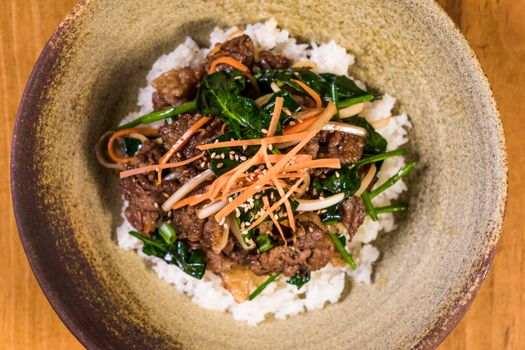
Marinated Korean bulgogi beef over rice with pickled vegetables and sesame. 36g protein, authentic flavors in 25 minutes.
Ingredients
-
350g
Beef sirloin (thinly sliced)
-
3 tbsp
Soy sauce
-
1 tbsp
Sesame oil
-
1 tbsp
Brown sugar
-
3 cloves
Garlic
-
1 tsp (grated)
Ginger
-
¼
Pear or apple (grated)
-
140g (dry)
Jasmine rice
-
1 small
Cucumber
-
1 tsp
Sesame seeds
-
2 stalks
Green onions
Instructions
1
Make bulgogi marinade
Whisk soy sauce, sesame oil, brown sugar, minced garlic, grated ginger, and grated pear (a natural tenderizer). Add sliced beef and marinate 15 minutes.
2
Cook rice
Rinse and cook rice according to package directions while beef marinates.
3
Quick-pickle cucumber
Slice cucumber thin. Toss with 1 tsp rice vinegar, a pinch of sugar, and sesame seeds. Set aside.
4
Cook bulgogi
Heat a large pan over high heat. Cook marinated beef 3-4 minutes, letting it caramelize in the sweet marinade without stirring too much.
5
Assemble bowls
Divide rice into bowls, top with bulgogi, quick-pickled cucumber, sliced green onions, and extra sesame seeds.
The Best Korean Beef Bulgogi Bowl for Meal Prep
This Korean beef bulgogi bowl brings authentic Seoul street-food flavors to your kitchen in just 25 minutes. Thinly sliced beef is marinated in a sweet-savory blend of soy sauce, sesame oil, garlic, ginger, and grated pear — a traditional Korean tenderizing trick that makes the meat incredibly juicy. Served over fluffy jasmine rice with quick-pickled cucumbers and toasted sesame seeds, every bite delivers that perfect balance of sweet, salty, and umami that makes bulgogi one of the most beloved Korean dishes worldwide.
With 36g of protein and 540 calories per serving, this bowl fits perfectly into meal prep routines, cutting phases, or simply anyone who wants a restaurant-quality dinner without the restaurant price tag. The marinade does all the heavy lifting — once the beef hits the hot pan, you get those gorgeous caramelized edges in under 4 minutes.
Why Bulgogi Bowls Are Perfect for Fitness Goals
Korean bulgogi is one of those rare dishes that tastes indulgent but actually fits your macros. The protein-to-calorie ratio is excellent: 36g protein from just 540 calories means 27% of calories come from protein. The complex carbs from rice provide sustained energy for workouts, while the healthy fats from sesame oil support hormone production and nutrient absorption.
What sets this apart from generic "healthy bowls" is the depth of flavor. The grated pear in the marinade serves double duty — its natural enzymes break down tough muscle fibers while adding a subtle sweetness that caramelizes beautifully at high heat. Combined with the umami punch of soy sauce and the nuttiness of toasted sesame, this is a bowl you will genuinely crave rather than tolerate.
The Secret to Authentic Bulgogi at Home
Most home cooks make two mistakes with bulgogi: they cut the meat too thick and they overcrowd the pan. Authentic Korean bulgogi uses paper-thin slices — freeze the beef for 30 minutes and you can slice it almost translucent with a sharp knife. Then cook in small batches over maximum heat so the meat sears and caramelizes instead of steaming. Those charred, slightly crispy edges are what separate good bulgogi from great bulgogi.
Recipe Notes & Tips
- Freeze before slicing: Place the beef in the freezer for 30 minutes until firm but not frozen solid. This makes it dramatically easier to cut paper-thin slices that cook quickly and absorb marinade.
- High heat is non-negotiable: Cook bulgogi over the highest heat your stove can produce. The meat should sizzle aggressively the moment it touches the pan. Low heat creates steam and gives you gray, chewy beef.
- Don't overcrowd: Cook in two batches if needed. Each slice of beef needs direct contact with the hot pan surface to caramelize properly.
- Grate the pear directly into the marinade: Use a microplane or box grater. The juice and pulp both contribute enzymes and sweetness. An Asian pear is traditional, but any ripe pear or apple works.
- Toast your sesame seeds: Dry-toast in a small pan for 2 minutes until golden. The aroma and crunch are noticeably better than raw seeds.
- Let it rest 2 minutes after cooking: This allows the caramelized sugars to set on the surface, giving you those signature glossy, slightly sticky pieces.
Variations
- Bulgogi lettuce wraps: Skip the rice and serve the beef in butter lettuce cups with pickled daikon and a drizzle of gochujang. Drops carbs to 15g while keeping all 36g of protein.
- Spicy bulgogi: Add 1-2 tablespoons of gochujang (Korean chili paste) to the marinade for a sweet-spicy version. Garnish with sliced fresh chilies.
- Chicken bulgogi: Substitute thinly sliced chicken thigh for beef. Marinate the same way — thighs hold up better than breast to the sweet marinade. Cook 5-6 minutes until golden.
- Bulgogi bibimbap: Serve over rice with a fried egg, sautéed spinach, bean sprouts, shredded carrots, and gochujang. Mix everything together before eating.
- Meal prep version: Double the recipe. Store beef and rice in separate containers for 4 days. The flavors deepen overnight. Reheat beef in a hot pan (not microwave) to restore the caramelized texture.
Common Mistakes to Avoid
- Cutting meat too thick: Bulgogi should be sliced paper-thin (2-3mm). Thick slices won't absorb the marinade properly and take too long to cook, losing the characteristic caramelized edges.
- Marinating too long: The fruit enzymes in pear break down meat fibers. Past 8 hours, the beef becomes mushy and loses its texture. Stick to 15 minutes to 4 hours.
- Cooking on low heat: This is the #1 mistake. The pan must be screaming hot. Low heat releases moisture from the meat, creating a pool of liquid instead of a sear.
- Skipping the pear: Without the pear, the meat will be noticeably tougher and less sweet. It's not optional — it's a core component of authentic bulgogi.
- Stirring too much: Let the beef sit undisturbed for 60-90 seconds to develop a sear before flipping. Constant stirring prevents caramelization.
How to Store
Cooked bulgogi stores in an airtight container for up to 4 days in the fridge. Keep rice in a separate container to prevent it from absorbing the sauce and becoming mushy. The quick-pickled cucumber keeps for 3 days refrigerated. For meal prep, assemble bowls fresh each day — it takes under 2 minutes. To reheat, use a hot skillet for 2 minutes rather than a microwave — this restores the caramelized edges. Bulgogi also freezes well for up to 2 months — thaw overnight in the fridge and reheat in a pan.
What to Serve With This
- Kimchi: The fermented, spicy kick of kimchi is the classic Korean pairing. It cuts through the sweetness of the bulgogi perfectly.
- Miso soup: A warm cup of miso soup alongside the bowl adds umami depth and makes it feel like a complete Korean restaurant experience.
- Steamed edamame: A quick protein-boosting side that adds 8g protein per serving. Sprinkle with sea salt and sesame.
- Cucumber kimchi (oi-sobagi): Spicy stuffed cucumber kimchi is a traditional banchan that pairs beautifully with the sweet bulgogi.
- Asian slaw: Shredded cabbage, carrots, and scallions tossed with rice vinegar and sesame oil. Adds crunch and freshness to the bowl.
Korean Bulgogi: A Dish with Centuries of History
Bulgogi (불고기) literally translates to "fire meat" in Korean, and its origins trace back to the Goguryeo era (37 BC – 668 AD) when the dish was called maekjeok — skewered, grilled meat. Over centuries it evolved from a royal court delicacy into Korea's most iconic everyday meal. Modern bulgogi uses the soy-sugar-sesame marinade that developed during the Joseon dynasty, when soy sauce became widely available.
Today, bulgogi is one of the most searched Korean recipes globally, and for good reason — it's approachable, forgiving, and endlessly customizable. This bowl version takes the traditional flavors and packages them into a meal-prep-friendly format that works for busy weeknights. Pair it with our beef stir fry and beef and broccoli for a full week of Asian-inspired beef dinners, or try our ground beef bowl for a simpler weeknight option.
Building Your Korean Bowl Bar
One of the best things about bulgogi bowls is that they work as a build-your-own meal. Set out the components — rice, bulgogi, pickled cucumbers, kimchi, shredded carrots, bean sprouts — and let everyone assemble their own bowl. This is perfect for families with picky eaters or for meal prep where you want variety without cooking different meals. The base recipe stays the same; only the toppings change.
Frequently Asked Questions
What does pear do in the marinade?
Grated pear (or apple) contains enzymes that naturally tenderize the beef. It also adds a subtle sweetness that's characteristic of authentic Korean marinades. Don't skip it — it makes a real difference.
Can I use a different cut of beef?
Rib-eye is traditional and gives the best flavor. For a leaner option, use flank steak or top round. Slice as thinly as possible — partially freezing the beef for 30 minutes makes it easier to slice.
How long can I marinate the beef?
Fifteen minutes is the minimum, but 2-4 hours in the fridge gives the best flavor penetration. Don't go beyond 8 hours — the fruit enzymes in the pear can break the meat down too much, making it mushy.
Can I make this into a meal prep?
Yes. Cook the bulgogi and rice in bulk and store separately for up to 4 days. The pickled cucumber keeps well too. Reheat the beef and rice, then assemble fresh bowls when ready to eat.
What can I serve alongside bulgogi besides rice?
Bulgogi is traditionally served with kimchi, steamed greens, and Korean pickled radish (danmuji). You can also wrap it in lettuce leaves for a low-carb option or serve over glass noodles (japchae-style).
Did you make this recipe?
Share a picture on Instagram with #aimealplan