A 7-day low-sodium diet meal plan built to stay under 1,500mg of sodium a day. Meals use fresh meat and fish, plain grains, and herbs instead of deli meat, soy sauce, and jarred sauce. This sample is food guidance, not a prescription — confirm the target with your clinician if you have high blood pressure, heart failure, or kidney disease.
Key Takeaways
- Keep the day under 1,500mg. That is the American Heart Association ideal for most adults, especially with high blood pressure.
- Cook the protein yourself. Deli turkey, rotisserie chicken, and brined breasts blow the day before dinner.
- Flavor with garlic, citrus, vinegar, and single spices. Soy sauce, seasoning blends, and pickles are the salt.
- A low-sodium dinner, sandwich, and snack are on this page, with a shop list for the week.
Who This Week Is For
Use this no-salt week if a clinician asked you to cut sodium, or if you want a concrete menu instead of a vague “eat less salt.” It fits high blood pressure and the sodium part of heart-failure eating. It is not a full renal diet: kidney plans also limit potassium, phosphorus, and sometimes protein. If that is your constraint, start from the kidney disease meal plan and the low-potassium meal plan.
The DASH meal plan shares the 1,500mg idea and adds potassium-rich produce and low-fat dairy in set amounts. This page is the stricter grocery filter: no added salt, no deli counter, no bottled sauce.
Sodium Targets
| Label | What it means | Use it for |
|---|---|---|
| This week | Under 1,500mg per day | Blood pressure and heart-health cooking |
| General cap | 2,300mg per day | Dietary Guidelines limit for most adults |
| Sodium-free | Less than 5mg per serving | FDA claim — fruit, oil, unsalted nuts |
| Very low sodium | 35mg or less per serving | Packaged foods worth keeping |
| Low sodium | 140mg or less per serving | Bread, yogurt, tuna if the label says so |
Most adults eat well over 3,000mg before they notice the salt shaker. Bread, sandwiches, pizza, soup, and cured meat carry more of it than the shaker does. Potassium chloride (“salt substitute”) is not a free swap if your kidneys are impaired — ask before you buy it.
What Can I Eat for Dinner That Is Low in Sodium?
Dinner is a fresh protein, a starch you cooked without salt, and vegetables. Season after the pan is hot: garlic, lemon, dill, rosemary, ginger, chili, vinegar. Skip the bottle of sauce. These seven dinners are the ones in the menu above, each built to land well under a few hundred milligrams:
- Herb-crusted baked cod with zucchini, peppers, and asparagus.
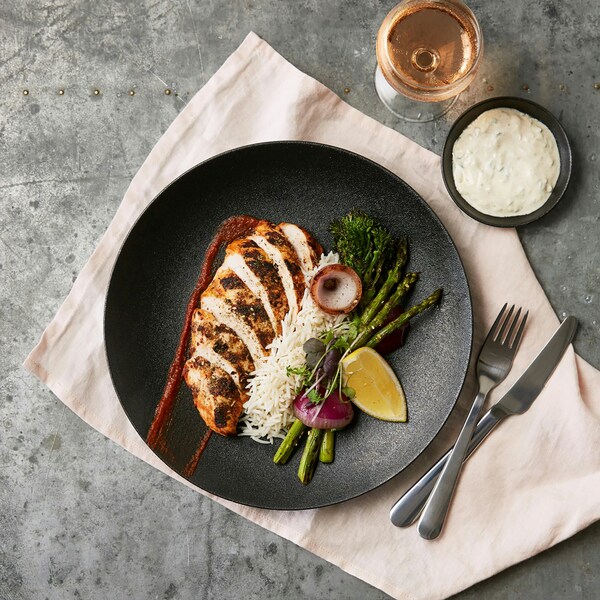
- Rosemary roast chicken, baked sweet potato, steamed green beans.
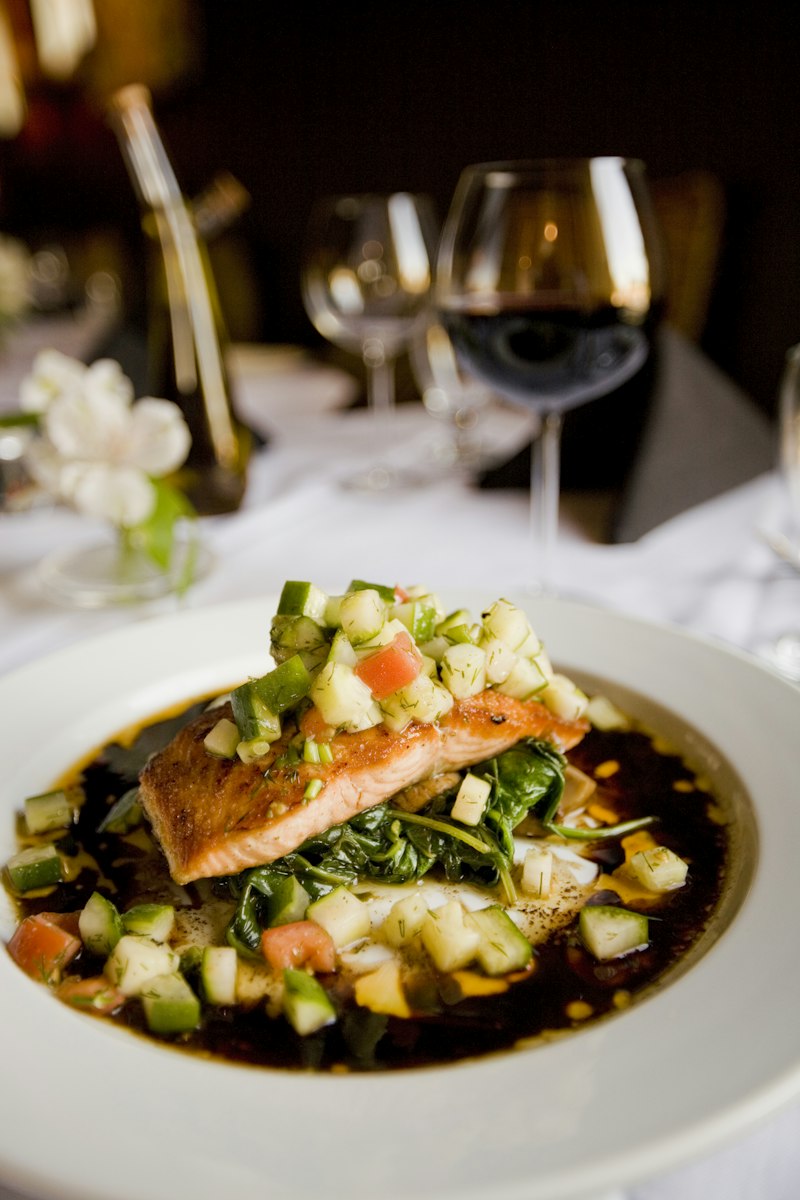
- Grilled salmon with dill, brown rice, and broccoli.
- Turkey meatballs you mix yourself (no seasoned breadcrumbs) with whole-wheat pasta, basil, and olive oil.
- Shrimp with broccoli, snap peas, and carrots. Ginger and lime. No soy sauce.
- Pork tenderloin rubbed with rosemary, roasted carrots, Brussels sprouts.
- Herb-baked chicken with garlic mashed cauliflower and asparagus.
If you are out, ask for the protein grilled with no salt and sauce on the side, then leave the sauce. Soup, stir-fry, and anything “blackened” or “Cajun” at a restaurant is usually the whole day’s sodium in one plate.
What Is a Good Low-Sodium Sandwich?
Build it in this order. The bread decides the sandwich before the filling does.
| Layer | Use | Leave out |
|---|---|---|
| Bread | Low-sodium or no-salt-added loaf, or a lettuce wrap | Bakery sandwich bread, bagels, wraps with 300mg+ |
| Protein | Leftover roast chicken or turkey, no-salt tuna, egg | Deli slices, ham, salami, bacon |
| Spread | Avocado, unsalted hummus, 1 tsp yellow mustard | Cheese, mayo, pesto, olive tapenade |
| Crunch | Lettuce, tomato, cucumber, pepper | Pickles, olives, sauerkraut |
The lunch on day 2 is that sandwich as a wrap: roast chicken, hummus, lettuce, cucumber. A typical deli-turkey sandwich is often 800–1,200mg. This version stays in the low hundreds if the bread label is actually low sodium.
What Is a Good Snack for a Low-Sodium Diet?
Snack from foods that never went through a brine. Pair one produce item with one unsalted fat or protein so you are not hungry an hour later.
- Apple or berries with a small handful of unsalted almonds or walnuts.
- Carrot and cucumber sticks. Hummus only if you made it without salt or the tub is under 140mg per serving.
- Plain yogurt with fruit, if the carton is under about 70mg per serving. Skip granola from a bag unless it is unsalted.
- Air-popped popcorn with no salt, or unsalted rice cakes with unsalted peanut butter.
- A banana and a spoon of unsalted peanut butter.
Crackers, pretzels, cheese sticks, jerky, and cottage cheese are the usual mistakes. Regular cottage cheese is about 360mg per 100g. “Sea salt” on a snack is still salt.
What Foods Have No Sodium in Them?
Living food contains a little sodium. “No sodium” in the store means the FDA sodium-free line: under 5mg per serving. These usually qualify when nothing salty was added:
| Food | Typical sodium |
|---|---|
| Apple, banana, berries, orange | About 0–2mg per piece |
| Unsalted almonds, walnuts, peanut butter | About 0–5mg per ounce or tablespoon |
| Olive oil, vinegar, fresh herbs, single spices | 0mg. Blends often hide salt. |
| Dry rice, dry oats, cooked with no salt | About 0–5mg per serving |
| Cucumber, bell pepper, zucchini, apple | Usually under 5mg per cup |
| Fresh chicken, fish, pork | Natural sodium, often 40–80mg per 100g — low, not zero |
Canned beans, canned tomatoes, broth, and bread are not on this list unless the label says no salt added. Rinse no-salt-added beans anyway if you want the last of the packing liquid gone.
Prep Once, Then Assemble
Cook a tray of chicken breasts with rosemary and no salt on day 1. That meat becomes the day-2 wrap and keeps you out of the deli. Boil a pot of brown rice or quinoa without salt; it covers two lunches and the salmon dinner. Wash berries, cut carrots and cucumber into a box, and portion unsalted nuts so the snack is already decided. Make the lentil soup without salt and freeze a bowl — canned soup is the food that breaks this diet.
If a meal is one you will not eat, swap the protein for another fresh one and keep the herb-and-lemon seasoning. Do not swap in a frozen entrée, a rotisserie chicken, or a sauce to “save” the night.
Swaps That Stay Low Sodium
| Instead of | Use |
|---|---|
| Soy sauce or teriyaki | Ginger, garlic, lime, a splash of rice vinegar |
| Deli turkey | Chicken you roasted with herbs |
| Regular canned tuna or beans | No-salt-added cans, drained |
| Boxed broth | Water plus onion, garlic, and bay leaf |
| Feta, olives, parmesan | Lemon, herbs, a few unsalted walnuts |
| Salted butter on vegetables | Olive oil after cooking, plus pepper |
Low-Sodium Diet FAQ
What can I eat for dinner that's low in sodium?
A low-sodium dinner is a fresh protein, a plain starch, and vegetables, seasoned with herbs, garlic, citrus, or vinegar instead of salt, soy sauce, or a jarred sauce. This week uses herb-baked cod with roasted vegetables, grilled salmon with brown rice and broccoli, rosemary chicken with sweet potato, turkey meatballs in olive oil and basil, shrimp stir-fry with ginger and lime (no soy sauce), herb pork tenderloin, and baked chicken with mashed cauliflower. One restaurant entrée often exceeds 1,500mg. Cooking at home keeps dinner near 100–300mg.
What is a good low sodium sandwich?
A good low-sodium sandwich uses bread labeled low sodium or no salt added, leftover roast chicken or turkey you cooked yourself, and vegetables. Add avocado, lettuce, tomato, cucumber, and a thin layer of hummus you made without salt, or a teaspoon of yellow mustard. Skip deli meat, cheese, pickles, bacon, olives, and bottled mayo. Two slices of ordinary sandwich bread can be 300–400mg before any filling, and a deli-turkey sandwich often passes 1,000mg.
What is a good snack for a low-sodium diet?
A good low-sodium snack is fresh fruit, unsalted nuts or seeds, raw vegetables, or plain yogurt with a label under about 70mg per serving. An apple is about 2mg, a handful of unsalted almonds is about 1mg, and carrot or cucumber sticks are in the same range. Skip crackers, pretzels, cheese sticks, cottage cheese unless it says low sodium, and anything labeled sea salt.
What foods have no sodium in them?
Almost no whole food is absolute zero, because sodium is a mineral in plants and animals. The FDA calls a food sodium-free when a serving has less than 5mg. Fresh fruit, unsalted nuts and seeds, oils, vinegar, fresh herbs, and single spices (not seasoning blends) usually meet that. Dry rice and oats cooked without salt, and most fresh vegetables, stay very low. Fresh meat and fish have natural sodium, often 40–80mg per 100g, so they are low-sodium foods, not sodium-free foods.
How much sodium should I eat on a low-sodium diet?
This sample week stays under 1,500mg of sodium a day, the American Heart Association ideal limit for most adults, especially with high blood pressure. The Dietary Guidelines cap for the general public is 2,300mg. Your clinician may set a different target for heart failure or kidney disease. Do not use potassium salt substitutes unless that clinician says they are safe for you.
What foods are high in sodium to avoid?
The biggest sources are bread and rolls, deli and cured meats, pizza, sandwiches, soup, burritos and tacos, savory snacks, chicken that was brined, cheese, and condiments such as soy sauce, ketchup, and salad dressing. A tablespoon of regular soy sauce is about 900mg. Choose fresh or frozen food with no sauce, cook at home, and read the milligrams, not the word natural.
How can I add flavor without salt?
Use garlic, onion, lemon or lime, vinegar, fresh herbs, black pepper, cumin, paprika, chili, ginger, and mustard. Roast or grill so browning does the work salt used to do. Buy spices as single ingredients. Blends such as taco seasoning and lemon pepper usually list salt first.
Is a low-sodium diet the same as DASH?
No. This plan is the sodium cap: fresh food, no added salt, under 1,500mg. DASH uses a similar sodium limit and also pushes potassium, calcium, magnesium, and a set number of vegetable, fruit, and low-fat dairy servings. Use the DASH meal plan when blood pressure is the main goal and you want that fuller pattern.
Free Tools for This Plan
Browse Recipes
Related Meal Plans
Plans that share a heart or blood-pressure goal, with a different limit.
DASH Meal Plan
Same sodium idea, plus potassium, calcium, and set produce servings.
Kidney Disease Meal Plan
Sodium plus potassium, phosphorus, and protein. Not this week.
Lower Cholesterol Meal Plan
Fiber, nuts, and fish for LDL. Add this sodium cap if pressure is high too.
Low-Potassium Meal Plan
Skip salt substitutes. Potassium is the limit on that week, not only sodium.
Want this week matched to your sodium cap?
Get a personalized low-sodium meal plan with dinners, a sandwich you can pack, snacks, and a grocery list under your target.
Create My Low-Sodium Plan