
Compare · September 14, 2026
Eat This Much Alternative

AI Meal Planner vs Eat This Much isn't only about calorie math. It's about which system turns a weekly intention into meals you'll cook, groceries you'll buy, and a routine you'll repeat.
Short answer: Choose Eat This Much if exact calorie and macro targets come first and you're fine with a structured generator. Choose AI Meal Planner if you want weekly cooking, swaps, leftover-aware shopping, and a plan the household will actually follow.
Reviewed September 14, 2026 against public Eat This Much pages and AI Meal Planner checkout. Prices and plan limits change.
Eat This Much vs AI Meal Planner at a glance
| Feature | AI Meal Planner | Eat This Much |
|---|---|---|
| What it is | AI weekly meal planner with recipes, macros, and groceries | Automated nutrition planner (launched 2012) |
| Best for | Busy cooks and households who need a usable week | Solo users who want exact calories and macros |
| Free / trial | $1 seven-day trial, then a paid plan | Free daily planning |
| Weekly plan | Yes | Premium |
| Grocery list | Yes, grouped and leftover-aware | Premium, with delivery integrations |
| Calories and macros | Included in the weekly cooking workflow | Core product; strongest on exact targets |
| Recipes | Adaptive generation from your constraints | Fixed database (often cited around 5,000 recipes) |
| Mid-week changes | Swaps that keep the shop in mind | Settings, regeneration, and manual picks |
| Household | Better for mixed preferences | Servings yes; weaker as a multi-person planner |
| Platforms | Web and mobile app | Web and mobile apps |
| Intro price | About $9.99/week, $19.99/month, or $34.99/3 months | About $5/month billed annually, or $14.99/month |
Eat This Much vs AI Meal Planner: which saves more time?
You've finished work, opened the refrigerator, and still don't know what dinner should be. Numerical accuracy does not guarantee execution. A plan may hit a protein target and still break when meals repeat, ingredients don't fit the shop, or someone in the house refuses the menu.
Eat This Much is strong at translating calorie and macro inputs into a structured plan. AI Meal Planner covers more of the decisions that happen after generation: substitutions, leftovers, and changing preferences.
The trade-off is precision versus flexibility. Strict targets make Eat This Much useful for a defined nutrition plan. They can also narrow food choices and add friction when people eat together. A more adaptable planner may need a nutrition review, but it usually means fewer meals abandoned before cooking.
| Decision factor | AI Meal Planner | Eat This Much |
|---|---|---|
| Best fit | Busy cooks who need adaptive weekly planning | Users who prioritize precise calorie and macro control |
| Planning style | AI-led personalization and meal adjustments | Structured automatic generation |
| Nutrition focus | Goals, calories, and macros inside a cooking workflow | Exact calorie and macro targets at the center |
| Weekly execution | Plans, recipes, grocery organization, leftover reuse | Weekly planning and grocery features on Premium |
| Household | Better for mixed preferences and shared planning | Weaker for separate household nutrition rules |
| Main risk | Generated nutrition still needs review | Precision can mean repetition and food-choice friction |
Reviews of Eat This Much often describe effective conversion of calorie and macro targets into meal plans, alongside repetition and a dated interface. The product solves the calculation problem more directly than the behavior problem. Adherence is the better test than the first generated menu. If a planner saves setup time but leaves you replacing meals, rebuilding the grocery list, or negotiating every dinner, the automation has moved work around rather than removed it.
What each planner is
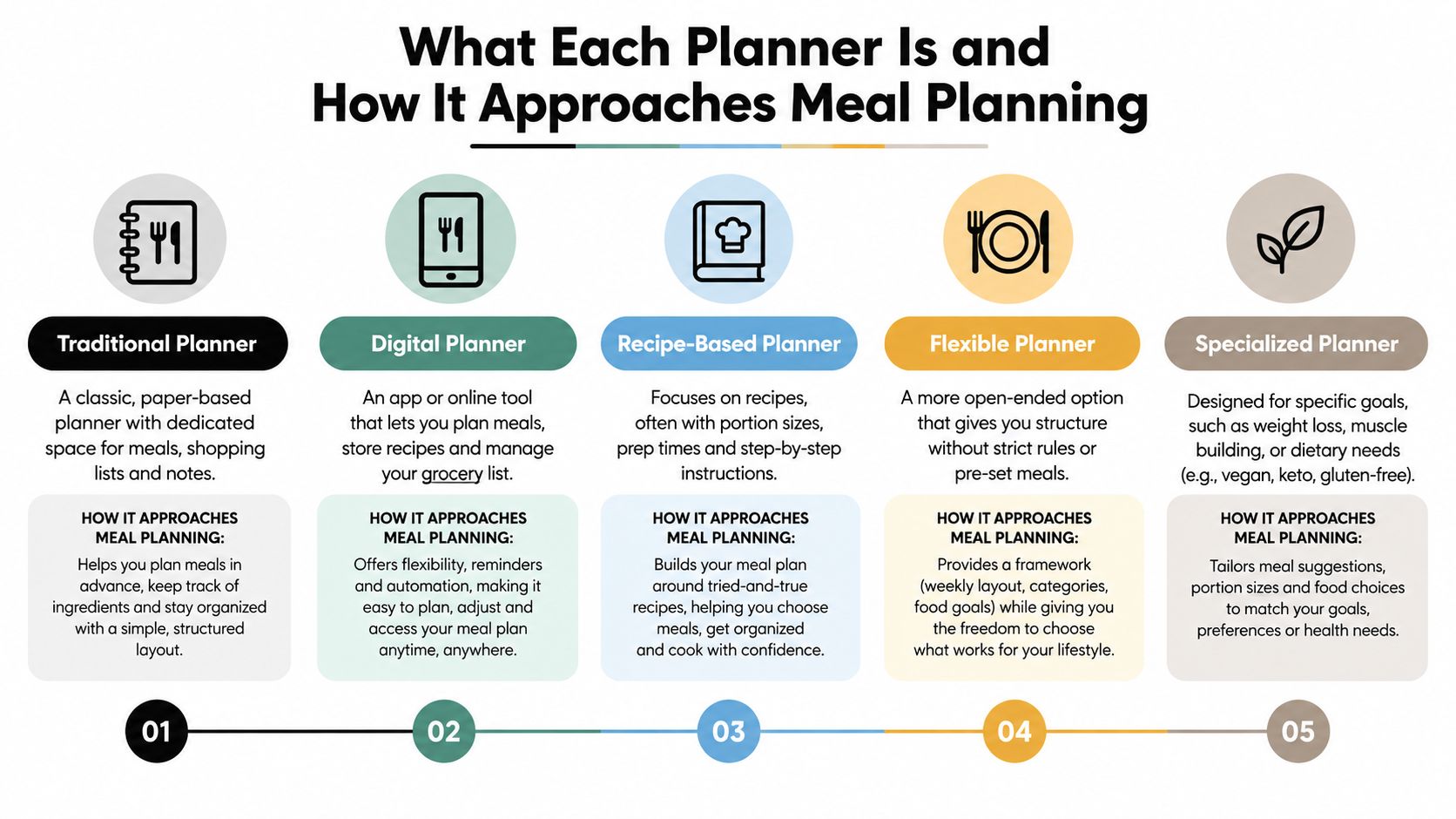
Eat This Much belongs to an earlier generation of automated nutrition tools. Its About page says the product started in 2012. That history matters: it was doing personalized meal planning long before the current AI nutrition wave. You enter targets, diet preferences, schedule, and food constraints, then the system assembles meals that satisfy the numerical rules.
Independent write-ups typically describe Eat This Much as a strict, nutrition-first planner with a large recipe database — closer to a calculator than a conversational AI planner. That explains both the strength in macro adherence and the weaker emphasis on open-ended discovery.
Calculator logic versus assistant logic
A calculator-style planner starts with constraints. That's useful when you already know the calorie level and macro split. It's less helpful when the problem is qualitative: something lighter, using vegetables before they spoil, or cooking for conflicting preferences.
An AI-native planner is a context layer around the meal. Onboarding captures goals, diet, allergies, and cooking effort, then turns those into weekly menus, recipes, nutrition, and groceries. You can see how conversational guidance fits that workflow on the AI nutritionist page.
Eat This Much asks: “What meals satisfy these targets?” An AI-first system asks a wider question: “What meals fit this person, this week, this kitchen, and this level of effort?”
Automation, personalization, and recipe variety
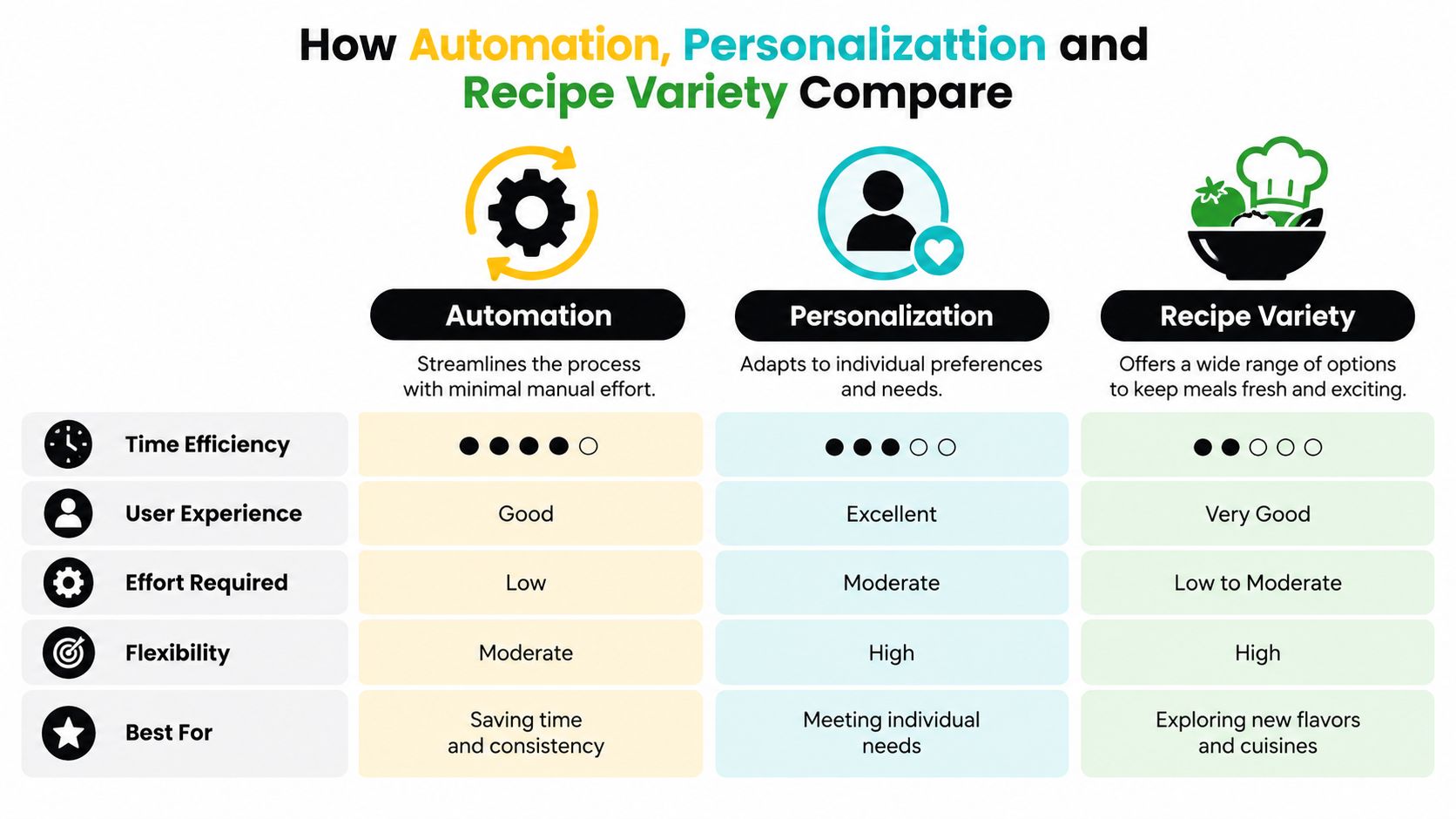
Separate precision from adaptability. Eat This Much wins when the job is translating fixed nutrition targets into a schedule. AI Meal Planner is built around learning preferences, adapting meals, and avoiding a full rebuild when the week changes.
| Criteria | AI Meal Planner | Eat This Much |
|---|---|---|
| Planning engine | AI workflow around goals, preferences, and meal context | Automatic generator around calories, macros, diet, and schedule |
| Macro adherence | Calories and macros inside personalized plans | Particularly strong for exact calorie and macro targets |
| Recipe source | Adaptive generation and personalization | Fixed recipe database (often cited around ~5,000 recipes) |
| Changes mid-week | Natural-language adjustments and swaps | Settings, regeneration, and manual selection |
| Taste learning | Onboarding plus ongoing preference signals | Food rules and feedback, still a structured generator |
| Variety over time | Meals change around tastes and constraints | Can get repetitive when filters narrow the pool |
| Best mindset | “Help me plan food I'll actually cook” | “Make the numbers work across my meals” |
Eat This Much's numerical strength is not a minor feature. If you track protein, carbs, and fat with discipline, automatic calculation removes spreadsheet work. The trade-off appears when constraints get narrow: dislikes, diet type, calorie targets, and pantry limits shrink practical variety even if the database looks large on paper.
Eat This Much optimizes the nutritional composition of the plan. AI Meal Planner is designed to optimize the fit between the plan and the person cooking it. A swap is not just “another recipe.” It has to keep the household schedule, a reasonable ingredient set, the nutrition profile, and avoid a second shop. An adaptive planner treats that as one problem.
People rarely quit because they can't calculate a macro split. They quit because meals feel repetitive, instructions don't match their energy, or the plan ignores what they already have. Precision still matters. It works best when food preferences are stable and numbers dominate. When tastes, leftovers, and household needs shift, personalization usually saves more time than another round of macro math.
Want a week of meals, macros, and a grocery list without rebuilding it every night?
Build your week in 2 minutesGrocery lists, household planning, and daily workflow
A weekly plan earns its place at the store and in the kitchen. Eat This Much Premium supports weekly planning, automatic grocery lists, and delivery integrations. The free tier focuses on the current day. Independent reviews treat one-day-at-a-time generation as the main free-plan limit. That changes how much coordination you still do yourself.
The solo workflow
For one person with stable targets, Eat This Much can be efficient: set the rules, generate, review, shop. The weak point is manual correction. Replace several meals because they repeat, conflict with the schedule, or use food you won't buy, and the automated list may no longer match the menu. You become the connection between planner and kitchen.
AI Meal Planner treats the list as part of the week: ingredients grouped, overlapping items combined, leftovers reused. If shopping coordination is the bottleneck, try the grocery list generator.
The household workflow
Household planning is a different decision. Scaling a recipe changes quantities. It does not answer whether each person will eat the meal. One house may need a shared grocery list plus separate preferences, allergies, calories, and portions. Eat This Much can help with servings. It is not built as a true multi-person or hybrid shared/individual planner.
A shared grocery list does not automatically create a shared meal plan. For families, ingredient overlap, planned leftovers, and clear substitutions reduce negotiation — and stop one person from becoming the permanent editor of an algorithmic menu.
Pricing, free limits, and what to test before you pay
A cheaper subscription can still be a more expensive week if free limits force you to rebuild plans, correct meals, or recreate lists. Compare subscription cost with time, waste, and household friction.
Eat This Much Premium is publicly listed at about $5/month billed annually ($59.99/year) or $14.99 month-to-month, with a trial. See their subscription help page for current rates. Premium is where weekly planning and grocery automation live. AI Meal Planner intro pricing after a $1 seven-day trial is about $9.99/week, $19.99/month, or $34.99/3 months — check the offer screen, because promotions change.
Competitor prices change. Confirm on Eat This Much and at AI Meal Planner checkout before you decide on cost alone.
| Plan | AI Meal Planner | Eat This Much |
|---|---|---|
| Free / trial | $1 for 7 days, then a paid plan | Free daily planning |
| Weekly | Intro about $9.99/week | Weekly planning is Premium |
| Monthly | Intro about $19.99/month | $14.99/month |
| Longer term | Intro about $34.99/3 months | $59.99/year (about $5/month) |
| What paid unlocks | Weekly plans, recipes, macros, grocery list, swaps | Weekly plans, grocery lists, delivery integrations |
Before paying, test the subscription against the actual bottleneck:
- Weekly access: Do you need a full week, or is daily generation enough?
- Shopping support: Will an automatic list cut duplicate buys and extra trips?
- Household fit: Can it handle different preferences without one person editing everything?
- Food quality: Do recipes match taste, skill, and constraints?
- Correction time: How much work before the menu is cookable?
A grocery budget calculator can connect the subscription to expected food spend. Meals that are rejected, repeated, or too demanding have little value at any monthly price.
Which planner fits your goals
Fitness and macros
If each week starts with calorie, protein, carb, and fat targets, Eat This Much is a natural fit. The trade-off shows after a few menus: strong macro control, weaker interactive personalization and discovery. Predictable meals suit people who want numerical consistency. If you get bored, reject dishes, or keep editing, that precision buys less than it looks.
Busy evenings
A professional home late needs a dinner that matches time, ingredients, energy, and taste. More exact calculations don't make that decision. AI Meal Planner is built around personalized weeks, recipes, calories and macros, grocery organization, swaps, and leftover reuse. Its value is whether those features reduce decisions after work — not whether they generate another menu to revise.
Families
One person may want high protein, another avoids an ingredient, kids reject a “compliant” dish. Eat This Much can scale a shared recipe. Differentiated preferences still tend to fall on one cook. Allergies and medical nutrition need a human check of ingredients and labels. An automated plan is not medical advice.
Health-conscious eating
A plan can meet macros while narrowing food around a small set of optimized meals — more repetition, concentrated ingredients, or sodium that's easy to miss in a target dashboard. Eat This Much is not automatically the wrong tool. If you manage heart health, diabetes, allergies, or a restrictive diet, inspect ingredients and nutrition, then ask whether the meals work for the kitchen you actually have.
Final recommendation
Eat This Much: strengths and limits
- Best when exact calories, protein, carbs, and fat come first.
- Lower annual Premium price than most AI planners.
- Large recipe database and Premium grocery/delivery tools.
- Free tier is mainly one day at a time; variety can shrink under tight filters.
AI Meal Planner: strengths and limits
- Best when the job is a cookable week, not a spreadsheet.
- Weekly recipes, macros, leftover-aware grocery list, and swaps in one flow.
- Stronger for mixed household preferences.
- Macro math is less calculator-strict; intro prices are higher than Eat This Much annual.
Choose Eat This Much when: exact calorie and macro targeting comes first; you prefer forms and automatic generation over conversation; you're planning mainly for yourself; the lower annual Premium price matters; repetition is acceptable if the numbers stay on target.
Choose AI Meal Planner when: the problem is deciding what to cook; you want weekly planning tied to recipes and groceries; swaps should reflect taste and effort; you cook for mixed preferences; leftover reuse matters; you care more about using the plan than perfect theoretical compliance.
Better generation doesn't guarantee better adherence. A planner earns its place when it reduces decisions after the plan exists: what to replace, what to buy, what to cook, and how to use leftovers. Test one complete week. Check whether meals match the schedule, the list matches the shop, how often you swap, and whether the second half of the week feels easier than the first.
Start with your goals and food constraints, then judge the week against those practical tests — not the first menu.
Get your personalized meal planAlso see our Mealime alternative if the job is simple weeknight recipes and a grocery list, and the roundup of the best meal planning apps for how Eat This Much and AI Meal Planner sit next to Mealime, Paprika, and other planners.
FAQ
Yes, if your bottleneck is deciding what to cook, swapping meals, shopping, and cooking for a household. Eat This Much remains stronger if exact calorie and macro targets are the only job.
Eat This Much is better for calculator-style macro control. AI Meal Planner is better for weekly execution: recipes, grocery organization, leftovers, and mixed preferences. Pick the one that matches why your current plan fails.
Eat This Much saves setup time when you already know your numbers. AI Meal Planner usually saves more time after generation — fewer abandoned dinners, fewer rebuilt lists, fewer household negotiations.
Yes. The free tier focuses on planning the current day. Weekly plans, automatic grocery lists, and delivery integrations are Premium features.
Public pricing is about $5/month billed annually ($59.99/year) or $14.99 month-to-month, plus a trial. Confirm current rates on Eat This Much, because prices change.
Eat This Much. Its generator is built around calorie and macro targets. AI Meal Planner includes calories and macros inside a broader cooking workflow, but it is not a spreadsheet replacement.
AI Meal Planner is a better fit for mixed preferences, leftovers, and a shared shopping list. Eat This Much can scale servings, but it is weaker as a multi-person or hybrid household planner.
Yes on Premium, including delivery integrations. The free experience is mostly day-by-day, so coordinating a full shop takes more manual work.
Eat This Much is an automated nutrition planner from 2012. It generates meals from calorie, macro, diet, and schedule rules. That is calculator-style automation, not a conversational AI planner.
Yes. AI Meal Planner builds a weekly grocery list from the plan, groups overlapping ingredients, and accounts for leftovers so you are less likely to shop twice.
Eat This Much Premium is cheaper on the annual plan, about $5/month billed yearly ($59.99/year) or $14.99 month-to-month. AI Meal Planner intro pricing is about $9.99/week, $19.99/month, or $34.99/3 months after a $1 trial. Confirm both at checkout; promotions change.
Export or note your calorie target, diet type, allergies, and dislikes. Take the AI Meal Planner quiz with those constraints, generate a week, then compare the grocery list and meals against what you actually cook. Cancel Eat This Much only after one usable week.