Most online roundups recommending the best meal planning apps in 2026 are ghost towns written by software that has never set foot in a grocery store. They actively recommend dead platforms, ignore shutting-down notices, and treat every household like a single person cutting calories for a fitness competition. Yummly shut off its servers in late 2024. PlateJoy folded in 2025. Mealime is pulling the plug this coming October. Yet search results still list them as top choices alongside generic advice.
The reality of dinner prep in 2026 comes down to three distinct jobs. You either want a generator to build a full week of meals based on strict numerical targets, a clip-and-save database to organize your own web bookmarks, or a fast tool to answer what to cook tonight with whatever is sitting in the crisper drawer. Mixing up these jobs leads to abandoned subscriptions, wasted produce, and ordering takeout at 7:00 PM on a Tuesday. This guide breaks down the active choices on the market, what they actually cost, where their algorithms fail, and how to pick software that matches how you actually buy groceries and cook food.
What “AI meal planning” actually means in 2026
Marketing departments attached the "AI" label to every recipe box and list tool over the last two years. In most apps, "AI meal planning" is simply a filtered database query disguised as machine learning. You select filters for "gluten-free" and "under thirty minutes," and the software queries a static array of pre-entered recipes. That is standard database filtering, not true artificial intelligence.
True artificial intelligence in meal planning uses large language models to construct custom meal lineups from scratch or adjust recipes dynamically based on your specific leftovers and household constraints. When an app generates a schedule using an LLM, it writes or modifies cooking instructions on the fly rather than pulling static cards from a pre-written file. That structural flexibility comes with clear operational trade-offs. Language models lack native awareness of real-world grocery store layouts, actual package sizes, or practical kitchen logistics unless strictly bound to verified inventory databases. A pure LLM might suggest using two tablespoons of canned tomato paste from a fresh six-ounce can without accounting for the unused remainder, or generate a daily dinner menu that satisfies exact macro targets while tasting like seasoned cardboard.
When evaluating software in 2026, distinguish between actual conversational models that adapt recipes instantly and structured recipe managers using standard relational algorithms. The former excels at solving immediate ingredient puzzles, while the latter keeps grocery lists organized and predictable across routine weekly shopping trips.
The best meal planning apps at a glance
When comparing the best meal planning apps, matching your specific operational goal matters far more than star ratings or promotional claims.
| App | Best for | Generates a week? | Grocery list | Cost |
|---|---|---|---|---|
| Eat This Much | Macro-focused automated schedules | Yes | Auto-generated | Free tier (~1 day), Premium ~$9/mo or $60/yr |
| Mealime | Quick 30-minute meals (shuts Oct 21) | Yes | Auto-generated | Free tier, Pro ~$5.99/mo |
| Samsung Food | Smart kitchen and recipe organization | Yes | Built-in with cart export | Free tier, optional paid upgrades |
| Paprika | Manual recipe hoarding and web scraping | No (Manual grid) | Built-in from saved recipes | ~$4.99 iOS/Android, ~$29.99 Desktop (per platform) |
| Plan to Eat | Manual drag-and-drop web bookmarking | No (Manual grid) | Auto-generated from schedule | ~$5.95/mo or $49/yr |
| AI Meal Planner | Rapid week builds from dietary rules | Yes | Auto-generated | Free trial, paid plans |
| eMeals | Grocery store pickup integration | Yes | Direct store cart export | ~$10/mo |
| SideChef | Step-by-step guided cooking | Partial | Auto-generated | Free tier, Premium ~$4.99/mo |
| BigOven | Leftover management and large recipe banks | Partial | Auto-generated | Free tier, Pro ~$3.99/mo |
| AnyList | Shared family grocery lists | No | Primary focus (manual or imported) | Free tier, Complete ~$14.99/yr |
| Prepear | Visual family meal boards | Partial | Auto-generated | Free tier, Pro ~$9.99/mo |
| Forks Meal Planner | Strict whole-food plant-based diets | Yes | Auto-generated | ~$19.99/mo or $119/yr |
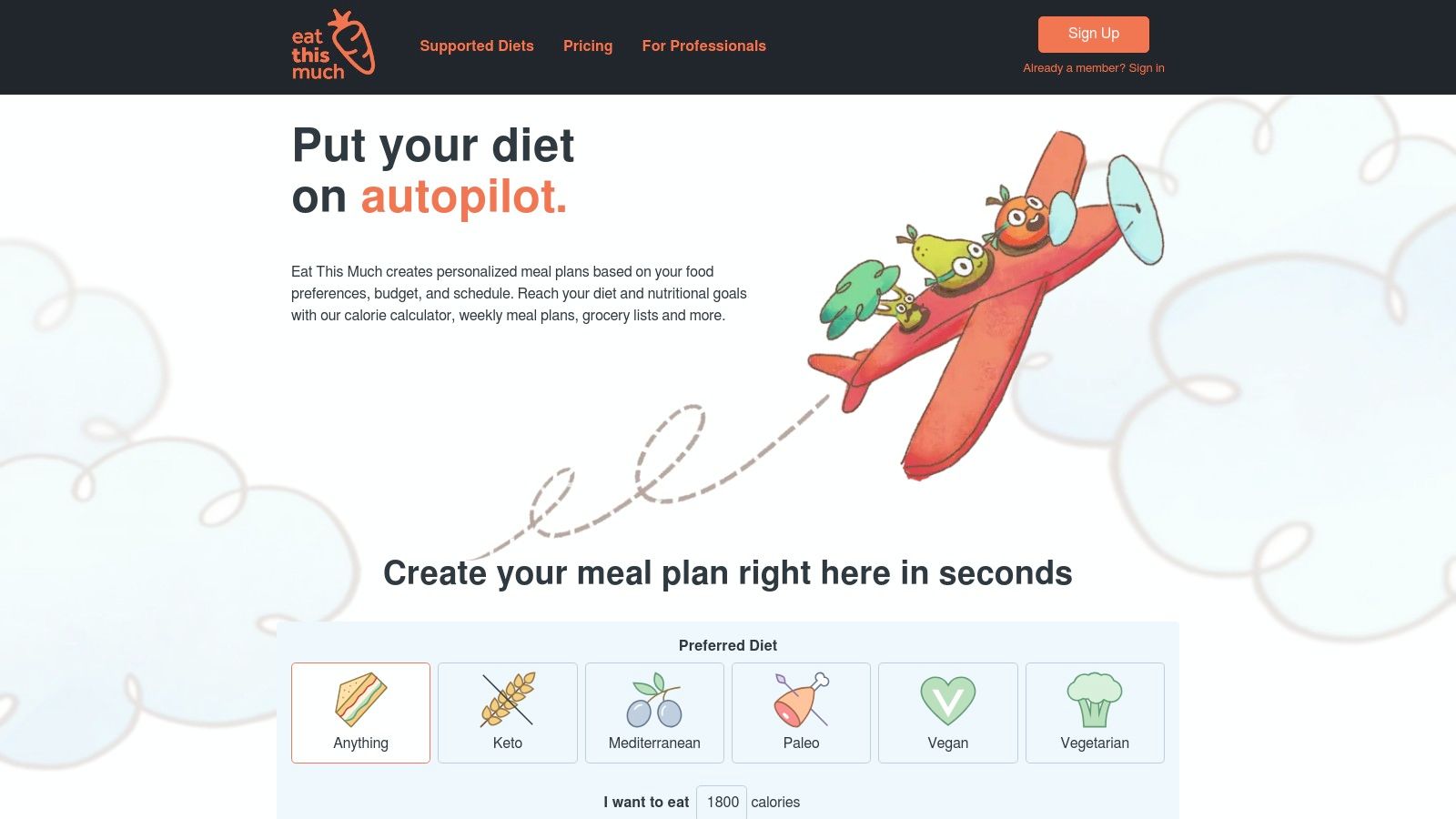
1. Eat This Much — best for macro-focused automation
Eat This Much acts as an automated calculator for people who view food strictly as fuel. You set target calorie counts, macronutrient ratios, and meal frequencies, and the platform calculates a complete menu to fit those exact numbers. It works well for bodybuilders or athletes cutting weight who need rigid structure without manually counting calories every meal.
The limitation becomes obvious at dinner time. Because the algorithm prioritizes mathematical targets over culinary harmony, it frequently yields combinations that hit your protein goal but taste like raw numbers. Eating a half-can of black beans alongside nine ounces of plain baked turkey breast satisfies a spreadsheet, but it tires out families quickly. The grocery lists automatically aggregate required quantities, though ingredient rounding can be clumsy. The free tier gives you about one day of planning at a time; unlocking a full week alongside grocery list aggregation requires Premium at about $9 a month or $60 per year. For a deeper breakdown of how its automated schedule compares to modern options, read our Eat This Much comparison.
2. Mealime — best for quick 30-minute meals (until October 21)
Mealime built its reputation on simple, fast weeknight cooking with minimal food waste. You pick a few dinners from a curated list of thirty-minute recipes, and the app automatically consolidates the exact ingredients into an organized grocery list. The interface is clean, the recipes are well-tested, and cooking directions prevent unnecessary dish clutter during prep.
However, do not start setting up a long-term routine here that you will have to abandon in October. Parent company Albertsons is shutting down Mealime on October 21, 2026, as it transitions users toward its broader Meals Hub ecosystem. While existing Pro subscriptions (about $5.99 per month) still grant access to advanced nutritional filters and extra recipe options for the remaining months, buying an annual membership is no longer sensible. If you want to review options for migrating your saved data before the deadline, check our Mealime comparison to see where to shift your workflow.
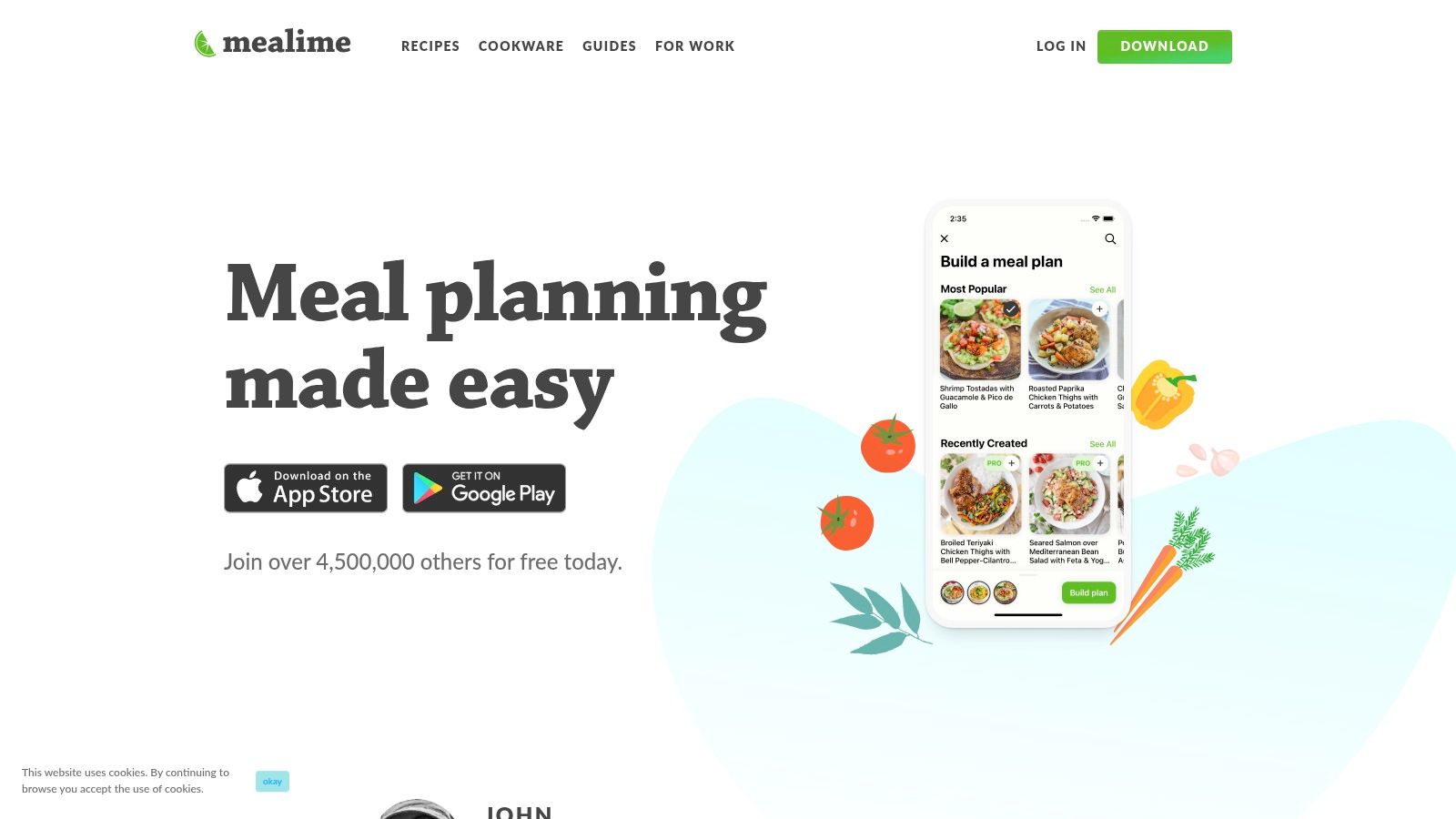
The real magic happens with its grocery list feature. Mealime automatically compiles your shopping list from the selected recipes, sorting items by aisle to streamline your trip to the store. This seamless integration from plan to pantry is a significant time-saver.
3. Samsung Food — best for smart kitchen integration
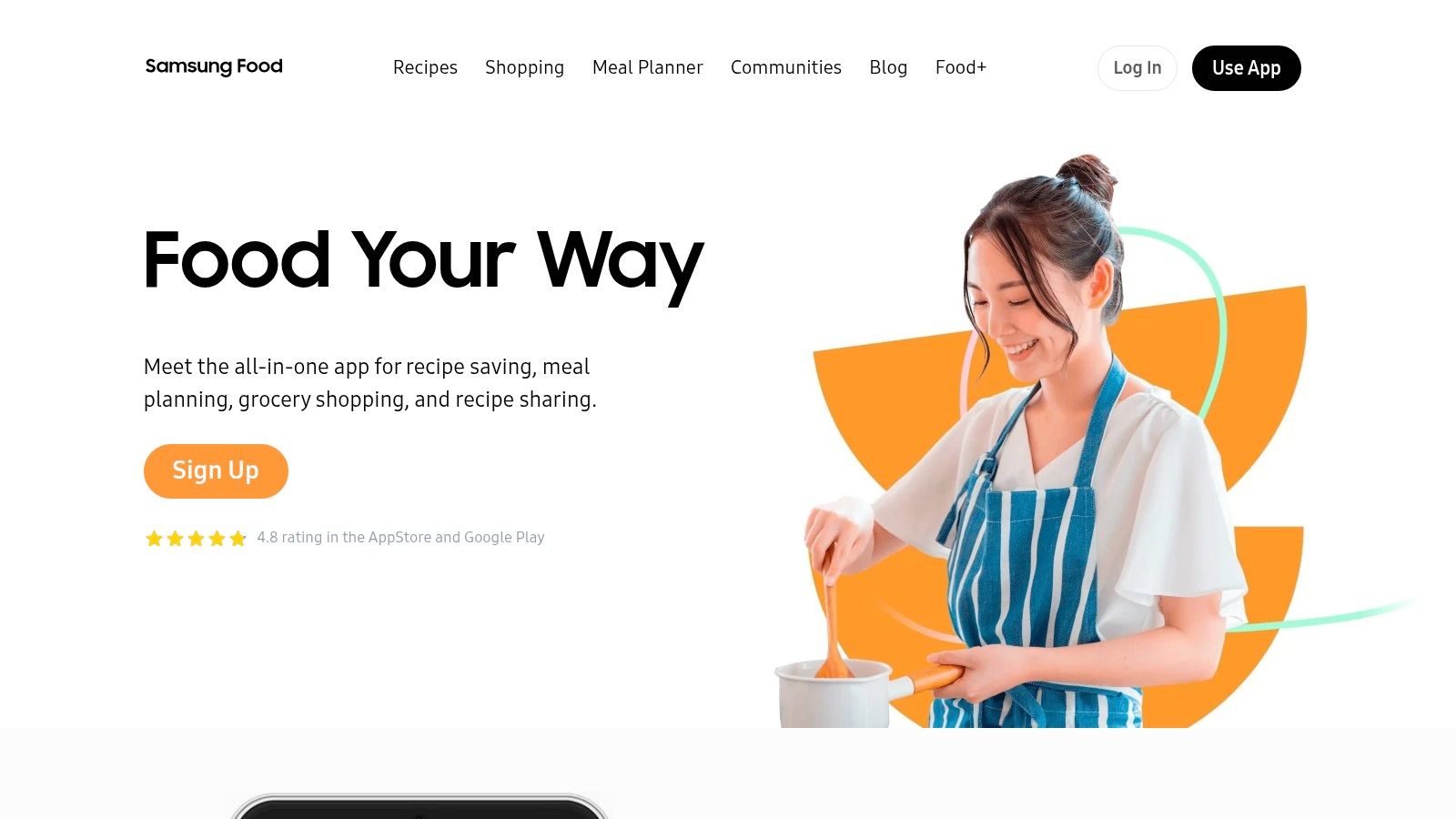
Formerly known as Whisk, Samsung Food functions as a hybrid recipe saver, meal builder, and connected appliance controller. Its strongest asset is the browser extension, which parses web recipes cleanly from almost any food blog, stripping away clutter, banner ads, and long introductory essays to leave raw ingredient lists and instructions.
The platform lets you save recipes into custom collections, drag them onto a weekly calendar, and automatically compile a unified shopping list. From there, you can export your shopping cart directly to online grocery pickup services like Walmart or Instacart. The core features remain free, with optional paid tiers for expanded health tracking features. The interface feels slightly cluttered due to Samsung's push toward smart appliance integration and social meal feeds, but as a free recipe scraper and list aggregator, it handles daily tasks far better than most paid competitors.
4. Paprika — best for recipe hoarders and manual control
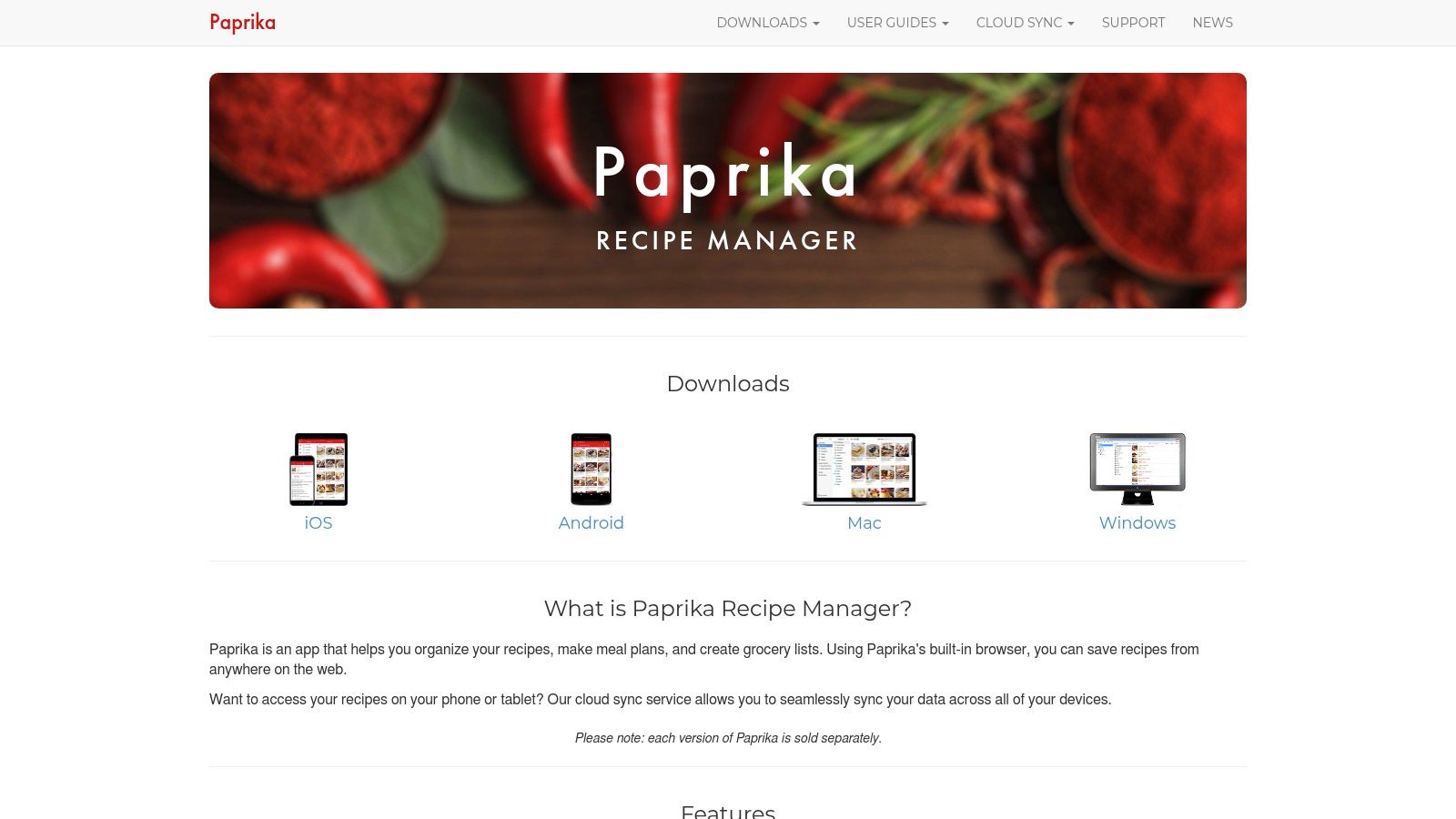
Paprika is built for cooks who want total control over their personal recipe library without automated algorithms interfering. It does not generate weekly menus for you or guess what you want to eat. Instead, it provides an exceptional web scraper that extracts recipes from any site, saves them offline, and lets you drag them into a custom calendar grid manually.
The app generates a clear grocery aisle list from your selected schedule, consolidating items across multiple dishes. Its major annoyance is the legacy pricing model: Paprika requires separate, one-time purchases for every platform you use. Paying about $4.99 on iOS or Android and then having to pay another $29.99 for the macOS or Windows desktop client feels outdated. Still, because there are no recurring subscription fees and all data resides locally or syncs via Paprika's free cloud server, it remains the gold standard for experienced home cooks who hoard their own web bookmarks.
5. Plan to Eat — best for drag-and-drop planning from custom links
Plan to Eat operates like a digital pegboard designed specifically for home cooks who curate their own food blogs. You import recipes using a bookmarklet or URL paste tool, which populates your private library. From there, you drag items onto a visual weekly calendar. The software calculates exact ingredient totals and builds a consolidated grocery list sorted by supermarket aisle.
Unlike automated platforms, Plan to Eat makes zero assumptions about what you should consume. It won't suggest dishes or balance your macronutrients; you are entirely responsible for building your schedule. That manual effort pays off in accuracy, as your grocery list reflects only dishes you actually selected. Sharing schedules across family accounts works reliably. The service costs about $5.95 per month or $49 annually after a 30-day free trial. It represents an ideal middle ground for households that want clean software without algorithmic clutter.
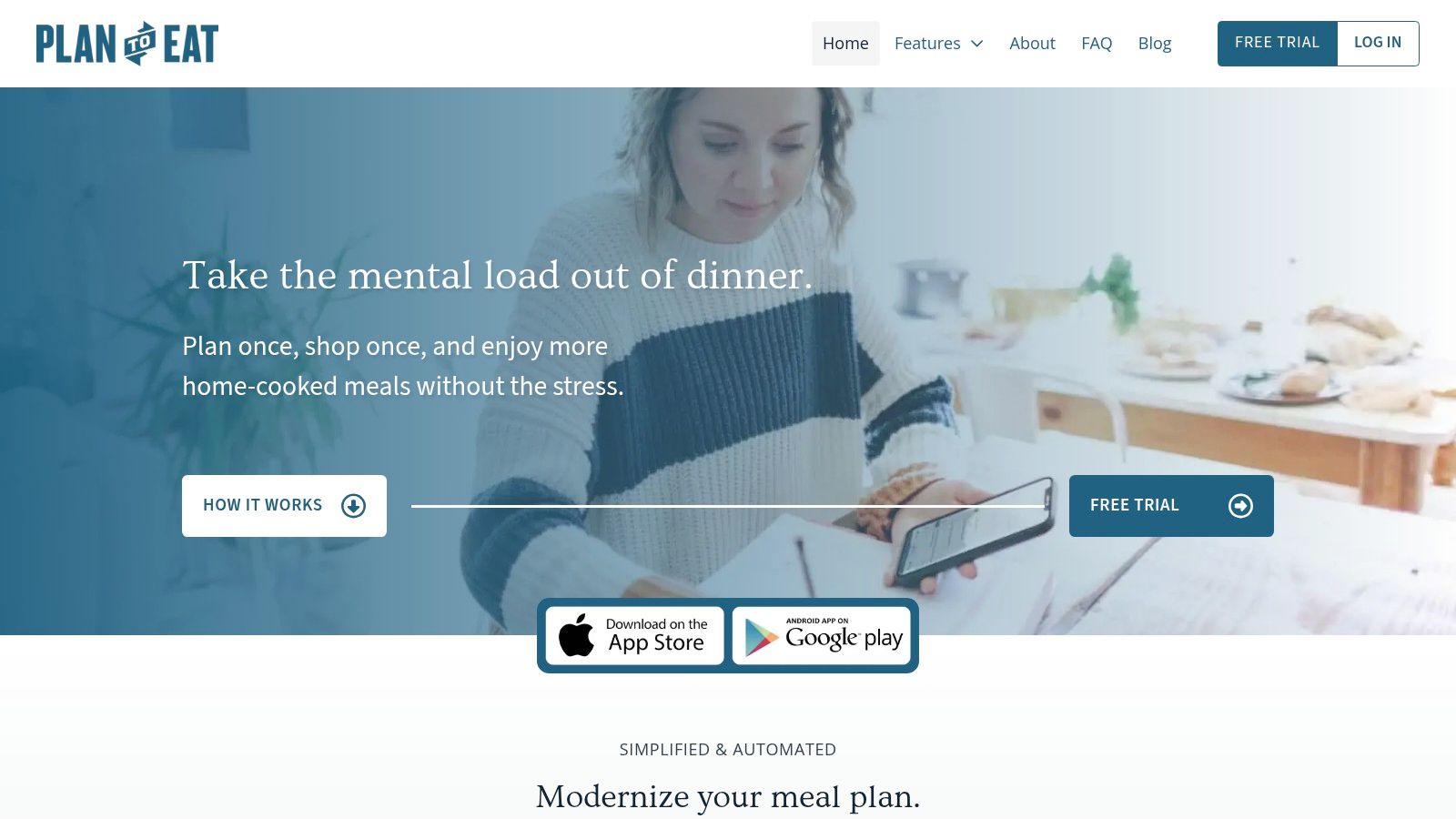
The platform automatically generates a detailed shopping list from the recipes you add to your calendar. This list is organized by store aisle and can be shared with family members, streamlining the entire grocery shopping process from your personalized plan.
6. AI Meal Planner — best for rapid goal-based week builds
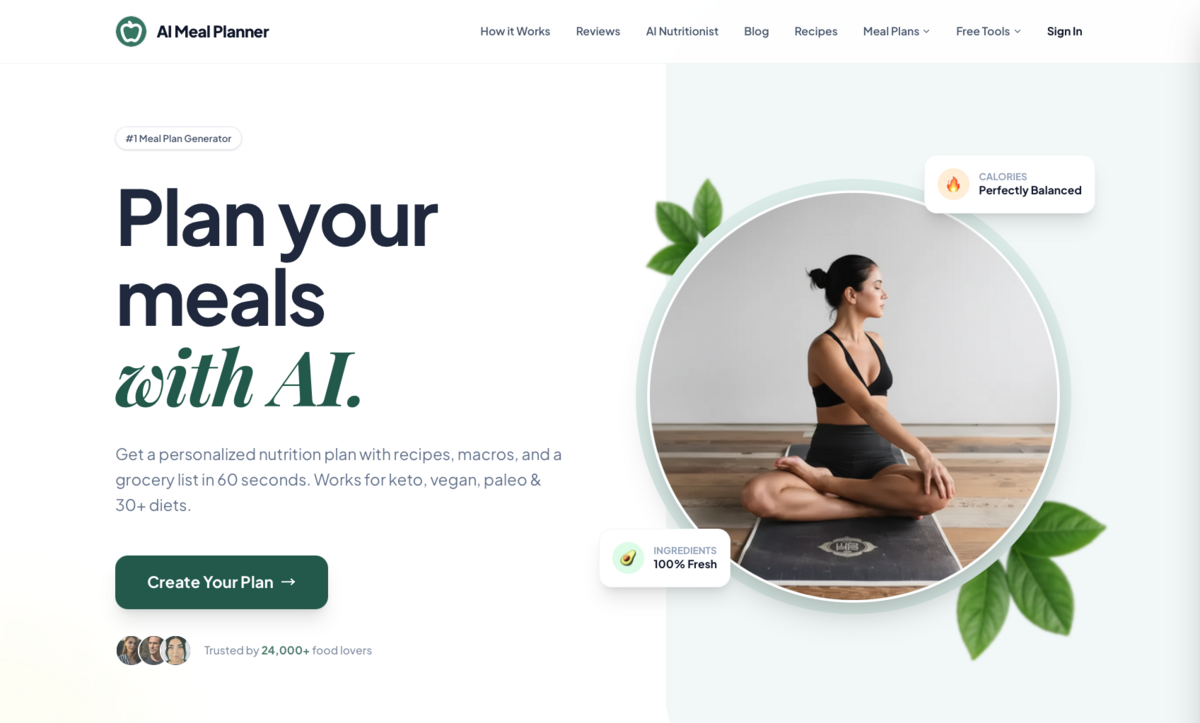
Full disclosure: this is our product. We designed AI Meal Planner to solve one specific problem: generating a complete, personalized week of meals based on your specific calorie targets, dietary rules, and food allergies in under sixty seconds. It builds a structured menu and matching grocery list automatically.
Where it breaks down: it is not designed to clip individual web recipes, store an existing bookmark collection, or answer "what should I cook right now with three eggs and broccoli." Its interface also requires signing up before viewing full customization controls, which turns off users who prefer browsing freely first. If you need rapid weekly structure tailored to dietary targets, it excels at that core job; if you want a digital recipe box, look at Paprika or Plan to Eat instead.
7. eMeals
eMeals is one of the best meal planning apps for those who want a truly hands-off experience, bridging the gap between planning and shopping. This subscription service delivers curated weekly meal plans directly to you, based on your chosen eating style. Its standout feature is the seamless integration with major US grocery retailers, allowing users to send an entire shopping list directly to services like Walmart, Kroger, or Instacart for easy pickup or delivery.

The service offers over 15 specialized meal plans, including options like Keto, Low-Calorie, Diabetic, and Family-friendly, all curated by dietitians. Each week, you receive seven new recipes, but you have the flexibility to swap them out if they don't suit your taste, ensuring you're never stuck with a meal you don't want.
8. SideChef
SideChef excels as a meal planning app for those who want to learn while they cook. It combines a robust recipe database with an intuitive meal planner, making it a great choice for both novice and experienced home cooks. The platform's standout feature is its step-by-step guided cooking instructions, complete with timers, photos, and even voice commands, which demystifies complex recipes.
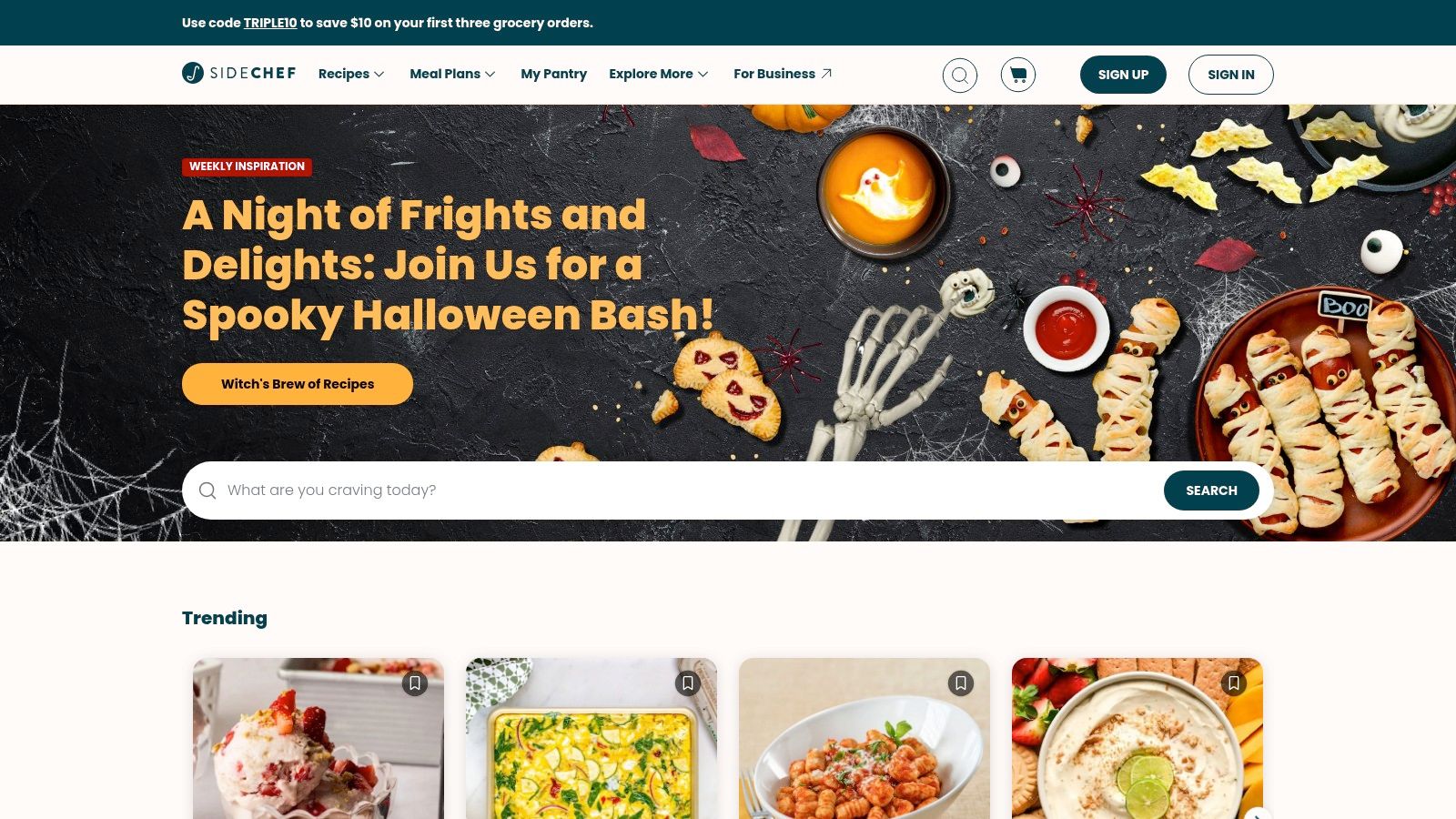
This focus on culinary education sets it apart from other meal planning apps. Beyond just planning, SideChef integrates grocery delivery through partners like Walmart and Amazon Fresh, transforming your chosen meal plan into a shoppable list that can be delivered directly to your door.
Key Features and User Experience
SideChef’s user experience is highly visual and interactive. Users can create their own meal plans from thousands of recipes or opt for the premium subscription to receive curated weekly plans. The integration with smart kitchen appliances further enhances its appeal for tech-savvy users, making the cooking process even more seamless.
- Best For: Aspiring home cooks and anyone who enjoys guided, interactive recipe instructions.
- Pricing: Free version with access to recipes and basic planner; SideChef Premium is $4.99/month or $49.99/year.
- Pros: Excellent step-by-step guided recipes, free meal planner option, optional grocery integration.
- Cons: Grocery partner availability varies by location; many curated plans and classes require a premium subscription.
Visit the website: https://www.sidechef.com/
9. BigOven
BigOven is a long-standing and robust contender among the best meal planning apps, appealing to users who value a massive, community-driven recipe database. Its strength lies in its sheer volume, offering over one million recipes that can be easily saved, organized, and added to a calendar-style meal planner. Features like the RecipeScan tool, which digitizes handwritten recipes, and a web clipper make it a powerful hub for all your culinary inspiration.
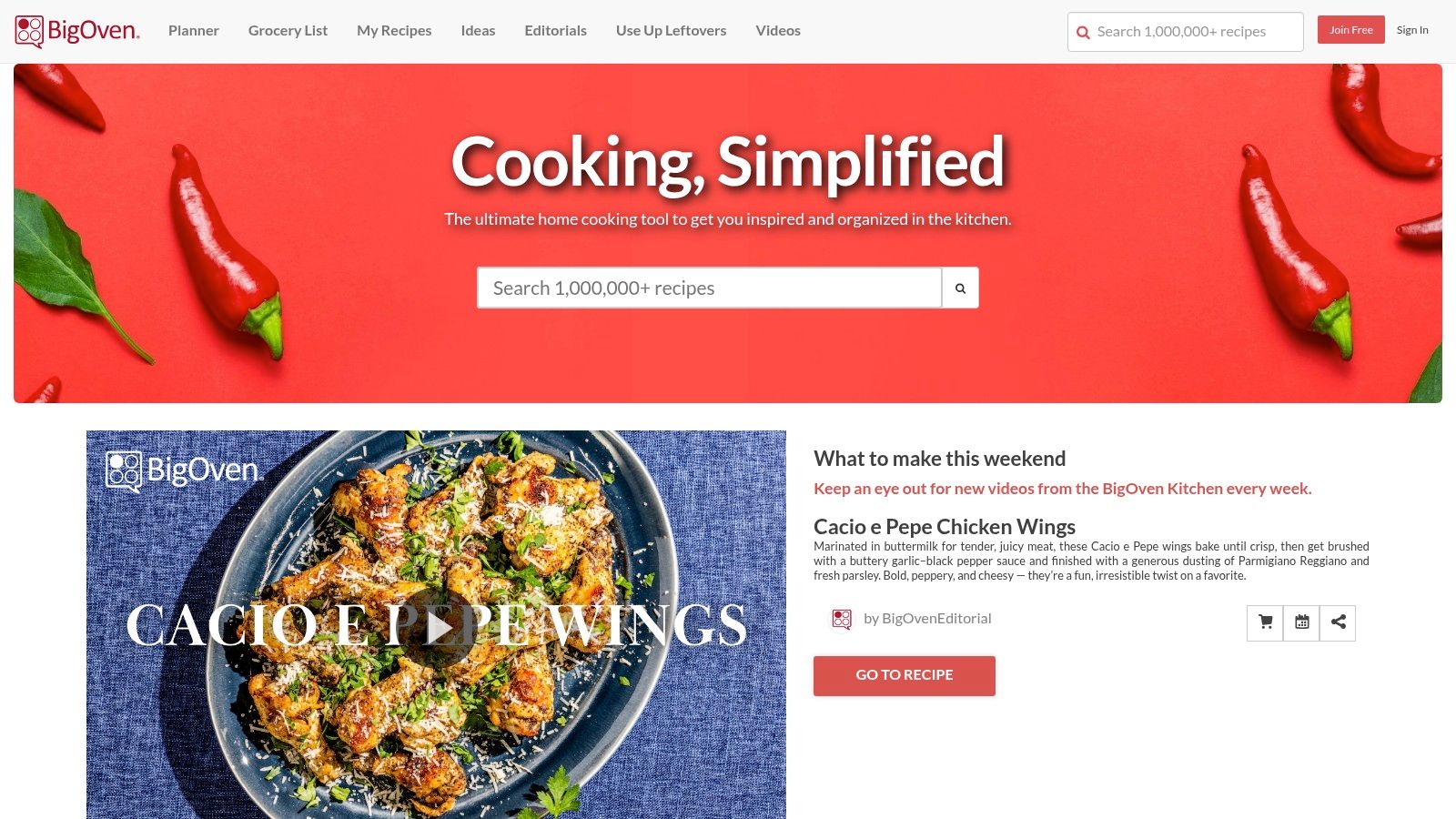
The platform seamlessly integrates your chosen meals into a shopping list, helping you prepare for the week ahead. While its interface may feel more traditional compared to newer, sleeker apps, its functionality is comprehensive and reliable for detailed weekly planning.
Key Features and User Experience
BigOven’s calendar view allows users to drag and drop recipes for breakfast, lunch, and dinner, providing a clear overview of the week. The Pro membership enhances this experience by unlocking nutrition information, advanced search filters, and removing ads. This makes it a great tool for those who want to track macros or stick to specific dietary goals using a vast library of user-submitted and professional recipes.
- Best For: Home cooks who want a massive recipe library and a traditional calendar planner.
- Pricing: Free basic version; BigOven Pro is available for $2.99/month or $24.99/year with a 30-day free trial.
- Pros: Enormous and diverse recipe database, affordable Pro subscription, useful recipe import tools.
- Cons: The user interface is less modern than competitors; grocery delivery is not a primary feature.
Visit the website: https://www.bigoven.com/
10. AnyList
AnyList begins its life as a top-tier grocery list application but transforms into a competent meal planner with its ‘Complete’ upgrade. It excels for families and individuals who prioritize powerful, collaborative list-making and want a straightforward, integrated meal calendar. The app allows you to import recipes from thousands of websites and add all the ingredients to your shopping list with a single tap.
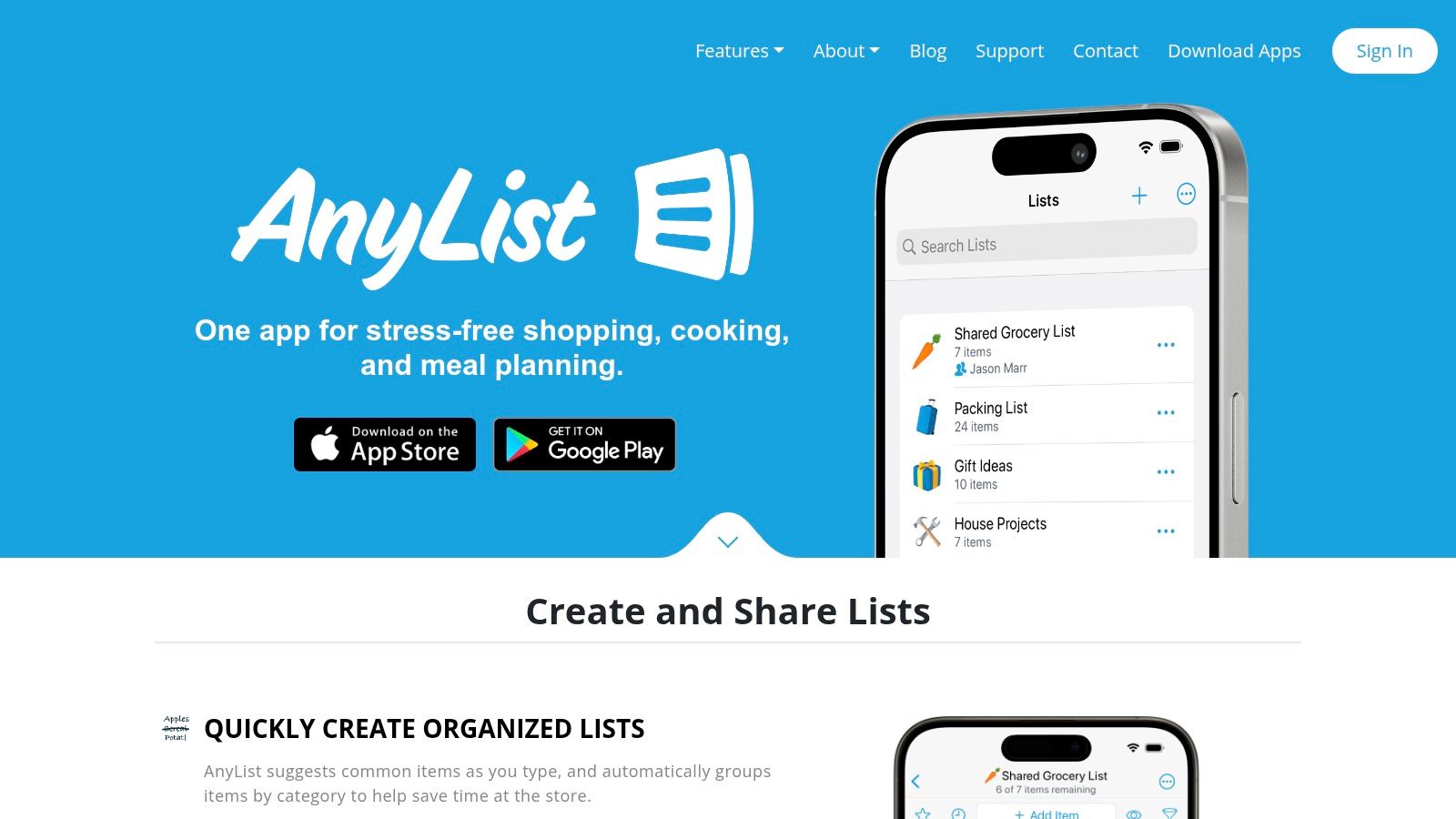
Its strength is in shared household management. Family members can add items to the grocery list in real-time and see the meal plan, making it one of the best meal planning apps for coordinated households. The drag-and-drop calendar is intuitive and syncs with external calendars like iCal and Google Calendar.
Key Features and User Experience
AnyList's interface is clean and functional, focusing on utility over flash. The meal planning calendar is a simple, effective tool for assigning recipes to specific days. While it doesn't generate plans for you or track macros, its seamless integration between recipe saving, meal planning, and grocery shopping is exceptionally well-executed and reliable across all devices.
- Best For: Families and couples who need a master grocery list combined with a simple meal calendar.
- Pricing: Free basic version; AnyList Complete is $9.99/year for an individual or $14.99/year for a family.
- Pros: Excellent grocery list management, very low annual price, easy recipe import and sharing features.
- Cons: No AI meal generation or nutritional tracking, fewer curated meal plans than dedicated apps.
Visit the website: https://www.anylist.com/
11. Prepear
Prepear positions itself as a social and collaborative meal planning app, ideal for users who enjoy discovering and using recipes from their favorite food bloggers. Its core concept revolves around organizing your personal recipes and subscribing to meal plans from content creators, creating a dynamic and community-driven planning experience. The platform excels at making recipes interactive and easy to follow while cooking.
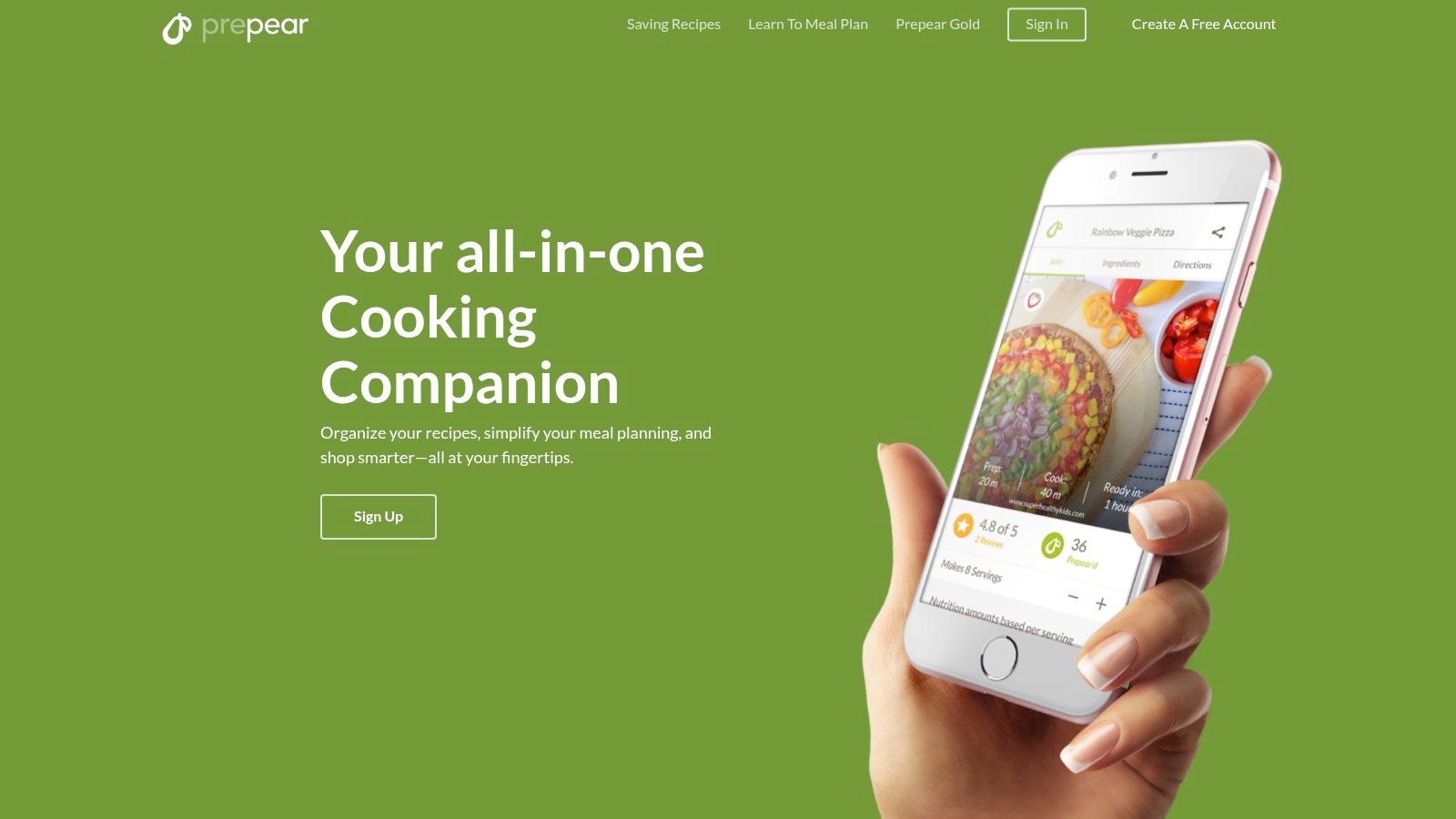
The app allows you to build, save, and reuse your own weekly meal plans or simply adopt a pre-made plan from a food blogger you trust. Its smart grocery list automatically populates from your plan and offers integrated grocery delivery and pickup options where available, bridging the gap between planning and shopping.
Key Features and User Experience
Prepear’s interface is designed for connection and customization. Users can easily import recipes from any website, organize them into collections, and drag-and-drop them into a weekly calendar. The Prepear Gold subscription unlocks premium recipes and meal plans from a curated network of creators, offering endless inspiration.
- Best For: Foodies who follow bloggers and want to use their content for structured meal plans.
- Pricing: Free basic version; Prepear Gold is available for $9.99/month or $99.99/year.
- Pros: Strong integration with creator content, highly customizable and reusable meal plans.
- Cons: Content depth is dependent on the creators you follow; subscription price is higher than some alternatives.
Visit the website: https://www.prepear.com/
12. Forks Over Knives — Forks Meal Planner
The Forks Meal Planner is a specialized tool designed exclusively for those committed to a whole-food, plant-based (WFPB) lifestyle. An extension of the influential Forks Over Knives movement, this app removes the guesswork from vegan eating by delivering weekly meal plans curated by chefs and nutritionists. It focuses on nutrient-dense, unprocessed foods, making it a powerful resource for anyone following this specific dietary path for health or ethical reasons.
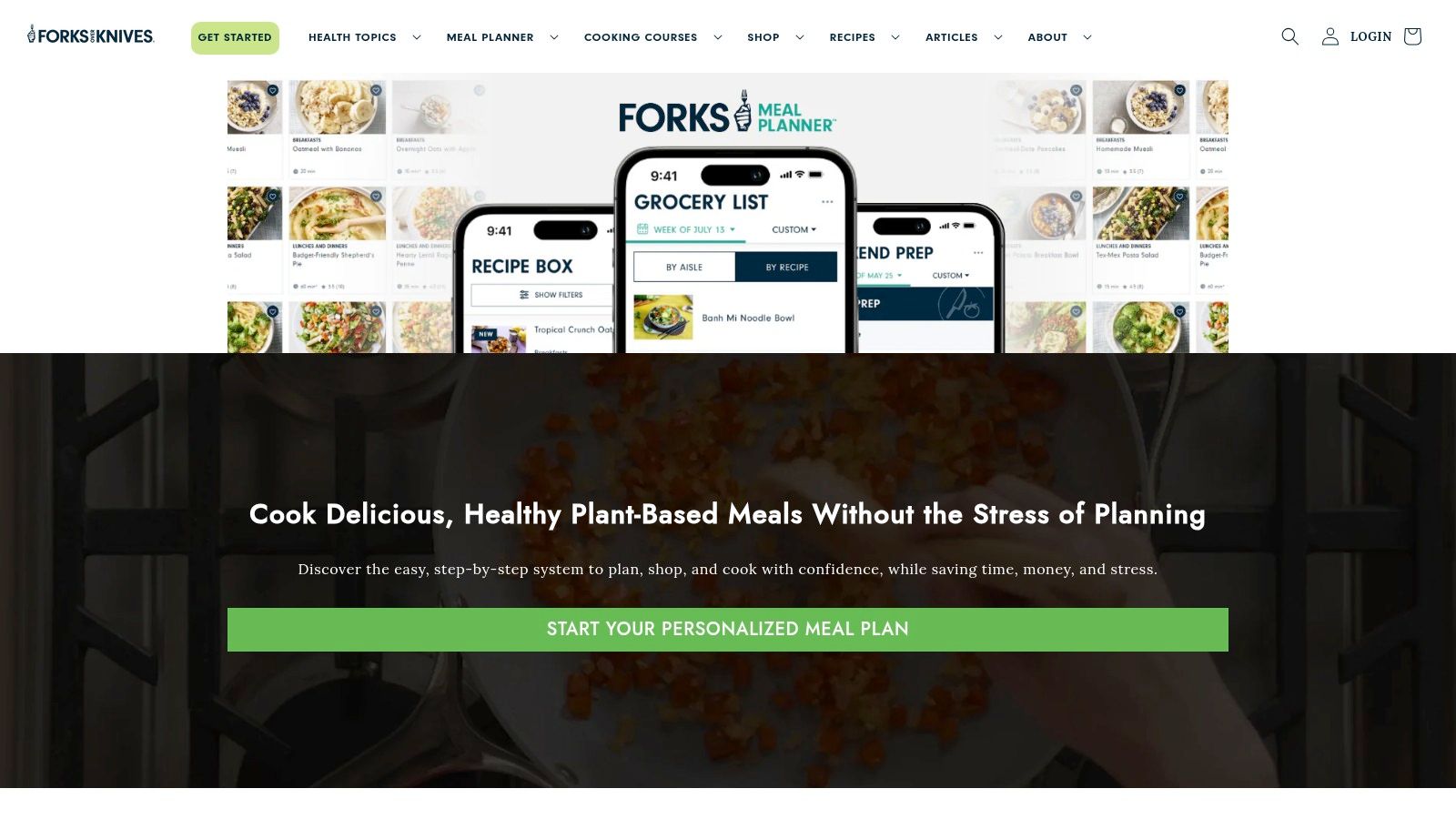
Its standout feature is the emphasis on practical meal prep. Each weekly plan includes a detailed batch-prep guide, showing users how to prepare ingredients in advance to make weekday cooking faster. This approach makes sticking to a WFPB diet more manageable for busy individuals and families.
Finding Your Perfect Meal Planning Partner
Navigating the crowded landscape of meal planning apps can feel as overwhelming as deciding what to eat on a busy Tuesday night. As we've explored, the "best meal planning apps" are not a one-size-fits-all solution. Instead, the ideal tool is the one that aligns perfectly with your unique lifestyle, dietary goals, and cooking habits. The key is to move beyond generic feature lists and identify the platform that genuinely solves your specific kitchen challenges.
Your journey to organized, stress-free meals begins with a clear understanding of your personal needs. Are you a busy professional needing lightning-fast, automated plans? Or are you a home cook who finds joy in meticulously curating a personal recipe collection from across the web? The answer will guide your choice.
Meal planning app vs ChatGPT
Using a general conversational model like ChatGPT to draft a dinner plan seems attractive because it costs nothing extra if you already pay for an LLM subscription. You can type a prompt like "give me five quick weeknight dinners with chicken and broccoli," and it generates a coherent list of ideas in seconds.
Where chatbot plans collapse is at the store. ChatGPT does not maintain a persistent, structured database of your actual pantry contents, local store pricing, or past cooking history unless you manually paste that context into every single prompt. When asked to construct a shopping list, it frequently outputs vague items like "various herbs" or lists ingredients in unhelpful units that don't match standard package sizes. A chatbot meal plan falls apart at the store when you discover it asked for three ounces of fresh dill for a single garnish. It also cannot automatically export items into a clickable Walmart or Instacart cart, nor can it sort ingredients by physical supermarket aisle.
A dedicated meal planning application maintains state across weeks. It remembers that you bought a five-pound bag of flour last Tuesday, groups produce together efficiently, and provides interactive checkboxes on your phone screen while you walk down the aisles. Use ChatGPT to brainstorm creative flavor pairings, but leave multi-day scheduling to specialized software.
Apps that are dead or shutting down
The digital kitchen sector has seen severe contraction over the past two years. If you are reading older reviews, you will inevitably see recommendations for software that no longer exists or will disappear shortly.
Yummly officially ceased all operations in December 2024 after Whirlpool shut down its software division. PlateJoy shuttered its servers during 2025 following years of declining subscriber numbers. Mealime is currently on life support; parent company Albertsons announced it will officially shut down the app on October 21, 2026, forcing users to transition into its retail grocery software. Continuing to pay for or migrate data into these legacy apps is a waste of time. Verify that any platform you adopt in 2026 has an active development team and an operational roadmap before committing your personal recipe collection.
Meal planning apps for families
Managing dinner for two adults and a kid who won't eat fish is a completely different product than tracking macros for a solo fitness cut. Multi-person households need real-time list synchronization, simple recipe substitution, and reliable online grocery delivery integration.
AnyList remains the benchmark for family coordination because it keeps live shopping lists synced across multiple phones without crashing. Plan to Eat lets parents drag familiar, kid-tested recipes onto a shared grid that everyone can view. eMeals allows parents to select crowd-pleasing dinner menus and push every required ingredient directly into an online pickup order, eliminating weekend shopping trips entirely. Until its shut-off date on October 21, Mealime also handles small family portions well. When managing a family, prioritize shared access and fast grocery cart generation over complex nutritional engines.
Frequently asked questions
What is the best meal planning app in 2026?
There is no single best meal planning app for every kitchen because different households have entirely different operational needs. If you want to automatically calculate weekly schedules around strict macro targets, Eat This Much is effective. If you prefer importing and organizing your own favorite web recipes, Paprika or Plan to Eat are far better choices. For simple shared family shopping lists, AnyList handles daily logistics without unnecessary friction.
Can ChatGPT replace a meal planning app?
ChatGPT can quickly generate meal ideas and draft single recipes, but it struggles to replace dedicated software for full weekly management. It lacks a permanent database to keep track of pantry inventory across weeks, cannot group ingredients accurately by supermarket aisle, and fails to export items directly into online grocery shopping carts. Use it for creative ideas, but rely on specialized apps for actual shopping and scheduling.
Do meal planning apps make a grocery list?
Yes, most dedicated platforms automatically aggregate ingredients from your selected meals into a single shopping list. Higher-quality apps organize these items by supermarket aisle so you aren't crisscrossing the store. A common annoyance in poorly designed apps is an aisle list that still dumps "spices" as one generic blob rather than breaking down specific jars like cumin or smoked paprika, so test list output before committing to a paid annual subscription.
What’s the best free meal planning app?
Samsung Food offers the most feature-complete free tier for clipping recipes and compiling shopping lists. AnyList also provides an excellent free tier for basic grocery list sharing across household devices. If you want automated weekly scheduling based on strict dietary rules, AI Meal Planner offers a basic starter option, though generating a full week is a different job than this roundup's manual recipe organizers.
Which apps help with meal planning for families?
AnyList and Plan to Eat are outstanding choices for families because they support shared multi-user accounts and real-time list synchronization. eMeals is also excellent for busy households, allowing parents to pick family-friendly weekly menus and send ingredients directly to store pickup services like Walmart or Instacart, saving hours of manual shopping time each week. Mealime works well too, until its shutdown on October 21.
What is the 3-3-3 rule for meal prep?
The 3-3-3 rule is a simple framework designed to streamline batch cooking without creating overly repetitive meals. You prepare three protein sources, three complex carbohydrates, and three vegetables during your weekend prep session. Throughout the week, you mix and match these pre-cooked components with different sauces and seasonings to create diverse, balanced dinners in under ten minutes without eating identical meals every night.
What happened to Mealime, Yummly, and PlateJoy?
Yummly permanently shut down its servers in December 2024 after Whirlpool sunsetted the brand. PlateJoy quietly closed operations during 2025. Mealime is scheduled to officially shut down on October 21, 2026, as owner Albertsons transitions its features into its main retail digital ecosystem. Users of these legacy platforms should export their saved recipes and move to stable alternatives like Paprika or Plan to Eat.
Stop overthinking software features based on marketing promises. Pick two apps from this list that match your operational style, download them today, and cook from them over the next seven days. Keep the one that is still open on your kitchen counter next Thursday.
AI-powered nutrition
Get Your Personalized Meal Plan
AI creates the perfect meals for your goals, lifestyle, and taste.
Start Your Journej