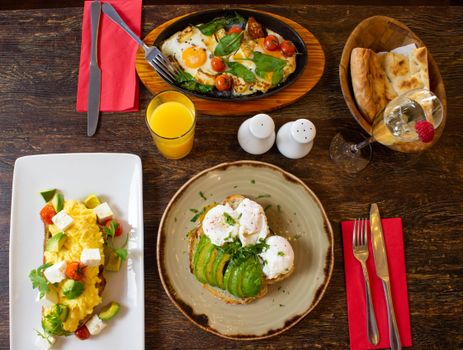
Soft, creamy scrambled eggs with wilted spinach and salty feta. 26g protein, 280 kcal. A 5-minute breakfast with restaurant technique.
Ingredients
-
3 large
Eggs
-
40g
Fresh spinach
-
30g
Feta cheese
-
1 tsp
Butter
-
to taste
Salt & pepper
-
1 tbsp
Fresh chives
Instructions
1
Wilt spinach
Melt butter in a non-stick pan over medium heat. Add spinach, cook 1 minute until just wilted. Don't overcook — it should still be bright green.
2
Add eggs
Crack eggs directly into the pan over the spinach. Using a spatula, gently stir in large, slow strokes. The key to creamy scrambled eggs is low heat and patience.
3
Finish off-heat
When eggs are still slightly wet and glossy, remove from heat — residual heat finishes the cooking. Crumble feta over the top, add chives, salt, and pepper.
Why This Scrambled Eggs Recipe is a Protein Powerhouse
This Scrambled Eggs with Spinach & Feta elevates a classic breakfast into a nutrient-dense, satisfying meal. At just 280 calories with 26g of protein, it's the perfect way to start your day—whether you're building muscle, losing weight, or simply want a breakfast that keeps you full until lunch.
The method used here ensures a creamy texture without overcooking the eggs, which is the key to achieving that soft, luxurious mouthfeel. The low and slow cooking technique creates large, fluffy curds that are both decadent and protein-packed. Combined with iron-rich spinach and tangy feta cheese, this dish delivers complete nutrition in under 10 minutes.
The Science of Perfect Scrambled Eggs
Scrambled eggs seem simple, but the technique separates rubbery, dry curds from restaurant-quality results. Here's what happens at the molecular level:
Protein coagulation: Eggs contain two types of protein—albumin (in whites) and various proteins in yolks. As you heat eggs, these proteins unfold and bond together, creating the solid structure we recognize as cooked egg. The key is controlling how tightly these proteins bond.
Low heat = loose bonds: Cooking eggs slowly over low heat allows proteins to coagulate gently, trapping moisture between loose protein networks. The result is soft, creamy curds that practically melt in your mouth.
High heat = tight bonds: Rapid heating causes proteins to squeeze together tightly, expelling moisture. This is why overcooked scrambled eggs become rubbery and weep liquid on the plate.
The takeaway: Patience is everything. Keep the heat at medium-low and stir continuously. The eggs should take 4-5 minutes to cook—if they're done in 2 minutes, your heat is too high.
Why Eggs Are a Nutritional Superstar
Eggs have shed their outdated reputation as cholesterol villains. Modern nutrition science recognizes them as one of the most nutrient-dense foods available:
- Complete protein: Each egg provides 6-7g of protein containing all nine essential amino acids in optimal ratios. The biological value of egg protein (a measure of how well your body can use it) is 100—the highest of any food
- Choline: Eggs are one of the best dietary sources of choline, essential for brain function, liver health, and cell membrane integrity. Most people don't get enough choline, and two eggs provide over 50% of daily needs
- Vitamin D: One of the few foods naturally containing vitamin D, which supports bone health and immune function
- B vitamins: Rich in B2 (riboflavin), B12, and B5—all crucial for energy metabolism
- Selenium: A powerful antioxidant that supports thyroid function
- Lutein and zeaxanthin: Antioxidants concentrated in egg yolks that protect eye health and may reduce macular degeneration risk
The cholesterol question: Research now shows that dietary cholesterol has minimal impact on blood cholesterol for most people. The liver adjusts its own cholesterol production based on dietary intake. For most healthy adults, eating 1-3 eggs daily is completely safe and beneficial.
The Power of Spinach in Your Breakfast
Adding spinach transforms this dish from simple to supercharged:
- Iron: Spinach is famously iron-rich, supporting oxygen transport in blood. Cooking spinach and eating it with the fat from eggs actually improves iron absorption
- Vitamin K: A single cup of spinach provides over 100% of daily vitamin K needs, essential for blood clotting and bone health
- Folate: Critical for cell division and DNA synthesis—especially important for women of childbearing age
- Magnesium: Supports muscle function, nerve transmission, and over 300 enzymatic reactions in the body
- Volume without calories: A generous handful of spinach adds just 7 calories but provides bulk, fiber, and visual appeal
Fresh vs. frozen: Both work well in this recipe. Fresh spinach has a more delicate texture; frozen is more convenient and often more nutritious (flash-frozen at peak freshness). If using frozen, thaw and squeeze out excess water before adding to eggs.
Recipe Notes & Tips
- Use fresh spinach and quality feta for the best flavor.
- Adjust the seasoning to your preference — some might want a bit more salt due to the feta's saltiness.
- For added texture, try folding in diced tomatoes or bell peppers just before the eggs finish cooking.
- Experiment with fresh herbs like dill or parsley for a different flavor profile.
- Consider pairing with a side of avocado for healthy fats.
Variations
- Tuscany Twist: Add sun-dried tomatoes and oregano for an Italian flair.
- Mexican Style: Incorporate diced jalapeños and serve with a side of salsa.
- Herbed Delight: Mix in basil and serve with a slice of toasted focaccia.
Common Mistakes to Avoid
- Overcooking: Scrambled eggs should be removed from heat while still slightly wet. This ensures they stay creamy instead of becoming dry and rubbery.
- Using too high heat: Always cook on low to medium to avoid tough eggs.
- Not seasoning early: It’s best to season the eggs before cooking to enhance their flavor.
How to Store
Store in an airtight container in the refrigerator for up to 3-4 days. Reheat gently in the microwave or on the stovetop.
Feta Cheese: More Than Just Flavor
Feta adds a salty, tangy punch that elevates the eggs, but it also contributes nutritionally:
- Protein boost: An additional 4g of protein per 30g serving of feta
- Calcium: Important for bone health and muscle function
- Probiotics: Traditional feta contains beneficial bacteria that support gut health (look for "live cultures" on the label)
- Lower fat than many cheeses: At 6g fat per 30g, feta is lighter than cheddar (9g) or brie (8g)
- Bold flavor means less needed: A small amount delivers significant taste impact, so you naturally use less cheese overall
Substitutions: Goat cheese offers similar tanginess with a creamier texture. Cottage cheese works for those who prefer milder flavor and want even more protein. For dairy-free options, crumbled tofu seasoned with lemon juice and salt mimics feta's texture.
Perfecting Your Scrambled Egg Technique
Follow these steps for consistently perfect results:
1. Whisk thoroughly: Beat the eggs until the yolks and whites are completely combined—you shouldn't see any streaks. This ensures even cooking and consistent texture throughout.
2. Use quality fat: Butter adds flavor and helps prevent sticking. For dairy-free cooking, ghee or olive oil works well. Avoid cooking sprays—they don't provide enough fat for proper texture.
3. Add eggs to a warm (not hot) pan: The pan should be warm enough that a drop of water sizzles gently, not violently. If butter browns immediately, the pan is too hot.
4. Stir constantly: Use a rubber spatula to push eggs from the edges toward the center, allowing uncooked egg to flow to the pan surface. This creates those large, soft curds.
5. Remove from heat before fully set: Eggs continue cooking from residual heat. Take them off the burner when they still look slightly wet—they'll finish cooking on the plate.
6. Add spinach and feta at the right time: Wilt the spinach briefly in the pan first (30 seconds), then add eggs. Crumble feta during the last 30 seconds of cooking so it softens but doesn't fully melt.
Fitting Scrambled Eggs into Your Nutrition Plan
For weight loss: At 280 calories with 26g of protein, this breakfast supports satiety without excessive calories. The high protein-to-calorie ratio (37% of calories from protein) triggers appetite-suppressing hormones that keep you satisfied for hours.
For muscle building: Add an extra egg or two to boost protein to 32-38g per serving. Pair with whole-grain toast for complex carbohydrates that support training performance.
For keto/low-carb: At just 4g of carbs, this recipe is perfectly keto-compliant. Add extra feta or a side of avocado to increase healthy fats.
For intermittent fasting: This protein-rich breakfast is ideal for breaking a fast—it doesn't spike blood sugar dramatically and provides sustained energy.
Meal Prep and Make-Ahead Options
While scrambled eggs are best fresh, you can streamline your mornings:
Prep ingredients ahead: Wash and chop spinach, crumble feta, and store separately in the fridge. Pre-cracking eggs into a container and whisking saves time but use within 24 hours.
Batch cooking (with caveats): You can make a larger batch of scrambled eggs and refrigerate for 2-3 days. The texture won't be quite as creamy when reheated, but it's still good. Reheat gently in a pan with a splash of water or in the microwave at 50% power.
Egg muffins alternative: For true grab-and-go convenience, pour the egg-spinach-feta mixture into muffin tins and bake at 175°C for 20 minutes. These "egg bites" keep for 5 days refrigerated and reheat beautifully.
Common Scrambled Egg Mistakes
- Too much heat: The number one mistake. If your eggs are done in 2 minutes, they're overcooked. Low and slow is the only way
- Adding milk: Contrary to popular belief, milk doesn't make eggs creamier—it dilutes them. The creaminess comes from technique, not liquid
- Seasoning too early: Salt draws moisture from eggs if added before cooking. Season at the end for best texture
- Wrong pan: Nonstick is essential for scrambled eggs unless you're using cast iron that's impeccably seasoned. Stainless steel creates sticking nightmares
- Watery spinach: Adding dripping wet spinach releases water into the eggs, creating a soggy mess. Dry spinach thoroughly or wilt it first and squeeze out liquid
Variations to Keep Breakfast Interesting
Once you've mastered the base recipe, experiment with these combinations:
- Mediterranean: Sun-dried tomatoes, olives, fresh oregano, and goat cheese
- Mexican: Salsa, black beans, cheddar, cilantro, and a dash of cumin
- Smoked salmon: Cream cheese, capers, dill, and smoked salmon added after cooking
- Italian: Roasted red peppers, basil, and Parmesan
- Mushroom and herb: Sautéed mushrooms, thyme, and gruyère
Each variation maintains the protein-rich foundation while offering completely different flavor profiles for variety throughout the week.
Frequently Asked Questions
What's the secret to creamy scrambled eggs?
Low heat and removing them from the pan while still slightly wet. Eggs continue cooking after you stop. Most people overcook scrambled eggs on high heat, resulting in dry, rubbery curds instead of soft, creamy ones.
Can I add more protein?
Add 2 strips of turkey bacon (6g protein) or serve on whole-grain toast with a schmear of cottage cheese for an extra 10g.
Can I use egg whites instead of whole eggs?
You can use 2 whole eggs plus 2 egg whites for a lighter version with less fat but similar protein. Avoid all egg whites — you'll lose the rich, creamy texture that makes this dish special. The yolks also provide essential vitamins A, D, and choline.
What can I use instead of feta?
Crumbled goat cheese gives a similar tangy creaminess. For a milder flavor, try fresh ricotta dolloped on top right before serving. Parmesan shavings work well too but give a nuttier, saltier profile.
How do I store leftover scrambled eggs?
Scrambled eggs keep in the fridge for up to 2 days in an airtight container. Reheat gently in a pan over low heat with a splash of water to restore moisture. Avoid the microwave if possible — it tends to make them rubbery.
Did you make this recipe?
Share a picture on Instagram with #aimealplan