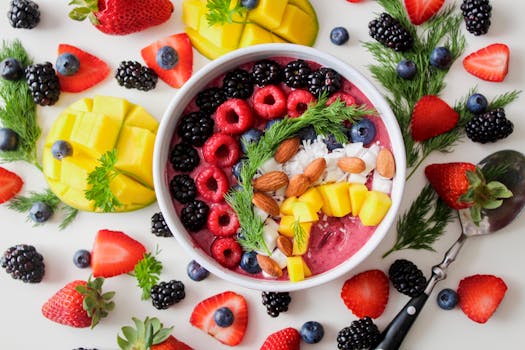
What is a cottage cheese protein bowl?
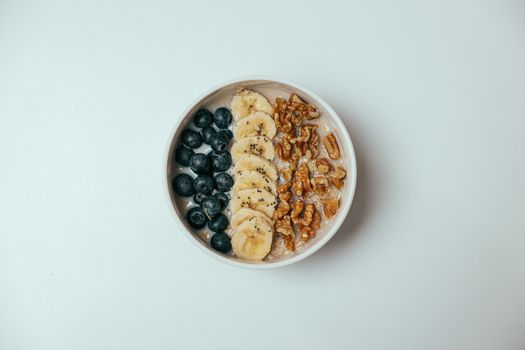
A cottage cheese protein bowl on this page is a no-cook breakfast built on 250g of 2% cottage cheese with banana, blueberries, almonds, chia, cinnamon, and a tablespoon of honey — about 380 calories and 35g protein in five minutes. It is the heavier fruit bowl. It is not the 200g savory-or-sweet template, and it is not a blender smoothie.
People search “protein bowl” because 28g did not feel like a meal, or because they want fruit breakfast without dropping to Greek-yogurt protein numbers. It fails when the scoop is still ½ cup from the nutrition panel, when honey is poured like syrup, or when the bowl sits dressed until noon.
Use cottage cheese bowl for the lighter 300-calorie / 28g version. Use this URL when you want the 35g hit. Cooked lunches with the same dairy: sweet potato and ground beef.
Nutrition and macros by portion
The Nutrition Facts label is this bowl as written: 380 calories, 35g protein, 36g carbs, 12g fat. Scale the cheese; keep toppings in line.
| Portion | Cottage cheese | Toppings | Calories | Protein | Carbs | Fat |
|---|---|---|---|---|---|---|
| Snack | 125 g | Half fruit, almonds, honey | 190 | 18g | 18g | 6g |
| This recipe | 250 g | As written | 380 | 35g | 36g | 12g |
| Hungry | 300 g | Same toppings | 425 | 41g | 38g | 13g |
Hungry adds cheese, not a second banana, so the extra calories are mostly protein. Honey is one tablespoon (~60 calories). Almonds are 15g, not a handful from the bag. Brand tubs vary; 11g protein per 100g makes this bowl closer to 28g from cheese before fruit and nuts. That is still the bigger scoop than the 200g page.
Why 250 grams, not 200
200g of cottage cheese is a solid breakfast. 250g is how you land near 35g of protein without powder when the fruit and honey are already on the spoon. The banana and tablespoon of honey are why this is 380 calories instead of 300. If you want 35g at 300 calories, you would need more cheese and less fruit — a different bowl. Do not strip this card and keep the name; use the lighter URL.
2% cheese is the default so 250g does not taste like water and does not jump to 450 calories. Full-fat is fine if you count it. Fat-free under banana often needs blending and a pinch of salt or it tastes thin.
Fruit, honey, and crunch
Blueberries (or any berry at 80g) plus half a banana is the volume. Whole banana plus a tablespoon of honey plus granola is a different breakfast. Chia at a teaspoon is texture, not a protein source. Almonds are the crunch — 15g. Granola on top of almonds is two crunches; pick one if you care about the label.
Cinnamon and a pinch of salt make the honey taste like enough. More honey will not fix a flat bowl. Frozen berries are a weekday cheat. They weep; eat now. Drain whey so you are not watering fruit on purpose.
Protein bowl vs cottage cheese bowl
Same food group, two recipes. The other page is the two-way method (sweet berries-walnut or savory tomato) at 200g. This page is one lane: bigger cheese, banana, more honey, 35g protein. If you land on both URLs in search, look at the grams. 200 vs 250 is the fork.
Savory toppings do not belong on this fruit card. Taco meat does not belong here. Those are the skillet and the lighter bowl’s savory steps. Mixing every cottage-cheese idea into one URL is how pages cannibalize each other and how users bounce.
How to meal-prep cottage cheese protein bowls
Portion 250g of cheese into containers. Berries washed. Banana sliced when you eat or it browns. Almonds in a jar. Morning: dump, honey, cinnamon. Five minutes, no pan. A Sunday-night assembled bowl is not meal prep; it is soggy cereal on dairy.
Opened cottage cheese 4–5 days. After day two, stir whey in the tub. Drain only into the serving bowl if a puddle is sitting on that scoop. Serve cold. Do not microwave. If you want contrast, you wanted toast or pancakes, not a hot protein bowl.
Banana, chia, and the 35-gram claim
Half a medium banana is roughly 50–60g. A large banana half can be 80g. Weigh it once if you track. The banana is carbohydrate and potassium, not protein. Chia at a teaspoon is about 20 calories and a little gel if it sits — which is why this bowl is eaten now, not left to become pudding unless you want that. A tablespoon of chia is a different texture and a different calorie line.
Almonds at 15g are about a tablespoon of slices, not a palm. Whole almonds change the crunch and the count if you guess. Honey is a tablespoon on this page and a teaspoon on the lighter bowl — that single difference plus 50g more cheese is a lot of why 300 became 380 and 28g became 35g. If you cut honey to a teaspoon to “make it healthier” but keep the name, you are closer to the other URL. Use that URL.
Blueberries can be fresh or frozen. Strawberries need slicing or they sit like wet hats. Mango and peach work at 80g. Dried fruit is a sugar bomb compared with 80g of berries; if you use raisins, you are not on this label. Cinnamon is a pinch. It is not a tablespoon of sugar-and-cinnamon dust from a shaker that also contains sugar.
How 250g becomes 35g of protein
The 35g claim is mostly the cheese. 250g of 2% cottage cheese at ~12g protein per 100g is about 30g before toppings. Two eggs would add more, but this is a no-cook fruit bowl — almonds and chia add a couple of grams, not a scoop of powder. If your tub is 11g per 100g, the bowl lands nearer 30–32g total. That is still the heavier breakfast next to the 200g / 28g page. It is not 35g if you scooped ½ cup (~110g) and kept the banana and honey.
250g is a packed cup after you drain the whey, not the ½-cup line on the lid. Weigh it once. Cups of cottage cheese swing with how much liquid you left in the scoop. The Nutrition Facts assume 250g drained 2%, half a banana (~50–60g), 80g blueberries, 15g almonds, 1 tsp chia, 1 tbsp honey. Skip the honey and you are closer to 320 calories; skip 50g of cheese and you are on the other URL.
Protein bowl vs yogurt parfait vs overnight oats
A Greek yogurt parfait at the same calorie count is usually lower protein unless you use 0% yogurt in a big cup and still add granola. Granola is the trap: it looks like the almond sprinkle and eats like a bowl of cereal. Overnight oats with a spoon of cottage cheese mixed in is a different breakfast — cooked starch, fridge time, and a different carb line. This page stays cold cheese, fruit, crunch, five minutes, no jar to soak.
Do not blend this into a smoothie and quote 35g. Blending 250g of cheese with milk and a banana is a drink with more volume and more sugar if you add juice. The protein bowl is eaten with a spoon so the almonds stay crunch and the honey stays a tablespoon. If you wanted the lighter sweet-or-savory template, that is the cottage cheese bowl. If you wanted bread, that is toast.
Frozen berries, granola, and the 380-calorie line
Frozen blueberries at 80g are fine if you eat now — they thaw into a jam swirl on the cheese. Frozen banana is icy and watery; use fresh. Granola on top of 15g almonds is two crunches. Pick almonds. A 40g granola dump can add 150–180 calories and still almost no protein. Peanut butter (1 tbsp) instead of almonds is a listed variation: calories jump, protein barely moves. That is allowed if you count it.
The 35g number dies if the scoop is ½ cup. It also dies if the tub is a dessert cup with 8g protein per serving. Buy a large 2% tub, weigh 250g, drain, toppings as written. If 35g is still a snack, a boiled egg on the side — not a second tablespoon of honey, not a scoop of powder unless you want it to taste like the tub.
Eat it now or it becomes pudding
Chia at a teaspoon will gel if the bowl sits. That is a different texture. This card is spoon-and-go. Banana browns, berries bleed, almonds soften. Portion cheese in boxes, fruit and nuts separate, honey at the table. Cinnamon plus a pinch of salt under the honey beats more honey if it tastes flat. Do not microwave. If you wanted cooked dairy, that is pancakes or toast.
Brand tubs, chia gel, and the side egg
If the lid says 11g protein per 100g, 250g is ~28g from cheese before almonds. You still beat a yogurt parfait. You do not hit 35g without a slightly better tub or the egg on the side. Chia at 1 tsp is texture, not 35g. A tablespoon of chia plus sitting in the fridge is pudding — different breakfast, extra calories. Cinnamon is a pinch of spice, not a sugar-cinnamon shaker. Eat immediately. This is the heavy fruit URL; the light one is 200g.
Strawberries need slicing or they sit like wet hats. Mango or peach at 80g swap blueberries. Dried fruit is a sugar bomb next to 80g of berries. This bowl is eaten cold with a spoon. Nothing to cook. Heat ruins the cheese.