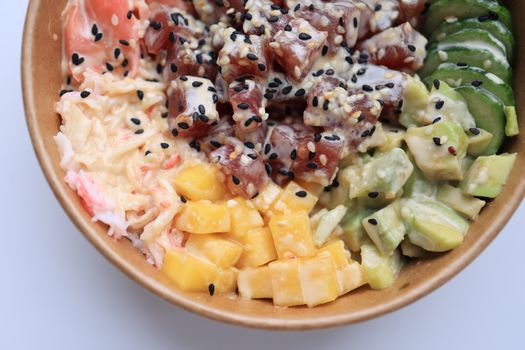
Fresh ahi tuna poke bowl with sushi rice, avocado, cucumber, and sesame-soy dressing. 40g protein, restaurant-quality at home.
Ingredients
-
300g
Sushi-grade ahi tuna
-
140g (dry)
Sushi rice
-
2 tbsp
Soy sauce
-
1 tbsp
Sesame oil
-
1 small
Avocado
-
½ medium
Cucumber
-
60g
Edamame (shelled)
-
1 tbsp
Rice vinegar
-
1 tsp
Sesame seeds
-
1 stalk
Green onion
Instructions
1
Cook sushi rice
Cook rice, then season with rice vinegar and a pinch of sugar while hot. Spread on a plate to cool slightly — it should be warm, not hot.
2
Cube the tuna
Cut sushi-grade tuna into 1.5cm cubes. Toss with soy sauce and sesame oil. Let marinate while you prep the toppings.
3
Prep toppings
Slice avocado, dice cucumber, thaw edamame if frozen. Slice green onion.
4
Assemble bowls
Divide seasoned rice between bowls. Arrange marinated tuna, avocado, cucumber, and edamame in sections. Sprinkle sesame seeds and green onion.
Why This Tuna Poke Bowl is the Ultimate Healthy Meal
This Tuna Poke Bowl brings the vibrant flavors of Hawaii right to your kitchen. With fresh, sushi-grade ahi tuna, perfectly seasoned sushi rice, and a delightful sesame-soy dressing, this dish combines convenience and exceptional nutrition. At 520 calories with 40g of protein, it's a powerhouse meal that supports muscle building, weight management, and overall wellness.
The key to achieving restaurant-quality poke at home lies in selecting the freshest ingredients, balancing the marinated tuna with creamy avocado and crunchy cucumber, and allowing the rice to cool just enough to create the perfect base for your toppings.
The Nutritional Power of Ahi Tuna
Ahi tuna (yellowfin) is one of the most nutrient-dense proteins available. Here's what makes it exceptional:
- Complete protein: Ahi tuna provides all nine essential amino acids in highly bioavailable form. The 40g of protein in this bowl exceeds the leucine threshold needed to trigger muscle protein synthesis
- Omega-3 fatty acids: While leaner than salmon, ahi tuna still delivers heart-healthy omega-3s that reduce inflammation and support brain function
- Selenium powerhouse: A single serving provides over 100% of your daily selenium needs—a mineral crucial for thyroid function and antioxidant defense
- Vitamin B12: Essential for nerve function and red blood cell production, tuna is one of the best dietary sources of B12
- Low mercury option: Compared to larger tuna species (like bigeye), yellowfin has lower mercury accumulation, making it safer for regular consumption
Sourcing Sushi-Grade Tuna
The term "sushi-grade" isn't regulated by the FDA, but it generally indicates fish that has been frozen to kill parasites and is safe to eat raw. Here's how to find quality tuna:
Where to buy: Asian grocery stores, fish markets, and high-end supermarkets with dedicated sushi counters are your best options. Whole Foods, H Mart, and local Japanese markets typically carry sushi-grade fish. Some online retailers also ship flash-frozen sushi-grade tuna directly to your door.
What to look for: Fresh ahi tuna should be deep red or burgundy in color with a clean, ocean-like smell—never fishy. The flesh should be firm and spring back when pressed. Avoid any pieces with brown spots or a slimy texture.
Storage: Use fresh sushi-grade tuna within 24 hours of purchase. If buying frozen, thaw overnight in the refrigerator (not at room temperature) and use the same day you thaw it.
The Art of Perfect Poke Marinade
Traditional Hawaiian poke relies on a simple but perfectly balanced marinade. The foundation is soy sauce and sesame oil, but small additions make a significant difference:
- Low-sodium soy sauce: Regular soy sauce can overpower the delicate tuna. Low-sodium allows you to control saltiness while adding umami depth
- Toasted sesame oil: Use toasted (dark) sesame oil, not light sesame oil. The toasted variety has an intense, nutty flavor that defines poke
- Rice vinegar: A small splash adds brightness that balances the richness of the oil and fish
- Fresh ginger and garlic: Microplane these for maximum flavor extraction without chunky pieces
- Scallions: Both the white and green parts add freshness and mild onion flavor
Timing matters: Unlike ceviche (where acid "cooks" the fish), poke should be marinated for just 5-15 minutes. Longer marination makes the texture mushy and the color dull.
Recipe Notes & Tips
- Use a sharp knife when cutting the tuna for clean, even cubes.
- Let rice cool slightly before assembling to maintain the texture.
- Garnish with additional sesame seeds or sliced chilies for extra flavor.
- If using frozen edamame, allow ample time for thawing for best texture.
- Try to prepare the ingredients just before serving for maximum freshness.
Variations
- Spicy Tuna Poke Bowl: Add sriracha or chili oil to the marinade for a kick.
- Veggie Poke Bowl: Replace tuna with marinated tofu for a vegetarian option.
- Citrus Poke Bowl: Incorporate citrus segments like mandarin oranges for added freshness.
Common Mistakes to Avoid
- Over-marinating the tuna: Keep marinating time short to avoid a mushy texture.
- Using low-quality fish: Always opt for sushi-grade tuna for safety and flavor.
- Skipping the rice seasoning: Properly seasoning the rice elevates the dish significantly.
How to Store
To maintain freshness, store marinated raw tuna and rice separately in the fridge. Consume within 24 hours for best quality.
Building the Perfect Poke Bowl
A great poke bowl is about balance—textures, flavors, and visual appeal all matter. Here's how to construct yours:
The base (rice): Use short-grain sushi rice, not long-grain. The stickier texture helps hold toppings in place. Season with rice vinegar, a pinch of sugar, and salt while still warm. Let it cool to room temperature before assembling—hot rice will "cook" the raw fish.
The protein layer: Cube your marinated tuna into approximately 2cm pieces. Larger cubes showcase the fish's texture; smaller pieces distribute more evenly throughout the bowl.
The creamy element: Sliced avocado adds healthy monounsaturated fats and creates a rich counterpoint to the lean fish. For best results, slice it just before serving to prevent browning.
The crunch: Cucumber, radish, or edamame add textural contrast. Thinly sliced cucumber stays crisp throughout the meal.
The toppings: Finish with sesame seeds (toasted for more flavor), sliced scallions, nori strips, and a drizzle of sriracha mayo if you enjoy heat.
Poke Bowl for Fitness Goals
This poke bowl fits remarkably well into various nutrition strategies:
For muscle building: At 40g of protein and 520 calories, this bowl supports muscle protein synthesis post-workout. The carbohydrates from rice help replenish glycogen stores after training. For additional protein, add an extra 50g of tuna or a soft-boiled egg.
For weight loss: The high protein content increases satiety—you'll feel full for 4-5 hours after eating. To reduce calories, halve the rice portion and add extra cucumber and greens. This modification drops the bowl to approximately 380 calories while maintaining 35g+ protein.
For low-carb eating: Replace the rice entirely with cauliflower rice or a bed of mixed greens. The tuna, avocado, and vegetables work beautifully without grains, dropping carbs to under 15g per serving.
Post-workout timing: The combination of fast-digesting rice carbohydrates plus high-quality protein makes this ideal for eating within 1-2 hours after exercise. The insulin spike from carbs helps shuttle amino acids into muscle cells more efficiently.
Meal Prep and Storage Considerations
While poke is best enjoyed fresh, you can streamline weeknight preparation:
What to prep ahead: Cook rice up to 3 days in advance and store refrigerated. Prepare the marinade (without the tuna) and store in a jar. Slice cucumber and prep toppings. On serving day, cube the tuna, toss with marinade, and assemble—total active time drops to under 10 minutes.
What NOT to prep ahead: Never marinate tuna in advance. The acid and salt will cure the fish, changing its texture dramatically. Always add tuna to marinade just before serving.
Leftover fish: If you have leftover marinated tuna, consume within 24 hours. You can briefly sear it in a hot pan to create a different dish—tataki-style tuna with the same flavors.
Common Poke Bowl Mistakes to Avoid
- Using low-quality fish: Non-sushi-grade tuna may contain parasites and lacks the clean flavor of properly handled fish. Never substitute regular grocery store tuna
- Over-marinating: More than 15 minutes in the marinade turns silky tuna into a mushy, overly salty mess
- Hot rice: Assembling the bowl with hot rice partially cooks the fish's outer layer, turning it gray and altering the texture
- Skipping the sesame oil: Toasted sesame oil is non-negotiable—it's what makes poke taste like poke. Regular vegetable oil won't deliver the same flavor
- Overcrowding toppings: Each element should be visible and accessible. Too many toppings create muddy flavors and make eating awkward
Understanding Hawaiian Poke Traditions
Poke (pronounced "poh-kay") means "to slice" or "cut crosswise" in Hawaiian. Traditional Hawaiian poke was simple—raw reef fish seasoned with sea salt, seaweed, and roasted kukui nuts. Japanese immigrants added soy sauce and sesame oil in the 20th century, creating the style most popular today.
Modern mainland poke bowls often include elements that would puzzle Hawaiian locals—cream cheese, mango, spicy mayo, and elaborate garnishes. While delicious in their own right, they're fusion interpretations rather than traditional preparations.
This recipe strikes a balance: respecting the essential simplicity of traditional poke (quality fish, clean marinade, minimal interference) while adapting to mainland ingredients and meal-prep realities.
Frequently Asked Questions
Where do I buy sushi-grade tuna?
Look for "sushi-grade" or "sashimi-grade" at fish counters, Japanese grocery stores, or online fish markets. The label means the fish was flash-frozen to kill parasites, making it safe to eat raw.
Can I use canned tuna instead?
For a budget version, yes — use high-quality canned tuna packed in water or olive oil. The flavor and texture are different from raw, but it's still a healthy, protein-packed bowl. Just skip the soy sauce marinade and season the canned tuna directly.
Is poke healthy?
Very! Raw tuna retains all its omega-3 fatty acids and nutrients (cooking destroys some). Combined with fiber from edamame, healthy fats from avocado, and complex carbs from rice, it's one of the most nutritionally complete meals you can eat.
How long does poke last in the fridge?
Marinated raw tuna should be eaten within 24 hours for best quality and food safety. Keep the fish and rice stored separately — assemble bowls fresh to prevent the rice from absorbing too much soy sauce.
Can I make poke without rice for a low-carb version?
Absolutely. Serve the marinated tuna over a bed of mixed greens, spiralized cucumber, or cauliflower rice. This cuts about 200 calories and 45g carbs per serving while keeping all the protein and healthy fats.
Did you make this recipe?
Share a picture on Instagram with #aimealplan