What is lemon butter salmon?
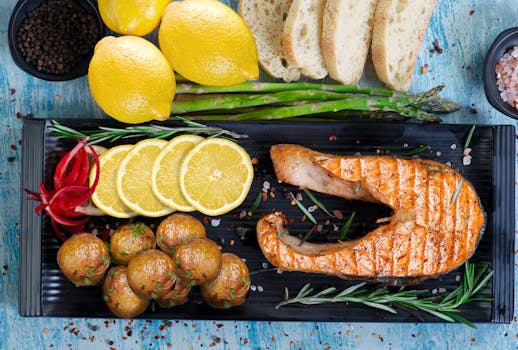
Lemon butter salmon on this page is two 150g skin-on fillets, pan-seared until the skin crisps, finished with 2 tablespoons of butter, garlic, and fresh lemon juice — about 420 calories and 38g protein per serving. It is a 15-minute dinner that tastes like a restaurant plate without the restaurant markup. It is not poached salmon in a cream sauce.
If you want salmon in a grain bowl with avocado, that is the salmon bowl. If you want cold flaked salmon on greens, that is salmon salad. This URL is hot, crispy-skin, butter-basted salmon with lemon — the simplest high-protein fish dinner you can make.
Nutrition and macros by portion
The label is one of two servings: 420 calories, 38g protein, 2g carbs, 28g fat.
| Portion | Adjustment | Calories | Protein | Carbs | Fat |
|---|---|---|---|---|---|
| Lighter | 1 tbsp butter instead of 2 | 370 | 38g | 2g | 23g |
| This serving | As written | 420 | 38g | 2g | 28g |
| Hungry | 200g fillet instead of 150g | 520 | 50g | 2g | 32g |
The fat comes from the salmon itself (omega-3 rich) plus the butter. If you are tracking saturated fat, use 1 tbsp butter and finish with olive oil instead. The protein is all salmon — 150g cooked fillet delivers roughly 38g. This makes lemon butter salmon one of the most protein-dense dinners you can prepare in under 15 minutes.
Crispy skin is the whole point
Salmon skin is either crispy or rubbery — nothing in between. The difference is moisture and heat. Pat the fillets completely dry with paper towels, both sides. Score the skin with 3 shallow cuts to prevent curling. Heat oil in a stainless or cast-iron pan over medium-high until it shimmers. Place fillets skin-side down and do not move them for 4 minutes. Press gently with a spatula for the first 30 seconds to maximize skin contact.
The skin releases naturally when it is done. If it sticks, it is not ready. After 4 minutes, flip and cook flesh-side down for 2–3 minutes depending on thickness. For medium (still slightly translucent in the center), pull at 52°C/125°F internal. For well-done (opaque throughout), pull at 63°C/145°F. Use an instant-read thermometer until you can judge doneness by touch — the fillet should feel like the fleshy part of your palm when you touch your thumb to your index finger.
Butter, garlic, and lemon — the pan sauce
Add 2 tablespoons of cold butter to the pan after you flip the salmon. As it foams, add 3 minced garlic cloves. Tilt the pan and spoon the foaming butter over the salmon repeatedly for about 1 minute. Squeeze half a lemon into the butter — it will sizzle and emulsify into a glossy sauce. Spoon this over the fillets as you transfer them to plates.
The sauce is not optional. Salmon without sauce is dry and forgettable. The butter carries the garlic and lemon flavor into every bite. Fresh dill on top is traditional; parsley works too. Capers are an excellent addition if you want a briny note — add them with the garlic. Some chefs add a splash of white wine before the lemon for extra acidity and complexity, but the simple lemon version is classic and requires no extra ingredients.
Why skin-on matters
Skin-on fillets are cheaper, easier to handle in the pan, and give you that crispy texture. Skinless salmon is fine but you lose the textural contrast and it overcooks more easily because there is no insulating layer. If your fishmonger only has skinless, reduce the first sear to 3 minutes and watch the internal temperature closely.
Wild salmon (sockeye, coho) is leaner and cooks faster than farmed Atlantic. Farmed is fattier and more forgiving of a minute too long in the pan. Either works — adjust your timing by watching the color change on the sides of the fillet. When the pink is about three-quarters of the way up, flip. Sockeye has a deeper red color and more intense flavor; Atlantic is milder and more buttery. Both work beautifully with the lemon butter sauce.
Choosing the right salmon
For this recipe, any salmon fillet works, but some are better than others. Atlantic salmon (usually farmed) is the most common and affordable. It has a mild flavor and high fat content, making it forgiving for beginners. Sockeye salmon (wild) has a deeper color and more pronounced flavor but is leaner and cooks faster. King salmon (also called Chinook) is the fattiest and most expensive — restaurant-quality if you can find it.
Look for fillets that are evenly thick (about 2.5–3 cm) so they cook uniformly. Avoid pieces with the thin belly flap unless you fold it under — it overcooks before the thick part is done. Fresh salmon should smell like the ocean, not fishy. If buying frozen, choose vacuum-sealed fillets and thaw properly.
What to serve with lemon butter salmon
This is a low-carb plate as written. Pair it with:
- Roasted asparagus or broccoli — 5 minutes at 220°C while the salmon cooks.
- Mashed potatoes or rice — if you want carbs, 100g cooked rice adds about 130 calories.
- Simple green salad — dressed with lemon and olive oil to match the fish.
- Roasted cherry tomatoes — burst in the oven and add sweetness.
- Steamed green beans — classic French bistro pairing.
For a salmon bowl setup, slice the salmon over rice with avocado and cucumber. The butter sauce becomes the dressing. For meal prep, cook the salmon slightly under and reheat gently at 130°C/275°F for 5–8 minutes — it will finish cooking without drying out.
Meal-prep salmon without drying it out
Salmon reheats better than most fish if you do it gently. Cool the cooked fillets, refrigerate in an airtight container for up to 3 days. Reheat in a 130°C/275°F oven for 5–8 minutes until just warmed through. Microwaving works but the skin will lose its crunch. Cold salmon on a salad is excellent and requires no reheating.
Make extra butter sauce and store separately. Reheat it in a small pan and spoon over the warmed salmon. Or skip reheating and use the salmon cold — it flakes beautifully into grain bowls, salads, or rice paper rolls. Cold salmon with a squeeze of fresh lemon is a completely different but equally delicious experience.
Frozen salmon works if you thaw it right
Frozen salmon is often flash-frozen at sea and can be higher quality than "fresh" that spent days in transit. Thaw it in the refrigerator overnight — never at room temperature, and never in warm water. Pat it extremely dry after thawing; frozen fish releases more moisture. If there is any ice glaze, rinse it off and dry again.
Do not sear salmon straight from frozen. The outside will overcook while the inside stays raw. The skin will steam instead of crisp. Thaw fully, dry completely, then follow the recipe. If you are in a hurry, place the vacuum-sealed salmon in cold water for 30 minutes, changing the water halfway. Never use hot water — it starts cooking the outside.
The pan matters
Stainless steel and cast iron are ideal for searing salmon. Both get hot enough and retain heat well. Nonstick works but will not give you the same crust — the surface does not get hot enough for aggressive browning. If using nonstick, accept a slightly softer skin.
The pan should be large enough that both fillets fit without touching. Crowding releases moisture and steams the fish instead of searing it. For four fillets, work in batches or use two pans. Heat the pan for 2–3 minutes before adding oil — a properly preheated pan is the difference between crispy and sad.
Common mistakes and how to avoid them
Wet skin: The number one reason skin does not crisp. Moisture turns to steam and steams the skin instead of frying it. Dry both sides. Dry again. Paper towels are your friend.
Moving the fish: Leave it alone for 4 minutes. Moving it breaks the sear and tears the skin.
Cold pan: The oil should shimmer before the salmon goes in. A cold pan equals sticking and steaming.
Overcooking: Salmon continues cooking after you remove it from heat (carryover). Pull it at 52°C for medium. Check with an instant-read thermometer until you can judge by touch.
Skipping the baste: The butter baste is not a garnish — it is cooking technique. Spooning hot butter over the flesh finishes cooking the top without flipping again and builds the sauce.
Using old lemon: Squeeze fresh lemon juice. Bottled lemon juice tastes flat and acidic in a bad way. Fresh lemon is bright and aromatic.
Omega-3s and why salmon is good for you
A 150g serving of salmon provides roughly 2–3 grams of omega-3 fatty acids (EPA and DHA), exceeding the weekly recommendation in a single meal. Omega-3s support heart health, reduce inflammation, and may improve brain function. The protein (38g per serving) is complete and highly bioavailable. Salmon is also a good source of selenium, B vitamins, and vitamin D — nutrients many people lack.
For weight loss, the combination of high protein and healthy fats increases satiety. Studies suggest omega-3s may even help reduce body fat storage. At 420 calories with 38g protein, this plate is one of the most nutrient-dense dinners you can make in 15 minutes. The American Heart Association recommends eating fatty fish like salmon at least twice per week — this recipe makes that easy.
Variations on lemon butter salmon
Herb-crusted: Press a mixture of fresh dill, parsley, and breadcrumbs onto the flesh side before searing. Flip carefully.
Honey-glazed: Add 1 tbsp honey to the butter sauce for a sweet-savory finish.
Spicy: Add red pepper flakes or a pinch of cayenne to the butter.
Mediterranean: Top with olives, sun-dried tomatoes, and basil instead of dill.
All variations stay in a similar calorie range. The base technique — dry fish, hot pan, butter baste — remains the same.
The 15-minute dinner
Dry salmon, season, heat pan, sear skin-side 4 minutes, flip, butter-garlic-lemon, baste 1 minute, plate. That is it. No marinating, no oven, no complicated sauce. The technique is the recipe. Master the timing and you have a restaurant-quality plate any weeknight.
Hungry is more salmon, not more butter. Lighter is less butter, same salmon. The 420-calorie line holds when you measure the butter. Eyeballing adds 100 calories before you notice. Two tablespoons, 3 garlic cloves, half a lemon, 150g fillet. Crispy skin, flaky flesh, bright sauce. 15 minutes. This is the fish dinner you will make on repeat once you nail it.