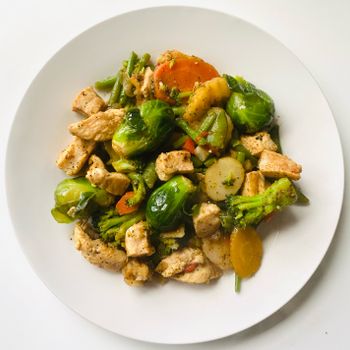
Quick honey-garlic chicken with crisp veggies in a light glossy sauce. Better-than-takeout in 30 minutes.
Ingredients
-
450 g
Chicken breast or thigh
-
200 g
Broccoli florets
-
1 large
Bell pepper
-
100 g
Snap peas or green beans
-
4 cloves
Garlic
-
3 tbsp
Honey
-
3 tbsp
Soy sauce
-
1 tbsp
Rice vinegar
-
1 tsp
Cornstarch
-
1 tbsp
Sesame oil
-
300 g
Cooked rice (for serving)
Instructions
1
Make sauce
Whisk honey, soy sauce, rice vinegar, minced garlic, and cornstarch in a small bowl.
2
Cook chicken
Cut chicken into bite-sized pieces. Sear in sesame oil over high heat for 5–6 min until golden. Remove and set aside.
3
Stir-fry vegetables
In the same pan, add broccoli, bell pepper, and snap peas. Stir-fry 3–4 min until crisp-tender.
4
Combine
Return chicken to the pan, pour sauce over, and toss 2 min until sauce thickens and coats everything.
5
Serve
Serve immediately over steamed rice. Garnish with sesame seeds or sliced green onion.
Why This Honey Garlic Chicken Stir Fry Beats Takeout
This Honey Garlic Chicken Stir Fry is the perfect option for a speedy meal that doesn't compromise on flavor or nutrition. At 480 calories with 36g of protein, it delivers restaurant-quality taste while fitting perfectly into your macro goals. The combination of honey and soy sauce creates a sweet and savory sauce that clings beautifully to tender chicken and vibrant vegetables.
Unlike takeout versions loaded with excess oil, sodium, and hidden sugars, this homemade stir fry gives you complete control over every ingredient. You'll spend the same 30 minutes waiting for delivery—except you'll end up with a healthier, fresher, and more satisfying meal.
The Science of a Perfect Stir Fry
Stir frying is one of the fastest cooking methods, but speed requires proper technique. Here's what makes the difference between soggy vegetables and crisp, flavorful perfection:
High heat is essential: Authentic stir fry requires temperatures above 230°C (450°F). This creates wok hei—the slightly charred, smoky flavor that defines great Chinese cooking. Home stoves can't quite match commercial wok burners, but using a well-seasoned carbon steel wok or cast-iron skillet over your highest heat setting comes close.
Work in batches: Overcrowding the pan drops the temperature dramatically, causing food to steam instead of sear. Cook the chicken first, remove it, then stir fry vegetables in batches if your pan is small. Everything comes together at the end.
Prep everything first (mise en place): Stir frying happens fast—you won't have time to chop while cooking. Have your chicken cubed, vegetables sliced, and sauce mixed before you turn on the heat. This is non-negotiable for success.
Cut uniformly: All pieces should be roughly the same size so they cook at the same rate. Bite-sized cubes (about 2cm) work best for chicken; vegetables can be slightly larger since they cook faster.
Understanding the Honey Garlic Sauce
The sauce makes or breaks any stir fry. This honey garlic combination balances five flavors:
- Sweet (honey): Provides the signature glossy coating and caramelization. Raw honey works best for depth of flavor
- Salty (soy sauce): Adds umami and seasons the entire dish. Use low-sodium soy sauce to control saltiness
- Sour (rice vinegar): Brightens the sauce and prevents it from becoming cloying. Just 1 tablespoon makes a significant difference
- Savory (garlic): Fresh garlic is essential—pre-minced jarred garlic lacks the pungent kick
- Body (cornstarch): A small amount mixed into the sauce thickens it as it heats, helping it cling to every piece
The secret to sauce timing: Add the sauce only after the chicken and vegetables are cooked. Pour it in, toss everything together, and cook just 1-2 minutes until it thickens and coats evenly. Overcooking the sauce makes it gummy and dull.
Choosing Your Protein: Breast vs. Thigh
This recipe works with either chicken breast or thigh, but they behave differently:
Chicken breast: Leaner (165 calories per 100g vs. 209 for thighs) with a milder flavor. It's more forgiving texture-wise when cut into small pieces, but can dry out if overcooked. For best results, sear quickly over high heat and remove as soon as the center is no longer pink.
Chicken thigh: Higher fat content keeps it juicier even with slightly longer cooking. The fat also carries flavor better, so the honey garlic sauce tastes more intense. Thighs require slightly longer cooking to render the fat properly.
For meal prep: Thighs hold up better when reheated. Breast can become rubbery after refrigeration, while thigh meat stays tender.
Recipe Notes & Tips
- Marinate the chicken for at least 15-30 minutes for deeper flavor.
- Use fresh vegetables for the best texture and color.
- Adjust the sauce ingredients according to your taste preferences.
- Keep the sauce handy during cooking to prevent sticking.
- Use high heat to achieve that perfect stir-fry sear.
Variations
- Vegetable Variation: Add carrots, zucchini, or baby corn for a different flavor.
- Protein Alternative: Replace chicken with shrimp or beef for variety.
- Spicy Option: Add red pepper flakes or sriracha for heat.
Common Mistakes to Avoid
- Overcrowding the pan: This can lead to steaming instead of searing the chicken.
- Not thawing frozen chicken properly: Always ensure it's fully thawed for even cooking.
- Using too much sauce: Balance is key; stick to the recipe for optimal results.
How to Store
Leftovers can be stored in an airtight container in the refrigerator for up to three days. Reheat thoroughly before serving.
Maximizing Vegetable Nutrition and Texture
The vegetables in this stir fry aren't just filler—they're nutritional powerhouses:
Broccoli (200g): Provides fiber, vitamin C, vitamin K, and sulforaphane—a compound studied for anti-cancer properties. The key to perfect stir-fried broccoli is cutting florets small enough to cook quickly while keeping stems tender-crisp. Adding broccoli first gives it a head start before faster-cooking vegetables.
Bell pepper: Rich in vitamin C (more than oranges, gram for gram) and adds sweetness that complements the honey. Cut into strips rather than cubes for better texture and visual appeal.
Snap peas or green beans: Add crunch and bright green color. They cook in just 2-3 minutes and should still have some snap when done.
Mushrooms, zucchini, or bok choy: Excellent additions if you want more volume without significantly increasing calories.
Making This Stir Fry Part of Your Meal Plan
This honey garlic chicken stir fry is exceptionally meal-prep friendly:
Batch cooking: Double or triple the recipe on Sunday. Store in individual containers with the rice portioned on the side (it reheats better separately). Each container gives you a ready-to-eat lunch in under 3 minutes of microwaving.
Freezer-friendly: The cooked stir fry freezes well for up to 2 months. Vegetables will soften slightly upon thawing, but flavor remains excellent. Don't freeze the rice—cook fresh or use frozen rice pouches.
Protein rotation: Use the same sauce and technique with different proteins throughout the week—shrimp (cooks in 3 minutes), beef strips (5 minutes), or tofu (pan-fry until crispy before adding to the stir fry).
Customizing for Different Dietary Goals
For weight loss: Serve over cauliflower rice instead of white rice, cutting approximately 150 calories per serving. Increase the vegetable portion and reduce the chicken slightly—you'll still get 28-30g of protein with significantly fewer calories.
For muscle building: Increase the chicken to 200g per serving (adding 15g protein). Serve with a larger portion of white rice (200g cooked) to boost post-workout carbohydrate intake for glycogen replenishment.
For low-carb/keto: Replace honey with a sugar-free alternative (monk fruit sweetener works well) and skip the rice entirely. Serve over zucchini noodles or shredded cabbage. This modification drops carbs to under 15g per serving.
For sodium reduction: Use coconut aminos instead of soy sauce—it has 73% less sodium while providing similar umami depth.
Common Stir Fry Mistakes and How to Avoid Them
- Cold pan: Adding food to a pan that isn't screaming hot causes steaming instead of searing. Wait until you see the first wisps of smoke before adding oil, then add food immediately
- Wet ingredients: Pat chicken dry before cooking—surface moisture creates steam and prevents browning. Same goes for vegetables after washing
- Moving food too much: Let the chicken sit undisturbed for 60-90 seconds to develop a sear before stirring. Constant movement prevents browning
- Adding sauce too early: Sauce added before ingredients are cooked dilutes the heat and creates a braise rather than a stir fry
- Overcooking vegetables: Vegetables should be bright, vibrant, and slightly crisp. Dull, olive-green broccoli has been cooked too long
Serving Suggestions and Accompaniments
While this stir fry is complete over rice, consider these additions:
- Steamed jasmine rice: The fluffy, slightly sticky texture is traditional and absorbs the sauce beautifully
- Brown rice: Adds fiber and a nuttier flavor. Takes longer to cook, so make it ahead
- Rice noodles: For a change from grain rice, wide rice noodles soak up sauce well
- Garnishes: Toasted sesame seeds, sliced green onions, and a squeeze of fresh lime juice elevate the presentation and add brightness
- Heat additions: Sriracha, chili garlic sauce, or red pepper flakes for those who like it spicy
The Nutritional Breakdown
Here's what each serving delivers:
- Calories: 480 kcal—a moderate amount for a complete meal
- Protein: 36g—supports muscle maintenance and satiety
- Carbohydrates: 40g—primarily from rice, providing sustained energy
- Fat: 16g—mostly from sesame oil and chicken, providing essential fatty acids
- Fiber: 5g—from vegetables, supporting digestive health
- Sodium: Approximately 800mg (significantly less than takeout versions which can exceed 2000mg)
The macro split of approximately 30% protein, 33% carbs, and 30% fat makes this suitable for most balanced eating approaches.
Frequently Asked Questions
Can I make this with tofu?
Yes! Press extra-firm tofu, cube it, and pan-fry until crispy before adding the sauce. Great vegan alternative.
Is this better than takeout?
Much better—less sugar, no MSG, more protein, and you control the oil. Plus it's ready in the same time as delivery.
Can I use other vegetables?
Absolutely. Carrots, zucchini, mushrooms, baby corn, or bok choy all work well in this stir-fry.
How do I make the sauce less sweet?
Reduce the honey to 1.5 tablespoons and add an extra splash of rice vinegar for tang. You can also substitute half the honey with a teaspoon of sriracha or sambal oelek for a sweet-heat balance.
What's the best way to reheat stir-fry?
Reheat in a hot skillet or wok for 2–3 minutes rather than the microwave—it restores the crisp texture of the vegetables. Add a teaspoon of water to loosen the sauce, and keep the rice separate until serving to prevent sogginess.
Did you make this recipe?
Share a picture on Instagram with #aimealplan