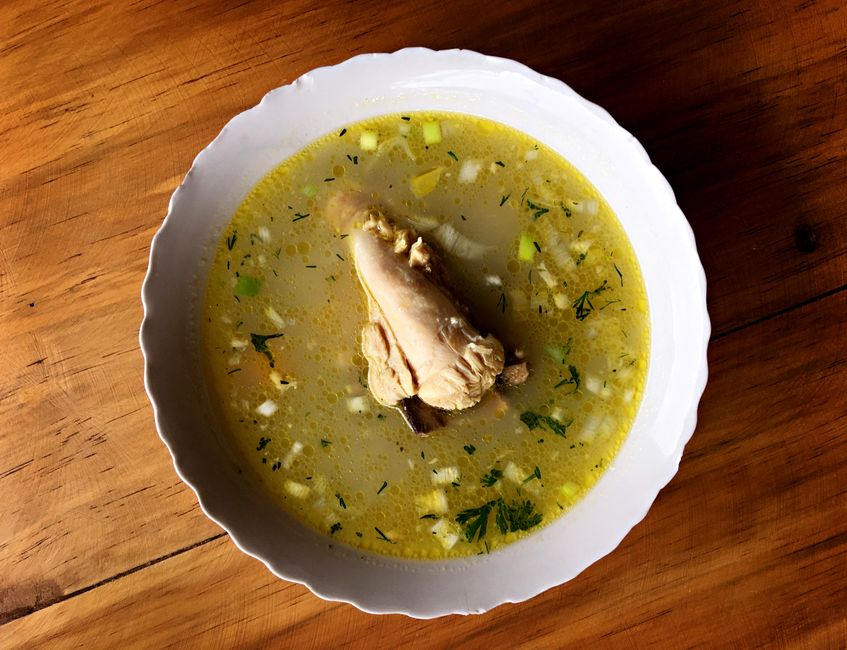
What is rotisserie chicken soup?
Rotisserie chicken soup is a shortcut to homemade chicken noodle soup using store-bought rotisserie chicken — about 280 calories and 24g protein per bowl. You get the depth of flavor that usually requires hours of simmering, ready in 40 minutes. The chicken is already cooked, seasoned, and tender. You just build the soup around it.
This is not canned soup with its sodium bomb and mushy vegetables. This is proper homemade soup with real vegetables, egg noodles, and rich chicken flavor. If you want other comforting soups, try lentil soup for something spicy or lentil soup for a vegetarian option.
Nutrition and macros by portion
The nutrition label shows one bowl as written: 280 calories, 24g protein, 28g carbs, 8g fat.
| Portion | Adjustment | Calories | Protein | Carbs | Fat |
|---|---|---|---|---|---|
| Lighter | Skip noodles, add extra vegetables | 180 kcal | 22g | 10g | 6g |
| This serving | As written | 280 kcal | 24g | 28g | 8g |
| Hungry | Add 50g extra chicken, 30g extra noodles | 400 kcal | 34g | 38g | 12g |
The protein comes from the chicken — about 100g shredded meat per serving delivers 24g protein. The carbs are mostly from the egg noodles. Skip the noodles and this becomes a very low-carb soup at only 10g carbs per serving. The fat is minimal, mostly from the chicken.
Why rotisserie chicken works
Rotisserie chickens are seasoned, cooked, and ready to use. The meat is tender from slow rotation cooking and already has flavor built in from the seasonings. Shredding a rotisserie chicken takes 5 minutes. Cooking raw chicken, seasoning it, and waiting for it to become tender takes 30+ minutes. The shortcut is worth it.
Bonus: use the carcass to make bone broth. After shredding the meat, put the bones in a pot with water, an onion, carrot, and celery scraps. Simmer for 2-4 hours. Strain. This homemade broth is more flavorful than any store-bought option and costs essentially nothing.
Building the flavor base
The aromatics create depth. Start with diced onion, carrots, and celery — the classic mirepoix. Cook them in olive oil over medium heat until the onion is translucent and the vegetables begin to soften, about 5-6 minutes. Add minced garlic at the end, cooking only 30 seconds until fragrant. Garlic burns quickly and becomes bitter if added too early.
The vegetable sizes matter. Dice everything into similar-sized pieces (about 1cm) so they cook evenly. Large chunks will still be hard when the soup is ready. Tiny pieces will disintegrate.
Broth selection
Homemade bone broth from rotisserie carcass is best — richest flavor, no added sodium, free if you were throwing away the bones anyway. Store-bought chicken broth works fine. Choose low-sodium versions so you control the salt level. Chicken stock is slightly different (made from bones primarily, more gelatin) and also works well.
The ratio for 4 servings: 1.5 liters broth. This creates a soup with a good broth-to-solids ratio. If you prefer brothier soup, add more. If you want it thicker, use less or add more noodles.
The noodle question
Egg noodles are classic — they hold their shape, absorb flavor, and have a satisfying chew. Cook them directly in the broth so they absorb maximum flavor. Add dry noodles to simmering broth and cook according to package directions, usually 8 minutes.
Alternatives: small pasta shapes (ditalini, orzo) work well. Rice noodles for gluten-free. Zucchini noodles for low-carb. Leftover rice can be added at the end for a heartier soup.
When to add the chicken
Add shredded chicken at the very end, cooking only 2-3 minutes until heated through. The chicken is already cooked — longer exposure to heat only dries it out. Stir gently to avoid shredding the meat into mush.
Shredding technique: use two forks to pull the meat apart along the grain. Remove and discard skin (unless you want extra fat) and any cartilage or bones. Dark meat (thighs, legs) stays more moist in soup than white meat (breast). A mix of both gives the best flavor and texture combination.
Seasoning strategy
Season in layers. Salt the vegetables while they cook to draw out moisture and build flavor. Season the broth after it comes to a simmer. Taste and adjust after adding noodles (they absorb salt). Final seasoning after adding chicken. This layered approach creates deeper flavor than dumping all seasonings at once.
Bay leaf adds subtle depth — add one whole leaf while the broth simmers and remove before serving. Fresh or dried thyme works well. Fresh parsley or dill as a finishing herb brightens the whole bowl.
Common mistakes to avoid
Overcooking vegetables: They should be tender but not mushy. Start checking at 15 minutes of simmering.
Overcooking chicken: It is already cooked. Just heat through. 2-3 minutes maximum.
Overcooking noodles: They continue cooking in the hot broth even after you stop heating. Slightly underdone is better than mushy.
Under-seasoning: Homemade soup needs salt. Taste frequently and adjust. The amount depends on your broth sodium level.
Not removing the bay leaf: Biting into a bay leaf ruins a spoonful. Always fish it out before serving.
Make-ahead and storage
Soup stores well for 3-4 days refrigerated. The flavors actually improve overnight as they meld together. Freeze for up to 3 months in airtight containers, leaving room for expansion.
The noodle problem: noodles continue absorbing broth and become bloated when stored. For meal prep, store the soup without noodles and cook fresh noodles when reheating. Or accept that leftover soup will be thicker and adjust with additional broth when reheating.
Reheating tips
Reheat on the stovetop over medium heat until simmering. Microwave works but heats unevenly — stir halfway through and check that the center is hot. Add a splash of water or broth if the soup has thickened too much in storage.
Variations
Mexican-style: Add cumin, chili powder, and lime juice. Top with avocado, cilantro, and tortilla strips.
Asian-inspired: Use ginger and soy sauce. Swap egg noodles for rice noodles. Add bok choy and scallions.
Italian: Add Italian seasoning, diced tomatoes, and white beans. Use orzo pasta. Top with parmesan.
Lemon herb: Add extra lemon juice, fresh dill, and a squeeze at the end. Bright and refreshing.
Serving the perfect bowl
Ladle soup into large bowls, ensuring each gets a good mix of broth, vegetables, noodles, and chicken. Garnish with fresh parsley or dill. A squeeze of lemon juice brightens everything — add it to each bowl individually so people can adjust. Serve with crusty bread for dipping into the broth.
The 40-minute comfort meal
Sauté aromatics while you shred the chicken — 10 minutes. Add broth, bring to simmer, season — 5 minutes. Cook noodles in the broth — 8 minutes. Add chicken, heat through, adjust seasoning — 5 minutes. Ladle into bowls, garnish, serve. Real homemade chicken soup in under an hour, most of which is hands-off simmering time. Comfort food made simple.