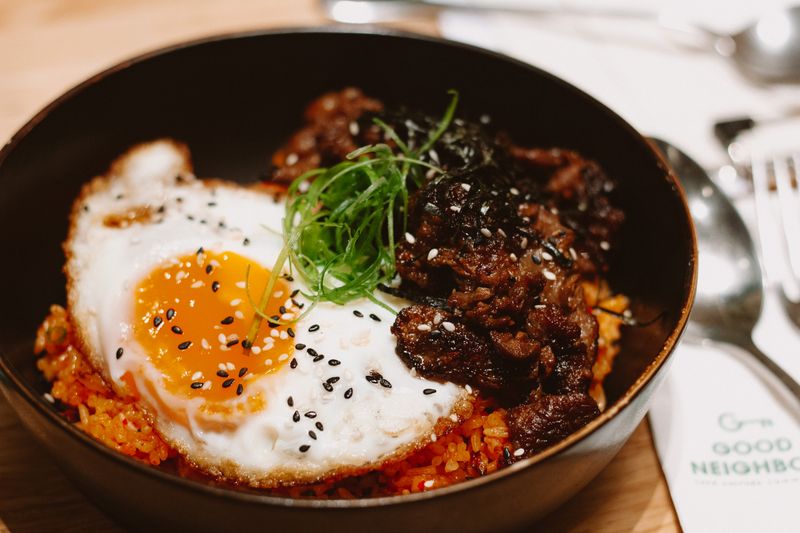

What is egg fried rice?
Egg fried rice is cold rice stir-fried with scrambled eggs, vegetables, soy sauce, and sesame oil — about 420 calories and 18g protein per serving in 15 minutes. This is the dish that turns leftover rice into a complete meal. The rice gets slightly crispy from high heat. The eggs are soft and distributed throughout. The soy sauce adds umami depth.
This is not mushy, greasy takeout rice. Proper egg fried rice has distinct grains, wok-charred flavor, and balanced seasoning. If you want other quick rice dishes, try high-protein chicken rice bowl for more protein or Thai basil chicken to serve over this rice.
Nutrition and macros by portion
The nutrition label shows one serving as written: 420 calories, 18g protein, 52g carbs, 14g fat.
| Portion | Adjustment | Calories | Protein | Carbs | Fat |
|---|---|---|---|---|---|
| Lighter | Use 150g rice per serving | 320 kcal | 15g | 38g | 12g |
| This serving | As written (200g rice) | 420 kcal | 18g | 52g | 14g |
| Hungry | Add 100g diced chicken or shrimp | 540 kcal | 32g | 52g | 16g |
The protein comes from the eggs — 3 eggs provide about 18g protein for the entire batch. The carbs are from the rice, which is the base of the dish. The fat is moderate, from the cooking oil, eggs, and sesame oil. Add diced chicken, shrimp, or tofu to boost protein significantly.
Why cold rice is essential
Day-old refrigerated rice is non-negotiable for proper fried rice. Freshly cooked rice is too moist — the steam creates clumping and mushiness when stir-fried. Cold rice has dried out overnight, allowing each grain to fry individually and develop that characteristic slight crispiness.
The science: refrigeration causes the starch in rice to retrograde — the starch molecules realign and firm up. This structural change makes the grains hold their shape better during high-heat cooking and prevents the gummy texture that fresh rice produces.
No leftover rice? Cook rice with slightly less water, spread it on a baking sheet, and refrigerate uncovered for 1-2 hours. Or freeze for 20 minutes. Not ideal but workable in a pinch.
The wok hei secret
Wok hei is the smoky, slightly charred flavor that distinguishes restaurant fried rice from home versions. It comes from extremely high heat and brief contact between food and a screaming-hot wok. Home stoves cannot match commercial wok burners, but you can approximate the flavor.
Use the largest pan or wok you have. Heat it until smoking before adding oil. Work in batches if necessary — a crowded pan steams food instead of searing it. Press rice against the hot surface and let it sit for a few seconds before stirring. Those slightly charred, crispy bits are the wok hei flavor you want.
The egg technique
Scramble eggs first, separately, then add them back at the end. This keeps the eggs in distinct pieces throughout the rice rather than coating every grain with egg film. Beat 3 eggs lightly. Pour into a smoking-hot wok with a little oil. Stir quickly for 30-45 seconds until just set but still slightly soft. Transfer to a plate immediately.
Break the cooked eggs into small pieces before adding them back to the rice. Large egg chunks distribute unevenly. Pea-sized pieces ensure egg in every bite.
Vegetable choices
Frozen peas and carrots are classic and convenient — they go from freezer to wok without thawing. The high heat cooks them quickly while keeping them slightly crisp. Other options: diced bell peppers, corn, edamame, bean sprouts, or water chestnuts.
Cut fresh vegetables small — about the size of the rice grains — so they cook quickly and distribute evenly. Large chunks throw off the texture and cooking time.
The soy sauce technique
Do not pour soy sauce directly onto the rice. Instead, push the rice to one side of the pan and add soy sauce to the empty hot surface. It sizzles and reduces for a few seconds, concentrating flavor and removing raw soy taste. Then toss everything together.
Two tablespoons for 400g rice provides good flavor without making it too salty. Taste and adjust. Light soy sauce is standard. Dark soy sauce adds color and slight sweetness but can make the rice too dark if overused.
Sesame oil: finishing touch
Toasted sesame oil is added at the very end — its flavor is destroyed by high heat. One teaspoon is enough to add aromatic nuttiness throughout the dish. More than that becomes overpowering. Drizzle it over the finished rice right before serving.
Common mistakes and how to avoid them
Fresh, hot rice: Too moist. Always use cold, day-old rice.
Pan not hot enough: The rice should sizzle loudly on contact. If not, wait until your pan is hotter.
Overcrowding: Work in batches if your pan is small. Crowded rice steams instead of fries.
Too much soy sauce: Start with 2 tablespoons, add more only if needed. You can always add more but cannot remove salt.
Adding sesame oil early: It burns at high heat. Add only at the very end.
Stirring constantly: Let the rice sit against the hot pan for a few seconds between stirs to develop crispy bits.
Protein additions
Shrimp: Cook separately until pink, add at the end. 100g adds 20g protein.
Chicken: Dice small, cook first until done, add at the end. 100g adds 25g protein.
Pork: Char siu (Chinese BBQ pork) is traditional. Dice and add at the end — it is already cooked.
Tofu: Press, cube, fry until crispy separately, add at the end. 100g adds 12g protein.
Flavor variations
Kimchi fried rice: Add 100g chopped kimchi with the vegetables. Adds fermented funk and mild heat.
Thai style: Add fish sauce instead of some soy sauce, finish with Thai basil and a squeeze of lime.
Japanese style: Use Japanese short-grain rice, add furikake and a fried egg on top.
Spicy: Add sriracha or gochujang to the soy sauce before adding to the rice.
Meal prep strategy
Cook a large batch of rice specifically for fried rice later in the week. Plain white rice refrigerates well for 5-6 days. When ready to eat, fried rice comes together in 15 minutes.
You can also prep vegetables and protein in advance: dice and refrigerate. Assembly becomes a quick stir-fry job with minimal prep.
The 15-minute dinner
Mise en place is essential — have everything within arms reach before you start cooking. Beat eggs. Mince garlic. Slice green onions. Measure soy sauce and sesame oil. Then: scramble eggs (1 minute), stir-fry vegetables (2 minutes), add rice and fry (4 minutes), season and combine (2 minutes). Hot, satisfying, better-than-takeout fried rice in 15 minutes flat.