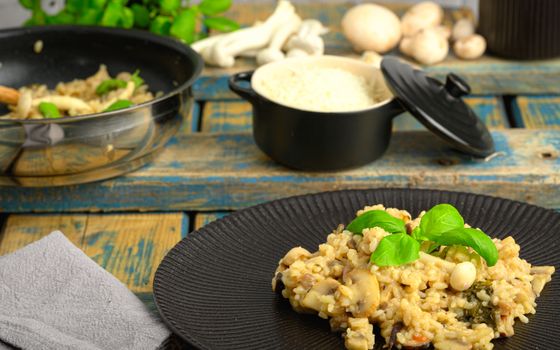
Rich, creamy mushroom risotto made with arborio rice, mixed mushrooms, and parmesan. 16g protein, 480 kcal. Worth the stirring.
Ingredients
-
160g
Arborio rice
-
250g
Mixed mushrooms (cremini, shiitake)
-
700ml
Vegetable broth (warm)
-
80ml
White wine
-
40g (grated)
Parmesan cheese
-
1 small
Onion
-
2 cloves
Garlic
-
2 tbsp
Butter
-
2 sprigs
Fresh thyme
Instructions
1
Sauté mushrooms
Heat 1 tbsp butter over high heat. Cook sliced mushrooms 5 minutes until golden-brown and dry. Season with salt, remove and set aside.
2
Toast the rice
In the same pan, add remaining butter. Sauté diced onion and garlic 3 minutes. Add arborio rice, stir 2 minutes until edges become translucent — this toasting step is crucial for texture.
3
Add wine and broth
Pour in white wine, stir until absorbed. Begin adding warm broth one ladle at a time, stirring frequently. Wait until each addition is absorbed before adding the next. This takes 18-20 minutes.
4
Finish
When rice is creamy but still slightly al dente, remove from heat. Stir in parmesan, mushrooms, and thyme. The risotto should flow like lava, not sit like paste. Adjust with extra broth if needed.
Why This Mushroom Risotto is the Ultimate Comfort Food
This creamy mushroom risotto showcases the beauty of simple ingredients working in harmony. At 480 calories with 16g of protein, it proves that vegetarian comfort food can be both satisfying and nutritious. Arborio rice, known for its ability to absorb liquid and release starch, creates that characteristic creamy texture that makes risotto so irresistible.
The combination of mixed mushrooms brings depth and umami—that savory, meaty quality that makes you forget this dish is entirely plant-based. The gradual addition of warm vegetable broth and a splash of white wine enhances the flavors without overpowering the earthy mushroom essence.
The Science Behind Perfect Risotto
Risotto isn't difficult, but it does require understanding what's happening in the pan. Here's the science that makes it work:
Starch release is everything: Arborio rice contains two types of starch—amylose and amylopectin. The high amylopectin content is what creates risotto's creaminess. As you stir and add liquid, the rice's outer layer releases starch into the surrounding liquid, creating a natural sauce that binds everything together.
Temperature matters: Adding cold broth shocks the rice and slows starch release. Always use warm or hot broth added gradually. This maintains the cooking temperature and allows consistent starch extraction.
The toast is crucial: Before adding any liquid, toast the rice in fat until the edges become slightly translucent. This seals the outer starch layer, ensuring the grains stay al dente in the center while the exterior becomes creamy.
Constant stirring: Yes, you really do need to stir frequently. The agitation releases starch and prevents the rice from sticking or cooking unevenly. It's meditative work—put on some music and enjoy the process.
Choosing and Preparing Mushrooms
The mushrooms make or break this risotto. Here's how to select and prepare them for maximum flavor:
Variety creates complexity: Using a single mushroom type works, but a mix creates layers of flavor. Try combining:
- Cremini (baby bella): Earthy base flavor, meaty texture
- Shiitake: Rich umami, slightly chewy
- Oyster: Delicate, slightly sweet
- Porcini: Intense, woodsy (dried porcini add incredible depth—soak in warm water and add both mushrooms and soaking liquid)
- Chanterelles: Fruity, peppery (special occasion ingredient)
Cleaning: Never soak mushrooms—they absorb water like sponges. Brush off dirt with a dry paper towel or soft brush. If truly dirty, a quick rinse and immediate pat-dry works.
Cooking: Sauté mushrooms separately in a hot pan until golden brown before adding to the risotto. Crowded mushrooms steam instead of browning, missing that caramelized flavor. Work in batches if needed.
The Role of Wine in Risotto
That splash of dry white wine isn't optional—it adds acidity and complexity that broth alone can't provide:
- Flavor depth: Wine adds brightness that balances the richness of butter and cheese
- Deglazing: Wine picks up browned bits from the pan, incorporating them into the dish
- Alcohol cooks off: Don't worry about the alcohol—it evaporates within minutes of adding the wine. What remains is flavor, not booze
Choosing wine: Use something dry and crisp—Pinot Grigio, Sauvignon Blanc, or unoaked Chardonnay work well. Never use "cooking wine" from the grocery store; it's inferior quality with added salt. The rule: only cook with wine you'd drink.
Non-alcoholic alternative: If avoiding alcohol, substitute with additional broth plus a teaspoon of white wine vinegar or lemon juice for acidity.
Recipe Notes & Tips
- Always use warm broth to prevent the cooking process from slowing down.
- Toast the rice until it’s just translucent for a better texture.
- Add broth gradually and keep stirring to ensure creaminess.
- Experiment with herbs like rosemary or parsley for additional flavor.
- Finish with a drizzle of good-quality olive oil for extra richness.
Variations
- Mushroom Wild Rice Risotto: Substitute wild rice for arborio to add a nutty flavor and chewiness.
- Spinach and Mushroom Risotto: Stir in fresh spinach towards the end of cooking for added nutrition and color.
- Truffle Mushroom Risotto: Drizzle with truffle oil before serving for a luxurious twist.
Common Mistakes to Avoid
- Mistake: Adding all the broth at once. Fix: Add it in stages, allowing it to be absorbed as you stir.
- Mistake: Not stirring enough. Fix: Continuous stirring is key to releasing starch and achieving creaminess.
- Mistake: Using cold broth. Fix: Always keep the broth warm to maintain cooking temperature.
How to Store
This risotto is best enjoyed fresh. If you need to store leftovers, keep in an airtight container in the fridge for up to 2 days and reheat with a splash of broth.
Mastering the Technique: Step by Step
Risotto rewards patience and attention. Here's the detailed method:
1. Prep everything first: Have your broth warm in a saucepan, mushrooms sautéed and set aside, onions diced, and cheese grated. Once cooking starts, you won't have time to prep.
2. Sauté the aromatics: Cook finely diced onion (or shallot for more delicate flavor) in butter over medium heat until softened and translucent—about 3 minutes. Add garlic in the last 30 seconds.
3. Toast the rice: Add Arborio rice and stir to coat with butter. Cook 2-3 minutes until the edges become slightly translucent. You'll smell a nutty aroma when it's ready.
4. Add wine: Pour in the wine and stir until completely absorbed. This happens quickly—about 1 minute.
5. The ladling process: Add warm broth one ladle (about 120ml) at a time, stirring frequently. Wait until each addition is mostly absorbed before adding more. This takes 18-20 minutes total.
6. Test for doneness: The rice should be creamy but with a slight bite in the center (al dente). If it's still chalky, continue adding broth. If you run out of broth, use warm water.
7. The mantecatura: Remove from heat and vigorously stir in cold butter and Parmesan. This final step emulsifies the fats and creates that luxurious, flowing consistency.
8. Rest and serve: Let the risotto rest 2 minutes off heat—it continues to thicken. It should flow slowly when spooned onto a plate, not mound stiffly.
Nutritional Profile and Dietary Considerations
At 480 calories per serving, this risotto fits comfortably into most meal plans:
- Carbohydrates (58g): Primarily from Arborio rice—a good source of energy for active individuals
- Protein (16g): Higher than typical pasta dishes thanks to Parmesan and mushrooms
- Fat (20g): Mostly from butter and cheese—satisfying and flavor-carrying
- Fiber: Mushrooms contribute approximately 3g of fiber per serving
- Micronutrients: B vitamins from mushrooms, calcium from Parmesan, selenium from rice
For lower calories: Reduce butter by half and use less Parmesan (or nutritional yeast for a vegan option). This can drop the dish to approximately 380 calories.
For more protein: Top with a fried egg (adds 6g protein and 70 calories) or serve alongside grilled chicken.
Vegan adaptation: Replace butter with olive oil and Parmesan with nutritional yeast plus a splash of white miso paste for umami depth.
Common Risotto Mistakes and How to Avoid Them
- Using the wrong rice: Long-grain rice won't create creaminess. Arborio, Carnaroli, or Vialone Nano are essential—their high starch content is the whole point
- Cold broth: Adding cold liquid drops the pan temperature and extends cooking time, potentially making the rice gummy
- Rushing the process: Adding all the broth at once creates waterlogged, starchy mush. The gradual addition is what creates the texture
- Overcooking: Risotto continues cooking off the heat. Remove it when slightly underdone; it will finish from residual heat
- Skipping the mantecatura: That final addition of cold butter and cheese creates the signature creaminess. Don't skip it
- Letting it sit: Risotto should be served immediately. It continues to thicken and can become gluey within 10 minutes of plating
Serving Suggestions and Wine Pairings
Risotto is traditionally served as a primo (first course) in Italy, but works beautifully as a main dish:
As a main: Serve in shallow bowls with extra Parmesan and a drizzle of truffle oil for elegance. A simple arugula salad with lemon dressing provides freshness alongside the rich risotto.
As a side: Smaller portions complement roasted chicken, grilled fish, or pan-seared scallops.
Wine pairing: Match with the same wine used in cooking—a crisp Pinot Grigio or Vermentino. The acidity cuts through the richness beautifully.
Garnishes: Fresh thyme or parsley, shaved Parmesan, a drizzle of high-quality olive oil, or crispy fried sage leaves.
Making Risotto Ahead (Yes, It's Possible)
Traditional wisdom says risotto must be made and served immediately. However, restaurants use a technique called par-cooking that works at home too:
The method: Cook the risotto about 70% of the way through (about 15 minutes), then spread it on a baking sheet to cool quickly. Refrigerate for up to 2 days. To finish, heat a ladle of broth in a pan, add the par-cooked risotto, and cook for 5-7 minutes until done. Finish with butter and cheese as usual.
The result: Slightly less perfect than fresh risotto, but a legitimate shortcut for weeknight cooking or entertaining.
Risotto Variations to Explore
Once you've mastered the mushroom version, the technique applies to countless variations:
- Asparagus and lemon: Spring vegetables with bright citrus notes
- Butternut squash: Roasted squash pureed into the base for sweetness and color
- Seafood risotto: Shrimp, scallops, or mixed seafood with white wine and parsley
- Beetroot risotto: Stunning pink color with earthy sweetness (add goat cheese)
- Truffle risotto: Simple Parmesan risotto finished with truffle oil or fresh truffle shavings
Each variation uses the same base technique—master the method, and you have endless options.
Frequently Asked Questions
Why do I need to add broth gradually?
Adding broth slowly and stirring causes the rice to release starch gradually, creating the characteristic creaminess of risotto without any cream. If you dump all the liquid in at once, you get rice soup instead of risotto.
Can I make risotto without wine?
Yes — substitute with 2 tbsp lemon juice mixed with 60ml extra broth. The wine adds acidity and depth, so the lemon replicates that brightness.
Can I reheat risotto?
Risotto is best fresh, but you can reheat it by adding a splash of broth and stirring over medium heat until creamy again. It thickens significantly in the fridge.
What mushrooms work best?
A mix gives the best depth of flavor. Cremini mushrooms offer a meaty base, shiitake adds umami, and a few dried porcini (rehydrated) create an intensely earthy, restaurant-quality result.
Can I make risotto vegan?
Replace the butter with olive oil and skip the parmesan — stir in 2 tablespoons of nutritional yeast and a squeeze of lemon instead. The result is surprisingly creamy and satisfying.
Did you make this recipe?
Share a picture on Instagram with #aimealplan