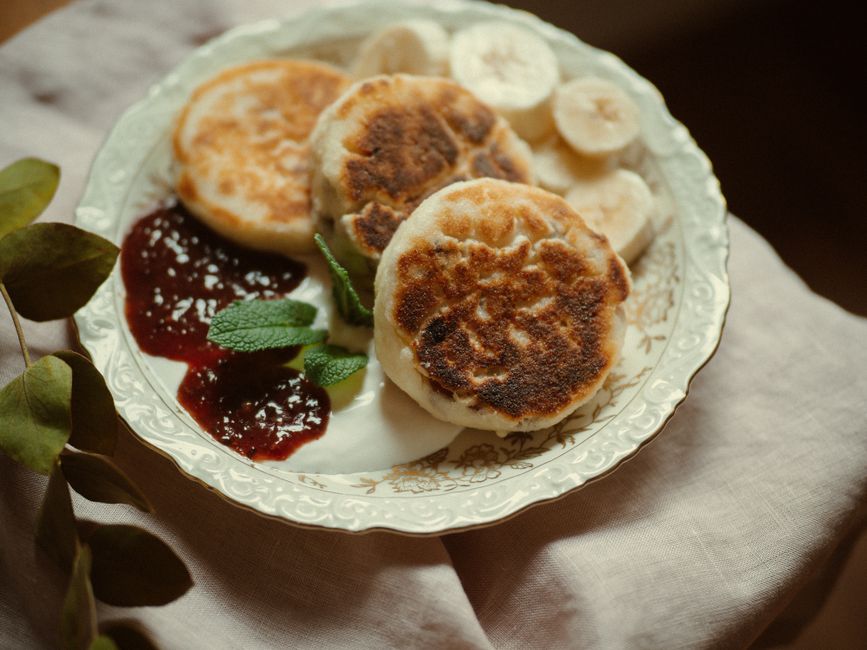
What are cottage cheese pancakes?
Cottage cheese pancakes are blended cottage cheese, eggs, and oats, fried like regular pancakes. This recipe is 200g of 2% cottage cheese, 2 eggs, and 60g rolled oats — four pancakes, two servings, about 350 calories and 24g protein per serving. There is no protein powder and no wheat flour. There is a blender and a pan.
People make them because they want pancakes that hit protein without tasting like a supplement. They fail when the batter is watery from whey, when the pan is too hot, or when someone eats the whole blender and still quotes 350 calories. Half the batch is a serving. The other half is breakfast tomorrow or a second person.
This is the cooked breakfast in the cottage-cheese cluster. The no-cook spoon is the cottage cheese bowl. Toast is the toaster version. Dip is a snack. Keep this URL for the skillet.
Nutrition and macros by portion
The Nutrition Facts label is one serving of this batch (two pancakes): 350 calories, 24g protein, 36g carbs, 12g fat. Scale pancakes from this batter, not a different recipe.
| Portion | Pancakes | Calories | Protein | Carbs | Fat |
|---|---|---|---|---|---|
| Snack | 1 pancake | 175 | 12g | 18g | 6g |
| This serving | 2 pancakes | 350 | 24g | 36g | 12g |
| Hungry | 3 pancakes | 525 | 36g | 54g | 18g |
The blender makes four pancakes. Hungry is three of those four, not a second recipe. Butter in the pan is already in the 12g of fat if you use the teaspoon. A second teaspoon of butter in a dry pan is extra. Maple syrup is extra. Banana in the batter is extra carbs. Brand cottage cheese varies; if your tub is 11g protein per 100g, the serving is closer to 22g protein before you count eggs.
How to blend batter that actually flips
Drain the tub, then blend cheese, eggs, oats, baking powder, vanilla until the oats are gone. Rest two minutes. You want batter that mounds slightly when poured, not a puddle and not a dough. Thin batter is leftover whey or not enough oats. Thick batter is greedy oats or a tub that was already dry.
A blender is not optional if you want “fluffy.” A fork leaves flakes and curds. Those pancakes tear when you flip them because there is no even structure. Stick blender, bullet blender, food processor — anything that purees oats.
Heat, size, and one flip
Medium heat. Cottage cheese sugars and dairy brown faster than flour batter. Too hot and you get a dark skin over wet middle, then a broken flip. Quarter-cup scoops keep them small enough to turn. Wait until the edges look dull and set. Flip once. Baking powder only gives you one good rise; beating the pancake with extra flips knocks it out.
Non-stick plus 1 tsp butter for four pancakes is enough. More butter is a fried breakfast and a different fat number. If they stick, the pan was not hot enough at the start or the coating is gone — not a reason to add oil by the tablespoon.
Why this is not a protein-powder pancake
Powder pancakes are a scoop of whey plus egg and maybe banana. They spike protein and often taste like the tub. This recipe gets 24g a serving from cheese and eggs, and the oats are the flour. The texture is closer to a diner pancake if you blend and rest. If you add a scoop of powder to this batter, it will seize. Use one recipe or the other.
Vanilla is here so the cheese does not announce itself. Skip it for savory pancakes with chives. Do not serve those with berries and call it the same breakfast.
How to meal-prep cottage cheese pancakes
Cook the four, cool, fridge three days or freeze a month. Reheat in a toaster. That is better than holding raw batter, which thins and tastes sour by morning. If you want zero dishes at breakfast, freeze in pairs (one serving) and toast from frozen.
Opened cottage cheese keeps 4–5 days for the next blend. Stir whey back in for eating from the tub; drain it for this batter. Serve pancakes hot. Do not microwave a stack into rubber if you have a toaster.
Oats are the flour
Sixty grams of rolled oats for the whole blender is about ⅔ cup. That is the structure. More oats make hockey pucks. Fewer oats make egg pancakes that brown and tear. Instant oats turn gluey. Steel-cut stay crunchy unless you soak them first, which this 15-minute card does not do. Certified gluten-free rolled oats if you need gluten-free — oats are often processed next to wheat.
Baking powder is a teaspoon for four pancakes. Old baking powder is why “fluffy” recipes come out dense even when the blender work was perfect. If the batter sits more than ten minutes, it starts to lose lift; cook it. That is another reason not to fridge raw batter overnight and expect the same pancakes.
Eggs are two for 200g of cheese. One egg makes a fragile pancake. Three eggs tastes like an omelette with oats. This ratio is the diner-pancake middle. Vanilla at ½ teaspoon is there so the first bite is pancake, not dairy. Skip it for savory. Do not add sugar to the batter and also pour maple — pick one sweetener and measure it.
3-ingredient cottage cheese pancakes vs this recipe
A lot of cottage cheese pancake recipes are three ingredients: cottage cheese, eggs, and oats. That batter works. You get a thinner, slightly eggy pancake with less lift because there is no baking powder. This card adds 1 tsp baking powder and ½ tsp vanilla so they brown like diner pancakes and do not taste like a tub. If you want the 3-ingredient version from this same blender, drop those two. Same pan, slightly flatter pancakes, a little less volume. Do not drop the oats — then you have a cheese omelette.
The 3-ingredient versions often use ½ cup cottage cheese and ½ cup oats with 2 eggs. Half a cup of cottage cheese is about 110–120g, not 200g. That is why those pancakes land around 15g protein when someone calls the whole blender “a serving.” This recipe is 200g of cheese for four pancakes / two servings. Convert our card to cups without a scale and 200g of 2% cottage cheese is a packed ¾ cup to a scant 1 cup, depending on how wet the tub is. Weigh it.
Cups, grams, and why ½ cup is not this recipe
Cups hide whey. A drained ½ cup is denser than a scooped ½ cup with liquid still in it. Grams do not care. This blender is 200g drained 2% cottage cheese, 2 large eggs (~100g), 60g rolled oats. In US cups that is roughly ¾–1 cup cheese, ⅔ cup oats, and 2 eggs. If a recipe says ½ cup cheese and ½ cup oats, you are making a smaller, oatier, lower-protein pancake than this card. Do not paste our 350 calories / 24g protein onto that batter.
Brand tubs vary in how much whey sits on top. Drain, then weigh. If you scoop 200g with the whey, the batter runs like crepe mix and the protein number is still close — the problem is flipping, not the label. If you only have cups, pack the cheese, level the oats, and accept a ±30 calorie swing. The table on this page assumes the gram line in the recipe card.
Why 60g of oats, not a full cup
A cup of rolled oats is about 90–100g. Recipes that use ~220g cheese plus a full cup of oats make thicker, oat-cake pancakes: more carbs, a little more protein from the oats, heavier in the pan. This card uses 60g so the cheese and eggs stay the protein and the oats stay the structure — closer to a pancake than a baked oat. If the batter is soup after the two-minute rest, add 1 tablespoon of oats, not another 40g. If it is paste, you already used the cup-of-oats ratio; thin with a teaspoon of the whey you drained, not milk. Milk dilutes protein and browns faster.
Instant oats in place of 60g rolled oats turn gluey. Oat flour can replace the 60g 1:1 by weight, but you lose the two-minute thicken from whole flakes — start cooking sooner. Steel-cut oats will not break down in 40 seconds; they are the wrong flour for a 15-minute card.
Why 24g protein, not 15g
Protein is the cheese plus the eggs. 200g of 2% cottage cheese is typically 22–24g protein; two large eggs add about 12g. Split across two servings that is ~17–18g from cheese and ~6g from eggs — about 24g. A ½-cup cheese recipe has roughly half the dairy protein before you count eggs. Listing cottage cheese pancakes as 15g or 25g is not a different species of pancake. It is a different amount of cheese and oats in the blender.
The Nutrition Facts here assume 2% cheese at about 12g protein per 100g. Fat-free tubs are similar protein and a wetter batter. Full-fat tubs taste richer and push fat above 12g. Oats add a couple of grams of protein to the batch, not a scoop’s worth. Flour pancakes with cottage cheese folded in — sheet-pan, steamed diner stacks, syrniki with wheat flour — are a different breakfast, often ~6g protein per pancake. Keep this URL for the blender oat version.