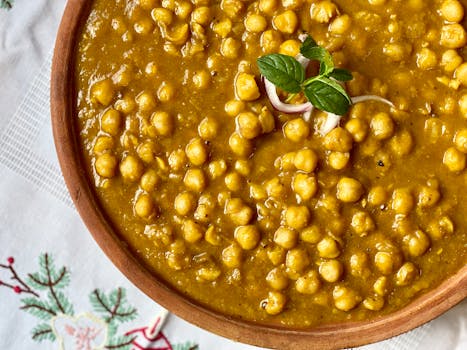
What is chickpea coconut curry?
Chickpea coconut curry is canned chickpeas simmered in a creamy coconut milk sauce with spinach and warming spices — about 420 calories and 18g protein per serving. This is a one-pot vegan dinner that comes together in 25 minutes. The coconut milk creates a rich, silky sauce. The chickpeas provide plant protein. The spinach wilts in at the end for color and nutrition.
This is not watery, flavorless vegetarian food. The curry powder, ginger, and garlic build deep flavor. The coconut milk adds richness that satisfies like meat-based dishes. If you want other plant-based meals, try crispy tofu stir-fry for something lighter or sweet potato black bean tacos for Mexican flavors.
Nutrition and macros by portion
The nutrition label shows one serving (1/3 of the pot) as written: 420 calories, 18g protein, 42g carbs, 20g fat.
| Portion | Adjustment | Calories | Protein | Carbs | Fat |
|---|---|---|---|---|---|
| Lighter | Smaller portion, more spinach | 300 kcal | 14g | 32g | 14g |
| This serving | As written | 420 kcal | 18g | 42g | 20g |
| Hungry | Serve over 140g rice | 600 kcal | 22g | 82g | 22g |
The protein comes from chickpeas — one can provides about 18g protein per serving when divided into three portions. The carbs are from chickpeas and coconut milk. The fat is primarily from coconut milk, which contains healthy medium-chain triglycerides. This is a complete vegan meal when served with rice.
The aromatic foundation
Every great curry starts with properly cooked aromatics. Dice one medium onion finely and cook in olive oil over medium heat for 4-5 minutes until translucent and slightly golden. This caramelization builds sweetness that balances the spices.
Add minced garlic (3 cloves) and freshly grated ginger (1 tablespoon). Cook only 1 minute until fragrant — garlic burns quickly and becomes bitter. Fresh ginger is essential; dried ginger powder lacks the brightness and slight heat that fresh provides.
Curry powder: the spice blend
Curry powder is a blend typically containing turmeric, coriander, cumin, fenugreek, and chili. Two tablespoons provides robust flavor without overwhelming heat. Add it to the cooked aromatics and stir for 30 seconds — this blooms the spices in the hot oil, intensifying their flavors.
For deeper flavor, toast whole spices (cumin seeds, coriander seeds, mustard seeds) before adding the onion, then use curry powder as well. The combination of whole and ground spices creates more complex flavor.
Coconut milk selection
Use full-fat canned coconut milk — it creates the rich, creamy sauce that defines this dish. Light coconut milk is watery and produces thin, disappointing curry. Shake the can before opening to combine the cream and liquid.
One 400ml can is the standard size. Look for coconut milk with minimal additives — just coconut and water is ideal. Some brands contain gums and stabilizers that can affect texture.
The chickpea technique
Canned chickpeas are perfectly acceptable — drain and rinse them before adding. For extra body in the sauce, mash about a quarter of the chickpeas against the side of the pot with a wooden spoon. The mashed chickpeas dissolve into the sauce, thickening it naturally.
Simmer the chickpeas in the sauce for 15 minutes minimum. This allows them to absorb flavor and the sauce to thicken. Longer simmering (up to 30 minutes) creates even more developed flavor.
Adding spinach correctly
Fresh spinach goes in at the very end — it wilts in 2 minutes and overcooking makes it slimy. Use about 100g (2-3 handfuls) per batch. The spinach adds color, iron, and vitamins without significantly changing the calorie count.
Frozen spinach works in a pinch — thaw and squeeze out excess water before adding. The texture is softer but the flavor integrates well into the curry.
Common mistakes to avoid
Burning the garlic: Add it after the onion is cooked and cook only 1 minute. Burnt garlic ruins the entire dish.
Not blooming spices: Curry powder added directly to liquid tastes raw. Toast it in oil first.
Using light coconut milk: The sauce will be thin and watery. Use full-fat only.
Not simmering long enough: 15 minutes minimum for the chickpeas to absorb flavor and the sauce to thicken.
Adding spinach too early: It turns gray and mushy. Add in the last 2 minutes only.
Serving suggestions
Serve over steamed basmati rice or jasmine rice — the rice absorbs the sauce beautifully. Naan bread is traditional for scooping. Cauliflower rice keeps it lower carb. A squeeze of fresh lime juice right before serving brightens everything.
Garnish with fresh cilantro if you enjoy it. A dollop of plain yogurt (or coconut yogurt for vegan) adds cooling contrast to the warm spices.
Make-ahead and storage
This curry stores exceptionally well — the flavors actually improve overnight. Refrigerate in an airtight container for up to 5 days. The sauce thickens when cold; add a splash of water when reheating.
Freeze for up to 3 months. Thaw overnight in the refrigerator and reheat on the stovetop. The spinach texture changes slightly after freezing but the flavor remains excellent.
Variations
Add protein: Include 200g diced chicken breast or firm tofu cubes for extra protein.
More vegetables: Add diced bell peppers, cauliflower florets, or sweet potato chunks with the chickpeas.
Spicier: Add 1-2 fresh green chilies or 1/2 teaspoon cayenne pepper.
Thai-inspired: Use Thai red curry paste instead of curry powder and add a splash of fish sauce.
The 25-minute vegan dinner
Start rice if serving — it cooks while you make the curry. Sauté onion 5 minutes. Add garlic, ginger, curry powder — 1 minute. Add tomatoes and coconut milk, bring to simmer — 2 minutes. Add chickpeas, simmer 15 minutes. Stir in spinach — 2 minutes. Season with salt, pepper, lime juice. Serve over rice. A complete, protein-rich vegan meal in under 30 minutes.