What is a spinach omelette?
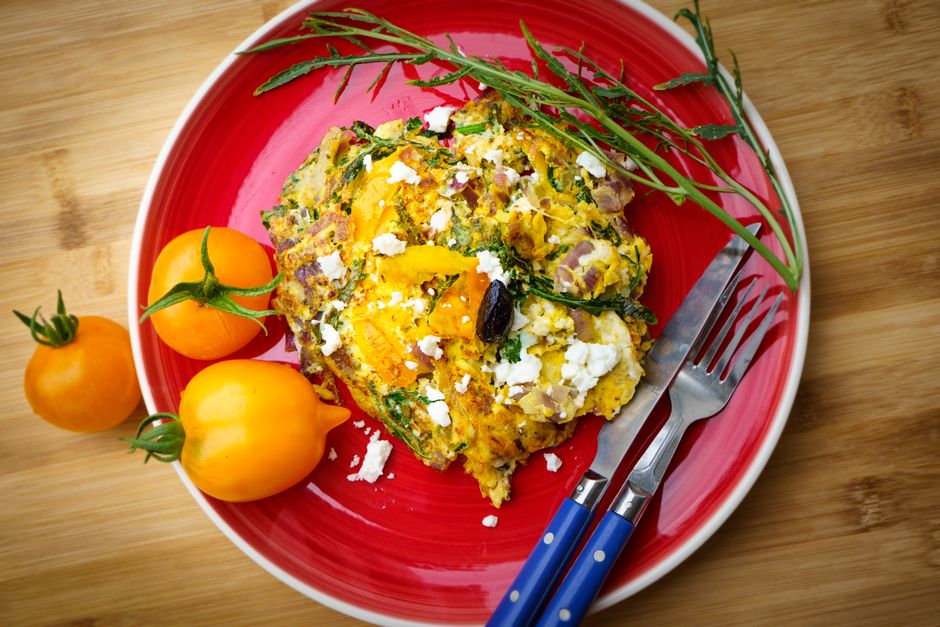
A spinach omelette is fluffy eggs folded around wilted spinach, crumbled feta, and diced tomatoes — about 320 calories and 24g protein per serving in 10 minutes. The eggs are soft and tender. The spinach adds color and nutrients. The feta brings salty, tangy bursts. This is a complete breakfast in one folded package.
This is not a rubbery diner omelette cooked to death. Proper technique produces soft, creamy eggs that barely hold their shape. If you want other egg-based breakfasts, try scrambled eggs with spinach for something simpler or shakshuka for poached eggs in tomato sauce.
Nutrition and macros by portion
The nutrition label shows one omelette as written: 320 calories, 24g protein, 6g carbs, 22g fat.
| Portion | Adjustment | Calories | Protein | Carbs | Fat |
|---|---|---|---|---|---|
| Lighter | 2 eggs, less feta | 240 kcal | 18g | 4g | 16g |
| This serving | As written (3 eggs) | 320 kcal | 24g | 6g | 22g |
| Hungry | Add toast and avocado | 520 kcal | 28g | 32g | 34g |
The protein is excellent for a quick breakfast — 24g from eggs and feta. The carbs are minimal, coming only from vegetables. The fat is higher because eggs contain fat in the yolks, which also provide essential nutrients like choline and vitamin D.
Wilting spinach first
Cook the spinach separately before making the omelette. Heat a pan, add spinach, and stir for 30 seconds until just wilted. Remove immediately. Raw spinach in an omelette releases water and makes it soggy. Pre-wilted spinach is concentrated and dry.
Use about 60g fresh spinach — it reduces dramatically when cooked. This becomes a compact, flavorful filling.
The perfect omelette technique
Beat 3 eggs with salt and pepper until uniform — about 30 seconds of vigorous whisking. Some people add a splash of water for fluffiness; others prefer milk for richness. Both work.
Melt butter in a non-stick pan over medium heat. Pour in eggs. Let them set undisturbed for 30 seconds until the bottom firms. Then gently lift the edges with a spatula, tilting the pan to let uncooked egg flow underneath. Repeat around the edges until the top is still slightly wet but not liquid.
Filling and folding
Add fillings to one half of the omelette while the top is still slightly wet. Place wilted spinach, crumbled feta, and diced tomatoes on one side. Fold the empty half over the filling. Let it sit 30 seconds more to melt the cheese slightly.
Slide onto a plate seam-side down. The residual heat continues cooking, so the interior stays creamy rather than rubbery.
Common mistakes to avoid
Heat too high: Brown, rubbery eggs. Medium heat only.
Overcooking: The top should still be slightly wet when you add fillings. It finishes cooking from residual heat.
Too much filling: The omelette cannot fold properly. Use restraint.
Wet spinach: Squeeze out excess water after wilting, or pre-wilt and drain.
Not using non-stick: Omelettes stick to regular pans. Non-stick is essential.
Feta cheese selection
Crumbled feta adds pockets of salty, tangy flavor. About 30g provides flavor without overwhelming. Greek feta is creamier; French feta is tangier. Either works. Goat cheese is a good substitute with similar tang.
Tomato options
Cherry tomatoes are ideal — dice them small so they distribute evenly. Regular tomatoes work but have more liquid. Drain diced tomatoes on a paper towel to prevent sogginess. Sun-dried tomatoes add concentrated flavor without excess moisture.
Variations
Greek: Add kalamata olives and oregano.
Mediterranean: Add roasted red peppers and basil.
Protein boost: Add diced ham or turkey.
Veggie loaded: Add mushrooms, bell peppers, and onions.
The 10-minute breakfast
Wilt spinach, set aside — 1 minute. Beat eggs — 30 seconds. Cook omelette base — 2-3 minutes. Add fillings, fold — 1 minute. Plate and serve. A restaurant-quality omelette with 24g protein in the time it takes to make toast. This is efficient morning cooking.