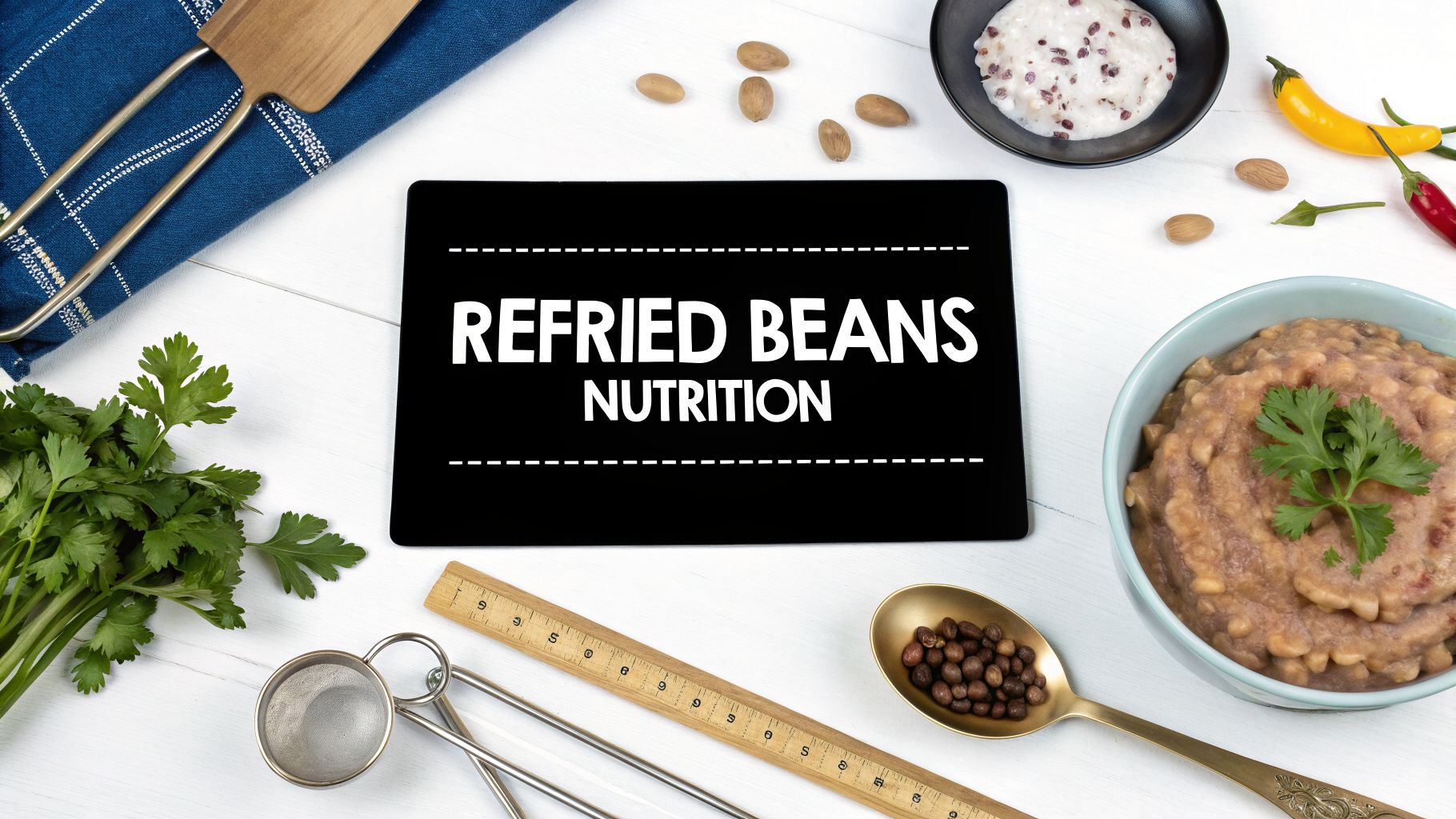
A one-cup serving of traditional refried beans contains approximately 234 calories, 13 grams of protein, and 10 grams of fiber. They are a good source of iron (20% DV) and magnesium (22% DV). However, canned versions can be very high in sodium, sometimes exceeding 970 mg per cup (42% DV).
Refried beans often get a bad rap, dismissed as a heavy, fat-laden side dish you only find at a Mexican restaurant. But it's time to look past that stereotype. When you peel back the layers, you find a surprisingly powerful, nutrient-dense food that can be a game-changer for modern, health-conscious eating.
This guide will cut through the confusion and demystify the nutritional reality of refried beans. We’ll break down what’s really inside, how to sidestep the pitfalls at the grocery store, and how you can make this humble dish a cornerstone of your health and fitness goals.
What Nutrients Are in a Serving of Refried Beans?
Most people see refried beans as just another side dish on their combo plate, but that's selling them way short. Think of them less as a filler and more as a foundational food. A good serving is packed with the kind of slow-burning fuel your body needs to stay energized and full for hours, thanks to a solid balance of protein and complex carbs.
For anyone tracking their macros or just trying to eat smarter, the numbers speak for themselves. A standard one-cup serving (around 260g) of typical canned refried beans gives you:
- 234 calories
- 13 grams of protein
- 35 grams of carbohydrates
- A massive 10 grams of fiber
- Only 5 grams of fat
This combination of high protein and even higher fiber is what makes them so incredibly filling. It's a nutritional profile that punches well above its weight class.

As you can see, you get a substantial amount of protein and fiber for a relatively low calorie count, which is the hallmark of a nutrient-dense food.
How do the macronutrients benefit you?
That 13 grams of protein is a huge win, especially for anyone on a plant-based diet. It provides the essential amino acids your body needs to repair and build muscle, making it a fantastic addition to a meal after a tough workout. You can learn more about building high-protein meals in our dedicated guide.
To really appreciate where beans fit in, it helps to have a solid grasp of what vegan protein is and how it works in your diet. This context shows you just how effectively a simple food like beans can anchor your protein intake for the day.
The powerful duo of high fiber and complex carbs is what gives refried beans their staying power. This combo ensures a slow, steady release of energy, preventing the dreaded sugar crash and keeping you feeling full and focused for hours.
What about micronutrients?
Beyond the big three macros, refried beans are loaded with essential minerals that are crucial for everything from energy levels to immune function. A single cup delivers a serious dose of your daily requirements for several key players:
- Iron: You get about 20% of your daily needs, which is vital for creating oxygen-carrying red blood cells and fighting off fatigue.
- Magnesium: This serving supplies 22% of your daily value. Magnesium is a workhorse mineral involved in over 300 different bodily processes, including muscle function, nerve signaling, and keeping your heart rhythm steady.
- Zinc: It provides 14% of your daily intake, playing a key role in supporting a strong immune system and helping with cell growth and repair.
This table breaks down the key nutritional data for a standard one-cup serving, putting these numbers into the context of your daily needs.
Nutritional Profile of Refried Beans (Per 1 Cup Serving)
| Nutrient | Amount per 1 Cup (260g) | Percentage of Daily Value (%DV) |
|---|---|---|
| Calories | 234 kcal | 12% |
| Protein | 13 g | 26% |
| Fiber | 10 g | 36% |
| Total Fat | 5 g | 6% |
| Sodium | 972 mg | 42% |
| Iron | 3.6 mg | 20% |
| Magnesium | 94 mg | 22% |
| Zinc | 1.5 mg | 14% |
This detailed breakdown really shows how a simple serving can cover a significant chunk of your daily nutritional targets. The one number to watch is the sodium, which can be high in many canned versions—something we'll cover how to manage later on.
Are Canned Refried Beans a Healthy Choice?
That can of refried beans is a weeknight lifesaver, right? It promises a quick, satisfying side dish in minutes. But when you're focused on nutrition, the convenience of canned goods often raises a big question: are they actually a healthy choice, or are you better off making them from scratch?
While grabbing a can is undeniably easy, the nutritional trade-offs can be huge. We're talking about major differences in sodium, fat, and a whole host of hidden additives you might not expect.

Many traditional and store-bought refried beans get their classic, rich flavor from lard (pork fat). While delicious, lard is high in saturated fat, which isn't great for heart health over the long term. You'll often see "vegetarian" versions that swap lard for vegetable oils, but the type and amount can still pack in unnecessary calories and processed fats.
What are the main problems with canned beans?
The single biggest issue with most canned refried beans is the sodium. It's not uncommon for a single half-cup serving to contain over 500 mg of sodium. That’s more than 20% of the daily recommended limit in just a few spoonfuls, making it incredibly easy to go overboard.
Think of it this way: buying canned beans is like getting a pre-set meal you can't change. Making them at home lets you be the chef, giving you total control over every single ingredient for better health.
On top of the salt, many canned varieties contain preservatives and flavor enhancers to improve shelf life and taste. When you make them yourself, you sidestep all of it. If managing high blood pressure is a priority, our guide to building a low-sodium meal plan has more great strategies.
How can you pick a healthier canned option?
Even with all that said, a busy schedule is a real thing, and sometimes the can is your only option. The good news is that not all canned beans are created equal. You can absolutely make a smarter choice at the grocery store by becoming a quick label detective.
Here’s what to look for:
- "Fat-Free" or "Vegetarian": This is the fastest way to sidestep lard and cut down on saturated fat.
- "Low-Sodium" or "No Salt Added": Scan the front of the label for these keywords. It’s the single most impactful change you can make.
- Read the Ingredients: The shorter the list, the better. You want to see beans, water, and spices—and not much else.
To see just how different the two options can be, take a look at this side-by-side comparison.
Canned vs. Homemade Refried Beans: A Nutritional Comparison
The differences between a standard canned product and a simple homemade version become crystal clear when you put them head-to-head. The table below highlights where the biggest nutritional gaps are.
| Nutritional Factor | Typical Canned Refried Beans | Healthy Homemade Version |
|---|---|---|
| Primary Fat Source | Often contains lard or hydrogenated oils. | Uses minimal olive oil or is fat-free. |
| Sodium (per ½ cup) | Frequently 500-700+ mg. | You control it; can be under 100 mg. |
| Additives & Preservatives | May contain preservatives for shelf life. | None; just fresh, whole ingredients. |
| Customization | Flavor and ingredients are fixed. | Fully customizable with your favorite spices. |
As you can see, taking just a little extra time to prepare your own gives you complete authority over the final product, ensuring it aligns perfectly with your health goals.
How Can Refried Beans Support Your Diet Goals?
Think of refried beans as more than just a simple side dish for your burrito. They're a true nutritional chameleon, ready to adapt to almost any eating style or health goal you throw at them. Whether you're aiming for weight loss, trying to build muscle, or simply want to eat more plants, their balanced mix of protein and fiber can be a game-changer.
The real key is knowing how to use their strengths to your advantage. By making smart choices—like picking the right pairings and steering clear of the usual suspects like excess lard and sodium—you can turn this humble food into a powerful cornerstone of your weekly meal plan.
How can refried beans help with weight loss?
If dropping a few pounds is your goal, then satiety is your best friend. And refried beans deliver on that front, big time. Their high fiber content is the hero here, slowing down digestion to help you feel full and satisfied long after you've finished eating. That feeling is what kills the urge to grab unhealthy snacks between meals.
This sense of fullness is a huge win for managing your calorie intake without feeling like you're constantly starving. A half-cup serving gives you a solid hit of protein and fiber for a pretty low calorie cost, making it an incredibly efficient way to fuel your body while staying on track with your daily targets.
- Smart Swap: Ditch the sour cream and cheese. A dollop of fresh salsa or a spoonful of plain Greek yogurt gives you that creamy texture with way fewer calories and a bonus protein kick.
- Meal Idea: Give refried bean and avocado toast a try on a hearty slice of whole-wheat bread. It's a high-fiber breakfast that will easily keep you full until lunchtime.
Can refried beans help build muscle?
Absolutely. For anyone focused on fitness, the 13 grams of protein you get in a typical one-cup serving is a serious contribution, especially from a plant source. That protein provides the essential amino acids your body needs to get to work repairing and rebuilding muscle tissue after you've hit the gym.
While refried beans aren't a "complete" protein on their own, that's an easy fix. They are easily complemented by other foods to create a meal with a full amino acid profile, turning them into an excellent part of a post-workout recovery plan.
Refried beans stand out for their robust fiber and mineral profile, making them ideal for anyone pursuing weight loss, muscle gain, or managing chronic conditions. One cup boasts 10g of fiber (40% DV) for satiety and 13g of protein for muscle repair, all for just 234 calories. Discover more insights about the complete nutritional value of refried beans on Nutriscan.
Are they suitable for plant-based and diabetic-friendly diets?
Refried beans are a true superstar for plant-based eaters. As long as you choose a version made without lard, they offer a hearty, satisfying source of both protein and iron—two nutrients that can require some careful planning on a vegan or vegetarian diet.
For anyone managing their blood sugar, the nutritional stats on refried beans are particularly powerful. The high fiber content works to slow down how quickly sugar is absorbed into your bloodstream, helping to prevent those sharp spikes and crashes. This promotes more stable energy levels throughout the day, making them a very smart carbohydrate choice. For more ideas on this, check out our guide to building a diabetic-friendly meal plan.
- Complete Protein Pairing (Vegan): It's a classic for a reason. Combine your refried beans with corn tortillas, brown rice, or quinoa. This simple pairing creates a complete protein, giving you all nine essential amino acids.
- Blood Sugar-Friendly Meal: Serve a portion of low-sodium refried beans next to a pile of grilled vegetables and a lean protein like chicken or fish. It's a perfectly balanced, low-glycemic meal that tastes fantastic.
Why Are Beans Becoming So Popular?
Have you noticed beans showing up everywhere lately? It feels like one day they were a quiet pantry staple, and the next, they're the star of food blogs and trendy restaurant menus. This isn't just a fluke. The humble bean is sitting right at the intersection of a few massive shifts in how we think about food, health, and the planet.
The two biggest forces behind this surge are the boom in plant-based eating and a collective desire for more sustainable food choices. As more of us cut back on meat—whether for our health, the environment, or ethical reasons—beans have stepped up as the perfect alternative. They’re affordable, easy to find, and packed with protein, giving plant-forward meals a hearty, satisfying feel that actually keeps you full.
Why are beans a good choice for health and the environment?
Beyond our own plates, beans are a massive win for the environment. Legumes have an almost magical ability to “fix” nitrogen in the soil. This natural process actually enriches the ground they grow in, which means less need for chemical fertilizers and healthier soil for whatever gets planted next.
And let's be honest, they're just plain smart financially. In a world where grocery bills are a real source of stress, being able to cook up a filling, nutritious meal for a fraction of the cost of a meat-based dish is a game-changer. This makes healthy eating feel possible for so many more people. We're even seeing a deeper interest in specific varieties, with things like a complete guide to buying Honey Beans (Ewa Oloyin) becoming common resources for home cooks.
Is this popularity supported by data?
This isn't just some passing trend; it's a major market shift with the economic data to back it up. The canned beans market alone has exploded, growing from USD 4.20 billion in 2020 and on track to hit a projected USD 10.14 billion by 2029. This boom is a direct reflection of our demand for convenient, plant-based foods that fit into our busy lives. You can read the full research on the canned beans market to see the detailed forecasts for yourself.
The bigger picture is just as impressive. The entire edible beans market hit USD 20.40 billion in 2024 and is forecasted to climb to USD 26.39 billion by 2033. This growth is being pushed directly by the momentum of veganism and a broader awareness of the benefits of plant-based protein.
This data makes one thing crystal clear: the popularity of foods like refried beans is part of a lasting movement. They represent a choice that’s not only great for your personal refried beans nutrition goals but is also smart for your wallet and a whole lot kinder to the planet.
How Can You Add Refried Beans to Your Meal Plan?

Understanding the nutrition numbers is one thing, but putting that knowledge into practice is where you’ll see the real results. It’s time to move beyond just taco night and start thinking about how this versatile staple can fit into your meals all week long.
With a little creativity, refried beans can become a cornerstone for breakfast, lunch, and dinner, boosting your protein and fiber with minimal effort. Their creamy texture and savory flavor make them an ideal base for countless dishes.
How can I creatively use refried beans?
Think of refried beans as a blank canvas. They can add substance to a quick breakfast, create a hearty filling for a work lunch, or serve as a satisfying dip for an afternoon snack.
Here are a few ideas to get you started:
- Breakfast Tostada: Spread a warm layer of refried beans on a crispy corn tortilla. Top it with a fried egg, a sprinkle of cotija cheese, and fresh salsa for a protein-packed start to your day.
- Hearty Lunch Wrap: Use refried beans as a creamy, binding "glue" in a whole-wheat wrap. Fill it with grilled chicken or chickpeas, crisp lettuce, and diced tomatoes for a balanced and portable meal.
- Protein-Packed Dip: Mix refried beans with a little lime juice and your favorite spices. Serve it with carrot sticks, bell pepper slices, and whole-grain crackers for a smarter snack that crushes afternoon hunger.
- Savory Dinner Bowl: Create a delicious and filling bowl by layering brown rice, seasoned refried beans, roasted sweet potatoes, and a scoop of guacamole.
How should I manage portions and tracking?
To maximize the benefits without overdoing it on calories or sodium, portion control is key. A good serving size to aim for is between 1/2 and 1 cup. This amount provides a serious nutritional boost while fitting easily into most daily calorie targets.
When tracking your macros, don't forget to account for both the beans and any fats they were cooked in. Homemade, fat-free versions are the easiest to track accurately since you have full control over every ingredient.
Manually calculating macros for every meal can feel like a chore, and it's easy to fall off track. This is where modern tools can completely change the game, making healthy eating feel effortless instead of overwhelming.
For anyone looking for a more streamlined approach, planning is everything. Exploring different options for a customized vegetarian meal plan can provide the structure and fresh ideas you need to stay consistent.
Integrating foods like refried beans, managing leftovers, and hitting specific nutrition targets becomes much simpler with a dedicated system. A tool like the AI Meal Planner can seamlessly build these meals into your week, generating a smart grocery list and taking all the guesswork out of hitting your health goals. It’s the perfect way to turn good intentions into consistent, healthy habits.
Questions About Refried Beans Nutrition
Are refried beans a complete protein?
No, refried beans are not a complete protein on their own. To make them complete, simply pair them with rice, corn, or quinoa to provide all essential amino acids.
Which refried beans are healthiest: pinto or black?
Both pinto and black refried beans are incredibly healthy and have nearly identical nutritional profiles. Pinto beans are slightly creamier, while black beans offer a higher concentration of antioxidants.
Can eating refried beans help with weight loss?
Yes, the high fiber and protein content in refried beans can promote feelings of fullness, which helps control appetite and can support weight loss goals. Choose fat-free versions for the best results.
Can I eat refried beans every day?
Yes, you can eat a portion of refried beans daily, but it's best to rotate them with other legumes like lentils or chickpeas for a wider range of nutrients. A typical serving is about 1/2 to 1 cup.
Do refried beans cause gas and bloating?
They can, due to their high fiber content. To minimize this, introduce them into your diet slowly, rinse canned beans well before using, and stay well-hydrated.
How much sodium is in canned refried beans?
Canned refried beans can be very high in sodium, often containing over 900 mg per cup. Look for "low-sodium" or "no salt added" versions to control your intake.
Are traditional refried beans vegan?
No, traditional refried beans are often made with lard (pork fat). Always check the label for "vegetarian" or "fat-free" to ensure they are plant-based.
Ready to stop guessing and start building balanced meals? AI Meal Planner creates personalized weekly plans with foods like refried beans, calculating all your macros and calories for you. Get your smart grocery list and start eating better today. Find out how you can build a smarter meal plan at https://ai-mealplan.com/onboarding.
AI-powered nutrition
Get Your Personalized Meal Plan
AI creates the perfect meals for your goals, lifestyle, and taste.
Start Your Journej