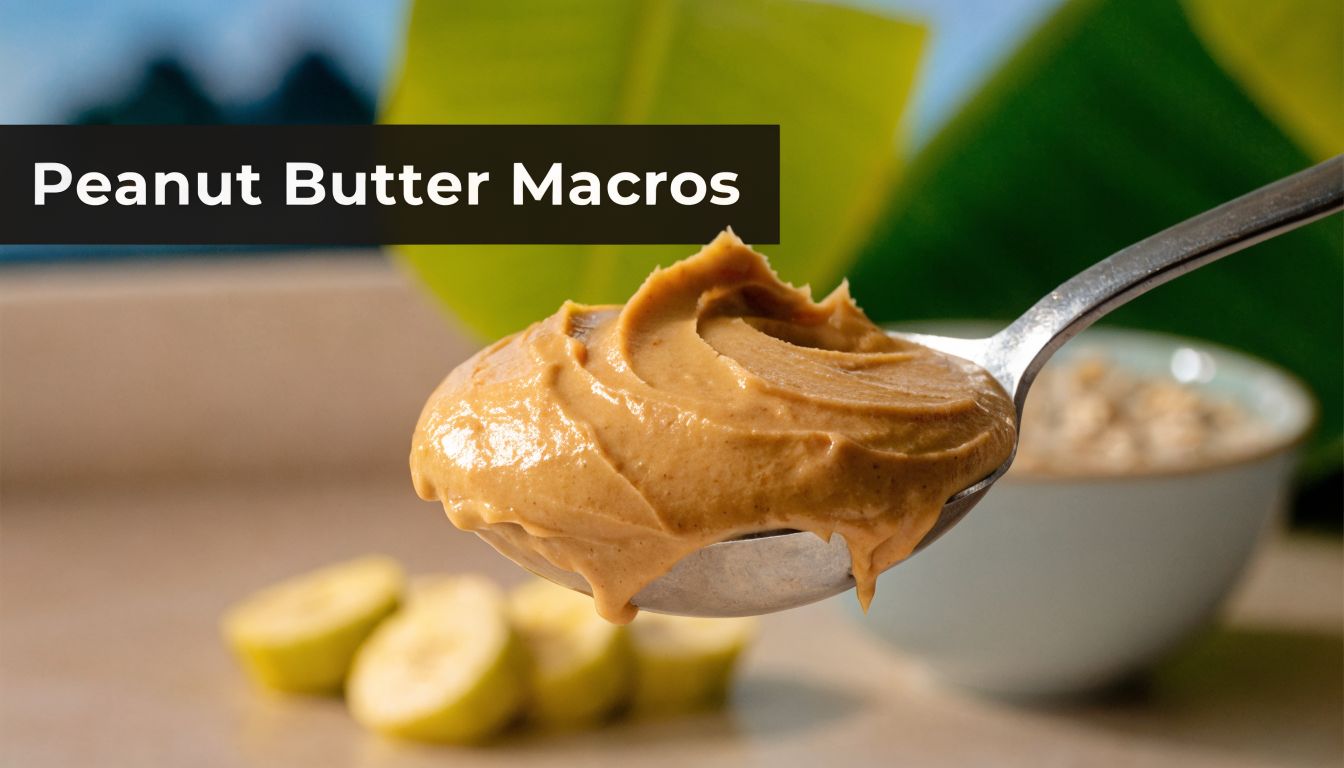
You’re probably looking at a peanut butter jar because you want something fast that still helps your goal, not just something that tastes good. 2 tbsp peanut butter is a useful portion because it’s a defined nutritional unit you can plug into a snack, breakfast, or post-workout meal without guessing.
How much nutrition is in 2 tbsp peanut butter?
Two tablespoons of peanut butter, about 32g, provide 188 calories, 16.12g fat, 6.26g carbohydrates, and 8.03g protein according to FatSecret’s peanut butter nutrition data. It also contains 1.9g fiber, 2.95g sugars, and 208mg potassium. Used deliberately, this serving works well for satiety, macro tracking, and quick meal building.
Peanut butter gets treated like either a “health food” or a “diet mistake.” In practice, it’s neither. It’s a compact portion of calories, fat, and plant protein that works well when you measure it properly and place it where it solves a real problem, such as staying full between meetings, adding energy to a post-gym meal, or making a vegan snack more substantial.
That’s why I like to frame 2 tbsp peanut butter as a repeatable unit. It’s easier to use well when you stop thinking of it as random spoonfuls from the jar and start thinking of it as a portion with a job.
What Are the Exact Macros in a Serving of Peanut Butter?
A measured 2 tbsp serving gives you a predictable block of calories and macros to place where it serves a purpose in the day.

What the numbers look like in one serving
| Nutrient | Amount in 2 tbsp |
|---|---|
| Calories | 188 |
| Total fat | 16.12g |
| Monounsaturated fat | 7.59g |
| Polyunsaturated fat | 4.44g |
| Carbohydrates | 6.26g |
| Fiber | 1.9g |
| Sugars | 2.95g |
| Protein | 8.03g |
| Potassium | 208mg |
| Sodium | 147mg |
| Cholesterol | 0 |
As noted earlier, these figures refer to a standard 32g serving. That makes 2 tbsp peanut butter a useful nutritional unit. You can slot it into a plan for appetite control, higher calorie intake, or better meal structure without having to estimate what a random scoop might contain.
The macro profile is fat-forward. At 16.12g of fat, this portion delivers most of its energy through fat, with 8.03g of protein and 6.26g of carbs playing supporting roles. In practical terms, that makes it more effective for staying power than for hitting a meal’s full protein target.
That distinction helps. If the goal is to stay full between meals, this serving works well with foods that add volume and fiber, such as apple slices, oats, or whole grain toast. If the goal is muscle gain or to get enough calories in, it fits easily into a smoothie, yogurt bowl, or a couple slices of toast without creating much food volume.
The protein count is useful, but it should be judged accurately. Eight grams helps a snack do more work for satiety and recovery, yet it usually needs a partner food if you want a more complete high-protein meal. Greek yogurt, soy yogurt, milk, cottage cheese, or higher-protein bread all make this portion more effective.
Fiber contributes to fullness too. On its own, 1.9g is modest. Paired with fruit or oats, it helps slow the pace of the meal and makes the portion feel more substantial.
The fat breakdown is also relevant for meal design. A large share comes from monounsaturated and polyunsaturated fat, which is one reason peanut butter tends to perform better as part of a planned snack or breakfast than as repeated spoonfuls from the jar. Portion discipline decides whether this food supports the plan or subtly pushes calories above it.
Micronutrients round out the serving. You also get potassium, plus smaller amounts of magnesium, iron, vitamin E, and vitamin B6. That does not turn peanut butter into a complete food, but it gives the portion more nutritional range than a simple calorie count suggests.
For anyone building meals around targets instead of guesswork, an AI nutritionist tool can help match portions like this to your calorie and protein goals. If you are still learning the basics, this guide to counting macros for beginners is a practical place to start.
How Can You Accurately Measure Two Tablespoons?
Many don’t under-measure peanut butter. They round up without noticing.

A proper serving is leveled, not heaped. If the spoon looks generous, it probably is. That matters because peanut butter is dense, sticky, and easy to overserve.
What works best
The most reliable method is a digital food scale. Put your bowl or plate on the scale, tare it to zero, then add peanut butter until you hit about 32g, which is the serving size tied to the macro data used earlier.
If you don’t have a scale, use actual measuring spoons. Scoop, then level the top with the back of a knife or a straight edge. Don’t count a rounded mound as a tablespoon unless you want a larger portion and are accounting for it on purpose.
What usually goes wrong
Three habits create most portion creep:
- Using a dinner spoon: A normal spoon from the drawer isn’t a standard tablespoon.
- Scooping straight from the jar twice: The second scoop is usually larger than the first.
- Adding “just a little more”: That’s how a measured serving turns into a free-pour ingredient.
A measured serving should look neat and almost underwhelming. That’s normal.
This is especially important if you’re following recipes from different regions, because tablespoon and teaspoon assumptions can get messy. If you cook from mixed sources, understanding UK recipe conversions can save you from accidental portion errors. For other food measurement help, practical kitchen calculators in these meal planning tools can make portioning less tedious.
Does Peanut Butter Help with Weight Loss or Muscle Gain?
A 2 tbsp serving matters most when appetite and calorie targets start pulling in opposite directions. On a cut, it can keep a snack from turning into a grazing session. In a gaining phase, the same portion can raise calories without forcing a large meal.

That is why I treat 2 tbsp of peanut butter as a useful nutritional unit, not just a condiment. It gives you a repeatable dose of calories, fat, and some protein that you can place differently depending on the goal.
When it helps with weight loss
For fat loss, peanut butter works best as a controlled substitute for a snack that leaves you hungry an hour later. Its calorie density can work in your favor when the portion is measured and paired with foods that slow the pace of eating, such as apple slices, plain Greek yogurt, or oats.
The useful angle here is appetite regulation, not just “it’s filling.” Beast Life’s overview of 2 tbsp peanut butter calories notes that the protein and fat in a 2 tbsp serving may support satiety through hormones such as PYY and GLP-1, helping some people stay full for 2 to 3 hours longer than after an isocaloric carbohydrate snack.
In practice, that matters most during the parts of the day where plans usually break down. Mid-morning at work, late afternoon between meetings, or after dinner when people start picking at snacks. A measured serving can steady those windows.
The trade-off is simple. Peanut butter helps a weight-loss phase when it replaces a less satisfying option. It gets in the way when it becomes an automatic extra on toast, smoothies, oatmeal, and dessert all in the same day.
For weight loss, use peanut butter with intent. Do not let it drift into the plan by habit.
When it helps with muscle gain
For muscle gain, the value shifts from appetite control to calorie efficiency. Some lifters can train hard but still struggle to eat enough total energy, especially once meal volume starts feeling like work.
The 2 tbsp serving earns its place. It adds meaningful calories in a portion small enough to mix into oats, blend into a shake, or spread on a sandwich without making the meal harder to finish. You also get a modest protein contribution, although it should support your protein plan rather than carry it.
A practical example is post-workout oatmeal with banana and peanut butter. The meal is easy to eat, easy to repeat, and easier to scale than another full plate of rice and chicken.
Later in the day, this can be useful too:
What works and what doesn’t
| Goal | Peanut butter works when | Peanut butter doesn’t work when |
|---|---|---|
| Weight loss | You measure it and use it to make a planned snack hold you longer | You eyeball the portion and keep adding it to meals that were already calorie-complete |
| Muscle gain | You use it to raise calories in meals that are easy to repeat | You expect it to cover your protein needs by itself |
| General health | You fit it into meals on purpose and keep the serving consistent | You treat “natural” peanut butter as unlimited |
If muscle gain is your focus, structure usually beats guesswork. A targeted muscle gain meal plan can place foods like peanut butter where they support recovery, calorie intake, and steady progress.
Is Peanut Butter Okay for Keto, Vegan, and Other Diets?
It usually fits. The key is the label and the role it plays in the meal.

For keto
Peanut butter often works on keto because it’s fat-forward and relatively modest in carbs compared with many snack foods. The catch is that some jars include added sugars or extra ingredients that make the portion less keto-friendly in practice.
Check the ingredient list first. Shorter is usually better. Then decide where it belongs. A spoonful added to a keto smoothie or eaten with a low-carb side tends to fit better than spreading it onto bread and calling the combination keto.
For people building a lower-carb structure, a keto meal plan can help place energy-dense foods more consistently.
For vegan eating
Peanut butter is one of the easiest ways to make vegan meals more substantial. It contributes plant protein, fat, and flavor without requiring prep.
It’s especially useful in breakfasts and snacks that would otherwise be too light. Stirring it into oats, blending it into a smoothie, or using it in a quick sauce can turn a weak vegan meal into one that holds you over.
For general healthy eating
The best peanut butter is often the simplest one you’ll consistently use. Read labels with three questions in mind:
- What’s added: Look for added sugar and extra oils.
- How salty it is: Some people do better with lower-sodium options.
- Whether you tolerate it well: Taste and digestion both matter.
If nut tolerances are a concern in your household, it can also help to understand how reactions differ across foods. This overview of almond intolerance insights from ImuPro Australia is useful background when you’re comparing nut and seed options.
Choose peanut butter the same way you choose yogurt or bread. Don’t stop at the front label.
What Are Some Quick Meals with a Serving of Peanut Butter?
The best use of peanut butter is often the simplest one you’ll repeat on busy days. You don’t need a recipe collection. You need a few combinations that are fast, reliable, and easy to portion.
One solid breakfast is oatmeal with a measured serving of peanut butter stirred in after cooking. It adds richness and makes a plain bowl more satisfying. If you want more texture, sliced banana works well here.
For a fast desk snack, pair 2 tbsp peanut butter with apple slices or celery. Apple makes the snack sweeter and more filling. Celery gives you crunch and keeps the snack lighter in feel.
A smoothie is another practical option. Blend peanut butter with milk or a plant-based alternative, fruit, and your usual protein source if you use one. Peanut butter gives the drink body, and it turns a thin smoothie into something that feels like a meal.
Savory meals work too. Stir peanut butter with warm water and seasonings you already use to make a quick sauce for noodles, rice bowls, or cooked chicken or tofu. The flavor is stronger than the effort required.
Here are five combinations that are easy to repeat:
- Breakfast bowl: Oatmeal plus peanut butter and fruit.
- Work snack: Apple slices with a measured portion on the side.
- Gym support: Smoothie with peanut butter for extra staying power.
- Fast lunch: Peanut butter on toast with sliced banana, if that fits your plan.
- Quick dinner shortcut: Peanut sauce over leftovers to make them feel like a new meal.
What usually fails is putting peanut butter into everything because it’s convenient. It works best when it solves one specific meal problem at a time.
How to Intelligently Integrate Peanut Butter Into Your Plan
A common failure point in meal planning is decision fatigue. The day gets busy, hunger shows up, and the foods that win are the ones that are easy to grab and easy to repeat. 2 tbsp peanut butter works well because it gives you a fixed unit you can plug into your day without renegotiating the calories every time.
That matters more than people expect.
A measured serving creates a repeatable rule. One jar, one spoon, one known portion. In practice, that makes peanut butter useful for learning portion control with a calorie-dense food. It also exposes a trade-off clearly. This serving can improve fullness and make a light meal hold longer, but it also uses a meaningful share of your calorie budget, so it should replace something or fill a specific gap.
The practical question is simple: what problem is this portion solving in your plan? For some people, it prevents a random snack run in the afternoon. For others, it makes a small breakfast more durable or helps a rushed meal feel complete. Used that way, peanut butter becomes less of a craving food and more of a planned input.
That shift is what makes it sustainable.
If you want less guesswork, keep peanut butter in your plan as a repeatable nutritional unit rather than a free-pour extra. For a more structured setup, AI Meal Planner can build meals around your actual calorie target, diet style, and routine.
Frequently Asked Questions About Peanut Butter
| Question | Answer |
|---|---|
| Is 2 tbsp peanut butter a standard serving? | Yes. Two tablespoons, about 32g, is the standard serving tied to the nutrition data used in this article. |
| Is 2 tbsp peanut butter too much for weight loss? | Not if you measure it and account for it in your daily intake. It becomes a problem when the portion is guessed or repeatedly added as an extra. |
| Is peanut butter a good source of protein? | It offers a useful amount of plant protein for a small serving, but it isn’t the same as a lean high-protein food. |
| Should I eat peanut butter before or after a workout? | It can work in either spot, depending on the rest of the meal. Many people tolerate it well when paired with a carbohydrate source. |
| Is natural peanut butter better? | It’s often a better fit if you want fewer added ingredients. The label matters more than the marketing on the jar. |
| Can vegans use peanut butter as a protein source? | Yes, especially in snacks and breakfast meals, though it’s best used as part of a broader mix of protein foods. |
| What’s the biggest mistake people make with peanut butter? | They don’t measure it. A heaping spoonful can turn a planned serving into something much larger without looking dramatic. |
If you want peanut butter, oats, snacks, and full meals to fit your goals without manual math, AI Meal Planner can build a personalized plan around your calories, macros, diet style, and schedule.
AI-powered nutrition
Get Your Personalized Meal Plan
AI creates the perfect meals for your goals, lifestyle, and taste.
Start Your Journej