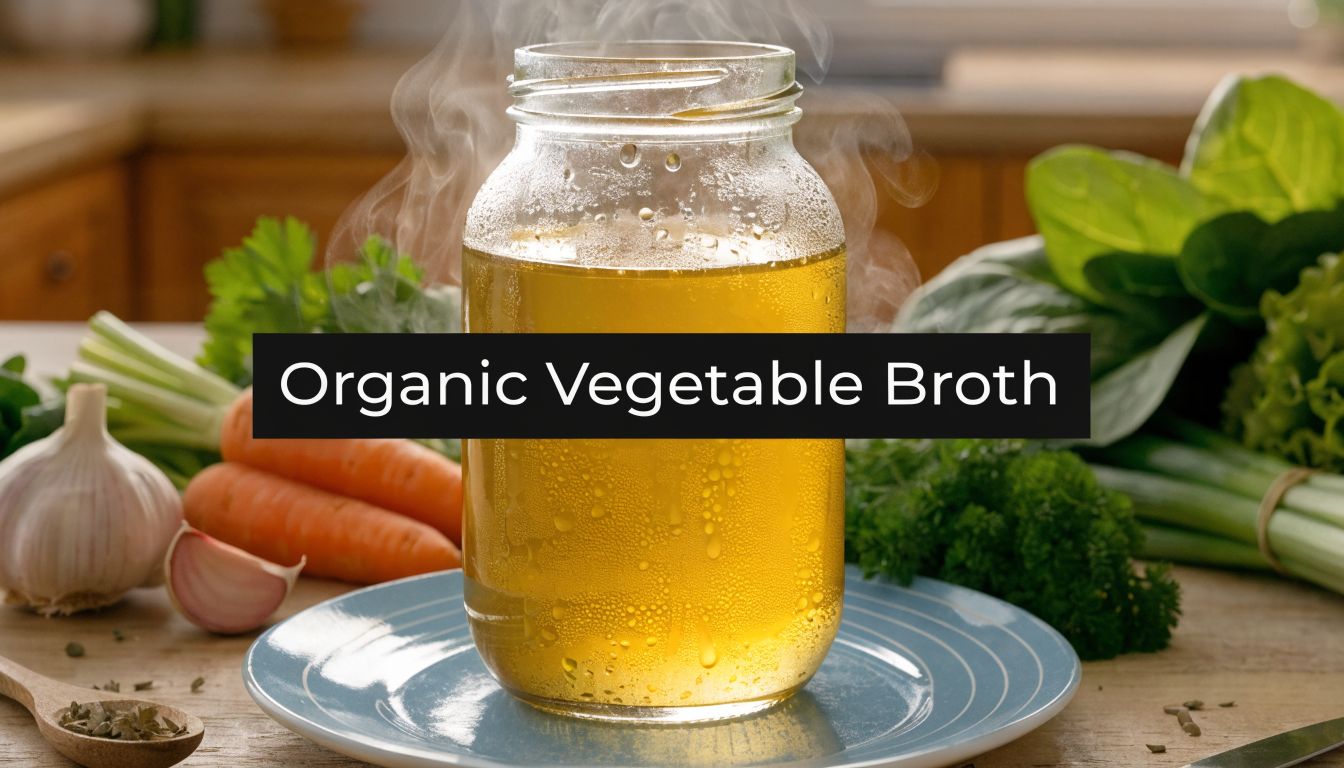
Organic vegetable broth is a cooking liquid made by simmering vegetables grown without synthetic pesticides or fertilizers. It is considered better for you because it guarantees non-GMO ingredients and reduces your exposure to agricultural chemicals. A typical 1-cup serving contains only 10-15 calories, 0g of fat, and is low in sodium, making it a healthy base for many recipes.
At its heart, organic vegetable broth is a simple, comforting staple made from simmering vegetables and aromatics—like carrots, onions, and celery—that have been grown according to the strict standards set by the USDA. This isn't just about a fancy label. It's a straightforward choice for anyone looking to minimize their exposure to agricultural chemicals and build healthier meals from the ground up.
Why Should I Choose an Organic Vegetable Broth?
Reaching for organic broth is a deliberate choice to prioritize what you put in your body. When you see that "USDA Organic" seal, you're getting a product with clear guarantees that trace all the way from the farm to your pantry, offering peace of mind for health-conscious cooks and their families.
What Does the "USDA Organic" Seal Guarantee?
That seal represents a firm commitment to a specific standard of agriculture and production. Here’s what it guarantees:
- No Synthetic Pesticides or Fertilizers: The vegetables used are grown in soil that has been free from prohibited substances for three years before harvest. This drastically reduces your exposure to the chemical residues often found on conventionally grown produce.
- Non-GMO Ingredients: Genetically modified organisms (GMOs) are strictly forbidden in any certified organic product. If avoiding GMOs is a priority, that seal is the most reliable guide you can find.
- Sustainable Farming Practices: Organic agriculture is built on methods that promote ecological balance and conserve biodiversity, like crop rotation and natural pest management.

How Does Choosing Organic Support My Health Goals?
When you're carefully planning your meals, the purity of every ingredient counts. Broth forms the base for so many dishes—from soups and stews to sauces and grains—so starting with a clean foundation is one of the smartest moves you can make. This is especially true if you're following a specific dietary plan, like the ones you can build with our AI Meal Planner.
By choosing organic vegetable broth, you ensure that the first layer of flavor in your recipe is as wholesome and clean as the main ingredients you've carefully selected. It supports a holistic approach to nutrition where every component of your meal aligns with your wellness objectives.
This choice is particularly powerful for anyone looking to reduce their "chemical load." While the debate continues on the long-term impact of low-level pesticide exposure, many people simply prefer to err on the side of caution. Organic broth provides that extra layer of confidence.
For those committed to eating clean, a well-designed plant-based meal plan can amplify these healthy habits. Making simple swaps, like choosing organic broth, is a small but powerful step toward a more mindful and nourishing diet.
What Is the Difference Between Broth, Stock, and Bouillon?
Walking down the soup aisle can be confusing with cartons of broth, boxes of stock, and little cubes of bouillon. They all promise savory flavor, but they are not interchangeable. Knowing the unique role each one plays is a kitchen skill that separates good cooks from great ones.
| Attribute | Organic Vegetable Broth | Vegetable Stock | Bouillon (Cube/Powder) |
|---|---|---|---|
| Main Ingredients | Vegetable flesh and aromatics | Vegetable scraps, ends, and roasted vegetables | Dehydrated broth/stock concentrate, salt |
| Cook Time | Shorter (around 1 hour) | Longer (several hours) | Instant (dissolves in hot water) |
| Body & Texture | Light and thin | Deeper, more viscous | Varies based on water ratio |
| Flavor Profile | Clean, seasoned, and distinct | Rich, deep, and unseasoned | Very salty and concentrated |
| Best For | Light soups, sipping, cooking grains | Rich sauces, gravies, hearty stews | Quick flavor enhancement, marinades |
How Do I Know When to Use Broth, Stock, or Bouillon?
Your recipe's end goal will always point you to the right choice.
- Reach for Broth when you need a light, clear, and flavorful liquid that won't overpower other ingredients. It's the perfect choice for a delicate restaurant-quality Japanese clear soup, cooking quinoa, or as a simple, comforting drink.
- Grab the Stock when your recipe needs a rich foundation with more body. A robust vegetable stock is essential for a vegetarian French onion soup, a thick gravy, or a hearty stew that needs depth.
- Use Bouillon when you're short on time and need an intense hit of savory flavor. It shines when you want to quickly season a pot of water for boiling pasta, punch up a stir-fry sauce, or add a flavor boost to a marinade.

What Are the Nutritional Benefits of Using Organic Broth?
Organic vegetable broth is one of the most underrated tools in a health-conscious kitchen. Beyond its clean, savory flavor, broth adds volume and satisfaction to meals without piling on calories, fat, or dense carbs.
A typical 1-cup serving of organic vegetable broth contains just 10 calories, with 100% carbohydrates, 0% fat, and 0% protein. This incredibly low calorie count means you can use it generously to add moisture and rich, savory depth to dishes. You can see a great nutritional breakdown of one popular option on EatThisMuch.com.
Here’s how it can help you meet your goals:
- Weight Management: Because it's so low in calories, you can build hearty, filling soups and stews that crush hunger without sabotaging your calorie deficit.
- Macro-Conscious Cooking: With virtually no fat or protein, broth is a neutral base. It won’t interfere with your carefully calculated macros, giving you full control.
- Hydration: Sipping on warm, savory broth is a fantastic way to boost your fluid intake, especially on a cold day.
Understanding how to use simple ingredients like this is key to making your diet work for you. For those who want to take it a step further, an AI nutritionist can build a personalized eating strategy around your specific needs.
How Can I Make Quick Organic Vegetable Broth at Home?
You don't need an entire afternoon to make delicious homemade broth. You can create a rich, flavorful organic broth in well under an hour using two simple shortcuts that save time, slash food waste, and put you in complete control of the flavor.

Can I Make Broth From Vegetable Scraps?
Yes, this is one of the most satisfying ways to make broth. Keep a large bag in your freezer and add clean organic veggie odds and ends as you cook. Great candidates include:
- Onion peels and ends
- Carrot peels and tops
- Celery tops and bottoms
- Mushroom stems
- Parsley and thyme stems
Once your bag is full (about 4–6 cups), dump the frozen scraps into a pot, cover with water, and simmer for 30–45 minutes.
What Is the Fastest Way to Make Homemade Broth?
A pressure cooker (like an Instant Pot) is your secret weapon for express broth. It uses high pressure to extract flavor in a fraction of the time. Just toss your fresh organic vegetables or frozen scraps into the pressure cooker, cover them with water, and cook on high pressure for a mere 20–30 minutes.
A key to delicious homemade broth is choosing the right vegetables. Aromatics like onions, carrots, and celery form a classic base. For even more complex flavor, try adding umami-rich ingredients like mushrooms, tomato paste, or a specific heirloom tomato from Seed Cellar's tomato picks.
Are There Any Vegetables I Should Avoid in Broth?
Yes, certain vegetables can completely sabotage your broth.
| Vegetable Group | Reason to Avoid |
|---|---|
| Cruciferous (Broccoli, Cabbage, Brussels Sprouts) | Releases sulfurous compounds that create a bitter, unpleasant taste. |
| Beets | Turns broth red and adds an overpowering earthy flavor. |
| Green Beans | Can impart a strange, "grassy" flavor that dominates. |
| Starchy Veggies (Potatoes, Corn) | Use sparingly; too many can make broth cloudy and starchy. |
What Are Some Creative Ways to Use Vegetable Broth?
Limiting broth to the soup bowl is like only using a smartphone for calls—you're missing out. This simple liquid is a secret weapon for adding savory depth and moisture to everyday meals without extra fat or calories.

- Elevate Your Grains: Use broth instead of water (1:1 ratio) when cooking quinoa, rice, lentils, or beans. The grains absorb the savory flavor, turning a simple side dish into something delicious.
- Create Better Sauces: Broth is the perfect foundation for light sauces and gravies. You can also use it to deglaze a pan and capture all those flavorful browned bits without adding oil.
- Braise and Sauté Vegetables: Instead of steaming in water, gently cook vegetables in broth. They will soak up the savory goodness, and the liquid reduces into a light, flavorful glaze.
- Revive Leftovers: Add a splash of broth to rice, pasta, or stir-fries before reheating. The steam gently rehydrates the food without making it soggy.
For more inspiration, check out how we use broth as the flavorful base in our healthy zucchini and tomato soup recipe.
Why Is Everyone Using Organic Broth Now?
If you’ve found yourself reaching for organic vegetable broth lately, you’re part of a major trend. The global market for vegetable broth is projected to double from USD 1.2 billion in 2023 to USD 2.4 billion by 2032. This growth is anchored in a few major cultural shifts changing how we eat.
- Increased Health Awareness: People are seeking foods with clean, simple labels. Organic broth is a pure, wholesome foundation, naturally low in calories and free from artificial additives, fitting perfectly into the clean eating meal plan mindset.
- Rise of Plant-Based Diets: As millions shift towards plant-based eating, organic vegetable broth has become an indispensable staple. It delivers the savory, umami-rich depth needed to create satisfying meatless dishes.
- Demand for Healthy Convenience: Life is busy, but we're no longer willing to trade quality for speed. Organic vegetable broth is a ready-to-go ingredient that instantly elevates a quick meal, adding flavor and nutrition without the effort.
This perfect storm of health-consciousness, plant-based eating, and the need for convenience is why organic broth has moved from the back of the shelf to the front of our minds.
Frequently Asked Questions About Organic Vegetable Broth
Can I drink organic vegetable broth by itself?
Yes, a warm mug of organic vegetable broth is a hydrating and soothing savory alternative to coffee or tea that is very low in calories.
How long does homemade vegetable broth last?
Homemade organic vegetable broth will stay fresh for up to 5 days in an airtight container in the fridge or up to 6 months in the freezer.
Is organic vegetable broth keto-friendly?
Yes, most organic vegetable broths are a great fit for a keto diet, typically containing only 1–2 grams of carbs per cup.
Is organic vegetable broth gluten-free?
Pure vegetable broth is naturally gluten-free, but always check the ingredients on store-bought versions for hidden gluten in additives or yeast extracts.
What should I look for when buying vegetable broth?
Look for the USDA Organic seal, check for a short ingredient list with real vegetables, and compare sodium content between brands.
Why does organic vegetable broth cost more?
The higher price reflects the stricter farming standards, which include avoiding synthetic pesticides and fertilizers and undergoing a rigorous certification process.
Is vegetable broth as healthy as bone broth?
Vegetable broth is much lower in calories and fat, making it ideal for light cooking, while bone broth is prized for its higher protein and collagen content.
Ready to make healthy eating simple and delicious? Let AI Meal Planner build a personalized plan for you, complete with smart grocery lists and quick recipes that fit your life. Start creating your perfect meal plan today at https://ai-mealplan.com/onboarding.
AI-powered nutrition
Get Your Personalized Meal Plan
AI creates the perfect meals for your goals, lifestyle, and taste.
Start Your Journej