You're staring at tomorrow's lunch and already know the usual outcome. You'll either spend too long assembling something decent, or grab something random that doesn't hold up by noon. Great meal prep lunches solve that by giving you a repeatable system, not just a recipe, so you can eat well without rebuilding the plan every day.
Great lunches for meal prep usually do three things at once, they save time, cut waste, and stay appealing after a few days in the fridge. That matters because meal prep has already moved from a once-in-a-while habit to a mainstream routine, with nearly 9 out of 10 Americans having meal prepped at least once and 44% doing it regularly, according to the cited survey in the U.S. meal prep market analysis. It also matters because lunch prep has become part of a huge prepared-food ecosystem, including the US$27.95 billion U.S. ready-meals market in 2023 and the US$12.62 billion food kits market in 2023, both from the same analysis.
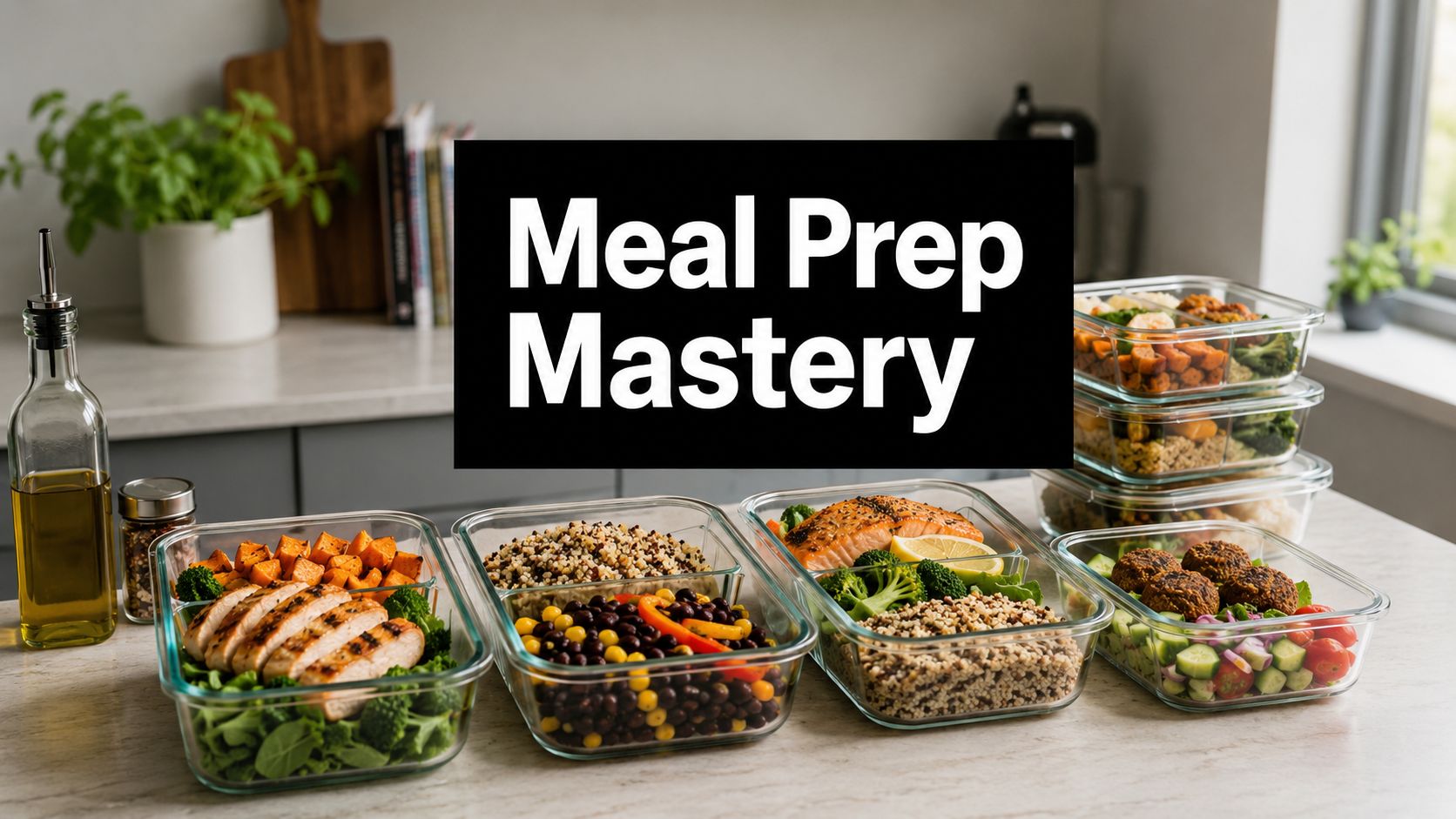
The best approach is to stop thinking in one-off lunches and start thinking in lunch systems. A grain bowl, a jar salad, a bento box, or a sheet-pan protein plus sides can carry you through a week because the structure does the work for you. That's advantage for busy people, fewer decisions, less spoilage, and a lunch that still feels intentional on day four.
1. Grain Bowls with Roasted Vegetables and lean protein
A grain bowl works best as a modular kit. Start with a base such as quinoa, brown rice, or farro, then add roasted vegetables, a lean protein, a healthy fat, and a dressing that stays separate until serving. That separation preserves texture, which matters if lunch sits in the fridge for hours or gets eaten at a desk.
The strongest bowls rely on ingredients that can do more than one job. Roast zucchini, bell peppers, broccoli, carrots, or sweet potatoes once, then reuse them across different flavor combinations so the same prep does not turn into the same lunch every day. The high-protein meal plan can help if you want a bowl structure built around macros instead of guessing portions each time.
How to make the bowl hold up
Roast vegetables at high heat so they caramelize and keep their shape better in storage. Cook grains in bulk, ideally with a rice cooker if that is the easiest path, then cool them before assembling. Keep sauces in small containers or squeeze bottles, because soggy bowls usually come from the sauce, not the grain.
Practical rule: use 2 or 3 grain options across the week, so you get variety without doubling your prep time.
A Mediterranean version can pair farro with roasted zucchini, bell peppers, chickpeas, goat cheese, and tahini dressing. An Asian-inspired bowl works well with brown rice, broccoli, carrots, snap peas, grilled chicken, and sesame-ginger sauce. For a Mexican-style build, quinoa, black beans, corn, roasted sweet potato, ground turkey, and cilantro-lime dressing give you a lunch that still tastes complete after a few days. If you want a framework that keeps the protein side consistent while you rotate the rest, this high-protein meal plan gives you a useful starting point, and the same habit structure can support habits that stick this year.

2. Sheet Pan Meals with Proteins and Roasted Sides
Sheet pan meals are the fastest way to create a lunch base with almost no cleanup. You roast a protein and vegetables together at one temperature, which gives you cohesive flavor and a lunch that can be portioned into containers in minutes. For people who hate washing multiple pans, this is one of the easiest systems to keep using week after week.
The method works best when you treat the sheet pan as a controlled environment. Cut vegetables uniformly, pat proteins dry before seasoning, and use parchment so both cleanup and storage are easier. If you're making several lunches at once, prep multiple pans so one round of oven time gives you a real supply, not just a couple of servings.
Italian flavor combinations are especially practical here, because chicken thighs, cherry tomatoes, zucchini, red onion, and Italian herbs roast well together at 425°F. A Moroccan-spiced salmon tray with sweet potato, bell peppers, cumin, and paprika at 400°F gives you a lunch that feels different without demanding a separate cooking method. A Mediterranean version with lean beef, broccoli, cauliflower, garlic, and lemon juice at 450°F brings sharper flavor and a sturdier reheated texture.
What works and what doesn't
Lean proteins need attention, because they can dry out if you overcook them. Chicken thighs are more forgiving than breast meat, and fish needs closer monitoring than beef or root vegetables. That's why this system is most reliable when you use one main temp, then adjust the cook time by ingredient size rather than trying to force everything to finish at exactly the same moment.
The upside is consistency. Once you know how your oven behaves, sheet-pan lunches become a repeatable rhythm, not a guess. That's especially useful if you're feeding yourself after long workdays and want something warm, savory, and ready in the container you already packed.
3. Mason Jar Salads with Layering Strategy
Mason jar salads work because they solve the oldest salad problem, wilting. You put dressing at the bottom, then hearty ingredients, then greens at the top, so the lettuce stays crisp and the whole lunch still feels fresh when you open it later. Tall quart-sized jars are best if you want a real meal, not a snack in disguise.
The layering order matters more than the recipe itself. Dressing goes first, then vegetables that can handle moisture, then protein and grains, then delicate greens. Crunchy toppings should stay separate until serving, and watery vegetables need to stay away from the dressing layer or the jar becomes a soggy compromise.
Build them for real-life lunches
A classic jar can use balsamic vinaigrette, cherry tomatoes, cucumbers, chickpeas, farro, and mixed greens. An Asian version works well with sesame-ginger dressing, carrots, snap peas, edamame, brown rice, and arugula. A protein-focused jar can lean on Greek yogurt ranch, broccoli, tomatoes, grilled chicken, and spinach.
If you're building vegan lunches, the vegan meal plan is a useful place to start because it keeps the lunch formula simple while still giving you structure.
Keep the crunchy parts out of the jar until the last minute. That one habit does more to protect texture than any fancy ingredient choice.
Jar salads are especially good for people who want lunch to feel light without being empty. They travel well, they're easy to label, and they make it obvious when you're recycling ingredients across the week. You can batch the components once, then change the dressing and protein to keep the mood different without changing the whole system.

4. Slow Cooker and Instant Pot Batch Cooking
Slow cookers and Instant Pots are for people who want lunch to build itself while they're doing something else. The value isn't just tenderness, it's volume. A single batch can become multiple lunches, and stews, chilis, shredded meats, and grain-based dishes usually reheat better than more delicate recipes.
The best use case is a lunch component that gets better after resting. Slow cooker chili, pulled pork, or pressure-cooked chicken and rice all store well because the flavors settle and the texture stays hearty. That's one reason these methods are so useful when your lunch plan needs to survive a whole workweek, not just the next day.
The cooking pattern matters. Fill the cooker to the right level, usually about 50 to 75% full, layer aromatics at the bottom, proteins in the middle, and use the sauté function first if you want extra flavor from browning. If you're using an Instant Pot for chicken and rice, a short high-pressure cook gives you a compact lunch base that can be portioned fast.
A slow cooker chili with ground turkey, kidney beans, tomatoes, and peppers can sit all day and still feel satisfying at lunch. Instant Pot chicken and rice with brown rice, broth, and frozen vegetables is another strong option when you want one-dish practicality. Pulled pork with onions and BBQ sauce also works well because it can become bowls, wraps, or bento-style lunches without feeling repetitive.
How to keep batch cooking from getting heavy
Fresh herbs or a bit of acid at the end matter more than people think. They brighten the whole batch and keep it from tasting flat after two days in storage. Freezing portions flat also makes storage easier and helps you build a backup lunch stash instead of starting from zero each week.
The recipes collection is a practical place to pull more batch-friendly ideas if you want to vary the proteins or sauces without changing the method.
5. Bento Box-Style Containers with Diverse Components
Bento boxes are the best answer when you want lunch to feel varied without cooking five different meals. Compartmentalized containers let you separate protein, starch, vegetables, fruit, and sauce, which protects flavor and portion balance at the same time. They also solve meal fatigue because every section gives you a different texture and taste.
This style works especially well when your lunch appetite changes from day to day. Some days you want more protein, other days you want more crunch or fruit. A five-compartment box gives you enough structure to stay organized without forcing everything into one mixed container.
What belongs in the compartments
An Asian box might include grilled teriyaki chicken, steamed rice, roasted broccoli, edamame, mango, and sriracha mayo. A Mediterranean version can use grilled shrimp, couscous, hummus, raw vegetables, olives, and feta. A Mexican-style box works with seasoned turkey, cilantro-lime rice, black beans, pico de gallo, and avocado.
Use small containers for wet ingredients, especially if the box itself doesn't seal every section tightly. Liners help reduce flavor transfer, and separate prep lets you assemble everything at once instead of rebuilding lunch throughout the week. That's the advantage, your prep is concentrated into one session, but the lunches still feel individualized.
Bento boxes are ideal for people who get bored when every lunch looks identical.
This system also fits the way many people eat at work, in pieces, over a longer break. You can start with fruit and vegetables, move to protein, then finish with the starch. That pacing makes the lunch feel more like a real meal and less like something assembled out of leftovers.
6. Lettuce Wraps and Wrap-Based Meals
Wrap-based lunches work when you need portability without sacrificing freshness. Sturdy lettuce leaves, like butter, romaine, or collard, give you a low-carb option, while whole-grain tortillas give you the more traditional wrap experience. The key is to store the filling separately and assemble at mealtime, because a wrapped lunch gets soft fast if it sits too long.
This system is especially useful when your lunch needs to stay flexible. One day you want a lighter option, the next day you want something more filling, and wraps let you use the same filling in different forms. That makes them a smart answer for people who prep for several days but don't want the lunch to feel identical every time.
Keep the wrap structure intact
Pat lettuce leaves dry and store them with paper towels so they stay crisp. Keep sauces in separate containers, because moisture is usually what breaks the wrap down first. Multiple filling combinations help too, since a rotation of flavors prevents the same chicken or turkey from feeling stale.
Asian lettuce wraps with shredded rotisserie chicken, carrots, cucumbers, edamame, and sesame-ginger sauce are easy to pack and eat quickly. Mediterranean wraps with grilled chicken, roasted red peppers, hummus, spinach, and feta are sturdy enough for a desk lunch. Taco-seasoned beef with shredded cheese, jalapeños, sour cream, and lettuce leaves gives you a richer option when you want something more substantial.
Wrap lunches are also useful for people with a short lunch break. They're fast to eat, easy to hold, and easy to vary without changing the prep rhythm. If you like to build lunches around leftovers, this is one of the easiest systems to keep in rotation.
7. Pasta Salads with Lean Proteins and Vinaigrette Dressing
Pasta salad is one of the most reliable meal prep lunches because it improves as the flavors sit together. Vinaigrette-based versions hold up better than creamy ones, and whole-grain or legume pasta gives the dish enough substance to function as lunch, not just a side. If you cool the pasta completely before adding dressing, you protect texture and help the flavors settle evenly.
Cook pasta slightly under al dente, because it will soften a bit in the fridge. Use about 2 to 3 tablespoons of vinaigrette per serving, then reserve extra to refresh the salad midweek. Stir it well before eating so the dressing redistributes across the ingredients instead of pooling at the bottom.
Better pasta salad formulas
An Italian version can use whole wheat penne, grilled chicken, roasted cherry tomatoes, basil, and balsamic vinaigrette. A Mediterranean version pairs lentil pasta, canned tuna, red onion, capers, and lemon-herb vinaigrette. An Asian-inspired bowl with brown rice pasta, edamame, shredded carrots, grilled salmon, and sesame-ginger vinaigrette gives you a chilled lunch that still feels balanced.
The recipe nutrition calculator is useful here if you want to sanity-check portions and ingredient balance before you commit to a week of lunches.
The best pasta salads don't try to do everything. They choose a strong grain, one or two proteins, a few vegetables, and a bright dressing, then let the mix mellow over several days. That's why they're so practical for busy weeks, they reward planning instead of punishing it.
7-Way Meal-Prep Lunch Comparison
| Option | Implementation 🔄 (complexity/time) | Resources ⚡ (equipment & prep time) | Expected Outcomes ⭐📊 | Ideal Use Cases | Key Advantages 💡 |
|---|---|---|---|---|---|
| Grain Bowls with Roasted Vegetables and Lean Protein | Moderate, multiple cooking steps and assembly | Oven, rice cooker, multiple containers; 1–2 hr batch prep | ⭐⭐⭐⭐, balanced, filling; components store 4–5 days | Balanced meal prep, customizable lunches, office meals | Modular swaps, texture preserved by separate dressings |
| Sheet Pan Meals with Proteins and Roasted Sides | Low, one-pan roast but timing critical | Sheet pan, oven, parchment; under 1–2 hr | ⭐⭐⭐, cohesive flavors, good caramelization; stores 4–5 days | Family meals, minimal cleanup, scalable batches | One-step prep, cost-effective, easy cleanup |
| Mason Jar Salads with Layering Strategy | Low, simple layering technique, careful order | Glass jars, chopping tools; 30–90 min | ⭐⭐⭐, very crisp up to 5 days; portable 📊 | On-the-go lunches, vegetarian/vegan options | Keeps greens crisp, reusable jars, mess-free when shaken |
| Slow Cooker and Instant Pot Batch Cooking | Very low active, assemble 10–15 min; long cook | Slow cooker/Instant Pot, large capacity; 1–8 hrs cook | ⭐⭐⭐⭐, tender, flavorful large batches; stores 5–7 days or freeze | Bulk cooking, budget meals, freezer-ready portions | Hands-off cooking, cost-efficient, great for tough cuts |
| Bento Box-Style Containers with Diverse Components | Moderate, multiple components and assembly | Bento containers, varied prep; 1–2 hr | ⭐⭐⭐, high variety and portion control; stores 4–5 days | Families, picky eaters, variety-focused meal plans | Visual variety, natural portioning, prevents soggy mixes |
| Lettuce Wraps and Wrap-Based Meals | Low, prep fillings; assemble at mealtime | Fresh sturdy leaves or tortillas, small sauce containers; 30–60 min | ⭐⭐⭐, fast assembly, low-carb option; leaves best 3–4 days | Keto/low-carb, quick lunches, no-reheat meals | Quick to assemble, low-carb, great texture contrast |
| Pasta Salads with Lean Proteins and Vinaigrette Dressing | Low, cook and cool pasta then combine | Pot, colander, mixing bowl; 30–60 min incl. cooling | ⭐⭐⭐, flavors often improve over time; stores 5–6 days | Potlucks, cold make-ahead lunches, budget meals | One-container meal, vinaigrette preserves texture, economical |
Ready to Automate Your Meal Prep?
These seven methods give you a real framework for lunch, not just a pile of ideas. The win comes from matching the system to your schedule, your kitchen setup, and the kind of food you'll want to eat on day three. If you're packing lunch most weekdays, the best plan is the one you can repeat without getting bored or wasting ingredients.
The bigger meal-prep lesson is simple, keep the structure steady and rotate the details. That lines up with the broader lunch-prep challenge many families face, from time pressure to food waste, and it's why repeatable systems tend to last longer than ambitious but fragile recipe plans. Harvard's meal prep guidance also supports starting small and choosing one planned day to shop and cook, which makes the whole habit easier to sustain over time. Harvard's Meal Prep Guide and Clemson Extension's advice on building lunches around multiple food groups both point in the same direction, simple systems work best when they're realistic and balanced. Clemson Extension's packed lunch guide
If your goal is less friction at lunchtime, the smartest move is to automate the planning before you ever open the fridge. AI Meal Planner creates personalized weekly menus with lunch included, generates smart grocery lists, and adapts meals to your goals, dietary preferences, and allergies. It's a practical fit for people who want great meal prep lunches without rebuilding the plan from scratch every week.
AI Meal Planner helps you turn these lunch systems into a weekly routine with less guesswork. It builds personalized meal plans and grocery lists, so you can prep lunches that match your schedule, dietary needs, and goals. If you want a more consistent way to organize lunch prep, visit AI Meal Planner and see how it can simplify your week.
AI-powered nutrition
Get Your Personalized Meal Plan
AI creates the perfect meals for your goals, lifestyle, and taste.
Start Your Journej