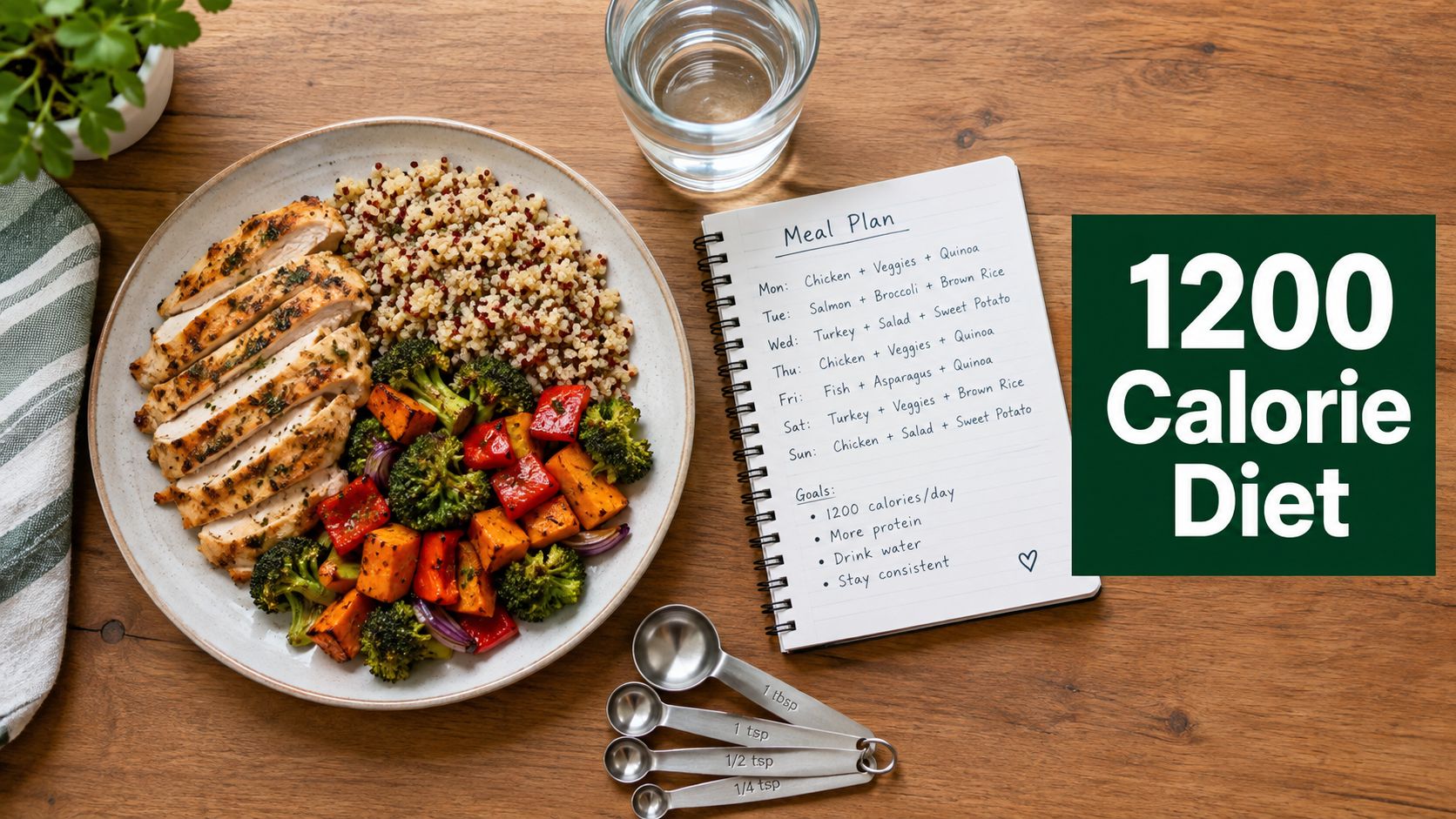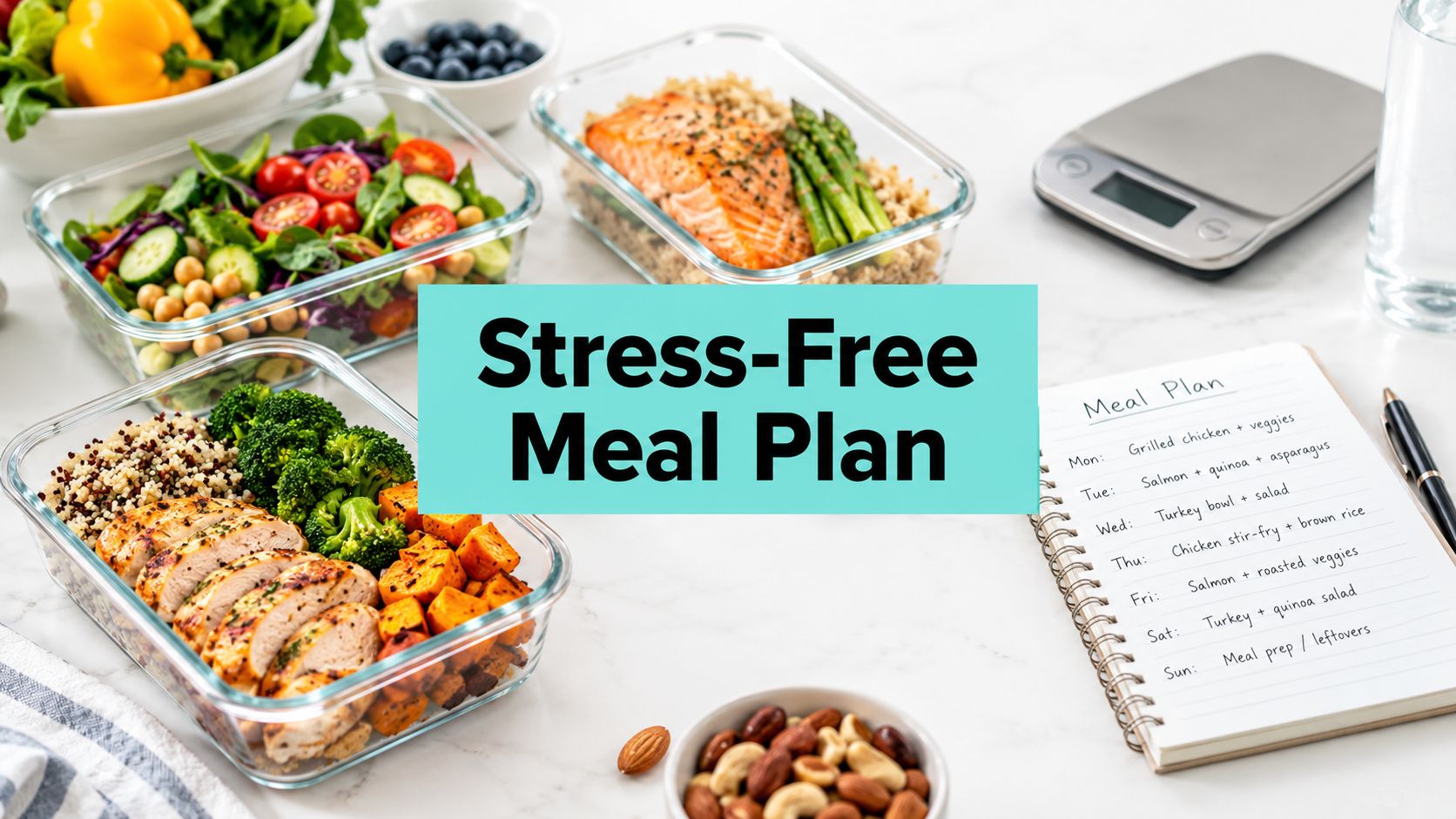
A practical weight-loss recipe plan can average about 1,600 calories and 120 grams of protein per day, provided those targets fit your needs. The most effective recipes support a consistent calorie deficit with clear portions, protein- and fiber-conscious ingredients, manageable preparation times, and swaps that make the plan easier to follow.
The popular advice to “just collect healthy recipes” misses the operational problem. A long list of low-calorie meals won't help much if you don't know how much to serve, how the meals fit together, what to buy, or what to do with the leftover half of a pack of vegetables. Weight loss diet recipes work best as part of a repeatable system, not as isolated inspiration.
This roundup compares seven ways to assemble weight-loss-friendly recipes. Some provide a personalized seven-day schedule, while others offer large recipe libraries, tracking systems, medical guidance, plant-based planning, or budget-focused cooking. The comparison considers calories, macros, protein and fiber, dietary swaps, grocery logistics, leftovers, and the time constraints of cooking around work.
Calorie and macro figures are planning tools, not universal prescriptions. Common guidance uses a daily deficit of about 300 to 500 calories, with meals and snacks distributed across the day, but individual energy needs vary and medical conditions may require professional advice (weight-loss meal-planning guidance). A macro starting point sometimes used for weight loss is 30% protein, 30% fat, and 40% carbohydrates, while another approach sets protein at 1.6 to 2.2 grams per kilogram of body weight before allocating remaining calories (macro guidance, protein-based macro planning).
The options below cover breakfasts, lunches, dinners, snacks, dietary swaps, weekly planning, grocery organization, and recipes designed for under-30-minute cooking. The AI Meal Planner is the most personalized option, using onboarding preferences, allergies, meal swaps, automated grocery lists, leftover planning, and progress adjustments. You can start with its personalized meal-plan onboarding, or use a manual recipe library if you prefer choosing every meal yourself.
A useful side reference for breakfast planning is this protein oats recipe for athletes. It illustrates the broader principle: a practical breakfast needs more than a “healthy” label. It needs a portion, a protein strategy, and a preparation method you will repeat.
1. 7-Day Diet Plan for Weight Loss With a Calorie Deficit and Grocery List
A weekly plan can be more useful than a larger recipe library. A library gives you choice, while a seven-day schedule connects breakfast, lunch, dinner, snacks, shopping, and leftovers. That connection reduces the work between finding a weight-loss-friendly recipe and cooking it during a busy workweek.
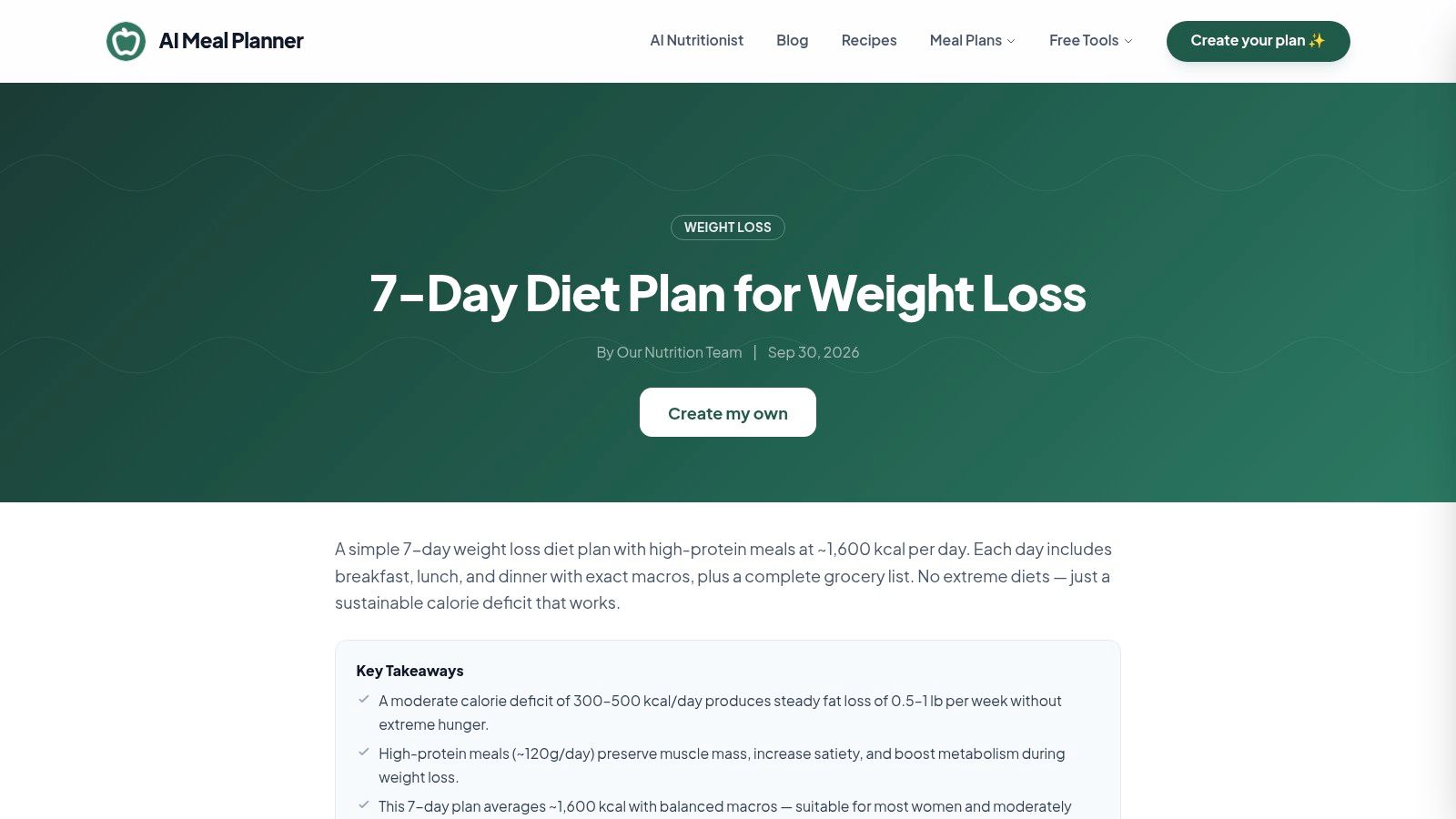
The featured plan averages about 1,600 calories and 120 grams of protein per day (AI Meal Planner calorie-deficit plan). Those figures provide a concrete starting point, not a universal prescription. Calorie needs, activity, medical conditions, and weight-loss goals differ, so the plan's main advantage is its structure rather than a fixed intake.
Why the weekly format works
A day-by-day menu limits repeated decisions. You might prepare protein oats for breakfast, use the same cooked protein and grain in several lunches, then carry vegetables or a sauce into dinner. Planned repetition lowers waste and cooking time without forcing every meal to be identical.
The grocery list turns those decisions into a shopping plan. It groups ingredients across the week, highlights items that can serve multiple recipes, and makes high-fiber choices easier to organize. Beans, lentils, vegetables, fruit, and whole grains can support easy fiber goals with Rip Van, while the list helps you buy quantities you can use before they spoil.
For professionals cooking around meetings, short recipes matter. Most dishes are designed for under 30 minutes, so the plan fits more easily into work nights than meals requiring extensive preparation. Batch-cooking one protein or grain on a quieter day can make the later dinners faster, although cooked food still needs suitable storage and reheating.
Swaps handle the plan's main limitation. If a meal conflicts with an allergy, dietary pattern, preference, or available ingredient, replacing it within the schedule is simpler than rebuilding the day's calories and macros manually. The trade-off is reduced flexibility compared with choosing every recipe from a library. Account or subscription access may also be required for full personalization and ongoing adjustments.
Practical rule: A calorie target becomes useful when the plan specifies what to cook, how much to serve, and how to replace an unsuitable ingredient.
Best for: Busy people who want measurable structure, defined macros, short cooking times, grocery organization, leftover planning, and fewer weekly decisions.
Website: AI Meal Planner
2. EatingWell for Dietitian-Created Recipe Plans
EatingWell takes the editorial recipe-library approach. Its strength is breadth: you can browse a large collection of recipes, then narrow the options using meal type, dietary pattern, nutrition tags, ratings, and comments. That works well if you want guidance without committing to a fully automated weekly schedule.
The platform publishes dietitian-created multi-day plans, including high-protein and diabetes-friendly formats. Recipe pages provide nutrition labels, and the surrounding cooking and nutrition content helps explain how a dish fits into a broader eating pattern. For readers who want familiar meals with editorial context, that combination is more useful than a bare database of calorie counts.
Where EatingWell is strongest
EatingWell is a good middle ground between unstructured browsing and a paid coaching program. Most recipes and plans are free, so you can test the workflow before investing in a system. Filters can help you find meals suited to higher protein, specific dietary needs, or a particular cooking window.
Its editorial oversight is also a meaningful consideration. Registered dietitians contribute to the platform, and the site pairs recipes with healthy-cooking advice rather than presenting every dish as a complete weight-loss solution. That doesn't make every recipe automatically suitable for your calorie needs, but it gives you better context for making selections.
The weakness is personalization. The plans are generalized, so you still need to compare serving sizes, calculate how breakfast and lunch affect your daily intake, and make substitutions when an ingredient doesn't suit your household. The ad-supported experience can also feel busy, especially when you're trying to cook from a phone in a crowded kitchen.
For a more structured alternative, a balanced meal plan can organize meals around personal preferences, allergies, and swaps rather than asking you to assemble the week yourself.
Best for: People who want free recipes, dietitian-led editorial guidance, nutrition labels, and a large selection of familiar meals.
What works: Filters, clear nutrition details, and ready-made plans make research faster.
What doesn't: A generalized plan won't automatically account for your schedule, leftovers, household size, or exact calorie target.
Website: EatingWell
3. Skinnytaste for Lighter Familiar Meals
Skinnytaste is built around a simple proposition: make familiar meals lighter without turning them into austere diet food. That makes it particularly useful for people who want recipes the household can share, including quick dinners that don't require preparing a separate “diet” plate.
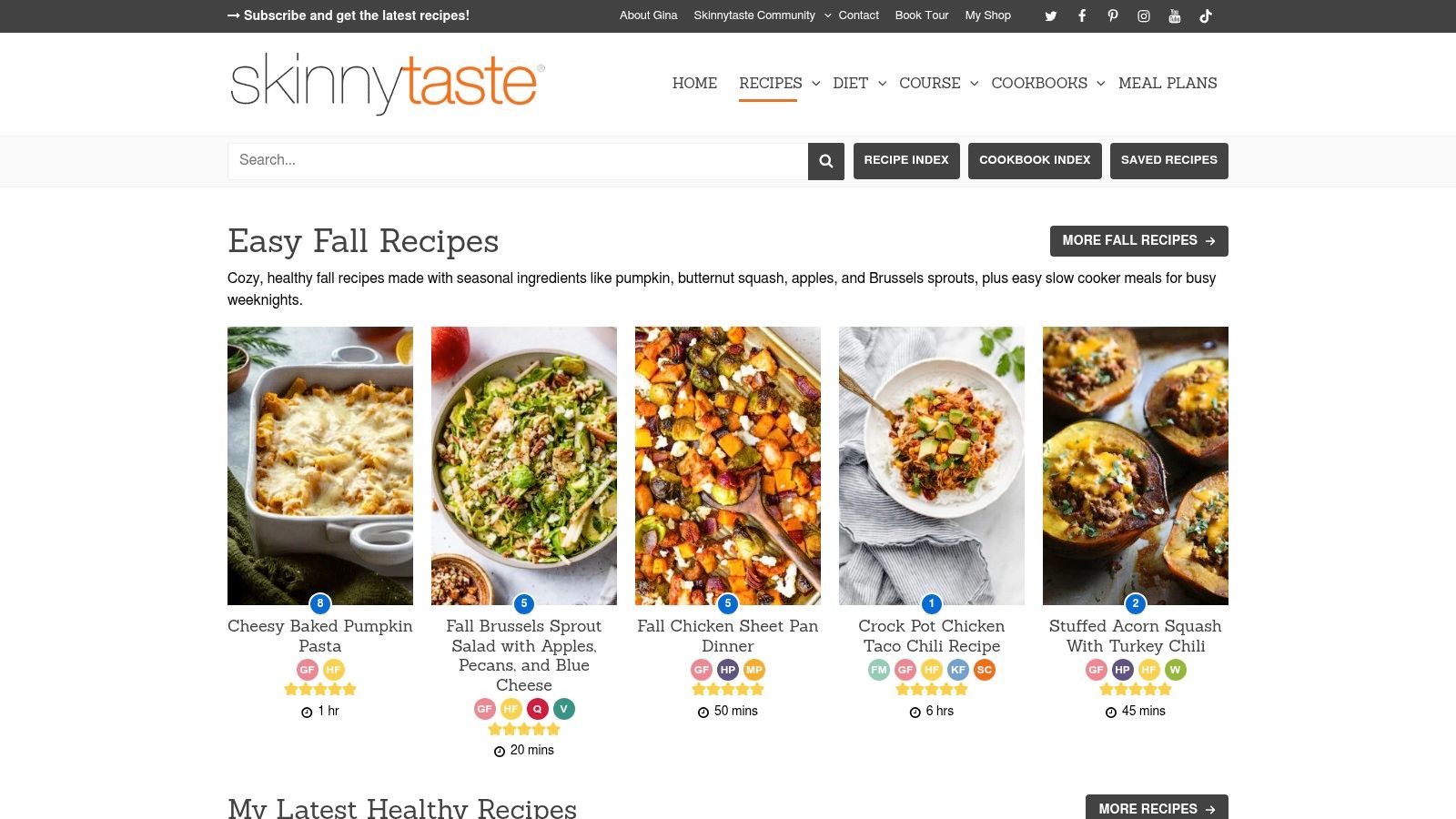
The site provides nutrition details and WW Points references on many recipes. Its recipe finder helps users search by protein, fiber, Points, diet type, and other practical criteria. Weekly free seven-day meal plans, including high-protein variations, give you more structure than a random recipe search, although you remain responsible for assembling the plan around your own needs.
The advantage of self-selection
Skinnytaste works when you enjoy choosing meals. You can select a lighter version of a familiar dinner, check its nutrition information, and place it into your own breakfast, lunch, and snack framework. That flexibility is valuable for families because you can choose recipes that are appealing to more than one person.
The library also supports gradual behavior change. You don't have to abandon favorite flavors or cuisines to create a calorie-conscious menu. A practical week might combine a repeatable breakfast, leftovers for lunch, and several Skinnytaste dinners selected around available time and ingredients.
The trade-off is manual planning. There isn't the same automated personalization as a dedicated meal-planning app. You must compare recipes, adjust portions, account for snacks, and check whether your selected meals provide enough protein and fiber for your preferences. Some WW Points information is easier to find in the cookbook collection than on every web recipe, so users relying heavily on Points should verify the details before building a full week.
A recipe can be individually light yet produce an inconvenient day if breakfast is small, lunch is low in protein, or dinner requires ingredients you won't reuse. Skinnytaste gives you strong building blocks, but the planning decisions remain yours.
Best for: Families and home cooks who want lighter versions of familiar meals with nutrition details and flexible self-selection.
Best use: Pick recipes by cooking time and shared ingredients, then place them into a weekly schedule.
Main limitation: You get a recipe library and meal-plan inspiration, not a fully individualized grocery-and-leftover workflow.
Website: Skinnytaste
4. WeightWatchers for Integrated Tracking and Support
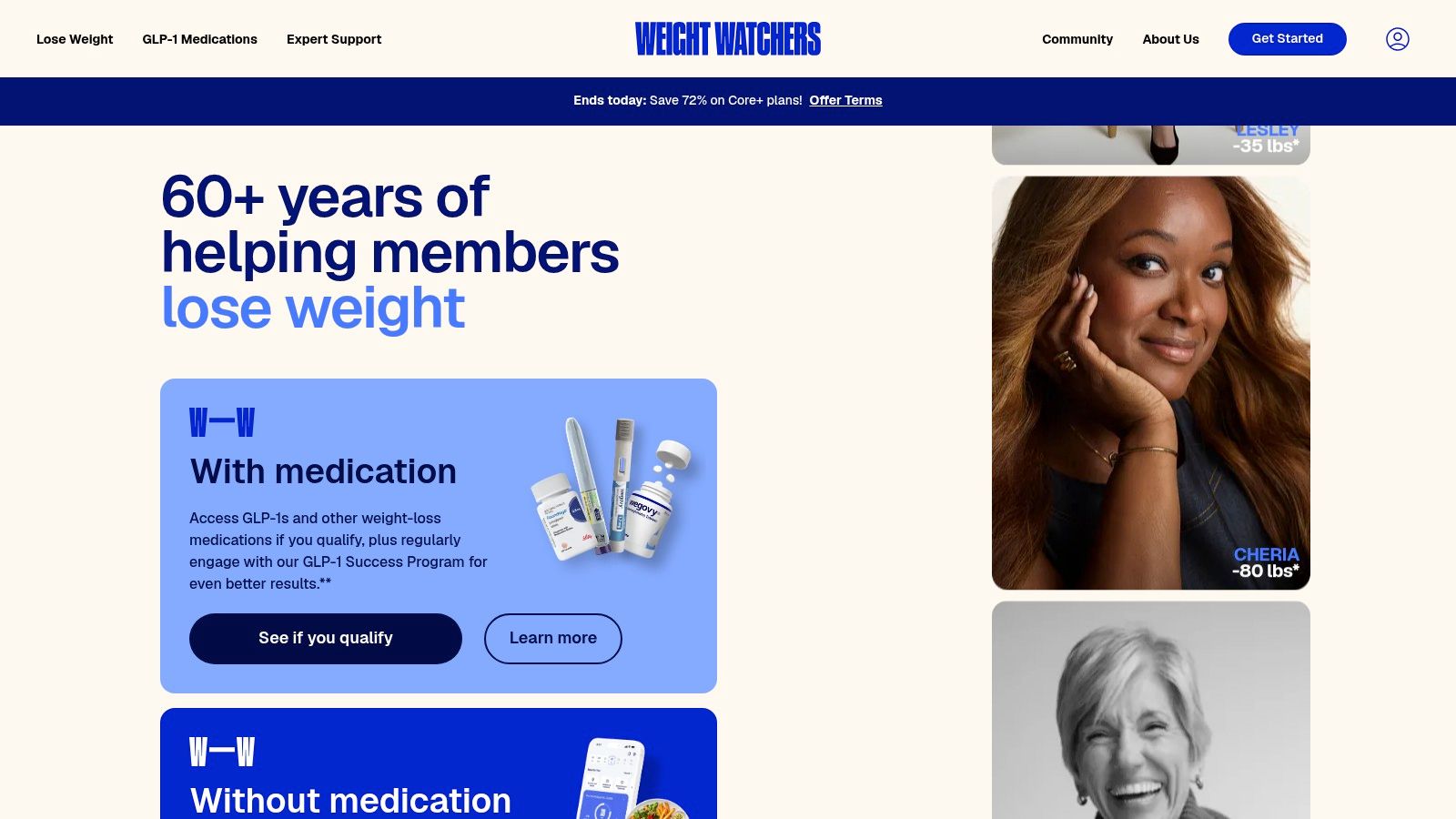
WeightWatchers combines recipes with a broader behavior-change system. Its app and membership connect a large searchable recipe library with Points guidance, macro tracking, coaching options, community support, and structured programs for needs such as menopause, diabetes, and postpartum weight management.
The appeal isn't only the recipes. It's the connection between choosing a meal and recording how it fits into the day's tracking system. That can help people who struggle to translate nutrition information into consistent behavior. Optional virtual or in-person Workshops add accountability for users who want more support than an app alone provides.
When a tracking ecosystem helps
WeightWatchers is a stronger fit than a standalone recipe site if you benefit from external structure. The platform also includes tools such as an AI Body Scanner and programs designed around specific life stages. These features create a more complete experience than just searching for low-calorie dinners.
The recipe library contains more than 12,000 searchable healthy recipes, according to the WeightWatchers platform. That breadth can help prevent repetition, but a large library can also become another form of decision overload if you don't establish a short list of repeatable breakfasts, lunches, and dinners.
The main cost is access. Full functionality and the strongest support features require a paid plan, and promotions and pricing can change. Medication costs, including GLP-1 treatments, are separate from the membership. Users should compare the value of the tracking, coaching, community, and specialty programs rather than paying solely for recipe access.
WW's Points system may feel simpler than managing calories and macros, but it can also obscure the specific protein, fiber, or portion details you want to monitor. If your priority is precise macro distribution, check the nutrition information rather than relying on Points alone.
Best for: People who want recipe access inside a structured tracking, coaching, and community system.
Best use: Select recipes that fit your Points and protein preferences, then use the app to monitor consistency.
Main limitation: The best tools are paid, and the platform can be more than you need if all you want is a short list of quick recipes.
5. Forks Over Knives for Whole-Food Plant-Based Recipes
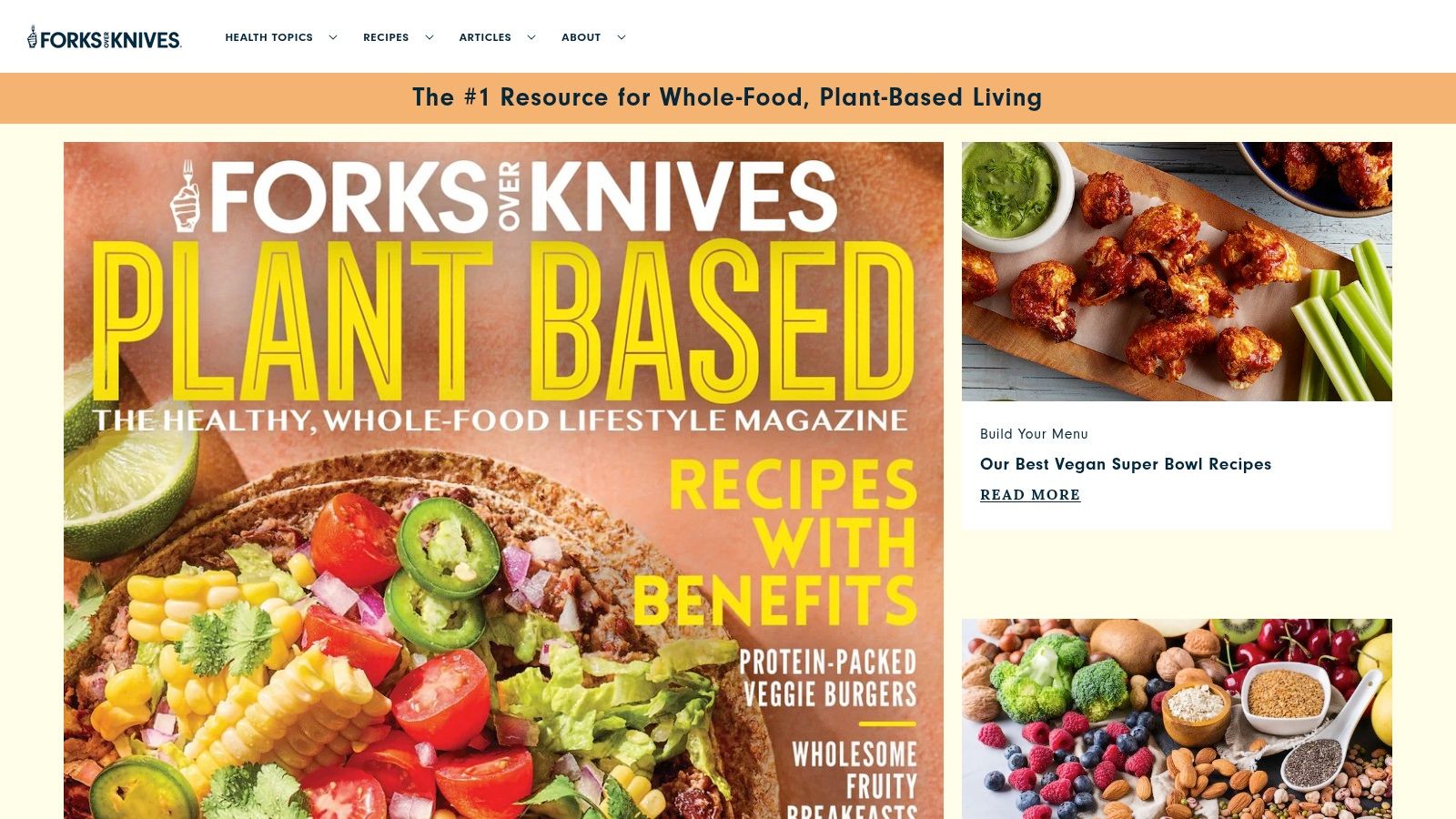
Forks Over Knives is the clearest choice for readers who want weight-loss recipes organized around whole-food, plant-based cooking. Its free catalog emphasizes recipes without added oils, while the paid Forks Meal Planner builds weekly menus, grocery lists, and preparation guides from a larger recipe collection.
The plant-based structure naturally puts vegetables, beans, lentils, whole grains, and other high-fiber foods at the center of meals. That aligns with the practical “protein plus fiber plus satiety” approach that is often more useful than searching for the lowest calorie number. A dinner that combines vegetables with beans or another plant protein may be easier to sustain than a small, low-calorie meal that leaves you hungry soon afterward.
The planning benefit
Forks Meal Planner reduces the work of selecting recipes and organizing ingredients. Its plans can be adjusted, and aisle-sorted grocery lists support more efficient shopping. Prep guides are especially useful for people who don't want to decide each evening whether to cook grains, chop vegetables, or assemble a bowl from scratch.
A plant-based meal plan offers a more personalized alternative when allergies, dislikes, protein targets, or household preferences make a fixed plant-based system difficult to follow.
Forks Over Knives isn't ideal for everyone. The no-added-oil approach can feel restrictive if you cook with olive oil, nuts, seeds, or other calorie-dense ingredients as part of your normal diet. Recipe calories can also vary with brands, substitutions, and serving decisions, so the listed figure isn't a substitute for checking your actual ingredients.
The platform's educational resources help beginners understand the style, but users still need to consider protein distribution and energy needs. Plant-based doesn't automatically mean low-calorie or high-protein. A bowl can become calorie-dense through large portions of grains, dressings, nuts, or sauces, while a vegetable-heavy meal may need beans, tofu, tempeh, or another protein source to feel complete.
Best for: Cooks committed to whole-food, plant-based meals and structured preparation.
What works: Curated menus, grocery automation, prep guides, and a clear cooking philosophy.
What doesn't: The strict oil-free approach and variable ingredient nutrition may frustrate cooks who want broader flexibility.
6. Budget Bytes for Low-Cost Meal Preparation
Low-cost weight-loss cooking depends less on finding “diet” recipes than on assembling meals that fit your budget, calorie target, and workweek. Budget Bytes provides the ingredients for that approach, with nutrition information and per-serving cost estimates that help you compare convenience against grocery expense.
The collection includes more than 1,200 recipes, according to Budget Bytes. Its meal-prep roundups and step-by-step instructions cover affordable breakfasts, bean-based lunches, vegetable-heavy dinners, and leftovers suitable for another workday. Use the Budget Bytes meal-planning guide when you want help turning individual recipes into a lower-cost weekly setup.
How to make a budget library work for weight loss
Budget Bytes is a recipe library, not a complete diet program. You choose the meals, confirm serving sizes, and fit each recipe into your daily calorie and macro targets. That requires more planning than a personalized 7-day plan, but it gives you control over sales, pantry staples, household preferences, and dietary swaps.
Start with ingredients that can serve several meals. Cooked beans might become part of a grain bowl, soup, or filling. Frozen vegetables can work in a quick stir-fry or as a side dish. This approach reduces waste, limits grocery decisions, and gives leftovers a planned destination instead of leaving them to chance.
For people cooking around work, the trade-off is clear. A budget recipe library offers more flexibility than an automated planner, but you must coordinate cooking time, portions, groceries, and storage. Choose recipes with overlapping ingredients and schedule the longest preparation for a day when you have enough time.
The ad-supported site may feel cluttered. An optional ad-free membership includes weekly meal-plan benefits, which may suit cooks who want added convenience, while the core recipes remain self-directed.
Treat cost estimates as planning aids, not guarantees. Prices vary by location, store, brand, and package size. Nutrition figures also change when you adjust oil, meat, grains, sauces, or serving sizes, so recalculate portions after significant substitutions.
Best for: Cost-conscious cooks who want approachable recipes, meal-prep guidance, and ingredient control.
Best use: Build a short weekly rotation from affordable staples and assign leftovers to later meals.
Main limitation: You handle the calorie, macro, swap, and grocery coordination yourself.
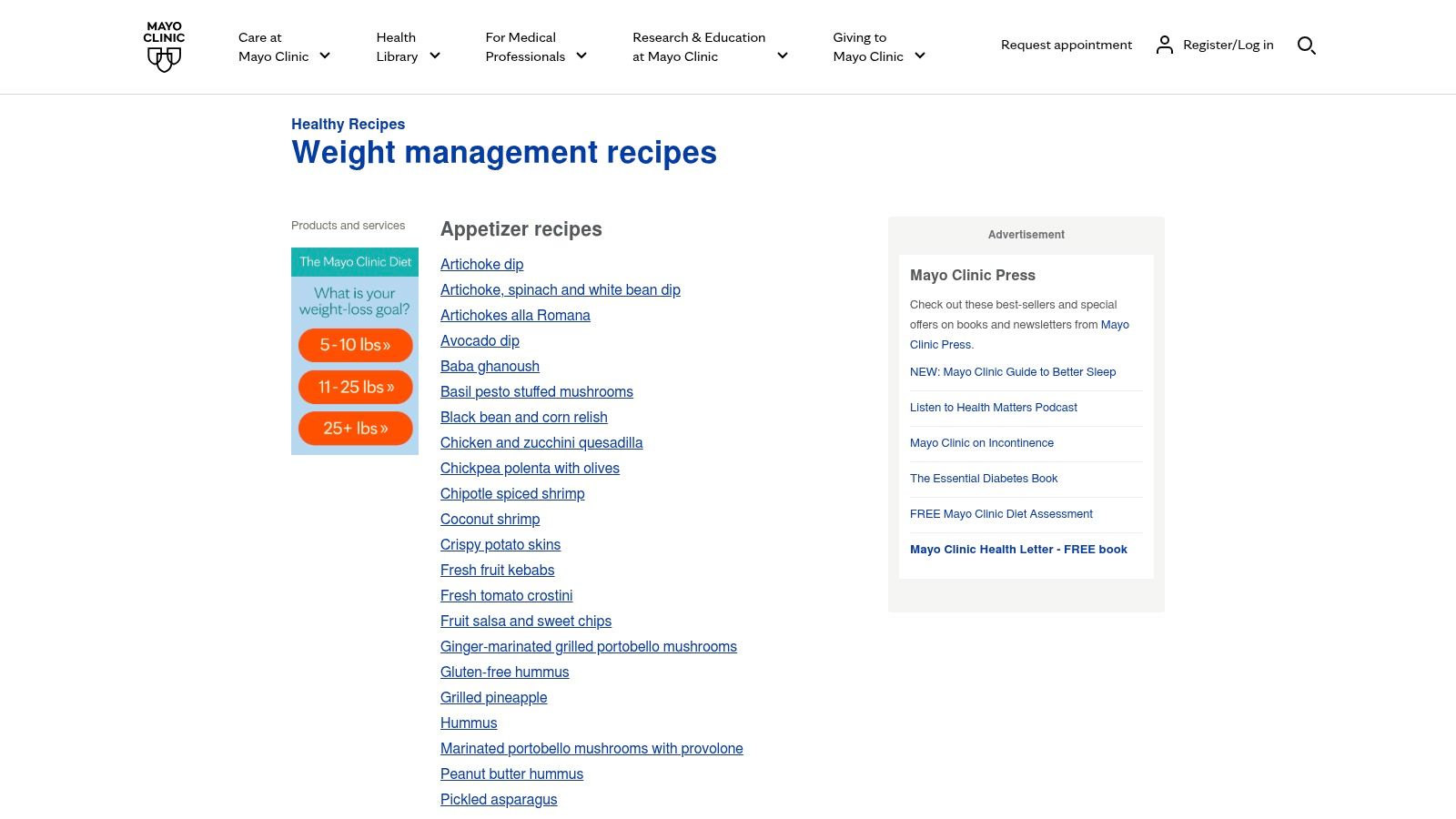
7. Mayo Clinic for Medically Reputable Recipe Guidance
Mayo Clinic's weight-management recipe center suits readers who want straightforward recipes alongside medically reputable nutrition information. The recipes emphasize produce, lean proteins, and heart-conscious cooking methods, with nutrition facts and filters for meal type and ingredients.
That editorial context is the main differentiator. A large recipe site may offer more variety, but Mayo Clinic gives beginners a calmer starting point. The recipes are generally easy to interpret, and many options are suitable for cooks who want minimally processed preparations without complicated techniques.
What Mayo Clinic does and doesn't provide
The weight-management section is useful for selecting individual breakfasts, lunches, dinners, and snacks. You can search by ingredients and meal type, then build a plan that fits your household. The nutrition facts help with portion and calorie decisions, but you still need to organize the recipes into a week.
Mayo Clinic doesn't provide the automated planning, aisle-sorted grocery lists, leftover scheduling, or in-app swaps found in dedicated meal-planning tools. Its recipe variety is also smaller than the largest food-media libraries. That can be an advantage for someone overwhelmed by choice, but a limitation for families seeking constant novelty.
Use the site when trust and clarity matter more than customization. You can pair a Mayo Clinic dinner with a repeatable high-protein breakfast and a planned lunch, then shop once for overlapping ingredients. If you have diabetes, heart disease, digestive issues, or another condition affecting food choices, medically informed guidance is more appropriate than choosing recipes solely by calorie count.
The strongest result comes from combining reputable recipes with practical planning. A medically sound recipe still fails if it takes too long after work, uses ingredients for one meal only, or leaves you without a workable lunch the next day.
Best for: Beginners who want evidence-based nutrition context and uncomplicated weight-management recipes.
What works: Clear recipes, nutrition facts, and a trusted editorial environment.
What doesn't: There is no automated weekly system, so grocery planning, swaps, and leftovers require manual work.
Website: Mayo Clinic weight-management recipes
7-Source Weight-Loss Recipe Comparison
| Plan / Site | Implementation Complexity 🔄 | Resource Requirements ⚡ | Expected Outcomes 📊 | Ideal Use Cases 💡 | Key Advantages ⭐ |
|---|---|---|---|---|---|
| 7-Day Diet Plan for Weight Loss (AI Meal Planner) | Low–Medium 🔄, ready-to-use menus; account for full personalization | Moderate ⚡, quick recipes (≤30 min); subscription may unlock features | High 📊, targeted calorie deficit (~1,600 kcal) + macros; predictable short-term loss ⭐⭐⭐ | Busy users seeking turnkey, measurable weight loss with shopping lists | Exact macros, consolidated grocery list, AI swaps and personalization |
| EatingWell | Low 🔄, browseable plans, no automated personalization | Low ⚡, mostly free; ad-supported | Moderate 📊, dietitian-vetted plans support sustainable loss if followed ⭐⭐ | Users who want dietitian-reviewed recipes and free multi-day plans | Large recipe library, nutrition labels, editorial/dietitian oversight |
| Skinnytaste | Low 🔄, user-driven meal selection; weekly free plans | Low ⚡, free recipes; cookbook options | Moderate 📊, good for calorie/WW Points tracking when self-applied ⭐⭐ | Home cooks wanting lighter, family-friendly, Points-aware meals | Broad lighter-recipe library, consistent nutrition details |
| WeightWatchers (WW) | Medium–High 🔄, app ecosystem, coaching options, onboarding | High ⚡, paid tiers for full features; app and optional coaching | High 📊, structured behavior-change system with strong adherence outcomes ⭐⭐⭐ | People who want structured programs, tracking, community, coaching | Points system, large recipe database, community and tracking tools |
| Forks Over Knives | Medium 🔄, WFPB approach may require habit change; planner automates menus | Moderate ⚡, mostly free recipes; paid planner available | Good 📊, effective for satiety/cardio health and weight loss when adhered to ⭐⭐⭐ | Users seeking whole-food, plant-based weight loss with meal-prep support | Oil-free WFPB focus, meal planner with grocery lists and prep guides |
| Budget Bytes | Low 🔄, simple recipes; self-directed planning | Low ⚡, budget ingredients; per-serving cost info; optional membership | Moderate 📊, supports calorie deficit affordably when portions tracked ⭐⭐ | Cost-conscious users wanting low-cost meal-prep and calorie control | Per-recipe cost estimates, meal-prep guidance, straightforward nutrition data |
| Mayo Clinic – Weight-Management Recipes | Low 🔄, browseable, no automated planning | Low ⚡, free, evidence-based content | Moderate 📊, clinically reputable guidance; conservative, safe outcomes ⭐⭐ | Users seeking medically vetted, heart-healthy recipes and advice | Trusted medical source, evidence-based nutrition and clear recipe guidance |
Which Weight Loss Recipe Approach Fits Your Routine?
The best choice depends less on the number of recipes available and more on the work you want the tool to perform. AI Meal Planner is the strongest option for personalized weekly structure, automated grocery organization, ingredient reuse, and meal swaps. EatingWell suits readers who value dietitian-led editorial guidance and a large free library, while Mayo Clinic is better for people who prioritize medically reputable advice over variety.
Choose Skinnytaste when familiar, lighter meals and family acceptance matter most. Its nutrition details make self-selection easier, but you need to build the week yourself. WeightWatchers is the better fit when tracking, coaching, community, and a structured Points system help you stay accountable. It offers more behavior-change infrastructure than a recipe site, but paid access is part of the trade-off.
Forks Over Knives fits a whole-food, plant-based kitchen with planned preparation and an oil-free cooking preference. Budget Bytes is the practical choice when cost, pantry staples, and low-waste cooking are central concerns. It offers useful nutrition and cost information, but it doesn't automatically turn recipes into a calorie-controlled weekly menu.
How to turn recipes into a repeatable week
Start by choosing breakfasts, lunches, dinners, and snacks before you shop. Don't begin with seven impressive dinners and then improvise the rest of the day. A repeatable breakfast and a planned lunch often do more for consistency than another complicated evening recipe.
Next, verify calories and macros against your personal needs. General meal targets sometimes use breakfast in the 200 to 250 calorie range, lunch around 320 to 450 calories, and dinner around 380 to 480 calories, with protein ranges that can reach 35 to 40 grams at lunch or dinner (calorie-deficit recipe guidance). These are examples for planning, not instructions for every reader.
Then make the swaps before cooking. Replace an allergen, choose a plant protein, change a grain, or select frozen vegetables if that makes shopping easier. A swap is successful when it preserves the meal's role, such as protein, fiber, volume, or convenience, rather than merely changing the flavor.
Batch-cook overlapping ingredients, not necessarily complete meals. Prepare a protein, a grain or bean, and several vegetables that can appear in different combinations. Reserve leftovers intentionally for another meal, label them, and put them into the schedule instead of hoping you'll remember them.
Finally, build one consolidated grocery list and check it against your pantry and freezer. Automated lists are convenient, but even a manual list should group ingredients by section and account for package sizes. The aim isn't to cook perfectly. It's to make the next healthy choice easier than ordering food when the workday runs late.
What Questions Do People Ask About Weight Loss Diet Recipes?
Are low-calorie recipes enough for weight loss?
No. Recipes need to fit a consistent calorie deficit, but adequate protein, fiber, satisfying portions, and preparation convenience also affect whether you can follow the plan.
Should every meal be high in protein?
Not necessarily, but including a meaningful protein source across meals can make a plan more satisfying and can help you work toward a daily protein target. Your appropriate intake depends on factors such as body size, activity, health, and dietary pattern.
Can I use leftovers in a weight-loss meal plan?
Yes. Planned leftovers reduce cooking time, shopping complexity, and waste. Assign them to a specific lunch or dinner so the food becomes part of the plan rather than an untracked extra.
Are meal-planning apps better than recipe websites?
Apps are usually better at connecting preferences, portions, grocery lists, swaps, and schedules. Recipe websites offer more browsing freedom and may be free, but they generally require more manual organization.
How can I make weight-loss recipes cheaper?
Use a short ingredient rotation, pantry staples, beans, lentils, oats, frozen vegetables, and recipes that share components. Compare the full shopping list rather than the cost of one recipe in isolation.
Do I need to remove carbohydrates to lose weight?
No. Whole grains, legumes, and starchy vegetables can provide useful carbohydrates and fiber. The more important issue is how the full meal fits your calorie, protein, preference, and health requirements.
How quickly should weight-loss recipes be prepared?
Choose recipes that fit your actual schedule. Under-30-minute meals can be practical for work nights, while batch-cooked components can make longer recipes workable when you prepare them ahead.
How Can You Turn These Recipes Into a Repeatable Week?
Match the tool to the friction that usually breaks your routine. Choose AI Meal Planner for personalized weekly structure, grocery automation, leftover planning, swaps, and progress-based adjustments. Choose EatingWell for a broad editorial library with dietitian involvement, or Mayo Clinic when medically reputable guidance matters more than recipe variety.
Choose Skinnytaste for lighter versions of familiar meals that work well for families. Choose WeightWatchers when a Points system, coaching, community, and structured tracking help you stay accountable. Choose Forks Over Knives for whole-food plant-based cooking with guided preparation, and choose Budget Bytes when affordable ingredients and low-waste meal prep are the priority.
A workable next step is simple. Select a few breakfasts, lunches, dinners, and snacks. Check the calories and macros against your personal needs, make dietary swaps before shopping, batch-cook overlapping ingredients, build a consolidated grocery list, and reserve leftovers for a named future meal.
The goal isn't to collect more recipes. It's to create a week you can repeat when work gets busy, energy is low, and cooking needs to be practical. Consistency, convenience, and adaptability matter more than finding a theoretically perfect dinner. If you want a personalized starting point, use the AI Meal Planner onboarding to enter your goals, preferences, allergies, and meal-swap needs.
AI Meal Planner creates personalized weekly meal plans with calories, macros, dietary swaps, automated grocery lists, and leftover planning for weight-loss routines. Visit AI Meal Planner to build a practical plan around your schedule, preferences, and cooking needs.
AI-powered nutrition
Get Your Personalized Meal Plan
AI creates the perfect meals for your goals, lifestyle, and taste.
Start Your Journej