You've seen a friend lose weight on 1,200 calories a day, downloaded a tracking app, and started wondering whether copying her plan is the fastest answer. It may be a useful short-term tool for a narrow group of adults, but it's too restrictive for many people and shouldn't be treated as a universal prescription.
Is a 1,200 Calorie a Day Diet Right for You
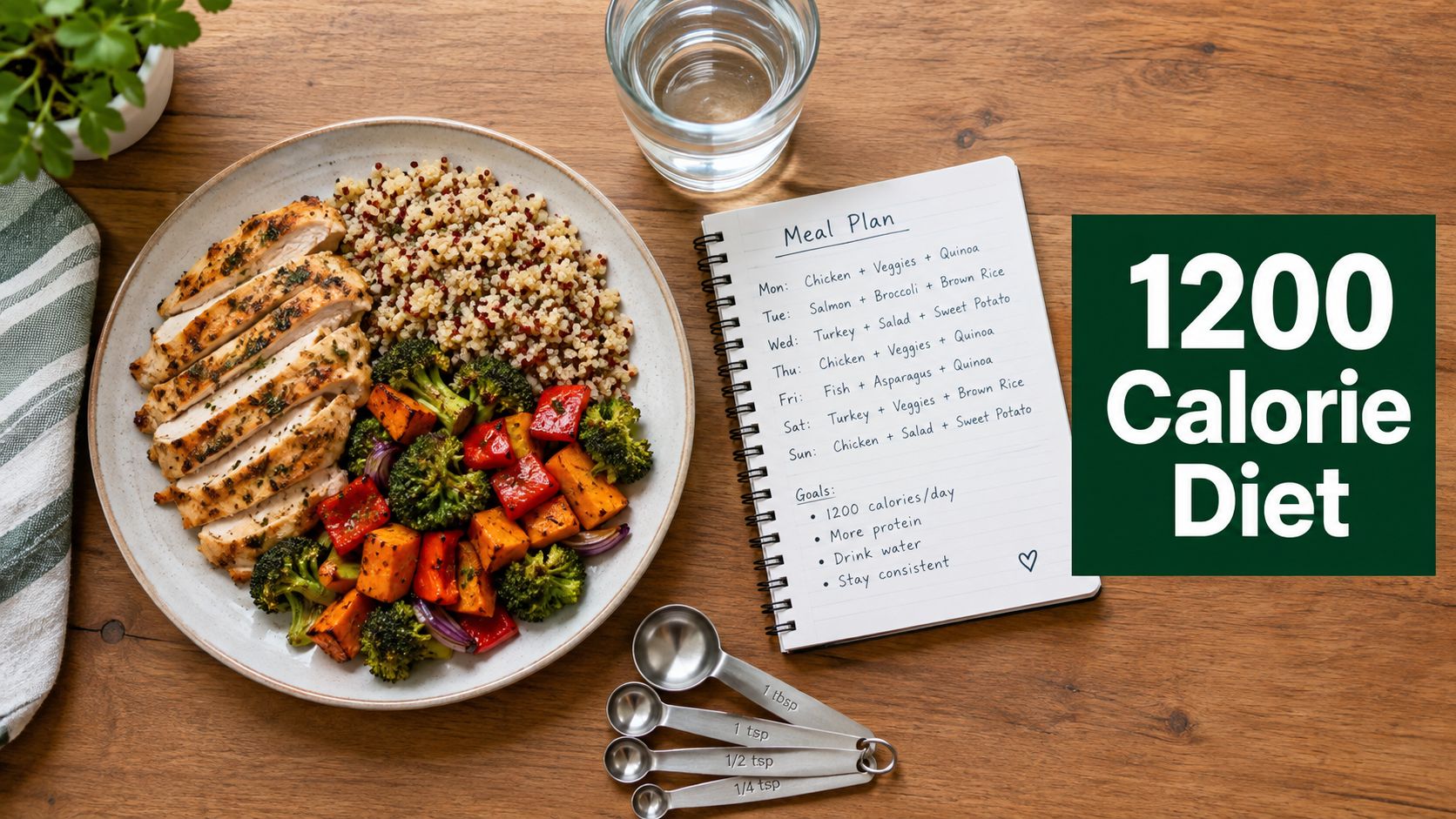
A 1,200 calorie a day diet sits at the low end of the low-calorie range, which is generally described as about 800 to 1,200 kcal per day. Diets below 800 calories are considered very low-calorie diets and usually require close medical supervision, according to NHS clinical guidance.
Take a realistic example. A 32-year-old office worker weighing 165 lb sees a friend lose 10 lb on 1,200 calories and considers doing the same. Her friend's result doesn't tell her whether the target fits her height, maintenance intake, medical history, or activity. Use this quick screen before opening a food tracker.
Run this 30-second safety screen
1. Estimate your maintenance calories. Use the Mifflin-St-Jeor equation as a starting point, then account for daily movement and exercise. A 1,200-calorie target only makes practical sense here if estimated maintenance is roughly 1,600 to 2,000 calories. You can begin with this TDEE calculator, but treat the result as an estimate, not a diagnosis.
2. Check body size. If you're under 5'4" or under 120 lb, don't automatically select 1,200. A smaller body may need a different target, and further restriction can leave too little room for protein, fats, fiber, and micronutrients.
3. Check life stage. This plan isn't appropriate for anyone who is pregnant, breastfeeding, or under 18. Children and teenagers need age-specific nutrition guidance rather than an adult weight-loss template.
4. Check medical history. Stop and seek professional advice if you use insulin for diabetes, have an active eating disorder, recently had surgery, or have a BMI under 18.5.
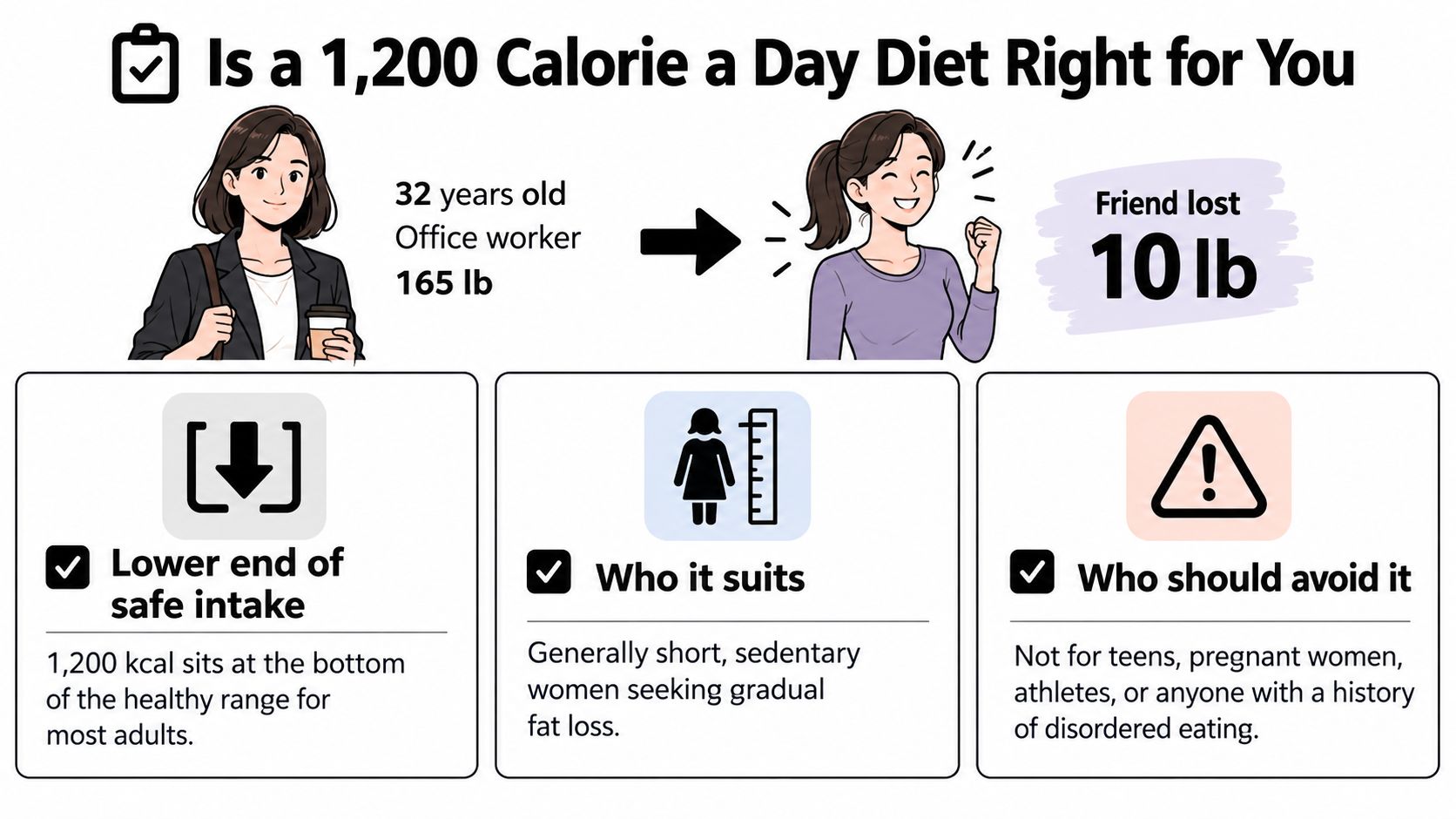
Decision rule: Pass all four checks before proceeding. Fail one, and stop here. A clinician or registered dietitian should help set your target.
The historical appeal is simplicity, not modern precision. Lulu Hunt Peters helped popularize calorie counting in 1918, and later interest was reinforced by the mid-1940s Minnesota Starvation Experiment, as described in Precision Nutrition's history of the 1,200-calorie diet. A clinical review warns that restriction below 1,000 to 1,200 calories daily should only occur with physician supervision because of risks including electrolyte shifts, arrhythmias, fainting, and low blood pressure.
What the Research Actually Says About 1,200 Calories
A 1,200-calorie target can produce weight loss when it creates a real energy deficit. It is not automatically the right target, and adherence often becomes the limiting factor. The research supports using it as a structured phase for selected adults, not presenting it as a universal prescription.
A Healthline summary of a study involving 4,588 people reported a 23% dropout rate. The same summary covered a medically supervised meal-replacement program with more than 2,000 participants, who lost an average of 4.7% body fat and about 6.8 kg, or 15 lb, after one year. The practical lesson is clear: 1,200 calories can work, but supervision, meal structure, and an exit plan affect whether the result lasts. Review the calorie-deficit meal plan before turning the target into a week of meals.
What 1,200 calories actually delivers
| Outcome metric | Reported result | Source basis |
|---|---|---|
| Dropout in one reported diet group | 23% | Healthline's review of the 1,200-calorie diet |
| Average body-fat change in a supervised program | 4.7% over 12 months | Healthline summary |
| Average weight change in that supervised program | About 6.8 kg, or 15 lb, after one year | Healthline summary |
| Supervised low-calorie diet with exercise and behavior support | 5% to 8% of initial body weight over 6 months | NCBI clinical review |
| Patients reaching at least 5% loss in that benchmark | About 60% to 65% | NCBI clinical review |
The psychological workload deserves equal attention. In a randomized 3-week experiment with 121 women, restricting intake increased cortisol output, while calorie monitoring increased perceived stress. Tracking can fail because the daily burden becomes exhausting, even when the meals themselves are acceptable. The findings appear in this randomized calorie-monitoring study.
A supervised 1,200 to 1,500 kcal/day plan paired with exercise and behavior modification produced average six-month losses of 5% to 8% of initial body weight, with roughly 60% to 65% of patients reaching at least 5% loss in the clinical review. That makes 1,200 calories a reasonable structured phase for an appropriate candidate, not a permanent default.
For a comparison between a more aggressive intake and medication-based treatment, read this 800-calorie plan vs GLP-1 therapy. Choose the lowest target that still lets you meet protein, fiber, and micronutrient needs, then build the meals before starting the week.
Setting Your Macros, Sodium, and Portion Targets
Calories alone won't build a good plan. On a 1,200-calorie day, every meal needs to contribute protein, produce, fiber, and enough fat to keep food satisfying.
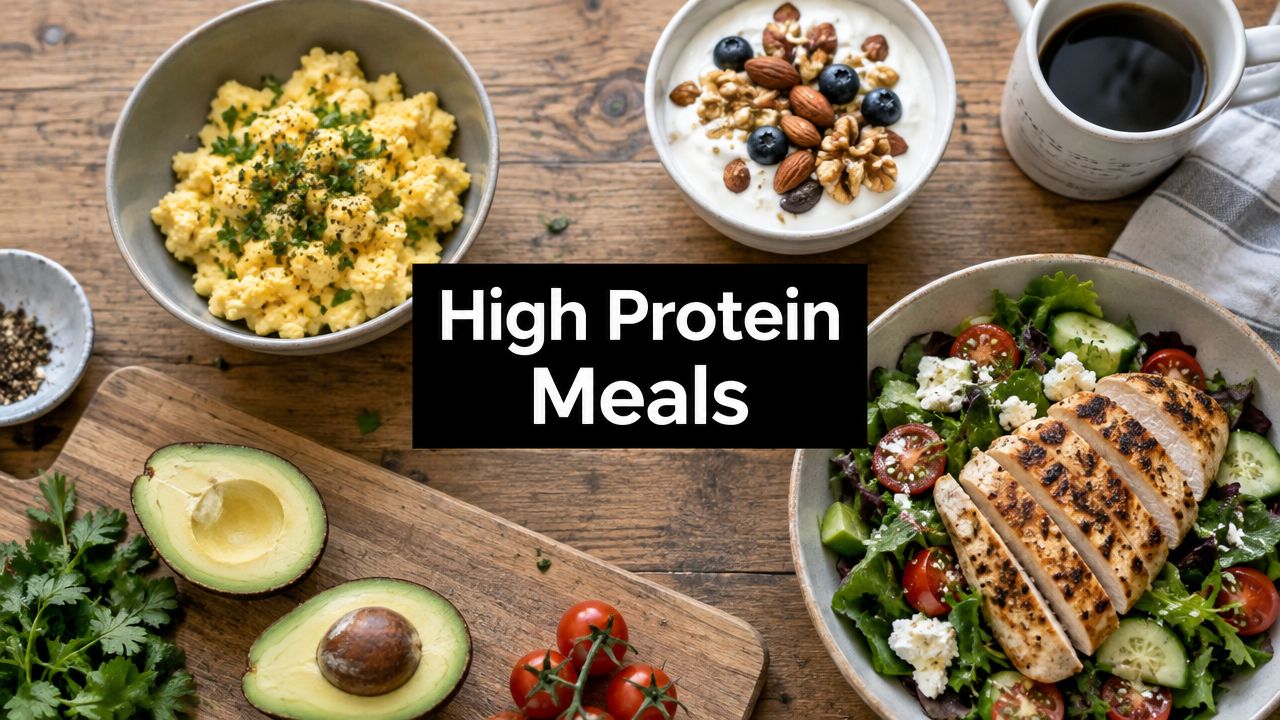
For an average adult woman or smaller-framed man, I'd start with 100 to 110 g protein, 30 to 40 g fat, and roughly 120 to 140 g carbohydrate. Protein should sit high because it improves meal structure and helps protect lean mass during a deficit. These macro ranges won't land perfectly at 1,200 calories for every person, so adjust food portions while keeping protein as the anchor.
The targets I'd use
Keep sodium around 1,500 to 2,000 mg daily. The NHLBI's 1,200-calorie meal-plan guide uses a sodium target of 1,500 to 2,300 mg per day, so sodium deserves its own line in your plan rather than being treated as an afterthought. The full guidance is available in this NHLBI 1,200-calorie meal-plan guide.
Aim for 25 to 30 g fiber, and drink roughly 2.0 to 2.5 L of fluid unless a clinician has given you different instructions. Calcium often falls short, so target 1,000 mg, and aim for 600 to 800 IU of vitamin D. Fortified dairy or a low-dose supplement commonly helps close the gap, but medication and supplement choices should be reviewed with a professional.
| Food Group | Daily Target | Hand or Object Reference |
|---|---|---|
| Cooked protein | Several portions across the day, with 3 oz at a meal as a base | 3 oz cooked protein equals a deck of cards |
| Cooked grains | Measured servings rather than free-poured portions | 1/2 cup cooked rice equals a cupcake wrapper |
| Added fats | Measure every time | 1 tbsp oil equals a poker chip |
| Leafy vegetables | At least a generous meal-sized serving | 2 cups leafy greens equals two baseballs |
| Fiber-rich foods | Build toward 25 to 30 g daily | Combine beans, vegetables, fruit, oats, or whole grains |
If you run, meal timing may need more attention than the basic template. This guide to what to eat before running can help you place carbohydrates around training without turning the entire day into guesswork. For individualized macro math, use a calorie and macro calculator.
Build meals from these portions first, then choose recipes. Recipes should serve your targets, not hide them.
A Sample 7-Day 1,200 Calorie Meal Plan
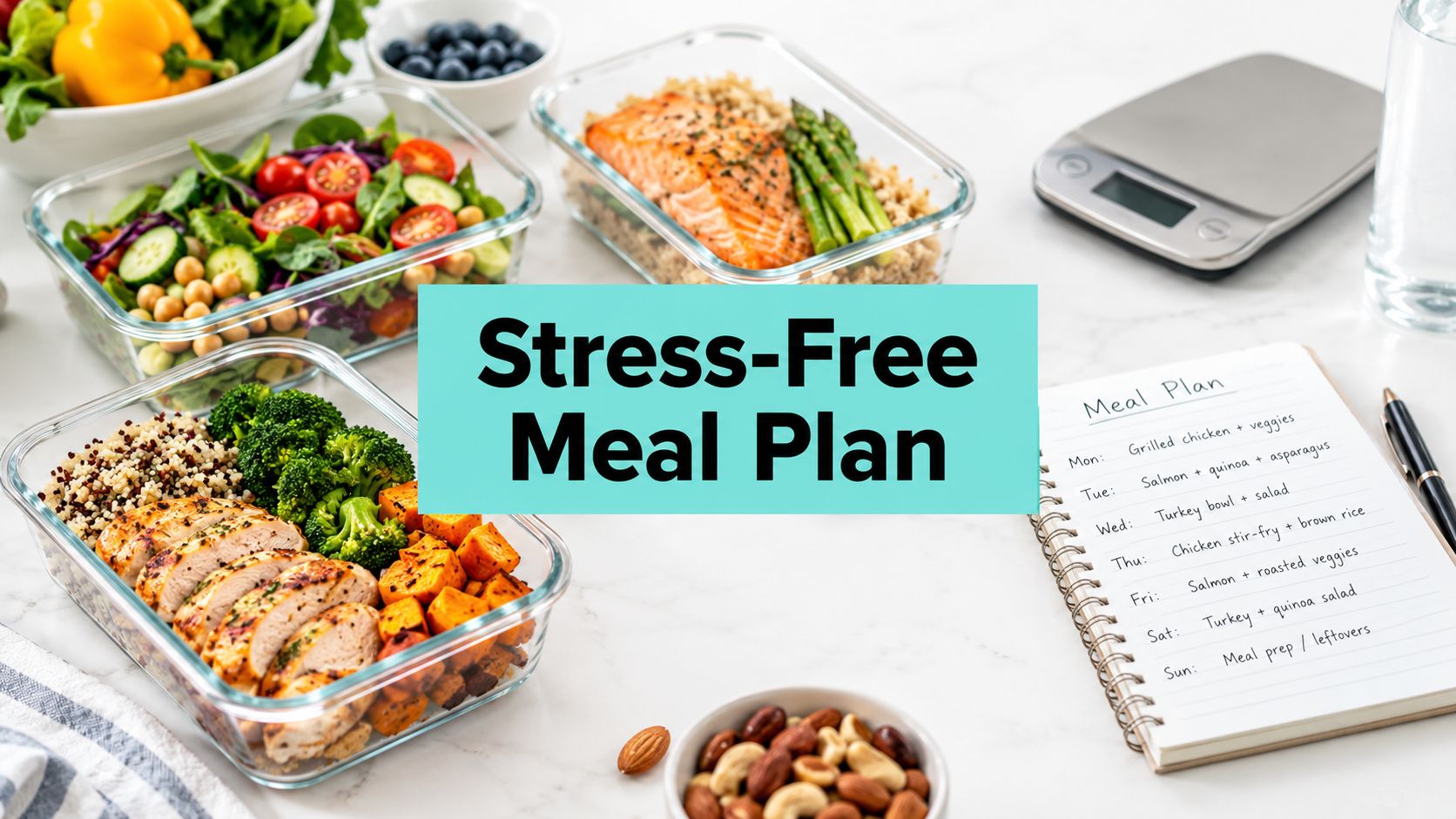
This week uses Greek yogurt, eggs, spinach, chicken, tofu, salmon, cottage cheese, brown rice, beans, berries, and roasted vegetables repeatedly. That keeps the grocery list manageable and lets last night's dinner become today's lunch.
Calories and protein are estimates because brands and cooking methods vary. Drinks are water, black coffee, or unsweetened tea. The plan aims for roughly 110 to 130 g protein daily and keeps sodium below the 2,300 mg ceiling used in the NHLBI guide.
| Day | Breakfast | Lunch, often leftovers | Dinner | Snack | Total kcal |
|---|---|---|---|---|---|
| Monday | Greek yogurt, berries, oats, 300 kcal, 25 g protein | Leftover grilled chicken wrap, vegetables, 330 kcal, 32 g | Sheet-pan tofu, roasted vegetables, brown rice, 420 kcal, 30 g | Cottage cheese, 150 kcal, 18 g | 1,200 |
| Tuesday | Frittata with Monday's roasted vegetables, 290 kcal, 24 g | Chicken wrap leftovers, 330 kcal, 32 g | Lemon-herb chicken, broccoli, brown rice, 430 kcal, 38 g | Berries with yogurt, 150 kcal, 12 g | 1,200 |
| Wednesday | Greek yogurt, berries, oats, 300 kcal, 25 g | Leftover chicken and vegetables, 320 kcal, 31 g | Salmon grain bowl with leftover rice and spinach, 430 kcal, 35 g | Cottage cheese, 150 kcal, 18 g | 1,200 |
| Thursday | Egg and spinach scramble, 300 kcal, 24 g | Leftover salmon grain bowl, 340 kcal, 32 g | Lentil and vegetable soup with cottage cheese, 410 kcal, 31 g | Fruit, 150 kcal, 2 g | 1,200 |
| Friday | Greek yogurt and berries, 290 kcal, 24 g | Leftover lentil soup with egg, 330 kcal, 25 g | Tuna salad wrap with roasted vegetables, 430 kcal, 38 g | Cottage cheese, 150 kcal, 18 g | 1,200 |
| Saturday | Frittata with spinach, 300 kcal, 24 g | Tuna salad wrap leftovers, 320 kcal, 30 g | Flexible social meal, prioritize lean protein and vegetables, 470 kcal, 35 g | Yogurt, 110 kcal, 10 g | 1,200 |
| Sunday | Eggs, spinach, berries, 300 kcal, 24 g | Leftover social-meal protein over greens, 320 kcal, 30 g | Sheet-pan chicken, broccoli, beans, 430 kcal, 38 g | Cottage cheese, 150 kcal, 18 g | 1,200 |
How to use the crossover
Cook chicken and vegetables together on Tuesday, portion one dinner serving, and reserve the rest for Wednesday lunch. Roast extra vegetables on Monday so Tuesday's frittata takes minutes rather than requiring a new side dish.
Use Wednesday's salmon in Thursday's lunch bowl, then make the lentil soup in one pot. Friday's tuna salad works for lunch and Saturday's lunch, while Sunday's chicken can become the first protein component of the next week.
Saturday is deliberately flexible. Don't “save” every calorie by skipping meals. Eat the planned breakfast and lunch, then use the social meal for protein, vegetables, and a measured starch or dessert.
Quick 30-Minute Recipes and a Smart Grocery List
A small recipe rotation beats an ambitious menu that demands a different specialty ingredient every night. These three recipes use one sheet pan, one pot, and basic tools.
Sheet-pan lemon-herb chicken with broccoli
For one serving, use 3 oz boneless chicken thigh, 2 cups broccoli, 1/2 cup cooked brown rice, 1 tsp olive oil, lemon juice, garlic, pepper, and dried herbs. For bulk prep, multiply the chicken, broccoli, and seasoning for four servings, then cook rice separately.
Heat the oven while seasoning the chicken and broccoli. Roast the chicken and vegetables on one sheet pan until the chicken is cooked through and the broccoli is tender, then serve with the measured rice. Set aside three portions for later meals, refrigerating what you'll eat soon and freezing the rest if needed.
One-pot lentil and vegetable soup
For one serving, combine 1/2 cup cooked lentils, 1 cup low-sodium broth, 1 cup chopped vegetables, 1 cup spinach, and herbs. For four servings, use four times those amounts in a pot.
Bring the broth and vegetables to a simmer, add lentils, and cook until hot. Stir in spinach at the end. Keep the soup low in sodium by choosing low-sodium broth and seasoning with lemon, garlic, pepper, and herbs.
Five-ingredient tuna salad wraps
Mix 1 can tuna, 2 tbsp Greek yogurt, 1 tsp mustard, chopped cucumber, and pepper. Spoon one portion into a whole-wheat wrap with spinach. For four servings, prepare four cans' worth, but keep the filling refrigerated and assemble wraps as needed.
| Section | Items, quantity | Used in |
|---|---|---|
| Produce | Broccoli, spinach, berries, lemons, cucumbers, mixed vegetables | Sheet pan, frittata, bowls, wraps, snacks |
| Proteins | Chicken thighs, tofu, salmon, tuna, lentils, eggs, beans | Dinners, lunches, breakfasts, soup |
| Dairy | Greek yogurt, cottage cheese, fortified milk | Breakfasts, snacks, tuna salad, calcium |
| Pantry | Brown rice, whole-wheat wraps, mustard, herbs, low-sodium broth, olive oil | Grain bowls, wraps, soup, cooking |
| Frozen | Frozen berries and mixed vegetables | Yogurt bowls, frittata, quick sides |
Store cooked chicken, salmon, rice, and soup in shallow containers and use refrigerated leftovers within 3 days. Soup freezes well, as do cooked beans and roasted vegetables. Keep wraps unassembled so they don't become soggy.
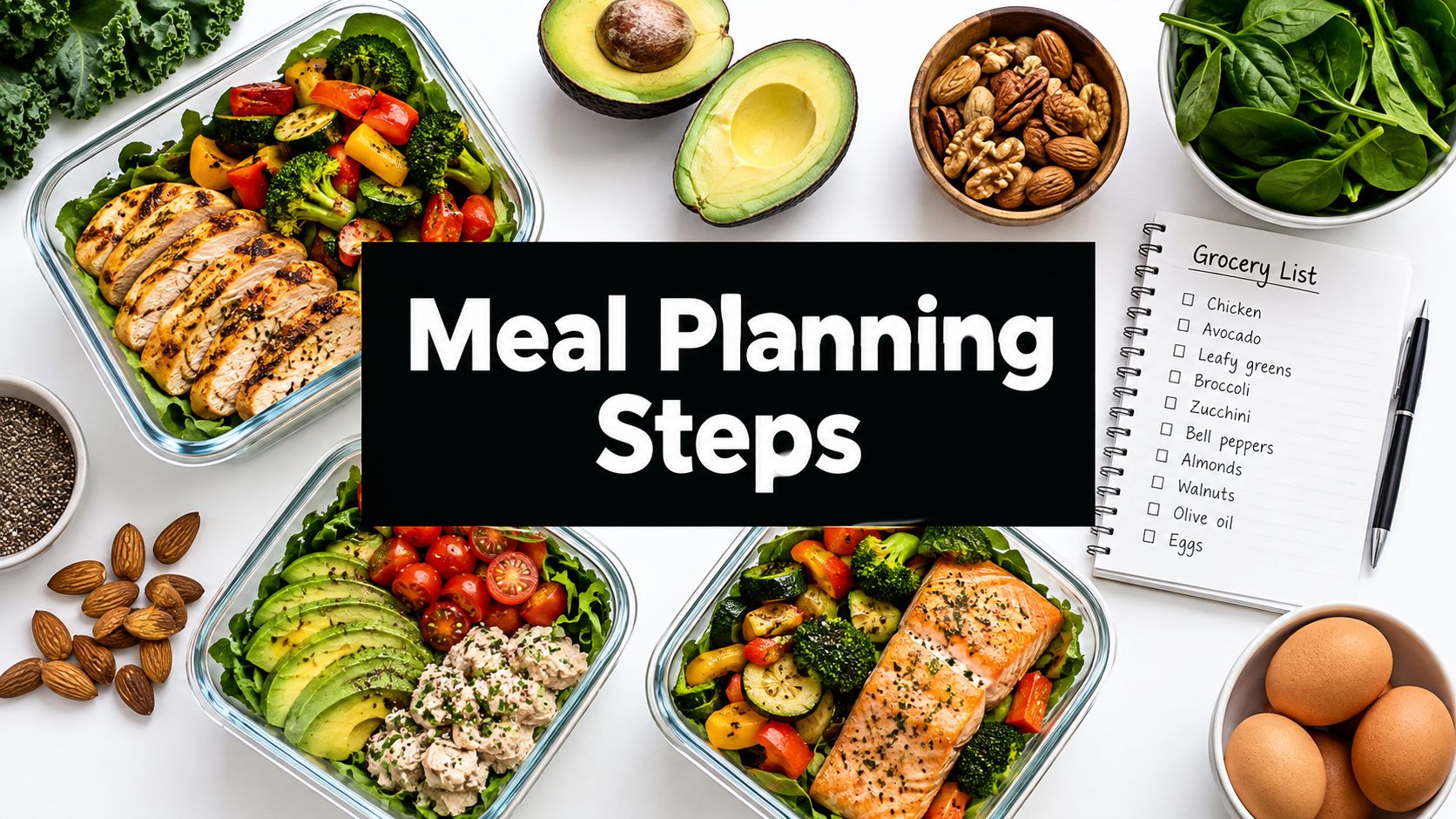
For automated quantities and aisle organization, use the grocery list generator. It's especially useful when you're reusing ingredients across several meals.
Customizing the Plan for Keto, Vegetarian, and Active Lifestyles
Don't force one 1,200-calorie template onto every eating pattern. Keep the decision rule from the first section, then change the food structure and, where necessary, the calorie target.
| Diet Style | Key Swap | Macro Shift | Daily Calorie Target |
|---|---|---|---|
| Keto | Replace rice, wraps, and fruit with avocado, olive oil, and higher-fat dairy | Roughly 70% fat, 25% protein, 5% carbohydrate | 1,200 only if individually appropriate |
| Vegetarian | Replace chicken and fish with tofu, tempeh, eggs, legumes, and cottage cheese | Keep protein high, monitor iron and B12 | 1,200 only if nutritionally complete |
| Gluten-free | Replace wheat wraps and regular soy sauce with corn tortillas, rice, and tamari | Similar balance to the base plan | Keep the same target if it remains adequate |
| Active lifter or runner | Add carbohydrate around training and enlarge protein or grain portions | More training fuel, less aggressive restriction | 1,400 to 1,600 |
Keto needs a different budget
For keto, replace the chicken wrap with tuna wrapped in lettuce, the rice bowl with salmon, avocado, and greens, and berries with a smaller serving of full-fat dairy if needed. A roughly 70% fat, 25% protein, 5% carbohydrate split leaves little room for grains, beans, and fruit, so vegetables and mineral-rich foods need deliberate planning.
Vegetarian meals need protein planning
A vegetarian replacement isn't “more pasta.” Use tofu in the sheet-pan dinner, tempeh in the grain bowl, eggs in the frittata, lentils in the soup, and cottage cheese as a snack. Iron and B12 deserve attention, particularly when meat and fish disappear from the week.
Gluten-free adaptation is simpler. Keep the chicken, tofu, eggs, rice, vegetables, and dairy, then replace wheat wraps with corn tortillas and standard soy sauce with tamari. Check labels for cross-contact if you have celiac disease.
If you lift or run regularly, or log 10,000 or more steps daily, 1,200 calories is usually too low to fuel training and recovery. Use 1,400 to 1,600 calories instead, adding carbohydrates around the workout rather than eating a tiny base plan and trying to push through fatigue.
Monitoring Progress and Knowing When to Stop
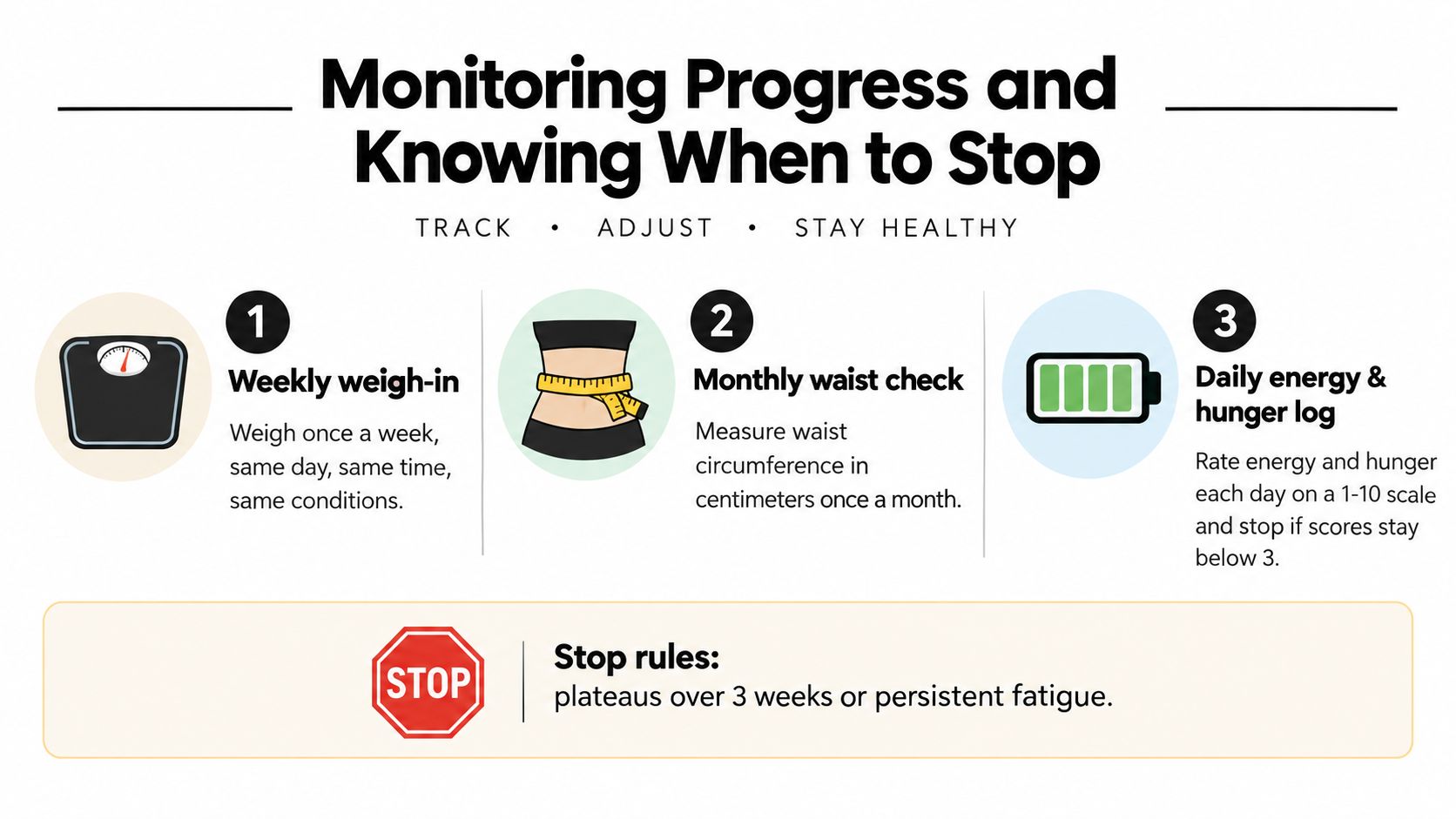
A restrictive plan needs a monitoring system, not just a calorie target. Weigh once a week under the same conditions, measure waist circumference in centimeters once a month, and rate energy and hunger from 1 to 10 each day.
The expected pace in this framework is 0.5 to 1 kg, or 1 to 2 lb, per week. Daily scale changes can reflect water, sodium, digestion, and hormonal shifts, so don't react to one weigh-in. If the trend stalls for three weeks despite consistent adherence, don't cut calories further. Review portions, cooking fats, drinks, activity, medications, and the maintenance estimate with a clinician or dietitian.
Use this weekly seven-point self-check
- Weight trend: Did you weigh under comparable conditions?
- Waist measurement: Is the monthly measurement stable, lower, or rising?
- Energy: Are daily scores staying functional rather than consistently low?
- Hunger: Can you manage hunger without constant food preoccupation?
- Sleep: Has sleep quality worsened?
- Training: Can you complete normal activity and recover?
- Eating behavior: Are you experiencing loss of control, bingeing, purging, or compensatory exercise?
End the diet and contact a clinician for hair shedding beyond normal brushing, missed periods for three cycles, dizziness when standing, persistently cold hands and feet, mood crashes, or any binge-purge pattern. These aren't signs that you need more discipline. They're reasons to stop the intervention.
Absolute red flags: Fainting, severe weakness, confusion, chest symptoms, repeated vomiting, or dangerous blood-sugar changes require a clinician call, not a diet adjustment.
Once you reach your goal weight, transition gradually by adding 100 to 200 calories every two weeks and reverse-diet toward maintenance. If the plan lasted longer than 8 to 12 weeks, schedule follow-up blood work for fasting glucose, ferritin, and thyroid markers with your healthcare professional.
A fitness tracker can help you observe activity and consistency, but it shouldn't pressure you to earn food. If you want to compare affordable options, review these top fitness tracker picks under $100.
AI Meal Planner can turn this framework into personalized weekly meals, calculated macros, reusable ingredients, and an organized grocery list that fits your dietary preferences. If 1,200 calories is appropriate for you, visit AI Meal Planner to build a practical plan with quick recipes instead of managing every portion in a spreadsheet.
AI-powered nutrition
Get Your Personalized Meal Plan
AI creates the perfect meals for your goals, lifestyle, and taste.
Start Your Journej