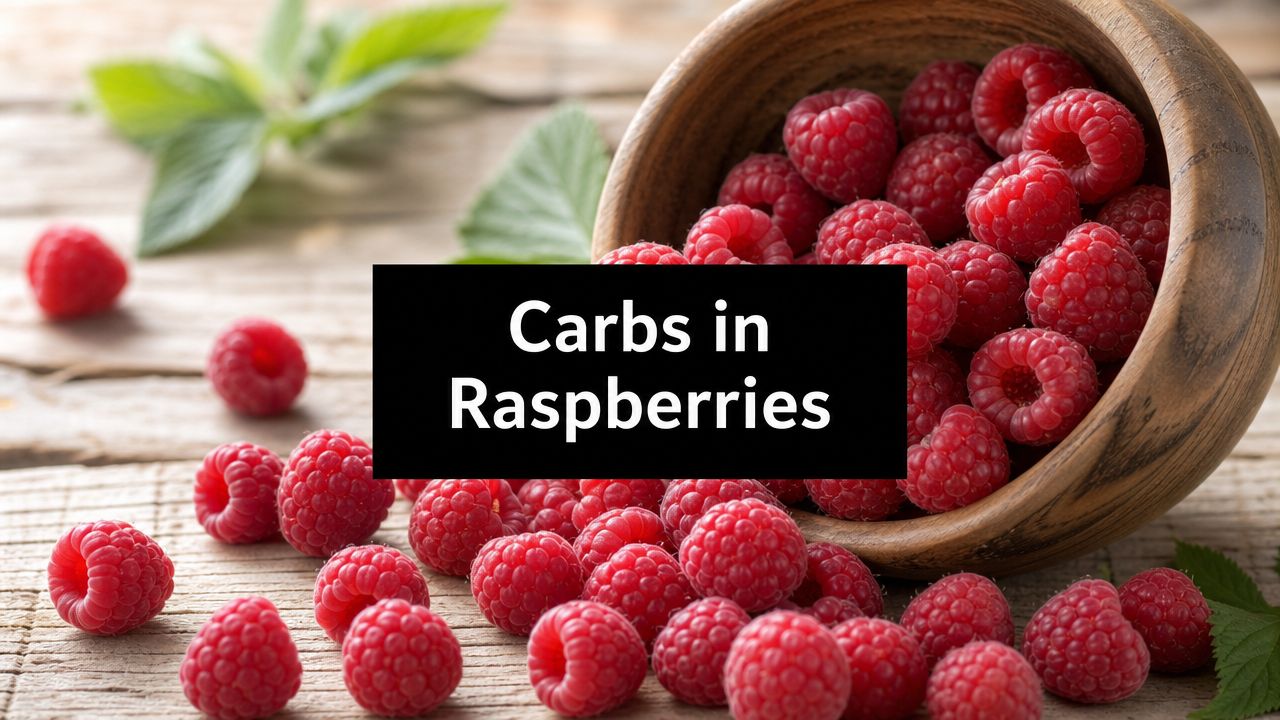
If you're checking the carbs in raspberries because you're tracking weight loss, keto, or blood sugar, the short answer is simple. One cup of fresh red raspberries contains 14.69 g of total carbs, 8 g of fiber, and about 6.6 g net carbs, with 5.44 g of sugars and about 63.96 calories based on standard nutrition references (University of Rochester Medical Center nutrition listing; Carb Manager raspberry entry). That makes raspberries one of the more practical fruits for lower-carb meal plans because a large share of their carbohydrate comes from fiber.
A lot of people assume all fruit is “too high in carbs” once they start paying attention to macros. Raspberries are one of the best examples of why that shortcut doesn't work. The number that matters depends on your goal. If you're counting total carbs, the cup serving matters. If you're trying to estimate blood sugar impact, fiber changes the picture quite a bit.
In practice, raspberries are easier to fit into a structured meal plan than many sweeter fruits. They work in yogurt bowls, chia puddings, cottage cheese snacks, smoothies, and lower-carb desserts without pushing carbs up too fast. The key is knowing what form you're eating and how to log it correctly.
What Are the Exact Carb Counts for Raspberries
A client trying to fit fruit into a lower-carb breakfast usually asks a practical question first. How many carbs are in a serving of raspberries, and which number should they track?
Start with the standard serving. A 1-cup serving (123 g) of fresh red raspberries contains 14.69 g total carbohydrates, 8 g dietary fiber, 5.44 g total sugars, and about 63.96 calories according to the University of Rochester Medical Center nutrition reference.
For keto or lower-carb planning, many apps also show net carbs, which are usually calculated as total carbs minus fiber. In raspberry entries, that works out to about 6.6 g net carbs, as noted earlier.
| Serving Size | Total Carbs (g) | Fiber (g) | Net Carbs (g) |
|---|---|---|---|
| 1 cup fresh red raspberries (123 g) | 14.69 | 8 | 6.6 |
The useful part is not just the raw number. It is how that number breaks down.
More than half of the carbohydrate in that cup comes from fiber, based on the same University of Rochester figures. That is why raspberries often fit more easily into a carb budget than people expect, especially compared with fruits that pack more sugar into the same volume.
How to calculate net carbs yourself
Use the basic formula:
Net carbs = total carbs - fiber
For raspberries, the math looks like this:
- Total carbs: 14.69 g
- Minus fiber: 8 g
- Estimated net carbs: about 6.6 g
This distinction is important because different eating plans track different numbers. A person following strict keto may focus on net carbs. A person with diabetes may look at total carbs first, then consider fiber, portion size, and what else is in the meal before deciding whether the serving fits.
If you log food often, use a searchable database so your entries stay consistent from one day to the next. The AI Meal Planner foods library is useful for checking serving sizes and comparing versions without relying on guesswork.
How to use these numbers in a meal plan
A full cup of raspberries can work well in many plans, but portion size still matters. If your carb target is tight, a half-cup serving may be easier to place in breakfast or dessert. If your goal is blood sugar management, pairing raspberries with protein or fat, such as Greek yogurt, cottage cheese, or nuts, usually makes more sense than eating them with other high-carb foods.
Here is the practical takeaway:
- Track total carbs if your plan or clinician uses full carbohydrate counting.
- Use net carbs if you follow keto or another lower-carb approach that subtracts fiber.
- Watch portions in mixed meals because toppings, sweeteners, and granola can add more carbs than the berries themselves.
- Use raspberries strategically when you want fruit, fiber, and a lighter sugar load in the same serving.
Raspberries are not a free food. They are a manageable fruit, and that is a meaningful difference when you are planning meals with a specific carb goal in mind.
How Do Raspberries Compare to Other Berries and Fruits
You are standing in the produce aisle deciding between raspberries, blueberries, and grapes for the week. For a lower-carb plan, that choice changes more than taste. It affects how easily fruit fits into breakfast, snacks, and desserts without crowding out the rest of your carb budget.

Why raspberries often come out ahead
As noted earlier, raspberries are one of the lower-net-carb fruit options, and their high fiber content is a big reason why. In practice, that gives them an advantage over sweeter fruits that use up more of your daily carbs in a smaller portion.
This distinction is important because two fruits can look similar in a bowl yet work very differently in a meal plan. Raspberries usually give you more flexibility. You can add them to yogurt, cottage cheese, or chia pudding and still keep the meal balanced for a lower-carb goal.
| Fruit | General carb impact for lower-carb eating | Best use case |
|---|---|---|
| Raspberries | Lower net-carb option | Yogurt bowls, snacks, toppings |
| Strawberries | Often a practical choice too | Sliced fruit, smoothies |
| Blueberries | Easier to over-portion | Oatmeal, baking, mixed bowls |
| Grapes | Usually more carb-dense per bite | Small portions only on low-carb plans |
I use this kind of comparison with clients because food decisions rarely happen one item at a time. The question is not whether a fruit is "good" or "bad." The useful question is which fruit gives you the best return for the carbs you want to spend.
What this means in real meal planning
The best choice depends on the job that fruit needs to do.
- For keto or stricter low-carb eating: raspberries are often easier to fit than grapes, bananas, or larger servings of blueberries. If you are building a tighter carb target, a keto meal plan built around lower-carb fruit choices is usually easier to follow than trying to guess portions meal by meal.
- For blood sugar management: berries are often a better starting point than dried fruit, fruit juice, or very sweet tropical fruit because they pair well with protein and fat.
- For portion control: raspberries help because a moderate serving looks generous, which can make a plan feel more satisfying.
A practical example helps. If someone wants fruit with breakfast, raspberries mixed into plain Greek yogurt usually leave more room for nuts or seeds than a similar-looking serving of granola plus sweeter fruit.
One caution still applies. Lower carb does not mean unlimited. If raspberries show up in a smoothie, snack bowl, dessert topping, and evening yogurt all in the same day, the carbs add up quickly even though each choice looked reasonable on its own.
Are Raspberries Good for Keto and Low-Carb Diets
Yes. In most cases, raspberries fit well into keto and low-carb diets because their digestible carb load is relatively modest compared with many other fruits.

The mistake I see most often is treating all fruit as if it's off-limits. That usually makes a plan harder to maintain. A better approach is to choose fruits that give you flavor and satisfaction without taking over your daily carb budget. Raspberries are one of the most reliable choices for that.
Why raspberries work on a carb-restricted plan
Raspberries work best on keto because they offer three advantages at once:
- They satisfy a fruit craving without pushing carbs up as fast as many sweeter options.
- They pair well with fat and protein in foods like Greek yogurt, chia pudding, cottage cheese, or whipped cream.
- They're easy to portion since they work as a topping, snack, or mix-in instead of requiring a large serving.
If someone is trying to stay consistent, that matters more than having a technically perfect food list. A small serving of raspberries in a meal you can repeat is usually more useful than trying to force ultra-restrictive choices that don't last.
What tends to work best
For keto or low-carb clients, I usually suggest thinking about raspberries in these ways:
- Use them as an accent food. Add them to a breakfast bowl or dessert instead of building a large fruit plate.
- Pair them with fat or protein. This usually makes the snack more filling and easier on appetite.
- Log them accurately. Eyeballing berries can turn a small topping into a much larger serving.
If you're following a keto pattern and want a structured approach, a keto meal planning system can make it easier to fit foods like raspberries into the week without doing mental math at every meal.
Best use: Raspberries make keto feel less rigid. They add sweetness and texture without acting like a dessert-sized carb hit.
This walkthrough gives a helpful visual overview of using berries in lower-carb eating:
What doesn't work
A few patterns cause trouble fast:
- Using raspberry jam as if it's equal to fresh berries
- Pouring raspberry juice into smoothies and assuming it counts the same way
- Adding raspberries to already carb-heavy meals without tracking the whole meal
Whole berries are usually the smart choice. Products made from raspberries can behave very differently once water is removed or sugars become more concentrated.
Can You Eat Raspberries If You Have Diabetes
In many cases, yes. Raspberries can fit into a diabetes-friendly eating pattern because the whole fruit offers a favorable balance of fiber and sugar, and that changes how practical the food is in a meal.
For blood sugar management, I care less about whether a food is “allowed” and more about format, portion, and pairing. Whole raspberries are very different from sweetened raspberry products, juices, and supplements.
Why whole raspberries make more sense than raspberry products
A useful nuance from Healthline's raspberry nutrition review is that whole raspberries and raspberry supplements are not interchangeable. That same review notes limited evidence for raspberry ketone supplements, while mentioning a 2019 trial suggesting post-meal raspberry intake may reduce blood sugar and inflammation in people with diabetes and obesity.
That doesn't mean raspberries are a treatment. It does mean the whole fruit is the version with the most practical nutrition case for meal planning.
Choose the food before the supplement. Whole raspberries give you fiber, volume, and a predictable place in meals.
How to use raspberries in a blood-sugar-aware meal
The best approach is usually to build raspberries into meals or snacks that already include protein, fat, or both.
Try patterns like these:
- Add raspberries to unsweetened yogurt or cottage cheese for a more balanced snack.
- Use them in oatmeal carefully if the rest of the bowl is controlled and protein is included.
- Keep them whole instead of switching to juice or sweetened sauces.
For readers dealing with insulin resistance patterns beyond diabetes alone, this overview of Dr. Valencia Root on PCOS causes gives helpful context on how insulin issues can overlap with food decisions.
What clients should watch for
Three problems come up repeatedly:
- Fruit is eaten alone when hunger is high. That can lead to larger portions and less staying power.
- “Natural” raspberry products are assumed to be blood-sugar friendly. They're often not.
- The carb count is tracked, but the meal pattern isn't. Blood sugar response depends on the whole plate.
If you're trying to organize meals around steadier blood sugar, a diabetic meal planning approach is often more helpful than focusing on one fruit in isolation.
How to Track Raspberries in Your AI Meal Planner
Knowing the carbs in raspberries is useful. Logging them accurately is what makes that knowledge practical.

Track the form, not just the food name
This is the big one. “Raspberries” is not always one nutritionally identical item.
A peer-reviewed analysis found that IQF and purée-with-seeds raspberries provide about 4.3 g fiber per 100 g fruit, while juice concentrate rises to 221 kcal per 100 g, showing how much more concentrated raspberry products become when water is removed, according to this processed raspberry composition analysis.
That means these entries shouldn't be treated as interchangeable:
- Fresh raspberries
- Frozen whole raspberries
- Seeded raspberry purée
- Raspberry juice concentrate
A simple logging routine that works
Use this sequence each time:
- Choose the correct entry first. Fresh and frozen whole berries are usually the closest substitutes.
- Weigh when possible. Grams are more precise than eyeballing a cup.
- Check whether the product is sweetened or concentrated. This matters a lot for sauces, smoothie packs, and dessert ingredients.
- Save the food as part of the full meal. A berry topping on yogurt is different from berries blended into juice.
If you're comparing ingredients or recipes, a recipe nutrition calculator can help catch mistakes that happen when raspberry ingredients are entered too broadly.
Tracking shortcut: If the raspberry product looks thicker, sweeter, or more shelf-stable than fresh berries, pause before logging it as plain fruit.
When precision matters most
You don't need perfect tracking every day. But it matters more in a few situations:
- Keto phases, where carb limits are tighter
- Prediabetes or diabetes, where meal patterns need more consistency
- Weight loss stalls, when casual extras start to add up
- Smoothie-heavy routines, where fruit portions become easy to underestimate
If you're working on blood sugar goals, this guide to personalized dietary advice for prediabetes adds practical context for building meals beyond just one ingredient.
For anyone just setting up a nutrition system, the easiest place to start is the AI Meal Planner onboarding flow, where you can set goals and dietary preferences before you start logging meals.
Frequently Asked Questions About Raspberry Carbs
Do frozen raspberries have different carbs than fresh raspberries
Frozen whole raspberries are often similar in practical meal planning, but you still need to log the correct product entry. Sweetened frozen fruit or mixed smoothie packs can be very different from plain whole berries.
Are raspberry jam and raspberry juice the same as whole raspberries
No. Whole raspberries and processed raspberry products don't behave the same way, especially when sugars are concentrated or fiber is reduced.
Are raspberries better than supplements for nutrition goals
Yes, for most food-based goals. Whole raspberries provide fiber and a place in a meal, while supplements are a separate category and shouldn't be treated as a replacement.
Can raspberries fit into a weight loss meal plan
Yes. They can work well because they add flavor and volume without a heavy calorie load, especially when used in balanced meals or snacks.
Should you count total carbs or net carbs
That depends on your approach. People on strict low-carb or keto plans often watch net carbs, while others prefer to track total carbs and overall meal quality.
Is there a best time to eat raspberries
There's no single best time. They tend to work well when paired with protein or fat, such as at breakfast, in a snack, or as part of dessert after a meal.
Do cooked raspberries count differently from raw raspberries
The answer depends on what happens during preparation. Heating whole raspberries is different from turning them into a sweetened sauce, reduction, or concentrate.
If you want a simpler way to turn nutrition facts into actual meals, AI Meal Planner helps you build personalized meal plans around goals like weight loss, keto, or blood sugar support without doing all the macro math by hand.
AI-powered nutrition
Get Your Personalized Meal Plan
AI creates the perfect meals for your goals, lifestyle, and taste.
Start Your Journej