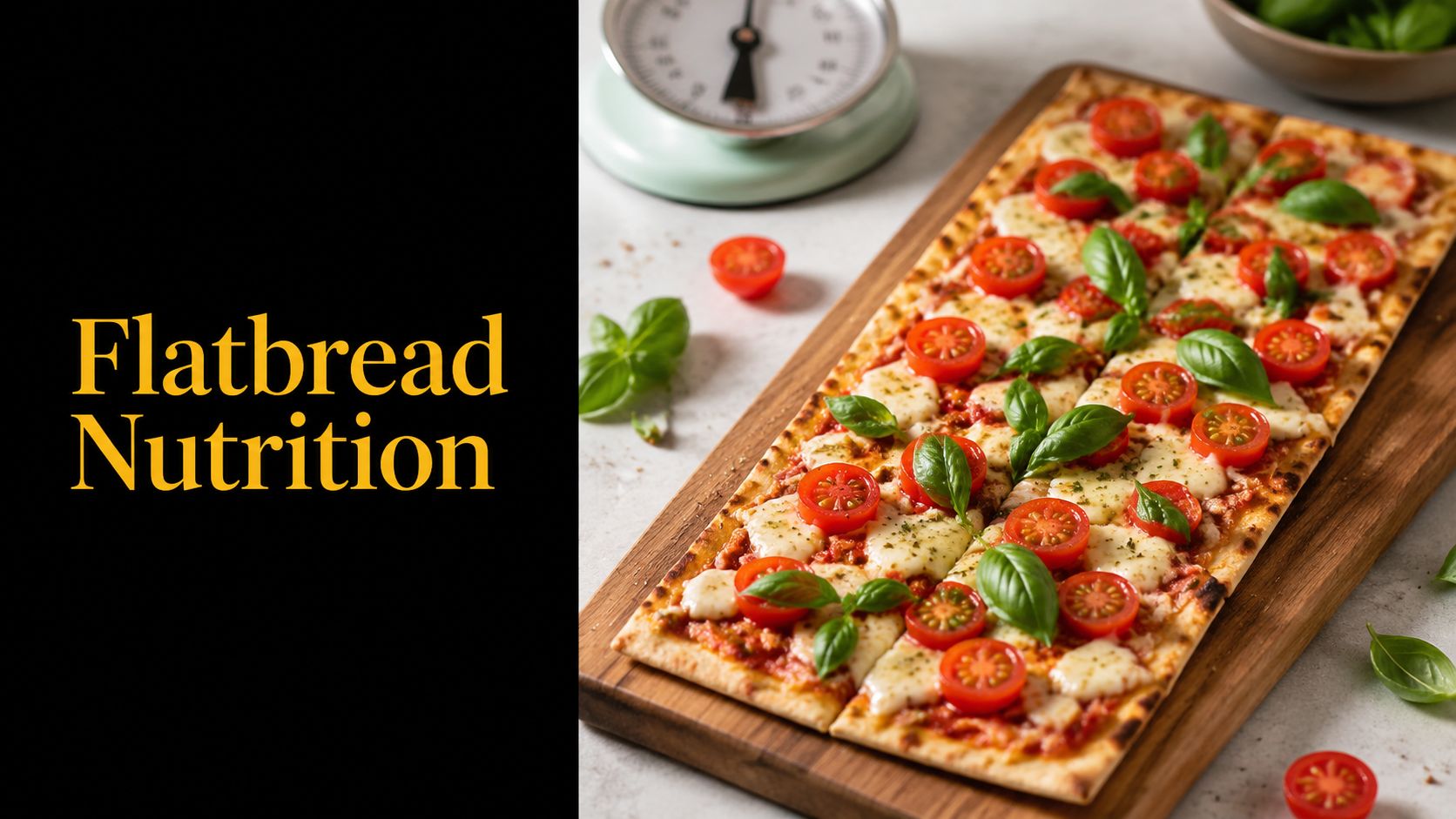
A single serving of flatbread pizza can be 221 calories or 463 calories depending on the recipe, and that gap changes whether it fits a light meal, a higher-protein lunch, or a calorie-dense dinner. Sodium can swing just as much, from 370 mg in one institutional recipe to 1,170 mg in a commercial half-flatbread serving, so the crust alone doesn't tell you much about the nutrition profile.
Flatbread pizza nutrition is best read as a combination of portion size, cheese load, topping choice, and sodium. If you track those four factors, you can usually tell whether a serving fits weight loss, muscle gain, diabetes planning, or a higher-carb meal plan before you take the first bite.
Introduction to Flatbread Pizza Nutrition
A flatbread pizza can sit in very different places nutritionally depending on how it is built. One homemade serving from Iowa State University is listed at 150 kcal, with 20 g carbohydrate, 4 g fat, 3 g fiber, and 9 g protein, while a commercial example reaches 463 calories, with 21 g fat, 51 g carbohydrate, and 23 g protein in a single serving Iowa State University flatbread recipe commercial flatbread listing.
That gap matters because the same style of food can fit very different meal targets. A thinner crust with vegetables and measured cheese can stay moderate in energy, while extra cheese, processed meat, and a larger serving move the meal toward a much denser macro profile. Protein may rise at the same time, but so can fat and sodium, which changes whether the pizza works better for a light lunch, a recovery meal, or a higher-calorie dinner.
Packaging matters too. If you are planning how the pizza ships, stores, or arrives at the table, the box is part of the meal experience, and Afida's guide to pizza boxes is a useful operational reference for that side of the process.
Understanding Flatbread Pizza Nutrition Profiles
Why the same food can look so different on paper
Flatbread pizza spans a wide nutrition range because the crust, cheese, and toppings can change the profile more than the name suggests. A homemade version from Iowa State lands at 221 calories, while a commercial version in the Eat This Much comparison reaches 463 calories. That 242-calorie gap comes from differences in crust size, cheese amount, and topping density, and it is large enough to shift the same meal from a light lunch to a much more calorie-dense dinner portion Eat This Much comparison.
The macro trade-offs follow the same pattern. More cheese usually raises fat and sodium at the same time, while extra meat can raise protein but often brings more sodium with it. In the Iowa State example, the serving lists 9 g fat, 21 g carbohydrate, and 14 g protein at 221 calories. The commercial example lists 21 g fat, 51 g carbohydrate, and 23 g protein at 463 calories. Those differences show why flatbread pizza should be judged by its ingredient stack, not by crust style alone Eat This Much comparison.
What the common ranges say about meal fit
Health Canada's Speedy Flatbread Pizza recipe lists 221 calories, 14 g protein, 2 g fibre, and 539 mg sodium per serving, while American Flatbread's Cheese & Herb 12" pizza lists 370 calories, 15 g fat, 41 g carbohydrate, 19 g protein, and 850 mg sodium per one-third pizza serving Health Canada flatbread recipe.
Those figures point to a clear pattern. Flatbread pizza often sits in a moderate-to-high carbohydrate range, while sodium can climb quickly even when calories stay moderate. That matters for anyone matching a meal to a daily target, because a flatter crust does not guarantee a lighter sodium load, and it does not guarantee a higher-protein meal either.
| Source | Serving Size | Calories | Fat | Carbs | Protein | Sodium |
|---|---|---|---|---|---|---|
| Iowa State University Speedy Flatbread Pizza | 1 serving | 221 | 9 g | 21 g | 14 g | 370 mg |
| Eat This Much commercial flatbread pizza | 1 serving | 463 | 21 g | 51 g | 23 g | not listed |
| Health Canada Speedy Flatbread Pizza | 1 serving | 221 | not listed | not listed | 14 g | 539 mg |
| American Flatbread Cheese & Herb 12" pizza | 1/3 pizza | 370 | 15 g | 41 g | 19 g | 850 mg |
For people who track macros, the useful question is which version fits the rest of the day. A lower-calorie homemade flatbread may fit a calorie-controlled plan more easily, while a richer commercial slice can work better in a higher-energy meal if the rest of the day stays lighter. For a broader food-level planning view, the AI Meal Planner foods library can help organize meals by calorie and macro targets.
Practical rule: If the flatbread comes with cheese-heavy toppings, assume sodium and fat will rise faster than protein.
Comparing Flatbread to Other Pizza Varieties

When flatbread is lighter, and when it isn't
Flatbread often looks lighter because the crust is thinner and the portion can appear smaller, but the nutrition profile depends more on preparation than on shape. A commercial half-flatbread from Pizzeria Uno reaches 580 kcal, with 44 g carbs, 13 g saturated fat, and 1,170 mg sodium Pizzeria Uno half-flatbread. That profile is useful because it shows how a flatbread format can still carry a heavy metabolic load when cheese, oil, and processed toppings are built in.
The comparison with other pizza styles comes down to what is added after the dough. A plain flatbread with vegetables and measured cheese can stay lower in calories than a deep-dish slice, but a bakery or restaurant flatbread with a dense topping layer can close that gap quickly. The crust alone does not determine the outcome, the topping stack does.
Which pizza style fits which goal
For calorie control, flatbread works best when the topping list stays short and the serving is kept to a defined portion. For a higher-energy meal, a richer pizza style can fit without creating a problem if the rest of the day is lighter. For sodium control, flatbread needs just as much attention as any other style, because the commercial example above shows how quickly salt can rise in a relatively small serving Pizzeria Uno half-flatbread.
The more useful way to compare pizza types is by the target they serve. Flatbread is a strong choice when the goal is a smaller portion with pizza flavor intact. It becomes less attractive when cheese and processed meats take over, because the sodium and saturated fat rise faster than the protein does. That is the trade-off readers should watch for when choosing between homemade, commercial, and bakery-style flatbread pizzas.
A thinner crust does not guarantee a lighter meal. Toppings decide most of the nutrition outcome.
For a commercially produced example beyond standard restaurant data, Pizza IFM Gourmet Dubai shows why bakery and food-service flatbreads should be judged as prepared products, not treated as one generic category.
Adapting Flatbread Pizza for Weight Loss Muscle Gain and Diabetes

Weight loss works best with portion discipline
Flatbread pizza fits a calorie-controlled day best when the serving size is fixed before anyone starts eating. A homemade example from Iowa State shows why: a 150 kcal serving with 20 g carbs, 4 g fat, 3 g fiber, and 9 g protein gives a relatively high amount of protein for the calories, which makes it easier to fit into a lower-energy meal than a richer commercial slice Iowa State University flatbread recipe. The nutrition profile still depends on toppings, but the base can stay modest if the topping list stays short.
That matters because the biggest calorie swings usually come from cheese, oil, and processed meats, not the flatbread itself. For weight loss, a smaller serving, plenty of vegetables, and enough cheese for flavor rather than full coverage keep the meal more predictable. A side salad or roasted vegetables can raise volume without adding the same calorie load that extra crust or extra cheese would bring.
Muscle gain needs more protein density
For muscle gain, flatbread works better as a base than as a complete protein source. Commercial and homemade examples both show that protein can be useful, but it usually stays moderate unless the pizza is built with lean meats, beans, tofu, or other protein foods on top Iowa State University flatbread recipe Eat This Much comparison.
The practical approach is straightforward. Keep the flatbread crust, then add grilled chicken, turkey, tofu, beans, or a similar topping, while measuring cheese so fat does not crowd out protein. The goal is a higher protein-to-calorie ratio, since a pizza that is heavy on cheese but light on protein is less efficient for muscle-focused eating. For readers building around macros, this diabetic meal-planning template is also useful because it shows how to distribute protein across meals while keeping carbs visible.
Diabetes planning starts with carb awareness
Flatbread pizza can look small and still carry a meaningful carb load. Typical slices can contain 25 to 40 g of carbohydrates, and sodium can rise quickly in prepared versions, so both the crust and the toppings need attention SnapCalorie flatbread nutrition SparkPeople flatbread listing. For diabetes planning, that means sauce, crust thickness, and starchy toppings matter as much as the cheese layer.
The most practical version uses non-starchy vegetables and a clear protein source, then keeps the crust portion consistent from meal to meal. That does not remove carbohydrates, but it makes the meal easier to count and easier to fit into the rest of the day's intake. Compared with a higher-carb pizza style, that kind of control is often what makes flatbread easier to work into a blood-sugar-aware plan.
Sodium check: A serving around 680 mg sodium can take up a large share of a day's limit, so cheese and processed meats deserve close attention.
Customizing Flatbread for Gluten Free and Vegan Diets

Gluten-free choices need label checks
Gluten-free flatbread pizza can look straightforward, but the crust usually drives the main nutrition trade-off. Store-bought gluten-free bases often use rice, cauliflower, almond flour, or other substitutes, and those options can differ sharply in calories, fibre, and sugar. For readers comparing crust styles, the practical issue is that a gluten-free swap may raise or lower total carbohydrates depending on the recipe and portion size.
That means gluten-free does not automatically mean lower in carbs or better for blood sugar. The label has to support that goal, and the ingredient list matters as much as the front-of-pack claim. For allergy-aware shopping and menu planning, TopFoodApp for allergen compliance is a useful reference for checking ingredient handling before you build the pizza. If you are planning a broader routine around carb control, this gluten-free meal plan template helps keep crust choices and topping changes visible across the week.
Vegan versions need protein and sodium discipline
Vegan flatbread pizza usually replaces dairy cheese with plant-based alternatives, but that substitution can shift the nutrition profile more than expected. Some vegan cheeses rely more on fat and salt than protein, so the rest of the toppings have to carry more of the meal's nutritional balance. Chickpeas, black beans, mushrooms, onions, peppers, and nutritional yeast add more structure to the meal while keeping sodium easier to control.
Sauce choice matters too. Tomato-based sauces usually keep the ingredient list simpler, while pesto or specialty sauces can add more fat depending on the recipe. A vegan flatbread works best when the topping mix supplies the protein and fibre that cheese once covered, and when salt is controlled from the start.
That same approach fits meal planning for people who need to avoid multiple allergens. An infographic detailing gluten-free and vegan flatbread pizza ingredient swaps for specific dietary requirements can help compare crusts, sauces, and toppings side by side before shopping or prepping.
Macro Counted Flatbread Pizza Recipes
Recipe 1 Lean chicken pesto flatbread
Use one flatbread base, spread a thin layer of pesto, add grilled chicken, then finish with sliced tomatoes and a light layer of mozzarella. Bake until the edges crisp and the cheese melts, then portion it before serving so the macros stay predictable.
This recipe raises protein without depending on extra crust or heavy cheese coverage, which keeps the calorie load easier to fit into a controlled day. It works well for a lunch or dinner where you want a higher-protein plate without pushing the meal into the same range as a loaded restaurant pie.
Recipe 2 Veggie-powered Greek flatbread
Start with a flatbread base, add tomato sauce, then layer spinach, peppers, onions, olives, and a modest amount of feta. The result is more about flavour density than raw protein, so it fits a lighter lunch better than a post-workout meal.
The trade-off is clear. You get more fibre and volume from the vegetables, while the protein stays lower unless you add beans, chicken, or another protein source. For readers tracking meal macros closely, this kind of recipe is easiest to quantify with the AI Meal Planner recipe nutrition calculator before cooking, since the final totals depend on how much cheese, oil, and crust you use.
Recipe 3 Balanced turkey sausage option
Turkey sausage adds more protein than a plain vegetable flatbread, but it also raises sodium quickly. Portion size matters, because a serving can move into the same sodium range seen in commercial flatbread listings, including 680 mg sodium in a typical SparkPeople serving and 1,170 mg sodium in the Pizzeria Uno half-flatbread example.
A practical batch-cooking method is to prep the toppings separately, then assemble only what you need. That keeps the crust from getting soggy and makes it easier to repeat the same macro profile across multiple servings. It also helps if you want one version for a higher-protein dinner and another version with less sodium for a day that already includes salty foods.
Integrating Flatbread Pizza into Weekly Meal Plans

How to fit it into a lighter week
A flatbread pizza meal can fit into a weight-loss week only if it replaces another meal instead of adding to total intake. The cleanest setup is a planned pizza night, with breakfasts and lunches kept lighter so the day still stays near the calorie target. A lower-calorie homemade version, including the Iowa State serving mentioned earlier, leaves more room for vegetables and protein in the rest of the day.
Grocery planning is simpler when the same toppings show up in more than one meal. Spinach, peppers, mushrooms, tomatoes, onions, and one lean protein can move between flatbread pizza, salads, and grain bowls without creating much waste. That matters in a busy week because it reduces decision-making and keeps the shopping list tighter. It also helps the same ingredients support more than one nutrition goal, which is useful when calories are limited but satiety still matters.
How to fit it into a higher-calorie training week
For muscle gain or a more active schedule, flatbread pizza can work as a larger dinner or a post-workout meal. Protein should stay visible on the plate, while the crust supplies the carbs that support the day's energy needs. Commercial flatbread can still fit, but the sodium and saturated fat need to fit the rest of the menu, since some restaurant-style versions climb quickly in both.
A practical weekly pattern is straightforward. Use one or two flatbread meals, keep the remaining meals protein-forward and vegetable-heavy, and adjust crust size or topping load to match training volume. That keeps pizza inside the plan while preserving the macro balance the rest of the week depends on.
Conclusion and Best Practices
Flatbread pizza works when you read it as a macro problem, not a comfort-food category. The smartest choices keep calories predictable, protein adequate, carbs intentional, and sodium visible. Homemade versions are usually easier to control, while commercial servings demand closer attention to cheese, processed meats, and portion size.
Batch toppings, measure cheese, and choose the crust to match the day's goal. If you want a structured way to keep those choices organized, start a plan today and build your next week around the exact flatbread pizza profile you want, not the one that only looks light.
A CTA for AI Meal Planner.
AI-powered nutrition
Get Your Personalized Meal Plan
AI creates the perfect meals for your goals, lifestyle, and taste.
Start Your Journej