Busy morning, laptop open, gym bag by the door, and breakfast needs to happen in five minutes. All natural protein shakes can work well for that job if you keep the formula simple, hit 20 to 25 grams of protein per serving, and keep fat below 10g per 100g and sugar under 15g per 100g based on formulation guidance from Noisy Guts. They're most useful when whole-food protein isn't practical, not as a default replacement for every meal.
The useful question isn't whether a shake sounds healthy. It's whether the ingredients are simple, the protein dose is high enough to matter, and the product or recipe avoids the common traps that waste time or upset digestion.
Understanding All Natural Protein Shakes
An all natural protein shake earns the label in the glass, not on the front of the tub. For a busy workweek, that usually means a short ingredient list, a protein source you can identify in one glance, and a recipe you can batch without creating three different shopping trips.
That matters because the category is getting crowded. Analysts at Custom Market Insights via GlobeNewswire project strong growth in natural protein powders, which helps explain why more products now use clean-label language. The trade-off is simple. Better marketing does not guarantee a better formula.
A practical filter works better than branding claims. Use these standards:
- Protein has to be the point: the shake should provide a meaningful serving, not just a health halo.
- Ingredients should read clean: milk, yogurt, kefir, egg whites, whey, casein, or a straightforward plant blend are easy to evaluate.
- Sweetness should stay controlled: dates, honey, maple syrup, and fruit can fit, but they should support the recipe rather than dominate it.
- Thickeners should earn their place: chia, oats, and frozen banana add texture with food value. Long lists of gums and starches usually add more texture than nutrition.
If you buy powder, it helps to find quality protein supplements before you build your weekly plan around one brand.
I coach clients to treat shakes as a workflow tool. A good version should fit the same grocery basket as the rest of your week. Greek yogurt for shakes can also cover breakfast bowls. Frozen berries can go into oatmeal. Cottage cheese, tofu, or pasteurized egg whites can rotate in if you want fewer powders. That overlap saves money and reduces half-used ingredients sitting in the fridge.
Whole-food shakes and powder-based shakes both have a place. Whole-food versions usually win on satiety and ingredient transparency, but they can be bulkier, spoil faster, and take more planning. Powder is faster, easier to portion, and more reliable for hitting protein targets, but quality varies and some formulas bring fillers, sweeteners, or stomach issues with them.
Food safety matters here too. Use pasteurized dairy and egg products, keep frozen fruit sealed and cold, and refrigerate prepped shake packs or blended shakes promptly. If you are using whole-food proteins instead of powder, choose ingredients that hold up well for two to three days, or prep freezer packs and blend fresh.
As noted earlier, a useful shake should hit a solid protein dose without turning into a dessert. If you want to match that dose to your training and daily meals, a protein intake calculator can help you set the right target.
Common problems are easy to spot once you know what to look for:
- Front-label confusion: “natural” claims can sit on top of a crowded ingredient panel.
- Overbuilt recipes: nut butter, granola, juice, and multiple fruits can push calories up fast.
- Low-protein formulas: some bottled smoothies look healthy but function more like a snack drink.
- Batch-prep mistakes: adding delicate greens too far ahead or storing shakes too long can hurt taste and safety.
The best all natural protein shake is the one you can repeat on a Wednesday morning with no guesswork, easy substitutions, and ingredients you were already going to buy.
Recipes and Macros for Custom Protein Shakes
A good shake recipe should survive a rushed Monday morning. If it takes too many ingredients, too much measuring, or a second trip to the store, it usually drops out of the rotation.

A base recipe you can keep in rotation
Start with one repeatable formula, then change only one or two parts at a time. That makes batch prep easier, keeps your grocery list tight, and helps you spot what is affecting taste, texture, and macros.
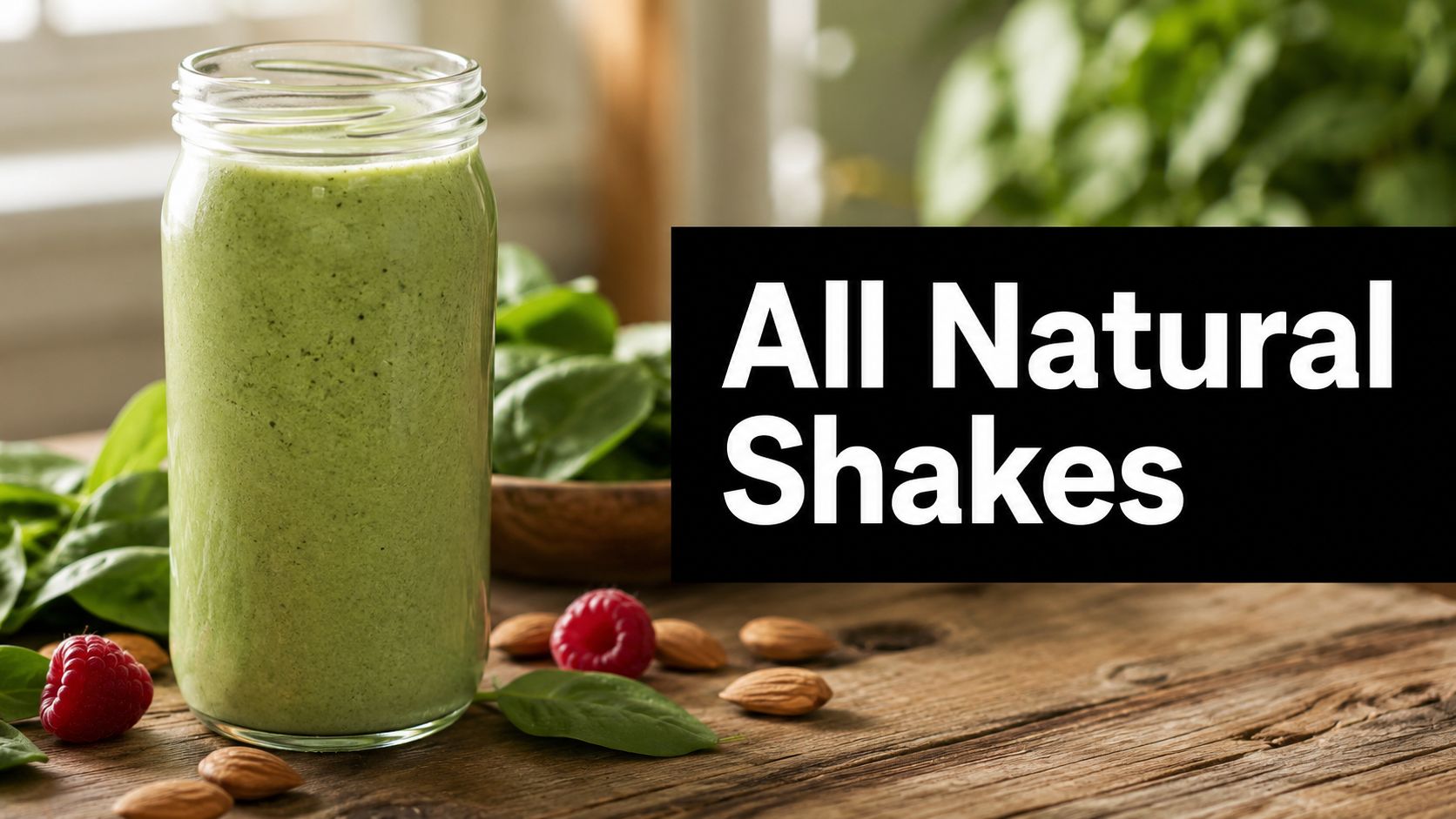
Base all natural protein shake
- 1 scoop unflavored or flavored protein powder
- 1 cup unsweetened milk or dairy-free milk
- 1 small handful frozen berries
- 1 handful spinach
- Ice
- Cinnamon or cocoa powder for flavor
Blend the liquid first, then the powder, then frozen ingredients and ice. In practice, that usually gives a smoother shake and leaves less powder glued to the blender jar.
As noted earlier, a useful all natural protein shake should give you a solid protein serving without turning into a sugar-heavy smoothie or a calorie bomb from add-ons.
Check the macros after any swap
The base formula is simple. The numbers change fast once you switch brands, add oats, use a larger banana, or pour in more nut butter than planned.
Use a recipe nutrition calculator for custom shake ingredients if you want the actual macros from your exact combination instead of a rough guess.
| Recipe version | Protein focus | Fat approach | Sugar approach | Best use |
|---|---|---|---|---|
| Basic breakfast shake | Keep protein solid and consistent | Keep add-ins modest | Let fruit do most of the sweetening | Busy mornings |
| Post-workout version | Use a higher-protein powder or add Greek yogurt | Keep fat moderate for easier digestion | Keep sugar moderate unless you want more carbs after training | After training |
| Lighter snack version | Use a smaller portion of protein and fruit | Keep fat low | Keep sweetness mild | Mid-afternoon |
I usually tell clients to lock in one version for workdays first. Variety helps, but consistency is what gets the recipe used.
Three easy flavor builds
These work well because they change the taste without forcing a whole new shopping list.
Berry green
Use frozen mixed berries and spinach with the base recipe. This is the easiest high-repeat option because berries cover the greens well and frozen fruit stores cleanly for batch prep.
Mocha cinnamon
Blend cocoa powder, cinnamon, and chilled coffee into the base. Skip sweet creamers. They add sugar quickly and can crowd out the reason you made the shake in the first place.
Vanilla chai
Use vanilla protein with cinnamon, ginger, and a pinch of nutmeg. This version works well for breakfast prep because the spice mix keeps for weeks and does not require extra fresh ingredients.
Add-ins that help, and add-ins that drift the recipe off course
A few extras can improve texture or satiety. Too many extras turn a practical shake into a blended snack that misses your target.
- Leafy greens: spinach is the easiest starting point because it blends smoothly.
- Spices: cinnamon, ginger, and cocoa add flavor without relying on syrups.
- Frozen fruit: easier to portion and store than juice or fresh fruit that spoils midweek.
- Seeds or nut butter: useful for staying power, but portions matter because fat climbs fast.
| Common add-in | Why it can backfire | Better move |
|---|---|---|
| Sweetened yogurt | Adds sugar fast and can make the shake taste heavier than expected | Use plain yogurt or leave it out |
| Fruit juice | Raises sweetness without adding much staying power | Use whole frozen fruit |
| Large spoonfuls of nut butter | Pushes calories and fat up quickly | Measure a smaller amount |
| Multiple sweeteners | Makes the shake harder to use daily | Stick with fruit or one mild sweetener |
The best custom shake is the one you can batch ingredients for, buy without wasting groceries, and blend with the same result every time.
Ingredient Swaps for Special Diets
You open the fridge at 7 a.m., realize the milk is gone, and still need a shake that fits your diet and gets you through the morning. That is where a good swap system helps. The goal is to keep protein high, texture drinkable, and your grocery list short enough that you will restock it.
A flexible shake starts with a base formula you can adjust without rebuilding everything from scratch. Keep one protein option, one liquid, one thickener, and one flavor add-in that fit your diet. That approach saves time, reduces half-used specialty ingredients, and makes batch prep easier later in the week.
Dietary ingredient swaps
| Diet | Traditional Ingredient | Natural Swap | What to watch for |
|---|---|---|---|
| Vegan | Whey protein | Pea protein or a plant blend | Texture can turn chalky, so cocoa, berries, or cinnamon usually help |
| Dairy-free | Cow's milk, Greek yogurt | Soy milk, oat milk, coconut yogurt, or a ready-to-drink dairy-free shake | Protein varies a lot, so check the label before buying |
| Lower-carb approach | Banana or dates | Ice, avocado, frozen cauliflower, or unsweetened cocoa | Lower sugar often means less sweetness, so flavor needs more attention |
| Paleo-style | Standard flavored powder | Egg white protein or whole-food add-ins that fit your approach | Ingredient lists are usually shorter, but convenience drops |
| Nut-free | Almond milk, almond butter | Soy milk, oat milk, tahini, sunflower seed butter, or chia | Seed butters are useful, but they can dominate the flavor fast |
The trade-offs matter.
Plant protein is practical for vegan and dairy-free plans, but the flavor is often earthier than whey. I usually pair it with frozen berries, cocoa, or strong spices instead of mild fruit. Soy milk gives more protein than many other non-dairy milks, while oat milk usually wins on taste and texture but not protein.
For lower-carb shakes, banana is often the first ingredient to replace. Frozen cauliflower works well if you want body without much flavor. Avocado gives a creamier result, but it raises fat quickly, so portion size matters if you are trying to keep calories predictable.
Nut-free swaps need a little more care than people expect. Sunflower seed butter and tahini both work, but they bring a stronger taste than almond butter. If you want a neutral result, plain frozen fruit or chia is usually the safer pick.
Whole-food swaps can also improve food safety and label clarity if you choose carefully. Plain pasteurized yogurt, frozen fruit, and packaged seeds are easy to use and easy to track. Raw eggs and homemade unpasteurized dairy ingredients are not worth the risk in a shake meant for daily use.
If you want a plant-based setup that stays realistic across the full week, a vegan meal plan built around simple repeat ingredients helps keep the shake in proportion with the rest of your meals.
One practical rule works well here. Pick swaps that also belong somewhere else in your week. If soy milk goes in coffee, frozen berries go in oatmeal, and chia goes into yogurt, you waste less food and keep your shake routine easier to maintain.
Quick Prep and Batch Cooking Strategies
If your mornings are packed, the win isn't finding a magical recipe. It's removing decisions. Batch the parts that slow you down and keep the final blend under two minutes.

A low-friction weekly workflow
Try this rhythm:
- Choose two flavors only. One fruit-based, one neutral.
- Pre-portion dry ingredients. Put powder, cinnamon, or cocoa into small containers or bags.
- Freeze smoothie packs. Portion berries, spinach, and any extras into grab-and-blend packs.
- Store liquids separately. Milk and yogurt keep better outside the frozen pack.
- Label by use case. Breakfast, post-workout, or snack.
This setup usually works better than fully blending every shake days ahead, because texture drops off and separation becomes annoying.
Where batch prep helps most
The biggest time saver is reducing friction at the blender, not building a huge Sunday production line.
- At night: move one frozen pack to the front of the freezer.
- In the morning: add liquid, dry mix, frozen pack, blend.
- For office use: keep a shaker bottle and shelf-stable backup ingredients at work.
A quick visual process helps if you're setting up the routine for the first time:
A good prep system should survive a bad week. If it only works when life is perfectly organized, it's too fragile.
Optimizing Your Grocery List for Efficiency
A bigger recipe collection isn't what's needed; a tighter shopping list is. Good all natural protein shakes come from buying ingredients that overlap with the rest of your meals, not from stocking a “smoothie-only” shelf.

Shop by storage, not by craving
Organize your list into three buckets before you leave home:
| Storage group | Best picks for shakes | Also useful elsewhere |
|---|---|---|
| Fresh | Spinach, plain yogurt, milk | Salads, bowls, breakfast |
| Frozen | Mixed berries, mango, cauliflower | Smoothies, desserts, sides |
| Pantry | Protein powder, cinnamon, cocoa, seeds | Oats, baking, snacks |
This does two things. It speeds up shopping, and it reduces waste because each ingredient has more than one job.
Build around repeat-use ingredients
Spinach is a perfect example. Buy it for shakes, then finish the box in eggs, sandwiches, or lunch bowls. Frozen berries work the same way for oatmeal, yogurt, and dessert.
A practical list usually includes:
- One protein base: powder or Greek yogurt
- One liquid base: dairy or dairy-free milk
- Two fruits: one frozen, one fresh if needed
- One flavor booster: cocoa, vanilla, or cinnamon
- One optional texture add-in: seeds, yogurt, or nut butter
If list-making is what slows you down, a grocery list generator can simplify the planning step and keep ingredients grouped in a more usable order.
The grocery rule that saves the most money is simple. Buy in bulk only when the item stores well or freezes cleanly.
Comparing Whole Food Proteins and Powders
A client with a full calendar usually has the same question at this point. Should the shake come from real food, a tub of powder, or both? The practical answer is both can work, but they solve different problems.
Consumer Reports notes that 20 to 40 grams of protein per meal is sufficient for muscle repair, and gives examples of whole foods such as chicken breast with 27g protein, cottage cheese with 24g, and Greek yogurt with 16g.

Whole-food proteins give you more than protein. Greek yogurt, cottage cheese, kefir, milk, and even silken tofu also bring calcium, potassium, fat, or carbs that can make the shake feel more like a meal. They are a strong fit for work-from-home mornings, planned breakfasts, or batch-prep blends you will drink within a day or two.
Powders solve a different problem. They store well, travel well, and make macro targets easier to hit without adding much prep time or fridge space. For a busy professional, that matters. Keeping one simple powder on hand can prevent the expensive grab-and-go breakfast that leaves you hungry an hour later.
Safety and tolerance deserve a closer look. Some people do fine with whey. Others get bloating, stomach pain, or a chalky shake they never finish. Label terms like "natural" do not tell you much about sourcing, testing, or digestibility, so the better filter is short ingredient lists, third-party testing, and a protein source you know you tolerate well.
Here is the simplest way to choose:
- Use whole-food protein if you want better satiety, more micronutrients, and fewer processed ingredients.
- Use powder if you need speed, portability, or a predictable protein amount in a smaller serving.
- Use a mixed approach if you batch-prep. Build most home shakes around yogurt, milk, or cottage cheese, then keep powder for office days, travel, or low-appetite mornings.
- Check the ingredient panel before buying. Fewer additives usually means fewer surprises in taste and digestion.
- Match the product to your weekly workflow. If your grocery list already includes dairy or tofu, whole-food shakes may be the more efficient choice. If fridge space is tight or food waste is a recurring issue, powder may be the smarter backup.
I usually recommend starting with whole foods if your schedule allows it, then adding powder where convenience provides a solution. If you need a shelf-stable option, you can shop natural protein powder and use it strategically instead of building every shake around it.
The best setup is rarely all-or-nothing. It is a repeatable system. Whole foods cover quality and fullness. Powder covers speed and consistency.
FAQ
Are all natural protein shakes actually healthier than regular protein shakes
They are healthier when the formula fits the job. A short ingredient list, a useful amount of protein, and ingredients you digest well matter more than the word “natural” on the tub.
How much protein should an all natural protein shake have
For most busy adults using a shake as breakfast, post-workout fuel, or a hold-you-over meal, a practical target is enough protein to keep the shake filling and useful. In real meal prep, that usually means building the recipe around one clear protein anchor such as Greek yogurt, cottage cheese, tofu, milk, or a plain powder serving instead of scattering in small amounts from several ingredients.
Can I make an all natural protein shake without powder
Yes. Greek yogurt, cottage cheese, kefir, tofu, and pasteurized liquid egg whites can all work, depending on your diet and texture preference.
Whole-food versions usually take a little more fridge space and planning, but they often do a better job on fullness and can pull double duty across your grocery list. Greek yogurt can cover shakes, parfaits, and sauces. Tofu can cover smoothies, stir-fries, and lunches. That kind of overlap keeps batch prep simpler.
What ingredients should I avoid in a shake labeled natural
Skip products that hide behind long ingredient lists and vague blends. Added sweeteners, heavy flavoring systems, and lots of thickeners can turn a simple shake into something harder to digest and harder to use consistently.
“Natural” is packaging language. The label panel is what counts.
Are dairy-free natural protein shakes good for muscle support
They can be, as long as the shake delivers enough protein and fits the rest of your day. Soy foods, pea protein, and blended plant proteins are usually the most practical options because they make it easier to reach a solid serving without a huge volume of food.
For meal prep, dairy-free shakes also benefit from smart pairing. Use soy milk instead of almond milk if you want more protein without adding another ingredient. Add oats, chia, or fruit based on whether you need more staying power, more calories, or just better texture.
Should I use a protein shake instead of breakfast
Use one when it solves a real problem. Early meetings, commute days, post-gym mornings, and low-appetite starts are all good use cases.
A whole-food breakfast usually gives better chewing satisfaction and often keeps hunger steadier for longer. A shake works best as a fast breakfast system, not as the automatic answer every morning.
How do I know if a protein powder is safe
Check for third-party testing, read the full ingredient panel, and buy from brands that are clear about sourcing and manufacturing. Front-label claims do not tell you much on their own.
If you use whole-food proteins instead, safety still matters. Choose pasteurized dairy and egg products, keep batch-prepped shakes cold, and make only what you will use within your normal fridge window.
If you want your shakes, meals, and grocery list to work together instead of living in separate notes apps, AI Meal Planner makes that process easier. It builds personalized meal plans, organizes ingredients by aisle, and helps you reuse the same foods across breakfast, lunch, dinner, and snack prep without doing all the macro math by hand.
AI-powered nutrition
Get Your Personalized Meal Plan
AI creates the perfect meals for your goals, lifestyle, and taste.
Start Your Journej