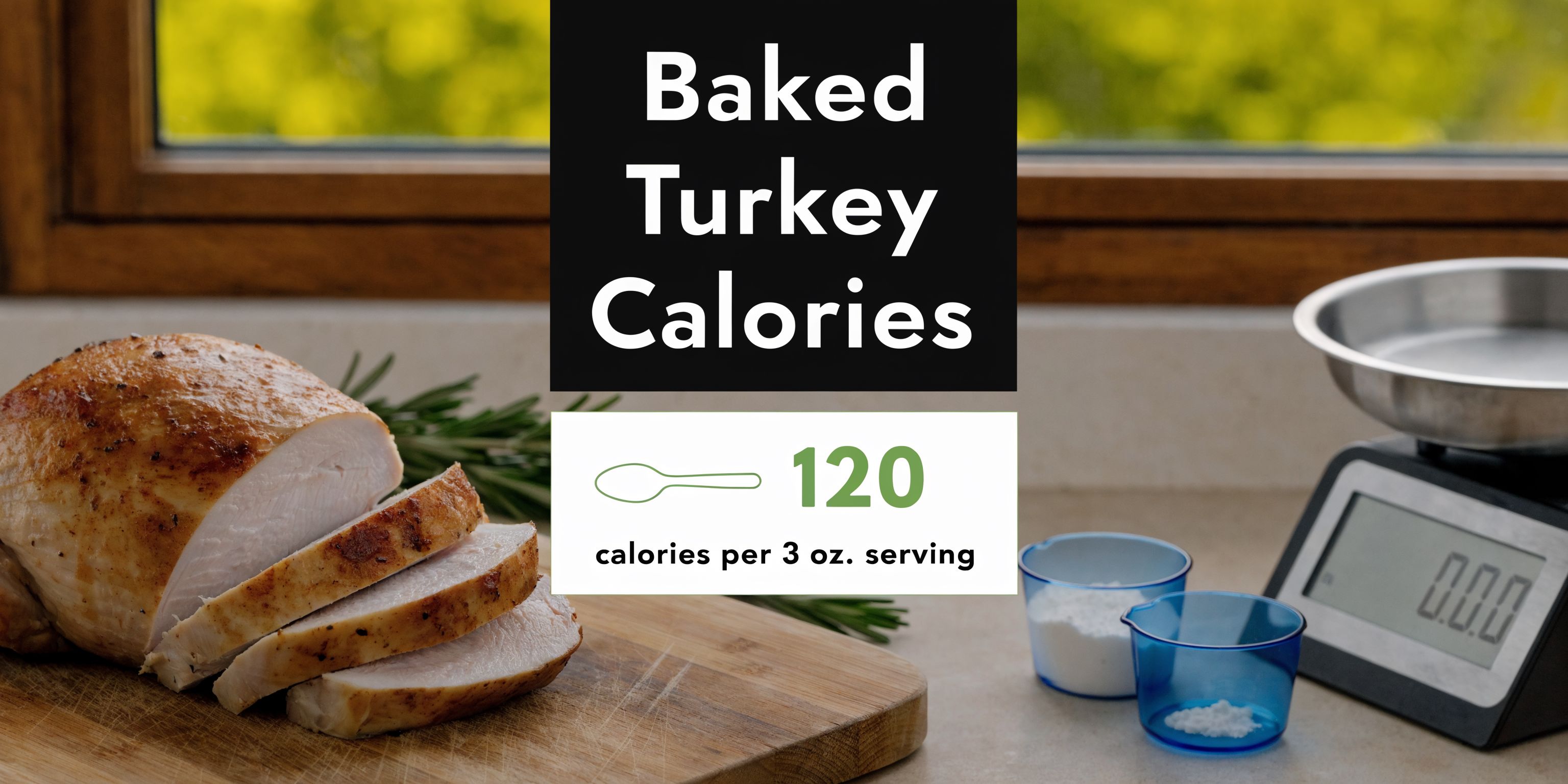
You’re probably trying to log a serving of turkey breast and finding three different calorie numbers for what looks like the same food. That confusion is normal. The calories in baked turkey breast are straightforward only when the turkey is plain, skinless, and baked without added fat. Once oil, butter, skin, deli processing, or marinades enter the picture, the number you log can change fast.
How Many Calories Are in Baked Turkey Breast?
A plain, skinless serving of baked turkey breast is typically about 125 to 152 calories for a standard serving, depending on whether you’re looking at 3 ounces or 4 ounces. A verified reference point is 152 calories per 4 oz (113g), with 34g protein, 0.8g fat, and 0g carbs from CalorieKing’s roasted turkey breast without skin entry. If your baked turkey includes oil, butter, skin, or a sweet marinade, your real calorie count can be notably higher than the plain baseline.
If you cook at home, tracking commonly falters. People log “turkey breast” but forget the tablespoon of oil brushed on top, the butter under the seasoning, or the marinade that stays on the meat after baking.
That matters because baked turkey breast is often chosen for one reason. It’s lean, high in protein, and easy to build meals around. But “lean” only describes the starting point, not the final plate.
When I review food logs, I see the same issue repeatedly. The meat is logged accurately, but the preparation method isn’t. If you want more precision for casseroles, sheet-pan dinners, or mixed recipes, this guide on how to calculate calories in homemade food is a useful companion.
For people who prefer to organize meals and portions in one place, a tool like https://ai-mealplan.com/tools can also help simplify logging.
Plain baked turkey breast at a glance
| Portion | Calories | Protein | Fat | Carbs |
|---|---|---|---|---|
| 3 oz skinless baked turkey breast | about 125 | high | low | 0g |
| 4 oz skinless baked turkey breast | 152 | 34g | 0.8g | 0g |
| 100g skinless baked turkey breast | about 135 to 140 | high | low | 0g |
Practical rule: If the turkey is plain and skinless, log the lean baseline. If you added fat or used a commercial product, log the preparation, not just the meat.
What Is the Base Calorie Count for Baked Turkey Breast?
The cleanest reference point is plain, skinless baked turkey breast. That gives you a reliable baseline before you account for cooking extras.
According to CalorieKing’s roasted turkey breast without skin data, a 4 oz (113g) serving has 152 calories, 34g of protein, 0.8g of fat, and 0g carbohydrates. That’s why turkey breast works so well in calorie-controlled and high-protein meal plans.

Nutritional value of plain baked turkey breast
| Portion Size | Calories | Protein (g) | Fat (g) | Carbs (g) |
|---|---|---|---|---|
| 3 oz | 125 | about 26 | low | 0 |
| 4 oz (113g) | 152 | 34 | 0.8 | 0 |
| 100g | about 135 to 140 | high | low | 0 |
Why this baseline matters
Turkey breast is one of the easiest proteins to work with when you want a lot of protein without spending many calories. CalorieKing’s data shows that about 89% of the calories come from protein, with negligible fat at 5% and zero carbohydrates. That’s unusually efficient for meal planning.
A few practical points stand out from the same source:
- Protein density: A modest serving delivers 34g of protein per 4 oz.
- Fat stays very low: The same serving contains 0.8g of fat.
- Carb-free by default: Plain turkey breast has 0g carbohydrates.
- Useful minerals: The serving includes 14mg calcium and 330mg potassium.
- Cholesterol awareness: The serving contains 94mg cholesterol.
Plain, skinless turkey breast is easy to fit into a deficit, easy to fit into a high-protein plan, and easy to overestimate if you assume every recipe matches the plain version.
What works for accurate logging
Use the baseline only when all of these are true:
- Skinless meat: No crispy skin left on.
- Dry baking method: No butter rub, oil glaze, or sugary marinade.
- No hidden add-ons: No broth-heavy commercial preparation.
- Measured serving: Weigh it after cooking if you want the cleanest log.
What doesn’t work is treating every baked turkey breast recipe as nutritionally identical. The plain version is your reference point, not your automatic answer.
How Do Cooking Methods Change Turkey Breast Calories?
Cooking method is where the calories in baked turkey breast start to drift away from the baseline. The turkey itself stays lean. The extras don’t.

A common mistake is logging “4 oz turkey breast” when the actual dish included a coating of olive oil, a butter-herb rub, or a sweet marinade. That shortcut can make a lean meal look much lighter than it really is.
GoodRx notes that many guides on this topic ignore preparation differences, even though oil-based marinades or butter rubs can add 50 to 100+ calories per serving in real cooking situations, which can throw off macro tracking for weight loss users in particular in their discussion of turkey vs. chicken nutrition and preparation differences.
The biggest calorie changers
Some changes are obvious. Others are subtle.
- Oil brushed on before baking: Adds calories quickly, especially when it pools in a pan sauce and gets spooned back over the sliced meat.
- Butter under seasoning: Common in holiday-style turkey breast recipes and easy to forget when logging.
- Sugar-containing marinades: These can cling to the surface and increase total calories.
- Skin left on: This changes the meal from very lean to less lean, even if the portion size looks the same.
- Pan drippings used as a glaze: Those count too if they end up on the plate.
What usually works in practice
If you want the leanest version, keep the method plain:
- Bake skinless turkey breast.
- Use dry seasonings instead of oil-heavy rubs.
- Add moisture with low-calorie ingredients like broth, citrus, or herbs rather than butter.
- Log any finishing sauce separately.
That approach keeps your calories in baked turkey breast much closer to the lean baseline.
What often causes under-logging
These are the patterns I’d flag first:
| Cooking choice | Effect on logging |
|---|---|
| Dry rub with no fat | Usually easiest to track accurately |
| Oil-based marinade | Often undercounted |
| Butter rub | Frequently forgotten in food logs |
| Skin-on roasting | Raises calories beyond the lean baseline |
| Sweet glaze | Adds calories that many apps miss if you choose a generic turkey entry |
If you didn’t bake it plain, don’t log it plain.
Home cooking still gives you more control than many prepared options. You can choose the seasoning, the fat source, and the final portion. That control is what makes turkey breast so useful for both fat loss and muscle-focused plans.
Are Store-Bought and Deli Turkey Breasts Different?
Yes. The difference can be large enough to matter for both calories and sodium.

Commercial oven-roasted and deli turkey products are convenient, but they aren’t nutritionally interchangeable with home-baked turkey breast. Brand formulation, retained moisture, and processing methods all change the final label.
According to Butterball’s product nutrition range for oven-roasted turkey breast products, commercial options can range from 30 to 70 calories per 2 oz (56g) serving, with sodium ranging from 280mg to 520mg per serving. That spread is wide enough that incorrect logging can create a weekly calorie difference of over 1,600 calories.
Home-baked vs deli-sliced
| Type | Calories | Sodium | What to watch |
|---|---|---|---|
| Home-baked skinless turkey breast | Lean baseline | Often lower | Depends on what you added during cooking |
| Store-bought oven-roasted turkey | Varies by brand | Often much higher | Broth, sodium, flavoring, moisture retention |
| Deli turkey slices | Varies by brand | Can be high | Serving size is small, so sodium adds up fast |
Where deli turkey helps and where it doesn’t
Deli turkey can still fit a healthy diet. It’s fast, portable, and protein-rich. For busy workdays, that convenience is real.
But there are trade-offs.
- Better for speed: Easy lunches, wraps, snack boxes.
- Less ideal for sodium control: Label reading becomes essential.
- More variable for tracking: Two brands with the same “oven-roasted” label can land very differently.
If sodium is a concern, a structured low-sodium plan usually works better than trying to fix the issue meal by meal. A resource like https://ai-mealplan.com/meal-plan/low-sodium can help organize those choices.
Store-bought turkey isn’t a problem by default. Assuming it matches homemade turkey is the problem.
For accurate food logs, never select a generic “turkey breast” entry when you’re eating a packaged deli product. Use the brand-specific label whenever possible.
How Does Turkey Breast Compare to Other Lean Proteins?
Turkey breast stands out for one main reason. It gives you a lot of protein with very little fat when it’s prepared plainly.
That doesn’t make it the only good option. It makes it a particularly efficient one.
Where turkey breast has an edge
For calorie-controlled eating, plain baked turkey breast is hard to beat. You get a dense protein serving without needing to budget much fat or any carbs. That makes it useful for people running a calorie deficit, building higher-protein lunches, or keeping dinner lighter while still feeling satisfied.
It also fits well into carbohydrate-conscious eating because plain turkey breast contains 0g carbs. That makes it easy to pair with vegetables, grains, legumes, or higher-fat sides depending on your goal.
Where other proteins may work better
Turkey isn’t always the best choice for every situation.
- Chicken breast: Similar role in a meal plan and often used interchangeably.
- Salmon: Better when you want more naturally occurring fats and a richer texture.
- Lean beef: Useful for variety and a different nutrient profile, but usually heavier than plain turkey breast.
- Tofu: Helpful for plant-based eating and mixed-diet households.
This is less about ranking proteins and more about matching the food to the day.
A practical way to choose
Ask one question first. What does this meal need to do?
If the answer is “keep calories low and protein high,” turkey breast is often the cleanest choice. If the answer is “make this meal more filling with richer flavor,” another protein may fit better.
A few examples:
- Post-workout lunch: Turkey breast works well because it’s protein-dense and easy to portion.
- Dinner that needs more staying power: Salmon or a mixed plate with grains may feel more satisfying.
- Family meal with mixed preferences: Tofu and turkey can both work in a build-your-own bowl format.
For people building around protein targets, a structured plan like https://ai-mealplan.com/meal-plan/high-protein can make those trade-offs easier to manage.
The best lean protein is the one you’ll portion correctly, cook consistently, and actually enjoy eating.
Turkey breast earns its place because it’s flexible. You can keep it ultra-lean, slice it cold for lunches, or build it into a more substantial dinner with starches and vegetables.
How Do You Portion and Plan Meals with Turkey Breast?
A complex system is not necessary. They need a repeatable one.

Turkey breast is easy to overcomplicate because the meat itself is simple but the meal around it isn’t. Sides, dressings, oils, wraps, and sauces usually change the total more than the turkey does.
How to portion it accurately
A food scale is the best tool when you want precision. If you’re meal prepping, weigh the cooked turkey after slicing and portion it into containers.
If you don’t have a scale, use visual consistency. Keep serving sizes similar from meal to meal so your log stays directionally accurate, even if it isn’t perfect.
What to include in your log
Don’t stop at the turkey. Log the full plate.
- Cooking fat: Oil and butter belong in the entry.
- Condiments: Mustard may be minimal, but creamy dressings and sweet sauces change the meal.
- Sides: Rice, potatoes, avocado, wraps, and bread usually drive total calories upward.
- Processed turkey swaps: Fresh baked and packaged oven-roasted versions don’t behave the same nutritionally.
Medical News Today highlights an important distinction in its discussion of turkey nutrition. Turkey breast has 0g carbs, which makes it useful for Keto-style eating, but processed oven-roasted versions can contain 400mg sodium compared with 59mg in fresh baked, a key issue for people managing diabetes or hypertension in their review of turkey nutrition and dietary use.
Simple meal ideas that work on busy days
These are practical formats, not rigid recipes.
- Turkey salad bowl: Sliced baked turkey, greens, cucumber, and a measured dressing.
- Turkey grain bowl: Turkey breast over quinoa or rice with roasted vegetables.
- Turkey lettuce wraps: Lean turkey, crunchy vegetables, and a controlled sauce portion.
If you like prepping in batches, these high-protein meal prep ideas can help you build repeatable lunches without relying on deli meat every day.
When meal planning gets easier
People do better when they remove small decisions. Choosing your turkey portion, side, and sauce ahead of time makes the week smoother than trying to estimate each lunch on the fly.
For fat-loss phases, a focused structure like https://ai-mealplan.com/meal-plan/calorie-deficit can help you keep portions and sides consistent.
Frequently Asked Questions About Turkey Breast Nutrition
Is baked turkey breast good for weight loss?
Yes, plain skinless turkey breast fits weight-loss plans well because it’s high in protein and low in fat. The key is logging added oil, butter, sauces, and sides accurately.
Is baked turkey breast keto-friendly?
Yes. Plain turkey breast has 0g carbs, so it works well in Keto-style meals. The carbs usually come from marinades, glazes, or side dishes, not the turkey itself.
Why do deli turkey calories sometimes look lower than homemade turkey?
Because the serving size is often small and the product holds added moisture. Lower calories on the label don’t automatically mean it’s the better overall choice.
Why is processed turkey often high in sodium?
Manufacturers use sodium-containing ingredients for flavor, preservation, and moisture retention. That’s why brand labels matter much more with deli or oven-roasted packaged products.
Is fresh baked turkey better than deli turkey?
For sodium control and simpler logging, fresh baked turkey is usually the cleaner choice. Deli turkey is more convenient, but it’s more variable.
Can I eat turkey breast every day?
It can fit daily meal plans if your overall diet is balanced and varied. Rotating protein sources still helps with variety, satisfaction, and long-term adherence.
Is turkey breast better than chicken breast?
Neither is universally better. Turkey breast is an excellent lean option, and chicken breast plays a similar role, so the best choice is usually the one you’ll cook and eat consistently.
If you want a simpler way to turn foods like turkey breast into balanced weekly meals, AI Meal Planner can build personalized plans around your calories, macros, dietary preferences, and health goals. It’s especially useful when you want structure without manually calculating every lunch, dinner, and grocery list.
AI-powered nutrition
Get Your Personalized Meal Plan
AI creates the perfect meals for your goals, lifestyle, and taste.
Start Your Journej