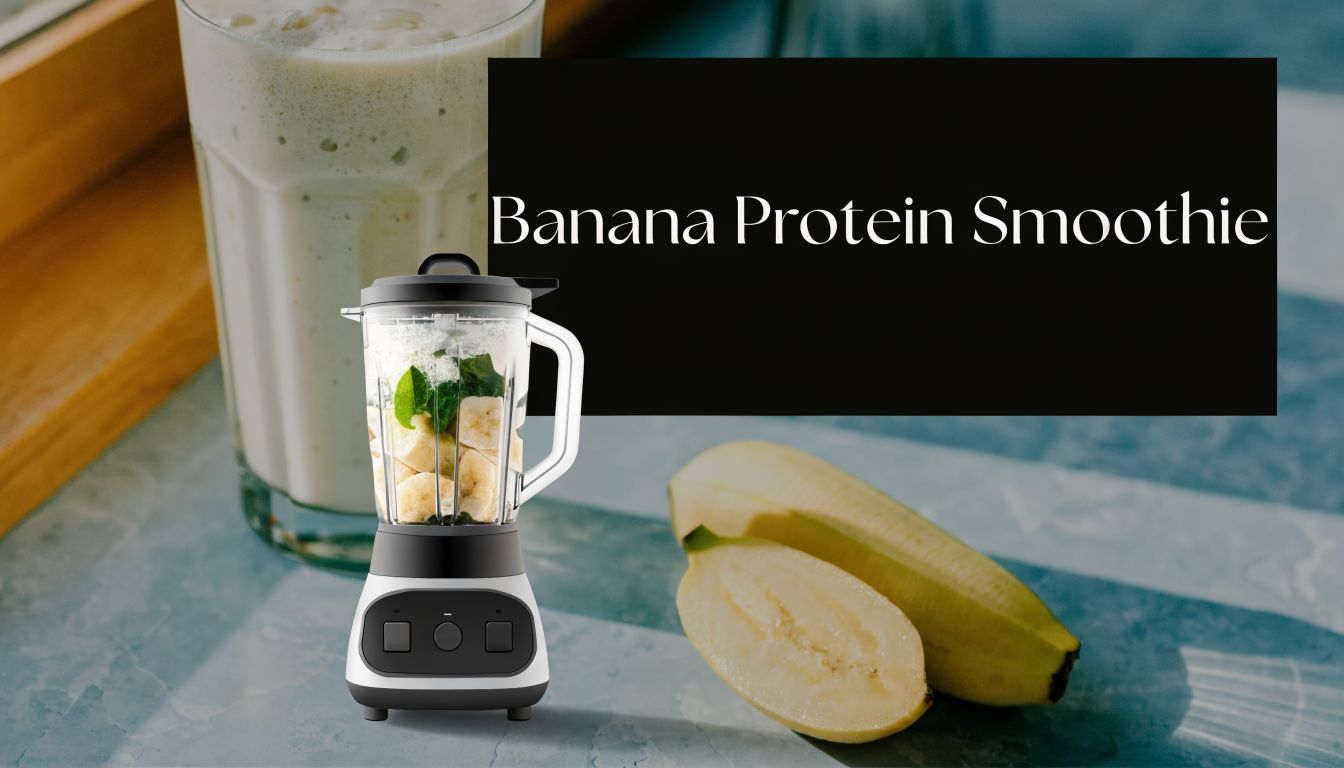
If you're staring at a blender and wondering how to make a banana protein smoothie that fits your goals, keep it simple. A typical serving built from banana, milk, and protein powder delivers 347 calories, 7.2g fat, 42g carbs, and 31.3g protein, which makes it a strong macro-balanced option for breakfast, recovery, or a high-protein snack based on real tracked nutrition data. The best version uses banana for texture and carbs, protein powder for the protein target, and the right liquid amount so it blends smooth instead of chalky.
Busy mornings are where this smoothie earns its place. It’s fast, portable, and easy to adjust, but the difference between a great banana protein smoothie and a mediocre one comes down to ingredient roles, blending order, and knowing when banana helps your plan and when it gets in the way.
Most recipes stop at “add everything and blend.” That’s fine if all you want is something drinkable. If you want a smoothie that supports training, controls hunger, works for meal prep, and avoids common nutrition mistakes, you need a better framework.
The Foundational Banana Protein Smoothie Recipe
You feel the difference between a well-built smoothie and a sloppy one by the second sip. One drinks like a meal with a clear macro purpose. The other tastes thin, gritty, or oddly sweet and leaves you hungry an hour later.
A reliable banana protein smoothie starts with one job for each ingredient. Banana provides body, potassium, and fast-digesting carbs. Milk adds fluid, extra protein, and a creamier texture than water. Protein powder sets the protein target. Ice is optional, but useful when the banana is fresh instead of frozen.

What to put in the blender
Use this baseline:
- Banana: 120g banana
- Milk: 240ml 2% milk
- Protein powder: 30g protein powder
- Ice: enough to chill and thicken if your banana isn’t frozen
This base lands in the range already noted earlier for calories and macros, which is why it works well as a breakfast, post-workout shake, or controlled high-protein snack inside a tracked plan.
Each ingredient has a trade-off. More banana improves texture, but pushes carbs up quickly. More powder raises protein, but can make the drink pasty if you do not increase liquid. Swapping milk for water lowers calories, but you lose creaminess and some staying power. If you follow a plant-based approach, a vegan meal plan built around practical meals and smoothies can help you choose swaps that still make sense at the daily macro level.
If your smoothie keeps turning out gritty, check the blender before blaming the ingredients. Chalkiness is often caused by under-blending, but a weak motor can also leave powder pockets and banana fibers behind. If you need better equipment, this guide to the best blender for smoothie success is a useful place to start.
How to blend it so it tastes smooth
Blending order matters more than people expect.
Pour in the milk first. Add the protein powder next, then banana, then ice last. That order gives the blades free liquid at the bottom, which helps the powder hydrate early instead of sticking to the sides and forming dry clumps.
Blend until the smoothie looks glossy and fully uniform. For most home blenders, that usually means going a little longer than your first instinct. A protein shake can look mixed before the powder has dispersed.
Practical rule: Liquid first, powder second, fruit third.
Use frozen banana when you want a thicker shake without watering it down with extra ice. Use fresh banana when digestion speed matters more than texture, such as right after training. For blood sugar control, pair the banana with a slower-digesting protein and avoid turning the smoothie into a dessert by adding honey, dates, or fruit juice on top of it.
What the macros look like per serving
Nutritional Breakdown per Serving
| Nutrient | Amount | % Daily Value |
|---|---|---|
| Calories | 347 | 17% |
| Fat | 7.2g | 10% |
| Carbohydrates | 42g | 21% |
| Protein | 31.3g | 31% |
The split is carb-forward enough to support training and protein-forward enough to keep the smoothie useful in a macro-tracked meal plan. That is the strength of this base recipe. It gives you a repeatable starting point, then lets you adjust carbs, fats, or texture with intention instead of guessing.
How Can You Adapt This Smoothie for Any Diet?
The base recipe is solid, but not every body or eating style needs the same version. The trick is to swap ingredients by function, not just by trend.

Vegan swaps that still blend well
A vegan banana protein smoothie needs two things to work. It needs a protein powder that doesn’t turn sandy, and it needs a milk alternative that adds body.
Good practical swaps:
- Use plant protein powder: Pea and soy blends usually create a more filling texture than very thin plant proteins.
- Choose a creamier liquid: Almond milk keeps things light. Oat milk usually gives a fuller mouthfeel.
- Add fat if needed: Avocado or nut butter can restore richness when a plant powder tastes lean.
If you want a full plant-based framework instead of guessing ingredient combinations, this vegan meal plan shows how to structure smoothies inside an actual day of eating.
Keto versions need a different thickener
Banana is excellent for texture, but it’s not the right anchor if you’re trying to keep carbs low. In a keto version, don’t just use “less banana” and hope for the best. Replace its job.
Better keto substitutes include:
- Avocado for creaminess
- Chia seeds for body
- Unsweetened almond milk as the liquid base
- Sugar-free protein powder to keep the flavor clean
A small amount of low-carb berries can give flavor without making the drink feel flat. The key point is this. Keto smoothies succeed when fat and texture are intentional. They fail when people remove banana and forget to rebuild structure.
Dairy-free is not the same as vegan
Some people tolerate whey but not milk. Others want no dairy at all. Those are different situations, and your banana protein smoothie should reflect that.
A dairy-free version works best when you match the liquid to the powder:
| Need | Best practical swap | Why it works |
|---|---|---|
| Avoid lactose in milk | Lactose-free milk | Keeps the familiar texture |
| Avoid all dairy | Plant milk | Lets the banana stay the main creamy element |
| Keep protein high | Dairy-free protein powder | Preserves the purpose of the smoothie |
The best adaptation is the one that preserves texture, protein value, and digestion. Not the one that sounds the cleanest on paper.
For high-protein eaters, you can also push the smoothie further with thicker protein sources like Greek yogurt or cottage cheese if dairy works for you. For vegan and keto versions, those same moves obviously don’t apply. That’s why one recipe never fits everyone.
Which Ingredients Maximize Nutritional Value?
You can turn the same banana protein smoothie into a solid recovery drink, a blood-sugar mess, or a balanced meal. The difference usually comes down to ingredient roles, not recipe length.

Banana adds texture and carbs, but it is not neutral
Banana earns its place because it fixes several problems at once. It sweetens the smoothie without added sugar, thickens the blend, and gives you fast-digesting carbohydrate that works well before or after training.
It also creates a trade-off.
If you are adding berries or cocoa mainly for flavanols, banana can reduce how much of those compounds your body absorbs because of its polyphenol oxidase activity, as explained in this report on the 2025 banana smoothie study. So the question is not whether banana is healthy. The question is what job you need the smoothie to do.
For a macro-friendly breakfast or post-workout shake, banana is usually a smart base. For an antioxidant-first berry smoothie, I would skip banana and build creaminess another way.
Use ingredients by function, not by label
The highest-value smoothies are built in layers. Each ingredient should solve a specific problem.
- Banana gives carbohydrate, sweetness, and body
- Protein powder sets the protein target without adding much volume
- Greek yogurt or kefir adds extra protein and changes texture, but only if dairy sits well with you
- Berries or cocoa raise polyphenol content
- Chia, flax, or nut butter slow gastric emptying and make the drink hold longer
- Lemon juice or yogurt can brighten flavor and help a fruit-heavy smoothie taste less flat
That last point matters more than people expect. A smoothie with protein, fiber, and fat often digests better and holds appetite longer than a banana-plus-powder blend, but too much fat will make it heavy and can blunt the quick-refuel effect some athletes want.
A home blender also changes the outcome. Frozen fruit improves thickness. Acidic ingredients can sharpen flavor and reduce the dull, overripe taste that bananas sometimes bring. If texture matters, freeze the banana in coins and blend liquid first, powder second, frozen ingredients last. That order reduces clumping and gives a smoother finish.
Choose protein based on digestion, leucine, and flavor
Protein powder is where a lot of smoothies go wrong. The tub with the best label is not always the one that blends well, tastes good, or fits your goal.
Whey isolate usually wins for fast digestion, clean texture, and a strong leucine hit for muscle protein synthesis. Casein makes a thicker shake and holds hunger better, but it can feel too heavy around training. Plant blends can work well, though they often need better flavor masking and a little more formula support from banana, cinnamon, or cocoa.
If your training matters, this guide on finding the best protein powder for runners is useful because it compares powders by performance use, not marketing language.
If you track macros closely or need to balance protein goals with glycemic control, an AI nutritionist for meal planning can help you test ingredient swaps before they end up in your blender.
The best add-ins depend on the nutritional gap
Add-ins should correct a weakness.
Use spinach if total produce intake is low. Use chia or flax if fiber is low. Use kefir or yogurt if you want more protein and fermented dairy works well for you. Use cinnamon for flavor, but do not pretend a sprinkle turns the smoothie into a blood sugar tool on its own.
That is the bigger strategy. A nutrient-dense smoothie is not the one with the longest ingredient list. It is the one that fills a clear gap in your day without wrecking digestion, calories, or taste.
When Is the Best Time to Drink Your Smoothie?
You finish an early workout in 30 minutes, or you need breakfast you can drink between meetings. Those are two different jobs, and the same banana protein smoothie should not be built the same way for both.
Timing changes digestion speed, fullness, and blood sugar response. It also changes what counts as a good texture. A thin smoothie works better before training. A thicker, slower-digesting one makes more sense when the smoothie needs to stand in for a meal.
Before a workout
Use the smoothie 30 to 90 minutes before training if you want quick fuel without a heavy stomach. Banana works well here because it gives you easy-to-digest carbohydrate, and protein keeps the drink from acting like straight fruit sugar.
Keep this version simple. Banana, protein, and a lighter liquid base usually do the job. Too much nut butter, chia, or flax can slow gastric emptying and make the smoothie sit harder during runs, lifting, or faster sessions.
Texture matters more than people expect. If it drinks easily, you are more likely to finish it and train comfortably.
After a workout
After training, the goal shifts from comfort to recovery. This is a good time for a full serving of protein and enough carbohydrate to refill what the session used, especially if you trained hard or need to eat quickly and move on with your day.
This is also the easiest slot for people who struggle to hit protein targets. Liquid calories are often easier to tolerate than solid food right after exercise, and banana improves taste without much effort. If you track intake closely, a meal planning tool for macro targets and ingredient swaps can help you decide whether this smoothie fits better as a snack, recovery drink, or full meal.
A good post-workout smoothie should be easy to drink and large enough to matter.
As a meal replacement
A meal replacement smoothie needs more structure. If it is just banana, protein powder, and liquid, it may digest too fast and leave you hungry well before your next meal.
Build this version to slow absorption and improve satiety. Greek yogurt, kefir, oats, chia, flax, or peanut butter can all work, but each one changes the result. Oats and banana raise carbs. Chia and flax add fiber but can thicken the drink fast. Nut butter helps fullness, yet it also pushes calories up quickly.
For people who prep ahead, a study on banana smoothie stability found that acid-modified psyllium husk improved viscosity and shelf life in refrigerated banana smoothies, as shown in this banana smoothie stability study. In practical terms, a small stabilizing ingredient can reduce separation and make a prepped smoothie more drinkable later.
That matters if your smoothie needs to function like a real meal, not just a fast shake.
How Do You Meal Prep Smoothies for the Week?
Smoothies only save time if the setup is already done. If you’re peeling bananas, opening five bags, and hunting for the scoop every morning, you’ve turned a quick breakfast into a chore.
Start with freezer packs. They’re the most reliable system for busy schedules.

Build smoothie packs the smart way
Use one bag or container per smoothie. Add the banana and any other frozen solids first. Keep powders separate if you prefer, or portion them into small containers so you can dump everything in fast.
A practical prep flow looks like this:
- Portion the fruit: Slice banana and freeze it in single servings.
- Add extras: Spinach, berries, or seeds can go into the same pack if you use them.
- Store powders separately: This avoids clumping if moisture gets into the freezer pack.
- Label by purpose: Breakfast, post-workout, or meal replacement.
If you want a planning system for batching ingredients and reducing food waste across the week, the meal planning tools can help organize ingredients beyond just smoothies.
What to do on the day you blend
In the morning, empty the frozen pack into the blender, add your liquid, add the protein powder, and blend.
That approach cuts friction more than anything else. There’s no decision fatigue, and you’re less likely to skip breakfast because the recipe feels annoying.
For a visual walkthrough, this short video shows the kind of prep rhythm that makes smoothie habits easier to keep:
Can you store the blended smoothie?
Yes, but texture matters. A freshly blended smoothie always tastes better than one that sat overnight.
If you do store it:
- Use a tightly sealed jar: Less air exposure helps.
- Re-shake before drinking: Separation is normal.
- Keep the recipe simple: The more powders and fibers you add, the more texture changes over time.
Freezer packs are usually the better answer than pre-blending the whole week. They preserve texture, taste better, and still keep prep fast.
What Common Mistakes Can Ruin Your Smoothie?
Most bad smoothies fail for predictable reasons. The ingredients aren’t always the problem. The ratios, order, and goal mismatch usually are.
Chalky texture and weak flavor
Protein powder gets blamed for a lot of issues it didn’t cause. Chalkiness usually comes from too little liquid, poor blending, or a powder that doesn’t suit smoothies.
Fixes that work:
- Blend longer: Many shakes need more time than people think.
- Add liquid gradually: Small increases fix texture without making the drink thin.
- Use frozen banana: It improves body and masks powdery edges better than ice alone.
If your smoothie tastes flat, add something with contrast. Cinnamon, cocoa, or a small amount of acidity can sharpen the flavor profile without turning it into a dessert.
Too thin or too thick
Thin smoothies usually have too much liquid or not enough frozen content. Over-thick smoothies often come from too much powder, too much fiber, or not enough liquid to let the blades circulate.
Use this quick guide:
| Problem | Likely cause | Better fix |
|---|---|---|
| Too thin | Excess liquid | Add frozen banana or ice |
| Too thick | Too much powder or fiber | Add more liquid in small pours |
| Grainy | Under-blended powder | Blend longer and use liquid-first order |
Ignoring blood sugar impact
A banana protein smoothie can still be a poor fit if your blood sugar control is shaky and you treat it like a milkshake with a scoop of protein.
One practical strategy is using one tablespoon of apple cider vinegar, which can reduce the post-meal glucose spike by 20% to 30% according to this article on banana protein shake blood sugar strategy.
Other practical adjustments that usually help include using a less ripe banana, adding cinnamon, and pairing banana with protein instead of drinking fruit alone.
Don’t judge a smoothie by protein alone. A good macro number can still hide a poor fit for appetite control or blood sugar management.
How to Integrate This Smoothie into a Smart Meal Plan
The smoothie needs a job.
If breakfast is chaotic, use it as a repeatable first meal. If training lands between meals, use it to cover protein and carbs without a heavy stomach. If afternoons are where your plan usually falls apart, place it there on purpose instead of waiting until you are already hungry and grabbing whatever is easy.
That is why banana protein smoothies work well in macro-based nutrition. They are easy to standardize. You can keep the same base, adjust the protein powder, banana amount, fat source, or liquid, and change the nutrition profile without changing your whole routine.
For fat loss, keep the smoothie tighter on calories and pair it with a solid-food meal later if appetite runs high. For muscle gain, push total calories up with a larger banana, milk instead of water, or an added fat source if digestion stays comfortable. For maintenance, the goal is usually consistency. Hit a protein target you can repeat, and let the smoothie solve one predictable eating window each day.
A dedicated high-protein meal plan helps because the smoothie stops being a random healthy choice and starts acting like a planned macro block inside the day.
One practical rule matters here. Count the smoothie as a real meal or a real snack. Do not drink it on top of meals you were already going to eat unless extra calories are part of the plan. That is where a well-built smoothie helps some people and stalls others.
Texture still matters, but meal-plan fit matters more. Use a banana that blends smoothly, a protein source you digest well, and a recipe you will repeat. As noted earlier, banana ripeness and prep method can change flavor, texture, and how the smoothie fits your blood sugar strategy, so build the version that matches your goal rather than copying a generic recipe.
Frequently Asked Questions About Banana Protein Smoothies
Is a banana protein smoothie good for breakfast?
Yes. It’s a practical breakfast when you need something fast, filling, and easy to drink on the go.
Can I make a banana protein smoothie without milk?
Yes. You can use plant milk, lactose-free milk, or even water, though milk usually gives a creamier result.
Should I use fresh or frozen banana?
Frozen banana is usually better for texture. It makes the smoothie thicker and colder without needing as much ice.
Is banana a good fruit for protein smoothies?
Yes, especially for texture and flavor. It blends smoothly and pairs well with vanilla, chocolate, and plain protein powders.
Can I add berries to a banana protein smoothie?
You can, but if your main goal is maximizing flavanols from berries, banana isn’t the best pairing because of the interaction covered earlier.
Why does my smoothie separate in the fridge?
That usually happens because fruit pulp, liquid, and powder settle over time. Shake it again before drinking, or use a prep method built around freezer packs instead.
If you want this smoothie to fit into a full week of eating instead of living as a one-off healthy idea, AI Meal Planner makes that easier. It builds a personalized plan around your goals, dietary preferences, and schedule, so meals like a banana protein smoothie connect to the rest of your nutrition instead of leaving you to do the math yourself.
AI-powered nutrition
Get Your Personalized Meal Plan
AI creates the perfect meals for your goals, lifestyle, and taste.
Start Your Journej