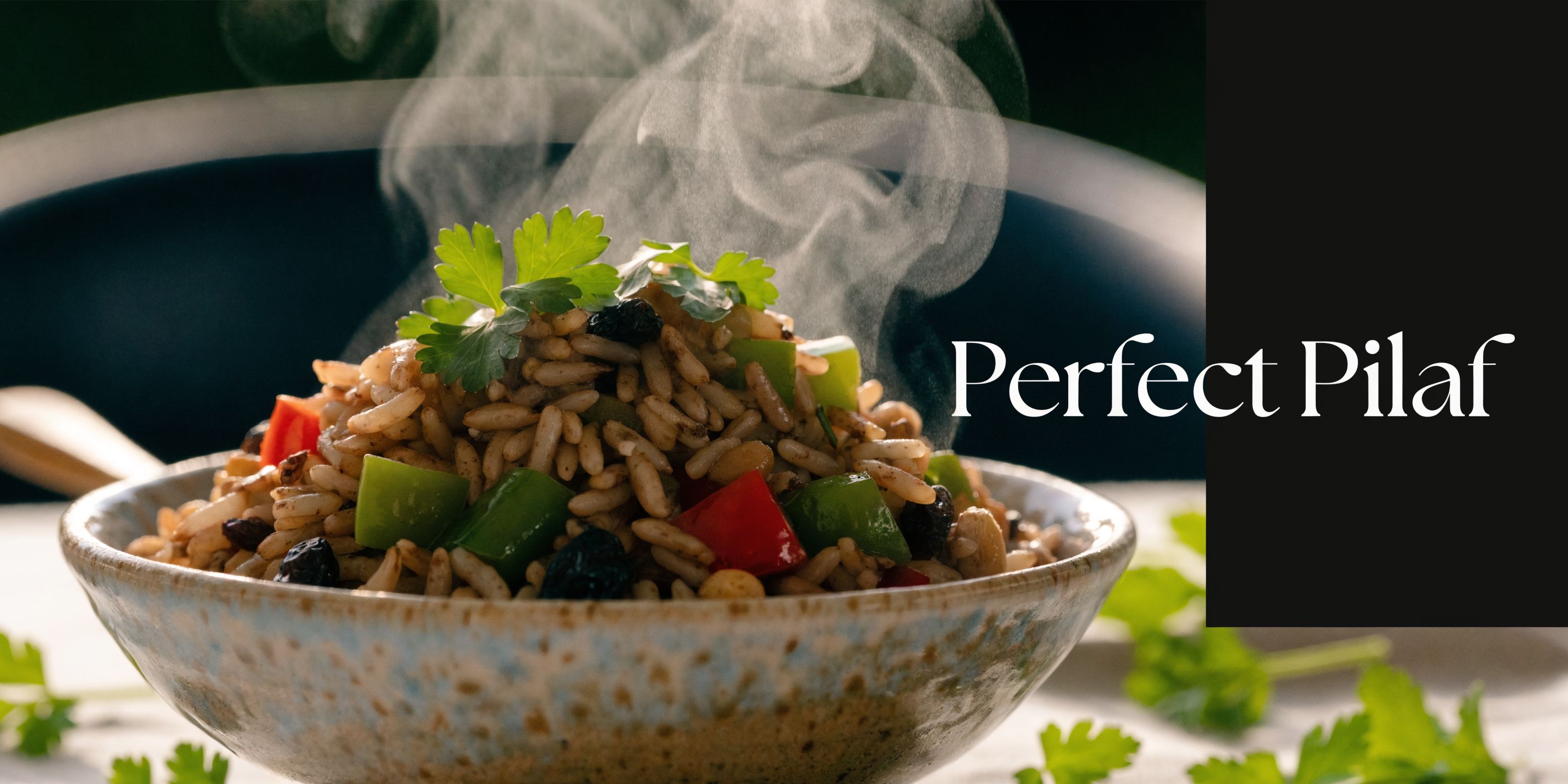
Brown rice pilaf turns out best when you toast the rice in oil for 1 to 3 minutes, use a 1:2 rice-to-liquid ratio, and cook it at a very low simmer for 50 minutes in a heavy-bottomed pot (wholesomemadeeasy.com). For meal prep, cool it within 2 hours, refrigerate it for at least 12 hours, and reheat it to 165°F to improve resistant starch formation and support steadier post-meal glucose response (YouTube).
Most brown rice advice starts with rinsing and boiling. That's why so many home cooks end up with grains that are wet on the surface, dry in the center, or stuck to the bottom of the pot.
Pilaf fixes that by changing the cooking sequence, not by adding complexity. The method builds flavor first, controls steam second, and finishes with a short rest that gives you distinct grains instead of a heavy mass. For busy people, that's the difference between a side dish you tolerate and one you'll keep in rotation.
Why This Brown Rice Pilaf Method Actually Works
Pilaf isn't just rice cooked in broth. It's a specific texture method.
Three actions matter most. Toast. Absorb. Rest. When those happen in order, brown rice pilaf becomes predictable.
Toasting changes both flavor and texture
The first mistake I see is rushing the oil stage. Brown rice needs that brief contact with fat before liquid goes in.
Toasting coats the grains, helps them cook more evenly, and gives the finished pilaf a nuttier flavor. It also reduces the risk of the soft outer layer breaking down before the center finishes.
Practical rule: If the rice doesn't smell fragrant before the liquid goes in, it usually won't taste like pilaf. It will taste like boiled brown rice with extras.
Brown rice is especially suited to this method because it still contains the bran layer. That outer layer is one reason it feels more substantial than white rice, and it's also why the cooking method matters so much.

Absorption cooking creates separated grains
The second principle is controlled absorption. Pilaf isn't supposed to be stirred constantly, flooded with excess liquid, or drained after cooking.
Once you add the measured liquid, the pot becomes a small steam chamber. The rice absorbs what it needs, and the lid traps the moisture that finishes the grain gently. That closed environment is what gives pilaf its signature look: full grains that stay separate.
Historically, that standard has deep roots. Pilaf cooking spread during the Abbasid Caliphate from Spain to Afghanistan, and later culinary texts described ideal grains as plump, somewhat firm, and separate rather than clumped (PMC). Brown rice itself became especially prominent much later, during the 1960s and 1970s, when whole foods gained cultural significance for retaining the bran layer removed from white rice.
If you already like grain-forward meals in a structured eating pattern, a Mediterranean meal plan is a natural fit for brown rice pilaf because the dish pairs cleanly with vegetables, legumes, fish, and olive oil-based mains.
Resting is not optional
The final rest is where many batches are saved or ruined.
When the heat turns off, moisture inside the pot is still moving. If you uncover the rice too soon, steam escapes before the grains finish settling. The surface may look done, but the texture won't be even.
A short off-heat rest lets the moisture redistribute so the grains fluff instead of smear. This is one of those quiet steps that feels minor and changes everything.
What works and what doesn't
| Method choice | What usually happens |
|---|---|
| Toast rice first | Better flavor and cleaner grain separation |
| Add measured liquid and cover | More even cooking |
| Keep heat very low | Less scorching and fewer split grains |
| Rest before fluffing | Lighter texture |
| Boil aggressively | Broken grains and uneven moisture |
| Lift the lid repeatedly | Longer cooking and less reliable texture |
Pilaf rewards restraint. Once the pot is covered, your job is mostly to leave it alone.
Your Pilaf Grocery List Organized by Aisle
A good brown rice pilaf starts at the store. If your shopping list is scattered, you either forget a key ingredient or come home with random add-ins that don't improve the dish.
Use a short list. Build from the base. Add only a few flavor upgrades that earn their place.
Produce section
- Onion or shallot for the savory base
- Garlic if you want a deeper aromatic profile
- Carrots for sweetness and color
- Celery for classic pilaf structure
- Parsley or dill for a fresh finish
- Lemon if you want brightness at serving
Grains and dry goods aisle
- Brown rice as the core ingredient
- Chopped nuts such as almonds or pistachios for crunch
- Dried fruit like raisins or chopped apricots if you prefer a more Middle Eastern profile
- Mushrooms or quinoa if you're testing quicker hybrid versions later
If you're trying to keep meals affordable and repeatable, the smartest move is to buy ingredients that can work across multiple dinners. A budget meal plan mindset works well here because brown rice pilaf shares ingredients easily with soups, sheet-pan meals, and grain bowls.
Oils, spices, and pantry items
- Olive oil or neutral cooking oil
- Salt
- Black pepper
- Cumin, paprika, or turmeric if you want a warmer profile
- Bay leaf if you like a more traditional broth-based finish
Dairy and broth section
- Broth or stock, choosing one with a flavor you like because the rice absorbs all of it
- Butter if you prefer a richer, more traditional finish
Buy the broth before you choose the herbs. The broth sets the direction of the whole pot.
A plain version is often the most useful for meal prep. You can always season more aggressively later when pairing it with proteins or vegetables.
How to Cook Foolproof Brown Rice Pilaf
Perfect brown rice pilaf is less about flair and more about process control. If the pot holds steady heat, the rice gets a brief toast, and the simmer stays gentle, the grains cook through without turning soft on the outside and hard in the center.
Start with equipment that gives you margin for error. A lidded Dutch oven or heavy-bottomed saucepan is the best choice because brown rice needs a long, even cook. Thin pans create hot spots, and that usually shows up as a scorched bottom before the center is done.
Heat a small amount of oil over medium heat. Add onion, celery, carrot, or whatever aromatics you chose, and cook until softened and fragrant. Keep them pale. Deep browning pushes the flavor toward sweet and roasted, which can overpower a pilaf that is supposed to stay clean and versatile for meal prep.
Add the brown rice and stir until the grains look glossy. Give it a short toast until it smells nutty.
If the rice smells harsh instead of nutty, lower the heat. Toasting should dry the surface and build flavor, not fry the grain.

Add liquid once, then manage steam
For a reliable stovetop batch, use 1.5 cups dry brown rice and 3 cups liquid. That ratio gives the bran-coated grain enough moisture to hydrate fully without drifting into a porridge texture.
Pour in the broth or water, bring it to a boil, then reduce the heat right away to a very low simmer and cover the pot. The goal is trapped steam with quiet bubbling, not active boiling. Strong bubbling throws off the water balance and roughs up the grains.
This matters for texture and for meal planning. A batch that cooks evenly portions more accurately, reheats better, and is easier to use inside a macro-aware nutrition planning tool.
Stir less than you think
Pilaf benefits from restraint. Stir once before covering, then leave it alone for most of the cook.
One mid-cook stir can help if your burner runs hot or your pot tends to collect heat at the center. Do it quickly, then cover again. Repeated stirring releases starch and makes the final texture tighter and less distinct.
The rhythm that works
- Warm the oil over medium heat.
- Soften the aromatics.
- Toast the rice briefly.
- Add all the liquid.
- Bring it to a boil.
- Cover and reduce to a very low simmer.
- Cook until the liquid is absorbed and the grains are tender.
- Rest off heat before fluffing.
The sensory signs of a correct batch
Good pilaf gives clear signals as it cooks.
| Stage | What you should notice |
|---|---|
| Toasting | Nutty aroma, glossy grains |
| After liquid is added | Steam and a quick boil |
| Covered cooking | Quiet simmer, no aggressive bubbling |
| End of cook time | Surface looks dry, grains look expanded |
| After resting | Rice fluffs easily and stays separate |
If you want a broader refresher on heat control, water absorption, and resting, this guide on how to cook rice properly is a useful companion.
What usually goes wrong
Mushy pilaf
Too much liquid is the usual cause. So is a simmer that stays too high. Brown rice needs time more than force.
Dry center with a wet top
The pot likely lost steam, either from a loose lid or frequent checking. It can also happen when the heat is too low to maintain steady internal steam.
Burned bottom
This usually points to cookware, not the recipe. A thin pan concentrates heat in one area, while a heavier pot spreads it across the base.
Brown rice pilaf gets much easier once you treat steam retention as part of the recipe, not just the lid's job.
A reliable base recipe
Use this as your repeatable template.
- Rice: 1.5 cups dry brown rice
- Liquid: 3 cups broth or water
- Fat: enough oil to lightly coat the grains
- Cook method: covered, very low simmer
- Rest: off heat before fluffing
- Pan: heavy-bottomed pot with a tight-fitting lid
For batch cooking, I prefer slightly underseasoning the base pot. It gives you more flexibility later when the pilaf gets paired with salmon, chicken, lentils, or higher-sodium sauces. If you cool and chill the rice after cooking, then reheat portions later, you also get a practical meal-prep advantage. The texture holds up well, and the starch profile becomes more useful for steadier blood sugar response in some meals.
What Is the Nutritional Profile of This Pilaf
Brown rice pilaf earns its place in meal prep because it is easy to portion, easy to repeat, and predictable enough to fit real macro targets.
The exact numbers still depend on your recipe. A pilaf cooked with olive oil and low-sodium broth will land differently than one finished with butter, salted stock, and nuts. The useful approach is to treat brown rice as the fixed base, then track the extras that change calories, fat, protein, and sodium.
A practical nutrition table for tracking
Use this as a working estimate for 1 cup of cooked brown rice pilaf. The carbohydrate count is the most consistent part. The rest should be calculated from your actual ingredients.
| Nutrient | Amount | % Daily Value |
|---|---|---|
| Carbohydrates | About 45 g carbs per 1 cup cooked | Varies by individual needs |
| Protein | Recipe-dependent | Varies |
| Fat | Recipe-dependent | Varies |
| Fiber | Present naturally in brown rice's bran layer | Varies |
| Sodium | Depends mostly on broth and added salt | Varies |
Brown rice keeps its bran and germ, so it usually brings more fiber, minerals, and slower digestion than refined white rice. In practice, that matters less than the full plate. Pilaf behaves best nutritionally when it shows up with protein, vegetables, and a controlled amount of added fat.
What that means for weight loss and glucose management
A full cup is a substantial carb serving. For active adults, that may fit well at lunch or after training. For people aiming for fat loss, tighter glucose control, or lower calorie meals, a half cup to three-quarter cup portion is often easier to manage.
Portion size is only one lever.
Pairing changes the response too. Protein slows gastric emptying. Fiber from vegetables adds bulk and helps with satiety. Fat can improve staying power, but too much makes the meal calorie-dense fast. That is the trade-off I plan around most often.
A practical plate pattern looks like this:
- Pilaf as the measured carbohydrate
- Protein such as chicken breast, salmon, tofu, lentils, or Greek-style beans
- Vegetables for fiber, volume, and micronutrients
- Fat kept modest if the protein is already rich
If you want tighter day-to-day portion guidance, a tool such as an AI nutritionist for macros and meal planning can help you decide whether pilaf fits best at one meal a day or across several prepped meals.
How this fits a macro-aware meal plan
Brown rice pilaf works best as a structured carbohydrate, not a vague “healthy side.” That framing makes portioning much easier.
For fat loss, use a smaller portion and let lean protein and vegetables take up more plate space. For muscle gain, increase the rice portion around training and keep protein consistent. For blood sugar support, avoid eating pilaf by itself, especially as a large bowl with little else in it.
Batch-cooked and chilled brown rice can also be useful in meal prep because cooled starch changes texture and often reheats well without turning gummy. That gives you a practical advantage. You can prep a larger batch, portion it consistently, and pair it with different proteins through the week without guessing.
If you are comparing pantry ingredients made from rice, keep them in a separate category from whole grains. Products such as organic brown rice syrup are nutritionally very different from cooked brown rice pilaf, even though the source grain sounds similar.
Consistency matters more than labels. If your scoop size, protein portion, and vegetable volume stay stable from meal to meal, brown rice pilaf becomes one of the easiest carbs to use well.
How to Adapt Brown Rice Pilaf for Any Diet
Brown rice pilaf is one of the easiest grain dishes to adapt because the core technique stays the same even when the ingredients change. You don't need a different recipe for every eating style. You need the right swaps.

Make it vegan without losing depth
The usual problem with vegan pilaf isn't texture. It's flat flavor.
Use a full-flavored vegetable broth, then layer in savory ingredients that build body naturally. Mushrooms work especially well because they give the dish a deeper, almost meaty base. Nutritional yeast can help too if you want a more rounded savory finish.
A projected 2026 trend highlighted in the source is the use of pre-soaked or hybrid brown rice grains to cut the usual 40 to 50 minute cooking time to under 30 minutes, and one example mentioned is a mushroom-quinoa-brown rice hybrid that also creates a complete protein (Harvard School of Public Health news page).
That hybrid approach is practical, not trendy for the sake of it. It helps on nights when standard brown rice feels too slow.
Keep it gluten-free with one important check
Brown rice itself is naturally gluten-free. The ingredient that causes trouble is often the broth.
Check labels carefully if you're cooking for celiac disease or strict gluten avoidance. Broths, bouillon products, and seasoning blends can introduce gluten where you don't expect it.
The rice is rarely the issue. Packaged flavor bases are where hidden gluten tends to show up.
Raise the protein without making it heavy
Pilaf doesn't need to stay a side dish. It can become the center of the meal if you add protein thoughtfully.
Good options include:
- Chickpeas for a plant-based version that stays pantry-friendly
- Lentils for a more earthy, fiber-rich bowl
- Tofu if you want a vegan protein that absorbs seasoning well
- Shredded chicken if you want a straightforward high-protein meal
- Fish if you prefer a lighter pairing
The rule is simple. Add proteins that don't dump extra water into the pan late in cooking. If they do, the texture softens.
Adjust for speed, not just restriction
Some diets aren't about elimination. They're about time.
If cooking speed is the barrier, pre-soaked grains or brown rice blends can be worth trying. They won't behave exactly like traditional pilaf, but they can produce a respectable version much faster.
A vegan meal plan can be especially useful if you want ideas for where pilaf fits across a full week without repeating the same bowl every night.
Best swaps by goal
| Goal | Best adjustment |
|---|---|
| Vegan | Vegetable broth, mushrooms, nutritional yeast |
| Higher protein | Chickpeas, lentils, tofu, chicken, fish |
| Gluten-free | Certified gluten-free broth and seasonings |
| Faster cooking | Pre-soaked grains or hybrid grain blends |
The method stays the anchor. Once that's stable, the diet adaptation becomes the easy part.
How to Batch Cook and Store Pilaf for Smart Meal Prep
Brown rice pilaf is one of the few meal-prep staples that often improves after day one. That matters if you want better texture, steadier portions, and a carb source that fits a macro-aware plan without much daily effort.

Cooling changes the rice. After the pilaf is cooked and chilled, part of its starch becomes more resistant to digestion. In practical terms, that can make prepped pilaf a better fit for blood sugar control than the same rice eaten straight from the pot, especially when you pair it with protein, fat, and high-fiber vegetables.
Texture improves too. A full chill gives the grains time to firm up, so reheated pilaf is less likely to turn soft or clump together. I use that to my advantage during meal prep. Fresh pilaf is great for dinner. Chilled pilaf is often better for packed lunches and portioned bowls.
Why chilled pilaf works well for meal prep
Brown rice holds structure better than many faster-cooking grains. If you cooked it with the right liquid ratio and let it rest before fluffing, it stores cleanly and reheats with very little loss in quality.
Flavor settles overnight as well. Aromatics, broth, and toasted notes distribute more evenly by the next day, which is one reason batch-cooked pilaf tastes more finished than plain leftover rice.
Food safety still matters. Cool the pilaf within 2 hours, keep it refrigerated at 40°F or below, and reheat servings to 165°F. A shallow container helps the rice cool faster and more evenly. Properly chilled pilaf usually keeps its quality for 4 to 5 days.
The batch-cook workflow that works
A good system starts before the rice goes into containers. Batch cooking succeeds when the base stays flexible and the add-ins stay controlled.
- Cook a versatile base with onion, broth, and mild seasoning so it can go in several directions later.
- Portion it soon after cooking into shallow containers. This improves cooling speed and protects texture.
- Chill it fully before reheating so the grains firm up and the starch structure changes.
- Store wet toppings separately such as salsa, yogurt sauces, roasted tomatoes, or juicy proteins.
- Build meals by target such as a higher-protein lunch, a lighter dinner, or a recovery bowl after training.
This approach gives you cleaner portions and better reheats.
A later reheat is also the right time to add herbs, lemon juice, nuts, seeds, or tender greens. Those ingredients lose quality fast in storage, and pilaf tastes sharper when they go in at the end.
Here's a useful visual if you want a quick meal-prep reference while assembling your containers:
Best containers and storage habits
Condensation is the main texture problem. Refrigeration itself is not.
Use shallow glass or BPA-free plastic containers with enough surface area for the rice to cool quickly. Let steam escape before sealing. If you trap that moisture, the top layer softens and the separated pilaf texture starts to collapse.
A few habits make a real difference:
- Store pilaf in meal-sized portions so you reheat only what you need
- Keep proteins separate if they release liquid during storage
- Add crunchy toppings just before eating
- Freeze flat portions for faster thawing and more even reheating
If you freeze a large block, the outside overcooks before the center is hot. Smaller portions solve that.
When batch cooking is worth the effort
Pilaf earns its place in meal prep when you need repeatable carbs that still feel like real food.
It works especially well if you track macros, want more consistent blood sugar response, or need lunches that hold up for several days without getting dull. It also solves a common problem with healthy meal prep. Many grain bases become bland or waterlogged by day two. Properly cooked brown rice pilaf usually does not.
To take your meal prep from ad hoc cooking to a repeatable weekly system with personalized meals and grocery lists, check out AI Meal Planner.
Common Questions About Making Brown Rice Pilaf
Can I make brown rice pilaf in a rice cooker
Yes, but the texture depends on the machine. Use the pilaf flavor-building steps on the stovetop first if possible, then transfer to the cooker for the absorption phase.
Why is my brown rice pilaf mushy
Mushy pilaf usually comes from too much liquid, weak toasting, or too much stirring. It can also happen when the heat stays too high and the grains break down before cooking evenly.
Why did the bottom burn while the top stayed undercooked
That usually points to a thin pan or uneven heat. A heavy-bottomed pot gives you steadier heat and better steam retention.
Can I freeze brown rice pilaf
Yes. Freeze it in individual portions so it thaws faster and keeps its texture better after reheating.
What vegetables work best in brown rice pilaf
Onion, carrot, celery, mushrooms, and herbs are dependable because they add flavor without overwhelming the grain. Watery vegetables are better stirred in later than cooked from the start.
Is brown rice pilaf different from plain boiled brown rice
Yes. Pilaf starts by toasting the rice in fat, then cooks by controlled absorption. Boiled rice skips that flavor-building step and usually doesn't aim for the same separated, savory finish.
How do I fix pilaf that seems too wet at the end
Put the lid back on and let it rest a little longer off the heat. If it still looks loose, a brief return to very low heat can help evaporate excess surface moisture without overworking the grains.
AI Meal Planner helps you turn dishes like brown rice pilaf into a full week of balanced eating without spreadsheets, guesswork, or repetitive grocery runs. If you want personalized meal plans, automatic macro tracking, and aisle-sorted shopping lists built around your goals, try AI Meal Planner.
AI-powered nutrition
Get Your Personalized Meal Plan
AI creates the perfect meals for your goals, lifestyle, and taste.
Start Your Journej