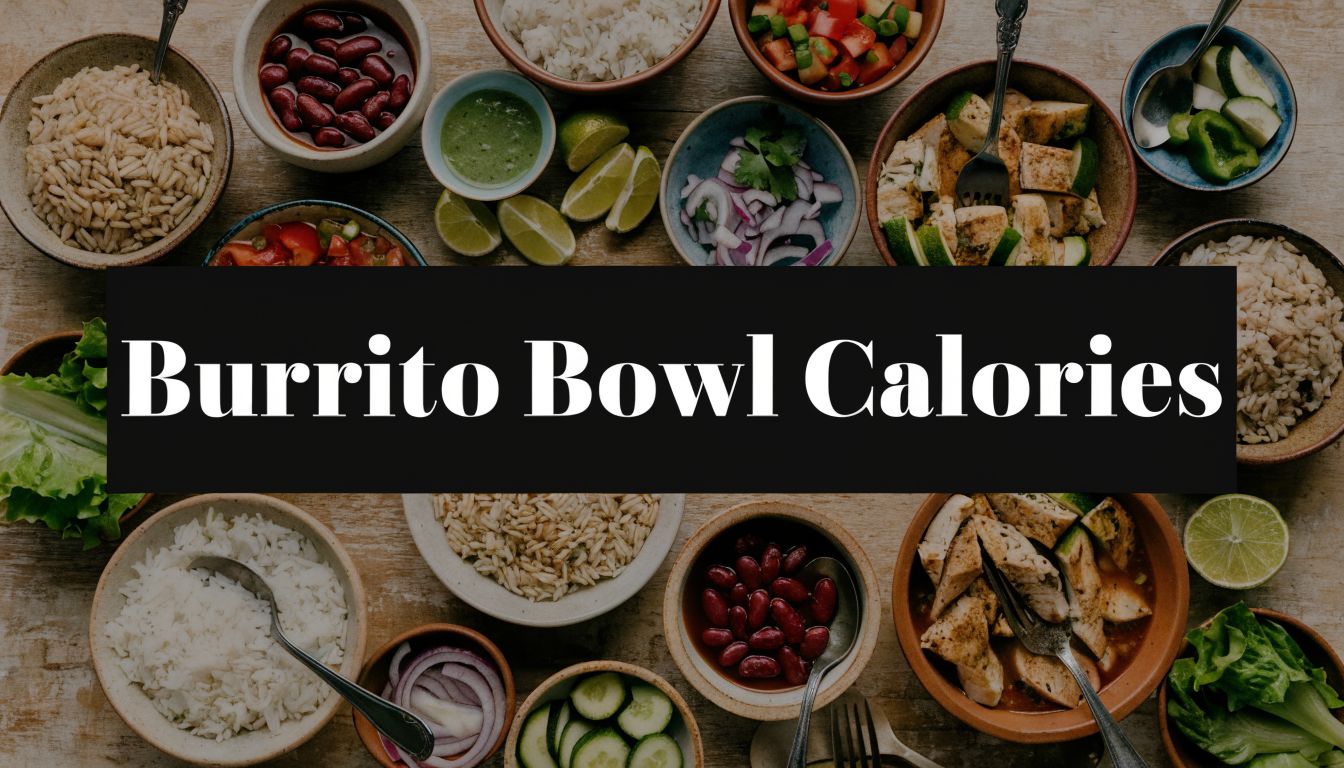
Lunch is often where healthy intentions get blurry. A burrito bowl sounds like the smart choice, but the final calorie count can swing sharply based on rice, protein, cheese, guacamole, and portion size.
How Many Calories Are in a Burrito Bowl?
A standard chicken burrito bowl from popular chains typically ranges from 663 to 850 calories per serving, based on the nutrition data summarized by Fitia’s chicken burrito bowl listing. Adding extras such as guacamole at 230 calories or a side tortilla at 320 calories can push the meal well over 1,000 calories, which is why burrito bowl calories depend more on what goes into the bowl than on the name itself.
That wide range is why people get tripped up. You order a bowl instead of a burrito, assume it’s lighter, and still end up with a meal that doesn’t match your goal.
A burrito bowl can absolutely work for fat loss, muscle gain, or everyday balanced eating. The key is to stop treating it as one fixed menu item and start treating it as a build-your-own formula. Protein, base, toppings, and add-ons each move the total in a different direction.
For someone aiming to stay aligned with a daily intake target, the bowl has to fit the bigger picture. If you’re working from a structured intake, a 2000 calorie meal plan makes it easier to see whether your burrito bowl should be the anchor meal of the day or a lighter lunch.
Practical rule: A burrito bowl isn’t automatically “healthy.” It’s only as lean, filling, or blood-sugar-friendly as the ingredients you choose.
Three things decide most burrito bowl calories:
- The base: Rice changes the calorie load faster than lettuce or extra vegetables.
- The protein: Leaner options keep calories lower without sacrificing fullness.
- The extras: Cheese, sour cream, guacamole, and tortillas raise calories quickly.
If you want better results, don’t ask whether burrito bowls are healthy. Ask whether your version matches your target.
Why Do Burrito Bowl Calories Vary So Much?
You can order a burrito bowl on Monday for fat loss and order another on Friday that fits a muscle-gain day, even if both came from the same chain. The difference is rarely the bowl itself. It comes from how the bowl is built and which trade-offs you make with each layer.

A burrito bowl is one of the easiest restaurant meals to customize, which is exactly why the calorie range gets so wide. A greens base with lean protein, beans, salsa, and fajita vegetables can stay relatively controlled. Add rice, cheese, sour cream, guacamole, and an extra scoop of protein, and the same “healthy bowl” turns into a much heavier meal.
The first big variable is energy density. Rice, cheese, sour cream, and guacamole pack more calories into a smaller volume than lettuce, salsa, peppers, or onions. That matters in real life. Busy professionals trying to stay in a calorie deficit often need meals that look large without quietly consuming half the day’s intake. People trying to gain muscle may want the opposite. They need enough calories and protein in one sitting without relying on shakes or snacks later.
Portion size matters just as much as ingredient choice. Restaurant bowls are not assembled with a food scale, and scoops vary. A slightly heavier hand on rice, beans, cheese, or guacamole can shift the bowl enough to change whether it fits your target.
Macros also change the result. Two bowls can have similar calories but behave very differently for hunger, training recovery, and blood sugar. A bowl built around lean protein, fiber-rich beans, and vegetables usually supports fullness better than a bowl that pushes most of its calories into rice and high-fat toppings. For anyone trying to utilize a macro calculator for weight loss, that distinction matters more than the total calorie number alone.
Here is the practical pattern I use with clients and product users:
| Bowl layer | What usually drives calorie variation | Best use by goal |
|---|---|---|
| Base | Rice adds calories faster than greens or extra vegetables | More rice for performance or muscle gain. Less for fat loss or blood sugar control |
| Protein | Richer cuts and double portions raise calories quickly | Double lean protein for muscle gain. Single lean portion for weight loss |
| Beans and fillers | Useful for fiber and staying power, but portions still count | Helpful for fullness and steadier energy |
| Toppings | Cheese, sour cream, and guacamole change the total fastest | Add intentionally, not automatically |
Small additions are usually what push the meal off target.
That does not mean those ingredients are “bad.” Guacamole can make a bowl more satisfying. Cheese can help with adherence if it keeps the meal enjoyable enough to repeat. Extra rice can make sense after training. The right choice depends on the job that meal needs to do.
A better question than “Is this burrito bowl healthy?” is “What is this bowl designed to do?” If the goal is fat loss, control the dense add-ons first. If the goal is muscle gain, increase protein before stacking fats. If the goal is steadier blood sugar, prioritize protein, fiber, and lower-sugar toppings, then keep the starch portion deliberate.
That shift, from counting calories after the fact to building the bowl for a purpose, is what makes burrito bowls useful instead of confusing. AI Meal Planner works best from that same principle. Set the goal first, then build the meal to match it.
What Is the Calorie and Macro Count of Each Ingredient?
When I assess burrito bowl calories, I look for the ingredients doing most of the work. In many bowls, a few items drive the majority of calories while the vegetables contribute far less.
A clear example comes from Arise’s breakdown of a burrito bowl with beef and vegetables. In that bowl, shredded beef contributes 250 kcal from 100g, Mexican rice adds 200 kcal from 150g, and 30g of shredded cheese provides 120 kcal. Those three ingredients alone often account for over 75% of the bowl’s calories.
That’s the pattern to watch. The calorie drivers are usually protein portions, rice, cheese, and other rich add-ons. The supporting ingredients matter nutritionally, but they often don’t dominate the total.
Ingredient breakdown you can actually use
Here’s a practical reference table based only on the verified ingredient data available.
Burrito Bowl Ingredient Calorie & Macro Breakdown (per standard serving)
| Ingredient | Serving Size | Calories (kcal) | Protein (g) | Carbs (g) | Fat (g) |
|---|---|---|---|---|---|
| Chipotle steak | standard protein serving | 150 | not provided | not provided | 6 |
| Chipotle beef barbacoa | standard protein serving | 170 | not provided | not provided | 7 |
| Chipotle chicken | standard protein serving | 180 | 32 | not provided | 7 |
| Chipotle chicken al pastor | standard protein serving | 200 | not provided | not provided | 11 |
| Chipotle carnitas | standard protein serving | 210 | not provided | not provided | 12 |
| Guacamole | 4 oz | 230 | not provided | not provided | not provided |
| Tortilla on the side | 1 tortilla | 320 | not provided | 50 | not provided |
| Shredded beef | 100 g | 250 | not provided | not provided | 15 |
| Mexican rice | 150 g | 200 | not provided | 40 | not provided |
| Shredded cheese | 30 g | 120 | not provided | not provided | 10 |
| Black beans | 30 g | 35 | not provided | not provided | not provided |
| Corn | 50 g | 45 | not provided | not provided | not provided |
How to read the table
Three patterns matter most:
- Protein can be efficient or expensive: Steak and chicken give you a better starting point when calories are tight.
- Rice is often the hidden base load: It doesn’t look large, but it changes the bowl fast.
- Cheese and guacamole are dense add-ons: They can be worth it, but they should be conscious choices.
If you’re trying to set calories and macros before you order, it helps to utilize a macro calculator for weight loss so you know whether your bowl should skew lower-fat, higher-protein, or more carb-supportive for training days.
Clinical takeaway: Don’t start by trimming salsa or vegetables. Start by checking rice, cheese, guac, and protein size.
The trade-offs that matter most
A lot of people focus on the wrong lever. They ask whether tomatoes or corn are “okay,” while ignoring the rice-and-cheese base that’s doing most of the calorie lifting.
For weight loss, the first move is usually reducing energy-dense ingredients. For muscle gain, the first move is usually protecting protein and then deciding how much carbohydrate support you want. For everyday health, the best bowl is often the one you can repeat consistently without second-guessing.
How Can I Build a Burrito Bowl for My Health Goal?
You open the app at lunch, see ten ingredients, and have about 20 seconds to decide. That is where a lot of good intentions fall apart. A burrito bowl can support fat loss, muscle gain, or steadier energy, but only if the build matches the goal.

The practical rule is simple. Choose protein first, decide how much carbohydrate support you need, then use fats and extras on purpose. People who get this right are rarely counting every tomato. They are managing the big calorie and macro drivers while keeping the meal realistic enough to repeat next week.
What should a weight loss burrito bowl look like
For weight loss, the best bowl is filling, protein-centered, and controlled where calories add up fast.
Use this build:
- Start with lean protein: Chicken or steak usually gives the best calorie-to-protein return.
- Keep the base lighter: Go light on rice, skip it, or split the base between rice and lettuce.
- Add fiber and volume: Beans, fajita vegetables, lettuce, and salsa improve fullness.
- Pick one richer extra: Cheese or guacamole can work. Using both often pushes the bowl higher than planned.
A strong fat-loss bowl usually includes lean protein, vegetables, salsa, and either beans or a modest portion of rice depending on hunger and activity level.
I usually advise clients not to make the bowl too small. If lunch is low in protein and low in volume, hunger tends to show up at 3 p.m., and the extra snacking often matters more than the bowl itself.
For people training regularly or trying to protect muscle while losing weight, a structured high protein meal plan helps set a realistic protein target for the day before you order.
How should you build one for muscle gain
Muscle gain changes the priority. Protein stays first, but carbohydrates matter more, especially around training, and calorie-dense ingredients can be useful instead of something to avoid.
A practical build looks like this:
- Choose a higher-protein main option.
- Add an extra portion of protein if your daily target is hard to hit.
- Keep rice or beans in the bowl for training support.
- Use calorie-dense toppings intentionally, based on the rest of the day.
This works well for people who under-eat protein at lunch and then try to catch up at dinner. A burrito bowl is one of the easier restaurant meals to turn into a high-protein option without a lot of guesswork.
Here’s a useful visual guide before choosing your build:
What works for blood sugar control and better day-to-day energy
If your goal is steadier blood sugar or fewer afternoon crashes, the bowl needs balance. Protein helps. Fiber helps. A very large rice portion with several rich toppings often works against that goal.
A steadier-energy bowl usually includes:
- a solid protein source
- beans or a moderate carb portion instead of a heavy carb load
- vegetables for fiber and volume
- limited high-fat extras so digestion stays comfortable during the workday
In practice, this often means choosing one main carb source instead of stacking rice, beans, corn, chips, and a sweet drink in the same meal.
Which swaps change the bowl the most
Small swaps can shift the bowl meaningfully without making it feel restrictive.
| Swap | Why it helps |
|---|---|
| Choose salsa instead of cheese | Lowers calorie density while keeping flavor |
| Use guacamole as your one rich add-on | Gives you fat and texture without stacking extras |
| Ask for light rice | Keeps the bowl satisfying while controlling the base |
| Add extra fajita vegetables or lettuce | Increases fullness with minimal calorie impact |
| Add more protein instead of multiple toppings | Supports muscle gain and satiety more directly |
The simplest decision rule
For weight loss, spend calories on protein, fiber, and volume.
For muscle gain, spend calories on protein first, then add carbs where they support training and recovery.
For blood sugar control or general health, keep the bowl balanced enough that you feel good after eating, not just full in the moment.
That is the shift I want people to make. Stop treating a burrito bowl like a random mix of toppings. Build it like a tool that matches the job.
What Are the Healthiest Choices at Popular Chains?
You step into a fast-casual line at lunch, order a burrito bowl because it sounds like the lighter option, and still end up with a meal that feels heavy by 3 p.m. That usually comes down to build quality, not the restaurant name.

At popular chains, the healthiest choice is usually a custom bowl with a clear goal. For fat loss, that means higher protein and tighter control of calorie-dense extras. For muscle gain, it means keeping protein high and adding enough carbs to support training. For blood sugar control, it means avoiding a pile-up of fast-digesting carbs in one bowl.
Chain menus differ, but the decision pattern stays consistent. Start with a protein you can build around. Add one main carb source if you want one. Use vegetables, salsa, and beans strategically. Then decide whether cheese, sour cream, or guacamole improve the meal enough to earn their place.
Best chain picks by goal
For weight loss
- Choose grilled chicken, steak, shrimp, tofu, or another leaner protein option
- Pick beans or rice as the main carb, rather than loading both heavily
- Add fajita vegetables, lettuce, pico, or other salsa-style toppings
- Choose one richer extra, not several
For muscle gain
- Start with a full serving of protein, or double protein if your budget and appetite allow
- Keep rice, beans, or both if you train hard and need recovery carbs
- Add calorie-dense toppings on purpose, not automatically
- Make sure the bowl still has vegetables so the meal stays filling and easier to digest
For blood sugar control
- Build around protein, beans, and non-starchy vegetables
- Go lighter on rice, corn, chips, and sweet drinks
- Include fat in a measured way, such as a portion of guacamole
- Keep the meal balanced enough that energy stays steady after eating
A few chain-specific habits work well in real life. At Mexican fast-casual spots, guacamole on the side gives better portion control. At salad-and-grain chains, half a scoop of grains often lands better than a full base plus bread on the side. At build-your-own concepts, sauces can change the bowl more than people expect, so asking for them lightly is often the cleanest calorie save.
A practical ordering script
Use a short script before you reach the counter:
- Pick the protein based on your goal
- Choose your main carb source, or skip it if you do better with beans and vegetables
- Add vegetables and fresh toppings for volume
- Choose one rich extra
- Skip anything you added out of habit
This is the difference between estimating calories after the fact and building the bowl strategically from the start. If you want a faster system for repeating high-protein, lower-calorie, or blood-sugar-friendly meals, the AI Meal Planner tools can help you set up bowl templates that match your target instead of improvising every order.
The healthiest chain order is the one that matches the job. A bowl for fat loss should look different from a bowl for leg day, and both should look different from a bowl built to avoid an afternoon crash.
How Do I Accurately Track and Log My Burrito Bowl?
Tracking a burrito bowl manually sounds simple until you try it. The challenge isn’t just calories. It’s estimating portions across several ingredients that were scooped quickly by someone else.
Most logging errors happen in one of four places:
- Portion guessing: Rice, cheese, and guacamole are easy to underestimate.
- Wrong database entries: Generic app listings often don’t match the bowl you ordered.
- Missed extras: Sauces, tortillas on the side, and premium toppings get forgotten.
- Inconsistent logging: You remember the protein and base, then skip the smaller items.
That matters because burrito bowls are highly customizable. A rough entry might be close enough for casual tracking, but it won’t be reliable if you’re trying to maintain a deficit, push protein consistently, or manage blood sugar.
A more accurate way to log restaurant and homemade bowls
For restaurant orders, the most reliable method is to log each component separately when the chain provides a nutrition tool. For homemade bowls, build the recipe once using weighed ingredients, then save it.
That approach works well because future logging gets faster. You’re not rebuilding the meal from scratch every time.
If you want a more efficient setup for custom meals in general, nutrition tracking tools that organize recipes, meals, and repeat builds are much easier to live with than scattered app entries. A practical starting point is using meal planning and nutrition tools that let you standardize your own bowl combinations.
Why calorie tracking alone can still miss the point
Calories matter, but they aren’t the only issue. Two bowls with similar calories can affect appetite, energy, and blood sugar differently depending on the ratio of protein, carbs, and richer toppings.
That’s why I tell clients not to chase false precision while ignoring the bowl structure. If your rice portion changes, your day changes. If your protein is too low, your hunger later changes. If your add-ons pile up, the calorie total changes quickly.
Logging works best when the meal itself is built consistently.
A practical tracking standard
Use this standard for better logs:
- Record the protein exactly
- Note whether rice was full, light, or skipped
- Log calorie-dense toppings individually
- Save repeat orders as templates
That’s enough to make your burrito bowl calories much more useful in real life, not just on paper.
Beyond Calories How Do Burrito Bowls Affect Blood Sugar?
Calories are only part of the story. For people with diabetes, prediabetes, or a strong interest in steady energy, the carbohydrate structure of a burrito bowl matters just as much as the total calorie count.

According to Parkland Diabetes, a typical burrito bowl with 38g of carbs can have a medium-to-high glycemic load, and their burrito bowl nutrition guidance notes that swapping rice for cauliflower rice and emphasizing leafy greens and beans in moderation can significantly blunt the post-meal glucose spike.
That’s an important distinction. A bowl can be moderate in calories and still push blood sugar in the wrong direction if the carb load is concentrated and the structure is poorly balanced.
Which ingredients raise concern first
For blood sugar management, the first things I look at are:
- Rice-heavy bases
- Large portions of starchy ingredients
- Low-protein builds
- Bowls that rely on carbs for bulk
Protein and fiber usually help the meal behave better. The problem is that many restaurant bowls lean heavily on rice because it’s cheap, filling, and familiar.
What to change if glucose response matters
The strongest modifications are practical, not extreme.
Use this order of operations:
- Replace rice with cauliflower rice or greens when available
- Keep protein central
- Add leafy vegetables for volume
- Use beans more deliberately instead of treating them as automatic
- Avoid building the meal around multiple dense carb sources
A more diabetes-aware bowl can still feel satisfying. It just needs a different backbone.
For people who want a more structured way to plan lower-glycemic meals through the week, a diabetic meal plan can make the decision process much easier than improvising every lunch.
Better blood sugar control usually comes from meal composition, not just from eating less food.
What works better than simple calorie cutting
Many people try to solve glucose issues by shrinking the bowl. That can help, but composition matters more.
A small rice-heavy bowl may still create a sharper spike than a larger bowl built around protein, greens, and lower-carb ingredients. That’s why calorie guides alone don’t answer the full health question.
The smarter approach is to view burrito bowls as blood-sugar-customizable meals. Done well, they’re flexible enough to support weight management and glucose control at the same time.
Frequently Asked Questions About Burrito Bowl Nutrition
Are burrito bowls good for weight loss?
They can be. Burrito bowls work well for weight loss when you center them on protein and vegetables and stay selective with calorie-dense toppings.
Is a burrito bowl healthier than a burrito?
Often, yes, because removing the tortilla can lower the total. But the bowl can still become heavy if you add multiple rich extras.
What adds the most calories to a burrito bowl?
Rice, large protein portions, cheese, guacamole, and tortillas on the side tend to drive the biggest increases. Small toppings like salsa usually have much less impact.
Which protein is leanest at Chipotle?
Steak is one of the leanest options listed, at 150 calories and 6g of fat. Carnitas is higher, so the protein choice alone can change the bowl meaningfully.
Can I eat a burrito bowl if I’m trying to gain muscle?
Yes. A burrito bowl is a practical muscle-gain meal when you prioritize protein and use extra carbs or double meat intentionally.
Are burrito bowls okay for diabetes?
They can be, especially when you reduce rice, use more greens, keep protein high, and moderate the total carbohydrate load. The structure matters more than the label.
What’s the easiest way to keep burrito bowl calories under control?
Decide on your protein first, keep the base intentional, and choose only one richer topping. Most calorie creep comes from stacking extras without noticing.
If you want burrito bowls and the rest of your meals to match your goals without manual guesswork, AI Meal Planner gives you a personalized plan built around your calorie needs, macros, dietary preferences, and schedule. It’s a practical way to turn nutrition advice into repeatable meals you’ll follow.
AI-powered nutrition
Get Your Personalized Meal Plan
AI creates the perfect meals for your goals, lifestyle, and taste.
Start Your Journej