You toss a bag of banana chips into your tote before a flight, or add them to a work snack drawer because they sound like fruit in a more convenient form. That is a reasonable instinct. They often get grouped with other healthy snacks for traveling, and they can work that way. The catch is that banana chips are one of those foods where processing changes the nutrition picture more than the name suggests.
A useful way to judge them is to stop asking whether they are "healthy" or "unhealthy" and ask a better question. What role do they play in your meal plan? A small portion of plain, dehydrated banana chips can fit into a structured eating pattern, including a plant-based meal plan, because they offer portability and quick energy. Fried or sweetened versions can act more like a dessert snack, with calories that add up fast and fullness that disappears quickly.
That is why dried banana chips can be both. They can be a practical fruit-based add-on, or they can become a calorie-dense snack that feels lighter than it is. The difference usually comes down to ingredient list, portion size, and whether you are using them intentionally in a plan for weight loss, maintenance, or muscle gain.
Are Dried Banana Chips a Healthy Snack?
You grab a bag from the pantry because it sounds like a smart choice. It’s fruit, it’s shelf-stable, and it feels lighter than cookies or candy. That logic is understandable, and it’s part of why dried fruit snacks keep showing up alongside other healthy snacks for traveling.
The honest answer is that dried banana chips sit in the middle. They can be useful for convenience, especially when paired with a structured eating pattern like a plant-based meal plan, but the label matters more than the marketing. Some bags are basically dried fruit. Others are closer to dessert chips.
Introduction
A lot of people make the same assumption. If the package says banana, it must be close to eating a banana.
That’s where confusion starts.
Dried banana chips are popular because they’re portable, crisp, sweet, and easy to store. The category is also growing. The global dried banana chips market was valued at USD 1.2 billion in 2024 and is projected to reach USD 2.1 billion by 2034, with a CAGR of 5.8%, according to Intel Market Research. That growth reflects how many people want quick snacks that feel healthier than ultra-processed alternatives.
But popularity doesn’t answer the nutrition question.
What matters is how the chips were made, what was added during processing, and how much you eat at one time. A bag of plain dehydrated banana slices is a very different food from banana slices fried in oil and coated with sugar or syrup.
Banana chips also have a long food tradition behind them. They originated in India, specifically Kerala and Tamil Nadu, where bananas were preserved by drying, then evolved into the crunchy snack now sold around the world. That history helps explain why “banana chips” can describe more than one product.
A snack can be convenient and still require portion control. Those two ideas aren’t opposites.
If you want a simple takeaway before reading further, use this rule. Treat dried banana chips as a planned snack ingredient, not a free-pour pantry food.
What Exactly Are Dried Banana Chips?
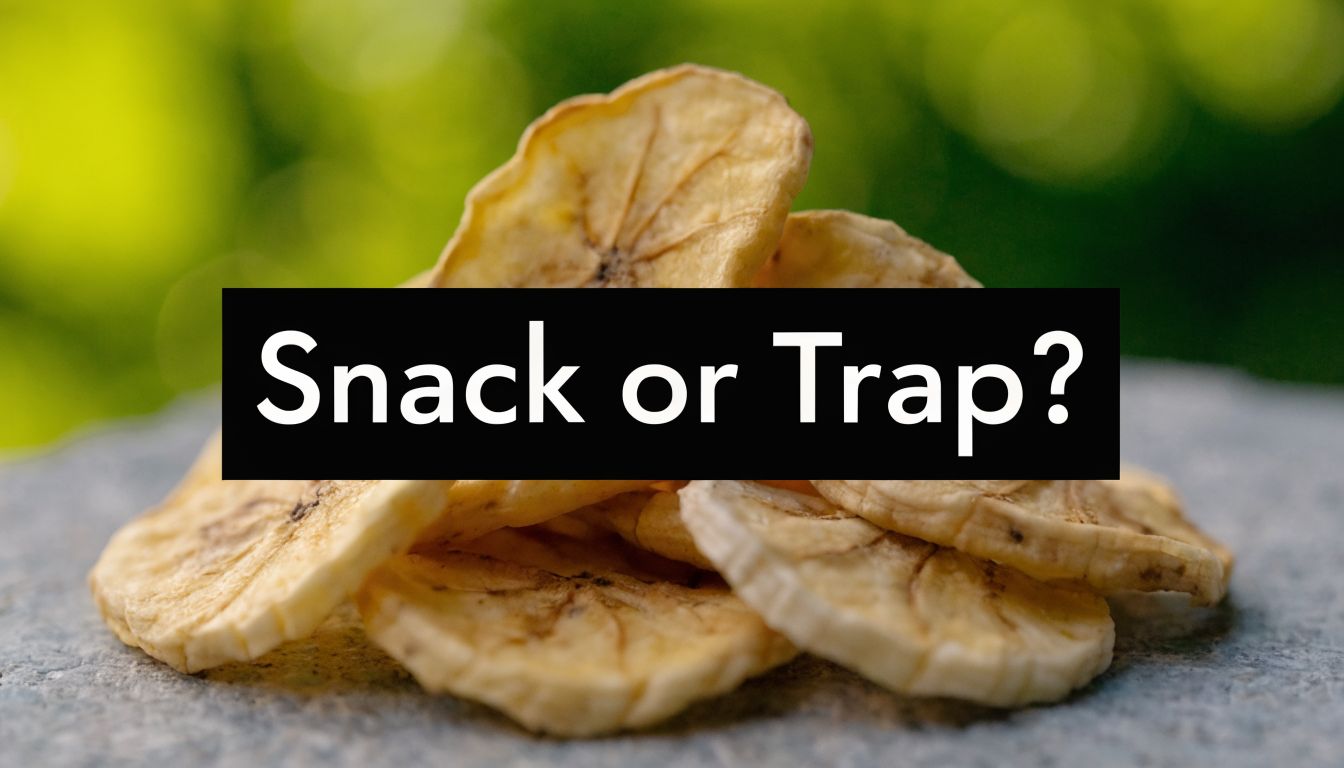
Dried banana chips are not one fixed food. They are a broad snack category made by slicing bananas, or sometimes plantains, and removing much of the water so the pieces last longer and turn crisp or chewy.
That distinction matters more than it sounds.
A fresh banana and a bag of banana chips may start with the same fruit, but they do not function the same way in a meal plan. Once water is removed, the food becomes more concentrated. You get less volume, less fullness, and more calories in a smaller handful. If oil or sweeteners are added, the nutrition profile shifts even further.
Some products use ripe dessert bananas, which create a sweeter result. Others use plantains, which are starchier and usually taste less sweet and more savory. That is one reason two bags labeled “banana chips” can feel like completely different foods, even before you check the ingredients list.
Banana chips also have a long history as a preservation food, especially in parts of South and Southeast Asia. Over time, that traditional idea was adapted into a packaged snack sold in many forms. For a health-conscious shopper, the practical lesson is simple. The name tells you the starting ingredient, not the final nutrition outcome.
A useful comparison is raisins versus grapes. Both come from the same food, but the dried version is denser, easier to overeat, and better treated as a measured ingredient than a casual grab-and-go snack. Banana chips work the same way, and often even more so when fat is added during processing.
That is why they fit best into a structured plan when portioning is deliberate. In a data-driven tool such as AI Meal Planner, banana chips make more sense as a counted topping, a pre-portioned snack add-on, or a swap for another crunchy carbohydrate source, not as an open bag on the counter.
Here is the simplest way to classify them:
- Plain dried banana slices are concentrated fruit.
- Plantain chips are usually starchier and less sweet.
- Commercial banana chips may include added oil, sugar, flavorings, or coatings that make them closer to a snack food than dried fruit.
Simple definition: Banana chips are a preserved fruit or plantain snack, but the label alone does not tell you whether they behave like dried fruit, a fried snack, or something in between.
How Are Banana Chips Made and Why Does It Matter?
The production method is the main reason one bag of dried banana chips can fit a balanced diet and another can derail it.
Commercial banana chips are commonly made in one of two broad ways. They’re either fried or dehydrated. The label may also say baked, dried, freeze-dried, or vacuum-fried. Those terms matter because they tell you whether the product is mostly concentrated banana or banana plus added fat and sweeteners.

Fried chips and dehydrated chips are not nutritionally equal
The clearest difference is in preparation. Dehydrated, unsweetened chips retain more of the banana’s original profile, while commercial fried and sugar-coated versions can have up to 35 to 40g of sugar per serving and significant saturated fat, which makes them a poor choice for blood sugar management, according to Medical News Today.
That one sentence cuts through a lot of misleading packaging.
A front label might say “made with real bananas,” “natural energy,” or “gluten-free.” None of those claims tell you whether the chips were fried, sweetened, or coated.
Fried vs. Baked or Dehydrated Banana Chips
| Attribute | Fried & Sweetened | Baked/Dehydrated (Unsweetened) |
|---|---|---|
| Processing | Sliced bananas cooked in oil, often with sugar or syrup added | Bananas dried slowly with little or no added fat |
| Texture | Very crunchy, rich, dessert-like | Crisp or chewy, more fruit-like |
| Flavor | Sweeter, heavier, more snack-food style | More natural banana flavor |
| Best use | Occasional treat | Better option for routine snacking |
| Blood sugar fit | Poorer choice, especially if sweetened | Usually the better choice if portions are controlled |
What happens during processing
When manufacturers fry bananas, they remove water and add fat at the same time. If they also coat the slices with sugar, honey, or syrup, the result moves even further away from whole fruit.
Dehydration is different. Water is removed, so sugars become more concentrated, but you don’t automatically add oil. That still means dried chips are more calorie-dense than fresh banana, just not as extreme as fried versions.
Use the ingredient list like a filter:
- Short list: banana, maybe salt. That’s usually a better sign.
- Watch for oils: coconut oil or palm oil often signal a richer, heavier chip.
- Watch for coatings: sugar, syrup, honey, glaze, or sweetener blends push the product toward candy territory.
If the ingredient list reads like a dessert topping, don’t count it as “just fruit.”
What Does the Nutrition Label on Banana Chips Reveal?
You buy a bag because it says “banana,” pour some into a bowl, and assume you picked something close to fruit. The nutrition label usually shows a different story. Banana chips are small, dry, and easy to overeat, so the numbers add up faster than many shoppers expect.
A 72g (1-cup) serving of fried banana chips contains around 374 calories and 24g of fat, according to Healthline’s review of banana chip nutrition. The same source explains that much of the banana’s water is removed during processing. That matters because water gives fresh fruit volume. Once it is gone, the food becomes more concentrated, like reducing a sauce on the stove until the flavor and calories are packed into a smaller space.

Why the label can be deceptive
The package front often highlights fruit. The back panel shows whether you are buying something that behaves more like dried fruit, a fried snack, or a dessert topping.
A fresh banana is bulky because it carries water and fiber in a form that slows you down while eating. Banana chips are the compressed version. A small handful can contain far more energy than it looks like, which is why “healthy snack” can turn into “accidental extra meal” if you eat straight from the bag.
What to scan first
Read the label in this order:
- Serving size. Check how much the brand calls one serving, then compare it with how much you would eat.
- Calories per serving. This tells you how easily the snack fits, or does not fit, into your daily target.
- Fat and added sugar. These often climb quickly in fried or sweetened versions.
- Fiber. Fiber helps, but it does not cancel out a calorie-dense serving.
- Ingredient list. A simple product is easier to place in a meal plan than one coated in sugar and oil.
That last point matters if you use a structured approach. If you are trying to control blood sugar, a diabetic meal plan can help you decide whether banana chips fit better as a measured topping, a paired snack, or an occasional swap rather than an everyday grab-and-go food.
How to interpret the numbers for your goal
For weight loss, the main question is calorie density. Banana chips can fit, but the portion usually needs to be small and intentional.
For muscle gain, they may be useful around training if you need quick energy, but they still should not replace more balanced carb sources with better protein and volume.
For blood sugar management, low-sounding marketing claims can be misleading. A product can appear moderate on one metric and still be easy to overconsume in real life. The practical question is simpler: how much are you likely to eat, and what else are you eating with it?
Useful rule: Read banana chips as a concentrated snack food, not as a fresh banana equivalent.
That mindset makes label reading more honest. It also makes meal planning easier. A measured portion sprinkled over yogurt or added to trail mix is very different from eating a cup by itself while working or driving.
Are There Health Risks to Consider?
You buy a bag because it sounds lighter than cookies or candy. Then a few handfuls disappear during work, and your snack ends up acting more like chips than fruit. That gap between the label story and the actual eating pattern is where banana chips can cause problems.
For most healthy adults, dried banana chips are not risky in themselves. The concern is fit. A concentrated, crunchy food is easy to overeat, and that can clash with goals like blood sugar control, heart health, or fat loss.
Blood sugar is the first place to look
A fresh banana comes with water and volume, so it slows you down. Banana chips remove that built-in speed bump. You can eat a lot more banana, and often extra sugar or oil, before your brain registers the portion.
That matters for people with diabetes, prediabetes, insulin resistance, or frequent afternoon crashes. In practice, banana chips usually work better as a measured add-on than as a free-pour snack. If you are trying to keep glucose swings more predictable, a structured diabetic meal plan can help you place them into a snack or meal on purpose instead of eating them straight from the bag.
Heart health depends on how the chips were made
The main issue is not the banana itself. It is the frying oil and any added coating.
Many commercial banana chips are fried, which can raise saturated fat intake compared with plain dried fruit. That becomes more relevant if the rest of your day already includes takeout, pastries, processed snacks, or creamy coffee drinks. One serving may seem small, but the total daily pattern is what affects your health.
Calorie density makes portion drift easy
Crunchy foods work like a compressed version of the original ingredient. You get less water, less bulk, and more calories in a small space. That is why banana chips can slip past appetite cues so easily at a desk, in the car, or while watching a screen.
This is especially important if you are using a structured plan for weight loss or muscle gain. For fat loss, banana chips usually need a defined portion and a job, such as a yogurt topping. For muscle gain, they can sometimes help add quick carbs, but they still should not crowd out more filling, balanced foods.
A few practical risk checks help:
- Choose unsweetened or plain dried versions when possible.
- Treat fried or glazed chips as an occasional snack, not a fruit equivalent.
- Pre-portion servings before eating.
- Check allergy and cross-contact statements if that applies to your household.
Banana chips fit best when you assign them a role in your meal plan. They cause more trouble when they become a reflex snack.
How Can You Choose and Store the Best Banana Chips?
You don’t need a complicated nutrition system in the store. You need a fast filter.
Start with the ingredient list before the nutrition panel. If the first few ingredients are just banana and maybe salt, you’re probably looking at a more straightforward product. If you see oil plus sugar or syrup, treat it as a treat, not an everyday staple.

What to look for on the bag
A quick aisle checklist helps:
- Best wording: dehydrated, dried, baked, unsweetened, no added sugar
- Proceed carefully: crispy, glazed, sweetened, honey-coated
- Visual clue: a more natural, darker look often suggests less coating than very uniform glossy chips
Texture also tells you something. Very light, very shiny, very crunchy chips are often the richest versions.
How to store them without waste
Dried banana chips keep best in an airtight container in a cool, dark place. Moisture makes them stale. Heat can make oil-rich chips taste rancid faster.
If you buy a larger bag, divide it into small snack portions right away. That does two things. It protects freshness and makes it much easier to stick to a planned serving.
Practical uses work better than random snacking:
- add a few pieces to yogurt
- mix into nuts and seeds
- crush over oatmeal
- pack a measured portion with lunch
The best banana chips are the ones you can use intentionally, not the ones that disappear because the bag stayed open on the counter.
How to Smartly Add Banana Chips to Your Diet
The smartest way to use dried banana chips is as a measured add-in, not a base snack.
For effective macro tracking, a 20 to 30g portion is recommended, which works out to roughly 100 to 150 kcal, according to Healthline’s meal-planning guidance. That’s small enough to fit into a weight-loss plan, but large enough to add crunch and sweetness.

Best ways to use a small portion
Dried banana chips work better when paired with foods that slow you down and make the snack more balanced.
Try combinations like these:
- With Greek yogurt or a high-protein alternative for crunch
- In trail mix with nuts and seeds so the portion stays controlled
- Crushed over oatmeal instead of using sugar-heavy toppings
- Packed with lunch in a small container rather than eating from the bag
If you prefer lower-carb eating, a low-carb meal plan can help you decide whether banana chips fit your daily carb budget or whether a different crunchy snack makes more sense.
Practical rule: Measure the portion before you eat it. Never snack from the bag if your goal is weight loss, blood sugar control, or macro consistency.
Match the snack to your goal
Here’s how I’d frame it for different clients:
For weight loss
Use the smallest planned portion and pair it with protein or fiber. Banana chips alone are easy to overeat.
For muscle gain
They can work as a convenient carb source in a snack mix, especially around training, but they still need portion control because fat-heavy versions can crowd out more useful foods.
For diabetes or blood sugar control
Choose unsweetened dehydrated chips, keep the serving modest, and avoid treating the low GI as a green light for large portions.
For plant-based eating
Most banana chips fit well, but the quality varies widely. Ingredient simplicity matters more than the “vegan” label.
A quick visual guide can help if you want to see home prep in action:
A simple homemade option
If you want more control, make your own.
Slice bananas thinly, lay them on parchment, and bake or dehydrate until dry and crisp. You can keep them plain or add a light dusting of cinnamon. The big advantage is simple. You control whether oil or sugar gets added.
Homemade versions usually fit better into a structured plan because they remove the guesswork.
If you want that structure built around your week, including snacks, portions, and groceries, you can set it up through AI Meal Planner onboarding.
Frequently Asked Questions About Dried Banana Chips
Are dried banana chips good for weight loss?
They can fit a weight-loss plan if you keep the portion small and choose unsweetened versions. Fried, sweetened chips are easier to overeat and can crowd out more filling snacks.
Are dried banana chips okay for diabetics?
They may fit in small portions, especially if they’re unsweetened and paired with protein. Sweetened or fried varieties are much less suitable for blood sugar control.
Are dried banana chips healthier than potato chips?
Sometimes, but not automatically. Some banana chips offer useful minerals, while many fried versions are still very calorie-dense and high in saturated fat.
Are banana chips keto-friendly?
Most aren’t ideal for keto because they’re still concentrated banana. Some people can fit a tiny portion into their plan, but it usually isn’t a staple keto snack.
Do dried banana chips have fiber?
Yes, they do contain fiber, but they also bring concentrated calories and sugars. Fiber is a benefit, not a free pass.
How much dried banana chips should I eat?
A measured small portion is generally recommended. If you want personalized guidance based on your health goals, an AI nutritionist meal-planning tool can make those tradeoffs easier to manage.
Are homemade banana chips better than store-bought?
Usually yes, because you can control oil, sugar, and portion size. They’re often the simplest option if you want banana chips to behave more like fruit and less like candy.
If you want a simpler way to fit snacks like dried banana chips into your week without guessing, AI Meal Planner can build a personalized plan around your calorie target, macros, dietary preferences, and grocery routine. It helps you portion snacks realistically, reuse ingredients, and keep meals organized so convenience foods don’t take over your day.
AI-powered nutrition
Get Your Personalized Meal Plan
AI creates the perfect meals for your goals, lifestyle, and taste.
Start Your Journej