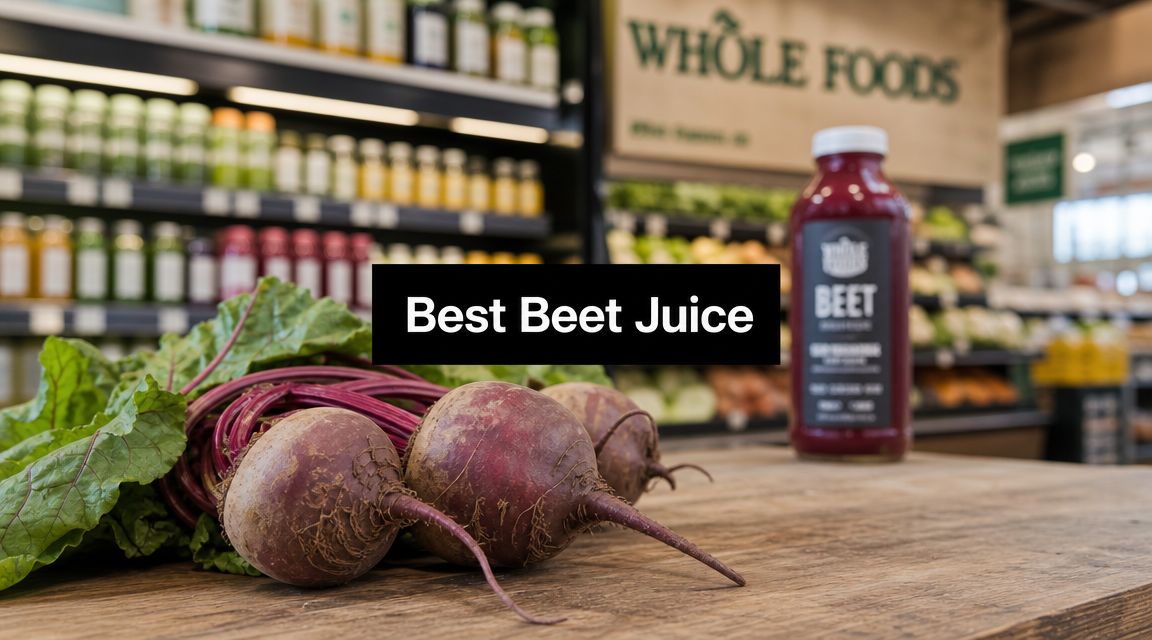
You're in the Whole Foods juice aisle, staring at red bottles that all look healthy and all claim some version of “pure,” “organic,” or “cold-pressed.” The fastest way to choose well is to ignore the front label first and read the ingredient list, nutrition panel, and processing clues.
What Is the Best Beet Juice at Whole Foods?
You see three kinds of beet juice at Whole Foods right away. One is a true beet juice, one is a fruit-forward blend with beet added for color and marketing, and one looks healthy but is carrying extra sweetness that changes how you'd use it.
The best choice is usually the bottle that keeps beets at the center and gives you the fewest surprises. In practice, that means a plain 100% beet juice or a beet-dominant juice with a short ingredient list, no added sweeteners, and a format that matches your goal, whether that is routine nutrition, pre-workout use, or easier taste.
Whole Foods Market's Just Beet It is a useful shelf reference because it sits in the category many shoppers want: a straightforward beet-juice product rather than a beet-flavored blend. If you prefer a more stable, shelf-ready option, Lakewood Organic Beet Juice is often another strong pick. If you want a smoother flavor, a blend can be reasonable, but it is usually a taste decision, not the strongest choice for someone specifically seeking beet intake.
My rule in the aisle is simple. Buy the product that looks least like a smoothie-shop recipe and most like actual beet juice. That usually gets you closer to the reason you came for it in the first place.
Direct Answer
Choose a beet juice whole foods option that is 100% juice, has beets as the main ingredient, and doesn't include added sweeteners or flavor fillers. In Whole Foods, store-brand Just Beet It and Lakewood Organic Beet Juice are strong starting points because they're actual beet-juice products sold in the store, not beet-flavored blends. For practical use, buy the bottle that matches your goal: a simpler beet-forward juice for routine use, or a blend only if you deliberately want a milder taste.
Introduction
You are standing in the Whole Foods refrigerated case, looking at a row of dark red bottles with words like cold-pressed, organic, raw, and HPP on the front. Two products both say beet. One is mostly beet juice. The other is mainly apple or lemon with beet added for color and marketing appeal. If you do not read past the front label, it is easy to buy the wrong bottle for your goal.
That is the shopping problem here. Whole Foods gives you several beet juice formats in one place, but the labels do not all mean the same thing in practice. Refrigerated juices, shelf-stable bottles, and small functional shots can each make sense. The better choice depends on whether you want a straight beet product, a milder blend you will drink consistently, or a bottle that is convenient enough to keep in your weekly routine.
I tell clients to shop this aisle with three questions in mind. What is the base juice. How processed is the product. Does the serving size match how they plan to use it.
A fast aisle-level filter
Use this quick screen before a bottle goes in your cart:
- Read the ingredient list before the front label. A product can feature beets on the package and still be mostly apple, carrot, or citrus.
- Check the format. Cold-pressed and HPP products are usually found refrigerated. Shelf-stable options often have a different taste, texture, and storage advantage.
- Look at the serving size and total sugars. Juice can be a reasonable choice, but the amount per serving matters if you are using it daily.
- Match the bottle to the job. A concentrated shot, a breakfast juice, and a pre-workout pour are different use cases.
There is also a practical trade-off shoppers miss. The least processed-looking option is not always the best buy for every person. Refrigerated juices often taste fresher, but they cost more and spoil faster once opened. Shelf-stable beet juice is less exciting from a marketing standpoint, yet it can be the smarter choice if you want consistency, a lower cost per serving, and less food waste.
Whole Foods is one of the few stores where you can compare these formats side by side. That makes it a good place to buy beet juice, if you know how to read past the packaging language and choose the bottle that fits your actual routine.
Why Is Beet Juice Considered a Nutritional Powerhouse?
Beet juice has earned its reputation because it's more than produce in liquid form. Beetroot contains dietary nitrate, antioxidants, and plant compounds that make it relevant for both daily wellness and athletic use.
A 2021 review in Current Research in Food Science reports that beetroot contains about 25 mg of nitrate per 100 g of wet weight, along with 1.68 g protein, 9.96 g carbohydrates, 0.18 g fat, 2 g fiber, and 4.805 mg vitamins per 100 g. The same review also notes antioxidant activity reaching 88.44% in analyzed extracts, which helps explain why beetroot is treated as a functional food in both research and practice, as detailed in this review on beetroot composition and health properties.

What's doing the work in beet juice
The key compound is dietary nitrate. In the body, nitrate is reduced by oral bacteria to nitrite and then converted to nitric oxide. That matters because nitric oxide supports vascular smooth-muscle relaxation and better blood flow.
Beets also contain pigments and phenolic compounds that contribute antioxidant activity. That doesn't mean every bottle is automatically a miracle drink. It means beet juice has a plausible reason for its health reputation, and the food itself has measurable composition behind the claims.
Practical rule: Beet juice makes the most sense when you buy it for a specific purpose, not because the bottle looks healthy.
Where shoppers usually overestimate it
Beet juice is useful, but it's not complete nutrition. It doesn't replace whole vegetables, protein, or a balanced meal. It's strongest as an add-on. Think of it as a targeted beverage, not a substitute for eating well.
That's also why the format matters in store. A pure beet juice can support a focused goal. A sweeter mixed juice may be easier to drink, but it can drift away from the reason many people bought it in the first place.
If you like comparing natural drink options more broadly, this Australian guide to natural vitality is a helpful contrast because it frames how different beverages serve different energy and wellness needs. For food-level planning, a searchable ingredient database for meal building can help you place beet juice in the context of a real eating pattern rather than treating it like a standalone fix.
Three easy ways to use it beyond drinking it plain
- Blend it into a smoothie. Combine beet juice with Greek yogurt or a dairy-free alternative, frozen berries, and ginger for a more balanced texture and taste.
- Turn it into salad dressing. Whisk beet juice with olive oil, mustard, and vinegar for a bright vinaigrette over arugula, goat cheese, and walnuts.
- Use a small amount in soups or grains. A splash can deepen color and earthiness in blended vegetable soups or cooked grains.
How Do I Decode Beet Juice Labels at Whole Foods?
Whole Foods is full of products that look similar but function differently. If you want a good beet juice whole foods pick, the label tells you more than the front-of-bottle branding ever will.

The five label terms that matter most
| Label term | What it tells you | What to do in the aisle |
|---|---|---|
| 100% juice | The bottle is juice, not a diluted drink | Prefer this when you want an actual beet juice product |
| Organic | Ingredient sourcing follows organic standards | Useful if you prioritize organic produce |
| Cold-pressed | A juice extraction style often associated with premium refrigerated juices | Good sign for shoppers who want minimally styled juice products |
| HPP | High-pressure processing used on some refrigerated juices | Often a practical middle ground between fresh-style juice and safety/shelf-life needs |
| From concentrate | Juice was concentrated and later reconstituted | Not automatically bad, but usually less appealing if you want a fresh-style product |
The most important line is still the ingredient list. If you see apple juice, grape juice, or “natural flavors” leading the panel, you're probably not buying a true beet-forward juice.
What to avoid if your goal is quality
- Added sugars. Beet juice already carries natural carbohydrates. Extra sweetener usually moves it in the wrong direction.
- Artificial colors or flavors. These aren't necessary in a quality beet product.
- Long ingredient lists. The more crowded the label, the more likely you're buying a beverage concept instead of simple juice.
For a useful comparison mindset, this guide to selecting pure aloe shows the same label-reading discipline on another health beverage category. The principles carry over well.
Buy the bottle that needs the least explanation. If the label reads like a workaround, keep walking.
Cold-pressed, HPP, and shelf stability
Shoppers often confuse cold-pressed and HPP. They're not the same thing. Cold-pressed refers to how juice is extracted. HPP refers to how some refrigerated juices are processed afterward to extend shelf life while maintaining a fresher profile than traditional shelf-stable bottling.
That doesn't make shelf-stable beet juice useless. It just means you should be honest about your priorities. If you want convenience and pantry storage, shelf-stable may work. If you want the kind of product many shoppers associate with fresh juice bars, the refrigerated case is usually where to look.
A clean eating plan also matters more than any one bottle. If you're trying to fit beet juice into a simpler food routine, a structured clean eating meal plan approach helps prevent the common mistake of adding healthy drinks on top of an otherwise chaotic diet.
What Are the Top Beet Juice Options at Whole Foods?
Standing in the Whole Foods beverage aisle, the best beet juice is usually the bottle you can identify in ten seconds. Clear ingredients, a format that fits your routine, and a flavor profile you will use matter more than a wellness-sounding label.
Two options tend to make the most sense for most shoppers: a simple Whole Foods house brand if you want an easy store-brand pick, and Lakewood if you want a more traditional bottled juice with an organic, single-juice feel. Beet blends can work too, but only if you know you are buying a mixed beverage rather than a beet-forward product.
Whole Foods Market Just Beet It
Just Beet It is the practical in-store benchmark because it is easy to spot and easy to compare against other refrigerated juices. It suits shoppers who want a ready-to-drink beet option without spending time sorting through niche brands.
I'd look at this one for convenience and label clarity. If the bottle fits the pattern discussed earlier, meaning beet is front and center and the ingredient list stays short, it works well for someone using beet juice before training or as a small daily serving. The trade-off is concentration. Juice goes down faster than whole beets, so portion size matters more than people expect.
Lakewood Organic Beet Juice
Lakewood is the bottle I'd point to for shoppers who want a more classic pantry or bottled-juice experience. It is usually a better fit for someone who prefers a straightforward organic product and does not care whether the bottle feels trendy or juice-bar styled.
This choice often appeals to people who want fewer surprises. The format is familiar, the branding is plain, and the product category is obvious at a glance. That matters in a store like Whole Foods, where packaging can make a sweet fruit blend look nutritionally similar to a simple vegetable juice when it is not.
How I'd rank them in real shopping terms
- Best for an easy Whole Foods store-brand pick: Just Beet It
- Best for a classic bottled beet juice: Lakewood Organic Beet Juice
- Best for milder flavor: a beet blend with apple or ginger, as long as beet still appears high on the ingredient list
A good aisle rule is simple. Buy the bottle that matches your reason for buying beet juice in the first place. For exercise support, choose the more beet-forward option. For casual use and easier taste, a blend may be the better call. For pantry convenience, a shelf-stable bottle can be reasonable if the ingredients still stay clean.
How Can I Incorporate Beet Juice Into My Diet?
You get home from Whole Foods with a bottle of beet juice, drink one big glass because it sounds healthy, then avoid the rest because the flavor is stronger than expected. A better approach is to give beet juice a clear role. It works best when you use it in a way that fits how you already eat.

At Whole Foods, this usually means matching the format to the use. A cold-pressed bottle is easy to use around workouts or in a smoothie within a few days of opening. A shelf-stable bottle often makes more sense for dressings, soups, or occasional use because it is easier to keep on hand. The right choice is the one you will finish.
Three practical ways to use it
- Before training. Drink a modest serving on purpose instead of pouring a random amount. This is the simplest use if you bought beet juice for exercise support.
- In a smoothie. Beet juice blends well with berries, citrus, ginger, and yogurt. It softens the earthy flavor without burying it under added sugar.
- In savory recipes. A small amount can add color, sweetness, and acidity balance to vinaigrettes, grain bowls, or roasted vegetables.
Simple beet smoothie
Blend:
- Beet juice
- Frozen berries
- Plain yogurt or unsweetened dairy-free yogurt
- Fresh ginger
- Ice
This is one of the easiest ways to make a beet-forward bottle from Whole Foods more usable. If the juice tastes intense on its own, a smoothie lowers that barrier and turns it into something you will repeat. If you want more ideas for using ingredients you already buy, browse these healthy recipe ideas for everyday meals.
Here's a quick visual if you prefer to see preparation ideas in action before trying your own variation:
Simple beet vinaigrette
Whisk together:
- Beet juice
- Olive oil
- Apple cider vinegar or red wine vinegar
- Dijon mustard
- Pinch of salt and black pepper
Use it on arugula, spinach, lentils, or roasted carrots. This is a smart option for shoppers who buy a stronger, less sweet beet juice and do not want to drink it straight. You get the flavor and color in a smaller amount, with less waste.
A small serving used regularly beats an oversized glass that sits unfinished in the fridge.
What Is the Right Dosage and How Should I Store It?
You're standing at the Whole Foods fridge with a 32-ounce bottle in hand, trying to answer two practical questions before you buy it. How much will you use, and will it still taste good by the time you finish it?

How much should you drink?
The right amount depends on why you bought it.
If your goal is general nutrition, a small serving is usually enough. About 4 to 8 ounces works well for many adults, especially if the bottle is a straight beet juice with no fruit blended in. That gives you a meaningful amount without turning one drink into a large sugar load.
If you bought beet juice for exercise support or blood pressure goals, research has used larger, more deliberate amounts, as noted earlier in the article. That matters at Whole Foods because bottle size and format change how realistic that intake is. A small cold-pressed shot is convenient, but it may not match the serving used in studies. A larger bottle may be closer, but only if you will use it consistently before it spoils.
Start smaller if beet juice is new to you. Some people tolerate it well. Others notice stomach upset, loose stools, or do not enjoy the earthy flavor enough to keep buying it.
How I guide shoppers on dosage
I usually tell clients to match the serving to the label and to their reason for using it. Check three things before you pour: serving size, total sugar per serving, and whether the bottle is pure beet juice or a blend with apple, carrot, or lemon.
That label check matters. An 8-ounce serving of a beet-apple blend can fit very differently into your day than 8 ounces of plain beet juice. If you need tighter control over carbohydrate intake, use a diabetes-friendly meal planning framework so juice stays in proportion to the rest of the meal.
How to store it so it does not go to waste
Whole Foods usually stocks beet juice in a few formats, and storage follows the format.
- Refrigerated cold-pressed or HPP bottles: Keep them cold the entire time. Do not let them sit in the car while you finish shopping elsewhere.
- After opening: Reseal tightly and return the bottle to the fridge right away.
- Shelf-stable products: Store unopened bottles or boxes as directed on the package, then refrigerate after opening.
- If you will not finish it quickly: Freeze extra juice in small portions, such as ice cube trays or silicone molds.
This is one of the biggest shopping trade-offs. The cleaner, less processed bottle often tastes fresher, but it usually has a shorter refrigerator life once opened. A shelf-stable option may be less exciting, yet it can be the more practical buy if you only use beet juice a few ounces at a time.
One last tip. Write the open date on the cap. It sounds simple, but it prevents the half-used bottle from becoming an expensive science experiment in the back of the fridge.
Frequently Asked Questions About Beet Juice
Is beet juice better than eating whole beets?
No, not automatically. Juice is more concentrated and easier to drink quickly, while whole beets give you the full-food eating experience and more chewing satisfaction.
Can beet juice whole foods products have a lot of sugar?
Yes. Even without added sugar, juice can carry a meaningful carbohydrate load in a small serving, so portion awareness matters.
Is red urine after drinking beet juice normal?
Yes, it can happen. It's often harmless, but if it worries you or appears unrelated to beet intake, talk to a clinician.
Is beet powder the same as beet juice?
No. They're different formats, and labels vary widely, so they shouldn't be treated as interchangeable without checking the product details.
Should everyone drink beet juice for blood pressure?
No. It can be a useful food choice, but people with medical conditions or medication concerns should check with their clinician before using it strategically.
Are blends with apple or other fruit bad choices?
No, but they're different choices. A blend may taste better, while a simpler beet product is often better if your goal is a more beet-focused drink.
What's the easiest way to shop for beet juice at Whole Foods?
Read the ingredients first, then the serving size and nutrition panel. If the bottle clearly tells you what it is and why it fits your goal, it's usually a better buy than a flashy blend with vague marketing.
AI Meal Planner helps you turn healthy intentions into an actual weekly routine with personalized meals, smart grocery lists, and recipes matched to your goals. If you want a simpler way to plan nutritious meals around your schedule, explore AI Meal Planner.
AI-powered nutrition
Get Your Personalized Meal Plan
AI creates the perfect meals for your goals, lifestyle, and taste.
Start Your Journej