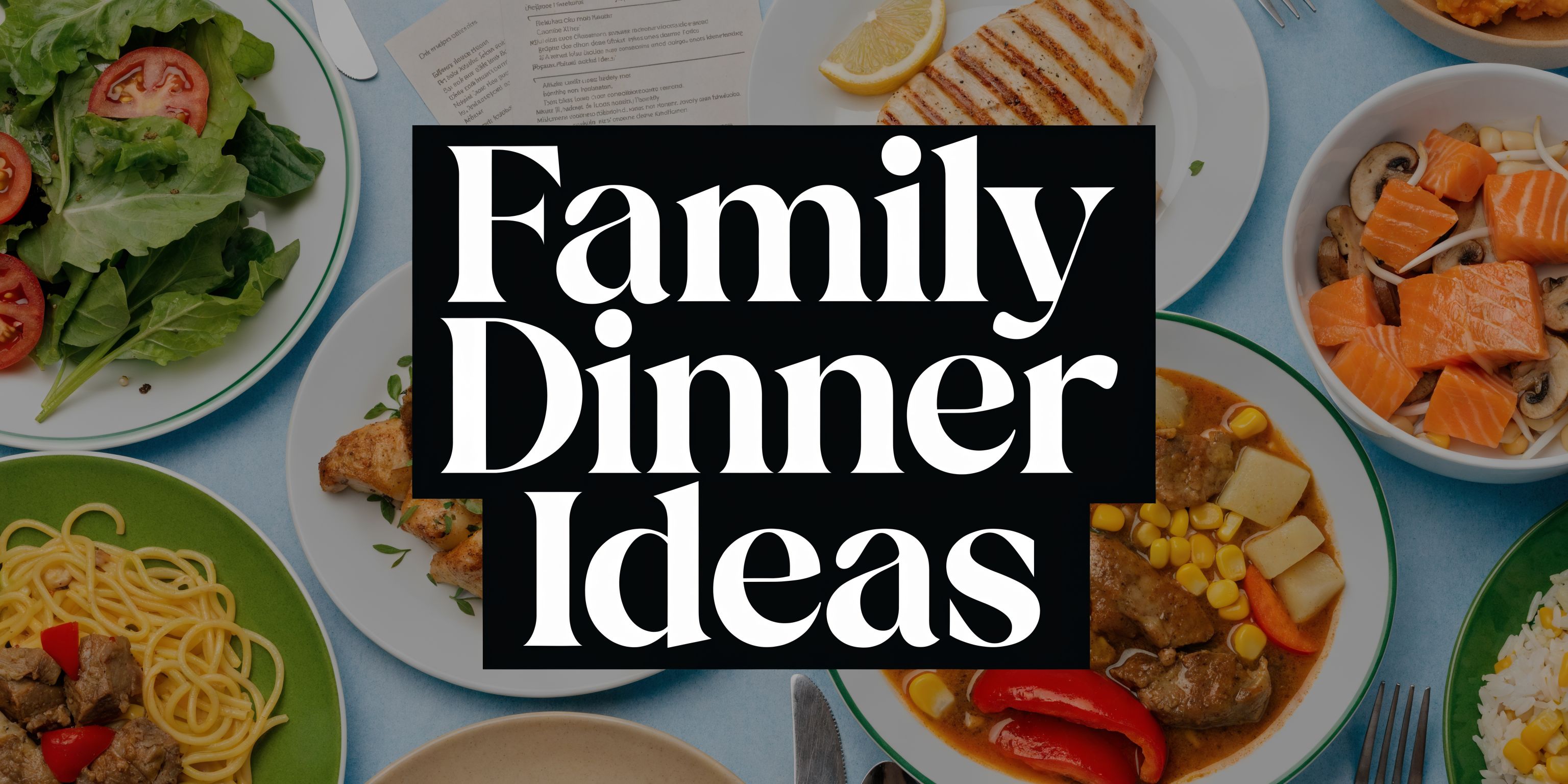
Tired of the 5 PM dinner scramble? The most reliable fix is to stop chasing random recipes and build a weekly system around seven repeatable dinner formats: sheet pan meals, slow cooker or Instant Pot meals, bowls, rotisserie chicken meals, theme nights, 30-minute complete meals, and freezer meals. For most families, planning 5 to 7 dinners in these formats creates enough structure to reduce weeknight stress while keeping meals flexible.
By Friday, many households have already lost the momentum they had at the start of the week. A 2022 Morning Consult survey series found that about 60% of households cook dinner at home on Sundays and Mondays, but only 50% do by Friday, a pattern highlighted by The Family Dinner Project’s summary of family dinner trends. That drop is exactly why weekly dinner ideas for families work best when they are built as systems, not one-off recipes.
The pressure is familiar. Work runs late. Homework starts. Someone is hungry now, someone else suddenly hates what you planned, and the kitchen feels too small for the mess that dinner is about to create. If that sounds familiar, it helps to organize the week around formats that are easy to repeat, easy to shop for, and easy to adapt.
This is the part most meal-planning articles miss. Families do not need more recipe inspiration. They need a reliable structure that survives busy Tuesdays, sports practices, leftovers, dietary restrictions, and plain old decision fatigue. A good dinner system makes the answer to “what’s for dinner?” obvious before the day gets chaotic.
That matters because family meals are worth protecting. A review discussed in this PubMed article on family mealtimes and health outcomes found that children in families sharing at least three meals per week are 12% less likely to be overweight, with additional benefits tied to eating patterns and food quality. Dinner does not need to be perfect to be useful. It needs to happen consistently.
If your kitchen setup itself slows you down, this guide on how to maximize small kitchen space is also worth a look.
1. How do sheet pan dinners make weeknights easier

Sheet pan dinners solve two problems at once. They cut cleanup, and they force you to build a complete meal on one surface instead of cooking a protein and then scrambling for sides.
The basic formula is simple. Choose one protein, two vegetables, and one starch if your family wants it. Roast everything together, but do not pretend every ingredient cooks at the same speed. That is where sheet pan dinners go wrong.
Chicken breast with carrots and Brussels sprouts works well. So does salmon with asparagus and sweet potatoes. Turkey meatballs with zucchini and bell peppers is another strong option because the meatballs hold up well if dinner gets delayed by ten minutes.
What works on a sheet pan and what does not
What works:
- Match cooking times: Pair salmon with fast vegetables like asparagus or green beans. Pair chicken thighs with denser vegetables like carrots or potatoes.
- Cut evenly: Similar size means similar doneness.
- Use a liner: Parchment paper keeps cleanup low and helps sticky glazes behave.
- Season in stages: Coat the protein first, then lightly season vegetables so salt stays balanced.
What does not work:
- Crowding the pan: Steaming is not roasting.
- Mixing wet and dry ingredients carelessly: Watery vegetables can keep proteins from browning.
- Using one temperature for everything without adjustment: Fish, root vegetables, and chicken do not all love the same timing.
A practical family version might look like this: chicken breasts in the center, sweet potato wedges started first, asparagus added later. Dinner lands on the table with no separate sauté pan and no second round of dishes waiting in the sink.
How to turn one pan into a weekly system
Prepping vegetables ahead of time changes this from a recipe into a routine. Wash and cut broccoli, peppers, carrots, onions, and potatoes during the weekend. Store them in containers so dinner becomes assembly, not prep.
If your household tracks calories or macros, use a structure that keeps portions predictable. A balanced meal planning setup is useful here because sheet pan dinners are easiest to repeat when the protein, starch, and vegetable ratio is already decided.
Keep one “default” sheet pan combo on standby for the busiest night of the week. Families follow plans more consistently when there is one dinner nobody has to think about.
Batch-roasting multiple pans can also carry you into the next few days. Roasted vegetables become lunch sides, taco fillings, or bowl ingredients. That is a key advantage. One cooking method feeds more than one meal.
2. What should families put in the slow cooker or Instant Pot
Some nights you need dinner to cook without you. Slow cookers and pressure cookers are built for that exact job.
These methods are best when the family schedule is staggered. One person gets home at five-thirty, another at seven. Instead of trying to time a skillet meal perfectly, dinner waits in the pot.
Beef chili with beans and tomatoes is a classic because it holds well. Chicken cacciatore with peppers and onions works for the same reason. Lentil soup, pulled turkey for sandwiches, pork carnitas, and vegetable stews also handle delayed serving better than quick-cooked fish or pasta.
When the slow cooker wins and when the Instant Pot wins
Use the slow cooker when you want:
- Low attention cooking: Add ingredients in the morning and leave.
- Deeper flavor over time: Soups, stews, chilis, and braised meats improve as they sit.
- Flexible dinner timing: The meal can stay warm if the evening shifts.
Use the Instant Pot when you want:
- A faster recovery plan: You forgot to prep, but still need dinner.
- Tender proteins fast: Shredded chicken, soups, beans, and rice-based meals come together quickly.
- One-pot cleanup: Good for nights when the kitchen is already a mess.
Small adjustments that improve the final meal
The difference between a flat slow cooker dinner and a good one is usually front-end flavor. Brown the protein first when possible. Sauté onion and garlic before pressure cooking if you have time. Use low-sodium broth so the meal does not become overly salty after reduction.
Layering matters too. Put sturdy vegetables on the bottom and proteins on top. In pressure cookers, avoid overloading with liquid when converting from stovetop recipes.
A realistic weekly rhythm is one appliance meal early in the week and one later when energy is lower. For example, chili on Monday becomes baked potato topping on Tuesday. Carnitas on Thursday become taco bowls on Friday.
Budget-conscious families often do especially well with this format because it stretches affordable cuts of meat, beans, and lentils. A budget meal planning approach fits naturally with slow cooker and Instant Pot dinners because both methods reward ingredient reuse and bulk cooking.
3. Why do build your own bowl nights work for picky eaters and mixed diets

Bowl nights work because they remove the all-or-nothing problem. You are not asking every person at the table to love the exact same finished plate. You are giving them a shared framework with enough choice to keep dinner peaceful.
That matters more than many families realize. The Family Dinner Project notes that a 2019 YouGov poll found 65% of families who have difficulty eating together cited scheduling as the primary obstacle, even when cooking at home. A customizable format helps because it shortens the conflict between “what the cook made” and “what everyone will eat.”
A bowl dinner is not just leftovers dumped into a dish. It needs structure:
- Base: rice, quinoa, greens, or potatoes
- Protein: chicken, tofu, beans, eggs, turkey, salmon
- Vegetables: raw, roasted, or sautéed
- Fat and flavor: avocado, olives, cheese, seeds, sauce
Bowl formats that make sense on a family schedule
Mexican bowls are the easiest place to start. Use cilantro-lime rice, black beans, seasoned turkey, corn, shredded lettuce, salsa, and avocado.
Mediterranean bowls also work well. Try quinoa, grilled chicken, cucumber, tomatoes, olives, hummus, and feta. For vegetarian households, a vegetarian meal planning option makes bowl nights especially practical because grains, legumes, eggs, tofu, and sauces can rotate without rebuilding the system from scratch.
Asian-style bowls are another strong weeknight choice: brown rice, teriyaki tofu or chicken, edamame, shredded carrots, cucumbers, and sesame sauce.
How to keep bowls from becoming chaotic
The weak version of bowl night is too many ingredients with no prep. The strong version uses a small set of components prepared ahead of time.
Try this:
- Cook grains in bulk: Rice and quinoa hold well.
- Double proteins: Make enough for lunch the next day.
- Prep sauces once: A yogurt sauce, salsa, and peanut-free sesame dressing can carry several meals.
- Set up a build station: Family members assemble in order, which reduces bottlenecks.
Children accept dinner more easily when they can choose their toppings and control what touches what.
This format is also one of the best answers for families dealing with restrictions. The online recipe space still underserves multi-restriction dinner planning. A 2025 Nielsen report summarized by Food Dietitians notes that 42% of U.S. families have at least one member with food allergies or intolerances, which is one reason flexible meal systems matter more than single fixed recipes. Bowl nights let one person skip dairy, another skip gluten, and another load up on beans without anyone eating a completely separate meal.
4. How can rotisserie chicken cover multiple family dinners
Rotisserie chicken is one of the few grocery shortcuts that earns its place. It saves time, it works across cuisines, and it helps families get dinner on the table on nights when cooking protein from scratch is the part they are most likely to abandon.
The trick is not buying one chicken and hoping for inspiration. The trick is assigning that chicken jobs before you leave the store.
One bird can become chicken tacos on night one, chicken and vegetable stir-fry on night two, and soup or grain bowls on night three. If your household is larger, buy two and shred one immediately while it is still easy to pull apart.
Best ways to use it without getting bored
A few formats consistently work:
- Tacos: shredded chicken, slaw, salsa, avocado
- Lettuce wraps: chicken with chopped vegetables and a simple sauce
- Salad bowls: romaine, croutons, parmesan, and chicken for a fast Caesar-style dinner
- Rice bowls: chicken, roasted vegetables, grain, and sauce
- Soup: use the meat now and save the carcass for broth later
This is also one of the safest ways to survive a midweek schedule crash. If practice runs late or work spills over, you are assembling dinner, not cooking it.
Where families misuse rotisserie chicken
The most common mistake is serving the same flavor profile every time. Chicken with rice three nights in a row gets old fast if the seasoning and format never change.
Change the meal identity, not just the side dish. Tacos feel different from lettuce wraps. A lemon-herb plate with roasted vegetables feels different from buffalo chicken over grain bowls. Use sauces, crunchy toppings, and different starches to create contrast.
Storage matters too. Shred the chicken and store it in portions so you can grab only what you need. If the carcass is still in good shape, freeze it for broth instead of throwing it away.
A strong practical setup is this: one rotisserie chicken for immediate dinners, one backup protein in the freezer, and one easy carb on hand such as rice, tortillas, or pasta. That combination covers more emergency dinners than most pantry strategies.
5. How do theme nights reduce decision fatigue
Theme nights sound simple because they are simple. That is the point.
Instead of planning from a blank page every week, assign a broad category to each day. Taco Tuesday. Pasta Wednesday. Stir-fry Friday. Breakfast for dinner on Thursday. Soup on Sunday. The categories stay the same even when the exact meals change.
This structure helps because most families do not struggle with cooking alone. They struggle with making repeated small decisions after a long day. Theme nights remove a large share of those decisions before the week even starts.
A practical weekly dinner ideas for families template
A useful example:
- Monday: sheet pan dinner
- Tuesday: tacos or bowls
- Wednesday: pasta or grain-based meal
- Thursday: slow cooker or Instant Pot meal
- Friday: pizza, stir-fry, or breakfast for dinner
- Saturday: leftovers or freezer meal
- Sunday: family favorite with prep for the week ahead
You still get variety. Taco night might be fish tacos one week, shredded chicken tacos the next, and black bean tacos after that. Pasta night could mean red sauce, pesto, baked pasta, or a vegetable-heavy skillet pasta.
Why this system sticks better than random planning
The biggest advantage is shopping. Once themes are fixed, your grocery list becomes easier to repeat. Tortillas, beans, rice, pasta, eggs, salad greens, and a few proteins cover a lot of ground.
Children also respond well to the predictability. They know roughly what kind of dinner is coming, which reduces pushback. Adults benefit too. You can prep ingredients in batches because you already know how they will be used.
Recent family meal data suggests households want that kind of consistency. The FMI Foundation reported that over 80% of Americans consumed the same or more family meals in the past year, and 90% planned to continue, according to the summary published by The Family Dinner Project. Families are trying to protect dinner. Systems like theme nights make that easier.
Theme nights should create guardrails, not rules. If taco night becomes quesadilla night because the tortillas need to be used, the system is still working.
The wrong way to do theme nights is making them too rigid. Keep the theme broad enough to absorb what is already in the fridge. That flexibility is what turns a nice idea into a real habit.
6. Which 30 minute complete meals are worth repeating
Not every fast meal deserves a place in your weekly rotation. Some are quick once, then become annoying because they use too many pans, need too much chopping, or leave everyone hungry an hour later.
The 30-minute meals worth repeating have three features: a fast-cooking protein, one efficient vegetable strategy, and a starch or base that does not need much attention.
Good examples include pan-seared salmon with broccoli and rice, chicken fajitas with peppers and onions, ground turkey tacos with slaw, baked cod with green beans and sweet potato, or shrimp pasta primavera.
How to finish in 30 minutes
The clock starts before the pan heats. Fast dinners depend on setup.
Use these rules:
- Start the slowest item first: Rice, potatoes, or the oven.
- Choose thin proteins: Tenderloins, fillets, shrimp, ground meat.
- Use pre-cut or frozen vegetables: This removes the chopping bottleneck.
- Keep staples stocked: Garlic, oil, broth, canned beans, pasta, seasoning blends.
One-pan or sheet-pan formats are especially useful inside this category because they simplify timing. The planning notes behind many family dinner systems lean heavily on these methods for exactly that reason.
What families often get wrong with quick dinners
They overcomplicate them. A weeknight meal does not need three sauces and a side salad made from scratch. It needs enough protein, produce, and staying power to carry the evening.
There is also an acceptance issue here. Many quick dinners fail because they feel too “healthy” in a sparse way. A plain chicken breast and steamed vegetables may be fast, but it often creates snack-seeking later. Add a starch, a sauce, or a topping that gives the meal more satisfaction.
On the emotional side, quick dinners help preserve the routine of eating together. The Family Dinner Project summary notes that only 29% of families eat together every night, while 23% manage 4 to 6 nights per week and 16% manage 2 to 3 shared meals weekly. That makes fast, realistic dinner formats valuable. They do not need to be elaborate to support the habit.
A good test is this: if you would willingly cook it on a drained Wednesday, keep it. If you only like the idea of it on a calm Sunday afternoon, cut it from the rotation.
7. When is freezer friendly batch cooking the best option
Freezer cooking is not for every meal, but it is excellent for weeks when the schedule is heavier than the household can comfortably absorb.
The strongest freezer strategy is not making one giant pot of the same thing and eating it forever. It is freezing a mix of meals and meal components that solve different kinds of nights. Chili for a cold evening. Meatballs for pasta or subs. Soup for a low-effort dinner. Marinated proteins for a quick cook later.
If you want a visual on batch prep in action, this walkthrough is useful:
What freezes well and what usually disappoints
Freeze-friendly winners:
- Chili and soups: They reheat evenly and often taste better later.
- Lasagna and baked pasta: Portion them before freezing.
- Curries and stews: Saucy dishes hold texture well.
- Cooked shredded meats: Useful in tacos, bowls, sandwiches, and wraps.
- Raw marinated proteins: These save prep time on cooking day.
Weaker freezer candidates:
- Delicate salads or watery vegetables: Texture suffers.
- Crispy foods: They rarely come back crisp without extra work.
- Cream-heavy sauces: Some separate after thawing.
How to make the freezer serve the plan
Portion size matters. Family-size pans are useful, but smaller containers are often more practical because they thaw faster and create less waste. Label every container with the name and reheating instructions. Keep similar meals grouped so the freezer does not become a mystery box.
A full-system approach helps most. Build a weekly meal plan that mixes fresh dinners with freezer backups instead of treating frozen meals as a last resort. That keeps the freezer strategic rather than random.
There is also a social benefit to having backup meals ready. Research summarized in the PubMed family mealtime review found that adolescents sharing at least five meals weekly were 35% less likely to engage in disordered eating compared with peers eating together once a week or less. Freezer meals will not create family connection by themselves, but they make it easier to protect shared dinner on nights when cooking from scratch would probably fail.
Freeze meals for the version of you that is tired, late, and out of ideas: If a frozen dinner requires too many steps to finish, it is not convenient.
7 Family Dinner Ideas Comparison
| Method | Complexity 🔄 | Resource Requirements | Speed/Efficiency ⚡ | Expected Outcomes ⭐📊 | Ideal Use Cases 💡 |
|---|---|---|---|---|---|
| Sheet Pan Dinners | Low: simple staging and timing | Oven, sheet pans, parchment; moderate oven space | ⚡ Prep ~15–30 min, one‑pan roast, minimal cleanup | ⭐ Balanced meals, consistent portions, moderate variety | Weeknight family dinners, meal-prep batches |
| Slow Cooker & Instant Pot Meals | Low-Moderate: set-and-forget with occasional prep | Slow cooker or Instant Pot, electricity; optional stovetop for sear | ⚡ Instant Pot: 20–30 min; Slow Cooker: 6–8 hr hands-off | ⭐ Tender proteins, deep flavors, good nutrient retention | Families with varying schedules, budget cuts, hands-off cooking |
| Build-Your-Own Bowl Nights | Moderate: component prep required | Multiple ingredient containers, fridge space, variety of staples | ⚡ Fast assembly after prep; higher upfront prep time | ⭐ Highly customizable macros, low waste, engaging for kids | Picky eaters, mixed diets, macro tracking or family engagement |
| Rotisserie Chicken-Based Meals | Very low: minimal cooking required | Store-bought rotisserie chicken, basic prep tools, fridge space | ⚡ Very fast, minutes to assemble multiple dishes | ⭐ High-protein, versatile, cost-effective; watch sodium | Quick dinners, budget-conscious households, rapid meal variety |
| Theme Night Dinners | Low-Moderate: requires initial planning | Pantry staples, theme-specific ingredients, weekly planning time | ⚡ Efficient for planning/shopping; cooking time varies by theme | ⭐ Reduces decision fatigue, streamlines grocery shopping | Families wanting routine, predictable meal planning |
| 30-Minute Complete Meals | Moderate: requires good mise en place and skills | Quick-cooking proteins, pans, possible pre-cut produce | ⚡ Very fast, complete in ≤30 minutes | ⭐ Nutritious, time-efficient; limited complex flavor development | Busy professionals, tight weeknights, avoiding takeout |
| Freezer-Friendly Batch Cooking | Moderate-High upfront: planning and portioning | Large freezer, airtight containers/bags, multi-hour prep session | ⚡ High downstream efficiency; significant upfront time cost | ⭐ Consistent nutrition, fewer weeknight cooks, portion control | Very busy weeks, bulk budgeting, need for reliable reheatable meals |
From Chaos to Calm Your New Dinner Blueprint
The hardest part of family dinner is rarely the cooking itself. It is the repetition of planning, shopping, adjusting, and getting a meal onto the table when the day has already taken too much out of everyone. That is why the most effective weekly dinner ideas for families are not built around inspiration alone. They are built around repeatable systems.
Each of the seven approaches here solves a different problem.
Sheet pan dinners reduce cleanup and simplify balance. Slow cooker and Instant Pot meals absorb schedule chaos. Bowl nights make mixed preferences manageable. Rotisserie chicken gives you a ready-made protein shortcut. Theme nights remove decision fatigue. True 30-minute meals protect busy evenings. Freezer cooking gives you insurance for the weeks that go sideways.
You do not need to adopt all seven at once. Most families do better when they start with two or three systems and repeat them until they become routine. A strong starter setup might be one sheet pan night, one bowl night, one appliance meal, one fast skillet dinner, and one leftovers or freezer night. That is enough structure to calm the week without making dinner feel mechanical.
This matters beyond convenience. Family dinners are difficult to sustain for many households, and scheduling remains a major reason. Yet the families who protect shared meals tend to see meaningful upside in consistency, food quality, and household rhythm. In practical terms, dinner planning is not only about nutrition. It is also about reducing friction so the meal happens.
The biggest shift is mental. Stop asking, “What should I make tonight?” Start asking, “Which dinner system fits tonight?” That one change makes the answer easier. If the day is chaotic, choose rotisserie chicken or a freezer meal. If energy is decent, run a sheet pan dinner. If preferences are all over the place, do bowls. If the week feels especially overloaded, lean on theme nights and the slow cooker.
This is also where many households benefit from automation. A good meal-planning tool can take your dietary preferences, allergies, cooking time, and health goals and turn them into a plan that is realistic for your week. That includes smart grocery lists, ingredient reuse, and enough variety to avoid burnout. For families balancing gluten-free, dairy-free, vegetarian, high-protein, or budget constraints at the same time, that kind of help is often what makes the plan sustainable.
If you want less scrambling and more structure, let AI Meal Planner build the week for you. It creates personalized weekly plans, adapts to your preferences, and removes much of the manual work that causes meal planning to collapse midweek. You can get started at https://ai-mealplan.com/onboarding
For more kitchen planning inspiration, the dreamkitchen Blog is also worth exploring.
If you want weekly dinner ideas for families that are organized around your time, goals, and dietary needs, AI Meal Planner is the fastest way to build a workable routine. It creates personalized meals, smart grocery lists, and flexible dinner systems so you can spend less time planning and more time getting dinner on the table.
AI-powered nutrition
Get Your Personalized Meal Plan
AI creates the perfect meals for your goals, lifestyle, and taste.
Start Your Journej