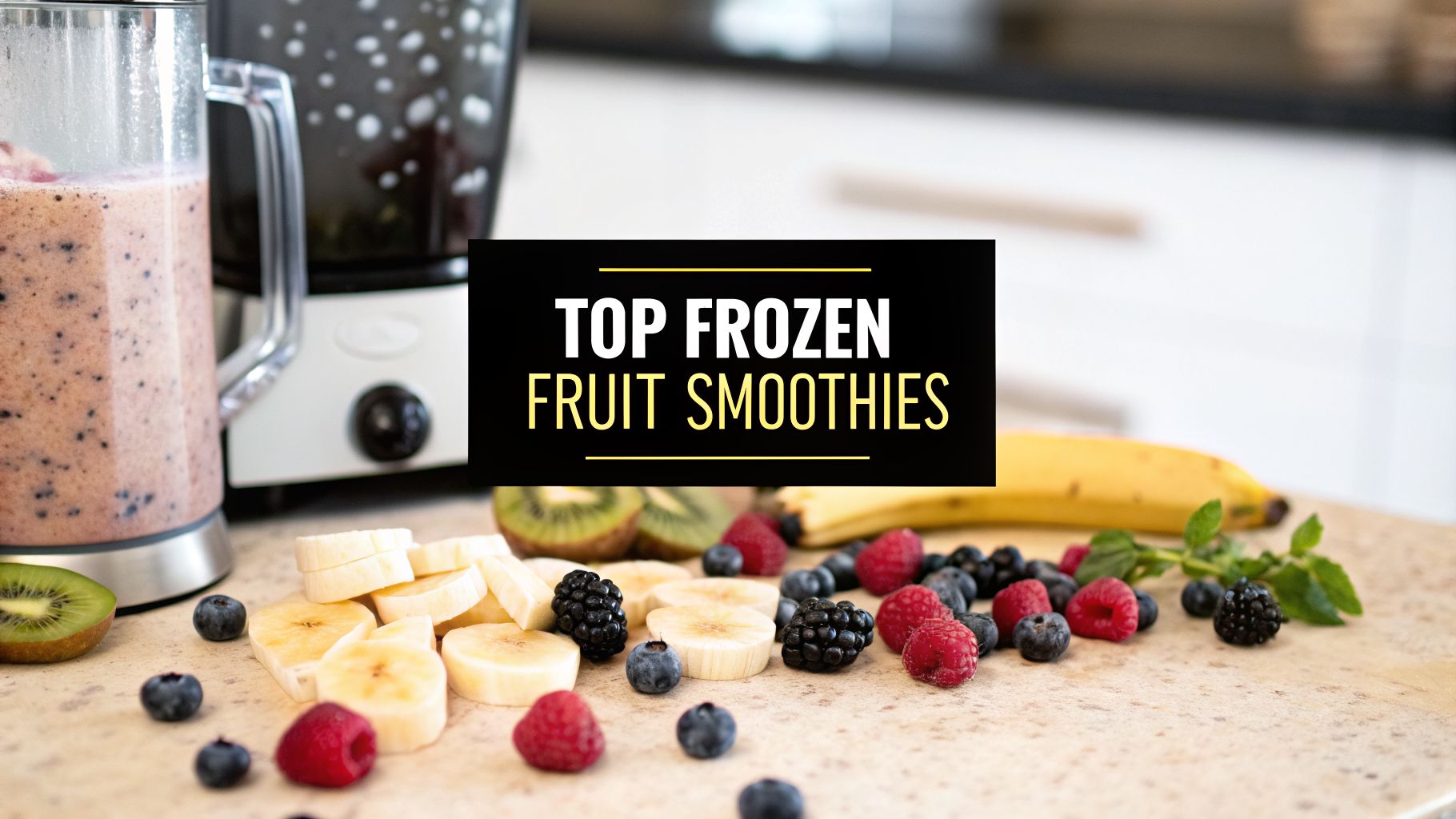
The best smoothie recipes with frozen fruit include the Classic Berry Blast, Tropical Mango Coconut, and Green Protein Power Smoothie. These three foundational recipes offer a balance of flavor, nutrients, and simple preparation. Using frozen fruit is the most effective method for creating a thick, creamy texture without needing ice, which can dilute the flavor.
This article provides a collection of 10 distinct smoothie recipes with frozen fruit, designed to meet various dietary needs and health goals. You'll find everything from a high-protein Chocolate Banana blend to a keto-friendly Raspberry Fat Bomb, each with detailed instructions, nutritional information, and practical tips. Frozen fruit is a game-changer for smoothie making; it eliminates the need for ice and ensures a consistently thick, chilled, and creamy texture. Plus, it’s a budget-friendly way to keep your favorite produce on hand year-round, minimizing food waste and maximizing convenience.
Incorporating these smoothies into your routine can be a fantastic way to streamline your healthy eating habits, especially if you get into the swing of everyday meal prepping. We've structured each recipe to be straightforward and actionable, complete with ingredient lists, blending steps, and diet-friendly variations. Whether you're a busy professional needing a fast breakfast, an athlete tracking macros, or a home cook looking for healthy family options, these recipes offer a solid foundation for delicious and nutritious blends. For those managing specific health goals, you can also explore personalized meal plans at ai-mealplan.com.
How do you make a classic berry smoothie?
The Classic Berry Blast is a foundational recipe that expertly combines flavor, nutrition, and convenience, making it one of the best smoothie recipes with frozen fruit for busy professionals. It balances macronutrients by using a strategic mix of mixed frozen berries for carbohydrates and antioxidants, Greek yogurt for protein, and milk as a liquid base. This simple yet powerful combination delivers sustained energy and satiety, making it an ideal meal replacement or post-workout recovery drink.

This smoothie’s adaptability is its greatest strength, serving as a reliable base for weekly meal prep. Its structure is popularized by major chains like Smoothie King and is a staple in fitness communities, valued for its efficient nutrient delivery.
What ingredients are needed?
- Prep Time: 5 minutes
- Yields: 1 serving
- Ingredients: 1 cup frozen mixed berries (strawberries, blueberries, raspberries), ½ cup plain Greek yogurt, ½ cup milk (dairy or non-dairy), 1 tsp honey or maple syrup (optional).
Instructions: Combine all ingredients in a blender. Blend on high for 60-90 seconds, or until the mixture is completely smooth and creamy.
How can I customize this recipe?
- Nutrient Boost: Add a handful of spinach or kale. The berry flavor is strong enough to mask the taste of the greens completely.
- Portion Control: Freeze your fresh berries in ice cube trays with a little water for perfectly portioned, easy-to-blend pucks.
- Lower Calorie: Substitute half of the milk with water to reduce calories by approximately 30-40 per serving without sacrificing much texture.
- Make-Ahead: Blend the night before and store in an airtight jar in the refrigerator for a quick grab-and-go breakfast.
This recipe is a perfect entry point for anyone looking to build a sustainable and healthy eating routine. For a more structured approach to meal planning that incorporates recipes like this, consider exploring a personalized system at AI Meal Plan.
How can you make a protein-rich green smoothie taste good?
The Green Protein Power Smoothie is a nutrient-dense powerhouse designed for fitness enthusiasts and anyone looking to manage their weight. It cleverly uses the natural sweetness of frozen tropical fruits like mango or pineapple to completely mask the taste of spinach, making it one of the most palatable green smoothie recipes with frozen fruit. This blend provides a balanced mix of fiber, micronutrients, and a significant protein punch, ideal for muscle repair and satiety. After a tough workout, your body needs replenishment. Our "Green Protein Power Smoothie" can be an excellent option for recovery, offering nutrients that rival even the most effective of the best post-workout recovery drinks.
This recipe’s effectiveness has made it a standard in various health-focused communities, from Beachbody's 'Tropical Greens' Shakeology to the post-workout protocols in CrossFit boxes. It's a go-to for those who want their greens without the bitter taste.
What ingredients are needed?
- Prep Time: 5 minutes
- Yields: 1 serving
- Ingredients: 1 cup frozen mango or pineapple, 1 frozen banana, 1 large handful spinach, 1 scoop vanilla or unflavored protein powder (whey or plant-based), ¾ cup unsweetened almond milk.
Instructions: Combine the almond milk and spinach in a blender first. Blend on high until completely smooth. Add the remaining frozen fruit and protein powder, then blend again for 60 seconds until creamy.
How can I customize this recipe?
- Smooth Texture: Blending greens with liquid first prevents gritty bits, creating a silky-smooth base before adding heavier frozen ingredients.
- Flavor Control: Use unflavored protein powder to let the tropical fruit flavors be the star of the show.
- Chill Factor: The frozen fruit provides sufficient coldness and thickness, so use ice sparingly to avoid a diluted, watery smoothie.
- Meal Prep: Freeze fresh spinach in ice cube trays with a little water. These cubes are easy to portion and help keep the smoothie extra cold.
This smoothie is a fantastic way to boost your daily protein intake while getting a full serving of greens. To discover more ways to build a diet around similar recipes, explore our high-protein meal planning options at AI Meal Plan.
What is a good recipe for a tropical smoothie?
The Tropical Mango Coconut Smoothie is a refreshing, island-inspired blend that serves as an excellent light breakfast or low-carb snack. It features frozen mango for natural sweetness and fiber, creamy coconut milk for healthy fats, and Greek yogurt for a protein and probiotic boost. This combination creates a satisfying smoothie that supports gut health and provides steady energy, making it one of the most delicious smoothie recipes with frozen fruit for those on lower-carb protocols.

This smoothie's profile is a mainstay in beach fitness culture and at wellness resorts, often featured on menus at places like Whole Foods Market. Its balance of tropical flavor and functional nutrition makes it a popular choice for warm climates and health-conscious consumers.
What ingredients are needed?
- Prep Time: 5 minutes
- Yields: 1 serving
- Ingredients: 1 cup frozen mango chunks, ½ cup light coconut milk, ½ cup plain Greek yogurt, 1 tsp lime juice (optional).
Instructions: Add all ingredients to a high-speed blender. Blend for 60-90 seconds until the consistency is smooth, thick, and creamy.
How can I customize this recipe?
- Protein & Skin Health: Add a scoop of unflavored collagen peptides. It dissolves completely and won't alter the tropical taste.
- Calorie Reduction: Use light coconut milk (around 5% fat) instead of full-fat to cut calories by nearly 40% while maintaining a creamy texture.
- Enhanced Creaminess: For an even richer, icier texture without dilution, freeze your coconut milk in ice cube trays before blending.
- Batch Prep: This smoothie freezes exceptionally well. Prepare a large batch and pour it into freezer-safe jars or bags for a ready-to-thaw meal that lasts up to three months.
This recipe demonstrates how frozen fruit can create a satisfying, low-carb meal replacement that feels like a treat. To integrate more smart, prep-friendly recipes into your weekly routine, check out the personalized options at AI Meal Plan.
Is a chocolate banana smoothie a healthy meal replacement?
The Chocolate Banana Peanut Butter Smoothie is a deeply satisfying and satiating meal replacement that combines rich flavor with high-performance nutrition. It strategically uses frozen overripe bananas for natural sweetness, peanut butter for healthy fats, and protein powder for muscle repair and satiety. This combination creates a dessert-like experience that effectively curbs cravings, making it an excellent choice for sustainable weight management and post-workout recovery.
This recipe’s structure is a global favorite, frequently logged on apps like MyFitnessPal and endorsed by fitness icons like Arnold Schwarzenegger in various protein shake forms. It serves as a standard protocol in personal training facilities due to its powerful blend of macronutrients that support both muscle gain and fat loss.
What ingredients are needed?
- Prep Time: 5 minutes
- Yields: 1 serving
- Ingredients: 1 frozen banana (preferably overripe), 1 scoop chocolate protein powder, 1.5 tbsp natural peanut butter, 1 tbsp unsweetened cocoa powder, 1 cup milk (dairy or non-dairy).
Instructions: Combine all ingredients in a blender. Blend on high for 60-90 seconds until the consistency is thick, smooth, and completely uniform.
How can I customize this recipe?
- Sustained Energy: Add ¼ cup of rolled oats for complex carbohydrates that provide a slow, steady release of energy over a 4-hour period.
- Metabolic Boost: Mix in 1 tsp of instant espresso powder. This enhances the chocolate flavor and adds a metabolic kick.
- Accurate Portions: Use a measuring spoon for the 1.5 tablespoons of peanut butter to ensure precise calorie and fat tracking.
- Natural Sweetness: Freeze your bananas when they are overripe (with brown spots) to maximize their natural sweetness and reduce the need for added sugars.
This smoothie proves that a healthy meal can also be a decadent treat. To seamlessly integrate high-satiety recipes like this into a structured eating plan, look into the personalized options at AI Meal Plan.
How do you make a smoothie bowl thick?
The Strawberry Yogurt Smoothie Bowl Base transforms a drink into a substantial meal, offering a thick, spoonable texture perfect for customization. This recipe focuses on creating a dense foundation with frozen strawberries and Greek yogurt with minimal liquid, ideal for busy professionals and families seeking a satisfying breakfast that extends consumption time. Its structure supports a wide array of toppings, allowing for creative and nutrient-dense additions.

This bowl concept was popularized by Australian café culture and gained massive visibility through Instagram fitness influencers, with chains like Jamba Juice expanding their menus to include it. Its presence in corporate wellness programs highlights its acceptance as a legitimate, healthy meal option.
What ingredients are needed?
- Prep Time: 5 minutes
- Yields: 1 serving
- Ingredients: 1.5 cups frozen strawberries, 1 cup plain Greek yogurt, 1-2 tbsp milk (dairy or non-dairy, only if needed).
Instructions: Combine the frozen strawberries and Greek yogurt in a high-powered blender. Blend on low, using the tamper if available, until it forms a thick, sorbet-like consistency. Add a tablespoon of milk only if the blender struggles to combine the ingredients.
How can I customize this recipe?
- Proper Consistency: Stick to a ratio of approximately 1.5 parts frozen fruit to 1 part yogurt to maintain a spoonable thickness.
- Maintain Structure: Chill your serving bowl in the freezer for 5 minutes before adding the smoothie base to prevent it from melting quickly.
- Topping Station: For families, portion toppings like granola, nuts, and seeds in separate bowls to allow for personalized creations.
- Make-Ahead Prep: Prepare single-serving bags of frozen fruit on Sunday for grab-and-blend weekday mornings.
This recipe provides a fantastic framework for building a balanced and visually appealing meal. To integrate more structured and customizable meal plans like this into your routine, check out the personalized system at AI Meal Plan.
What are the benefits of a blueberry and collagen smoothie?
This functional smoothie combines frozen blueberries, almond butter, and collagen peptides into a powerful blend designed for cellular health. It's one of the most targeted smoothie recipes with frozen fruit, specifically formulated to support the brain, skin, joints, and gut. The recipe pairs antioxidant-rich blueberries with healthy fats and easily absorbed protein, offering a potent mix for health-conscious individuals and those managing chronic conditions.
The inclusion of collagen has been popularized by brands like Vital Proteins and is now a staple in functional medicine and longevity-focused wellness programs. This smoothie’s structure is valued for its direct impact on connective tissues and overall vitality.
What ingredients are needed?
- Prep Time: 5 minutes
- Yields: 1 serving
- Ingredients: 1 cup frozen blueberries, 1 tbsp almond butter, 1 cup unsweetened almond milk, 1-2 scoops collagen peptides.
Instructions: Combine all ingredients in a blender. Blend on high for 60-90 seconds until the mixture is completely smooth and has a uniform, creamy consistency.
How can I customize this recipe?
- Nutrient Boost: Select hydrolyzed collagen (peptides) for an absorption rate over 90%. The blueberries provide the necessary Vitamin C to optimize collagen synthesis.
- Portion Control: For maximum muscle-collagen synergy, consume your smoothie within 30 minutes of completing a workout.
- Lower Calorie: Use water instead of almond milk to reduce the calorie count while maintaining the core nutritional benefits of the collagen and blueberries.
- Make-Ahead: While best fresh, you can pre-portion the dry ingredients (collagen powder) and frozen fruit into containers for a quick blend in the morning.
This recipe is a superb addition to any health-focused routine, providing targeted nutritional support. To build a meal plan around specific wellness goals, explore our balanced meal planning options for more ideas.
Can I have a fruit smoothie on a keto diet?
The Keto Raspberry Fat Bomb Smoothie is a specialized recipe designed for those following a ketogenic diet. It strategically combines high-fat ingredients like heavy cream, almond butter, and MCT oil with low-carb frozen raspberries to create a macronutrient profile that supports ketosis. This blend provides sustained, steady energy without the blood sugar spike associated with traditional fruit smoothies, making it an excellent choice for a meal replacement or a pre-workout fuel source.
This smoothie’s formulation is a cornerstone of ketogenic nutrition, often recommended by brands like Perfect Keto and integrated into protocols by performance nutritionists like Ben Greenfield. Its purpose is to deliver dense caloric energy from fats, which the body can efficiently convert into ketones for fuel.
What ingredients are needed?
- Prep Time: 5 minutes
- Yields: 1 serving
- Ingredients: ½ cup frozen raspberries, ¼ cup heavy cream (grass-fed preferred), 1 tbsp almond butter, 1 tbsp MCT oil, ½ cup unsweetened almond milk.
Instructions: Combine all ingredients in a blender. Blend on high for 60 seconds until the mixture is thick, smooth, and completely emulsified.
How can I customize this recipe?
- Digestive Care: Start with just 1 teaspoon of MCT oil and gradually increase to 1 tablespoon over several days to allow your digestive system to adapt.
- Collagen Boost: Add a scoop of unflavored gelatin or collagen peptides for joint support and to improve the smoothie's texture.
- Accurate Macros: Use a food scale to measure ingredients precisely, ensuring you stay within your daily ketogenic macro targets.
- Prevent Separation: This smoothie is best consumed within an hour of blending, as the MCT oil can begin to separate if left to sit for too long.
This recipe is perfect for maintaining ketosis while still enjoying the flavor and convenience of a frozen fruit smoothie. For a more detailed ketogenic meal structure, find personalized plans at AI Meal Plan's keto section.
Which smoothie ingredients can boost immunity?
The Peach Oat Immunity Smoothie is a functional recipe designed to support the body’s natural defenses. It strategically combines vitamin C from frozen peaches, complex carbohydrates from rolled oats, and zinc from pumpkin seeds. This blend provides sustained energy while delivering key micronutrients, making it an excellent choice during cold season or for anyone focused on proactive wellness.
This smoothie’s formulation is common in functional medicine and hospital wellness programs, where nutrient-dense, easily digestible meals are prioritized. Its focus on ingredients like ginger and citrus zest for their immune-supportive properties makes it one of the most purposeful smoothie recipes with frozen fruit.
What ingredients are needed?
- Prep Time: 5 minutes (plus 15 minutes optional soaking)
- Yields: 1 serving
- Ingredients: 1 cup frozen peach slices, ¼ cup rolled oats, 1 tbsp raw pumpkin seeds, ½ inch fresh ginger root (or ½ tsp ginger powder), 1 cup orange juice or water, 1 tsp honey (optional).
Instructions: Combine all ingredients in a blender. Blend on high for 60-90 seconds until the texture is completely smooth and creamy.
How can I customize this recipe?
- Smoother Texture: For an ultra-creamy consistency, soak the rolled oats in the orange juice or water for 15 minutes inside the blender cup before blending.
- Extra Nutrients: Add the zest of half an orange or lemon before blending to include beneficial bioflavonoids.
- Zinc Bioavailability: Use raw, unsalted pumpkin seeds to ensure you get the maximum amount of available zinc.
- Timing: Consume in the morning, which some practitioners suggest is a peak window for immune system activity.
This recipe offers a targeted nutritional approach to wellness. For more personalized meal plans that align with specific health goals, you can build a custom system at AI Meal Plan.
How do you make a superfood smoothie?
The Açai Berry Superfood Smoothie is a nutrient-powerhouse designed for maximum antioxidant intake and post-workout recovery. This smoothie centers around frozen açai, a berry celebrated for its high concentration of micronutrients, combined with other frozen fruits, coconut water, and a blend of superfoods. The result is one of the best smoothie recipes with frozen fruit for those prioritizing nutrient density over sheer volume, delivering a rich dose of vitamins, minerals, and electrolytes.
This recipe’s structure is a staple in surfer culture and CrossFit communities, where it's valued for rapid nutrient absorption after intense physical activity. Its popularity is also driven by chains like Flow Açai and its presence in health-conscious markets like Whole Foods.
What ingredients are needed?
- Prep Time: 5 minutes
- Yields: 1 serving
- Ingredients: 1 packet (100g) frozen unsweetened açai, ½ cup frozen mixed berries, 1 cup coconut water, 1 tbsp chia seeds, 1 tbsp hemp seeds, 2 tbsp goji berries.
Instructions: Break the frozen açai packet into a few pieces and add to your blender. Combine with the remaining ingredients and blend on high for 60-90 seconds until perfectly smooth.
How can I customize this recipe?
- Protein Boost: Add ½ cup of Greek yogurt or a scoop of your favorite protein powder to create a complete post-workout meal with 15-25g of protein.
- Cost Savings: Purchase frozen açai packets in bulk from suppliers like Costco or through Instacart, which can reduce the cost by up to 50% compared to buying from a cafe.
- Optimal Recovery: Consume this smoothie within 30-45 minutes after intense exercise to take full advantage of the metabolic window for muscle repair and glycogen replenishment.
- Thicker Texture: For a spoonable smoothie bowl, reduce the coconut water to ½ cup and add ½ a frozen banana.
This superfood smoothie is an excellent tool for targeted nutrition and recovery. To integrate powerful recipes like this into a consistent health strategy, look into a structured system at AI Meal Plan.
How do you make a high-protein smoothie taste like dessert?
The Strawberry Shortcake Protein Smoothie offers a dessert-like experience without compromising nutritional goals, making it one of the best smoothie recipes with frozen fruit for curbing sweet cravings. It cleverly combines frozen strawberries, vanilla protein powder, and a hint of almond extract to recreate the classic dessert's flavor profile. This high-protein blend is an excellent meal replacement or post-workout recovery option, packing over 25 grams of protein to support muscle repair and satiety.
This recipe's popularity is evident in its commercial analogs, like Fairlife's Core Power shakes, and its status as a most-requested flavor in personal training facilities. It serves as a satisfying, nutrient-dense treat that aligns with fitness and weight management objectives.
What ingredients are needed?
- Prep Time: 5 minutes
- Yields: 1 serving
- Ingredients: 1 cup frozen strawberries, 1 scoop vanilla protein powder, ½ cup Greek yogurt, ½ cup unsweetened almond milk, ¼ tsp almond extract, ¼ tsp vanilla extract.
Instructions: Place all ingredients into a blender. Blend on high for 60-90 seconds, or until the mixture is thick and completely smooth.
How can I customize this recipe?
- Texture & Protein: Substitute the Greek yogurt with cottage cheese for a creamier texture and an extra protein boost.
- Flavor Depth: Use a premium vanilla protein powder (like Orgain or Optimum Nutrition) for the best taste. The quarter teaspoon of almond extract is crucial for the "shortcake" flavor, but do not add more as it is very potent.
- Serving Style: Pour into a bowl and top with 1 tablespoon of graham cracker crumbs for a satisfying crunch that mimics a dessert crust.
- Optimal Timing: Consume this smoothie post-workout to take advantage of the muscle protein synthesis window for recovery.
This recipe proves that adhering to a specific diet doesn't mean giving up your favorite flavors. By tracking intake carefully, you can easily fit this smoothie into a calorie deficit meal plan and still achieve your weight loss goals. For more strategies on managing your daily intake, you can explore structured meal plans at AI Meal Plan.
What are the key differences between these smoothie recipes?
| Item | Preparation 🔄 | Resources & Cost ⚡ | Expected outcomes 📊⭐ | Ideal use cases | Key advantages ⭐💡 |
|---|---|---|---|---|---|
| Classic Berry Blast Smoothie | 🔄 Low: <5 min; basic blender | ⚡ Low cost; frozen berries, yogurt, milk | 📊 Balanced macros (15–20g protein); antioxidant-rich | Meal-prep base, weight-loss support, quick breakfasts | ⭐ Versatile base; easy macro-tracking; freeze portions 💡 |
| Green Protein Power Smoothie | 🔄 Moderate: blend greens first; consume fresh | ⚡ Moderate–high: quality protein powder adds cost | 📊 High protein (25–35g); supports muscle recovery, low GI option | Post-workout, blood-sugar control, fitness-focused plans | ⭐ High protein density; customizable protein sources 💡 |
| Tropical Mango Coconut Smoothie | 🔄 Low: simple blend; watch portions | ⚡ Low–moderate: frozen mango + coconut milk (calorie-dense) | 📊 High vitamin C & MCT fats; higher calories (300–400 kcal) | Light breakfasts, keto adaptations (with full-fat), gut health | ⭐ Satisfying tropical flavor; MCT energy; probiotic support 💡 |
| Chocolate Banana Peanut Butter Smoothie | 🔄 Moderate: thick blend; high-power blender preferred | ⚡ Low–moderate: pantry staples but calorie-dense | 📊 High satiety and protein (20–30g); calorie-dense (350–450 kcal) | Meal replacement, post-workout, dessert alternative | ⭐ Very filling; supports muscle gain and cravings control 💡 |
| Strawberry Yogurt Smoothie Bowl Base | 🔄 High: thick texture, quick serving to avoid separation | ⚡ Moderate: Greek yogurt + frozen fruit; bowl prep items | 📊 Slower consumption → extended satiety; modular macros | Family breakfasts, customizable meal-prep bowls, mindful eating | ⭐ Superior portion control; high visual appeal; topping flexibility 💡 |
| Blueberry Almond Smoothie with Collagen | 🔄 Low–moderate: mix collagen into base; consume fresh | ⚡ Moderate: collagen adds $0.50–1; almond products | 📊 Cognitive, joint, skin support; low GI; antioxidant-rich | Longevity, aging populations, recovery-focused plans | ⭐ Targeted functional benefits; clean ingredient profile 💡 |
| Keto Raspberry Fat Bomb Smoothie | 🔄 Moderate: high-fat blend; strict macro measurement required | ⚡ High: heavy cream, MCT oil increase cost; precise tracking | 📊 Maintains ketosis (3–5g net carbs); high fat (30–35g) for ketone support | Ketogenic diets, metabolic flexibility, appetite suppression | ⭐ Effective for ketosis and cognitive steady energy 💡 |
| Peach Oat Immunity Smoothie | 🔄 Moderate: soak oats or blend longer for smoothness | ⚡ Low–moderate: oats, seeds, ginger; seasonal peaches may vary | 📊 Immune-supporting nutrients (vit C, zinc, beta-glucans); sustained energy | Cold/flu season, recovery, breakfast for sustained satiety | ⭐ Whole-food immune support; heart-health fiber benefits 💡 |
| Açai Berry Superfood Smoothie | 🔄 Low–moderate: use frozen açai packets; add superfoods | ⚡ High cost; premium açai and superfood add-ons; sustainability concerns | 📊 Very high antioxidant density; electrolyte repletion when coconut water added | Post-workout recovery, nutrient-dense snack, athletic recovery | ⭐ Exceptional antioxidant profile; electrolyte + superfood synergy 💡 |
| Strawberry Shortcake Protein Smoothie | 🔄 Low: standard blend; dessert-like profile | ⚡ Moderate: requires quality vanilla protein powder | 📊 25–30g protein; dessert satisfaction with moderate calories (280–320) | Meal replacement, post-workout, evening dessert alternative | ⭐ Increases adherence via dessert mimicry; family-friendly 💡 |
How can I master smoothie making?
Mastering these recipes means taking control of your nutrition in a simple, delicious, and efficient way. The central takeaway is that your freezer is your greatest ally for crafting the perfect smoothie. Using frozen fruit is the secret to achieving a thick, creamy, ice-free consistency that elevates a good smoothie to a great one.
Here are your next steps for success:
- Prep for Success: Dedicate a small amount of time this weekend to creating smoothie packs. Bag up the frozen fruit, greens, and protein powder for three to five different recipes. This will dramatically increase the likelihood of you choosing a healthy option on a busy morning.
- Experiment with ONE New Recipe: Don't try to master all ten recipes at once. Pick the one that sounded most appealing and make it this week. Once you're comfortable, move on to the next.
- Listen to Your Body: Pay attention to how different ingredient combinations make you feel. Notice the texture and taste differences to create your own signature smoothies that are perfectly suited to your nutritional needs.
Ultimately, the power of a well-made smoothie lies in its simplicity and versatility. It is a practical tool for achieving your health and wellness goals. By embracing these techniques, you're not just making smoothies; you're building a sustainable habit that supports a healthier lifestyle.
Tired of manually planning how to fit these smoothie recipes into your weekly diet? The AI Meal Planner can automatically generate a customized meal plan that incorporates your favorite smoothies, balances your macros, and even creates a shopping list for you. Visit AI Meal Planner to see how it can simplify your healthy eating journey.
Frequently Asked Questions
Is it healthier to use fresh or frozen fruit in a smoothie?
Using frozen fruit is often healthier as it's picked at peak ripeness and flash-frozen, locking in nutrients. Frozen fruit also eliminates the need for ice, which can water down the smoothie and dilute its nutritional value.
Can you make a smoothie with just frozen fruit and water?
Yes, you can make a simple smoothie with just frozen fruit and water. However, it may lack the creaminess and protein found in recipes that include ingredients like yogurt, milk, or protein powder.
Do I need to thaw frozen fruit before making a smoothie?
No, you should not thaw frozen fruit before blending. Using the fruit while it is still frozen is essential for achieving a thick, creamy, and cold smoothie without using ice.
How much liquid should I use for a smoothie with frozen fruit?
A good starting ratio is 1 cup of frozen fruit to ½-¾ cup of liquid. You can adjust the amount of liquid to achieve your desired consistency; use less for a thicker smoothie bowl and more for a thinner, drinkable smoothie.
Can I prepare smoothie ingredients in advance?
Yes, you can prepare smoothie packs by portioning your frozen fruit, greens, and any dry ingredients (like protein powder or seeds) into freezer-safe bags or containers. This makes morning preparation much faster—just add liquid and blend.
AI-powered nutrition
Get Your Personalized Meal Plan
AI creates the perfect meals for your goals, lifestyle, and taste.
Start Your Journej