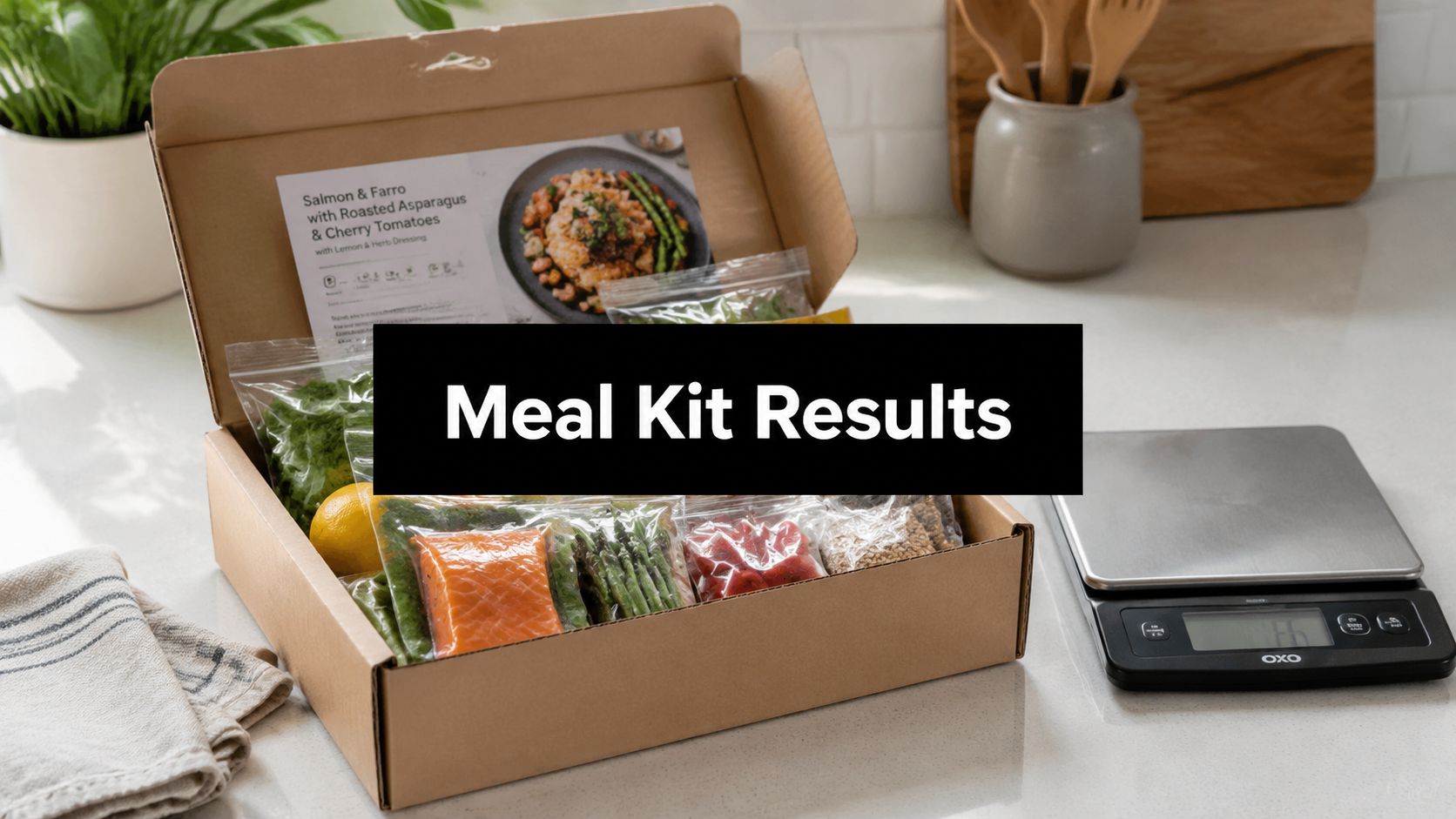
Trying to lose weight often falls apart at a predictable moment. It is 6:30, you are tired, there is no dinner plan, and the easiest option usually wins. Weight loss meal kits appeal because they remove several of those failure points at once. They narrow the decision set, put ingredients in front of you, and make a decent dinner more likely on low-energy nights.
Do Weight Loss Meal Kits Actually Work?
Yes, for some people. A meal kit can support weight loss if it helps you keep meals within your calorie target, prioritize enough protein, and repeat that pattern often enough to matter. The service itself does not create fat loss. Your total intake, your consistency, and what happens outside the box still decide the outcome.
That is why I treat meal kits as a behavior tool first and a food product second.
They sit in the middle ground between takeout and full DIY meal prep. You get more structure than building every meal from scratch, but less control than a fully prepared, portioned plan. That trade-off is where the key lies. For a client who keeps ordering restaurant food after work, a meal kit can be a clear improvement. For someone who wants tighter calorie control or dislikes cooking, it may still feel like too much work for too little precision.
I have seen clients do well with meal kits when they use them to reduce friction, not to outsource judgment. They choose meals that fit their budget and calorie range, keep breakfast and snacks boring in a good way, and treat the kit dinner as one part of the day instead of a license to eat more elsewhere.
I have also seen the opposite. People assume any meal kit labeled “healthy” will produce weight loss, then add extra oil, dessert, drinks, or weekend takeout and wonder why progress stalls.
The better question is not whether meal kits work in general. It is whether they solve your main point of failure, planning, portions, cooking consistency, boredom, or food spending. If they solve the right problem, they can help. If they do not, a simpler system or a more flexible planning approach will usually last longer.
Are Weight Loss Meal Kits an Effective Strategy for Dieting?
For the right person, yes. Weight loss meal kits are effective when the biggest obstacle is friction. If shopping, deciding what to cook, and guessing portions keep knocking you off track, a kit can make healthy eating more repeatable.
The reason is simple. Weight loss usually improves when fewer daily decisions are left to willpower. A meal kit doesn't eliminate choice, but it shrinks it. That alone helps many people stay more consistent through the workweek.
When meal kits help most
Weight loss meal kits tend to work well for people who:
- Skip planning regularly and end up ordering takeout
- Need built-in portions because “eyeballing it” turns into overeating
- Want a cooking routine without having to design a full weekly menu
- Do better with structure than with total food freedom
A good meal kit acts like guardrails for your diet. It doesn't drive the car for you, but it keeps you from drifting as easily.
Practical rule: If your main problem is inconsistency, a meal kit can help. If your main problem is overeating outside the kit, it won't fix that by itself.
Where the strategy breaks down
Meal kits are less effective when someone expects them to solve everything. They only cover certain meals. They still require cooking. And they can create a false sense of precision if the final calories depend on how much oil hits the pan or how generously the meal gets plated.
They're also not automatically “diet food.” Some are balanced. Some are just convenient. Those are not the same thing.
If you want to use a meal kit for fat loss, think of it as a system for reducing friction and improving consistency. That's valuable. But it still has to fit into a full-day calorie pattern that includes breakfasts, lunches, snacks, and weekends.
What Is the Core Principle Behind Weight Loss Meal Kits
The main value of weight loss meal kits isn't novelty or even nutrition. It's outsourced decision-making. They reduce the number of moments where you have to think, shop, estimate, improvise, and resist.
That matters because failing a diet isn't typically due to a lack of knowledge. It happens because healthy eating asks for too many small decisions every day.
They reduce cognitive load
A strong meal kit does five things at once:
- Creates a default option so you don't negotiate dinner every night
- Limits ingredient excess because the food arrives in measured amounts
- Builds a routine around regular meals instead of reactive eating
- Improves clarity because recipes are defined in advance
- Cuts shopping friction that often leads to skipped cooking

This isn't a niche behavior anymore. Industry research estimates the global meal kit delivery services market at USD 39.44 billion in 2025 and projects USD 79.83 billion by 2033, with the U.S. industry generating about $9.1 billion in 2025 according to Grand View Research's meal kit market analysis. That tells you meal kits have become a mainstream eating system, not a temporary curiosity.
The real mechanism is consistency
People often talk about portion control first. That's important, but consistency is the deeper mechanism. A decent plan repeated often beats a perfect plan used for six days.
Here's the practical test I use. If a meal kit helps you cook at home more often, eat more predictably, and stop the nightly “what are we doing for dinner” spiral, it's doing useful work.
If you want to pair that structure with your actual energy needs, use tools for calorie management to estimate whether your intake supports fat loss. For a more personalized starting point, a calorie deficit calculator can help you define the target the meal kit needs to fit.
Meal kits work best when they simplify the behavior around eating, not just the ingredients.
Why this works better than relying on motivation
Motivation is unstable. Friction is predictable. Meal kits don't make you more disciplined. They make disciplined behavior easier to repeat.
That's why some people get traction fast with them. The plan is visible, the ingredients are there, and dinner requires less thought. In coaching terms, that's often enough to turn “I know what I should do” into “I did it.”
How Do You Evaluate a Weight Loss Meal Kit
Tuesday night is where a meal kit proves itself. You get home late, you're hungry, and your plan is only useful if dinner still happens without blowing your calorie target. That is the standard I use with clients.
A weight loss meal kit earns its place when it fits your intake, your schedule, and your patience for repetition. Menu photos matter far less than whether the service keeps working in week four, not just week one.

Check calorie fit and protein first
Start with the numbers the service gives you before you order. If calories are vague, portions are inconsistent, or protein is too low, the rest of the marketing does not matter.
For many adults trying to lose fat, a useful screening point is meals that fit cleanly into the day's calorie budget and provide enough protein to hold appetite and support muscle retention. In practice, I want to see a clearly listed calorie range and at least 20 grams of protein in a meal that is supposed to be filling. If a service regularly forces you to add snacks later because the meals are too light, or leaves you over budget because the portions are too heavy, it is a poor match.
| Question | What you want to see |
|---|---|
| Does each meal fit your calorie budget? | A clear range that aligns with your target |
| Is protein high enough? | At least 20 g+ per meal as a practical baseline |
| Are calories defined before cooking? | Enough detail to plan the rest of the day |
| Can you avoid calorie-heavy add-ons? | Simple swaps and controlled extras |
Judge the service by the full week, not a single meal
A lot of people evaluate kits meal by meal. That misses the fundamental question. Can you build five to seven days of eating around it without constant patchwork?
Look at how many meals you need covered, what happens at breakfast and lunch, and whether the kit leaves you doing extra grocery runs for sides, sauces, or higher-protein add-ons. If you're building your week around a calorie deficit meal plan, the kit should reduce decisions, not create new ones.
This is also where hidden costs show up. Shipping, premium recipes, family-size upgrades, and the “just add avocado, tortillas, rice, or oil” problem can change the true price fast. A cheap-looking box that still sends you to the store twice a week is not cheap.
Look past “healthy” branding
Words like balanced, clean, and chef-crafted do not tell you whether the meals are useful for fat loss. They tell you how the company wants to be perceived.
Read sample menus like a coach would. Are the meals repetitive in a good way, meaning predictable and easy to plan around? Or repetitive in a bad way, meaning creamy bowls, pasta variations, and calorie-dense comfort food wearing a health label? I have seen clients do well with kits that looked plain on paper because the meals were consistent, high enough in protein, and easy to repeat. I have also seen clients stall with prettier menus because every dinner needed “just one extra thing.”
If you want another format to evaluate against, it can help to compare Meal Pro service with other structured eating options and note how each one handles portioning, prep time, and flexibility.
To see how a coach thinks through meal-service tradeoffs in practice, this walkthrough is useful:
Evaluate the boring parts carefully
Long-term success is often determined by this.
- Prep reality: A 25-minute recipe can become 45 minutes once chopping, pans, and cleanup are included.
- Menu fatigue: Check whether you would still order these meals after the novelty wears off.
- Subscription friction: Skipping a week, changing servings, and canceling should be easy.
- Household fit: One person's weight loss plan often falls apart if everyone else in the home hates the meals.
- Waste and leftovers: Extra ingredients, spoiled produce, and portions that do not satisfy anyone raise the true cost.
If you would not make these meals on your busiest Wednesday, the kit does not fit your life. And if it only works when life is calm, it is not a strong weight loss tool.
What Are the Real Benefits and Downsides of Using Meal Kits
A common pattern looks like this. Someone signs up for a meal kit after a few weeks of takeout, cooks more often, feels more in control, and loses a bit of weight. Then life gets busy, the recipes start to blur together, the add-on grocery trips creep back in, and the cost feels harder to justify.
That does not mean meal kits fail. It means their value depends on what problem they are solving in your routine.
Where meal kits help
Meal kits work best when dinner is the weak point in the week. They reduce decisions, create a clear stopping point between work and eating, and can improve food quality compared with restaurant meals or last-minute convenience food. For some clients, that alone is enough to create early momentum.
They also teach useful habits. Repeating balanced meals makes portion sizes more familiar. Cooking protein, vegetables, and starch together on purpose is a better skill to build than grazing through whatever is in the fridge.
As noted earlier, research on structured eating patterns suggests a simple truth. Tighter portion control usually produces better short-term weight-loss results than loosely defined healthy eating.

Where they fall short
Meal kits are often better for improving dinner quality than for creating a full weight-loss system.
The first limitation is adherence. A kit can look organized on paper and still be a poor fit in real life. If a meal takes 35 minutes, uses several pans, and leaves little room for swapping ingredients, busy households stop using it consistently.
The second limitation is calorie drift. The recipe card may be measured. Your version at home may not be. Extra oil, a larger handful of cheese, a second serving, or bread on the side can wipe out the built-in structure.
Cost is the third issue, and many people notice it late. The price of the box is only part of the spend. Snacks, breakfasts, weekend meals, shipping fees, and the occasional backup takeout order all count. I have seen clients praise a kit for helping them eat better while unknowingly spending more than they did on simple groceries and repeat meals.
Then there is boredom. Weight loss can survive some repetition. Long-term maintenance usually requires more flexibility than a fixed subscription gives you.
How to make a meal kit useful for longer
Use meal kits for the meals that repeatedly go off track, not as an all-or-nothing identity.
A practical setup looks like this:
- Assign the kit to specific nights. Usually the busiest two or three dinners of the week.
- Keep the rest of the menu boring on purpose. Easy breakfasts, repeat lunches, and a few backup meals reduce total friction.
- Measure the calorie-dense extras. Oil, sauces, nuts, cheese, and dressings change the math fast.
- Review cost by the full week, not by one dinner. Include the food the kit does not cover.
- Have an exit plan. If you cannot see yourself using the service three months from now, treat it as a short-term tool and build skills alongside it.
For households that want more flexibility than a subscription box allows, a grocery list generator for planned weekly meals can solve the same decision problem with less packaging, lower cost, and more room to adjust portions.
Meal kits are useful when they reduce decision fatigue and keep dinner predictable. They are less useful when they become expensive training wheels that never teach you how to eat well without the box.
What Are the Common Mistakes to Avoid with Meal Kits
The biggest mistake is treating a meal kit like a complete weight-loss system. It's not. It's one tool inside a larger eating pattern.
People usually run into trouble in three places: they get bored, they add calories casually, or they never build a plan for the meals the kit doesn't cover.
Mistake one is relying on novelty
Early enthusiasm carries a lot of meal-kit users for the first stretch. Then routine sets in. Good Housekeeping notes that a major reason people quit structured meal programs is diet fatigue and weak long-term adherence, even when services focus on calorie-controlled meals such as 650 calories or less in mainstream coverage of weight-loss plans, as discussed in its review of weight-loss meal delivery services.
That rings true in practice. If every meal has to feel exciting to stay on plan, the plan won't last.
A better approach is to use kits strategically. Keep them for the meals that usually derail you, then use easier repeat options for the rest of the week.
Mistake two is “freestyling” the recipe
This is common and rarely admitted. Someone buys a structured dinner, then adds extra oil, doubles the starch, uses a heavy bottled sauce, or splits the serving unevenly. The meal still feels healthy, but the calorie target is gone.
Watch for these patterns:
- Extra cooking fat: A quick pour can change the meal more than the vegetables or protein do.
- Unplanned extras: Garlic bread, alcohol, dessert, and finishing sauces add up fast.
- Loose portioning: “One serving each” often becomes “whoever is hungrier gets more.”
Mistake three is using a rigid tool for a flexible life
Meal kits work best when your week is fairly predictable. They work worse when travel, family preferences, or changing schedules make fixed deliveries feel restrictive.
That's where flexible planning often beats boxed meals. A meal kit gives structure by shipping ingredients. A planning system gives structure by organizing your actual life, pantry, budget, and food preferences without locking you into one format. For long-term weight control, flexibility usually wins over novelty.
When Should You Consider Alternatives to Meal Kits
You start with a box on Monday because dinner has been inconsistent for months. Six weeks later, dinner is easier, but the rest of the system still feels messy. You are still filling gaps with random lunches, buying extra groceries to cover off-days, and wondering why the weekly food bill keeps creeping up.
That is usually the point where an alternative makes more sense.
Meal kits are often useful as a short-term structure tool. They can teach portion awareness, expose weak spots in your routine, and reduce the mental load of deciding what to cook. But long-term weight loss depends on whether the system still works after the novelty wears off. If a service keeps solving dinner while creating friction with cost, flexibility, or full-week planning, it is time to reconsider the format.
The weekly bill stops matching the benefit
The headline meal price rarely reflects the actual cost of using a kit as your main weight loss strategy. Shipping, minimum order rules, missing meals, pantry add-ons, breakfasts, lunches, and snacks all matter more than the advertised per-serving number.
Many clients do fine with that trade-off for a month or two. Fewer keep liking it once they realize they are paying for partial coverage, not a complete food system.

Clear signs you would do better with another approach
Look for these patterns:
- You keep outgrowing the menu: The meals are fine, but you are tired of the rotation and start ordering less consistently.
- You need tighter budget control: Grocery-based planning gives you more room to adjust protein choices, reuse ingredients, and reduce waste across the week.
- Your schedule changes often: Fixed delivery windows and preselected meals work poorly for travel, late work nights, and family schedule changes.
- You need more than dinner help: Weight loss usually becomes easier when breakfast, lunch, snacks, and dinner fit together instead of one meal being organized and the rest being improvised.
- You want more personalization: Allergies, training goals, high-protein targets, and household preferences can outgrow a standard subscription fast.
Medical support can change the decision too. If that part of the picture matters, read about comparing Mounjaro and Ozempic options and keep it separate from the food-structure question. Medication can affect appetite and adherence. It does not replace the need for a routine you can live with.
What usually works better after meal kits
For many people, the next step is not full traditional meal prep with a Sunday marathon in the kitchen. A better fit is a planning system that builds meals around your calorie target, food preferences, schedule, and grocery budget.
That gives you the parts of meal kits that matter most. Structure, fewer decisions, and clearer portions. It also removes the parts that often limit long-term success, like fixed menus, shipping fees, and paying a premium for convenience every week.
I have seen this transition work well when someone already knows the kind of meals they can repeat without feeling trapped by them. In that case, a personalized AI nutritionist tool can help more than another subscription box because it supports the whole week instead of outsourcing a few dinners.
Meal kits are often a good starting point. Sustainable weight loss usually comes from a system you can adjust, afford, and repeat long after the first round of progress.
Frequently Asked Questions About Weight Loss Meal Kits
Can you lose weight with meal kits alone
Yes, sometimes. It depends less on the box itself and more on whether the meals fit your calorie target and keep the rest of your day under control. I see progress stall when someone eats a reasonable kit dinner, then adds extra snacks, drinks more calories, or treats restaurant meals as a free pass.
Are meal kits better than grocery shopping for weight loss
They are usually better for structure and follow-through, especially for people who get derailed by planning fatigue after work. Grocery shopping usually wins on cost, leftovers, and the ability to adjust the full week instead of a few preset meals.
Are prepared meals better than meal kits for fat loss
Prepared meals tend to be tighter on portion control because what you receive is what you eat. Meal kits can work just as well, but cooking oil, serving size drift, and second helpings create more room for error.
How many meals per week should come from a meal kit
Start with the meals that break down first.
For a lot of households, that means two to four dinners on busy weekdays. That level gives you structure where it helps most without making the whole plan feel rigid or expensive.
Do weight loss meal kits work for families
They can, but family fit matters more than marketing. If one adult is trying to lose weight and everyone else wants different meals, the kit often turns into extra work instead of less. The better family setups are the ones where the base meal works for everyone and portions can be adjusted without cooking two separate dinners.
What should you look for first in a service
Check calories, protein, prep time, serving size, and cancellation terms before anything else. Then look at menu range. A service that looks good for one week but gets repetitive by week three is harder to stick with than many people expect.
Are meal kits a long-term solution
For some households, yes. Usually that happens when the cost is manageable, the menu stays varied enough, and the service solves a real friction point like weeknight dinners. For many others, meal kits work better as a short-term structure builder, then a more flexible system takes over once habits are stable.
If you want the structure of meal kits without fixed boxes, shipping costs, or repetitive menus, AI Meal Planner is a smarter long-term option. It builds personalized weekly meal plans around your calorie needs, food preferences, and dietary restrictions, then creates grocery lists that make healthy eating easier to stick with. You can get started through the onboarding flow and turn weight loss into a repeatable system that fits real life.
AI-powered nutrition
Get Your Personalized Meal Plan
AI creates the perfect meals for your goals, lifestyle, and taste.
Start Your Journej