
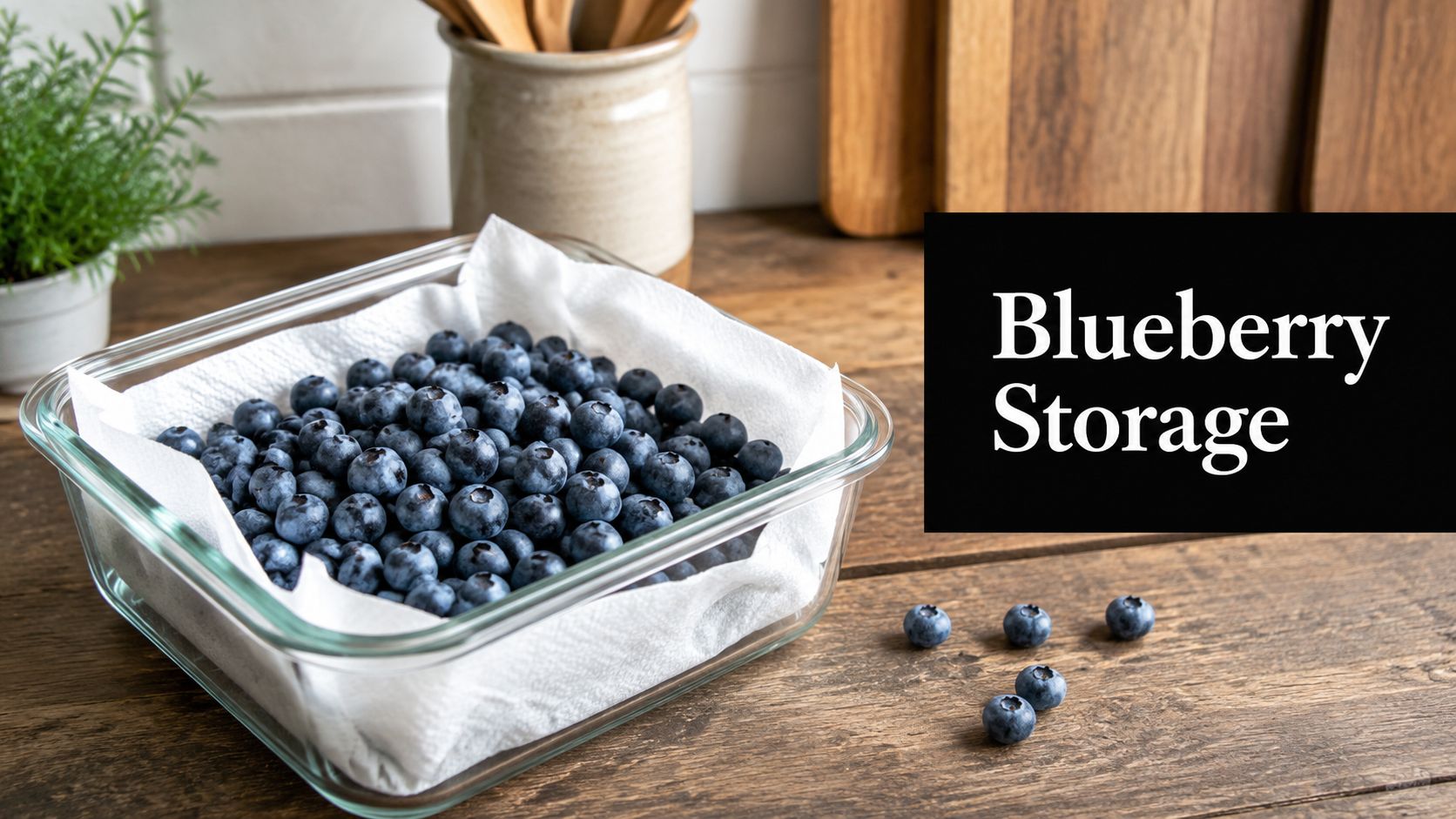
The best way to store fresh blueberries is unwashed in a breathable container, such as the original clamshell or a container lined with a paper towel. Keep them in the main part of your refrigerator, not the crisper drawer, at around 32-40°F (0-4°C). This method will keep them fresh for up to two weeks.
Whether you've just come home from a U-pick adventure with quarts of sun-ripened gems or simply snagged a pint from the grocery store, proper storage is your best defense against food waste. Moisture is the enemy of a fresh blueberry, inviting mold and decay to the party far too soon. By holding off on washing them until just before you eat, you preserve their natural protective bloom and dramatically extend their life.
We're going to dive into the common mistakes that sabotage your berries—like washing them right away—and give you the practical steps to keep them perfect, from fridge to freezer.
Why Should I Keep My Blueberries Dry Until Eating?
It’s a strong impulse—you get home from the store or the farm, and you want to wash all your produce right away. But when it comes to blueberries, that’s a habit you need to break. Moisture is the absolute number one enemy of a fresh blueberry. It’s the catalyst that kicks spoilage and mold growth into high gear.
Keeping your berries dry until the very moment you plan to eat them is the single most important rule for keeping them fresh.

Think of it this way: every blueberry comes with its own natural, built-in preservative. That hazy, silvery-white coating you see on perfectly fresh berries? That’s called the bloom. This waxy, protective layer is nature’s defense, shielding the fruit's delicate skin from moisture loss and microbial attack. When you wash the berries, you rinse away this shield, leaving them completely vulnerable.
What Happens When Blueberries Get Wet?
I learned this lesson the hard way after a fantastic trip to a local U-pick farm. I came home with a beautiful haul, washed them immediately, and was horrified to find them covered in a fuzzy blanket of mold just two days later. The culprit wasn't the berries; it was my own eagerness.
Once that protective bloom is gone, any water clinging to the berry's surface creates the perfect damp, humid environment for mold to thrive, especially inside a closed container. You can find more nutritional details about a variety of produce on our dedicated foods information page.
To avoid this sad fate, your first step after bringing berries home should always be inspection, not washing.
Crucial First Step: Inspect and Cull Gently pour your berries onto a flat, paper-towel-lined surface. Carefully pick through the batch and remove any that are already soft, mushy, moldy, or have broken skin. One bad berry can truly spoil the whole bunch in record time.
Beyond just managing moisture on the berries themselves, keeping your storage area clean is also a key part of the strategy. Learning how to manage common kitchen pests is an important step to achieve a pest-free home.
Expert guidance consistently points to keeping blueberries dry and cold until you're ready to use them. While grower resources suggest dry, refrigerated berries can last about two weeks, consumer guides often state a more conservative five-to-seven-day window. That difference highlights just how much proper handling at home impacts shelf life. By embracing this "wait to wash" mindset, you’re working with the berry’s natural defenses, not against them.
How Do I Prepare Blueberries for Refrigerator Storage?
So, you’ve brought home a beautiful pint of fresh blueberries. The first instinct is often to just toss the container straight into the fridge, but a few simple prep steps can make a world of difference, extending their life from a few days to a couple of weeks.
Your first job is a quick inspection. Gently pour the berries onto a clean kitchen towel or paper towel. Take a moment to pick through them, removing any that are soft, mushy, wrinkled, or showing even the slightest hint of mold. One bad berry can quickly spoil the whole bunch, so this cull is your most important move.
What Is the Best Container and Location?
Once sorted, it's time to think about where they’ll live in the fridge. That original plastic clamshell they came in? It’s actually a great choice. It was specifically designed with vents to allow for crucial airflow. If you’ve discarded it, any rigid container that isn't airtight will work just as well. The goal is to prevent moisture and ethylene gas from getting trapped, which are the two biggest culprits behind premature spoilage.
Here’s a simple trick that works wonders: line the bottom of your container with a folded paper towel. It acts as a sponge, wicking away any excess moisture or condensation that can turn your plump berries soft. Just lay the towel down, place the unwashed blueberries on top in a single layer if possible, and they’re ready for the fridge.
Where you place them matters, too. Blueberries love the cold, so you want to store them where the temperature is stable and chilly, ideally around 32°F (0°C). Forget the humid crisper drawer—that’s the enemy of fresh berries. The middle shelf of your refrigerator provides the perfect cold, dry environment to keep them at their best.
For a clearer look at your options, here’s a breakdown of the most common storage methods.
Which Blueberry Refrigerator Storage Option Is Best?
| Storage Method | Pros | Cons | Best For |
|---|---|---|---|
| Original Clamshell | Designed for optimal airflow; convenient. | Can be flimsy; may not protect from bruising. | Quick, easy storage when you're short on time. |
| Vented Produce Container | Excellent airflow; durable and stackable. | Requires an extra purchase; takes up space. | Long-term freshness and preventing crushed berries. |
| Paper Towel-Lined Container | Effectively absorbs moisture; simple and cheap. | Paper towel needs replacing if it gets damp. | Maximizing shelf life by keeping berries dry. |
Each method has its place, but the paper towel-lined container consistently delivers the best results for keeping berries plump and fresh.
By following this simple method—sort, store in a breathable container lined with a paper towel, and place on a middle shelf—you can easily keep your blueberries fresh for up to two weeks.
This quick routine ensures you get the most out of every pint you buy. Of course, great storage is only half the battle; planning how to use your fresh ingredients is just as important. Using a smart grocery list generator can help you plan delicious meals around the fresh ingredients you have on hand, minimizing waste and maximizing flavor.
What's the Best Way to Freeze a Large Batch of Blueberries?
When you hit the jackpot at the farmers market or your U-pick adventure yields a massive haul, you’ll have far more blueberries than you can possibly eat in two weeks. That’s when the freezer becomes your most valuable tool. For long-term storage, nothing beats the flash freezing technique. It’s the method professionals use to lock in that perfect summer flavor and, just as importantly, keep each berry separate and ready to use.
Unlike prepping berries for the fridge, you’ll want to wash these first. Give them a gentle rinse under cool, running water. The next part is critical: you have to dry them completely. I mean, painstakingly dry. Any water left on the berries will turn into pesky ice crystals, which leads to freezer burn. Take the time to pat them dry with paper towels or a soft kitchen towel until no moisture remains.
How Does Flash-Freezing Work?
Once your blueberries are bone-dry, it's time for the most important step. Grab a baking sheet and line it with parchment paper, then spread the berries out in a single, even layer. You want to make sure they aren't touching each other. This is the secret to preventing them from freezing into a solid, unusable brick of ice.
Slide the baking sheet into your freezer and leave it for at least one hour, or until the berries are frozen solid to the touch. This rapid freeze locks in their texture and ensures they stay as individual berries. Later, you can easily scoop out exactly what you need, whether it's a cup for a smoothie or a small handful to toss into your morning oatmeal.
After they’re frozen, transfer the berries into a heavy-duty freezer bag or an airtight, freezer-safe container. Before you seal it, squeeze out as much air as possible. This little vacuum-seal effect is your best defense against freezer burn, which can ruin the taste and texture of your beautiful berries over time.
While freezing is for the long haul, this four-step process for refrigerator storage is a great way to handle berries you plan to eat soon.

This visual guide breaks down the core principles for keeping berries fresh in the short term: sorting out bad ones, ensuring airflow, managing moisture, and keeping them cold. These fundamentals aren't just for blueberries; they apply to many delicate fruits. In fact, if you're wondering how to handle other produce, you might find some great tips in this guide on how to store fresh grapes.
The Payoff: A Year-Round Supply of Summer By mastering flash freezing, you’re basically hitting the pause button on your blueberry bounty. When stored properly, these frozen gems will keep their fantastic quality for up to a year, giving you a delicious taste of summer long after the season ends. This is the complete playbook for enjoying your favorite fruit all year long.
How Can I Tell if My Blueberries Have Gone Bad?
Even with the best storage practices, some berries just won't make it. Knowing how to spot the subtle signs of spoilage is the key to enjoying your blueberries safely and avoiding waste. A patch of gray fuzz is an obvious dealbreaker, but other clues are less dramatic.
A perfect blueberry is firm, plump, and has a satisfying little pop. The moment they feel soft and mushy to the touch, they're already past their prime and on their way out.
Another tell-tale sign is the skin. Fresh blueberries have smooth, tight skin with a silvery-white bloom. If your berries look shriveled or wrinkled, it means they've lost too much moisture and are starting to break down from the inside.
What Should I Look and Smell For?
Beyond the feel and look, a couple of other senses will give you definitive answers. Keep an eye out for any berries that are "weeping" or leaking juice. This is a clear sign their cell walls have collapsed, creating a sticky mess that quickly encourages mold and bacteria to spread through the whole container.
Finally, trust your nose. It's one of your best tools in the kitchen. Fresh blueberries have a barely-there, faintly sweet smell. If you pop open the container and get hit with a fermented, vinegary, or musty odor, it's a sure sign the berries have started to spoil.
When in Doubt, Throw It Out This simple food safety mantra is your best guide. You can absolutely pick out a single moldy or soft berry to save the rest of the batch. But if you see widespread mushiness, weeping juice, or any off-smells, it's safest to discard the entire container.
If you catch some berries that are just a little past their peak—maybe a bit soft but not moldy or smelly—don't throw them out just yet! While they might not be great for eating fresh, they're perfect for tossing into a smoothie or simmering into a quick sauce for pancakes or yogurt. Learning these signs helps you waste less and enjoy your berries at their absolute best. Now that your fruit is sorted, you might be inspired to plan some delicious meals. A great way to get started is with a custom meal plan from the AI Meal Planner.
How Do I Incorporate Stored Berries into My Meals?
You’ve done the work to keep your blueberries perfectly fresh. Now comes the best part: turning that beautiful stash into delicious, healthy meals. A little planning goes a long way, ensuring every last berry gets used and you always have a pop of freshness ready to go.

Think of your refrigerated berries as your "fast and fresh" ingredients. They're at their peak flavor and texture, so you'll want to use them up within the first week. They are perfect for:
- Effortless breakfasts: Sprinkle them over yogurt, cereal, or oatmeal for a simple, antioxidant-rich start to your day.
- Vibrant salads: Toss a handful into a spinach and feta salad. The sweet burst is an amazing contrast to the savory cheese.
- Simple snacks: Honestly, is there anything better than a handful of fresh blueberries for a quick pick-me-up?
How Do I Use Frozen Blueberries?
Your frozen blueberries are a secret weapon for cooking and baking. Because their texture softens when they thaw, they are absolutely ideal for any recipe where they get blended or cooked down. They shine in smoothies, giving you that thick, frosty texture and an intense berry flavor without watering things down.
Pro Tip: Prevent Purple Batter To keep your pancake or muffin batter from turning a murky purple, just toss your frozen blueberries in a tablespoon of flour before mixing them in. This light coating absorbs the extra juice and helps keep the berries from sinking to the bottom.
It's a simple trick that keeps your baked goods looking as amazing as they taste. You can also toss frozen berries straight into a saucepan and simmer them into a quick, vibrant sauce to pour over ice cream, cheesecake, or even pork chops.
For more ideas on transforming your ingredients into fantastic meals, check out the huge variety of recipes we offer.
When you start seeing your stored blueberries as a ready-to-go ingredient, you'll find it much easier to reduce food waste and keep your meals exciting. Whether fresh or frozen, having a good supply means a healthy, delicious option is always within arm's reach.
Frequently Asked Questions About Storing Blueberries
How long do unrefrigerated blueberries last? Unrefrigerated blueberries last for only 1-2 days at room temperature before they begin to spoil. For the best flavor and longevity, always move them to the refrigerator as soon as possible.
Can I use a vinegar wash before storing blueberries? Yes, a vinegar wash (1 part vinegar to 3 parts water) helps kill mold spores, but you must dry the berries completely before refrigerating. Any remaining moisture will accelerate spoilage.
Why are my frozen blueberries mushy when they thaw? Mushiness is normal for thawed blueberries because freezing creates ice crystals that break down the fruit's cell walls. This is why they are best used in smoothies, baking, or sauces rather than eaten fresh.
Is it safe to eat slightly wrinkled blueberries? Yes, if they are just wrinkled but show no signs of mold, leaking, or off-smells, they are safe to eat. They have just lost some moisture and are perfect for smoothies or cooking.
Should I wash berries labeled 'pre-washed'? It's a good practice to rinse any produce before eating, but always wait to wash blueberries until right before you use them. Washing them earlier will remove their natural protective bloom and cause them to spoil faster.
Can I store blueberries in a sealed mason jar? No, you should avoid storing blueberries in an airtight container like a mason jar. It traps moisture and ethylene gas, which will make the berries spoil very quickly.
Should I store blueberries in the crisper drawer? No, the crisper drawer is often too humid for blueberries and can encourage mold growth. The best place is on a middle shelf where the temperature is cold and stable.
Ready to turn those perfectly stored blueberries into delicious, healthy meals? AI Meal Planner creates personalized weekly plans that make the most of your fresh ingredients, helping you reduce food waste and eat better without the guesswork. Get your custom plan and smart grocery list today! Start planning now.
AI-powered nutrition
Get Your Personalized Meal Plan
AI creates the perfect meals for your goals, lifestyle, and taste.
Start Your Journej