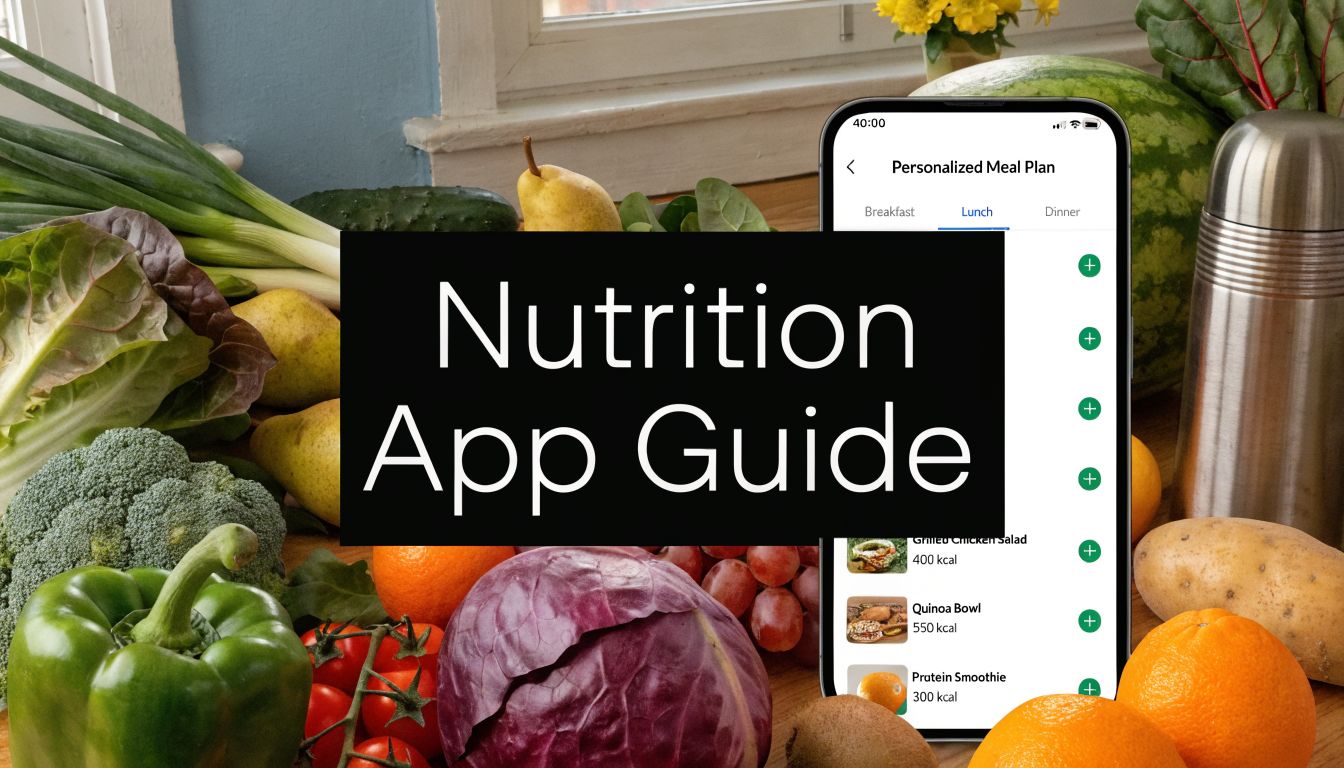
A good personalized nutrition app uses your goals, food preferences, and health inputs to build meal plans that change with you over time, not just count calories. The category is growing fast, with the global personalized nutrition market projected to rise from USD 15.79 billion in 2025 to USD 30.94 billion by 2030 as people move from generic advice to adaptive, data-driven eating plans.
You’re probably not looking for another app that makes you log breakfast, then leaves you alone by week two. Instead, you're likely seeking something much simpler and much harder to find: a system that helps you decide what to eat on busy days, keeps groceries organized, works with allergies or diet rules, and still feels usable after the initial motivation wears off.
That’s where the idea of a personalized nutrition app gets confusing. Many apps say they’re personalized when they really just ask whether you want low carb, vegan, or weight loss. Real personalization goes further. It learns from what you choose, what you skip, how your routine changes, and whether the plan still fits your actual life.
What Is a Personalized Nutrition App and How Do You Choose One?
A personalized nutrition app is software that tailors meal recommendations, grocery planning, and nutrition guidance to your individual goals, preferences, and constraints. To choose one, look for dynamic personalization, practical habit-building features, and clear privacy practices rather than just a calorie tracker with a custom label.
What Makes a Nutrition App Truly Personalized
The word personalized gets used loosely. In practice, nutrition apps fall into three very different buckets.
The easiest way to see the difference is to compare them to three kinds of trainers. One hands you a printed plan. Another gives you a plan matched to your goal. The third watches how you respond, then adjusts your program every week.
That third version represents the core expectation for personalization.

What basic tracking apps do well
A standard calorie counter can still be useful. It helps you log meals, estimate calories, and watch macros like protein, carbs, and fat. If your main goal is awareness, that may be enough.
But these apps usually depend on manual input and broad nutrition rules. They can tell you what you ate. They often can’t tell you what you should eat next based on your schedule, preferences, and progress.
A basic tracker usually works like this:
- Manual logging first: You search foods, scan labels, or build meals yourself.
- Static targets: The app gives you a calorie or macro goal and waits for you to follow it.
- Limited adaptation: If your week changes, your plan usually doesn’t.
That’s helpful for record-keeping. It’s not the same as ongoing personalization.
What profile-based apps add
The next level is static dietary profiling. These apps ask onboarding questions, then match you to a template.
You might pick:
- A goal: Weight loss, muscle gain, general wellness
- A diet style: Keto, Vegan, Paleo, balanced
- A restriction: Gluten-free, dairy-free, nut-free
This feels more personal because the app filters what you see. A vegan user gets vegan meals. Someone trying to gain muscle gets higher-protein suggestions. That’s useful, especially at the start.
But the system often stays mostly fixed. If you keep skipping breakfast, dislike half the recipes, or need shorter cooking times during a stressful month, many apps won’t learn much from that.
What dynamic personalization looks like
A personalized nutrition app behaves more like a coach than a database. It starts with your profile, then keeps learning.
That can include:
- your meal ratings
- your recipe swaps
- your allergies
- your cooking time limits
- your progress toward a goal
- your repeat behavior, such as always choosing portable lunches
Practical rule: If an app only personalizes during signup, it isn’t really personalizing. It’s sorting you into a category.
This shift matters because the broader market is moving in that direction. The global personalized nutrition market is projected to grow from USD 15.79 billion in 2025 to USD 30.94 billion by 2030, reflecting demand for adaptive meal planning instead of one-size-fits-all advice, according to personalized nutrition market projections.
A simple way to compare app types
| App type | What it mainly does | Where it helps | Where it falls short |
|---|---|---|---|
| Basic tracker | Logs food and counts nutrients | Awareness and accountability | Little guidance, high manual effort |
| Profile-based planner | Matches meals to diet and goal | Faster setup, better relevance | Often static after onboarding |
| Adaptive app | Learns from behavior and feedback | Better fit over time, less guesswork | Depends on quality of algorithm and data handling |
A lot of confusion comes from the fact that all three may use similar marketing language. “Customized,” “smart,” and “AI-powered” can appear on almost any app store page.
So ask a more concrete question: Does the app get better after week one?
If the answer is yes, you’re closer to real personalization.
For readers who want to see how this kind of adaptive guidance is described in practice, a useful reference point is this overview of an AI nutritionist experience. It shows the kind of interaction people increasingly expect from nutrition software: less static menu planning, more ongoing adjustment.
How Do AI Algorithms Create Your Perfect Meal Plan
AI sounds mysterious until you reduce it to its job. In a nutrition app, its job is simple: take your inputs, compare them against food and recipe data, and keep improving recommendations as you interact with the plan.
A good analogy is a personal chef who remembers what happened last week. If you loved one dinner, skipped another, swapped shrimp for tofu, and asked for faster lunches, that chef wouldn’t keep sending the same menu. A strong AI system works the same way.

It starts by building your nutrition profile
Most apps begin with onboarding. You enter details like your goal, dietary pattern, allergies, disliked foods, and household needs. Some systems also use activity data or health-related inputs.
That first layer creates a starting profile. Think of it as the app’s best opening draft. It’s useful, but it’s not yet intelligent in the deeper sense.
The more advanced step is what some researchers describe as a nutritional fingerprint. Advanced apps use AI to estimate how different foods may affect different users, rather than assuming the same meal works the same way for everyone. Stanford-linked work summarized in this explanation of AI in nutrition tracking shows that AI can predict individual glycemic responses to foods, which supports metabolism-specific guidance.
The feedback loop is the real engine
What makes AI useful isn’t that it starts smart. It’s that it learns repeatedly.
Every time you interact with the app, you create feedback:
- You rate a meal highly
- You reject a dinner because it takes too long
- You swap chickpeas for chicken
- You skip recipes with too many ingredients
- You do better with repeat breakfasts than daily novelty
A smart system notices patterns. Then it updates what it serves next.
The best meal plan isn’t the one that looks perfect on paper. It’s the one you’ll still follow when work runs late on Thursday.
Many users often get tripped up. They expect AI to be magic. It isn’t. It’s pattern recognition plus iteration. The app gets better because you keep giving it clues.
Why AI can reduce decision fatigue
Nutrition is hard partly because every day includes dozens of tiny decisions. What’s for breakfast. Whether lunch needs to be packed. Which dinner uses what’s already in the fridge. Whether your macros still work after a restaurant meal.
AI helps by narrowing the choice set.
Instead of asking you to solve nutrition from scratch, it can:
- suggest meals that fit your macro target
- keep ingredients overlapping across recipes
- avoid foods you’ve rejected before
- adapt to time limits like under-30-minute cooking
- build grocery lists from the plan automatically
That’s not glamorous. It’s practical. And practical tools are what support long-term use.
A lot of users also like to see this process visually. This short walkthrough gives a helpful look at how AI meal planning interfaces are starting to work in real time.
What to look for in an AI system
Not every app using “AI” has meaningful adaptation. A better test is to ask whether the app changes recommendations based on your behavior.
Look for signs like:
- Meal swapping that teaches the system: If you replace salmon with turkey, future suggestions should reflect that.
- Preference memory: The app should stop pushing meals you repeatedly reject.
- Goal-aware updates: Weight loss, muscle gain, or glucose-aware eating should change recipe balance.
- Practical planning tools: Good AI isn’t only about nutrients. It should also help with shopping, cooking time, and repetition.
If you want to compare planning tools directly, this set of meal planning tools gives a useful benchmark for what people now expect from modern nutrition software.
What Key Features Create a Sustainable Healthy Habit
A personalized nutrition app doesn’t fail because the meal suggestions are slightly off. It usually fails because the app adds friction to daily life. If using it feels like homework, people stop.
That’s why sustainable use matters more than a flashy setup screen. A systematic review of app-based nutrition behavior change identified a major long-term problem: many users drop off when apps stop fitting their routines or fail to adapt to changing needs. Features like adaptive re-planning and broader tracking of factors such as hunger or stress matter because they support continued use, as described in this systematic review on barriers and facilitators in nutrition apps.

The features that help people keep going
A sustainable app acts like a kitchen system, not just a tracker. It should reduce mental load, not add to it.
Here are the features that usually matter most over time:
- Automated weekly meal planning: This cuts the nightly “what’s for dinner” spiral and gives structure to breakfast, lunch, dinner, and snacks.
- Easy meal swaps: Plans should bend without breaking. If you don’t want lentil soup tonight, changing the meal shouldn’t wreck the whole week.
- Macro and calorie visibility: People trying to lose weight, maintain energy, or build muscle need the plan to connect to measurable intake.
- Smart grocery lists: The plan should turn into a usable shopping list, ideally grouped logically so buying food takes less effort.
- Allergy and restriction handling: This is essential for users avoiding gluten, dairy, nuts, or other ingredients.
- Progress tracking: Seeing patterns over time helps users stay engaged even when motivation dips.
Why leftover planning matters more than people expect
One overlooked feature is ingredient reuse. This sounds mundane, but it’s one of the strongest signals that an app understands real life.
If Monday’s dinner uses half a bunch of cilantro, a sustainable system should find a way to use the rest. If you roast chicken tonight, tomorrow’s lunch should be able to incorporate leftovers. Without this, meal plans create waste, extra cost, and fridge clutter.
That’s where many apps break trust. The recipes may be healthy, but the plan doesn’t behave like a real household kitchen.
A better design includes:
- repeated ingredients across compatible meals
- purposeful leftover carryover
- grocery lists that reflect actual recipe overlap
- options for budget-aware planning
For households trying to stretch groceries further, a budget meal planning approach is a useful benchmark because it shows how planning features can support both nutrition and food efficiency.
Reality check: A meal plan you can shop for, cook, and repeat is more valuable than a nutritionally perfect plan you abandon after ten days.
Progress tracking should show behavior, not just body changes
A lot of apps make the mistake of focusing only on weight. That can be too narrow.
Good progress tracking can also show:
- consistency with planned meals
- protein or fiber patterns
- successful adherence to a dietary pattern
- reductions in skipped meals
- fewer emergency takeout decisions
Healthy habits often improve before visible body changes do. Consequently, users need feedback that confirms the process is working.
A quick feature audit you can use
| Feature | Why it matters for long-term use | What to check |
|---|---|---|
| Weekly planning | Reduces decision fatigue | Can it plan multiple meals per day? |
| Adaptive re-planning | Helps during schedule changes | Can you adjust the week without starting over? |
| Grocery automation | Saves time and lowers friction | Does the list update when meals change? |
| Leftover logic | Supports budget and lowers waste | Does the app reuse ingredients on purpose? |
| Restriction controls | Keeps the plan safe and relevant | Are allergies and dislikes treated seriously? |
| Progress view | Reinforces consistency | Does it track behavior, not just weight? |
The strongest apps don’t just personalize recipes. They support repeatable behavior. That’s what turns a personalized nutrition app from a short experiment into part of your weekly routine.
Who Benefits Most from a Personalized Nutrition App
The phrase “for everyone” usually means “for no one in particular.” Personalized nutrition apps are most useful when the benefit is tied to a specific daily problem.
Here’s what that looks like in practice.
The busy professional who defaults to takeout
Sarah works long hours and doesn’t mind cooking. She minds deciding. By the end of the day, the hard part isn’t making food. It’s choosing a meal, checking ingredients, and realizing she forgot to shop.
For someone like Sarah, the value of a personalized nutrition app isn’t nutrition theory. It’s structure. She needs short recipes, an organized grocery list, and meals that fit into a chaotic week.
The right app helps by:
- planning several days at once
- favoring quick recipes over aspirational ones
- allowing easy swaps when meetings run late
The fitness enthusiast who wants better macro alignment
David trains consistently but eats inconsistently. He knows protein matters, but he often under-shoots it at lunch and over-corrects at dinner.
A personalized app helps him connect planning with performance. Instead of logging after the fact, he can start the day with meals already aligned to his target. That changes nutrition from reaction to preparation.
For this user, the most useful features are:
- visible macros for each meal
- repeatable high-protein options
- adjustments based on training goals
- easy substitutions that keep the plan intact
The household with mixed dietary needs
One person avoids gluten. Another wants more plant-based meals. A child is picky. Generic meal plans often collapse due to these varied requirements.
Families don’t need abstract personalization. They need conflict reduction. A good app can narrow the field to meals that satisfy multiple constraints without making the cook build separate menus from scratch.
When a plan works for a whole household, consistency goes up because the food doesn’t need to be renegotiated every night.
This use case often benefits from:
- ingredient filters
- allergy-aware planning
- simple recipes with familiar foods
- grocery lists that support one coordinated shop
The person focused on sustainable weight loss
Some users don’t want a strict diet. They want a plan they can live with for months.
This group often does best with apps that avoid all-or-nothing logic. Instead of labeling foods “good” or “bad,” the app should help them build regular meals, improve portion balance, and keep enjoyable foods in rotation. Boring plans tend to fail because boredom becomes noncompliance.
The person managing a health-related eating pattern
Someone dealing with blood sugar concerns, heart health goals, or another ongoing condition often benefits from more structure and less guesswork. They may need meals that are consistent, easier to monitor, and designed for specific restrictions.
For readers in that category, a diabetic meal plan example can be a useful reference point for how targeted planning differs from a general healthy eating app.
The common thread across all these examples is simple. The app works best when it solves a real friction point:
- too many decisions
- mismatched macros
- family complexity
- lack of consistency
- uncertainty about what fits a health goal
That’s who benefits most. Not “everyone.” The people whose eating decisions break down under real-world pressure.
How to Evaluate an App's Accuracy and Data Privacy
A nutrition app can look polished and still be weak where it matters. Two questions tell you most of what you need to know: Can I trust the nutrition guidance, and can I trust what happens to my data?
Start with accuracy. Then check privacy with equal seriousness.
How to judge nutrition accuracy
An app doesn’t need to be perfect to be useful. But it should be transparent about where nutrition information comes from and how meal data is generated.
Look for signs like:
- Clear food database practices: The app should explain where nutrition values come from.
- Recipe-level transparency: You should be able to see ingredients, portions, and macro totals.
- Consistency after swaps: If you remove cheese or change a protein, the nutrition should update logically.
- Human oversight: If professionals review recipes or meal structures, that’s a good sign.
Red flags include vague claims like “scientifically optimized” with no explanation of what that means.
Why privacy deserves close reading
This category is heavily direct-to-consumer. In 2024, the B2C model captured 57.13% of the personalized nutrition platform market, which means a large amount of personal food, health, and behavior data is flowing directly through apps rather than through a clinic or provider, according to Grand View Research on personalized nutrition platforms.
That doesn’t automatically make these apps unsafe. It does mean you should read privacy language with greater scrutiny.
Check whether the policy explains:
- what data is collected
- whether health-related inputs are shared with third parties
- whether data is anonymized or aggregated
- whether you can delete your data
- whether the app uses shopping, behavior, or location data for marketing
If you want a plain example of how companies present data privacy policies, this reference is useful because it shows the kind of sections readers should expect to see when assessing disclosure quality.
If a privacy policy is hard to understand, that’s already a signal. Sensitive health-related data shouldn’t come with mystery terms.
A simple pre-download checklist
| Question | Good sign | Red flag |
|---|---|---|
| Where does nutrition data come from? | Specific explanation | No source or method described |
| How are recommendations made? | Inputs and logic are described plainly | “AI-powered” with no detail |
| Can you edit or delete your data? | Easy to find in the policy | Not mentioned |
| Is data shared? | Purpose is disclosed clearly | Broad third-party language |
| Are restrictions handled safely? | Allergy and exclusion settings are explicit | Only superficial preference filters |
Most users spend more time reading recipe previews than privacy terms. That’s understandable, but backward. If an app knows your eating habits, health goals, and possibly biometrics, privacy isn’t a side issue. It’s part of product quality.
Why AI Meal Planner Is Built for Real Life
The most useful nutrition tools don’t ask you to become a different person. They work with the way people already shop, cook, and change their minds midweek.
That’s the appeal of AI Meal Planner. It focuses on the practical side of personalization: weekly planning, meal swaps, macro visibility, allergy-aware setup, grocery organization, and leftover logic that helps ingredients get used instead of forgotten. That makes it a better fit for people who want healthier eating to feel easier, not more technical.

The broader category is expanding quickly. The diet and nutrition app sector grew from $1.36 billion in 2017 to a projected $6.06 billion by the end of 2025, which shows how strongly consumers are adopting app-based meal planning and nutrition support. That trend is reflected in this earlier-cited market research, and it helps explain why users now expect more than food logging.
What stands out here is the focus on sustainability of use. Under-30-minute recipes support busy schedules. Grocery lists sorted for shopping reduce friction. Leftover planning supports less waste. Weekly adaptation gives users a reason to stay engaged after the novelty fades.
For people who want nutrition planning to connect with other wellness habits, it can also help to pair meal decisions with adjacent routines like sleep. This guide to sleep-promoting foods is a good example of how food choices can support broader health goals without turning meals into a chemistry project.
If you want to see how the setup works in practice, you can start with the AI Meal Planner onboarding flow.
Frequently Asked Questions About Personalized Nutrition
Is a personalized nutrition app better than a calorie counter?
Usually, yes, if you want guidance rather than just records. A calorie counter tells you what happened, while a personalized nutrition app helps plan what to eat next.
Can a personalized nutrition app work for families?
Yes, if it can handle multiple restrictions, familiar meals, and practical grocery planning. Family usefulness depends less on advanced AI and more on whether the plan works in one kitchen.
Do I need wearable data for personalization?
No. Many apps can personalize from onboarding answers, meal choices, and feedback alone. Wearables can add context, but they aren’t required for a useful experience.
Are these apps only for weight loss?
No. People also use them for muscle gain, dietary restrictions, meal organization, and condition-specific eating patterns. The best fit depends on your goal, not on a default weight-loss template.
How long does it take for an app to feel personalized?
A good app should feel relevant right away and improve after a few interactions. The clearest sign is whether suggestions get better after you swap meals, reject recipes, or update preferences.
What if I have allergies or very specific food rules?
Then filtering quality matters more than aesthetics. Choose an app that treats exclusions as core settings, not optional notes.
Should I trust user reviews?
Use them as one signal, not the only one. Reviews are most useful when they mention everyday issues like recipe fit, grocery usability, bugs, and whether the app stayed helpful after the first month.
If you want a personalized nutrition app that goes beyond calorie counting and helps you build repeatable habits with adaptive meal plans, smart grocery lists, macro tracking, and leftover-aware weekly planning, try AI Meal Planner. It’s designed for real schedules, real kitchens, and real health goals.
AI-powered nutrition
Get Your Personalized Meal Plan
AI creates the perfect meals for your goals, lifestyle, and taste.
Start Your Journej