Creating high calorie healthy meals starts with a simple structure: build meals that land around 600 to 900+ calories, aim for a macronutrient split of 45–65% carbs, 20–35% fat, and 10–35% protein, and use calorie-dense additions like oils, nuts, and seeds to raise intake without forcing huge portions. That approach works far better for healthy weight gain and muscle gain than just eating more processed food.
Some people struggle to gain because they’re busy and under-eat. Others eat plenty, but most of those calories come from foods that are easy to overconsume and hard to recover on. The practical problem is rarely “I don’t know any high-calorie foods.” It’s usually “I can’t consistently turn them into meals I’ll cook, digest well, and repeat.”
How Do I Make High Calorie Healthy Meals?
If you’re trying to gain muscle or body weight, “eat more” is too vague to be useful. High calorie healthy meals need to do two jobs at once. They must increase total intake, and they must still support training, recovery, and long-term health.
The biggest mistake is leaning on convenience foods and calling it a bulk. That does raise calories, but it often lowers food quality, protein quality, fiber intake, and meal consistency. According to CDC data on ultra-processed food intake, 55.0% of total calories consumed by Americans come from ultra-processed foods, and those foods are associated with a higher risk of cardiovascular disease and all-cause mortality.
That matters because ultra-processed foods are usually easy to eat in large amounts, but they’re a poor foundation for healthy weight gain. They’re commonly hyperpalatable, energy-dense, low in dietary fiber, and light on whole-food ingredients. If your goal is better training output, better recovery, and more useful weight gain, you need a better system.
What works better than just eating more
A good meal should contain a clear protein source, a substantial carb base, and a meaningful fat source. Then you increase density without making the plate absurdly large.
Generally, this works better than trying to double portion sizes overnight:
- Keep the meal familiar: Rice bowls, pasta bowls, wraps, curries, skillets, and oats are easier to repeat than elaborate recipes.
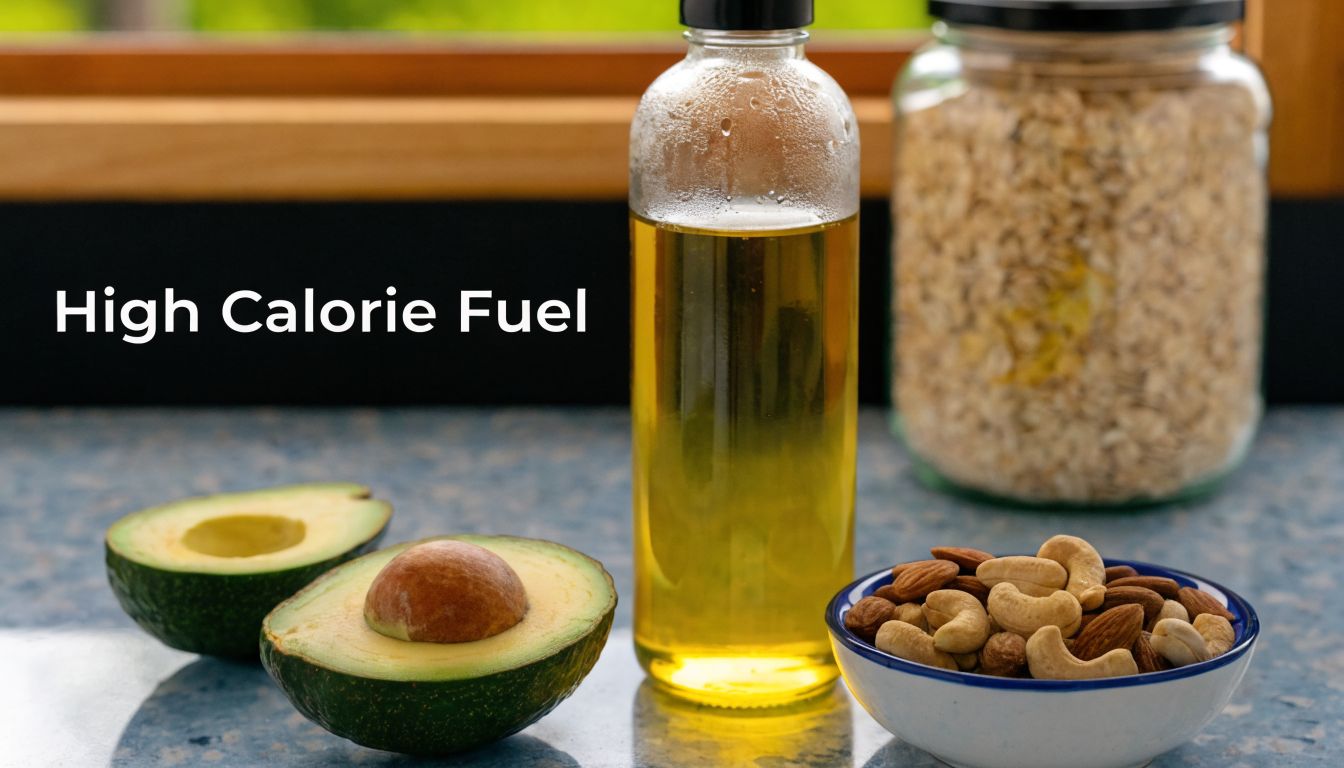
- Add calories through density: Olive oil, avocado, tahini, nuts, seeds, full-fat dairy, and nut butters raise intake without requiring giant volume.
- Use whole foods first: Salmon, eggs, beef, tofu, beans, potatoes, quinoa, oats, rice, fruit, and legumes create a much better base.
Practical rule: Build the meal first. Boost the calories second. Don’t start with random add-ons and hope the meal becomes balanced.
A second mistake is treating appetite like it will magically improve. It usually doesn’t. Busy professionals often skip meals, rely on coffee, then try to “catch up” at night. That usually leads to either under-eating or low-quality convenience eating.
If you need more structure, a macro-focused template helps. A simple high protein meal plan approach can make the process less mental and more repeatable. The win isn’t novelty. The win is having meals you can prepare quickly, eat comfortably, and repeat often enough to matter.
What Is the Framework for Calorie-Dense Eating?
A busy workday creates the same problem for a lot of lifters and professionals. Breakfast is rushed, lunch is light, training happens late, and by dinner you still have half your calories left to eat. The fix is a framework you can repeat under real conditions, not a meal plan that only works on quiet Sundays.

Set calorie and macro targets before you choose foods
Calorie-dense eating works best when total intake and macros are set first. Healthline’s 3000-calorie meal planning guidance uses a macro range of 45 to 65% carbs, 20 to 35% fat, and 10 to 35% protein. For someone eating 3,000 calories, that gives enough room to bias carbs higher for training performance, keep protein adequate for muscle gain, and use fats to raise calories without making meals huge.
In practice, I rarely see people fail because they chose the wrong “superfood.” They miss because the plan is too vague. A better target for muscle gain is to assign each meal a job. Carbs drive training and recovery. Protein covers repair. Fats make the plan easier to hit when appetite is limited.
If you want a more structured starting point, a 3,000 calorie meal plan for healthy weight gain gives you a usable intake target before you start adjusting food choices.
Build meals from foods that scale without much prep
High-calorie eating for busy people depends on foods that reheat well, combine easily, and fit dietary restrictions without much extra effort. That rules in rice, oats, potatoes, quinoa, pasta, beans, lentils, eggs, salmon, chicken, tofu, Greek yogurt, avocado, nuts, seeds, olive oil, and full-fat dairy if tolerated.
The key is scalability. A good base food should be easy to batch-cook, easy to pair with protein, and easy to modify for vegan or gluten-free needs. Rice bowls, potato skillets, overnight oats, pasta dishes, curries, and smoothie-based meals usually pass that test. Huge raw salads and very lean, low-fat meals usually do not. They can be healthy, but they are poor tools for someone trying to gain weight efficiently.
A simple framework looks like this:
| Meal part | Best use |
|---|---|
| Carb base | rice, oats, potatoes, quinoa, gluten-free pasta, beans |
| Protein source | chicken, salmon, beef, eggs, Greek yogurt, tofu, lentils |
| Fat source | olive oil, avocado, nuts, seeds, tahini, pesto, full-fat dairy |
| Easy add-in | dried fruit, granola, nut butter, hummus, coconut milk |
Raise calorie density before you raise meal size
This is the part many under-eaters miss.
Large portions are not always the answer, especially for people with low appetite, high work stress, or early training sessions. A better move is to keep the meal size reasonable and add calories through compact ingredients. Olive oil, nut butter, tahini, avocado, seeds, pesto, coconut milk, and full-fat dairy all do that well.
That approach also improves adherence. A 700-calorie bowl that feels normal is easier to repeat than a mountain of plain chicken, rice, and vegetables that takes 25 minutes to finish.
Use a repeatable meal formula
For quick meals under 30 minutes, use this five-part build:
- Choose one carb base such as rice, oats, potatoes, or gluten-free pasta.
- Add one protein anchor such as chicken, eggs, Greek yogurt, tofu, lentils, or salmon.
- Include one fat source such as olive oil, avocado, tahini, nuts, or seeds.
- Add one fast calorie booster such as nut butter, pesto, granola, dried fruit, or coconut milk.
- Check the macros so the meal supports your goal.
For many busy professionals and fitness-focused clients, a strong target for one main meal is roughly 30 to 50 grams of protein, 60 to 100 grams of carbs, and 15 to 30 grams of fat, adjusted to daily needs. That range is practical, easy to build around, and flexible enough for vegan and gluten-free versions.
Repeatability is the standard. If a meal takes too long, tastes flat, or falls apart during a workweek, it will not support consistent weight gain. The best calorie-dense framework gives you meals you can prep fast, digest well, and eat often enough to matter.
What Does a High-Calorie Meal Plan Look Like?
A strong high-calorie week doesn’t require gourmet cooking. It requires patterns you can repeat. One of the easiest ways to stay on target is to let dinner carry into the next day’s lunch, keep breakfast stable, and rotate only a few core ingredients.
Below is a practical template built around approximately 3,000 calories per day. It uses the article’s working structure of breakfast at about 600 kcal, lunch at about 700 kcal, dinner at about 800 kcal, and two snacks totaling about 450 kcal.
Sample 7-Day High-Calorie Healthy Meal Plan
| Day | Breakfast (approx. 600 kcal) | Lunch (approx. 700 kcal) | Dinner (approx. 800 kcal) | Snacks (2x, approx. 450 kcal total) |
|---|---|---|---|---|
| Day 1 | Oats with banana, nut butter, seeds, and Greek yogurt | Chicken rice bowl with avocado and olive oil drizzle | Salmon, roasted potatoes, vegetables, and tahini sauce | Trail mix and yogurt with fruit |
| Day 2 | Eggs, toast, avocado, and fruit | Leftover salmon bowl with rice and greens | Beef quinoa skillet with vegetables and olive oil | Smoothie and nut butter toast |
| Day 3 | Overnight oats with chia, nuts, and berries | Lentil curry with rice and coconut-based sauce | Chicken pasta with pesto and parmesan | Cheese and crackers, plus a banana |
| Day 4 | Yogurt bowl with granola, nuts, seeds, and honey | Leftover chicken pasta with extra olive oil | Turkey chili over rice with avocado | Hummus wrap and mixed nuts |
| Day 5 | Smoothie bowl with oats, nut butter, and seeds | Tofu quinoa bowl with edamame and avocado | Beef tacos on corn tortillas with rice and guacamole | Greek yogurt and dried fruit |
| Day 6 | Scrambled eggs, potatoes, toast, and fruit | Leftover taco bowl with beans and rice | Coconut lentil sweet potato curry with rice | Protein shake and nuts |
| Day 7 | Peanut butter oats with sliced banana and yogurt | Chicken pesto wrap with quinoa salad | Baked fish, rice, vegetables, and olive oil dressing | Cottage cheese with fruit and granola |
Why this style of plan works
This kind of week does a few things right. It avoids daily decision fatigue, it reuses ingredients, and it makes calorie intake more predictable. You don’t need a brand-new recipe every day. You need enough variety to stay interested and enough repetition to stay consistent.
A few useful patterns stand out:
- Leftovers become lunches: This saves time and usually improves adherence.
- Breakfast stays simple: Many individuals do better with one or two repeat breakfasts they enjoy.
- Dinner carries the calorie load: It’s often the easiest meal to make dense with grains, proteins, sauces, and oils.
- Snacks fill the gaps: They stop the day from collapsing if one meal runs light.
The best weekly plan doesn’t look impressive. It looks easy to repeat on a busy Wednesday.
If you want a more structured version of this format, a 3000 calorie meal plan builder can help turn broad targets into actual meals without manually calculating every plate.
How to adapt it for dietary restrictions
This framework is easy to modify. Swap salmon or chicken for tofu, tempeh, or lentils if you’re vegan. Use rice, quinoa, or potatoes in place of wheat-based options if you’re gluten-free. Keep the structure the same even when ingredients change.
That’s the core point. A useful meal plan isn’t rigid. It’s stable enough to repeat and flexible enough to survive real life.
5 Quick High-Calorie Recipes for Busy People
You get home from work at 7:15, training bag still in the car, and you need dinner inside 20 minutes. That is where many weight-gain plans fall apart. The solution is not random snacking or takeaway every night. It is a short list of repeatable meals that cook fast, fit your macros, and still work if you are vegan or gluten-free.
Healthline’s guide to foods for weight gain points to the same practical problem. People trying to gain size need calorie-dense foods that are easy to eat consistently. Speed matters just as much as food quality when your schedule is tight.

The recipes below are built for busy professionals and lifters. Each one takes about 30 minutes or less, includes a clear calorie and macro target, and has simple swaps for common dietary restrictions. If you want more carb-heavy dinner ideas, these quick high-calorie pasta dishes are a good place to look.
Salmon avocado rice bowl
A bowl meal is one of the easiest ways to raise calories without making dinner feel heavy.
Ingredients
- 5 to 6 oz cooked salmon
- 2 cups cooked rice
- 1/2 to 1 avocado
- 1 cup edamame
- 1/2 cucumber, sliced
- 1 tbsp olive oil
- 1 tbsp soy sauce or tamari
- 1 tbsp sesame seeds
How to make it
- Warm the rice, salmon, and edamame.
- Add cucumber and sliced avocado.
- Finish with olive oil, soy sauce or tamari, and sesame seeds.
Approximate macros
- Calories: 850 to 950
- Protein: 40 to 45g
- Carbs: 75 to 90g
- Fat: 35 to 40g
Why it works Rice keeps the volume manageable. Salmon, avocado, and oil add calories fast, so this works well for lifters who struggle to eat a huge plate of food.
Swap ideas
- Vegan: use baked tofu or tempeh instead of salmon
- Gluten-free: use tamari instead of regular soy sauce
Calorie booster Add another half cup of rice or a spoonful of tahini.
Beef quinoa power skillet
This is a strong option for people who want a one-pan dinner with solid protein.
Ingredients
- 6 oz lean ground beef
- 1 1/2 cups cooked quinoa
- 1 bell pepper, chopped
- 1/2 onion, chopped
- 3/4 cup black beans
- 1 tbsp olive oil
- 1/4 cup shredded cheese or dairy-free cheese
- 1/2 avocado
How to make it
- Brown the beef with onion and peppers.
- Stir in quinoa and black beans.
- Add olive oil and your preferred seasoning.
- Top with cheese and avocado before serving.
Approximate macros
- Calories: 900 to 1,000
- Protein: 50 to 55g
- Carbs: 65 to 75g
- Fat: 45 to 50g
Why it works Skillet meals help busy people eat enough because every bite carries carbs, protein, and fat. You do not end up finishing the meat and leaving the rest.
Swap ideas
- Vegan: use lentils, textured vegetable protein, or crumbled tofu
- Gluten-free: check your seasoning blend and keep the rest the same
A good bulking meal should taste like real food you want again tomorrow.
If you want more done-for-you combinations built around size goals, a bulking meal plan with macro targets can save time during the workweek.
Vegan lentil sweet potato curry
This recipe is useful for plant-based eaters who need calories without relying on processed snack foods.
Ingredients
- 1 cup cooked lentils
- 1 medium sweet potato, diced
- 3/4 cup full-fat coconut milk
- 2 cups spinach
- Curry paste or curry spices
- 1 1/2 cups cooked rice
- 1 tbsp olive oil
How to make it
- Sauté the sweet potato in olive oil for 5 to 7 minutes.
- Add lentils, curry paste, and coconut milk.
- Simmer until the sweet potato is tender.
- Fold in spinach and serve over rice.
Approximate macros
- Calories: 800 to 900
- Protein: 20 to 25g
- Carbs: 100 to 110g
- Fat: 30 to 35g
Why it works Curry is an easy format for high-calorie eating. Coconut milk raises energy density, and rice makes the meal easier to finish than a very high-fiber bowl of beans and vegetables alone.
Swap ideas
- Higher protein: add tofu
- Lower fiber if appetite is poor: use less lentil, more rice, and a little extra oil
Here’s a useful visual if you want more meal ideas before cooking.
Chicken pesto pasta bowl
For many clients, pasta is the easiest dinner food to eat in a surplus. It is fast, familiar, and easy to scale up.
Ingredients
- 5 to 6 oz cooked chicken
- 3 oz dry pasta
- 2 tbsp pesto
- 1 cup cherry tomatoes
- 2 tbsp parmesan
- 1 tbsp olive oil
- 1 to 2 cups spinach
How to make it
- Cook the pasta and reserve a small splash of pasta water.
- Toss with pesto, olive oil, spinach, and tomatoes.
- Add sliced chicken.
- Finish with parmesan.
Approximate macros
- Calories: 800 to 950
- Protein: 45 to 50g
- Carbs: 70 to 85g
- Fat: 30 to 40g
Why it works Pasta is easier to eat than very bulky whole-food meals, especially after training. Pesto and olive oil raise calories quickly without much prep time.
Swap ideas
- Gluten-free: use gluten-free pasta
- Dairy-free: use dairy-free pesto and skip parmesan
- Vegan: use chickpeas or tofu instead of chicken
Calorie booster Add pine nuts or another spoon of pesto.
Peanut butter banana overnight oats
This one solves two common problems. Mornings are rushed, and many people trying to gain weight miss breakfast more often than they realize.
Ingredients
- 1 cup oats
- 1 cup milk or fortified plant milk
- 3/4 cup Greek yogurt or plant yogurt
- 2 tbsp peanut butter
- 1 banana
- 1 tbsp chia or flax
- 1/3 cup granola
How to make it
- Mix oats, milk, yogurt, peanut butter, and seeds in a container.
- Refrigerate overnight.
- Top with banana and granola before eating.
Approximate macros
- Calories: 700 to 850
- Protein: 25 to 35g
- Carbs: 80 to 95g
- Fat: 25 to 30g
Why it works You remove morning decision-making. That alone can improve intake for office workers, shift workers, and anyone who trains early.
Swap ideas
- Gluten-free: use certified gluten-free oats
- Vegan: use plant yogurt and plant milk
- Nut-free: use sunflower seed butter or tahini
A simple macro reminder for recipe building
Fast high-calorie meals work best when each plate covers four jobs:
- A primary carb source: rice, pasta, potatoes, oats
- A clear protein source: meat, fish, tofu, lentils, yogurt
- An intentional fat source: olive oil, avocado, pesto, coconut milk, nut butter
- One easy add-on if calories are still low: extra rice, extra oil, granola, cheese, seeds, sauce
That pattern keeps quick meals useful for weight gain instead of turning into random “healthy” meals that leave you 500 calories short by the end of the day.
How Can You Master Meal Prep for Consistent Gains?
The people who gain well aren’t always the most motivated. They’re often the most organized. Meal prep matters because it protects your intake when work runs late, training drains your energy, or decision fatigue kills your appetite.

Home prep also gives you more control than restaurant eating. The USDA Economic Research Service found that each additional meal or snack eaten away from home adds an average of 134 calories that day, and for obese individuals the increase rises to 239 calories. The useful takeaway isn’t fear of restaurants. It’s that home prep gives you far better portion control and predictability.
What to prep instead of full meals every time
Many people quit meal prep because they try to cook seven perfect lunches and dinners in one session. That’s more work than is generally necessary. Prep components instead.
A simpler system works better:
- Cook proteins in batches: chicken, beef, tofu, lentils
- Make one or two carb bases: rice, quinoa, potatoes, pasta
- Prepare easy extras: chopped avocado, sauces, dressings, seed mixes
- Set up snack packs: nuts, dried fruit, yogurt, cheese, crackers
Build a repeatable weekly flow
A practical week often looks like this:
| Prep task | Why it helps |
|---|---|
| Batch one protein | removes the hardest cooking step |
| Cook one grain and one starch | gives you fast lunch and dinner options |
| Portion 2 snack types | closes calorie gaps during workdays |
| Keep one emergency meal | prevents takeout from becoming the default |
If you want examples of compact snacks and ready-to-go options, GrabGains is a useful reference point for how performance-focused convenience foods can fit into a busy schedule. The key is using convenience deliberately, not letting it replace your core meals.
Consistency usually breaks at the point of friction. Meal prep lowers friction more than motivation ever will.
For readers trying to keep a muscle-gain phase structured, a bulking meal plan can help organize portions, leftovers, and shopping so the week doesn’t drift off course by Thursday.
Should You Change Your Meal Timing and Frequency?
Yes, if large meals keep failing. A lot of people trying to gain assume they need three big plates a day. In practice, that often leads to long gaps without food, appetite suppression, and a nightly scramble to force calories.
According to the University of Virginia nutrition handout on maintaining weight with a high-calorie diet, consuming 5–6 smaller meals or snacks every 2–3 hours improves weight-gain success by helping prevent appetite suppression and digestive issues. That frequency also makes intake more manageable for people who feel full quickly.

Why frequent eating works better for some people
A big plate can look doable and still fail in real life. Appetite tends to drop when people wait too long between meals, especially during stressful workdays. Then dinner becomes uncomfortably large, and intake quality usually drops.
Smaller, more frequent meals solve several practical problems:
- Less fullness at each sitting
- More chances to recover missed calories
- Better support around training
- Less reliance on one perfect dinner
How to apply it without feeling chained to food
You don’t need to eat on a stopwatch. You do need enough structure to stop accidental under-eating. For many people, this means setting reminders and keeping ready-to-eat options nearby.
A simple rhythm might look like:
- Breakfast
- Mid-morning snack
- Lunch
- Afternoon snack
- Dinner
- Evening snack
If liquid calories help, guides to Master Protein Powder Shakes can be useful for building snacks that are easier to consume than another full meal. Shakes aren’t mandatory, but they can be practical when appetite is low or schedule pressure is high.
Eat before you feel ravenous. Waiting too long usually makes high-calorie eating harder, not easier.
When to place your biggest meal
Use your best appetite window. Some people tolerate a large breakfast better than a large dinner. Others train in the afternoon and do better with a heavier post-workout meal. The point isn’t to copy someone else’s schedule. It’s to place your densest meals where your appetite and routine support them.
That’s often the difference between a plan that looks smart on paper and one you’ll still be following next month.
Your Next Steps and Common Questions Answered
A useful high-calorie strategy is simpler than often assumed. Build meals around a serious carb source, a real protein source, and an intentional fat source. Keep meals dense instead of oversized. Prep enough food to survive your schedule. If three large meals keep failing, spread intake across the day.
That system is much more effective than trying to “bulk” on random snacks or restaurant food. It’s also easier to sustain because it respects the two problems commonly faced: lack of time and limited appetite.
If you want personalized support around food choices, allergies, and meal structure, an AI nutritionist tool can help turn broad goals into practical meal decisions without starting from scratch each week.
Common questions
Can I gain weight without relying on junk food?
Yes. The better approach is to increase calories through whole-food meals that use grains, proteins, healthy fats, and strategic boosters like oils, nuts, seeds, avocado, or full-fat dairy if tolerated.
What if I get full too quickly?
Make meals denser instead of bigger. Add olive oil, nut butter, avocado, pesto, tahini, or calorie-dense sauces so you can raise intake without forcing extra volume.
Do I need to eat the same foods every day?
No, but repeating a few reliable meals usually helps. A stable breakfast, two or three rotating lunches, and dinners that create leftovers often prove effective.
Are shakes necessary for healthy weight gain?
No. They’re a tool, not a requirement. They help when chewing fatigue, low appetite, or schedule pressure makes another full meal unrealistic.
How do I keep a vegan or gluten-free high-calorie plan practical?
Keep the same structure and swap the ingredients. Use rice, quinoa, potatoes, lentils, tofu, tempeh, beans, avocado, seeds, and plant-based sauces to maintain calorie density without losing flexibility.
Should I focus more on protein or calories?
You need both, but under-eating total calories is the more common problem in a gain phase. Protein matters, yet meals still need enough carbs and fats to make the plan workable.
If you want a faster way to put this into practice, AI Meal Planner can generate personalized weekly meal plans, macro-aware recipes, and smart grocery lists based on your calorie goals, dietary preferences, and allergies. It’s especially useful if you want high calorie healthy meals that fit a busy schedule without tracking everything by hand.
AI-powered nutrition
Get Your Personalized Meal Plan
AI creates the perfect meals for your goals, lifestyle, and taste.
Start Your Journej