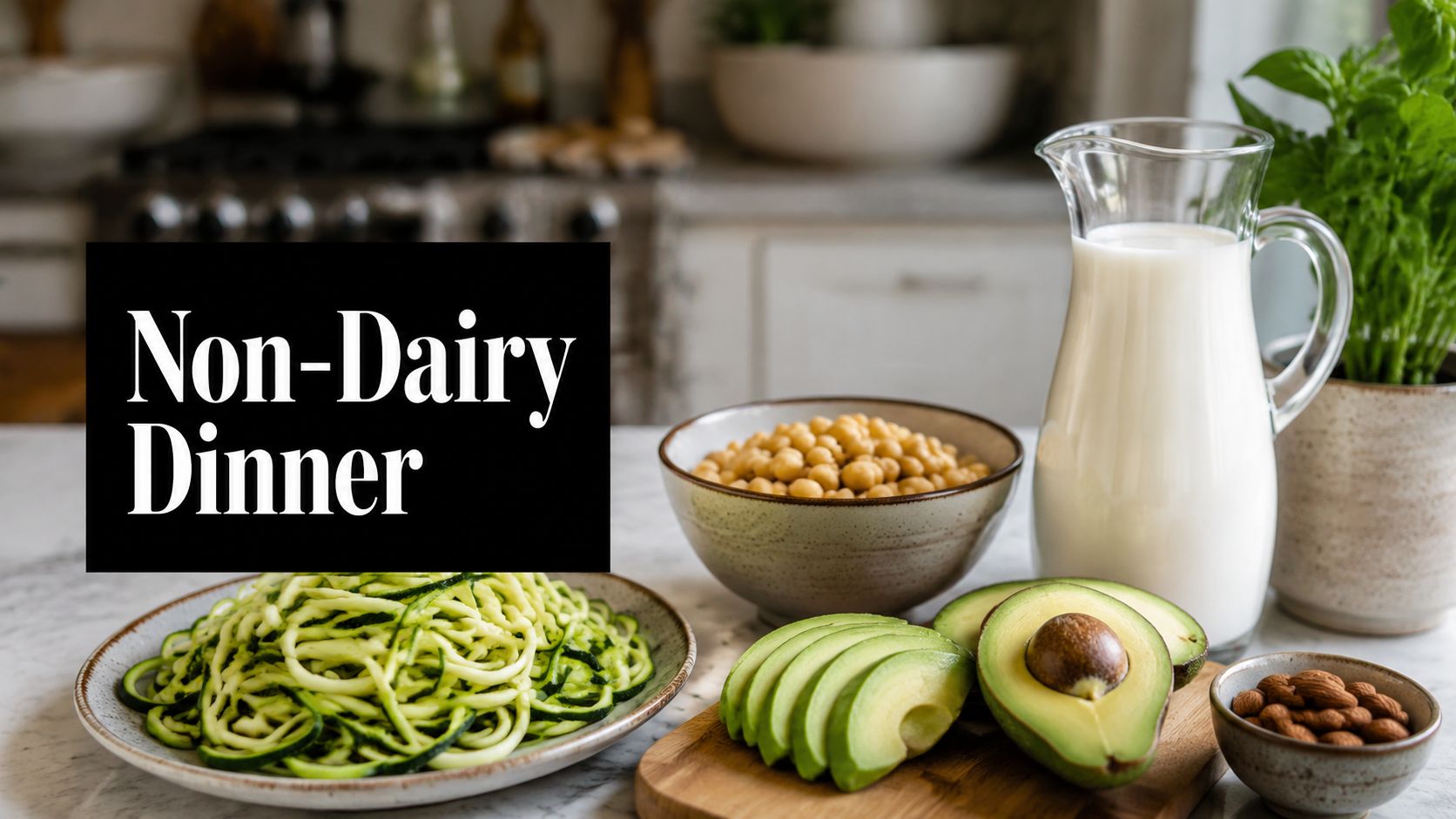
You're standing in front of the fridge at 6:30 p.m., the kids are hungry, and there's no butter or cream in sight. That is exactly why non dairy recipes for dinner have become the practical default, not a compromise. The 10 dinners below are grouped by cooking need, so you can go straight to a 30-minute weeknight, family-friendly, high-protein, vegan and gluten-free, or meal-prep option without sorting through a pile of mismatched ideas.
Start with the recipes that fit your schedule and your macros. Then use AI Meal Planner's recipe nutrition calculator to check the numbers before you turn a single recipe into a full week with grocery lists and automatic macros. The point is simple, eat dinner that works, not dinner that creates another problem.
Why Non-Dairy Dinners Have Moved From Niche to Default
The old idea that dairy-free dinner means bland food or endless substitutions is outdated. A large dairy-free dinner collection now shows how broad the category has become, with 282 recipes and zero no-cook dinners, which tells you these meals are built for real cooking, not just assembly. That same collection reports a median protein content of 31 grams per serving, and 77% of the dinners provide 10 grams or more of fiber per serving, so the category already lines up with the way many people want to eat now, more protein, more fiber, and fewer empty plates of pasta pretending to be a meal. Fit Chef's dairy-free dinner hub
There's also a clear market reason these dinners show up everywhere now. In the UK, a 2022 survey found one in three households was using more plant-based alternatives than the year before, and half of 25 to 34-year-olds were trying to reduce dairy intake. In the United States, retail sales of plant-based foods reached $8 billion in 2023, which helps explain why major recipe publishers now keep large dairy-free dinner collections instead of treating them like a side category. BBC Good Food's dairy-free dinner roundup
Practical rule: Build dairy-free dinners around aromatics, fat, acid, and texture. That's what keeps a weeknight curry, bowl, or stir-fry tasting finished instead of merely edited.
The ingredient logic is straightforward too. Healthline points to common swaps like tofu for ricotta or cottage cheese, coconut or soy cheese, and dairy-free margarine or coconut oil for butter, while other recipe guides consistently use coconut milk, nutritional yeast, olive oil, and oat milk to create creaminess and savory depth without dairy. Healthline's dairy-free dinner guide
1. Coconut Milk Curry with Rice and Vegetables

This is the easiest way to make dinner feel rich without using cream. A coconut milk curry works because it gives you built-in sauce, steady heat, and room for vegetables, chickpeas, shrimp, chicken, or tofu.
Use it on nights when you want one pan, one pot of rice, and leftovers that don't fall apart in the fridge. If you're tracking macros, pair the curry with brown rice or quinoa so the meal lands more like a full plate and less like a side dish with sauce.
Use the recipe nutrition calculator to map portions before you cook.
Best move: Cut the vegetables the night before and cook the harder ones first, like carrots or squash, then finish with spinach or basil at the end. That keeps the texture sharp and the cooking time tight.
Acid matters here. A squeeze of lime at the end lifts the coconut fat and keeps the curry from tasting heavy.
For meal prep, curry is one of the safest bets on the list. It reheats cleanly, and a larger batch gives you an emergency dinner that still feels intentional two days later.
2. Stir-Fried Vegetables with Tofu or Chicken and Cashew Sauce
When dinner needs to happen fast, stir-fry wins. You get protein, crunch, and a glossy sauce in about the time it takes to reheat something less satisfying.
Cashew sauce is the right choice when you want creaminess without dairy, but you don't want the sweetness of coconut to dominate the pan. It works especially well with broccoli, bell peppers, snap peas, mushrooms, tofu, or chicken, and it's a strong fit for people who want a dinner that looks colorful without requiring a long shopping list.
3. Why This Weeknight Format Works
Stir-frying forces you to prep first, cook hot, and serve immediately, which means there's no drift and no waiting around for a sauce to thicken slowly.
Use this formula for best results
- Cut everything first: Stir-frying moves too quickly for mid-cook prep.
- Keep the protein ready: Thaw frozen tofu, chicken, or shrimp in the morning.
- Make cashew cream in batches: Blend raw cashews with broth and refrigerate it for later use.
- Add acid at the end: Lime or rice vinegar cuts the richness and sharpens the flavor.
If you want the cleanest finish, cook over high heat and don't crowd the pan. That's how you get the browned edges that make a simple vegetable stir-fry taste like a real dinner.
3. Mediterranean Quinoa Bowl with Roasted Vegetables and Tahini Dressing
A quinoa bowl gives you the easiest path to a balanced dairy-free dinner that still feels fresh. It's especially good when you want something portable, because the components hold up well and don't turn soggy by the next day.
Quinoa carries protein better than plain rice, roasted vegetables bring sweetness and texture, and tahini gives you the creamy finish that many people miss when they cut dairy. Chickpeas, white beans, lentils, or roasted eggplant all fit here without fighting the rest of the bowl.
4. Build It So It Stays Good Tomorrow
This is a strong meal-prep dinner, but it only works if you keep the wet and dry parts separate. Dress the bowl right before eating, not hours before.
Keep tahini dressing in its own container. That one habit protects texture and makes lunch leftovers actually worth eating.
Use these assembly rules
- Grains on the bottom: Quinoa, farro, or brown rice gives the bowl structure.
- Sturdy vegetables next: Roasted zucchini, sweet potato, or cauliflower hold their shape.
- Delicate items on top: Herbs, greens, or cucumber should stay fresh until serving.
- Dressing last: Tahini-lemon sauce belongs at the end, not in the fridge-soaked middle.
For a Mediterranean meal plan built around this style of dinner, start with AI Meal Planner's Mediterranean plan. It makes the bowl format easy to repeat without getting repetitive.
4. Grilled Salmon with Herb Oil and Roasted Root Vegetables
This is the dinner to make when you want something that tastes restaurant-quality but still stays dairy-free by default. Salmon already brings richness, so herb oil does the job of butter without flattening the flavor.
Roasted root vegetables make the plate feel complete, and they handle the oven well while the fish cooks. That means less juggling at the stove and fewer chances to overcomplicate dinner.
5. Keep the Fish and Vegetables on Separate Clocks
Salmon rewards clean timing. If you dry the skin well, start skin-side down, and finish quickly, you get better texture than you'll ever get from drowning it in sauce.
The smartest version is simple. Season the salmon, roast or grill the vegetables, and finish everything with an herb oil made from olive oil, garlic, lemon zest, and fresh herbs.
Serve it right away. Herb oil looks best and tastes brightest when it hits hot fish and vegetables.
This meal works best when you want higher protein without leaning on beans or pasta. It's also a good option for mixed households, because nobody at the table has to care that it happens to be dairy-free.
5. Thai-Inspired Vegetable and Chickpea Lettuce Wraps with Almond Butter Sauce
If you want dinner to feel light but still filling, lettuce wraps are the move. They give you crunch, sauce, and a hands-on meal that works well when people want to build their own plate.
Chickpeas make the filling more substantial, and almond butter sauce gives the wraps the same satisfying finish people usually look for in peanut sauces or creamy dressings. Use sturdy lettuce like romaine, cabbage, or butter lettuce so the wraps don't collapse halfway through eating.
6. Turn Dinner Into a Self-Serve Station
This format is better than a plated meal on busy nights because everyone can customize heat, crunch, and sauce. It's also one of the best options for families where one person wants more vegetables and another wants more protein.
Make it easier with these steps
- Sauté the filling first: Vegetables should get a little color so the wraps don't taste raw.
- Toast the chickpeas: That gives you better texture and a more savory bite.
- Keep sauce separate: Almond butter sauce should stay thick until serving.
- Assemble late: Fresh wraps taste better within a short window.
If you're feeding a group with different preferences, this is one of the most flexible non dairy recipes for dinner. The ingredients are simple, the structure is clear, and the final plate doesn't need dairy to feel complete.
6. Black Bean and Sweet Potato Tacos with Avocado Crema
These tacos are the weeknight answer when you want comfort food without turning dinner into a project. Black beans give you protein and fiber, sweet potatoes add sweetness and body, and avocado crema makes the whole thing feel finished.
Corn tortillas keep the dish naturally dairy-free, and the toppings can stay minimal or get piled high depending on who's eating. It's one of the best choices for families because everyone already understands the format.
7. Why This Taco Night Lands So Well
This is a practical dinner, not a fussy one. You can roast the sweet potatoes ahead, season canned black beans in minutes, and warm tortillas right before serving so the texture stays right.
The avocado crema is what separates a decent taco from a strong one. Use it as the cooling element so the beans and sweet potatoes can carry the spice without tasting dry.
Store the avocado crema separately if you want leftovers to hold. Pre-mixed avocado turns the next meal into a compromise.
This is also one of the easiest dinners to stretch across multiple nights. Use the same roasted sweet potatoes in bowls or breakfast hash the next day, and the beans can move into salads or wraps without much effort.
7. Chickpea Pasta with Garlic, Olive Oil, and Roasted Broccoli
This is the most reliable pasta choice if you want more protein without dairy. Chickpea pasta gives you a sturdier base than standard wheat pasta, and olive oil plus garlic makes a simple sauce that still feels like dinner.
Roasted broccoli brings texture, which matters because dairy-free pasta can fall flat if it's only noodles and oil. Lemon at the end keeps the dish bright and keeps the garlic from becoming heavy.
For a vegan rotation, AI Meal Planner's vegan plan makes this kind of pasta easy to slot into a full week.
8. Don't Overcook the Pasta
Chickpea pasta is less forgiving than regular spaghetti, so pull it early and let the sauce finish it. A little reserved pasta water helps the oil cling to the noodles instead of sliding off the plate.
A good version needs only a few controls
- Cook the pasta slightly underdone: It keeps softening after draining.
- Reserve pasta water: The starch helps emulsify the sauce.
- Roast broccoli well: Crisp edges matter more than extra sauce.
- Finish with lemon zest: It keeps the dish from tasting dull.
This is the dinner to choose when you want a fast, higher-protein pasta that doesn't need a cream substitute or a long ingredient list.
8. Lentil and Vegetable Soup with Herb Garnish
Lentil soup is the quiet workhorse of dairy-free cooking. It's cheap, filling, and easy to batch, which makes it one of the strongest meal-prep options on the list.
Red lentils give you a creamier texture, while green lentils hold their shape better if you want a soup that feels more substantial. Either version works with carrots, celery, onion, broth, and herbs, and both are strong candidates for freezing.
9. Make the Pot Do More Than One Dinner
A soup like this should be cooked for leftovers on purpose. If you know Tuesday is going to be chaotic, make extra on Sunday and freeze part of it before it disappears into lunch containers.
Soup thickens as it cools. Add broth when reheating so the texture comes back instead of turning into paste.
This is the best answer when your dinner priority is efficiency. Add bread, salad, or a simple grain on the side if you want more carbs, but the lentils already do most of the nutritional heavy lifting.
9. Baked Tofu or Tempeh with Teriyaki Glaze and Steamed Vegetables
This is the cleanest high-protein dairy-free dinner on the list if you want something you can repeat without getting bored. Tofu or tempeh gives you a neutral base, and teriyaki glaze makes the flavor familiar enough for skeptical eaters.
The key is to press the tofu well and bake it until the edges turn crisp. Steam the vegetables separately so the broccoli, snap peas, or carrots keep their shape and don't sink into the glaze.
10. Build a Better Protein Routine
This is the meal to use when you want predictable macros and simple prep. Pair it with brown rice or quinoa and you've got a balanced plate that doesn't need cheese, cream, or butter to feel complete.
Keep the process tight
- Press the tofu early: Better water removal means better browning.
- Bake at a high enough heat: That gives you crisp edges instead of soft cubes.
- Add glaze near the end: It sticks better and burns less.
- Steam vegetables separately: Each vegetable keeps its own texture.
If your week needs one repeatable protein dinner, this is it. It's easy to batch, easy to portion, and easy to reheat without losing the whole meal.
10. Top 10 Non-Dairy Dinner Recipes
The strongest non-dairy dinner pattern is obvious once you line these recipes up. You've got pasta, stir-fries, grain bowls, grilled fish, lettuce wraps, tacos, soup, and baked tofu, which means the category covers quick cooking, meal prep, high-protein eating, and family-style dinner without leaning on dairy at all.
The best part is how naturally these meals rotate. Coconut curry and lentil soup handle colder nights, tacos and lettuce wraps work when you want something lighter, quinoa bowls and tofu bowls keep lunch leftovers useful, and salmon or chickpea pasta cover the nights when you want dinner to feel more complete without extra effort. That flexibility is why non-dairy cooking has moved from a workaround to a routine. The ingredient base is broad enough for mixed households, and the macro profile can stay strong even when the dairy is gone.
Top 10 Non-Dairy Dinner Recipes Comparison
| Dish | 🔄 Implementation Complexity | ⚡ Time / Efficiency | 📊 Expected Outcomes | 💡 Ideal Use Cases | ⭐ Key Advantages |
|---|---|---|---|---|---|
| Coconut Milk Curry with Rice and Vegetables | Easy–Intermediate; one-pot simmering; spice inventory needed | 25–30 min; quick one-pot; reheats well | Creamy, satisfying; moderate–high calories depending on coconut milk | Dairy-free comfort dinners; weekly meal-prep | Versatile proteins; creamy dairy-free base; macro flexibility |
| Stir-Fried Vegetables with Tofu or Chicken and Cashew Sauce | Easy; requires high-heat wok skill; cashew soak adds prep | 15–20 min active (excl. cashew soak); very fast | Crisp vegetables, high veg volume; calorie-dense if heavy on cashew cream | Fast weeknights; high-veg macro meals; quick meal-prep | Quick cook, high veg fiber; creamy nut sauce; adaptable proteins |
| Mediterranean Quinoa Bowl with Roasted Vegetables and Tahini Dressing | Easy; component assembly with oven-roast step | ~30+ min (roast + quinoa); excellent make-ahead option | Balanced macros; high fiber; portable and nutrient-dense | Office lunches; meal-prep bowls; post-workout moderate-carb meals | Complete protein (quinoa+legumes); tahini nutrients; long-storing components |
| Grilled Salmon with Herb Oil and Roasted Root Vegetables | Intermediate; precise fish cooking and roast timing | 25–30 min total; salmon cooks quickly, vegetables take longer | High protein and omega-3s; very satiating and nutrient-dense | Pescatarian dinners; muscle-gain meals; restaurant-style weeknights | Omega-3 rich; restaurant-quality finish; high-quality complete protein |
| Thai-Inspired Vegetable and Chickpea Lettuce Wraps with Almond Butter Sauce | Easy; minimal cooking, assembly-focused | 20–25 min; fast assembly; low-heat | Light, crunchy, low-carb option with good plant protein | Low-carb evenings; interactive family meals; light dinners | Fresh, portable, high-fiber; customizable and low-carb friendly |
| Black Bean and Sweet Potato Tacos with Avocado Crema | Easy; roasting and assembly required | 25–30 min; roast time dominates | High fiber and plant-based complete protein; filling | Family tacos; plant-based comfort nights; batch-friendly | Affordable pantry staples; bold flavors; naturally gluten-free |
| Chickpea Pasta with Garlic, Olive Oil, and Roasted Broccoli | Easy; simple technique but different pasta texture | 25–30 min; quick prep, includes roast time | Higher-protein pasta meal; satiating Mediterranean profile | Protein-forward vegetarian dinners; simple entertaining | Double protein vs wheat pasta; simple, elegant; nutrient-dense |
| Lentil and Vegetable Soup with Herb Garnish | Easy; one-pot technique, minimal skill | 30–35 min; excellent batch-cook and freezer option | Economical, high-fiber protein; flavors deepen over time | Budget-friendly meal-prep; comfort food; batch cooking | Low-cost protein source; reheats well; nutritionally dense |
| Baked Tofu or Tempeh with Teriyaki Glaze and Steamed Vegetables | Easy–Intermediate; tofu pressing and baking steps | 25–35 min; mostly hands-off baking | High plant-protein; meal-prep friendly and customizable | Vegan main dishes; fitness meal-prep; weekly dinners | Inexpensive complete proteins; customizable sauces; hands-off cooking |
| Overview: Top 10 Non-Dairy Dinner Recipes | Varies across recipes from Easy to Intermediate | Many options under 30 min; includes batch-friendly choices | Broad set of dairy-free, macro-aware outcomes for varied diets | Menu planning; expanding non-dairy repertoire; cookbook reference | Comprehensive selection; adaptable dairy-free substitutes (coconut, tahini, nut creams) |
How to Turn These Recipes Into a Sustainable Weekly Plan
A non-dairy dinner rotation works best when you build around overlap instead of chasing variety every night. Reuse the same onions, garlic, limes, herbs, rice, quinoa, and broccoli across several recipes, and your grocery list gets shorter while less food sits unused in the fridge. Curry, soup, and tofu bowls also freeze well in portions, so keep them ready for nights when cooking from scratch feels like too much.
Rotate proteins with a purpose. Use tofu or tempeh one night, chickpeas the next, salmon later in the week, then lentils or black beans after that. That keeps dinner from feeling repetitive, and it also helps you cover macro needs without leaning on the same texture and flavor every evening.
Leftovers should do real work. Roasted vegetables can move from bowls to tacos. Beans can move from tacos to wraps. Rice can move from curry to soup night. That is how a week of non dairy recipes for dinner becomes a system instead of a scattered list.
Use the recipes by cooking need. Save the 30-minute meals for weeknights, use the family-friendly options on the nights when everyone needs the same plate, lean on the high-protein dishes after training days, and keep the vegan and gluten-free choices ready for mixed households. Meal-prep recipes belong at the front of the week, because they hold up better after reheating and make the rest of the plan easier to stick to.
If you want the planning handled for you, a quick onboarding at AI Meal Planner turns these dinners into a personalized weekly plan with grocery lists, macro calculations, and leftover-reuse suggestions across the week. Pick the recipes you will cook, let the plan organize the rest, and stop rebuilding dinner from scratch every night.
AI-powered nutrition
Get Your Personalized Meal Plan
AI creates the perfect meals for your goals, lifestyle, and taste.
Start Your Journej