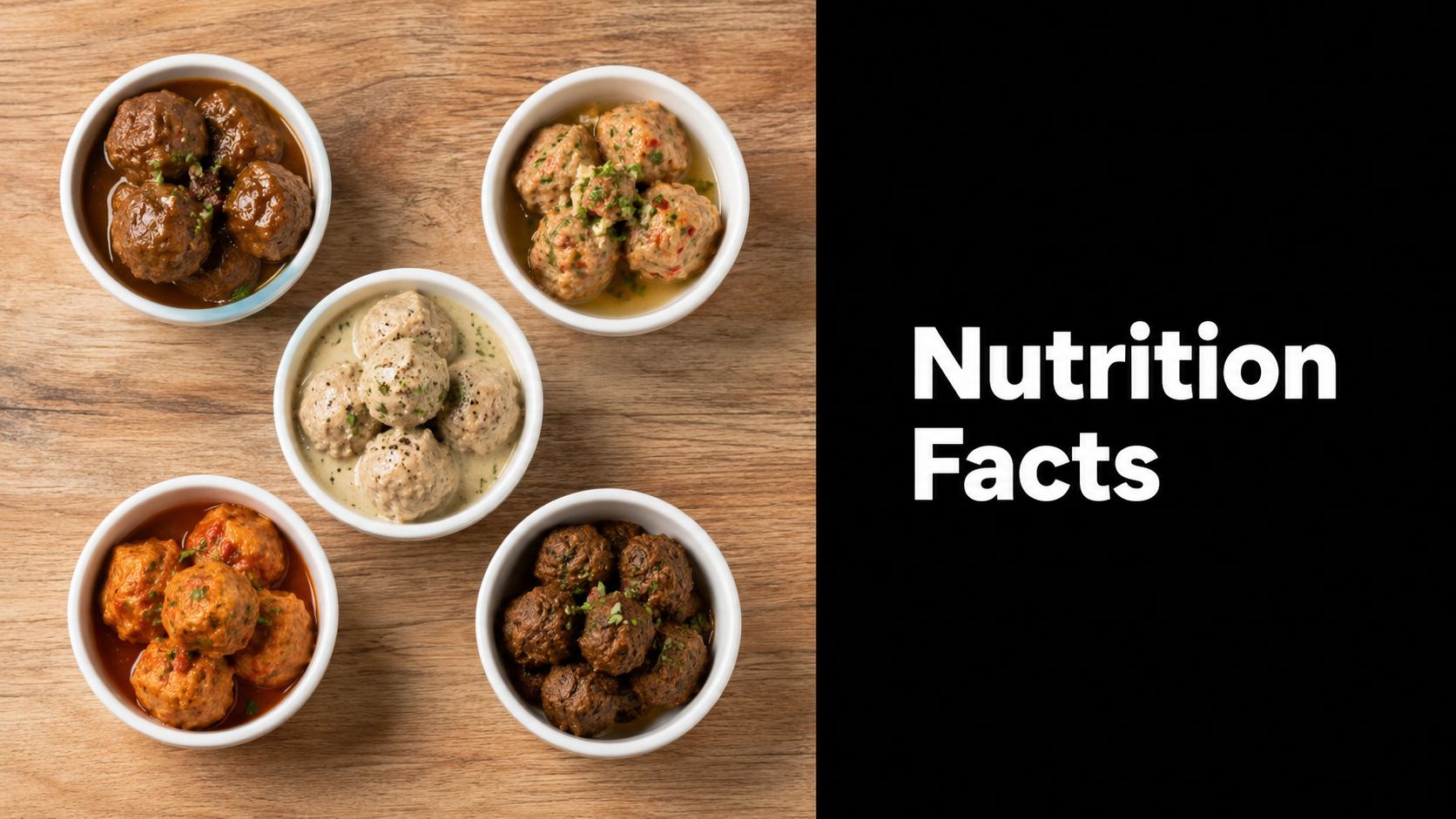
Meatballs nutrition facts usually start at 100 g with 286 kcal, 22.2 g fat, 8.1 g carbohydrates, 14.4 g protein, 666 mg sodium, and 66 mg cholesterol. That makes meatballs an energy-dense, protein-containing food with a sodium load that can matter fast when you're planning a full meal.
If you're deciding whether meatballs fit your goals, the answer is that the recipe and portion size matter more than the label name. Beef, pork, poultry, and plant-based versions can land in very different places nutritionally, and sauces or cooking methods can shift the numbers again.
If you're trying to fit meatballs into a calorie target, the fastest way to judge them is by weight and recipe type. A standard portion can add a meaningful amount of fat and sodium before any pasta, bread, or sauce enters the plate.
What Is the Standard Nutrition Profile for Meatballs?
The most useful baseline for meatballs nutrition facts is the 100 g reference point. At that size, a typical meatball profile comes in at 286 kcal, 22.2 g fat, 8.1 g carbohydrates, and 14.4 g protein, with 666 mg sodium and 66 mg cholesterol (nutrition composition reference). That mix tells you a lot about how meatballs behave in a meal, because calories come mostly from fat while carbohydrates stay relatively modest.

Why the sodium and cholesterol numbers matter
666 mg sodium is already a substantial amount in one reference serving, and the same baseline carries 66 mg cholesterol (nutrition composition reference). For someone building a full day of meals, that means the meatballs themselves can take up a noticeable share of the sodium budget before sauces or sides are added. The cholesterol number matters less as a standalone headline than as part of the overall pattern, especially if the recipe uses fatty meat or extra cheese.
Practical rule: if the meatballs are the protein center of the plate, treat the rest of the meal as the place to save sodium and saturated fat.
Why this food is rarely “light”
The macro split is important because it shows where the calories come from. In this baseline, fat supplies most of the energy, so meatballs are usually better understood as a protein-rich comfort food than as a lean protein source. That matters for weight loss planning, because a bowl of meatballs with sauce can look modest in volume while still delivering a dense calorie load.
Food composition databases also show that meatballs vary a lot by recipe and processing method, with some products closer to 225 kcal per serving and others around 302 kcal for a large serving (nutrition composition reference). That range is wide enough to change how a meal fits into a plan, which is why you should never assume one meatball recipe matches another. For a fast reference when you're shopping or cooking, the meatball food database can help you compare entries more accurately.
Nutrition Facts for Beef and Pork Meatballs
Beef and pork meatballs are where the category usually becomes most calorie-dense. A standard serving of large ground beef meatballs can total 302 calories, and the energy split is heavily weighted toward fat, at 67% fat, 31% protein, and only 2% carbohydrates (large ground beef meatballs reference). That split explains why these versions feel filling but can also push a meal over target if the portion gets large.
Beef meatballs reward portion discipline
Per 100 grams, beef meatballs are listed at 202 calories, with calories coming mostly from fat, and the same entry shows 12.41 g protein per 100 g (FatSecret beef meatballs). That combination makes portion size a major driver of intake. A small serving can look reasonable on paper, but the total climbs quickly once pasta, bread, or a second serving enters the plate.
For cooks choosing between richer and leaner beef blends, the outcome is straightforward. More fat in the grind means a softer texture and more calories, while leaner beef usually lowers the calorie load but can make the meatball less forgiving if it is overcooked. The same fat-versus-juiciness tradeoff shows up in meatballs, and expert advice for juicy burgers from Just Cook It is useful for understanding how grind composition affects moisture and texture.
Pork changes the texture, not the planning problem
Pork meatballs behave similarly from a meal-planning perspective because they still lean toward higher fat content when compared with lean poultry options. The exact calorie count depends on the grind and added ingredients, so the label matters more than the meat name. In practice, pork is often chosen for flavor and tenderness, not because it creates a lighter meal.
What matters most is the meal context. Beef or pork meatballs paired with creamy sauce, refined pasta, or bread can become a dense meal very quickly, while the same meatball served with vegetables and a lighter sauce is easier to fit into a calorie target. The meatball is rarely the only problem, and that is the mistake people make when they log the protein alone.
A meatball meal is only as lean as its richest ingredient.
Nutrition Facts for Chicken and Turkey Meatballs
A weeknight meal built around chicken or turkey meatballs can look balanced on the plate and still vary a lot in the numbers behind it. The main advantage is not only that poultry is leaner than many beef or pork options, but that it changes the entire macro balance of the meal. With less fat in the grind, there is often more room for vegetables, grains, or an extra protein source without pushing the meal out of range.
Poultry gives you more room in the meal
Compared with the beef entries above, chicken and turkey versions usually make it easier to keep calories under control. That is why they are often used in weight-loss plans or in higher-volume meals where the goal is a clear protein anchor without a heavy fat load. They also work well with sharper seasonings, herb-based sauces, and vegetable-heavy sides, which helps the plate feel complete without relying on richness.
The tradeoff is moisture. Poultry meatballs can dry out faster than beef or pork, so the cooking method and the recipe structure matter more than many home cooks expect. Ground chicken breast behaves differently from a mix that includes thigh meat, and turkey can shift from fairly lean to noticeably richer depending on the grind. That difference comes from the recipe, not from poultry itself.
What to look for on the label
The better poultry options usually keep the ingredient list short and the added fat low. If breadcrumbs, cheese, or oil-heavy binders make up much of the recipe, the poultry advantage narrows quickly. A chicken meatball can still become a calorie-dense food if the supporting ingredients are doing too much of the work.
For structured meal planning, the better question is whether the meatball fits the day's macro target. Poultry meatballs work well when you need protein without much fat baggage, especially at lunch or dinner when carbohydrates are already coming from the rest of the plate. That makes them a practical default for people tracking calories carefully.
If you are comparing poultry meals with non-meat protein formats, a vegan meal plan can be a useful reference point because it shows how the protein source, binders, and side dishes are usually built differently.
Are Plant-Based and Vegan Meatballs a Healthier Choice?
A plant-based meatball can fit a meal plan in a very different way from a meat-based one. The main advantage is that it can add fiber and bring zero cholesterol to a food that usually offers neither. The tradeoff is straightforward. Plant-based versions can still be calorie-dense and high in sodium, so the label matters as much as the protein source.

What plant-based meatballs add
The University of Rochester Medical Center lists meatless meatballs at 283.68 kcal per cup, with 30.24 g protein, 11.52 g carbohydrate, 12.96 g fat, 6.62 g fiber, 792 mg sodium, and 0 mg cholesterol (University of Rochester Medical Center). That profile shows why plant-based meatballs can be useful in real meal planning. They supply protein and fiber together, which helps separate them from many meat-based versions that offer protein without much fiber. For vegetarian, vegan, or flexitarian patterns, that combination can make the meal easier to balance.
Where the tradeoffs show up
The same serving also shows why plant-based does not automatically mean low sodium. At 792 mg sodium, this entry is still a meaningful sodium source (University of Rochester Medical Center). A shopper choosing plant-based meatballs for heart-health reasons still needs to check the package closely, especially if the product is heavily seasoned or made with several processed ingredients.
Best use case: plant-based meatballs make the most sense when you want fiber and a cholesterol-free protein option, not when you need a low-sodium shortcut.
How to judge them fairly
A fair comparison starts with the whole plate, not the label on the protein alone. A plant-based meatball served with a salty sauce or refined grains can be just as hard to fit into a diet as a red-meat version. The advantage becomes more useful when the meal includes vegetables and a lighter sauce, because the fiber has room to matter.
For readers building non-meat meals on purpose, the AI Meal Planner vegan option is one way to see how a plant-based pattern can be organized around macros instead of guesswork. That is the practical takeaway. Plant-based meatballs can be a smart choice, but only if the ingredient list and the rest of the meal match the goal.
How Do Sauces and Preparation Methods Affect Nutrition?
A meatball's final nutrition profile is never just about the meat. Breadcrumbs, cheese, oil, and sauce all add their own calories and sodium, and the cooking method can change the result even more. That's why two plates of meatballs can look similar and still land very differently in a food log.
Add-ins change the macro balance fast
Breadcrumbs contribute carbohydrates, cheese adds fat and sodium, and oil used in browning or frying adds calorie density without much volume. The more the recipe relies on these extras, the less the meatball itself defines the final nutrition facts. A marinara-based dish is usually easier to work into a plan than a cream-heavy or cheese-heavy sauce, but even tomato sauces can be sodium-heavy if they're packaged or heavily seasoned.
Cooking method matters as much as ingredients
Baking or air frying usually keeps added fat lower than pan-frying, because you're not asking the meatball to absorb extra oil. Frying can improve surface texture, but it also raises the calorie total in a way that's easy to miss if you only log the meat. That's one reason accurate tracking needs the cooking method, not just the ingredient list.
If the pan needs oil, that oil belongs in the log too.
A useful meal-planning habit is to separate the core protein from the finishing layers. Log the meatball recipe, then add the sauce and cooking fat as separate entries when possible. That gives you a cleaner picture of the meal and helps prevent the common error of undercounting dinner by a wide margin.
For recipe-based planning, the recipes library can help you compare versions before you cook. That matters because meatballs are a dish where the same name can hide very different nutrition outcomes.
Tips for Making Healthier Meatballs at Home
Healthier meatballs usually come from a few small decisions repeated consistently. Start with a leaner protein, reduce the amount of added fat, and make the texture work harder through vegetables and herbs instead of salt and cheese. Those choices won't turn meatballs into a salad, but they can make them much easier to fit into a normal day of eating.

Build the recipe around moisture, not extra fat
Grated zucchini, finely chopped mushrooms, and oats can help keep meatballs tender without leaning so hard on cheese or oil. The vegetables add volume and moisture, while oats bring structure with a gentler macro footprint than many enriched breadcrumbs. That makes the final dish easier to portion and usually more satisfying per calorie.
Cook them with less added fat
Bake, broil, or air fry when you can. These methods keep the recipe closer to the ingredient list you planned, instead of adding another layer of oil that gets easy to forget during logging. They also make batch cooking simpler, which helps if you're preparing several meals at once.
Don't ignore food safety
Meatballs need to reach the right internal temperature, and that matters for both safety and texture. Mayo Clinic Press lists 160°F for classic Italian meatballs (Mayo Clinic Press). If you're meal prepping, that number is useful because undercooked meatballs are a risk and overcooked poultry meatballs can dry out quickly.
For storage, it also helps to understand when food stays safe before it gets cooked or refrigerated. A practical guide like what causes food to spoil from BacteriaFAQ.com is helpful context when you're batch-cooking for the week.
Best habit: weigh the cooked batch, divide it into portions, and freeze what you won't use in the next couple of days.
How Do You Log Meatballs Accurately for Macro Tracking?
Logging meatballs accurately starts with refusing to treat them as a generic food. A search for “meatballs” in an app can pull up anything from a lean poultry recipe to a salty frozen Italian-style product, and those are not interchangeable in a macro plan. The closer your log matches the actual recipe, the more useful the numbers become.

Log the recipe, not just the name
Start by entering the meat type, the binder, the sauce, and any cooking fat separately when possible. If you made the meatballs at home, the most accurate entry is usually the recipe itself rather than a generic food database listing. That matters because the nutrient spread across meatball types is wide, from the beef and pork examples above to plant-based versions with very different fiber and sodium outcomes.
Use weight whenever you can
A digital scale gives you better control than guessing by count, especially when the meatballs aren't uniform. A guide to food safety compliant scales from Simply Hospitality is useful if you're choosing a tool for repeatable portioning, because the goal is consistency, not perfection. Once the batch is cooked, divide the total weight by the number of portions so each serving is easier to reproduce.
Match the log to the goal
If the goal is weight loss, log the sauce and oil carefully because those are often the hidden calorie sources. If the goal is muscle gain, the protein total matters most, but sodium still matters if you're eating meatballs often. If you want an easier system, Recipe Nutrition Calculator can calculate calories and macros from ingredients and quantities, which is useful when meatballs are entered as a full recipe.
AI Meal Planner can also organize recipes and meal plans around your target calories and macros, which makes repeated logging less manual. That's especially useful when you cook the same meatball recipe every week and want the numbers to stay consistent.
Frequently Asked Questions About Meatball Nutrition
| Question | Answer |
|---|---|
| Are meatballs good for weight loss? | They can be, if you control the portion, use a leaner recipe, and keep the sauce light. The problem is usually the fat and sodium load, not the idea of meatballs itself. |
| Are meatballs keto-friendly? | Some are, especially low-carb versions made with meat, cheese, and minimal breadcrumbs. The exact answer depends on the binder and sauce. |
| Are plant-based meatballs always healthier? | No. They can add fiber and eliminate cholesterol, but they can still be high in calories and sodium. |
| What should I track first, the meatball or the sauce? | Track both, but sauce often hides the easiest-to-miss calories and sodium. The complete dish is what matters for accuracy. |
| Can I use meatballs for muscle gain? | Yes, if the recipe gives you enough protein and fits your calorie target. Beef, poultry, and some plant-based versions can all work. |
| Why do my homemade meatballs log differently than store-bought ones? | Homemade recipes vary in meat type, binder, fat, and added salt, so the numbers rarely match a packaged product exactly. |
| How do I get more accurate portions at home? | Use a scale and divide the cooked batch by weight, not by eye. That keeps each serving consistent across meal prep days. |
For anyone who wants the cleanest possible tracking workflow, the most useful habit is simple. Build the recipe once, weigh the batch, and reuse the same verified entry instead of guessing each time you serve it. If you cook meatballs regularly and want a system that keeps calories, macros, and grocery planning aligned, visit AI Meal Planner and set up a meal plan that matches your goals.
AI-powered nutrition
Get Your Personalized Meal Plan
AI creates the perfect meals for your goals, lifestyle, and taste.
Start Your Journej