You've found a bag of rice with a rosy blush, an unfamiliar name, and a label that makes it sound both special and healthy. Madagascar pink rice is a lightly milled, medium- or long-grain rice whose natural color comes from pigments in the bran layer. A 60 g dry serving provides about 200 calories, 44 g of carbohydrate, 4 g of protein, and 2 g of fiber, so its strongest advantage is usually flavor and texture, not a dramatic nutritional transformation (True Foods Market nutrition information).
The most useful way to understand it is to treat it like a distinctive everyday grain rather than a novelty superfood. Its gentle chew gives grain bowls, salads, pilafs, and leftovers more structure, while its color adds contrast to familiar ingredients. The key question isn't whether pink rice is magically better than every other rice. It's whether its origin, cooking texture, and meal-planning qualities fit what you want to eat.
What Madagascar Pink Rice Actually Is
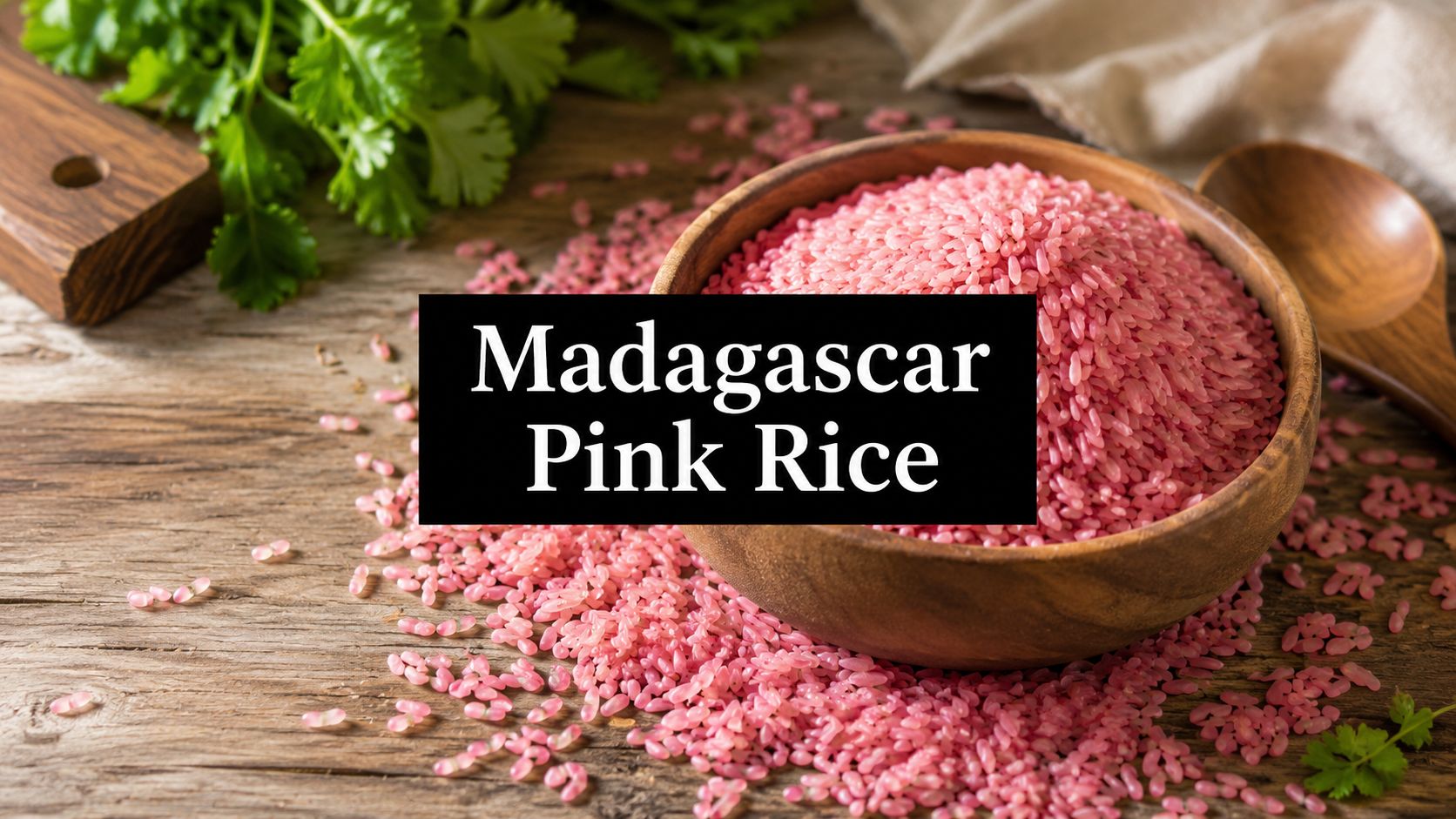
If a rosy grain appears beside familiar white and brown rice, treat the color as a clue about processing and variety, not as proof of a superior superfood. Madagascar pink rice is a naturally pigmented rice associated with the Lake Alaotra basin in northeastern Madagascar. It is described as medium- or long-grain, with its pink tone coming from pigments in the bran layer rather than added coloring (The African Gourmet's description of Madagascar pink rice).
That makes it different from white rice dyed pink, and it should not be treated as a stand-in for every red or black rice. Madagascar has a remarkably varied rice tradition, with source material documenting roughly 1,500 local rice varieties, including cataloged varieties such as Rojofotsy 1285 (Madagascar Rice Variety Map). Pink rice is one part of that wider agricultural story.
Its geographic identity is specific. The cultivation zone linked to the commercial product covers about 2,000 hectares between the Ivakaka and Imamba rivers near Lake Alaotra. Hydraulic works in the 1960s helped expand the basin's irrigable plains to about 80,000 hectares (UNCTAD paper on Madagascar pink rice). Highland runoff feeds lowland paddies, concentrating rice production around one of Madagascar's major rice-growing regions.

Why the bran layer changes the grain
A widely sold product is lightly milled, retaining about 66% of its bran layer (Kroger product specification for Lotus Foods Organic Madagascar Pink Rice). Processing therefore falls between fully polished white rice and familiar brown rice.
The bran helps produce a firmer bite and fuller flavor. It also leaves more of the grain's outer layers in place, while bran oils can make storage more sensitive to heat and air. In a meal, the effect resembles adding a sturdier grain to a bowl: the rice holds its shape, adds color, and gives softer ingredients more contrast.
That is the practical reason to buy it. Madagascar pink rice is primarily a flavor-and-structure upgrade for mixed meals, not a dramatic nutritional upgrade. For a broader comparison, explore grains by cooking use and nutrition profile with the AI Meal Planner food library.
Practical rule: Choose Madagascar pink rice for contrast, chew, and visual interest. Don't buy it expecting a high-protein or high-fiber staple.
Where Madagascar Pink Rice Comes From
Madagascar pink rice began its modern export journey in the Lake Alaotra region, where the Koloharena Ivolamiarina Besarety cooperative connected smallholder farmers with international buyers. Lotus Foods arrived in Madagascar in 2006. The product was first presented as red rice, then marketed as pink rice to emphasize its appearance (UNCTAD's account of the product's commercialization).
The change was commercial rather than botanical. The grain did not suddenly acquire a new color or flavor. Its name and packaging helped buyers recognize it as a distinctive specialty product, suitable for premium, giftable, and health-conscious markets.
Farming practices also became part of the rice's identity. The cooperative is associated with the System of Rice Intensification, or SRI, which emphasizes plant spacing, careful field management, and less reliance on continuous flooding. An independent account of Madagascar's SRI experience reports yields increasing from 1.5 t/ha under traditional practice to 4.2 t/ha when all five SRI practices were used (Cornell's SRI archive on Madagascar). That farming context helps explain why the product represents more than an unusual color in a retail bag.
From farmer innovation to export product
The export history developed through several linked steps:
- 2006: Lotus Foods arrived in Madagascar and helped position the crop for commercial export.
- 2007 to 2010: Lotus Foods marketed the rice in the United States through the Koloharena cooperative.
- Early 2010: The first container of milled pink rice reached the United States, carrying about 18 tons, followed soon afterward by a second container.
A 2009 grant helped farmers buy weeders and organic fertilizer. The Cornell archive also reports production rising by more than 50%. Together, these developments show how a local grain can move from preserved seed and farmer knowledge to cooperative processing, international branding, and retail packaging.

The cooperative model matters because shoppers usually see only the finished bag. Behind it are farmers, local processing, cultivation methods, and trade relationships. Certifications can provide useful signals, but clear information about origin and sourcing remains the better guide. This history adds context, not a promise of superior nutrition. For home cooks, the more dependable reason to choose the grain is the color, chew, and structure it brings to mixed meals.
How Madagascar Pink Rice Looks and Tastes
Start with the dry grain. Madagascar pink rice can show a russet-pink, dusty-rose, or muted mauve tone, depending on the product and how much bran remains visible. The kernels may look slightly translucent at the edges, and opening the bag can reveal a mild grain aroma rather than the pronounced floral fragrance associated with jasmine rice.
After cooking, the color usually deepens toward a mauve-brown shade. Bran flecks remain visible, and the grains tend to hold their shape instead of collapsing into a soft mass. That makes the rice visually closer to a lightly milled brown rice than to polished white rice.
How the texture compares
The easiest comparison is texture, not color:
- Against jasmine rice: Pink rice is generally firmer and less floral. Jasmine is soft and fragrant, while pink rice brings more resistance to the bite.
- Against basmati rice: Pink rice is less long and fluffy. Basmati separates into slender grains, while pink rice feels more compact and substantial.
- Against brown rice: Pink rice shares the bran-driven chew, but its bite may feel gentler and less rugged depending on the product.
- Against farro: Both can provide a satisfying chew, although farro is typically sturdier and more wheat-like.
A properly cooked kernel should yield to a fork while offering gentle resistance, similar to al dente farro or a firm short-grain brown rice. The aroma is subtle, with an earthy, mildly sweet character that can suggest toasted grain or warm bread crust. Salt, broth, herbs, nuts, and roasted vegetables help bring out that character.
Pink rice works best when you want the grain to remain noticeable in the finished dish. If your ideal rice is delicate, fluffy, and nearly invisible beneath a sauce, jasmine or basmati may suit you better. If you want a base that stands up to beans, curries, vegetables, or chilled dressings, the firmer structure is an advantage.
Madagascar Pink Rice Nutrition Compared to Other Rices
If you are choosing rice for a balanced bowl, pink rice is best understood as a flavor-and-structure upgrade, not a dramatic nutritional upgrade. Its firmer bite and earthy character can make beans, vegetables, tofu, or roasted ingredients feel more substantial, while its basic role remains that of a carbohydrate staple.
The nutrition figures above reflect the same 60 g dry serving cited in the introduction. For the commonly sold organic product, that portion provides about 200 calories, 44 g of carbohydrate, 4 g of protein, and 2 g of fiber, plus manganese, magnesium, phosphorus, and molybdenum (True Foods Market nutrition information). The fiber is useful but modest, and the protein content does not make pink rice a protein-rich food.
A practical comparison
The table focuses on how each rice functions in a meal. Exact nutrition varies with brand, milling level, and serving definition, so qualitative comparisons are more reliable than unsupported numbers.
| Nutrient / Attribute | Pink Rice | White Jasmine | Brown Long-Grain | Black Rice |
|---|---|---|---|---|
| Processing | Lightly milled, retaining about 66% of the bran layer | Fully or mostly polished | Bran and germ retained | Pigmented whole-grain style |
| Color source | Natural pigments in the bran | Pale outer appearance after milling | Tan bran layer | Dark natural pigments in the outer layer |
| Texture | Firm, chewy, structured | Soft, tender, floral | Chewy and nutty | Firm and substantial |
| Carbohydrate role | High-carbohydrate staple | High-carbohydrate staple | High-carbohydrate staple | High-carbohydrate staple |
| Fiber profile | About 2 g per 60 g dry serving for the cited product | Usually lower than less-milled rice, product dependent | Often higher than polished white rice, product dependent | Product dependent |
| Flavor | Mildly sweet, earthy, grain-forward | Floral and delicate | Nutty and toasted | Deep, earthy, sometimes slightly sweet |
| Best use | Bowls, salads, pilafs, make-ahead meals | Light sides and fragrant dishes | Hearty sides and grain bowls | Colorful bowls, salads, and desserts |
Color alone cannot establish that one rice is healthier. Serving size and the rest of the meal often matter more than appearance. Glycemic impact also varies with portion size and accompanying protein, fat, and fiber. Current product information does not support claiming that pink rice has a superior glycemic effect.
Use a recipe nutrition calculator when you want to assess a complete bowl rather than the rice alone. Pink rice served with chickpeas, vegetables, olive oil, or tofu creates a different nutritional picture from the same portion eaten by itself. That is its practical advantage: it gives mixed meals a more noticeable grain flavor and sturdier structure, while remaining nutritionally similar in overall role to other rice staples.
Cooking Madagascar Pink Rice the Right Way
For a dependable stovetop batch, use 1 cup of rice with about 1 3/4 to 2 cups of water. Bring it to a boil, then lower the heat and simmer for 15 to 20 minutes, following the Brookfield Farm cooking guidance.
Rinse the rice briefly in a fine-mesh strainer to remove loose starch and debris. The rinse leaves the bran intact, which helps preserve the grain's firmer texture. If your schedule allows, soak it for about 30 minutes. Like wetting a dry sponge before squeezing it, soaking gives the kernels more time to hydrate evenly, particularly with products sold as higher-bran rice.
Stovetop method
- Put the rinsed rice, water, and a pinch of salt in a saucepan.
- Bring the mixture to a boil while watching the pot.
- Reduce the heat to low, cover, and simmer for 15 to 20 minutes.
- Remove the saucepan from the heat and let it stand, covered, for 5 to 10 minutes.
- Fluff gently with a fork, then taste before adding more salt.
Water keeps the flavor clean, while broth adds savory depth. Olive oil suits a pilaf, and coconut milk works for a breakfast bowl or tropical side dish. A rice cooker can use approximately the same ratio on a brown-rice or whole-grain setting. A pressure cooker is another option, with high-pressure cooking taking around 18 to 20 minutes according to the specified preparation guidance.

For several meals, cook a batch, cool it quickly, and refrigerate it in an airtight container. Chilled grains firm up, so add a splash of water before reheating and cover the container to bring back moisture. The payoff is mainly culinary: properly cooked pink rice gives mixed meals a more distinct flavor and sturdier bite, rather than a major nutritional change.
Best Recipes and Meal Plan Uses for Pink Rice
The best use for Madagascar pink rice is any dish where the grain needs to keep its identity. Its chew gives saucy ingredients something to cling to without turning the entire bowl soft, and its color makes simple meals look more composed.
Match the grain to the plate
Grain bowls are the most forgiving starting point. Layer pink rice with roasted root vegetables, chickpeas, tofu, grilled salmon, or lemon-herb chicken. Add a dressing at the end so the grains stay distinct.
Cold salads benefit from the same structure. Toss the cooked rice with herbs, cucumber, roasted peppers, mango, avocado, or a sharp vinaigrette. Unlike very soft rice, it can remain satisfying after chilling because the kernels don't disappear into the dressing.
Stuffed vegetables offer another natural fit. Fill peppers, tomatoes, or squash with pink rice, aromatics, beans, and herbs, then bake until the vegetables soften and the filling absorbs their juices. The rice's bran-rich bite gives the filling more substance than a delicate white rice would provide.

Use leftovers as a planning tool
A single cooked batch can move across cuisines:
- Savory pilaf: Fold in toasted cashews or almonds, dried fruit, scallions, and herbs.
- Curry base: Serve it beneath lentils, chickpeas, or a vegetable curry that needs a sturdy foundation.
- Stir-fry: Add chilled grains to a hot pan with vegetables, tofu, egg, or a soy-based sauce.
- Breakfast porridge: Simmer cooked rice with coconut milk, honey, and cardamom for a softer, sweeter bowl.
The texture makes pink rice especially useful for meal prep. Build balanced plates by adding a clear protein source, vegetables for volume and fiber, and a fat such as avocado, tahini, nuts, or olive oil. That approach is more useful than calling the rice itself a complete health upgrade.
For more ways to turn a cooked grain into practical lunches and dinners, browse these adaptable rice-based recipes.
Substitutions and Who Should Eat Pink Rice
Pink rice earns a place at the table through flavor and structure, not because it dramatically changes a meal's nutrition. As noted in the nutrition comparison above, this rice is a conventional carbohydrate staple rather than a protein or fiber powerhouse.
Calling it “healthier rice” misses the useful distinction. Its retained bran can add more texture and a different mineral profile than white rice. Compared with other whole rices, however, the practical difference may come more from taste, cooking behavior, portion size, and the foods served alongside it. Treat pink rice as a meal-building choice, much like choosing a sturdier bread for a sandwich.
| Attribute | Pink Rice | Brown Rice | White Rice | Red Rice | Black Rice |
|---|---|---|---|---|---|
| Main reason to choose it | Rosy color, mild earthiness, chewy structure | Familiar whole-grain chew | Soft texture and neutral flavor | Nutty, robust flavor | Deep color and firm bite |
| Meal texture | Structured and moderately chewy | Chewy | Tender and lighter | Firm and hearty | Firm and substantial |
| Best substitute role | Bowls, salads, pilafs | Everyday whole-grain side | Delicate or soft rice dishes | Similar nutty, pigmented dishes | Color-forward bowls and salads |
| Dietary fit | Gluten-free, vegetarian, vegan, and adaptable to balanced plans | Gluten-free and whole-grain meal plans | Gluten-free and easy-to-digest meals | Gluten-free and flavor-focused meals | Gluten-free and visually striking meals |
| Choose instead when | You want a distinctive grain that holds shape | You want broad availability | You want softness or faster familiarity | You want a more pronounced red-rice flavor | You want darker color and deeper flavor |
Red Camargue rice and Bhutanese red rice suit cooks seeking a similarly nutty chew. Forbidden rice, also called black rice, brings a deeper color. Wheat berries and farro work when you want an even sturdier bite, though they are wheat grains rather than rice and do not suit people avoiding wheat.
Pink rice can fit gluten-free, vegetarian, vegan, Mediterranean, and macro-balanced meal patterns. Its firmer, bran-rich texture may be less comfortable for people who find dense whole rices difficult to digest. Anyone managing strict arsenic sensitivity should discuss rice choices with a qualified clinician instead of assuming a specialty variety resolves that concern. For most shoppers, the clearest reason to choose pink rice is simple: it gives mixed meals a more distinctive color and chew while remaining easy to pair with vegetables, legumes, and a clear protein source.
Buying, Storing, and Choosing Sustainable Pink Rice
Choosing Madagascar pink rice takes more label reading than choosing familiar white rice. Look at specialty grocers, online heritage-grain retailers, and food cooperatives that name the rice's origin. A bag connected to the Koloharena cooperative may offer clearer traceability than one labeled only “pink rice,” with no country or farming organization identified.
Use the label as a sourcing checklist
Check these details before buying:
- Origin: The package should name Madagascar, preferably with a region or cooperative.
- Processing: “Lightly milled” signals more bran and a firmer bite.
- Trade relationship: Fair-trade or direct-trade wording is more useful when the package names the organization supporting the claim.
- Harvest information: A harvest year or lot detail helps you assess freshness.
- Package size: A small bag suits a first trial. Buy a larger sack only after confirming that you enjoy the flavor and can store it properly.
The bran changes storage needs. Its oils can lose quality faster than those in fully milled rice, so choose an airtight, opaque package when possible. At home, transfer opened rice to a sealed container and keep it in a cool, dark, dry pantry. Refrigeration or freezing can slow quality loss if you cook it infrequently.
Judge sustainability beyond the front label
SRI-related sourcing may indicate attention to water and farm-input management, but the package should connect that statement to a named producer, cooperative, or certification. Cooperation among small farmers can support local processing and market access. Ocean shipping also affects the product's environmental footprint, so weigh that factor against the value of an imported specialty grain.
Traceability check: A credible sustainability claim should identify who produced the rice, where it was grown, and which standard or working relationship supports the claim.
Words such as “natural,” “ethical,” and “eco-friendly” do not explain a supply chain on their own. Look for concrete details, including a cooperative name, country of origin, production method, or certification body. If those details are absent, treat the environmental language as incomplete rather than proof of responsible sourcing.
A planned meal can also prevent specialty rice from sitting unused. Use a grocery list generator to organize bowls, salads, and dinners around one bag, then buy complementary vegetables, legumes, and proteins.
AI Meal Planner can create personalized weekly menus around Madagascar pink rice, dietary preferences, allergies, calorie targets, and macro goals. Visit AI Meal Planner to generate recipes, reuse leftovers, and receive an organized grocery list without planning every dish from scratch.
AI-powered nutrition
Get Your Personalized Meal Plan
AI creates the perfect meals for your goals, lifestyle, and taste.
Start Your Journej