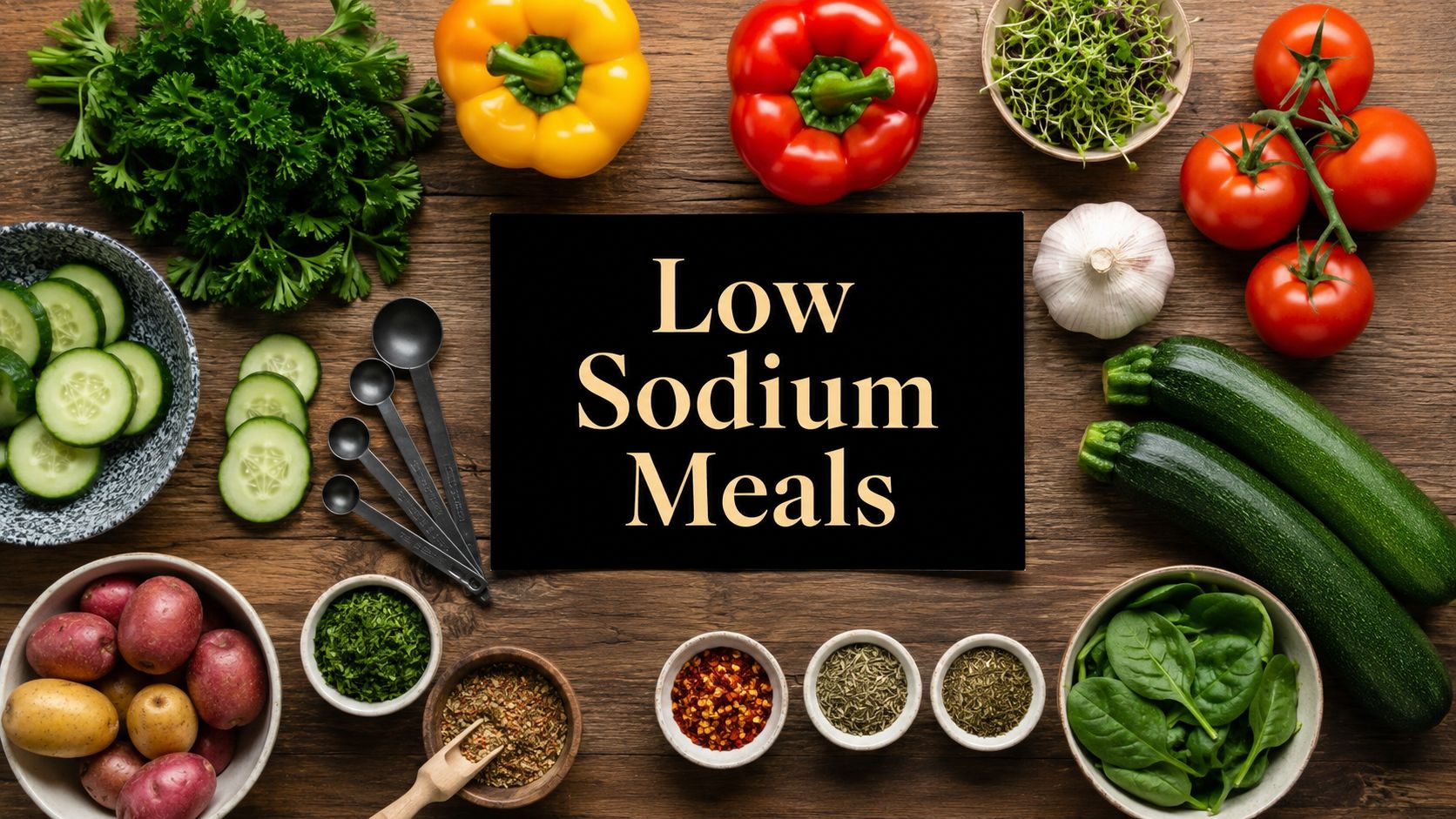
You can make low-sodium meals satisfying by building flavor with minimally processed ingredients, no-salt-added products, rinsed canned legumes, herbs, spices, acids, and homemade sauces. The eight meals below range from 65 to 280 mg of sodium per serving, depending on the ingredients and portions used.
The better question isn't whether low-sodium cooking can taste good. It's whether your routine gives flavor enough time to develop. Roasting brings out sweetness, grilling adds char, citrus sharpens mild foods, and homemade dressings let you control the sodium that packaged sauces often hide.
These low sodium meal ideas are organized around real situations, including fast weeknights, batch cooking, plant-forward lunches, family meals, and flavor swaps for familiar dishes. Labels, serving sizes, rinsing, and recipe components determine the final total, so treat each range as a planning guide rather than a guarantee for every brand.
A useful starting point is the World Health Organization recommendation that adults consume less than 2,000 mg of sodium per day, equivalent to less than 5 g of salt or about one teaspoon. WHO reported global mean adult intake of 4,278 mg per day in 2021, more than double that recommendation. On U.S. labels, foods with 140 mg of sodium or less per serving are commonly defined as low sodium, while 5% Daily Value or less is considered low. See this guide to growing herbs for better flavor if you want fresh seasoning within easy reach.
1. Grilled Chicken Breast With Roasted Seasonal Vegetables
Grilled chicken and roasted vegetables are dependable for fast weeknights because the components can cook at the same time. Use plain chicken breast, not pre-marinated or broth-injected poultry, then pair it with broccoli, bell peppers, zucchini, and sweet potato. The meal's flavor comes from browning, herbs, and citrus rather than added salt.
Marinate the chicken for 15 to 30 minutes in olive oil, lemon or lime juice, garlic, black pepper, and a salt-free herb blend. Grill it while vegetables roast at 425°F, using only enough oil to coat the vegetables lightly. Sweet potato develops caramelized edges, while zucchini and peppers soften quickly.

Make one chicken base taste different
A Sunday batch doesn't have to mean eating the same plate repeatedly. Divide the chicken into portions and rotate salt-free profiles such as Italian herbs, cilantro-lime, lemon-pepper, or Cajun seasoning without salt. A fresh squeeze of citrus just before eating makes the flavor seem livelier than citrus added early.
Practical rule: Build a flavor toolkit with several salt-free blends, then change the acid and vegetables before changing the whole recipe.
For macro tracking, weigh the cooked chicken portion separately from the vegetables. That makes it easier to increase protein for a training meal, add more sweet potato for carbohydrates, or reduce oil when calories need tighter control. A single-portion version works well for a busy professional, while a larger batch supports several lunches without depending on packaged sides.
2. Mediterranean Bowl With Chickpeas, Fresh Vegetables, and Feta
This bowl works best as a portable lunch because each ingredient keeps its texture when stored separately. Start with cooked quinoa or farro, then add chickpeas, tomatoes, cucumber, and bell pepper. A modest amount of feta contributes tang, but the bowl shouldn't depend on cheese, olives, or bottled dressing for character.
Rinse canned chickpeas thoroughly and drain them before seasoning. The Food and Drug Administration's Nutrition Facts label guidance recommends using the label's 5% Daily Value threshold as a low-sodium reference and 20% Daily Value as a high-sodium reference. Compare feta and chickpea labels, because brands can differ substantially.
Cook grains ahead and store them apart from wet vegetables. Mix lemon juice, olive oil, parsley, mint, garlic, and black pepper for a sharp dressing. If feta is too salty for your target, choose a lower-sodium version or replace part of it with extra lemon and herbs.
Grocery blocks for repeat lunches
- Grain base: Cook quinoa or farro in a plain cooking liquid and cool it before storage.
- Legume base: Choose no-salt-added chickpeas when available, then rinse canned versions.
- Produce base: Rotate cucumber, tomatoes, peppers, leafy greens, and radishes.
- Crunch base: Use unsalted pumpkin seeds, sunflower seeds, almonds, or pine nuts instead of olives.
- Dressing base: Keep lemon-herb dressing in a separate container until serving.
For macro tracking, keep the grain and chickpea portions consistent while changing the vegetables. Add feta as a measured ingredient rather than an automatic topping. You can also use an AI Mediterranean meal plan to organize variations around the same grocery building blocks.

3. Sheet Pan Salmon With Lemon, Garlic, and Asparagus
Salmon is a strong choice when you want a complete dinner with very little assembly. Place the fillet skin-side down on parchment, arrange asparagus alongside it, and add thin lemon slices, minced garlic, black pepper, parsley, or dill. Roast the pan at 400°F for 15 to 18 minutes, depending on thickness.
Pat the salmon dry first so the surface roasts rather than steams. Toss asparagus with a small amount of olive oil and keep it separate from the fish to limit moisture transfer. Add herbs shortly before cooking so they adhere to the fillet, then finish with lemon juice at the table.

Keep the fish moist without salty marinades
Salmon doesn't need teriyaki, bottled glaze, or a heavy spice rub. Lemon slices provide aroma as the fish cooks, garlic adds savory depth, and a little olive oil improves texture. If you prefer a crisp exterior, cook the fish skin-side up after the initial roasting stage, or remove the skin before serving if that better suits your preferences.
Use the portion size as the main macro lever. Keep the salmon steady when protein and fat are priorities, then adjust asparagus, rice, or another plain grain to change carbohydrate intake. The salmon recipe collection can help place this dinner into a broader weekly rotation.
4. Stir-Fried Tofu With Brown Rice and Fresh Ginger-Garlic Sauce
Takeout-style stir-fries often taste intense because they combine salty sauces, sweeteners, and concentrated seasonings. This version creates a similar contrast with pressed tofu, fresh vegetables, ginger, garlic, rice vinegar, sesame oil, and a carefully measured low-sodium soy sauce or tamari.
Press extra-firm tofu for 20 to 30 minutes under a heavy object wrapped in kitchen towels. Cut it into even cubes, then cook it until the surfaces turn golden. Stir-fry snap peas, carrots, mushrooms, and broccoli separately or in batches so they retain some bite. Add the tofu during the final 2 to 3 minutes, then coat everything with the homemade sauce.
Sauce first, stir-fry second
Prepare the sauce in advance with fresh ginger, garlic, rice vinegar, sesame oil, and a small measured amount of low-sodium soy sauce or tamari. Tamari isn't automatically low sodium, so read the label instead of assuming it has less sodium. For a soy allergy, use an appropriate soy-free alternative and verify its label.
Finish with sesame seeds or sliced green onion for texture. Those toppings won't replace salt by themselves, but they make the dish feel more complete. Serve over plain brown rice and track the rice, tofu, oil, and sauce separately so your calorie and macro totals remain clear.
A vegan meal-prepper can vary the vegetables across the week without changing the sauce formula. Families reducing takeout gradually can serve the sauce on the side, letting each person control intensity without adding extra sodium to the full pan.
5. Slow Cooker Chili With Beans and Fresh Spices
Chili is one of the most useful batch-cooking meals because time does much of the flavor work. Brown ground turkey or lean beef before it enters the slow cooker. Add no-salt-added diced tomatoes, rinsed kidney beans, black beans, onion, garlic, cumin, chili powder, paprika, oregano, and black pepper.
Browning develops a deeper savory base than putting raw meat directly into the cooker. Split the spice mixture so some goes in at the start and the rest midway through cooking. This keeps the flavor from becoming flat after a long cook.
Build a family chili bar
Cook the chili on low for 6 to 8 hours, then brighten it with fresh cilantro and lime juice. Keep toppings separate so the base remains flexible. Good options include diced avocado, plain yogurt, unsalted corn, chopped cilantro, or sliced green onion. Avoid assuming that salsa, shredded cheese, tortilla chips, and bottled hot sauce are low sodium. Check each label.
- Protein choice: Use turkey for a leaner bowl, or lean beef when a richer flavor matters more.
- Legume choice: Use no-salt-added beans and rinse canned beans before adding them.
- Carbohydrate choice: Serve alone, over plain rice, or over quinoa depending on your macro target.
- Storage choice: Freeze individual portions for convenient reheating.
A measured serving of chili makes macro tracking easier because meat, beans, and tomatoes are distributed through the batch. If you add rice or toppings, log them separately rather than treating the whole bowl as one interchangeable portion.
6. Herb-Crusted Turkey Breast With Roasted Root Vegetables
Turkey breast gives you a lean, protein-centered plate without relying on deli turkey or packaged seasoning. Pound the breast to an even thickness, then coat both sides with chopped parsley, thyme, rosemary, garlic, olive oil, and lemon zest. The herb crust sticks better when the surface is dry.
Sear the turkey in a cast-iron pan for 2 to 3 minutes per side, then transfer it to a 375°F oven for 12 to 15 minutes. Use an instant-read thermometer and cook to 165°F internally, avoiding extended cooking that dries the lean meat. Rest it for 5 minutes before slicing.
Match the vegetables to the herb crust
Roast carrots, parsnips, beets, and turnips with a light coating of olive oil and the same herbs used on the turkey. This creates a unified plate without sauce. If beets are too earthy for your household, use sweet potato or winter squash while keeping the herb and lemon profile intact.
For athletes tracking macros, turkey provides a clear protein anchor, while root vegetables supply the main carbohydrate component. For calorie control, measure oil carefully because it adds energy without adding much volume. For a family meal, slice the turkey and serve the vegetables separately so each person can build a plate that fits their appetite.
The sodium result depends on the turkey product. Choose plain, unenhanced meat and read the package for terms that indicate added broth or saline. A plain cut and a seasoned convenience product may look similar in the case but behave very differently in your daily total.
7. Vegetable-Based Soups With Homemade Unsalted Broth
Soup becomes a low-sodium staple when the broth is under your control. Start with homemade unsalted vegetable broth or bone broth made from onion, carrot, celery leaves, garlic, herbs, and vegetable scraps. Add apple cider vinegar during cooking if you like a brighter base, then strain and freeze the broth in convenient portions.
Build the soup around hard vegetables first, such as carrots, turnips, or potatoes. Add tender greens, zucchini, herbs, or cooked legumes near the end so they retain color and texture. Tomatoes, lentils, beans, barley, or brown rice can turn a light vegetable soup into a more filling meal.
Keep the base flexible
Prepare the broth and vegetables separately when you're cooking for several days. Combining them too early can leave vegetables soft and waterlogged after reheating. Instead, warm a portion of broth, add the vegetables and legumes, and finish with lemon juice and fresh herbs.
Fresh herbs and acid belong at the end. Long cooking extracts depth, but it can mute the bright notes that make unsalted soup taste finished.
For kidney disease or other medical conditions, sodium and other nutrient targets need individual guidance. A homemade broth gives you control, but it doesn't make every soup suitable for every medical diet. Track the grains, legumes, oil, and protein separately when you need accurate calories and macros.
Use an AI low-sodium meal plan to rotate soup combinations while keeping your grocery list practical. The same broth can support a vegetable-lentil soup one day and a grain-and-greens version later in the week.
8. Grain Bowls With Black Beans, Roasted Vegetables, and Cilantro-Lime Dressing
Grain bowls are especially useful for portable lunches because one base can support different protein choices. Cook quinoa, farro, or brown rice in plain water, then add rinsed black beans, roasted vegetables, and fresh raw vegetables. The cilantro-lime dressing brings acidity and aroma without depending on a bottled condiment.
Rinse and drain canned black beans thoroughly. Choose no-salt-added beans when available, and compare labels before buying. Roast vegetables such as peppers, cauliflower, zucchini, or sweet potato until browned, then cool them before assembling the bowls.
Assemble for texture, not just storage
Put grains on the bottom, beans and roasted vegetables in the middle, and raw vegetables near the top. Add the dressing only when you eat the bowl. Crunchy toppings such as unsalted seeds, nuts, or homemade crispy chickpeas should also go on at serving time.
Make the dressing from cilantro, lime juice, garlic, olive oil, and black pepper. Store it separately and use a measured portion for macro tracking. The grain bowl recipe collection can provide more combinations while you keep the grain and bean foundation consistent.
Grocery-building insight: Cook one grain, roast one large tray of vegetables, and buy two fresh toppings. Variety comes from assembly, not from purchasing a different recipe's ingredients every day.
Vegetarians can keep the bowl as written, while fitness-focused diners can add plain grilled chicken or tofu. If calories need to come down, reduce dressing or seeds before cutting vegetables. If carbohydrates need to rise, increase the grain portion and keep the beans steady.
8 Low-Sodium Meal Ideas Comparison
| Dish | Implementation Complexity 🔄 | Resource & Time ⚡ | Expected Outcomes 📊 ⭐ | Ideal Use Cases 💡 | Key Advantages ⭐ |
|---|---|---|---|---|---|
| Grilled Chicken Breast with Roasted Seasonal Vegetables | Moderate 🔄, sheet-pan or grill; 25–30 min active | Low ⚡, affordable chicken & seasonal veg; basic tools | Lean protein + fiber; low-sodium (150–200mg); ⭐⭐⭐⭐ | Meal prep, fitness macro tracking, weeknight dinners | Adaptable diets; easy scaling; simple macro tracking |
| Mediterranean Bowl with Chickpeas, Fresh Vegetables, and Feta | Low 🔄, mostly assembly; minimal cooking for grains | Moderate ⚡, pantry grains, chickpeas, fresh produce; inexpensive | High fiber, plant-forward protein; sodium 180–250mg; ⭐⭐⭐⭐ | Lunch bowls, heart-healthy Mediterranean pattern, office lunches | High fiber; vegan-adaptable; minimal cook time |
| Sheet Pan Salmon with Lemon, Garlic, and Asparagus | Low 🔄, one-pan; 15–18 min cook but precise timing | Moderate ⚡, higher-cost salmon; oven; fresh produce | Omega-3 rich, vitamin D; very low sodium (65–90mg); ⭐⭐⭐⭐⭐ | Fast weeknight dinners, heart-health plans, busy households | Fast, one-pan, nutrient-dense (omega‑3s), minimal cleanup |
| Stir-Fried Tofu with Brown Rice and Fresh Ginger-Garlic Sauce | Moderate 🔄, pressing tofu and stir-fry technique | Low ⚡, budget-friendly tofu & veg; pan/wok; brown rice adds time | Complete plant protein (with grains); sodium 180–220mg; ⭐⭐⭐⭐ | Vegan meal-prep, budget protein swaps, reduce takeout | Low-sodium vs takeout; vegan; cost-effective |
| Slow Cooker Chili with Beans and Fresh Spices | Low active effort 🔄, hands-on <15 min; 6–8 hr cook | Low ⚡, inexpensive pantry staples; requires slow cooker | High fiber & protein; batch yields; sodium 220–280mg; ⭐⭐⭐⭐ | Batch cooking, families, freezer meals, meal-prep Sundays | Hands-off cooking; economical; deep flavor without added salt |
| Herb-Crusted Turkey Breast with Roasted Root Vegetables | Moderate 🔄, sear + oven finish; temp control needed | Moderate ⚡, turkey breast, fresh herbs, oven/cast iron | Ultra-lean protein; low sodium 75–120mg; ⭐⭐⭐⭐ | Weight-loss plans, high-protein meals, formal meal prep | Very lean, high protein-to-calorie, visually appealing |
| Vegetable-Based Soups with Homemade Unsalted Broth | Moderate-to-high 🔄, long broth time (8–24 hr) but low hands-on | Low cost ⚡, affordable scraps; freezer space required | Full sodium control; collagen if bone broth; sodium 80–140mg; ⭐⭐⭐⭐ | Sodium-restricted diets, batch freezer meals, gut/joint support | Complete sodium control; economical; highly customizable |
| Grain Bowls with Black Beans, Roasted Vegetables, and Cilantro-Lime Dressing | Low 🔄, grain cook time (20–30 min) + assembly | Low ⚡, common pantry ingredients; bulk-cook friendly | Complete plant protein (grain+bean); sodium 160–210mg; ⭐⭐⭐⭐ | Weekday lunches, vegetarians, budget meal-prep | Filling, versatile, economical; easy to customize |
Build a Low-Sodium Rotation You Can Actually Repeat
The best meal plan is one you can cook again when work is busy. Use the grilled chicken and salmon for fast weeknights, especially when a sheet pan or grill can handle the protein and vegetables together. Choose chili and vegetable soup when you want batch cooking, freezer portions, and lunches that reheat well. Mediterranean bowls and grain bowls are better for portable meals because the wet ingredients, grains, and toppings can stay separate until serving.
Turkey breast fits a lean-protein-focused plate, while tofu stir-fry provides a plant-based option with a more intense flavor profile. The trade-off is preparation. Turkey needs careful cooking to avoid dryness, tofu benefits from pressing, and bowls require component storage. Those extra steps are manageable when you prepare grains, dressings, broth, or spice blends ahead of time.
A practical flavor-swap checklist includes:
- Citrus: Finish chicken, fish, beans, and vegetables with lemon or lime juice.
- Vinegar: Use rice vinegar, apple cider vinegar, or balsamic vinegar to sharpen sauces and dressings.
- Aromatics: Cook garlic, onion, ginger, and scallions to create a savory foundation.
- Fresh herbs: Add cilantro, parsley, thyme, rosemary, dill, mint, or basil near the end.
- Salt-free spice blends: Use Italian herbs, lemon-pepper, smoked paprika, cumin, or Cajun seasoning without salt.
- Rinsed legumes: Drain and rinse canned beans and chickpeas, then choose no-salt-added versions where possible.
- No-salt-added goods: Look for canned tomatoes, beans, broths, and vegetables without added salt.
- Homemade dressings: Mix oil, citrus or vinegar, garlic, herbs, and spices instead of relying on bottled sauces.
The label provides the most reliable check for packaged ingredients. The FDA identifies foods with 5% Daily Value or less as low in sodium and 20% Daily Value or more as high, so compare every sauce, broth, cheese, tortilla, and canned product that enters the meal. A food labeled low sodium generally contains 140 mg or less per serving, and the American Heart Association also uses that threshold, with 35 mg or less described as very low sodium in guidance summarized by Memorial Sloan Kettering Cancer Center's 2-gram sodium diet resource.
For daily planning, WHO recommends staying below 2,000 mg of sodium per day, while U.S. guidance commonly uses 2,300 mg per day. The FDA's sodium guidance notes that Americans average about 3,400 mg per day, and 90% eat more than recommended. These figures explain why small choices, such as replacing packaged soup with homemade broth or bottled dressing with lemon and herbs, can matter across a full week.
Macro planning works best when you track the parts that change. Record the protein portion, cooked grain or root vegetable, oil, legumes, cheese, and dressing separately. That lets you keep sodium controlled while adjusting calories, protein, carbohydrates, or fat for weight loss, muscle gain, or general eating preferences.
Your medical target may differ from a general guideline. If you manage hypertension, heart disease, kidney disease, fluid retention, or take medication that affects fluid balance, discuss the appropriate sodium level with a qualified healthcare professional before making major dietary changes.
Frequently asked questions
What sodium range do these meal ideas provide?
The supplied meals range from 65 to 280 mg of sodium per serving, depending on ingredients and portions. Brand labels, canned products, sauces, cheese, and serving sizes can change the final total.
Should I rinse canned beans for low-sodium meals?
Yes, drain and rinse canned beans or chickpeas before using them. Choose no-salt-added versions when available and still check the label for the actual sodium per serving.
Are homemade sauces better than bottled sauces?
Homemade sauces make sodium easier to control because you choose the soy sauce, tamari, oil, acid, herbs, and spices. Bottled sauces can fit occasionally, but their labels need careful comparison.
Can I meal-prep these recipes?
Yes. Chili, soup, cooked grains, roasted vegetables, chicken, and turkey are especially useful for batch cooking. Store dressings and wet toppings separately so bowls and vegetables don't become soggy.
How can I add flavor without salt?
Use garlic, onion, ginger, citrus, vinegar, fresh herbs, black pepper, spices, and salt-free seasoning blends. Roasting, grilling, browning, and sautéing also create deeper flavor without adding sodium, as described in this salt-free seasoning guide.
Which meal should I choose for a fast weeknight?
Choose grilled chicken with roasted vegetables or sheet pan salmon with asparagus. Both rely on straightforward preparation and let the oven or grill do most of the work.
Which meal is best for portable lunches?
The Mediterranean chickpea bowl and the black bean grain bowl travel well when grains, vegetables, dressing, and crunchy toppings are stored separately. Keep the portions consistent if you're tracking calories and macros.
AI Meal Planner can turn these principles into personalized weekly plans with calculated macros and calories, ingredient swaps, and aisle-sorted grocery lists. Set your dietary preferences and sodium target, then adjust meals around allergies, family needs, or training goals.
Visit AI Meal Planner to create a personalized low-sodium week with meal swaps, calculated nutrition, and a grocery list organized by aisle. Use it to keep fresh ingredients moving across chicken, salmon, bowls, chili, and soup without relying on spreadsheets or guesswork.
AI-powered nutrition
Get Your Personalized Meal Plan
AI creates the perfect meals for your goals, lifestyle, and taste.
Start Your Journej