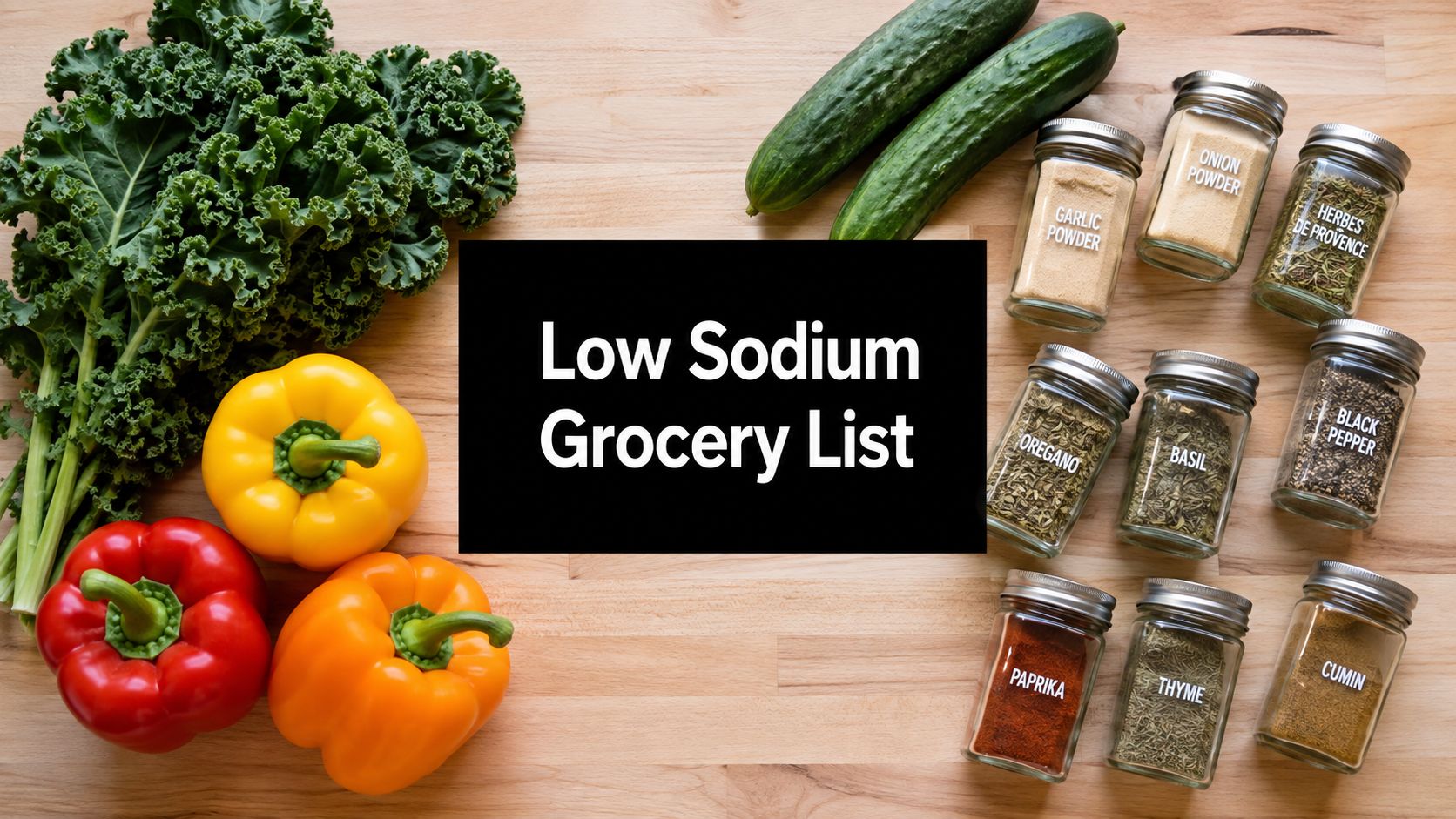
A good low sodium grocery list starts with food you can trust before you even reach the label. Build it around fresh produce, plain proteins, unsalted staples, and packaged foods that meet a sodium target you can verify on the Nutrition Facts panel. Use 140 mg of sodium or less per serving or 5% Daily Value or less as your low-sodium cutoff, and treat 20% DV or more as a high-sodium signal.
That approach keeps meals workable. It also keeps shopping simple, because you are choosing foods that already fit the goal instead of trying to repair a salty cart later.
Stock Your Kitchen for Low-Sodium Success. A smart list gives you control over both sodium and spending, especially when you buy whole ingredients instead of convenience foods. For a closer look at how ingredient costs are broken down, determining per-unit farm costs is a useful reference. Use that same mindset when you shop, and your pantry starts doing real work for you.
A strong low-sodium plan also needs categories, not random items. Fresh vegetables, unsalted nuts, plain frozen proteins, low-sodium broths, fruit, eggs, yogurt, whole grains, no-salt-added beans, and salt-free seasonings give you enough structure to build breakfasts, lunches, and dinners without relying on processed shortcuts.
If you want a simple way to organize the week, use a template that matches how you eat. A plant-forward shopper can build around produce, beans, grains, and yogurt with a plant-based meal plan. A mixed-eating household can use the same framework and swap in eggs, chicken, fish, or other plain proteins.
Read labels with purpose, then stop overcomplicating it. A product can look healthy and still carry a heavy sodium load, so check servings first, compare similar items, and keep portions realistic. That is how a grocery list turns into actual low-sodium meals instead of a hopeful stack of ingredients.
1. Fresh Vegetables for a Low-Sodium Base
Fresh vegetables belong at the top of any low sodium grocery list because raw, non-canned vegetables are naturally sodium-free. They give meals volume, fiber, and color without forcing you to rely on salty sauces or processed side dishes. Build your cart around whole foods first, then use packaged items only where they solve a real problem. A low-sodium meal plan template helps turn that idea into a week of actual meals.

Spinach and kale work well in salads, omelets, and smoothies. Bell peppers, broccoli, cauliflower, carrots, celery, tomatoes, and cucumbers fit weekday prep because they hold up in containers and cook quickly. That mix gives you easy options for breakfasts, lunches, and dinners without adding sodium.
Choose Vegetables You Will Use
Start with seasonal produce, then buy what looks fresh and firm. Pick vegetables you can chop, roast, or eat raw in the same week. Pre-wash and cut them on meal-prep day so weeknight cooking stays quick. Freeze extra chopped peppers, broccoli, and cauliflower before they spoil.
Practical rule: if a vegetable keeps ending up untouched in your crisper, leave it off the list next time.
Store leafy greens with paper towels so they stay drier and last longer. Keep the color mix broad, red, orange, and green, so your meals do not all taste the same. Use carrots and cucumbers for snacks, broccoli and cauliflower for roasting, and spinach for fast salads or egg dishes. For a vegetable-heavy cart, this plant-based meal plan gives you a simple starting point.
2. Unsalted Nuts and Seeds That Add Protein Without Salt
A small bag of unsalted nuts or seeds solves a common low-sodium problem. You get crunch, protein, and healthy fat without drifting into salty snack foods, and you can use them in breakfast, lunch, or a quick bite between meals. They also belong in a simple grocery plan built around plain ingredients, which is why a low-sodium meal plan can help you turn this kind of shopping list into actual meals for the week.
Raw almonds work as a snack or as the base for homemade nut butter. Walnuts add texture to oatmeal and salads. Sunflower seeds, pumpkin seeds, and ground flaxseeds fit easily into yogurt, grain bowls, and smoothies.
Keep the flavor, drop the sodium
Buy raw or dry-roasted unsalted varieties. Seasoning blends and flavored mixes often hide sodium you do not need. Read the label and skip anything with added salt, salt-heavy flavor coatings, or long ingredient lists that turn a simple food into a processed snack.
Portion nuts and seeds into small containers before you put them away. A large jar on the counter invites mindless snacking, and that works against a low-sodium grocery list built for control and consistency. Store them in airtight containers in a cool, dark place, or refrigerate them if you buy in bulk.
Toast them lightly at home if you want more flavor without salt. Make your own nut butter in a food processor if you want a clean label with no added salt or oils. That gives you a flexible spread for apples, oats, and whole-grain toast without relying on packaged brands.
3. Plain Frozen Proteins for Fast Weeknight Meals
Plain frozen proteins keep dinner on track without breaded cutlets, marinated meats, or salty sauces. Buy chicken, fish, or lean beef that lists only the protein itself. That gives you control over the rest of the meal and keeps the grocery list focused on plain ingredients.

Use frozen chicken breasts for baked dinners with herbs and vegetables, salmon fillets for a quick pan sear with lemon, or cod for a fast steamed meal. Ground turkey works well in pasta, tacos, and rice bowls. Lean beef sirloin also fits the list when you season it at home instead of buying pre-marinated cuts.
Freezer habits that make low-sodium easier
Buy individually frozen portions so you thaw only what you need. Label freezer bags with dates, then thaw them overnight in the refrigerator for the best texture and safer handling. Batch-cook proteins at the start of the week so you can build meals fast instead of reaching for packaged shortcuts.
Season with fresh herbs, spices, and salt-free blends. If you want a simple weekly plan built around proteins like these, use the low-sodium meal plan as a practical starting point instead of defaulting to processed entrées.
4. Low-Sodium Broths and Stocks for Flavorful Cooking
A carton of low-sodium broth turns plain rice, vegetables, and pasta into a real meal without forcing salt into every bite. Keep it in the pantry for soups, risottos, pan sauces, and grain pilafs, but only buy versions that are clearly labeled low sodium or make your own stock so you control the salt from the start. For this kind of shopping, use the same label standard you would use anywhere else on a low sodium grocery list, and treat lower-sodium broth as a flavor base, not a shortcut to ignore the Nutrition Facts panel.
Homemade broth from vegetable scraps and bones works well if you simmer it and freeze it in portions you can use. Mushroom broth brings depth when you want a savory base without salty seasoning cubes. Chicken, beef, and vegetable broths all fit the list when the sodium stays in check and the ingredient list stays plain.
Read the broth label, not the marketing
Choose packages that say low sodium or show the sodium amount clearly on the Nutrition Facts panel. Ignore front-label claims that sound healthy if the panel says something different. Shelf-stable cartons belong in the pantry until you open them, then the leftovers go into the refrigerator and get used quickly.
Use broth instead of plain water for rice, quinoa, couscous, or pilaf when you want more flavor without adding salt. Freeze extra broth in ice cube trays so you can drop a few cubes into sautés and sauces without opening a full container every time. That keeps weeknight cooking practical and reduces the urge to grab bouillon cubes or salty seasoning packets.
If you want a weekly plan that uses broth in a smarter way, the low sodium DASH meal plan gives you a simple structure to build from.
Homemade broth gives you flavor control that boxed convenience foods rarely match.
5. Fresh Fruits for Snacks and Simple Breakfasts
Fresh fruit belongs on every low sodium grocery list because it gives you sweetness, fiber, and hydration without pushing sodium upward. Apples, bananas, oranges, berries, melons, and citrus all work as grab-and-go food when you're trying to avoid packaged snack bars and salty desserts. Charted low-sodium grocery guides also place apples, bananas, oranges, and plain grains in the low-sodium category, which makes fruit an easy anchor for breakfast and snacks low-sodium foods chart.

Berries work in yogurt parfaits and smoothie bowls. Apples pair well with unsalted nut butter. Bananas are useful for pre-workout fuel, and citrus brings brightness to salads and simple desserts.
Make fruit easier to reach than packaged snacks
Buy seasonal fruit when you can, then freeze what ripens too fast. Pre-portion berries into containers so breakfast takes seconds. Store apples separately so they don't speed up the ripening of other fruit.
Use frozen fruit when fresh options are too expensive or out of season. That keeps your cart realistic and prevents the “I bought produce and let it rot” problem. If your weekly plan also needs heart-health structure, the DASH meal plan fits naturally with fruit-forward shopping.
6. Eggs for Cheap, Flexible Protein
Eggs are one of the smartest low-sodium proteins to keep on your grocery list. They usually fit into a low-sodium pattern, and they bring complete protein with a level of flexibility that works for breakfast, lunch, and dinner. If you want a real-food option that cooks fast and does not need much handling, eggs belong in the cart.
Scrambled eggs with vegetables make a fast weekday breakfast. Hard-boiled eggs hold up well in a lunch box or gym bag. Egg muffins, frittatas, and shakshuka also fit a sodium-conscious routine because you control the seasonings at home, not a packaged sauce or seasoning packet.
Make eggs a weekly default
Boil a dozen on Sunday if you want a ready snack all week. Keep raw eggs in the original carton in the main part of the fridge, not in the door where temperatures swing more. If you prefer pasture-raised or omega-3 enriched eggs, buy them, then keep the rest of the meal simple.
Season lightly so the egg flavor stays front and center. Pair eggs with low-sodium vegetables for more volume and better satiety. That combination gives you a quick meal without reaching for a box, a sleeve, or a packet. It also makes label reading easier, because the protein is plain and the sodium risk comes from what you add around it.
7. Plain Greek Yogurt That Works Sweet or Savory
Plain Greek yogurt earns a spot on a low sodium grocery list because it solves more than one meal problem. Use it for breakfast, stir it into sauces, mix it into marinades, or swap it in for sour cream when you want creaminess without extra salt. It is a practical staple for anyone trying to keep the cart simple and the label short.
For breakfast, plain Greek yogurt pairs well with berries, sliced banana, or unsalted granola. For lunch or dinner, it turns into a quick cucumber-dill sauce, a tangy topping for roasted vegetables, or a yogurt-herb marinade for chicken. It also works well in a kidney-friendly meal plan guide if you want more structure around low-sodium eating.
Choose plain first, flavored never by default
Buy unsweetened plain yogurt and read the label every time. Flavored cups often bring in extra sodium and sugar, and that defeats the point of putting yogurt on the list in the first place. If you want sweetness, add fruit, cinnamon, or a small drizzle of honey at home so you control what goes into the bowl.
Full-fat yogurt is a good choice if it keeps you satisfied longer. If you want a thicker texture, strain regular plain yogurt through cheesecloth overnight and use it the same way. Keep the ingredient list short, keep the sodium predictable, and build the rest of the meal around produce, grains, or protein you already trust.
8. Brown Rice and Whole Grains You Can Build Around
Plain grains belong on any low sodium grocery list because they are filling, inexpensive, and easy to cook in batches. Brown rice, quinoa, farro, oats, and barley all work as neutral bases that let the rest of the meal carry the flavor. They also give you a simple way to keep packaged seasonings out of the cart and keep dinner predictable.
Brown rice cooked in low-sodium broth becomes a basic pilaf. Quinoa bowls hold vegetables and protein without much effort. Steel-cut oats work for breakfast with fruit, while farro and barley can anchor lunch salads or dinner sides. If you already keep herbs at home, the right grains also pair well with the perfect soil for indoor herbs so you can season meals without reaching for salty blends.
Keep grains plain and flexible
Buy plain grains in bulk to save money and avoid seasoning packets that push sodium higher. Batch-cook them once, then portion them into containers for the week so you always have a base ready. Rinse quinoa before cooking to remove the bitter coating and keep the flavor clean.
Store grains in airtight containers in a cool, dark place so they stay dry. Use low-sodium broth when you want more flavor, but do not depend on it for every grain dish. Plain grains give you room to build meals around vegetables, eggs, beans, or yogurt, and that makes shopping and cooking much easier.
For people who want a tighter structure around low-sodium eating, a kidney disease meal plan can help turn these grains into repeatable breakfast, lunch, and dinner templates.
9. Canned Beans With No Salt Added
Canned beans with no salt added belong on every low sodium grocery list. They deliver protein, fiber, and iron with far less sodium than many ready-to-eat pantry items, and they keep weeknight cooking simple without pushing you toward processed meat. Plain beans, rinsed beans, and no-salt-added beans fit the low-sodium approach described in NIH low-sodium foods guide.
Black beans, chickpeas, white beans, and lentils all earn a spot because they move easily between soups, tacos, salads, and chili. Rinse canned beans under cold water before you use them. That quick step removes extra surface sodium and sharpens the flavor. If cost matters more than convenience, cook dried beans in batches and freeze portions for later.
Turn one can into several meals
Pair beans with rice or another whole grain for a practical meal that stretches your budget and keeps you full. Stir chickpeas into a salad with vinaigrette. Spoon white beans into low-sodium broth for a fast soup. Mash beans into a refried-style spread, then use it in tacos, wraps, or grain bowls without salty seasoning packets.
If you want better texture in salads, keep the beans firm and drain them well before mixing. For soups, let them simmer long enough to pick up the other flavors in the pot. For lunches, pack a bean portion separately so the beans do not turn soggy before you eat.
Store opened beans in an airtight container and use them within a few days. Save aquafaba from chickpeas if you bake or make plant-based dressings. If you plan meals around sodium limits for kidney care, the kidney disease meal plan gives you a cleaner template for breakfast, lunch, and dinner.
10. Fresh Herbs and Salt-Free Spice Blends That Make the List Taste Good
Fresh herbs and salt-free spice blends keep a low sodium grocery list useful instead of bland. Basil, oregano, cilantro, dill, parsley, garlic powder, paprika, cumin, and chili powder bring real flavor without relying on salty condiments. That is the right direction for low-sodium cooking, because herbs and spices carry the flavor load while sodium stays low.
A few staples go a long way. Fresh basil and oregano fit pasta dishes. Cilantro and lime work well in tacos and salsa. Garlic powder, paprika, cumin, dill, and lemon do the same job in rice bowls, fish, chili, and bean dishes without turning every meal into the same plain routine.
Build a seasoning shelf that replaces salt
Keep fresh herbs within reach if you cook often. A windowsill herb pot gives you a steady supply, especially if you start with the perfect soil for indoor herbs. Dry extra herbs by hanging them in bundles or using a food dehydrator, then store them in a dry container so they stay usable. Mix your own salt-free spice blends in bulk, and label them clearly so you do not waste time hunting for flavor at dinner.
Salt-free food tastes flat when the seasoning drawer is empty.
That problem is easy to fix. Build a small rotation of blends for different meals, one for eggs, one for chicken or fish, and one for beans or grains. Use fresh herbs near the end of cooking, and use dried herbs earlier so the flavor has time to spread through the dish. For basic seasoning guidance, UCSF low-sodium guidance and kidney-friendly seasoning guidance both point in the same direction, use herbs, spices, citrus, garlic, and onion instead of salt-heavy shortcuts. This is how a low sodium grocery list starts to taste like food you want to eat.
10-Item Low-Sodium Grocery Comparison
| Item | Complexity 🔄 | Resources ⚡ | Expected Impact 📊 | Ideal Use Cases 💡 | Key Advantages ⭐ |
|---|---|---|---|---|---|
| Fresh Vegetables (Raw, Non-Canned) | Low–Moderate: washing & prep; simple cooking | Fridge storage (1–14 days); seasonal cost variations | High 📊: 0mg sodium, high fiber & micronutrients | Salads, sides, smoothies, meal-prep | Versatile, nutrient-dense, sodium-free ⭐ |
| Unsalted Nuts and Seeds | Low: ready-to-eat; portion control advised | Pantry/refrigerator; 6–12 months; calorie-dense | Moderate 📊: healthy fats, plant protein, no added salt | Snacks, toppings, nut butters, smoothies | Portable, satiating, nutrient-rich ⭐ |
| Plain Frozen Proteins (Chicken, Fish, Lean Beef) | Moderate: thawing/cooking required; simple prep | Freezer space; 3–6 months; economical in bulk | High 📊: complete protein; check label sodium variability | Weeknight dinners, meal-prep, high-protein plans | Convenient, protein-dense, long shelf life ⭐ |
| Low-Sodium Broths and Stocks (Bone, Vegetable) | Moderate–High: label checking or long homemade simmer | Pantry/freezer; shelf-stable or frozen; cost varies | Moderate–High 📊: flavor with controlled sodium; collagen in bone broths | Soups, grains, sauces, batch cooking | Adds umami without salt; versatile base ⭐ |
| Fresh Fruits (Whole, Non-Canned) | Low: minimal prep (wash/peel) | Fridge (3–14 days) or freeze; seasonal pricing | High 📊: 0mg sodium, vitamins, fiber, natural sugars | Snacks, breakfasts, smoothies, desserts | Sodium-free energy, portable, antioxidant-rich ⭐ |
| Eggs (Fresh, Whole) | Low: quick cook time; observe food-safety | Refrigerator; 3–5 weeks; very low cost | High 📊: complete protein, low sodium per egg (70–90mg) | Breakfasts, meal-prep, high-protein meals | Affordable complete protein, highly versatile ⭐ |
| Plain Greek Yogurt (Unsweetened, Full-Fat) | Low: ready-to-eat; check labels for added sodium/sugar | Refrigerator; 1–2 weeks; moderate cost | High 📊: 15–20g protein, probiotics, relatively low sodium | Breakfasts, sauces, marinades, snacks | High protein + probiotics; versatile base ⭐ |
| Brown Rice & Whole Grains (Plain, Unflavored) | Moderate: longer cooking/batch-cook recommended | Pantry dry-stable 12+ months; very low cost | Moderate–High 📊: complex carbs, fiber, very low sodium when plain | Meal-prep bowls, sides, porridges | Stable staple, filling, full control over sodium ⭐ |
| Canned Beans (No Salt Added) | Low: ready after rinsing; verify "no salt added" label | Pantry; 2–3 years unopened; inexpensive | High 📊: plant protein, fiber, zero added sodium | Quick protein for salads, chili, tacos, bowls | Convenient, zero-added-sodium protein source ⭐ |
| Fresh Herbs & Salt-Free Spice Blends | Low–Moderate: learning curve for blends; fresh upkeep | Grow/pantry; fresh 1–3 weeks, dried 1–2 years | High 📊: intense flavor without added sodium | Seasoning for all dishes; replace salt; elevate recipes | Transforms taste without salt; essential for palatability ⭐ |
Shop Smart, Eat Well, Stay Heart-Healthy
Use this list as your shopping blueprint for a low sodium grocery list that works in real life. Fill most of your cart with fresh produce, plain grains, unsalted nuts, no-salt-added beans, plain yogurt, eggs, and unseasoned proteins. Build flavor with low-sodium broth, herbs, and salt-free spice blends so the food tastes like a meal, not a punishment. If you also want to keep cholesterol in check, pair this plan with evidence-backed options for cholesterol reduction.
Label reading matters as much as the ingredient list. A food can say “reduced sodium” and still be salty, because that claim only means 25% less sodium than the original product consumer low-sodium shopping guide. Check the milligrams per serving every time. Use the 140 mg per serving benchmark for low sodium, the 5% DV rule for quick decisions, and the 20% DV mark as your signal to leave the item on the shelf FDA guidance, MyHealthfinder shopping advice.
Portion control matters too. A package can look harmless and still blow up your sodium budget if you treat one container as one serving without checking the label. Watch serving size, count the servings you eat, and divide shared foods into smaller portions when needed. That simple habit keeps snacks, sauces, and boxed sides from subtly turning a low-sodium day into a high-sodium one.
The best low sodium grocery list is the one you can repeat every week. Buy ingredients that work in more than one meal, keep a few shelf-stable backups on hand, and build a routine that makes dinner easy even when you are tired. If you are cooking for heart health, family meals, or a kidney-friendly plan, repeatability matters more than novelty.
Quick meal ideas help the list stick. Mix eggs and frozen vegetables for breakfast, use beans and brown rice for bowls, spoon Greek yogurt into savory sauces, and turn plain chicken or tofu into weeknight dinners with herbs and broth. Those combinations save time because the ingredients already fit together.
If you shop for different diets, use a weekly template instead of guessing. For higher protein, center the cart on eggs, yogurt, nuts, beans, and plain chicken or fish. For vegetarian meals, load up on beans, yogurt, grains, nuts, seeds, and vegetables. For a kidney-friendly approach, keep the same structure and watch portion sizes, especially on packaged foods and broth.
You do not need specialty products in every aisle. You need a system that starts with whole foods, checks labels with discipline, and uses flavor tools that do not sabotage the sodium budget. That approach works for busy weeks, mixed dietary needs, and simple meal prep without forcing bland food.
AI Meal Planner can turn that system into a weekly grocery list and meal plan automatically, so you do not have to build it from scratch every Sunday. If you want ingredient-matched shopping lists, low-sodium meal templates, and a faster way to keep your cart on target, visit AI Meal Planner.
AI Meal Planner builds weekly meal plans and smart grocery lists around your goals, dietary needs, and food preferences. If you want a low sodium grocery list that is sorted, portioned, and easier to repeat, AI Meal Planner can help you turn these food choices into a practical weekly routine.
AI-powered nutrition
Get Your Personalized Meal Plan
AI creates the perfect meals for your goals, lifestyle, and taste.
Start Your Journej