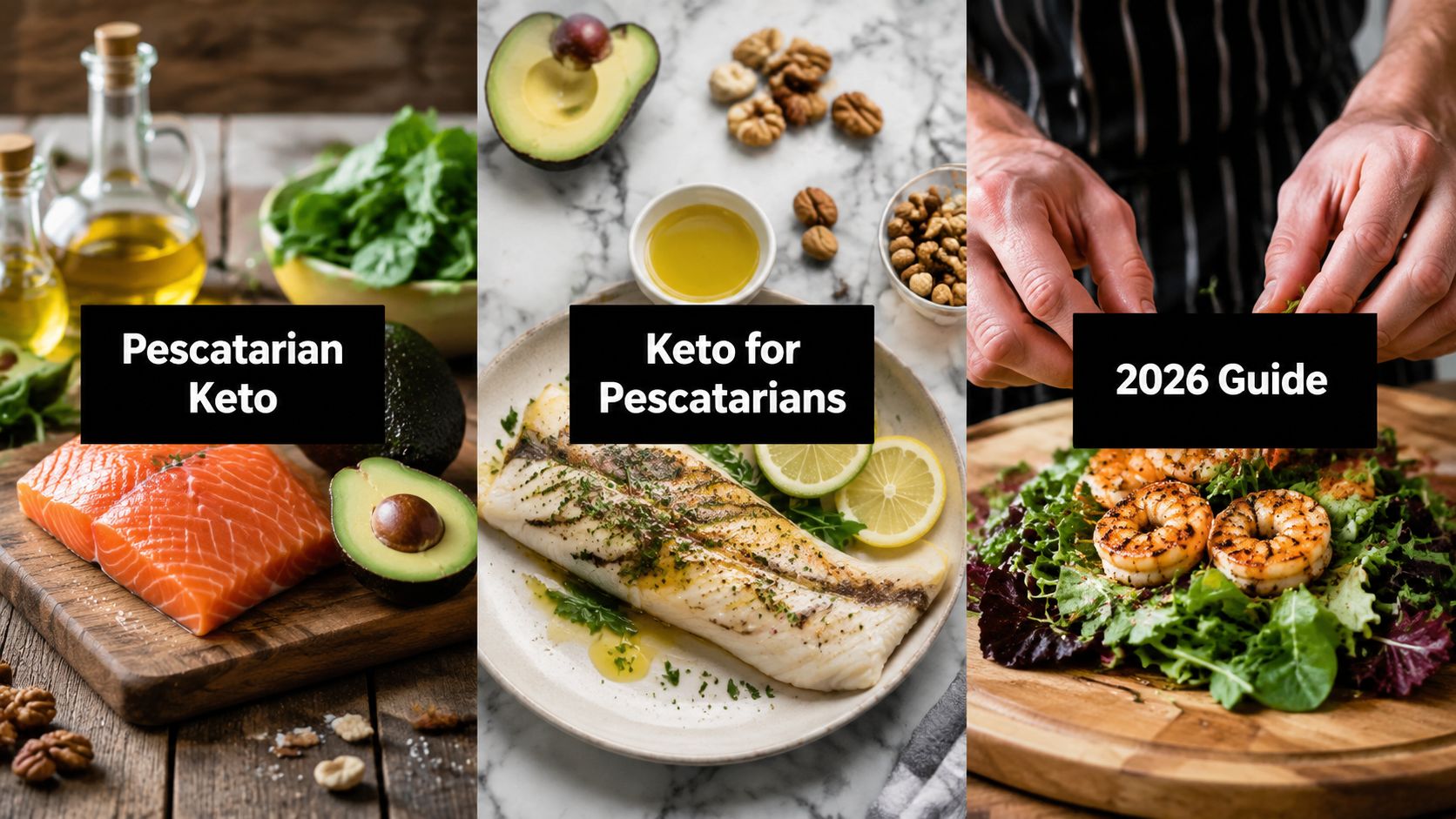
You can make keto work as a pescatarian, but only if you treat it as a tight overlap of two rule sets. The core target is 20 to 50 grams of carbs per day, with fish, seafood, eggs, and dairy replacing meat and poultry, so the whole plan lives or dies on food selection and portion control.
The practical version is simple: build meals around seafood, keep starches out, and use fats and low-carb vegetables to stay inside ketosis. If you want the structure done for you, a meal plan that can organize seafood-based keto meals and groceries saves a lot of trial and error.
If you're trying to eat this way, you've probably already felt the tension. A regular pescatarian plate leans on rice, beans, fruit, and starchy sides, while a regular keto plate often leans on meat-heavy proteins. Keto diet for pescatarians sits in the narrow space between them, which is exactly why it works for some people and feels awkward for others.
The upside of that narrowness is clarity. You're not guessing whether a meal fits, you're checking it against two filters at once, very low carbs and no meat or poultry. The downside is that many familiar staples fall out of rotation quickly, so a sustainable version needs more than enthusiasm. It needs a repeatable structure.
What a Pescatarian Keto Diet Means
A pescatarian keto diet is a ketogenic eating pattern that keeps carbohydrates very low, often 20 to 50 grams per day, while excluding meat and poultry but allowing fish, seafood, eggs, and dairy (Perfect Keto). That definition matters because it is not just low-carb seafood eating. It is a keto framework built around a seafood-based protein base.
Why this combination changes your food list
The carb ceiling is the main filter. Once you commit to keto-level carbs, staple pescatarian foods like rice, beans, lentils, bread, pasta, and many higher-carb vegetables stop being everyday foods and become occasional exceptions, if they fit at all. What replaces them is a tighter mix of seafood, eggs, full-fat dairy, low-carb vegetables, nuts, seeds, and fats.
Practical rule: if a food is common in pescatarian eating but hard to fit into keto, it usually falls out of the overlap.
That is why the diet feels more specialized than either parent diet alone. A standard pescatarian approach can be broad and plant-forward, while a standard keto approach can be broad and animal-forward. The keto diet for pescatarians strips both down to the shared center, seafood plus low carbs, and that is the version you have to plan around.
A useful way to frame it is simple. You are not building meals by asking, “What would a pescatarian eat?” You are asking, “What seafood-based meal can stay inside the carb limit without depending on starch?” That shift changes shopping, cooking, dining out, and even how you snack.
If you want a structured starting point, a keto meal plan framework can show the difference between a random low-carb day and a week that fits the macro target.
Macro and Micronutrient Targets Worth Planning Around
A workable pescatarian keto plan still follows the usual keto macro shape, about 70 to 80% fat, 20 to 30% protein, and 5% or less carbs (Kiltz Health). On a 1,800-calorie day, that rough split puts you around 140 to 160 grams of fat, 90 to 135 grams of protein, and up to about 22 grams of carbs. On a 2,200-calorie day, it moves closer to 171 to 196 grams of fat, 110 to 165 grams of protein, and up to about 28 grams of carbs.
Protein needs attention on seafood-based keto
Seafood is leaner than many people expect. A 6-ounce salmon fillet already gives about 36 grams of protein, so a few generous portions can push you toward the top of the protein band faster than you intended. That's not a problem if you want a higher-protein day, but it does mean fatty fish should be portioned deliberately instead of treated like a free-for-all.
Practical rule: on this diet, protein control matters as much as carb control.
Micronutrients deserve equal attention. Fatty fish brings omega-3s, seafood can help with iodine, and low-carb vegetables cover magnesium and potassium better than a seafood-only plate. The weak spot is often the opposite extreme, too much saturated fat from heavy dairy and keto convenience foods. That matters because ketogenic diets may improve triglycerides and blood pressure in the short term, but they can also raise LDL cholesterol and still have limited long-term safety data.
The cardiovascular data for pescatarian-style eating points in the opposite direction. A JACC review reported CAD mortality was 34% lower in pescatarians compared with regular meat-eaters, and a meta-analysis summarized there found lower BMI by 1.7 kg/m^2, lower total cholesterol by 0.34 mmol/L, and lower LDL by 0.36 mmol/L (JACC). That's why a smart pescatarian keto plan emphasizes fatty fish plus unsaturated fats, not a dairy-heavy version that just happens to exclude meat.
For easier math on a full day of eating, use a macro calculator that can help you keep the ceiling tight: calorie and macro calculator.

Foods to Eat Freely and Foods to Skip
The easiest way to shop for this diet is to stop thinking in individual recipes and start thinking in categories. The foods that fit are the ones that keep carbs low while giving you enough fat and protein to build real meals. The foods that don't fit are usually the ones that look familiar from other pescatarian plans, but break ketosis fast.
| Pescatarian Keto Foods at a Glance | |
|---|---|
| Eat Freely | Skip or Limit |
| Fatty fish like salmon, sardines, mackerel | Rice, pasta, bread |
| Shellfish like shrimp, mussels, scallops | Beans, lentils, chickpeas |
| Eggs and full-fat dairy | Most fruit and fruit juice |
| Leafy greens and non-starchy vegetables | Starchy vegetables |
| Olive oil, avocado, unsaturated oils | Sugar and beer |
| Nuts and seeds that fit your carb cap | Meat and poultry |
The core food pattern is fish and seafood plus eggs, dairy, healthy fats, nuts, seeds, and low-carb vegetables, while meat and poultry stay out (Pescatarian Keto). That means your cart should look less like a standard pescatarian haul and more like a seafood-and-fat toolkit.
Hidden carb traps that catch people fast
Problem foods are often the ones that look “clean.” Sushi rice can blow up a meal quickly. Flavored yogurt usually carries more sugar than people expect. Bean-based pastas, “keto” desserts with sugar alcohols like maltitol, and seaweed snacks with added sugar can also derail a day without looking obvious.
The practical fix is boring but effective. Read labels for total carbs, not just marketing claims, and build around meals that are naturally low-carb rather than relying on packaged substitutes. If you want the plan to feel easier in real life, pick a few base proteins, a few low-carb vegetables, and a few fats you repeat every week.
A good pescatarian keto cart usually starts with salmon, eggs, spinach, olive oil, cucumber, avocado, and one or two shellfish options. That's enough to cover breakfast, lunch, dinner, and leftovers without forcing you to improvise around starch.
A Sample Weekly Meal Plan With Seafood Variety
A weekly rotation works better than a rigid set of recipes because seafood spoils fast and boredom sets in even faster. The pattern I've seen hold up is simple, fatty fish a few times per week, shellfish for quick meals, lean white fish when you want a lighter plate, and eggs or dairy when breakfast needs to stay simple. One guide also recommends 7 to 10 cups of non-starchy vegetables and leafy greens daily alongside seafood to support nutrient and fiber intake (Dr. Berg).
A practical seven-day rotation
- Monday: salmon with spinach and olive oil sauce.
- Tuesday: shrimp over zucchini noodles with garlic butter.
- Wednesday: cod with broccoli and avocado.
- Thursday: sardines with leafy greens and lemon dressing.
- Friday: tuna with cucumber, celery, and olive oil mayo.
- Saturday: mussels with cauliflower mash and herbs.
- Sunday: eggs, cheese, and sautéed greens for a lower-effort reset.
The goal isn't recipe variety for its own sake. It's variety by fish type, texture, and prep time so the plan stays livable.
A meal structure like “fatty fish plus leafy greens plus fat sauce” works because it's flexible. Salmon can become trout. Shrimp can become scallops. Cod can become halibut or another lean white fish. You keep the same meal logic even when the ingredients change.
If you're the kind of person who gets tired of repeating the same fish by Thursday, a planner that swaps meals automatically helps keep the week moving. You can also use a rotating recipe library to pull in seafood-based meals without recreating the wheel every Sunday: seafood recipe ideas.
Common Pitfalls and How Real Eaters Solve Them
The first mistake is usually hidden carbs. Sushi rice, sweetened yogurt, breaded fish, fruit smoothies, and bean-heavy substitutions can look harmless, then push you out of ketosis by the end of the day. The fix is simple but strict, keep one eye on the carb cap and the other on the ingredient list, especially with convenience foods and restaurant add-ons.
A pescatarian keto plan has a narrow overlap, 20 to 50 grams of carbs, no meat or poultry, and enough protein and fat to keep meals satisfying. Most problems happen when people build the menu around generic pescatarian habits and then try to bolt keto rules on top. It works better when every meal starts with the same question, does this food fit both constraint sets?
The other failure points eaters encounter
- High LDL from dairy-heavy keto choices: If the plan leans too hard on butter, cheese, and ultra-processed keto snacks, shift the fat source toward olive oil, avocado, nuts, and fatty fish. That pattern fits better with the lower LDL profile associated with pescatarian-style eating, as discussed in JACC.
- Constipation from too little fiber: Cutting grains and legumes without replacing them with low-carb vegetables is a fast way to feel backed up. Use leafy greens, zucchini, broccoli, chia, and flax more aggressively.
- Mercury or overfishing worries: Don't make tuna the only fish on your plate. Rotate species so you're not depending on one source every day.
- Restaurant friction: The pescatarian part already narrows the menu, so keto can make it feel impossible. Choose the simplest protein-forward option and swap starches for extra vegetables whenever you can.
Practical rule: when a meal feels “almost right,” it is usually the sauce, side, or topping that breaks the plan, not the fish.
The cleanest fix is usually substitution, not reinvention. Cauliflower rice beats sushi rice, plain full-fat yogurt beats sweetened yogurt, and a simple grilled fillet with vegetables beats trying to force a carb-heavy pescatarian dish into keto. That is the difference between a plan that looks good on paper and one that still works after a busy Tuesday.
If you are planning a restaurant week or a trip, a curated list of Manchester GF restaurant recommendations can help you spot places that already handle special dietary requests well: Manchester GF restaurant recommendations.

Dining Out, Travel, and Daily Execution
A seafood-based keto order is usually easiest to get right when the menu already starts with fish or eggs. Ceviche, sashimi, grilled fish with extra vegetables, and omelets with greens often need only a small adjustment. Ask for the fish plain, the sauce on the side, and any starch left off the plate.
Travel works better when you assume the default food will be inconvenient. I keep canned sardines, single-serve olive oil, and a small bag of nuts on hand because they cover the gap between flights, meetings, and hotel breakfasts that do not fit the plan. On a workweek, the home routine should stay just as plain, cook seafood in batches, wash and portion vegetables, and keep two fat sources ready so dinner becomes assembly instead of starting from zero.
The fastest way to stay on track is to remove decisions before you are hungry.
A few practical moves make the week easier. Batch salmon, shrimp, or cod so you can reuse them in different meals without extra cooking. Pre-portion washed greens, sliced cucumber, and roasted broccoli so the vegetable side is already handled. Keep emergency meals simple, eggs and cheese solve more late dinners than elaborate recipes do. If you are building a repeatable grocery rhythm, an AI meal planning tool can help sort seafood, vegetables, and fat sources into a list you can use without overthinking each shop.
If you are planning a restaurant week or a trip, a curated list of Manchester GF restaurant recommendations from Food Escapes can help you spot places that already handle special dietary requests well: Manchester GF restaurant recommendations.
The bigger operational lesson is that consistency comes from fewer choices. A planning tool can map out the week, sort the grocery list by aisle, and reuse seafood across multiple meals so you shop less often and waste less food. That matters more than trying to force variety into a diet that is already built from two tight rules, low carb and no meat or poultry.
Supplements and Lab Markers Worth Tracking
A seafood-based keto plan can look nutrient-dense on paper and still leave gaps in practice. That is why labs matter. You want to see whether ketosis is happening, whether lipids are moving in a direction you can live with, and whether the food pattern is supporting the body rather than only fitting the rules. A small 14-day study of a fish-based restrictive ketogenic diet found blood ketones rose from 0.21 mmol/L to 2.20 mmol/L and body mass fell from 76.66 kg to 73.77 kg, with no major adverse effects (PMC).
What to check at baseline and again in about 8 to 12 weeks
Start with the basics that show whether the diet is doing what it should. Blood ketones, especially beta-hydroxybutyrate, confirm nutritional ketosis. A full lipid panel deserves attention because some keto patterns raise LDL. Fasting insulin and HbA1c help show whether lower-carb eating is changing glycemic load. Ferritin and B12 are worth checking because seafood, eggs, and dairy often help, but they do not remove the need to track. Vitamin D and omega-3 status can matter on a seafood-heavy plan. Thyroid markers are reasonable to review if iodine intake is low, since seafood can help but not every version of the diet is iodine-sufficient.
Supplement choices should stay practical. Magnesium is the most common add-on I use with clients, and potassium matters when low-carb eating changes fluid balance. Omega-3 support can be useful when fatty fish intake is inconsistent, and a B-complex can help if dairy intake drops. Exogenous ketones and MCT oil are optional tools, not requirements, and they should not replace a food pattern that already fits the carb ceiling.
For the food side, a structured keto foods guide can help keep seafood, dairy, and vegetable choices consistent while you watch the medical side. That is often easier than trying to remember every suitable option from scratch.

How to Make Pescatarian Keto Stick Long Term
The people who last on this diet usually do five things well. They keep two or three fatty fish as defaults, they stop guessing at carbs, they rotate low-carb vegetables aggressively, they run labs instead of waiting for symptoms, and they use a planning system so dinner isn't a daily debate. That's how the plan stays a plan.
Is pescatarian keto safe long term? It can be, but only if you monitor lipids, micronutrients, and food variety instead of assuming seafood automatically covers everything. Can you drink alcohol on it? Light drinking can fit the carb budget, but it still makes planning harder and can blunt judgment around food. How do you know it's not working? If ketosis markers never move, hunger stays high, or your labs drift the wrong way, the food mix needs adjusting.
If you want that structure without building it by hand, AI Meal Planner can generate weekly meal plans and grocery lists around your dietary rules, including keto and seafood-forward preferences. It's a practical way to keep the carb ceiling tight, reduce repeat shopping, and turn a narrow diet into a routine you can follow. Visit AI Meal Planner and build a pescatarian keto week that fits your schedule, your macros, and your grocery store.
AI-powered nutrition
Get Your Personalized Meal Plan
AI creates the perfect meals for your goals, lifestyle, and taste.
Start Your Journej