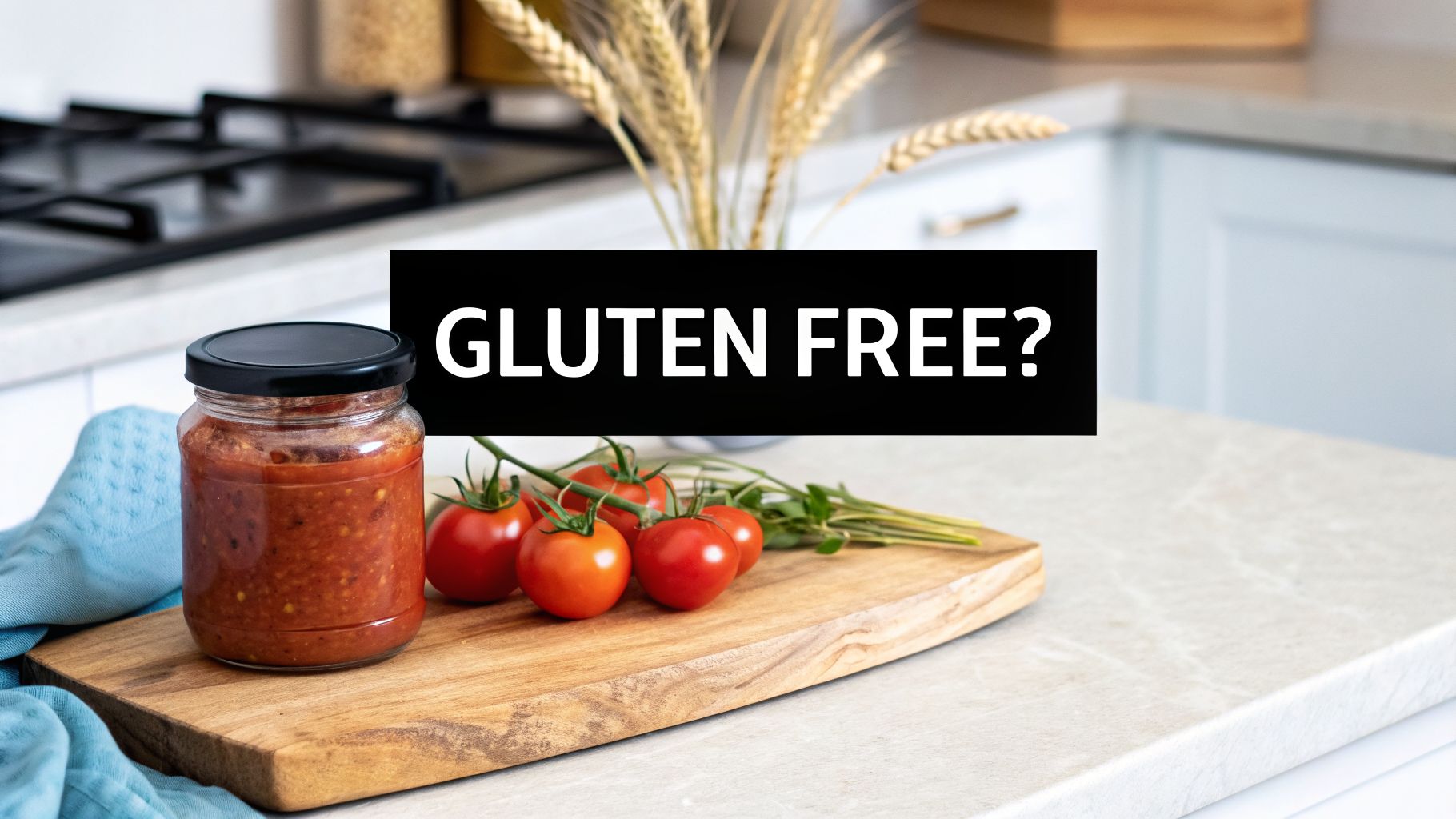
Yes, pure tomato paste is naturally gluten-free as it is made only from tomatoes, which do not contain gluten. To be completely safe, you must check the product label for a "Certified Gluten-Free" seal or a "gluten-free" claim. These labels guarantee the product contains less than 20 parts per million (ppm) of gluten and is safe from cross-contamination.
This guide will walk you through how to identify safe products, understand potential hidden risks, and use tomato paste confidently in your cooking.

Why is tomato paste usually gluten-free?
Tomato paste is a staple ingredient that adds deep, concentrated umami flavor to dishes. For anyone on a gluten-free diet due to celiac disease or sensitivity, confirming its safety is essential. The core reason tomato paste is safe is its simple composition.
Is the main ingredient naturally gluten-free?
At its heart, tomato paste is just tomatoes cooked for hours to remove water, then strained to remove skins and seeds. The result is a thick, rich concentrate of pure tomato.
Since tomatoes are a fruit, they are 100% naturally free from gluten, the protein found in wheat, barley, and rye. In its pure, unadulterated state, there is no gluten risk, making it a fundamentally safe ingredient.
Think of it like a fresh carrot or a plain apple—in its natural state, there's no gluten whatsoever. That fundamental simplicity is why pure tomato paste starts out as a safe ingredient.
When does tomato paste become unsafe?
The potential for gluten exposure doesn't come from the tomatoes. It creeps in during manufacturing or when other ingredients are added. The journey from the tomato field to the can is where risks can hide.
To shop safely, you need to watch out for two main issues:
- Added Ingredients: Some brands, especially those marketed as "flavored" or "seasoned," might mix in starches, spice blends, or "natural flavors" that can contain hidden gluten.
- Cross-Contamination: This is the bigger concern. If a facility also produces wheat-based products like soups or pasta sauces on the same equipment, trace amounts of gluten could find their way into the tomato paste.
Reading labels is your best defense against these risks. If you're looking for help building a meal plan that carefully considers all your dietary needs, you can check out the AI Meal Planner. For more ideas on how to build a safe and delicious menu, our guide to vegetarian eating can help you incorporate ingredients like tomato paste with confidence.
What are the hidden gluten risks in tomato products?
On paper, tomato paste should be one of the safest ingredients in your pantry. But the journey from the farm to the grocery store can introduce hidden gluten, turning a simple ingredient into a problem for anyone with celiac disease or high sensitivity.
The risks pop up in two main areas: sneaky additives and factory cross-contamination.
Some brands add more than just tomatoes and salt to get a certain taste or thickness. You might find thickeners like wheat flour or certain modified food starches derived from wheat. Other times, flavor packs like spice blends or broths can contain hidden barley-based ingredients. These additives aren’t always advertised on the front of the can.
How does cross-contamination happen in factories?
The much bigger, and often invisible, risk is cross-contamination. Picture a large food processing plant where one line cans pure, gluten-free tomato paste, but the line next to it cans a hearty soup with barley or a pasta sauce thickened with wheat.
Even with regular cleaning, microscopic gluten particles can become airborne or stick to shared equipment. For someone with celiac disease, it only takes an exposure of 20 parts per million (ppm) of gluten—the equivalent of a few stray crumbs—to set off an immune reaction.
This is precisely why a product being "naturally gluten-free" is not a guarantee of safety. The environment where it's made matters just as much as the ingredients. A product can have a perfectly clean ingredient list, but if it was run on shared equipment without certified gluten-free cleaning protocols, it’s a gamble. This is why following a structured menu, like an elimination diet meal plan, can give you the confidence you need by helping you stick to vetted, safe ingredient sources.
How can I read labels to find safe tomato paste?
When it comes to pantry staples like tomato paste, knowing what to look for on the label is your best defense. It's about learning to read the story a product tells you, from certifications to the fine print.
The absolute gold standard is a "Certified Gluten-Free" seal from organizations like the Gluten-Free Certification Organization (GFCO). This seal is a guarantee that the product and facility have passed strict third-party testing, ensuring it contains less than 10 parts per million (ppm) of gluten. If you have celiac disease, this is your safest bet.
What should I look for if there is no seal?
What if there’s no fancy seal on the can? You can still find plenty of safe options by digging a little deeper. Here's what to look for:
- A "Gluten-Free" Claim: A manufacturer's own "gluten-free" statement is regulated by the FDA. This means the product must contain less than 20 ppm of gluten, which is a level considered safe for the vast majority of people with gluten sensitivities.
- The Ingredient List: You want to see a simple list, like "tomatoes" and "salt." Red flags include vague terms like "spices," "natural flavors," or "modified food starch" if the source isn't specified (e.g., "modified corn starch" is fine).
- Allergen Warnings: Always scan for phrases like "May contain wheat" or "Processed in a facility that also handles wheat." These voluntary warnings signal a risk of cross-contamination. For those with celiac disease, it's best to steer clear.
To help you visualize this process, here's a quick guide on how to spot potential gluten risks.

This decision tree helps you follow the two main pathways where gluten might sneak into your tomato paste, making your label-checking process quick and effective.
What do different gluten-free labels mean?
Navigating the different claims and seals can be confusing. This table breaks down what each label really means for you.
| Label / Statement | What It Means | Level of Assurance |
|---|---|---|
| Certified Gluten-Free Seal | The product was tested by a third-party organization (like GFCO) to contain less than 10 or 20 ppm of gluten, depending on the certifier. This is the strictest standard. | Highest |
| "Gluten-Free" Claim | The manufacturer attests that the product meets the FDA's requirement of containing less than 20 ppm of gluten. No third-party testing is required. | High |
| No Gluten Ingredients | The ingredient list does not contain any obvious gluten sources (wheat, barley, rye). However, it offers no protection against cross-contamination risk. | Medium to Low |
| "May Contain Wheat" | A voluntary warning from the manufacturer indicating that the product is made on shared equipment or in a facility that also processes wheat. | Lowest (Avoid) |
Ultimately, a certified seal offers the greatest peace of mind, but a simple "gluten-free" claim on a product with clean ingredients is also a very reliable indicator of safety. Global food safety policies have driven compliance to impressive levels. You can learn more about the growth and regulation of the gluten-free market to see how far the industry has come.
Which tomato paste brands are widely considered gluten-free?
While you should always give the label a quick scan, some brands have built a solid reputation for being reliably gluten-free. This makes shopping much easier.
Can you list reliable gluten-free tomato paste brands?
Here are a few brands that are consistently safe choices, whether they carry an official certification or simply stick to gluten-free ingredients and processes:
- Hunt's: A classic, easy-to-find choice. Hunt's clearly labels its tomato paste as gluten-free.
- Muir Glen: An organic option that is both certified organic and explicitly labeled gluten-free.
- Cento: Famous for its double-concentrated paste in a tube, Cento is made without any gluten-containing ingredients.
- Bionaturae: This brand offers a rich-tasting organic tomato paste in glass jars that is also safely gluten-free.
- Amore: Another go-to brand for tube paste, Amore is convenient, flavorful, and confirmed to be gluten-free.
For anyone managing dietary restrictions, especially those using tools like the AI Meal Planner to navigate chronic conditions, the safety of plain tomato paste is a huge relief. Market data confirms that 100% of plain varieties are safe.
The demand for safe, reliable staples like this is a big reason why the gluten-free market is projected to skyrocket to $33 billion by 2034. Ingredients like tomato paste provide deep flavor without adding gluten risk. You can dive deeper into these trends and what they mean for food safety and consumer choice.
How can I use tomato paste in gluten-free cooking?

Now that you know how to find safe, gluten-free tomato paste, it's time to use it. Tomato paste is a secret weapon for adding deep umami flavor that makes simple dishes taste like they’ve simmered for hours.
Its most classic role is creating a rich, savory base for sauces like marinara or bolognese. It’s also fantastic for thickening hearty chilis and stews, giving them a robust color and body without needing flour or other gluten-based thickeners.
The possibilities are endless. You can whisk it into marinades for meats and veggies, or use it to whip up homemade ketchup. It’s a key player in many BBQ sauces, though you'll always want to double-check every ingredient. Gaining an understanding of the best BBQ sauce for wings is a great way to see how individual components come together in a gluten-free recipe.
Beyond flavor, tomato paste is a fantastic way to add nutrients. It delivers about 25mg of lycopene per 100g, a powerful antioxidant. Since the 2010 U.S. FDA gluten-free labeling rule, it's easier than ever to trust what you eat. If you're ready to take control, you can build a confident, gluten-free meal plan that works for you.
Frequently Asked Questions About Gluten in Tomato Products
Here are quick answers to other common questions about tomato-based products on a gluten-free diet.
Is tomato sauce also gluten-free?
Plain tomato sauce made only from tomatoes is gluten-free. However, many pre-made pasta sauces contain wheat-based thickeners or flavorings, so you must always check the ingredient list on the jar.
Are canned tomatoes gluten-free?
Yes, plain canned tomatoes (whole, diced, or crushed) are naturally gluten-free. Be cautious with "recipe-ready" or seasoned varieties, as these can contain hidden gluten in spices or thickeners.
Can I make my own gluten-free tomato paste?
Absolutely. Making your own tomato paste at home is the best way to ensure it is 100% gluten-free. It simply involves slow-cooking fresh tomatoes with salt until they form a rich, concentrated paste.
Does "organic" tomato paste mean it is gluten-free?
Not necessarily. The "organic" label refers to farming methods, not gluten content. You must still look for a "gluten-free" claim or certification to ensure it's safe from cross-contamination.
Is ketchup gluten-free?
Most major brands of ketchup are gluten-free, but it's not a guarantee. Some specialty or restaurant-made ketchups may use vinegar derived from wheat or other gluten-containing additives, so always check the label.
Is pizza sauce gluten-free?
Like tomato sauce, plain pizza sauce is typically gluten-free. However, always verify the ingredients, as some brands add starches, flavorings, or spices that may contain gluten.
What is a good substitute for tomato paste?
If you run out of a trusted brand, you can simmer tomato puree or sauce on low heat to thicken it and concentrate the flavor. This process will create a close substitute for tomato paste in many recipes. This kind of flexibility is perfect when building a versatile vegan meal plan.
Ready to take the guesswork out of healthy eating? The AI Meal Planner creates personalized, gluten-free meal plans tailored to your goals and tastes. Get your smart grocery list and delicious, easy recipes today.
AI-powered nutrition
Get Your Personalized Meal Plan
AI creates the perfect meals for your goals, lifestyle, and taste.
Start Your Journej