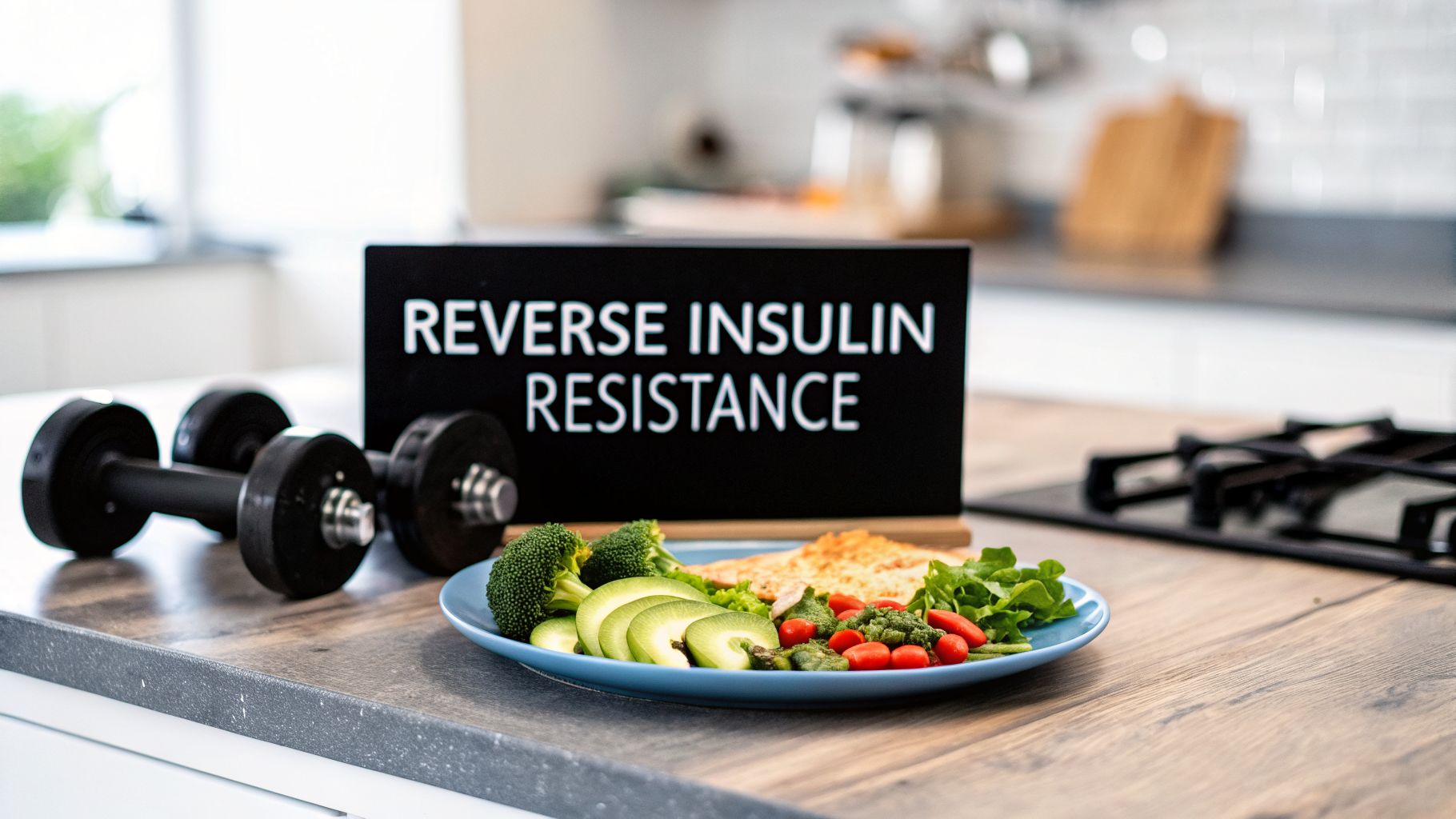
You can reverse insulin resistance by losing 5–10% of your body weight if overweight, getting at least 150 minutes of moderate exercise per week, and adopting a low-glycemic diet. Consistently combining these three actions can significantly improve your body's insulin sensitivity in as little as 3-6 months.
Tackling insulin resistance isn't about quick fixes; it's about a strategic, whole-body approach. The most powerful levers you can pull involve a low-glycemic diet, consistent exercise, and key lifestyle shifts like getting 7–9 hours of sleep nightly. These pillars work together, creating a powerful synergy that dramatically improves how your body responds to insulin.
What's the best action plan for reversing insulin resistance?
If you've been diagnosed with insulin resistance, it's easy to feel like you've been handed a permanent sentence. But that’s not the case. Think of it as a metabolic signal—your body is telling you it needs a change. The great news is that this condition often responds incredibly well to focused, consistent lifestyle strategies.
We’re not talking about extreme diets or workouts that leave you exhausted. The goal is to build a sustainable system that supports your metabolic health for the long haul. With the right plan, you can significantly improve your insulin sensitivity and, in many cases, reverse the condition entirely.
The rise of insulin resistance is a real concern. Back in 2003, it affected about 22% of US adults over 20. Fast forward to 2021, and that number had skyrocketed to nearly 40% for adults aged 18-44.
But recent research offers a clear path forward. A 2023 clinical trial demonstrated that 62% of participants reversed their insulin resistance within six months just by following personalized low-glycemic meal plans. They achieved an average weight loss of 12% and saw their fasting insulin levels plummet by 45%. This proves just how much control you have.
This isn't about one magic bullet. Reversing insulin resistance requires a multi-faceted approach, focusing on the three core pillars of diet, exercise, and sleep.

As the infographic shows, these pillars are interconnected. Better sleep improves your food choices, and consistent exercise makes your cells more receptive to insulin. They all support each other to create lasting metabolic change.
What are the core strategies for reversing insulin resistance?
To bring these concepts together, here’s a quick overview of the most impactful interventions and what you can expect from them. Each strategy targets a specific aspect of your metabolic health, creating a comprehensive plan for improvement.
| Intervention | Target | Expected Outcome |
|---|---|---|
| Low-Glycemic Diet | Reduce blood sugar spikes and overall glucose load | Decreased insulin production, reduced fat storage, and improved cellular sensitivity. |
| Aerobic & HIIT | Improve cardiovascular health and glucose uptake | Increased number of insulin receptors and more efficient use of sugar by muscles. |
| Resistance Training | Build lean muscle mass | More muscle tissue to store glucose, leading to lower circulating blood sugar levels. |
| Weight Management | Decrease visceral fat and overall inflammation | Reduced inflammatory signals that interfere with insulin action, significantly improving sensitivity. |
| Sleep & Stress | Regulate cortisol and other stress hormones | Lowered cortisol levels, which directly counteracts insulin's effectiveness. |
These strategies are not just suggestions; they are evidence-based actions that form the foundation of a successful reversal plan. By consistently implementing them, you give your body the tools it needs to restore its natural metabolic balance.
How can you track your progress?
So, how do you know if your efforts are paying off? To get a clear picture of your insulin sensitivity, the most direct measurement is a fasting insulin test. When combined with your fasting glucose level, this allows for the calculation of your HOMA-IR score, a critical biomarker for tracking your progress over time.
Key Takeaway: A HOMA-IR score below 2.5 is a solid target to aim for. Hitting this number is a strong indicator that you’ve made significant strides in improving your insulin sensitivity.
As you get your diet dialed in, you might want to explore more advanced techniques. Strategies like carb cycling can be an effective way to further enhance your metabolic flexibility once you've mastered the basics.
What's the best diet to reverse insulin resistance?
When it comes to fighting insulin resistance, what you eat isn't just part of the solution—it's the most powerful tool you have. This isn't about extreme diets or deprivation. It's about making smart, strategic choices that help your body handle energy more efficiently.
At its heart, insulin resistance happens when your body's cells start to ignore the signals from the hormone insulin. Think of insulin as a key that unlocks your cells to let glucose (sugar) in for energy. When you constantly eat foods that flood your bloodstream with sugar, your pancreas works overtime, pumping out more and more insulin. Eventually, the locks on your cells get "worn out," and they stop responding.
The goal is to give your system a break. By choosing foods that release sugar slowly and steadily, you lower the demand for insulin, allowing your cells to regain their sensitivity. Building a plate that supports this process is easier than you think.
How do the glycemic index and load affect insulin resistance?
Let's cut through the noise about "good" vs. "bad" carbs. The most useful tools for understanding how food affects your blood sugar are the glycemic index (GI) and glycemic load (GL).
Think of the GI as a speed rating for how quickly a food raises your blood sugar. It's a scale from 0 to 100, with pure glucose at the top. But the GI doesn't tell the whole story.
That's where glycemic load comes in. It's the more practical, real-world number because it accounts for both the GI and the actual amount of carbs in a serving. Watermelon, for example, has a high GI, but because it's mostly water, its glycemic load is low. You’d have to eat a ton of it to get a big sugar spike. A donut, on the other hand, has a high GI and a high GL—a recipe for blood sugar chaos.
Focusing on low-GL foods is the simplest way to manage your blood sugar without getting bogged down in charts.
How do you build a plate for blood sugar balance?
The simplest rule of thumb for every single meal is to include a trio of protein, healthy fats, and high-fiber carbs. This powerful combination works together to slow down digestion, preventing the sharp blood sugar spikes that drive insulin resistance.
- Protein: This is your metabolic anchor. It slows down how quickly sugar enters your bloodstream and keeps you feeling full. Focus on lean sources like chicken breast, fish, tofu, lentils, and Greek yogurt.
- Healthy Fats: Don't fear the fat! Monounsaturated and polyunsaturated fats—found in avocado, olive oil, nuts, and seeds—actually help improve insulin sensitivity and fight inflammation.
- High-Fiber Carbs: Fiber is your secret weapon. Since your body can't digest it, it adds bulk to your meals and dramatically slows down sugar absorption. Load up on non-starchy vegetables, berries, beans, and whole grains like quinoa and oats.
A study highlighted that people who followed a diet rich in fiber, healthy fats, and lean protein saw significant improvements in their HOMA-IR scores in as little as 12 weeks. The key was consistency and balance, not calorie restriction alone.
Making smart swaps is an easy way to start. Ditch the white rice (high GL) for quinoa (lower GL, plus more protein and fiber). Instead of sugary breakfast cereal, try Greek yogurt with berries and a sprinkle of chia seeds. These small shifts add up. For a fantastic, evidence-based framework, a dietary pattern like the Mediterranean diet is a proven winner.
Does meal timing matter?
It's not just what you eat, but when you eat. Your body has its own internal clock, or circadian rhythm, and your insulin sensitivity naturally changes throughout the day. It's typically highest in the morning and declines as the day wears on.
When you eat a large, carb-heavy meal late at night, you're asking your body to manage a huge sugar load at the exact time it's least equipped to do so. This can lead to higher fasting blood sugar the next morning and make insulin resistance worse over time.
You don't need a rigid eating schedule, but a simple shift can make a world of difference. Try to finish your last meal at least three hours before you go to sleep. This gives your digestive system a much-needed break and allows your insulin levels to fall overnight—a critical window for your body's metabolic reset.
Sample 3-Day Meal Plan to Lower Insulin Resistance
Putting these principles into practice is the most important step. To help you visualize what this looks like, here is a sample meal plan focused on whole foods, balanced macros, and plenty of fiber to help stabilize blood sugar and improve insulin sensitivity.
| Day | Breakfast | Lunch | Dinner | Snack |
|---|---|---|---|---|
| 1 | 2-egg omelet with spinach and feta; 1/2 avocado | Large salad with grilled chicken, mixed greens, cucumber, tomatoes, and an olive oil vinaigrette | Baked salmon with roasted asparagus and a side of quinoa | Handful of almonds |
| 2 | Greek yogurt with a handful of berries and a tablespoon of chia seeds | Lentil soup with a side of mixed green salad | Turkey meatballs (made with almond flour) over zucchini noodles with marinara sauce | Apple slices with peanut butter |
| 3 | Protein smoothie with unsweetened almond milk, spinach, vanilla protein powder, and 1/4 cup of blueberries | Canned tuna mixed with Greek yogurt and celery, served in lettuce cups | Stir-fry with tofu, broccoli, bell peppers, and snap peas in a low-sodium soy-ginger sauce | A hard-boiled egg |
Think of this as a blueprint, not a strict rulebook. The goal is to see how easy it is to build satisfying meals that work for your metabolic health, not against it. To take the guesswork out of it entirely, a personalized tool can be a game-changer.
Which types of exercise are best for reversing insulin resistance?
If diet is the foundation for reversing insulin resistance, exercise is the engine that truly drives the change. Moving your body fundamentally alters how your muscles and liver use glucose, making them far more efficient at clearing sugar from your bloodstream. It's one of the most direct ways to improve insulin sensitivity.
The key isn't forcing yourself into grueling workouts you hate. Instead, it’s about finding a mix of activities you can stick with, because consistency is what truly moves the needle on your metabolic health.

Why does resistance training build a "glucose sponge"?
When you hear “resistance training,” you might picture bodybuilders lifting massive weights, but its role in managing insulin is much more profound. Think of your muscles as sponges for glucose. The bigger and more efficient that sponge, the more sugar it can soak up from your bloodstream, reducing the demand on your pancreas to pump out insulin.
Every time you challenge your muscles—whether through lifting weights, using resistance bands, or even doing bodyweight exercises like squats and push-ups—you’re doing two crucial things:
- Depleting Glycogen: You force your muscles to burn through their stored glucose (glycogen) for energy.
- Stimulating Uptake: After the workout, your muscles are hungry to replenish those stores. They can pull glucose directly from your blood, even without much insulin around.
This effect is powerful and can last for hours after you finish. Over time, consistent resistance training builds more lean muscle mass. More muscle simply means you have a bigger storage tank for glucose, giving you a massive metabolic advantage in controlling your blood sugar day to day.
Key Takeaway: You don't need a gym membership to get started. A simple home routine with bodyweight squats, lunges, push-ups, and planks performed two to three times a week is incredibly effective for building this "glucose sponge" effect.
What makes aerobic and HIIT workouts so effective?
While resistance training builds your glucose storage capacity, aerobic exercise makes your entire system better at using that energy. Activities like brisk walking, cycling, jogging, or swimming are fantastic for improving both cardiovascular health and insulin sensitivity. This type of movement actually increases the number of insulin receptors on your cells, making them more responsive to insulin's signals.
The research here is compelling. The CDC recommends 150 minutes of weekly aerobic exercise—like brisk walking—to manage and prevent chronic diseases tied to insulin resistance.
For those short on time, High-Intensity Interval Training (HIIT) offers a potent alternative. HIIT involves short bursts of all-out effort followed by brief recovery periods. A session might look like 30 seconds of sprinting followed by 60 seconds of walking, repeated for 15-20 minutes.
These short, intense sessions create a strong metabolic demand that can dramatically improve insulin sensitivity. In fact, some studies show that just 20-minute HIIT sessions can boost sensitivity by 25% in only 8 weeks, especially when combined with smart nutritional changes. This makes it a highly efficient option for a busy schedule.
How can you build a consistent exercise routine?
Here's the honest truth: the best workout plan is the one you actually stick with. Consistency trumps intensity every single time. The goal is to make movement a non-negotiable part of your week.
- Start Small: If you're new to exercise, don't aim for five gym sessions a week. Start with a 15-minute walk after dinner. Once that feels like a habit, add a second walk or a short bodyweight strength routine.
- Schedule It: Treat your workouts like important appointments. Block out time in your calendar, even if it's just for 20 minutes. Protect that time.
- Find What You Enjoy: You are far more likely to stick with something you genuinely like. If you hate running, don't force it. Try dancing, hiking, swimming, or a team sport instead.
A balanced weekly plan could look something like this:
- Monday: 30-minute brisk walk
- Tuesday: 25-minute full-body resistance training
- Wednesday: Rest or gentle walk
- Thursday: 20-minute HIIT session (cycling or bodyweight)
- Friday: 25-minute full-body resistance training
- Saturday: 45-minute hike or bike ride
- Sunday: Rest or active recovery like stretching
Pairing your new fitness routine with a well-structured diet is where the real magic happens. To ensure your workouts are properly fueled for recovery and muscle repair, explore a high-protein meal plan that can support your metabolic goals.
How do sleep and stress affect insulin resistance?
We’ve talked a lot about the kitchen and the gym, but two of the most powerful levers you can pull in the fight against insulin resistance are your pillow and your state of mind. It’s easy to dismiss sleep and stress as “wellness fluff.” They’re not.
Think of them as non-negotiable parts of your metabolic strategy. They directly control the hormones that can either supercharge your progress or completely sabotage it.
When you're constantly stressed or running on fumes, your body isn't just tired—it's stuck in a state of high alert. This triggers a flood of hormones like cortisol, the infamous "stress hormone." Cortisol's main job is to prep you for a perceived threat, and it does this by dumping sugar into your bloodstream for quick energy. This hormonal surge directly fights against insulin's efforts, making your cells even more resistant over time.

Why is sleep a metabolic priority?
Skimping on sleep does a lot more than just make you groggy. Even one night of bad sleep can tank your insulin sensitivity. Research shows that after just a single night of only four hours of sleep, the insulin sensitivity of healthy young adults can plummet by 16-25%.
Those numbers look suspiciously like what we see in people with prediabetes. It happens for a few clear reasons:
- Sky-High Cortisol: Sleep deprivation jacks up your morning cortisol levels. As we just covered, that means more sugar in your blood.
- Tired Brain, Lazy Glucose Use: Your brain is a huge consumer of glucose, but when you're tired, it uses less. That leaves more sugar just circulating in your bloodstream with nowhere to go.
- Hunger Hormones on Overdrive: Lack of sleep cranks up ghrelin (the "I'm hungry" hormone) and tanks leptin (the "I'm full" hormone). The result? Intense cravings for high-carb, sugary foods—the very things that fuel insulin resistance.
Consistently getting 7–9 hours of quality sleep per night is one of the most effective ways to keep cortisol in check and support your body's natural metabolic rhythms. It's not just about the hours logged; it’s about the quality of that rest.
Making sleep a priority means creating an environment that screams "it's time to wind down." It's the small, consistent habits that build a rock-solid foundation for restorative rest.
How can you improve your sleep quality?
Fixing your sleep isn't about finding a magic pill. It's about building a disciplined pre-bed routine that signals to your body and mind that the day is done. This "sleep hygiene" can have a massive impact on your ability to fall and stay asleep, which directly benefits your metabolic health.
Here are a few practical strategies you can start tonight:
- Lock in Your Schedule: Go to bed and wake up around the same time every single day. Yes, even on weekends. This is the single best way to reinforce your body's natural sleep-wake cycle, or circadian rhythm.
- Create a "Power-Down" Hour: For the 60 minutes before bed, dim the lights and ditch the screens—phones, TVs, and laptops. The blue light from these devices crushes the production of melatonin, the hormone that tells your body it's time for bed. Read a real book, listen to some calm music, or take a warm bath instead.
- Build Your Sleep Sanctuary: Your bedroom should be for sleep and sex. That's it. Keep it cool, dark, and quiet. Blackout curtains, an eye mask, or a white noise machine can be game-changers.
These simple actions send powerful signals to your brain, helping it shift from the "on" state of your day to the "off" state required for deep, restorative sleep.
What are some practical ways to manage daily stress?
Just like a bad night's sleep, chronic stress keeps your body locked in fight-or-flight mode, with cortisol constantly pumping sugar into your blood. Finding effective ways to manage this isn't just a mental health exercise—it's a physical tool for regaining metabolic control.
You don’t need to book a week-long meditation retreat to see real benefits. Small, accessible stress-reduction techniques can be woven right into your daily life. The goal is to consciously activate your body's "rest and digest" system, the polar opposite of the stress response.
- Mindful Breathing: Feeling overwhelmed? Stop what you're doing and take five minutes to practice box breathing. Inhale for four seconds, hold for four, exhale for four, and hold for four. This simple act can physically lower your heart rate and cortisol levels in minutes.
- Take a Nature Break: Spending just 15-20 minutes walking in a park or any green space can slash stress hormones. The key is to leave your phone at home and just focus on your surroundings.
- Perform a "Brain Dump": Before bed, spend a few minutes writing down everything that's bouncing around in your head—worries, to-do lists, things you're grateful for. Getting it out on paper can stop you from ruminating when your head hits the pillow.
These techniques help break the vicious cycle of chronic stress, lowering the constant demand for cortisol and giving your insulin a chance to finally do its job effectively. For a truly personalized diet that complements these lifestyle changes, the AI Meal Planner can build plans that support stable energy and reduce the stress of figuring out what to eat.
Are there supplements or medications that help?
Let’s be clear: diet, exercise, and lifestyle changes are the bedrock of any successful plan to reverse insulin resistance. There's no substitute for this foundational work. However, once those habits are in motion, certain supplements and medications can act as powerful accelerators, helping to speed up your progress.
Think of them as strategic tools, not magic pills. They work with the positive changes you’re making, enhancing your body’s response to better nutrition and movement. But this isn't a free-for-all. It's essential to work with your healthcare provider to make sure any new addition is safe and right for your specific health situation.

What supplements should you consider?
The supplement aisle can feel overwhelming, but a handful of compounds are backed by solid science for improving insulin sensitivity. When combined with lifestyle efforts, you might explore beneficial supplements that can give your metabolic health an extra edge.
Here are a few of the most well-researched players:
- Berberine: Often called "nature's Metformin," this plant-based compound works by activating an enzyme called AMPK, which is a master regulator of your body's energy. Firing up AMPK helps your cells pull more glucose out of the blood, directly lowering blood sugar and improving insulin sensitivity.
- Myo-Inositol: This is a type of sugar alcohol that acts as a "secondary messenger" for insulin. It essentially helps amplify insulin's signal inside your cells, allowing glucose to be used much more effectively. It has shown particular promise for women with Polycystic Ovary Syndrome (PCOS), a condition deeply intertwined with insulin resistance.
- Magnesium: This mineral is a true workhorse, involved in over 300 enzymatic reactions in the body, many of which are critical for glucose metabolism and insulin signaling. Magnesium deficiency is strongly linked to a higher risk of insulin resistance, so ensuring you have enough is key for optimal function.
A Quick Word of Caution: Always discuss any new supplement with your doctor. They can help you find the right dose and make sure it won't interfere with other medications or conditions.
These supplements target different parts of the metabolic puzzle, from cellular energy to insulin signaling. For women navigating the complexities of PCOS, a condition where insulin resistance is a major driver, our guide on a PCOS-friendly meal plan offers dietary strategies that pair perfectly with these kinds of supportive supplements.
Should you take Metformin for insulin resistance?
While lifestyle change is always the first and most important step, your doctor may recommend medication, especially if your bloodwork shows prediabetes. The most common and well-studied medication for this is Metformin.
Metformin doesn’t just mask the problem; it works on a few different levels to improve your metabolism. It primarily tells your liver to dial down its glucose production, so there’s less sugar floating around in your bloodstream to begin with.
It also makes your muscle cells more receptive to insulin, helping them pull in and use glucose for energy much more efficiently. Finally, it can slightly slow down how much sugar your gut absorbs from the food you eat.
Metformin isn’t a replacement for a solid diet and exercise plan, but it can give you a significant metabolic assist while you're putting those healthy habits into place. Your doctor will look at your lab results, risk factors, and overall health to decide if it's a good fit for you.
Frequently Asked Questions
How quickly can you reverse insulin resistance?
Most people see significant lab marker improvements in 3 to 6 months of consistent effort. However, you can often feel better with more energy and fewer cravings in just a few weeks.
Do you have to give up carbs to reverse insulin resistance?
No, you do not need to eliminate carbs. The goal is to choose high-fiber, low-glycemic carbs and always pair them with protein and healthy fats to slow sugar absorption.
Is intermittent fasting necessary to fix insulin resistance?
Intermittent fasting is an effective tool but not mandatory. If it fits your lifestyle, it can help improve insulin sensitivity by giving your system a longer break from processing food.
What is more important for insulin resistance: diet or exercise?
Both are critical and work together. Diet is primary as it controls the sugar entering your system, but exercise builds muscle that acts as a "glucose sponge" and makes cells more sensitive to insulin.
Do you need to lose weight to improve insulin resistance?
Losing just 5–10% of body weight can dramatically improve insulin sensitivity if you are overweight. However, you can still improve body composition and metabolic health through diet and exercise without significant weight loss.
Can insulin resistance come back after being reversed?
Yes, insulin resistance can return if you revert to the lifestyle habits that caused it. Maintaining a healthy diet, regular exercise, and good sleep is essential for long-term success.
Where can I get a personalized meal plan for insulin resistance?
You can get a fully personalized meal plan designed to help manage insulin resistance by using an online tool like the AI Meal Planner. It creates plans based on your specific dietary needs, goals, and preferences.
AI-powered nutrition
Get Your Personalized Meal Plan
AI creates the perfect meals for your goals, lifestyle, and taste.
Start Your Journej