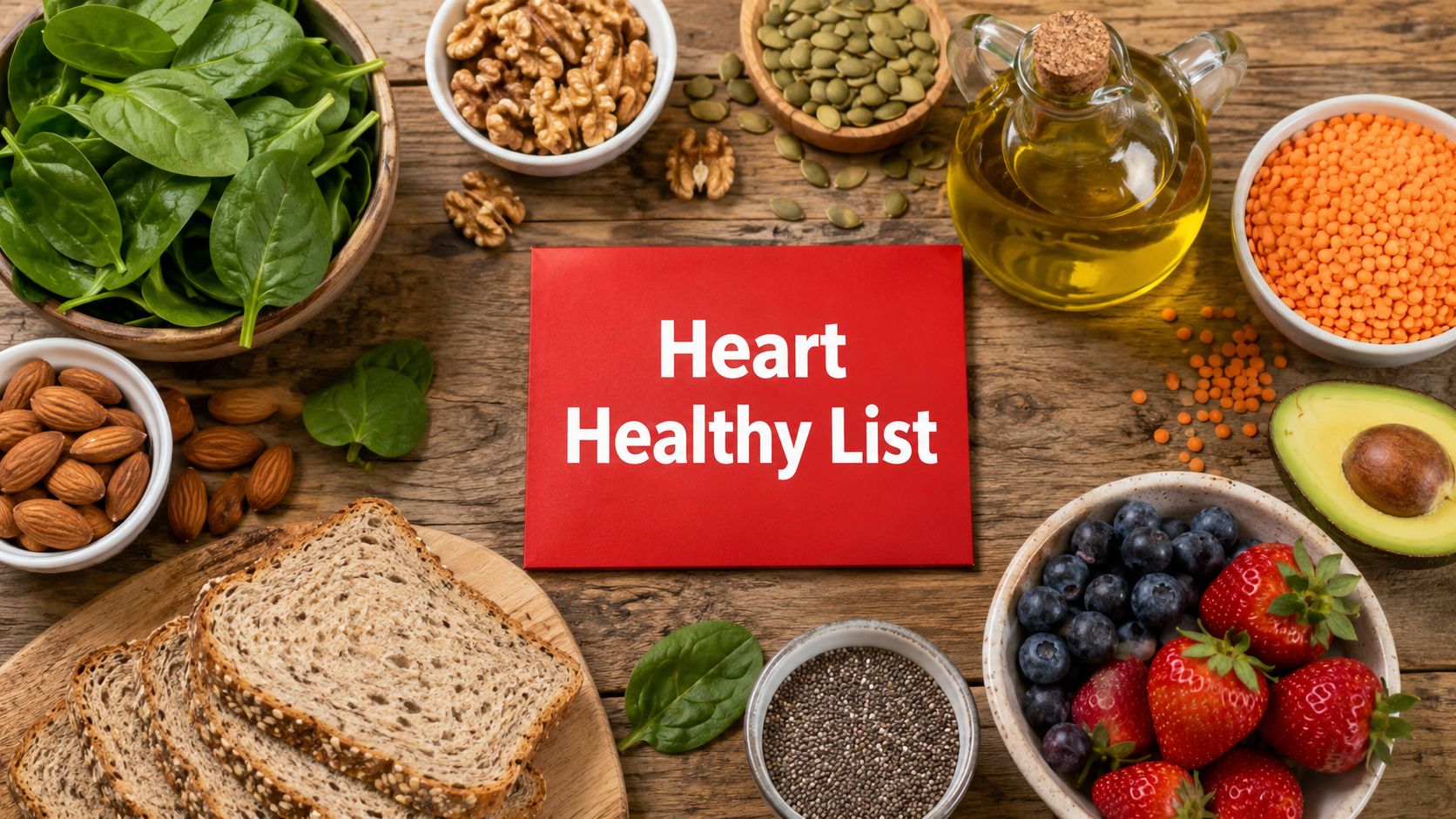
You're standing in the grocery aisle, trying to eat better, and every package claims it's “heart healthy.” The fastest way to build a heart healthy grocery list is to shop by aisle, not by marketing. Buy enough produce to support at least 2 cups of fruit and 2.5 cups of vegetables per day, choose whole grains, keep sodium within that same guidance, and favor lean proteins, seafood, beans, nuts, and unsweetened staples over highly processed foods.
A strong list isn't built around one miracle ingredient. It's built around repeatable choices you can make on a busy Tuesday after work. That means frozen berries when fresh fruit will spoil, canned beans when you don't have time to cook dry ones, and low-sodium pantry staples that make healthy meals easier instead of harder.
If your cart usually ends up half-planned and half-impulse buys, simplify it. Start with foods that help keep arteries flowing smoothly, then add the practical filters that matter in real life: shelf life, prep time, sodium, and whether you'll still want to eat it three days later.
What should be on a heart healthy grocery list?
You get one hour at the store, a tight budget, and a cart that can either make weeknight meals easier or leave you relying on takeout. A useful heart healthy grocery list solves that problem by giving each aisle a job.
Build the list around foods you can turn into actual meals. In produce, buy fruit and vegetables you will use before they spoil, plus frozen backups. In the grain aisle, choose oats, brown rice, quinoa, and breads or cereals with whole grains listed first. In proteins, stock beans, lentils, fish, plain yogurt, eggs, and lean poultry. In fats, keep extra virgin olive oil, nuts, seeds, and nut butters with short ingredient lists.
This test is simple. Can this food help you put together breakfast, lunch, or dinner without adding a heavy sodium load, a lot of added sugar, or highly processed extras?
Use a few shopping filters:
- Choose foods close to their original form: plain oats beat sugary instant packets.
- Check the label fast: look for lower sodium, little or no added sugar, and short ingredient lists on staple foods.
- Buy for your schedule: frozen vegetables, canned beans, and plain frozen fish often work better than fresh versions that spoil.
- Watch portions on calorie-dense staples: nuts, seeds, oils, and granola belong on the list, but they still need measured use.
If you want a practical pattern to follow each week, a Mediterranean-style meal plan built around heart-supportive staples makes the list easier to repeat. That matters more than chasing specialty products with health claims on the front of the package.
A strong cart is not a random collection of "healthy" foods. It is a plan: produce for volume, beans and fish for protein, whole grains for fiber, and a few reliable staples that keep you from ordering dinner when the week gets busy.
1. Fatty Fish (Salmon, Mackerel, Sardines)

You get home on a Wednesday, need dinner in 15 minutes, and the healthy option has to be faster than takeout. That is where fatty fish earns its place on a heart healthy grocery list. It gives you protein plus omega-3 fats in a form that can be fresh, frozen, or canned, so this category still works even when your week does not.
The shopping goal is simple: buy enough fish for two meals. Salmon is the easiest pick for many shoppers, but sardines and mackerel often win on cost, shelf life, and convenience. If someone tells me they want to eat more fish for heart health, I usually tell them to stop relying on fresh fillets alone. Fresh fish is easy to intend to cook and easy to waste.
How to buy it without overcomplicating the plan
Use the seafood case for one near-term meal and the freezer or pantry for your backup.
Good options to rotate:
- Fresh salmon fillets: Buy portions around 4 to 6 ounces per person for a dinner entrée.
- Frozen salmon or trout portions: Better for flexible schedules and easier portion control.
- Canned sardines: Choose varieties packed in water or olive oil. Use them for toast, salads, or a quick lunch plate.
- Canned mackerel: Mild enough for fish cakes, rice bowls, or mixing with mustard and lemon.
Label reading matters here. For canned fish, check sodium before you throw it in the cart. Packed in olive oil is fine if you like the flavor, but sauces can add unnecessary sodium and sugar. For frozen fish, look for plain fillets instead of breaded products that turn a strong staple into a processed convenience food.
A few smart trade-offs help:
- Fresh tastes better to many people, but frozen is often the better weekly staple.
- Sardines are less popular than salmon, but they are one of the easiest ways to keep fish available at all times.
- Individually portioned fillets cost more, but they reduce waste and make weekday cooking easier.
If you are unsure where to start, buy one salmon dinner and two cans of sardines or mackerel. That gives you a realistic aisle-by-aisle plan, not just a good intention.
2. Leafy Greens (Spinach, Kale, Arugula, Collards)

You get home with good intentions, then the greens liquefy in the crisper by Friday. That usually means one problem at the store. You bought greens by name, not by use.
Leafy greens belong in a heart healthy grocery list because they give you an easy way to add volume, potassium, fiber, and color to meals you already make. They also help shift the cart away from refined convenience foods. The practical goal is not to buy the “best” green. The goal is to buy the right format, in the right amount, for the meals on your calendar.
A smart weekly target is one large clamshell or bag for quick use, plus one sturdier option if you shop once for the whole week.
How to choose greens that actually get eaten
Each green solves a different problem in the kitchen:
- Spinach: Mild, fast-cooking, and easy to fold into eggs, soups, pasta, or smoothies. Best if you want a flexible starter green.
- Kale: Better shelf life and more texture. Good for sautés, grain bowls, or soups later in the week.
- Arugula: Peppery and useful in small amounts. Works well in salads, sandwiches, and on top of pizza or roasted vegetables.
- Collards: Stronger flavor and sturdier leaves. Best for braising, slicing into ribbons, or cooking as a side.
- Chard: A good middle ground if you want a cooked green that softens faster than collards.
Portion planning matters here. For salads, plan about 2 packed cups per person. For cooked greens, expect a large raw volume to shrink down quickly, so buy more than you think you need if they are meant to be a dinner side.
Pre-washed greens cost more. In practice, they often earn their spot because they remove the rinsing and chopping step that causes follow-through to drop. Whole bunches are usually cheaper and sometimes fresher, but they make sense only if you will prep them the same day or have a clear use for them.
Use the label to screen for extras you do not need. Plain greens should have one ingredient. Salad kits are a different product. They often add salty dressing, sweetened toppings, and refined crunchy add-ins that can turn a strong produce choice into a less useful default.
A simple aisle-by-aisle plan works well:
- Buy spinach or arugula from the produce case for meals in the next 2 to 3 days.
- Buy kale, collards, or chard as your backup green for the second half of the week.
- If you eat mostly plant-forward meals, build your cart around a few plant-based meal plan ideas so those greens already have a job before you check out.
Store tender greens with a paper towel in the container to absorb moisture. Keep sturdier bunches dry until you are ready to wash and prep them.
Buy greens with a destination. “Salad sometime” is vague. “Spinach for Monday eggs, kale for Thursday soup” gets used.
3. Whole Grains (Oats, Brown Rice, Quinoa, Whole Wheat)
The grain aisle can help or hurt your heart healthy grocery list fast. One cart has plain oats, brown rice, quinoa, and true whole wheat staples that keep meals steady and filling. The next has sugary cereal, white bread marketed as "multigrain," and instant packets loaded with sodium.
Whole grains earn their spot because they are useful, affordable, and easy to repeat through the week. They also make healthy meals more practical. A batch of cooked grains gives you a base for breakfast, lunch bowls, soups, and quick dinners, which lowers the odds that convenience food takes over by midweek.
How to shop this aisle with a plan
Start with products that have a short ingredient list and name the grain clearly. For bread, the first ingredient should be "whole wheat flour" or another whole grain. For oats, buy plain rolled or steel-cut oats instead of flavored packets. For cereal, choose options with whole grain listed first and little or no added sugar.
Portion size matters here because grains are easy to overpour. A practical target is about 1/2 cup cooked rice or quinoa per meal, 1 slice of whole wheat bread, or about 1/2 cup dry oats before cooking. That amount leaves room for the foods that should share the plate, especially vegetables, beans, fish, or lean proteins.
A smart cart usually includes:
- Rolled or steel-cut oats: Best for breakfasts you can repeat. They also work in overnight oats, homemade oat bran blends, or even as a binder in turkey meatballs.
- Brown rice: Cheap, dependable, and useful for batch cooking. Buy frozen cooked brown rice if the trade-off for convenience means you will use it.
- Quinoa: Cooks faster than many grains and adds protein and texture to bowls and salads.
- Whole wheat bread or pasta: Good convenience staples, but check the label closely because many products use mostly refined flour with a small amount of whole grain mixed in.
There are trade-offs. Brown rice and steel-cut oats are strong staples, but they take longer to cook. Quinoa and quick oats save time, though some people find them less satisfying. Whole wheat pasta is a practical weeknight option, but the texture is different enough that some households do better with a mix, such as half whole wheat pasta and half legume pasta or a smaller pasta portion with more vegetables added.
If you build a lot of grain-based lunches or meatless dinners, a plant-based meal plan for weekly grocery shopping can help assign each grain to actual meals before it sits in the pantry unused.
Buy grains with a job. Oats for weekday breakfast. Quinoa for two lunch bowls. Whole wheat bread for sandwiches and avocado toast. That level of specificity is what turns a healthy grocery list into a plan you can follow.
4. Legumes (Beans, Lentils, Chickpeas)
You get home on a weeknight, open the fridge, and the fresh protein you meant to cook still needs prep. It's for these moments that legumes belong on a heart healthy grocery list. Beans, lentils, and chickpeas give you a shelf-stable backup that can turn into a real meal fast, with fiber and plant protein that help make meatless meals more filling.
They also solve a shopping problem that gets ignored. A bag of dry lentils or a few cans of beans can sit in the pantry until you need them, which lowers the odds of wasted food and expensive last-minute takeout.
A plant-based meal plan can help assign legumes to specific lunches and dinners so they get used instead of collecting dust.
What to buy and how to choose it
Buy a mix based on how you cook.
- Canned beans and chickpeas: Best for speed. Look for low-sodium or no-salt-added options. If regular canned beans are what you have, rinse them well.
- Dry lentils: One of the easiest pantry staples because many types cook faster than dry beans and do not require soaking.
- Black beans: Good for tacos, rice bowls, and soups.
- Chickpeas: Useful in salads, sheet-pan dinners, and mashed sandwich fillings.
- White beans: Mild flavor, easy to add to soups, pasta, or sautéed greens.
Portion size matters here because legumes often replace part of the meat, not just sit on the side. A practical serving is about 1/2 to 1 cup cooked, depending on the meal. For mixed households, one effective swap is using half the usual ground meat and adding lentils or black beans to chili, tacos, or pasta sauce.
Dry beans cost less, but canned beans save time. For many shoppers, canned wins because it gets eaten.
Use label cues that make the decision easier. Choose short ingredient lists. Watch sodium per serving, especially in canned soups or seasoned bean products. Skip baked beans or flavored bean pouches loaded with added sugar or salty sauces if the goal is heart-focused shopping.
Use legumes in meal formats you already repeat:
- Lentils: Soup, curry, pasta sauce, or a grain-free bowl with roasted vegetables
- Chickpeas: Salad topper, roasted snack, hummus-style spread, or tray-bake add-in
- Black beans: Burrito bowls, quesadillas, tacos, or scrambled with eggs
- White beans: Blended into soup, tossed with greens, or mashed on toast with olive oil
5. Nuts and Seeds (Almonds, Walnuts, Flaxseed, Chia Seeds)
Nuts and seeds are easy to overbuy and easy to overeat, so this aisle rewards a little strategy. The right picks give you unsaturated fats, fiber, and better staying power than chips, crackers, or sugary snack mixes. The wrong picks add a lot of sodium, sugar, or calories without doing much for meal quality.
Treat this part of your heart healthy grocery list as a portion-controlled staple, not a free-pour snack.
What to buy and how to use it
A small core set is enough for most households:
- Walnuts: Best for oatmeal, yogurt, and salads. Their softer texture works well in breakfast foods.
- Almonds: Practical for packed snacks or pairing with fruit.
- Ground flaxseed: Best for stirring into oatmeal, smoothies, or yogurt. Ground is more useful than whole for everyday eating.
- Chia seeds: Good in overnight oats, yogurt bowls, or chia pudding.
- Pumpkin seeds: Helpful for salads, grain bowls, and soups when you want crunch without croutons.
Portion size is where this category usually goes off track. A practical serving is a small handful of nuts, or 1 to 2 tablespoons of seeds. Pre-portioning them into small containers or bags works better than eating straight from a large tub.
In the store, read the front of the package skeptically. “Honey roasted,” “glazed,” “sweet and spicy,” and many trail mixes usually mean added sugar, extra sodium, or both. For heart-focused shopping, choose raw, dry-roasted, or lightly salted options with short ingredient lists.
Seeds need one more filter. For flax, buy ground flaxseed, not whole flaxseed, if the goal is easy daily use. For chia, plain is the better buy because flavored versions often cost more without adding much value.
A smart swap here is simple. Replace snack bars or flavored nut mixes with almonds plus fruit, or add chia or flax to a breakfast you already eat. That keeps nuts and seeds in their best role: small additions that improve a meal, not calorie-dense foods that accumulate to the equivalent of a second meal.
6. Berries (Blueberries, Strawberries, Raspberries, Blackberries)

You get home with good intentions, then the berries mold in the fridge by Thursday. That is why berries need a shopping plan, not just a spot on a healthy foods list.
Berries earn their place because they make sweet foods easier to manage. They can replace part of a dessert, improve a plain breakfast, and add fruit without extra prep. The practical decision is not just which berry to buy. It is which form you will finish.
How to choose berries that fit your week
Fresh berries work best if you have a clear use for them in the next few days. Frozen berries are often the better buy for regular use because they store well, reduce waste, and give you a reliable fruit option even when fresh berries are expensive or disappointing.
Use this quick filter in the store:
- Buy fresh if you need berries for lunches, snacks, or a weekend breakfast within 2 to 3 days.
- Buy frozen if you want berries for oatmeal, smoothies, or yogurt over the next 1 to 2 weeks.
- Skip sweetened frozen fruit and choose plain bags with fruit as the only ingredient.
Portion size matters here too. A practical serving is about 1 cup of fresh berries or 3/4 to 1 cup frozen. That is enough to add fiber and volume to a meal without turning fruit into an afterthought or, on the other side, a large sugary smoothie base.
Aisle strategy helps. In produce, check the bottom of the container for crushed fruit or moisture, which usually means faster spoilage. In the freezer aisle, avoid blends with added syrups. If you use berries in smoothies with non-dairy milk, it also helps to know which plant-based milk is best so the drink stays balanced instead of turning into a low-protein snack.
The best uses are the ones that repeat easily:
- Oatmeal: Add blueberries or raspberries during cooking.
- Yogurt bowls: Use strawberries or blackberries for texture and sweetness.
- Dessert: Warm frozen mixed berries and spoon over plain yogurt.
- Snacks: Pair a small bowl of berries with a few nuts instead of reaching for cookies or candy.
Fresh raspberries are excellent, but they are one of the easiest fruits to waste. Frozen blueberries are less delicate and often more realistic for busy households. For heart-focused shopping, the better choice is the one you will buy again and use completely.
7. Olive Oil (Extra Virgin)
You are in the cooking oil aisle, and half the shelf looks healthy. Extra virgin olive oil is the bottle to buy first if the goal is better heart-focused meals that you will cook and repeat.
What matters is not owning olive oil. It is using the right amount, in the right places, often enough to replace butter, creamy dressings, or heavier sauces.
Choose extra virgin, not “light” olive oil. A dark glass bottle is better because it protects the oil from light. Buy a size you can finish within a reasonable stretch of regular cooking. A large bargain bottle is not a smart buy if it sits for months near the stove and loses flavor.
A practical serving is 1 to 2 teaspoons for cooking or about 1 tablespoon for a salad or grain bowl. That gives you enough to coat food and carry flavor without turning a vegetable dish into an oil-heavy one.
What to look for in the aisle
Use a short filter:
- Label: “Extra virgin olive oil” should be clearly stated on the front.
- Bottle: Dark glass is better than clear plastic.
- Ingredients: Olive oil should be the only ingredient.
- Use case: Pick one bottle for everyday cooking, not a specialty oil you save and avoid using.
This is also where trade-offs matter. A very peppery oil can be excellent on salads but less useful if your household prefers milder flavors. For many shoppers, a mid-priced bottle with a taste they enjoy is the better long-term choice because it gets used consistently.
Use olive oil where it helps healthier staples taste better:
- Salad dressing: Mix with lemon juice, vinegar, garlic, or herbs.
- Roasted vegetables: Toss lightly so the vegetables brown instead of steam.
- Beans and grains: Add a small drizzle after cooking for flavor and texture.
- Fish or chicken: Spoon a little over the top instead of using a creamy sauce.
If olive oil is part of breakfast smoothies or coffee-shop style drinks in your routine, it also helps to know which plant-based milk is best so the rest of the meal still has enough protein and stays balanced.
Store the bottle in a cool, dark cabinet. Keep it away from the stove if possible. Heat, light, and time dull the flavor, and once the oil tastes flat, people often stop using it well.
8. Low-Fat Dairy and Unsweetened Plant-Based Alternatives
You're in the dairy case trying to buy something simple, and half the shelf is dessert dressed up as breakfast. Heart-health shopping gets easier once you screen these products the same way every time: keep saturated fat moderate, skip added sugar, and choose options you will use during the week.
For this aisle, plain products usually give you the best control. Plain Greek yogurt, low-fat cottage cheese, and unsweetened fortified plant milks fit into meals without adding much sugar or extra sodium. Reduced-fat cheese can work too, but portion size matters more than the health claim on the front of the package.
What to put in the cart
Pick a short list you can use in more than one meal:
- Plain Greek yogurt: Buy a tub if you use it often. A serving is about 3/4 to 1 cup, enough for breakfast or as a base for a sauce.
- Low-fat cottage cheese: Useful for snacks or lunch bowls. Start with 1/2 to 1 cup depending on your protein needs.
- Unsweetened soy milk: Usually the best plant-based option if you want more protein in smoothies, cereal, or oatmeal.
- Unsweetened almond or oat milk: Better for taste and texture if that helps you use them consistently, but check the label because protein is often much lower.
- Reduced-fat cheese: Fine in small amounts, such as 1 ounce sliced or shredded into a meal instead of making it the main feature.
Label reading matters more here than branding. Check added sugars on yogurt and plant milks first. “Vanilla” often means sweetened. Then check sodium, especially in cottage cheese and cheese slices. If blood pressure is part of the goal, build your cart around low-sodium meal planning ideas so these foods fit the rest of the week.
One trade-off comes up often in practice. Some shoppers do better with low-fat dairy because it gives them more protein and better fullness. Others prefer plant-based options for taste or digestion, but they accidentally buy versions with very little protein and a long ingredient list. The better choice is the one that fits your meals and gets used regularly, not the one with the most health-focused packaging.
If you're comparing plant milks, which plant-based milk is best depends on how you use it. For oatmeal or smoothies, soy milk is usually the stronger nutritional pick. For coffee or occasional cereal, unsweetened almond or oat milk can still fit well if the rest of the meal covers protein.
9. Poultry and Lean Meats (Chicken Breast, Turkey)
You're in the meat aisle deciding between plain chicken breast, preseasoned cutlets, deli turkey, and a family pack of ground beef. For heart health, that choice matters less by category than by form. The best picks here are the least processed, the leanest, and the easiest to portion into real meals.
Use poultry as a steady weeknight protein, not as an excuse to load the cart with salty convenience foods. Skinless chicken breast, turkey breast, and lean ground turkey fit well because they give you protein without the saturated fat load that comes with fattier cuts and many processed meats. Lean ground beef can still fit sometimes, but it works better as an occasional choice than a default.
What to buy and how to judge it
A good cart in this aisle usually includes a few reliable basics:
- Skinless chicken breast: Good for stir-fries, sheet pan dinners, soups, and meal prep.
- Turkey breast: Useful for simple lunches and quick dinners.
- Lean ground turkey: A practical option for meatballs, burgers, chili, and taco filling.
- Lean ground beef: Choose it selectively, and check the package for a higher lean percentage.
Label reading matters here. Look at the ingredient list first. Fresh poultry with one ingredient is different from “flavored,” “marinated,” or “seasoned” options that often add a lot of sodium before you even start cooking. For ground meat, compare lean percentages side by side and pick the one that gives you enough flavor for the dish without making saturated fat the main feature.
Portion size helps too. A useful target is about 3 to 4 ounces cooked per meal, roughly the size of a deck of cards. If a package contains far more than you'll cook in two days, divide it at home and freeze meal-size portions right away.
Processed meats deserve extra caution. Deli turkey, chicken sausage, breaded tenders, and many frozen meat products look convenient, but they often trade convenience for more sodium and more additives. If blood pressure is part of the goal, building dinners around plain poultry and a DASH-friendly weekly meal plan makes this aisle much easier to use well.
One trade-off comes up often. Chicken breast is lean, but some shoppers find it dry and stop using it. In that case, plain chicken thighs can be a more realistic option if the rest of the week is built around fish, beans, lentils, and vegetables. The better plan is the one you will cook, portion, and repeat.
10. Colorful Vegetables (Bell Peppers, Tomatoes, Carrots, Broccoli)
A cart full of good intentions does not help your heart if the vegetables spoil before Thursday. The better plan is to buy a mix you will use, with some for salads and snacks, some for cooking, and some backup in the freezer.
These vegetables earn their place because they add volume, fiber, and color without turning dinner into a sodium-heavy convenience meal. They also fit different levels of effort. Bell peppers can be sliced for lunch in two minutes. Broccoli can go straight from bag to sheet pan. Carrots hold up for days and still work raw, roasted, or added to soup.
Shop this aisle with a use plan
Buy vegetables in forms that match how you cook:
- Bell peppers: Pick 2 to 3. Use raw for snacks, sliced into stir-fries, or roasted for grain bowls.
- Carrots: Buy a 1 to 2 pound bag. Keep some for snacks and roast the rest with olive oil and herbs.
- Broccoli: Choose crowns if you want less waste, or a bag of florets for speed. A practical serving is about 1 cup cooked.
- Tomatoes: Fresh tomatoes work for sandwiches and salads. No-salt-added canned tomatoes are often the better buy for soup, chili, and pasta sauce.
- Frozen mixed vegetables: Keep at least one bag on hand for nights when fresh produce is gone.
Label reading matters here too, just in a different way. For canned tomatoes, look for "no salt added" or compare sodium per serving side by side. For frozen vegetables, plain vegetables are usually the best choice. Skip versions with cheese sauce, seasoned butter, or sweet glazes unless they fit the rest of the meal.
One common mistake is buying only delicate produce. A stronger cart has a balance of short-life vegetables, like tomatoes, and longer-keeping options, like carrots, broccoli, and frozen blends. That gives you better odds of using what you buy.
If blood pressure is part of the goal, pair this produce aisle strategy with a DASH-style meal plan built around lower-sodium meals. It helps turn vegetables into actual meals instead of side items you forget to cook.
11. How to Read Nutrition Labels for a Healthier Heart
You're in the cereal aisle comparing two boxes that both say “whole grain” on the front. One has far more sodium and added sugar than you expected. The front of the package sells the product. The nutrition panel tells you whether it belongs in your cart.
For heart health, the label matters most in packaged foods that can drive up sodium, added sugar, saturated fat, or refined grains. That includes bread, cereal, soup, yogurt, frozen meals, sauces, deli meat, and snack foods. Read labels like a filter, not a research project. You need a few cues that help you make a fast decision in the aisle.
Start with these, in this order:
- Serving size: Check it first. A package may look like one portion but list two or three. If you usually eat double the serving, double the sodium, sugar, and saturated fat.
- Sodium: Compare similar products side by side and choose the lower-sodium option. This is one of the fastest ways to improve a heart healthy grocery list.
- Added sugars: Review this in cereal, flavored yogurt, granola bars, sauces, and drinks. Lower is usually the better call.
- Saturated fat: Pay close attention in cheese, processed meats, desserts, frozen entrees, and creamy snacks.
- Ingredient list: For breads, crackers, pasta, and cereals, look for a whole grain near the top of the list, such as whole wheat, oats, or brown rice.
A simple rule helps: compare one category at a time. Don't compare cereal to eggs or peanut butter to yogurt. Compare two breads, two soups, or two crackers, then choose the one with better numbers and ingredients.
The ingredient list can also save you from misleading front-label language. “Multigrain” does not always mean whole grain. “Made with whole grains” can still describe a product built mostly from refined flour. For bread, a practical target is a product with whole wheat or another whole grain listed first.
Keep the trade-off realistic. The lowest-sodium product is not always the one your household will readily eat, and a healthier option that gets thrown away does not help much. I usually recommend buying the better option your family will use consistently, then improving from there.
One more shortcut works well. Build most of your cart from foods that need little or no label reading: plain oats, beans, lentils, produce, nuts, seeds, fish, plain yogurt, and minimally seasoned proteins. Then use labels carefully in the packaged parts of the store.
If two packaged foods are close, buy the one with lower sodium, less added sugar, and a shorter ingredient list you recognize.
If you want those rules turned into actual meals, a DASH-style meal plan gives you a practical structure for using lower-sodium, higher-fiber foods across the week.
11-Item Heart-Healthy Grocery Comparison
| Item | 🔄 Implementation Complexity | ⚡ Resource & Prep | 📊 Expected Outcomes | 💡 Ideal Use Cases | ⭐ Key Advantages |
|---|---|---|---|---|---|
| Fatty Fish (Salmon, Mackerel, Sardines) | Moderate, simple cook but storage/mercury care | Higher cost; fresh or frozen; cooks 15–20 min | Lowers triglycerides and inflammation; improves heart health | Weekly dinners; quick protein-rich meals | High EPA/DHA and complete protein ⭐ |
| Leafy Greens (Spinach, Kale, Arugula) | Low, minimal prep, quick to use | Very low cost; perishable (store airtight) | Improves blood pressure, vitamin supply, low calories | Salads, smoothies, sides, daily base | Nutrient-dense, high vitamin K/fiber ⭐ |
| Whole Grains (Oats, Brown Rice, Quinoa) | Moderate, longer cooking or batch-cook | Budget-friendly, shelf-stable; batch cook friendly | Lowers LDL, steady energy, better glycemic control | Breakfasts, bowls, meal-prep staples | High fiber, beta-glucans, micronutrients ⭐ |
| Legumes (Beans, Lentils, Chickpeas) | Moderate, soaking/cooking or use canned | Very low cost; shelf-stable; canned = convenient | Reduces LDL, stabilizes blood sugar, high satiety | Plant-based meals, budget meal prep | High protein+fiber, affordable, shelf-stable ⭐ |
| Nuts & Seeds (Almonds, Walnuts, Flaxseed) | Low, ready-to-eat; portion control needed | Moderate cost; store cool to prevent rancidity | Improves cholesterol, reduces inflammation | Snacks, toppings, travel-friendly | Healthy fats, portable, nutrient-dense ⭐ |
| Berries (Blueberries, Strawberries) | Low, minimal prep; rinse before use | Moderate cost; fresh short shelf life, frozen option | Antioxidant/anti-inflammatory effects; supports BP | Breakfasts, smoothies, snacks | High polyphenols, low sugar, fiber ⭐ |
| Olive Oil (Extra Virgin) | Low, easy to use; choose quality | Moderate cost; store dark/cool; mindful portions | Reduces inflammation; improves endothelial function | Dressings, low–medium heat cooking | Monounsaturated fats + polyphenols ⭐ |
| Low‑Fat Dairy & Unsweetened Plant Alternatives | Low, ready-to-eat; label reading required | Moderate cost; refrigerated or shelf-stable plant milks | Provides protein, calcium, vitamin D; satiety | Quick breakfasts, snacks, post-workout | High protein (Greek yogurt), fortified options ⭐ |
| Poultry & Lean Meats (Chicken, Turkey) | Low, quick cook; food-safety mindful | Affordable; refrigerated/frozen; easy portioning | Supports muscle maintenance; lower sat fat than red meat | Mains, meal prep, high-protein meals | Complete, lean protein; versatile ⭐ |
| Colorful Vegetables (Peppers, Broccoli, Carrots) | Low, quick cook or raw | Very affordable in season; frozen alternatives | Broad micronutrient support; lowers CVD risk | Fill half your plate; sides, snacks | Low-calorie, high fiber and antioxidants ⭐ |
| How to Read Nutrition Labels for a Healthier Heart | Moderate, learning curve but scalable | Time and attention at shopping; no extra cost | Better product choices; lowers sodium/sugar/sat fat intake | Grocery shopping, product comparisons | Empowers informed choices; avoids marketing traps ⭐ |
Your Action Plan: The Printable Heart-Healthy Checklist
It is 6 p.m., you are tired, and dinner decisions get made by whatever is easiest to grab. A useful heart-healthy grocery list prevents that moment. It gives you a short set of repeat purchases that turn into real meals, not a cart full of good intentions.
The goal is a list you can shop by aisle and use all week. Keep the structure stable. Change the specific foods based on price, season, and how much cooking you will realistically do. Fresh produce is great if you will use it in three to four days. Frozen vegetables, berries, and fish are often the better buy if your schedule is less predictable.
The American Heart Association Heart-Check grocery workflow shows the same principle. A shopping system works best when it helps you find foods, compare options, and build a list you can follow in the store.
Use this checklist as your baseline.
Printable Checklist:
Produce Aisle:
- Leafy greens, 1 to 2 bags or bunches. Spinach, kale
- Berries, 1 to 2 containers or bags. Blueberries, strawberries, fresh or frozen
- Colorful vegetables, 3 to 4 choices. Broccoli, bell peppers, carrots
- Other fruit, 3 to 4 pieces or servings. Apples, bananas, oranges
Protein (Meat/Fish Counter and Plant-Based Section):
- Fatty fish, 2 meal portions. Salmon, sardines
- Lean poultry, 1 package. Skinless chicken breast or turkey breast
- Legumes, 2 to 3 cans or 1 dried option. Lentils, chickpeas, black beans
Dairy and Alternatives Aisle:
- Plain Greek yogurt or low-fat cottage cheese, 1 tub
- Unsweetened almond, soy, or oat milk, 1 carton
Pantry Aisles:
- Whole grains, 1 to 2 staples. Rolled oats, quinoa, brown rice
- Nuts and seeds, 1 to 2 options. Walnuts, almonds, chia seeds, ground flaxseed
- Extra virgin olive oil, 1 bottle
- Canned tomatoes, no-salt-added if available
- Herbs and spices. Garlic powder, oregano, turmeric
A few label checks make this list stronger. Choose canned beans and tomatoes marked no salt added or low sodium. For yogurt and plant milks, look for unsweetened on the front and a short ingredient list. For bread, crackers, and grains, make sure whole grain or whole wheat is the first ingredient, not enriched flour.
Portions matter too. Nuts and seeds are useful, but easy to overeat. A small handful of nuts or 1 to 2 tablespoons of seeds is enough for most meals or snacks. Olive oil is a better fat choice than butter, but it still counts toward calories, so measure it when you cook if portions tend to creep up.
The simplest version of this plan is a fixed core list with a few weekly swaps. Buy spinach one week, kale the next. Use salmon when it fits the budget, canned sardines when it does not. Rotate black beans, lentils, and chickpeas so meals stay practical and you do not waste ingredients.
If you want your heart healthy grocery list turned into an actual week of breakfasts, lunches, dinners, and snacks, AI Meal Planner does the heavy lifting. It builds personalized meal plans, creates smart grocery lists by aisle, and helps you keep meals practical, balanced, and repeatable without spending your evening planning everything by hand.
AI-powered nutrition
Get Your Personalized Meal Plan
AI creates the perfect meals for your goals, lifestyle, and taste.
Start Your Journej