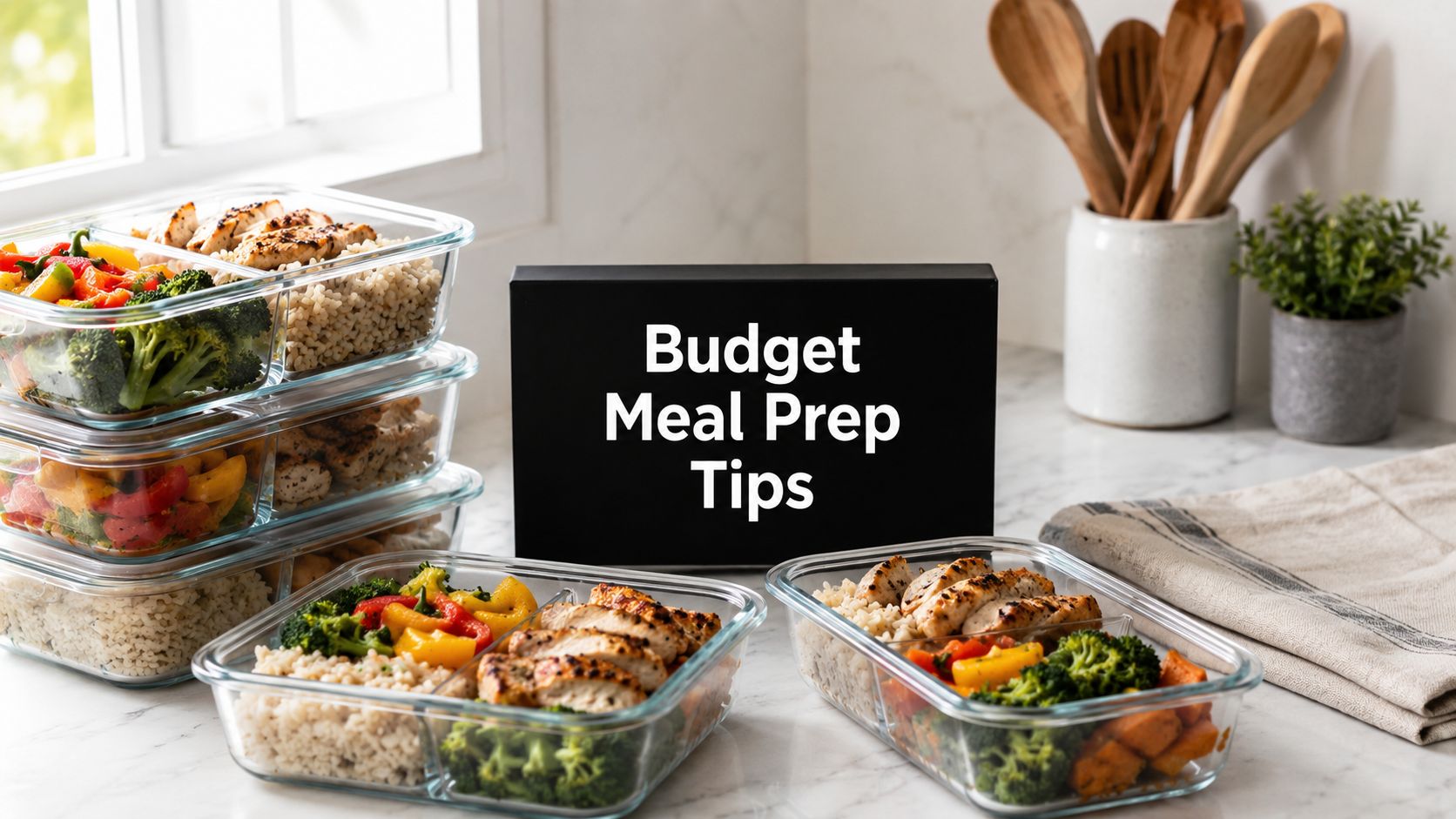
Budget-friendly meal prep works best when you plan before you shop, cook at home more often than you eat out, and reuse a small set of low-cost ingredients across several meals. The USDA recommends spending 15 to 20 minutes per week on meal planning before shopping, and that simple habit helps reduce impulse buys, stretch leftovers, and make one grocery trip cover multiple meals.
You're probably trying to solve two problems at once. You want meals that are cheap enough to repeat every week, but you also want food that still tastes good on a Wednesday night when work ran late and ordering takeout feels easier.
That's why most budget friendly meal prep fails. People search for cheap recipes, but what they really need is a system. Recipes matter, but the bigger win comes from deciding how you'll shop, how you'll reuse ingredients, how you'll freeze extras, and how you'll keep meals from feeling repetitive.
Cooking at home usually beats eating out on cost. One food company's breakdown puts an average meal out at about $13 versus about $4 for a meal made at home, which helps explain why meal prep is often treated as a money-control habit first and a convenience habit second in this look at saving money with meal prepping. The same budget-focused guidance also keeps returning to basics like rice, beans, pasta, potatoes, oats, and eggs because those foods store well, batch-cook well, and stretch across multiple meals.
If you want meal ideas to plug into the system, these easy budget meal prep recipes are a useful starting point. But the true advantage comes from the 10 strategies below.
1. How do you lower costs by batch cooking proteins?
Protein is usually where grocery budgets get messy. If you cook one portion at a time, buy small packs, and season every meal from scratch, you spend more money, more time, and more mental energy than necessary.
Batch cooking fixes that. Make one or two protein bases, portion them immediately, and freeze what you won't use in the next few days.
A practical example is cooking a large tray of chicken breasts, a pot of taco-style ground turkey, or a dozen hard-boiled eggs on Sunday. Those components can become rice bowls, wraps, salads, pasta add-ins, soups, or quick breakfasts without forcing you to cook from zero each day.
What actually works
Cook proteins plain or lightly seasoned first. Then split them into smaller portions and add different flavor profiles later. That gives you more variety from the same batch.
- Chicken for multiple cuisines: Roast or poach chicken, then turn one portion into fajita filling, another into garlic herb bowls, and another into a stir-fry.
- Ground meat as a base: Brown ground turkey or beef with onion, then divide it for chili, pasta sauce, or taco bowls.
- Eggs for fast meals: Hard-boiled eggs work for breakfast boxes, grain bowls, and emergency lunches.
Practical rule: Freeze in meal-sized portions, not family-sized bricks. Small portions thaw faster and are more likely to get used.
Label each bag or container with the date and flavor. If you have “cooked chicken” in one container and “ginger soy chicken” in another, you're far less likely to get bored and far more likely to use what you already made.
This visual walkthrough shows the process well:
Common mistake
People often batch cook too many complete meals and too few components. By day three, they're tired of the same exact lunch. A better approach is to prep protein as a building block, then change the sauce, starch, or vegetables later.
If you track macros, this method helps there too. You log the cooked protein once, then reuse it across the week instead of recalculating every meal from scratch.
2. How should you plan meals around sales and seasons?
The fastest way to overpay is to decide on recipes first and prices second. Budget friendly meal prep gets cheaper when the store ad shapes the menu, not the other way around.
That means checking weekly grocery discounts before finalizing your plan. If chicken, cabbage, frozen broccoli, or canned tomatoes are discounted, those items become the week's anchors.
Build a flexible weekly plan
Keep one part of your meal plan fixed and one part flexible. Your fixed part is your pantry base, things like rice, oats, pasta, beans, eggs, oil, and spices. Your flexible part is whatever produce or protein is cheapest that week.
Here's what that looks like in practice:
- Sale protein week: Chicken is marked down, so you make chicken rice bowls, soup, wraps, and sheet pan dinners.
- Produce-heavy week: Zucchini, peppers, and tomatoes look best and cheapest, so you lean Mediterranean with pasta, roasted vegetables, and grain bowls.
- Frozen fallback week: Fresh produce is weak or expensive, so you use frozen vegetables for stir-fries, soups, and egg scrambles.
If you want to check whether your weekly menu still fits your target spend, a grocery budget calculator helps you pressure-test the plan before checkout.
What doesn't work
Rigid recipe shopping usually creates leftovers you didn't intend to buy. You purchase cilantro for one dish, half a cabbage for another, and specialty condiments for a third. Then part of the spend ends up in the trash.
A better pattern is choosing ingredients with multiple possible uses. Onions, carrots, rice, canned tomatoes, eggs, frozen spinach, and beans can move between breakfast, lunch, and dinner with almost no waste.
Buy the versatile version when possible. Plain frozen vegetables beat pre-sauced blends because they can fit more meals.
This approach also makes seasonal eating easier without being precious about it. If fresh is cheap and good, use it. If not, frozen often gives you a better value and less waste.
3. How do you save money by overlapping ingredients across recipes?
Most affordable meal prep plans rely on repetition, just not obvious repetition. You don't need seven unrelated recipes. You need a cluster of meals built from the same core ingredients.
That pattern shows up clearly in a recent analysis of online budget food communities. In the study's food-frequency table, rice appeared 9,178 times in the regular budget group and 28,251 times in the healthy budget group, while vegetables appeared 7,851 and 27,842 times. The broad takeaway is simple. Budget-focused eating keeps circling back to a small set of affordable staples.

Use recipe clusters, not isolated meals
A strong weekly cluster might look like this:
- Anchor ingredients: Rice, onions, bell peppers, beans, garlic, chicken
- Meal 1: Chicken stir-fry bowls
- Meal 2: Bean and rice burrito bowls
- Meal 3: Chicken and pepper pasta
- Meal 4: Vegetable soup with leftover rice
- Meal 5: Egg fried rice with the remaining vegetables
That's enough variation to keep the week from feeling repetitive, but enough overlap to keep the cart under control.
Where people go wrong
They confuse variety with efficiency. Five cuisines can still be cheap if they use the same base ingredients. Five trendy recipes with separate ingredient lists usually aren't.
Start with three anchor ingredients and build outward. Rice plus onion plus eggs can already turn into breakfast bowls, fried rice, soups, and grain-based lunches. Add one protein and one vegetable, and the plan gets much easier.
What works best is ingredient overlap with flavor variation. Garlic, soy sauce, curry powder, salsa, lemon, yogurt, and dried herbs can make the same underlying ingredients feel different enough to repeat.
4. When is DIY food prep actually worth it?
Homemade versions of convenience foods can save money, but only when they replace things you already buy often. Making everything from scratch sounds virtuous and usually burns people out.
The smarter move is to pick two or three recurring items that are easy to make and easy to store. Think broth, hummus, simple sauces, seasoning blends, cooked beans, or overnight oats.
High-value DIY swaps
These are usually worth the effort:
- Broth from scraps: Save onion skins, carrot ends, celery tops, and herb stems in a freezer bag, then simmer them into broth.
- Cooked beans from dry: If you use beans often, cooking a large batch and freezing portions can lower cost and improve flexibility.
- Seasoning blends: Mix taco seasoning, Italian seasoning, or a simple curry blend from pantry spices instead of buying separate packets.
- Sauces and dressings: Yogurt-based sauces, vinaigrettes, and peanut sauces often take minutes and use ingredients you already have.
What usually isn't worth it
Making every snack, every condiment, and every specialty ingredient from scratch. If a DIY project takes too long, uses expensive equipment, or leaves your kitchen wrecked on a worknight, it won't stick.
A realistic standard is this. If it saves time later, reduces waste, or replaces an item you buy repeatedly, keep it. If it creates more hassle than value, skip it.
Homemade should reduce friction, not add a second job to your week.
One practical example is scrap broth. It turns peels and trimmings into a base for soup, rice, and sauces. Another is a jar of simple peanut sauce made from peanut butter, garlic, soy sauce, and water. It can rescue bowls, noodles, roasted vegetables, or leftovers that would otherwise feel flat.
5. Is bulk buying actually cheaper for meal prep?
Bulk buying works when you already know how the food will be used. It fails when people treat warehouse stores like treasure hunts.
A big bag of oats, rice, frozen vegetables, eggs, or chicken can lower your per-meal cost, but only if your routine can absorb it. The purchase itself isn't the savings. The savings come from using the whole thing before quality drops or freezer space runs out.
Buy in bulk only for repeat ingredients
Bulk buying makes the most sense for foods you use weekly:
- Dry staples: Rice, oats, pasta, beans
- Freezer staples: Frozen vegetables, frozen fruit, portioned meat
- Long-use basics: Oil, vinegar, spices, nut butter
- High-turn proteins: Eggs, chicken, yogurt
If your meal prep relies on these items every week, warehouse clubs and larger format stores can fit well. If your meals change constantly, bulk becomes riskier.
For people building lower-cost plans around recurring staples, a budget meal plan tool can help align your shopping list with foods you'll reuse.
The hidden trap
Warehouse stores make overspending easy because the unit price looks good, but the total basket climbs fast. A giant jar of sauce or a bulk snack box isn't a bargain if it wasn't on your list.
Go in with categories, not curiosity. Know which items are cheaper there, which ones are only “seem” cheaper, and which perishables your household can realistically finish.
This strategy works especially well when combined with ingredient clustering. If rice, eggs, chicken, and frozen vegetables already appear across several meals, buying them in larger quantities starts to make sense.
6. How do frozen and canned foods fit into a cheap meal prep system?
A cheap meal prep plan falls apart fast when every meal depends on fresh ingredients with a short shelf life. Frozen and canned foods solve that problem. They give you backup ingredients that hold quality, reduce spoilage, and keep your weekly plan usable even when work runs long or you skip a shopping trip.
That reliability has real budget value.
In practice, frozen and canned foods work best as system ingredients, not emergency food you buy and forget. They fill the gaps between shopping cycles and make the rest of your plan more stable. If chicken thighs were on sale, canned beans can stretch them into chili. If fresh spinach went bad, frozen broccoli can still finish your rice bowls for the week.
A low-cost meal prep setup usually keeps a short list of repeat items on hand:
- Frozen vegetables: Broccoli, spinach, mixed vegetables, peppers
- Canned basics: Tomatoes, beans, chickpeas, tuna
- Dry staples: Rice, oats, pasta, lentils
- Flavor supports: Garlic, onions, oils, vinegar, soy sauce, dried spices
The trade-off is straightforward. Frozen and canned foods are not always the cheapest item by unit price, and they do not always match the texture of fresh. Frozen spinach cooks down more. Canned green beans stay softer. But they often win on total value because you use what you buy instead of throwing part of it away.
For meal prep, that matters more than perfect texture in every dish.
Use plain versions when possible. Plain frozen broccoli gives you more flexibility than a seasoned vegetable mix. Plain canned tomatoes usually cost less per use than a jarred simmer sauce that only fits one recipe. This section of the system is about versatility. The more ways one item can fit into soups, pasta, bowls, curries, and casseroles, the cheaper your cart becomes over time.
If sodium matters for your household, canned and frozen foods need a quick label check. Low-sodium or no-salt-added options are common, and they are often worth the small price difference if you use these products several times a week.
That point matters because cheap meal prep is never one-size-fits-all. People managing blood pressure, diabetes, digestive conditions, or other health issues may need different canned goods, different starches, or tighter ingredient control. A budget system still has to be usable for the person eating the food.
Used well, frozen and canned foods can save money in two places at once. They lower waste, and they reduce the number of last-minute takeout nights caused by an empty fridge or a failed plan. That makes them less of a shortcut and more of a support beam in a sustainable budget meal prep system.
7. How do you simplify meals without making them feel basic?
Complicated recipes usually cost more because they require more ingredients, more condiments, and more leftovers of random items you won't use again. Simpler meals are easier to repeat, scale, and adapt.
The trick isn't to eat bland food. It's to use a repeatable structure.

Use frameworks instead of fixed recipes
A strong budget meal framework looks like this:
- One protein
- One starch
- Two vegetables
- One fat or sauce
- One seasoning direction
From there, you can build sheet pan dinners, soups, chilis, pasta skillets, rice bowls, and slow cooker meals with minimal thinking.
For example, chicken plus potatoes plus broccoli plus oil plus garlic herb seasoning becomes one dinner. Swap the potato for rice and the herbs for curry seasoning, and you have a different meal from almost the same cart.
Why one-pot and sheet pan meals work
They reduce friction. Fewer pans means less cleanup, and less cleanup means you'll cook again tomorrow.
A one-pot chili, a sheet pan chicken dinner, or a rice-and-vegetable skillet also makes portioning easier. You can cool the dish, divide it into containers, and move on.
“Simple” should mean fewer moving parts, not less flavor.
What doesn't work is stripping meals down so far that they feel like punishment. If every lunch is plain chicken, plain rice, and steamed vegetables, the routine will not be sustained. Add a sauce, roast instead of steam, use aromatics like onion and garlic, and the exact same framework becomes much more sustainable.
8. How can you use less meat without feeling unsatisfied?
A lot of people think saving money means removing protein or living on side dishes. That's not the right move. The better move is to stop building every meal around a large piece of meat.
Use meat as one component, not always the center of the plate. Then let vegetables, beans, lentils, and grains handle more of the volume.

Better ratios for lower-cost meals
These patterns work well:
- Stir-fries: More vegetables, smaller portions of sliced meat, served over rice
- Chili and soups: Beans or lentils as the base, meat for depth
- Pasta dishes: Vegetables and aromatics carry the dish, with meat used sparingly
- Bowls: Roast vegetables in bulk, add grains, then top with a modest amount of chicken or beef
This approach often improves texture and variety too. A bowl with roasted carrots, onions, cabbage, chickpeas, and a little chicken has more going on than a plate dominated by one large protein portion.
Important health trade-off
Generic “cheap staples” advice needs nuance. Some low-cost meal prep guides rely heavily on white rice, processed grains, or high-sodium canned goods. For people with diabetes, heart disease, or hypertension, those defaults may not fit well.
If you're planning for a medical condition, don't just ask what's cheapest. Ask what's cheapest that still fits your needs. That might mean choosing different grains, lower-sodium beans, or a different carbohydrate base and accepting that some substitutions cost more.
The budget goal should be sustainable eating, rather than the lowest receipt total.
9. How do you reduce food waste enough for meal prep to stay cheap?
Food waste undermines a meal prep budget. You can shop smart and still lose money if herbs wilt, bread stales, vegetables soften, or leftovers sit in the fridge until they're unrecognizable.
Low-waste cooking closes that gap. Use more of what you buy, and your grocery dollars stretch further without adding more recipes.
Start with the easiest zero-waste habits
There's no need to jump straight into advanced whole-animal cooking. Start with practices that have almost no downside:
- Save scraps for broth: Onion ends, celery leaves, carrot peels, herb stems
- Use stems and greens: Broccoli stems, beet greens, carrot tops, cauliflower leaves
- Plan leftovers on purpose: Roast extra vegetables with the next day already in mind
- Revive stale items creatively: Older bread becomes croutons, strata, breadcrumbs, or toast-based meals
If you want to build lower-waste meals around beans, grains, vegetables, and repeatable ingredients, a plant-based meal planning tool can make that easier to structure.
Advanced options that can work well
For some households, organ meats and whole cuts can be cost-effective. A small amount of finely chopped liver mixed into ground meat, for example, can stretch the mixture and boost nutrient density. But this only works if your household will eat it.
A more universal strategy is root-to-leaf cooking. Slice broccoli stems into stir-fries, sauté beet greens, and use herb stems in sauces or stock. Those habits are easy to repeat and don't require anyone to become a culinary maximalist.
The cheapest ingredient is often the one already in your fridge that still has another use.
10. How do macros and portion control help a food budget?
People often separate “eating on a budget” from “eating for nutrition goals,” but they fit together well when you keep the system simple. Macro-based planning helps you choose foods by function instead of impulse.
That means identifying a few affordable proteins, a few affordable carbohydrate bases, and a few fats or sauces that make meals satisfying. Then you portion them consistently.
Why this matters
Without portion control, cheap ingredients can still become expensive habits. You overuse proteins in some meals, underbuild others, get hungry later, and end up buying convenience food anyway.
A more stable approach is to define a few repeatable meals and portion them with basic consistency. You don't have to weigh food forever, but doing it for a short stretch helps you learn what your normal servings look like.
For anyone who wants that structure built into meal planning, a calorie and macro calculator can help line up food choices with targets before the week starts.
Focus on your cheapest reliable foods
Start by identifying:
- Your easiest protein sources: Eggs, beans, yogurt, chicken, lentils, tofu
- Your best carb bases: Rice, oats, potatoes, pasta
- Your practical fats: Olive oil, peanut butter, seeds, cheese in moderate amounts
- Your high-use vegetables: Frozen broccoli, onions, spinach, carrots, cabbage
One caution here matters a lot. If your meal plan is technically cheap but tastes repetitive, many people won't stay with it. Flavor fatigue is real. The fix usually isn't buying expensive ingredients. It's keeping a small flavor library on hand, things like onions, garlic, vinegar, soy sauce, chili powder, curry powder, dried herbs, and lemon juice. Those low-cost additions make repeated base ingredients feel like different meals.
10-Strategy Budget Meal-Prep Comparison
The ten strategies above work best as one system, not as ten separate tips. A good budget meal prep plan usually combines two or three low-effort habits first, then adds more advanced ones only if they fit your schedule, storage space, and cooking style.
Use this comparison as a decision tool. Pick the strategies that match your real constraints, then build from there.
| Strategy | Best for | Main trade-off | What you need | Likely payoff |
|---|---|---|---|---|
| Batch cooking proteins | People who want faster lunches and dinners during the week | More prep time upfront, plus freezer and container space | A few repeatable protein options, storage containers, basic labeling habit | Lower protein cost per meal, fewer convenience-food purchases, easier weeknight meals |
| Planning around sales and seasons | Flexible cooks who can change the menu week to week | Less predictability, more planning before shopping | Store ads, a price-aware shopping list, a short list of swappable meals | Lower grocery totals and better use of cheaper produce |
| Overlapping ingredients across recipes | Households that waste produce or buy too many one-off items | Less variety if you plan too narrowly | A simple meal map that reuses the same core ingredients | Lower waste, simpler shopping, better value from each ingredient |
| DIY prep where it actually saves money | Cooks willing to trade some time for lower food costs | Some homemade items take longer than they save | Basic equipment and a shortlist of DIY items worth repeating | Better control over staple costs, especially for sauces, snacks, and prepped basics |
| Bulk buying | Families, high-volume eaters, or shoppers with storage space | Higher upfront spend and risk of waste if you overbuy | Pantry room, freezer space, and a shortlist of true staples | Lower unit prices on foods you already use consistently |
| Using frozen and canned foods strategically | Busy households and small households that struggle with spoilage | Slightly less texture appeal in some meals | Freezer and pantry space, plus a rotation habit | Lower waste, more stable ingredient supply, easier backup meals |
| Simplifying meals | Beginners or anyone short on time | Less novelty if you never change flavors or formats | A few reliable meal templates and low-cost seasonings | Lower cooking friction, fewer ingredients, easier cleanup |
| Using less meat without losing satisfaction | Anyone trying to lower grocery costs without cutting protein too hard | Requires better seasoning and meal composition | Beans, lentils, eggs, tofu, grains, and flavorful add-ins | Lower meal cost and better stretch from pricier proteins |
| Reducing food waste | Households that regularly throw away leftovers or produce | Requires attention to storage, labeling, and leftovers planning | Clear containers, a leftover plan, and a first-in, first-out habit | More of the food you buy gets eaten, which protects the whole budget |
| Using macros and portions to guide spending | People who want nutrition targets without overspending | Tracking takes effort at first | Repeatable serving sizes, basic tracking, and a few dependable meals | Better control over hunger, protein spending, and portion consistency |
If a reader wants the simplest starting point, I would begin with ingredient overlap, one batch-cooked protein, frozen vegetables, and a short list of simplified meals. That combination usually gives the fastest return without adding much complexity.
If someone already meal preps but still spends too much, the next layer is sale-based planning, selective bulk buying, and stricter waste control. Those three habits save money, but only when the household has enough flexibility and storage to use them well.
Putting Your Budget-Friendly Meal Prep Plan into Action
Budget friendly meal prep gets easier when you stop treating it like a weekly test of discipline. It works better as a system with a few repeatable rules. Plan before shopping. Buy ingredients that overlap. Cook components in batches. Freeze extra portions. Keep enough flavor options around that the same rice, beans, eggs, vegetables, or chicken can show up in different forms.
You don't need a full kitchen overhaul to make this work. You need one dependable weekly rhythm. Spend a short block of time planning. Choose a few anchor ingredients. Prep one or two proteins, one starch, and a few vegetables. Leave room for one flexible meal that absorbs leftovers or sale items. That's enough to lower food costs and reduce the temptation to default to takeout.
The trade-offs matter. Bulk buying only helps if you'll use the food. DIY cooking only helps if it saves time later. Freezer meals only help if they're labeled clearly and portioned well. More variety isn't always better, because too many unique ingredients often lead to waste. The sweet spot is moderate repetition with enough flavor variation to keep meals interesting.
If you're planning for a household with health goals, be careful with generic budget advice. Cheap isn't the only filter that matters. Some people need lower-sodium options, different carbohydrate choices, or a more structured way to balance meals. In those cases, the best budget plan is the one that stays affordable without creating a second problem.
The strongest starting point is usually one of these:
- Batch-cook your main protein for the week
- Build two or three meals around the same sale ingredient
- Create one ingredient cluster you can use across lunch and dinner
- Replace a few fragile fresh ingredients with frozen or canned backups
- Portion leftovers immediately so they don't disappear in the fridge
Once that becomes normal, add the next layer. Use more freezer strategy. Simplify recipes. Waste less by using stems, scraps, and leftovers intentionally. Keep a short list of cheap meals that you already know your household will eat. Familiar meals beat ambitious plans that collapse by midweek.
Technology can help here if planning is the part that keeps breaking down. AI Meal Planner is one option for people who want help organizing weekly meals, grocery lists, and nutrition targets in one place. It's designed to generate personalized plans, account for preferences and allergies, and structure meals with calories and macros already calculated, which can reduce the spreadsheet work that often makes meal prep feel harder than it needs to be. If you want to set up a personalized system, you can start through the AI Meal Planner onboarding page.
One more practical note. Containers, labels, and a realistic menu matter more than fancy kitchen gear. If your meals are easy to see, easy to reheat, and easy to remix, you'll keep using them. That consistency is where the savings really show up.
Even if your first week is imperfect, the method still works. You don't need a flawless seven-day menu. You need a repeatable process that costs less than takeout, creates less waste than random grocery shopping, and fits your actual schedule. That's what makes budget friendly meal prep sustainable.
For a broader packaging and food-service perspective, this guide for UK hospitality businesses offers useful context on practical food handling choices.
If you want a simpler way to organize budget friendly meal prep, AI Meal Planner can help you build personalized weekly meals, generate grocery lists, and keep calories and macros aligned with your goals without planning everything manually.
AI-powered nutrition
Get Your Personalized Meal Plan
AI creates the perfect meals for your goals, lifestyle, and taste.
Start Your Journej