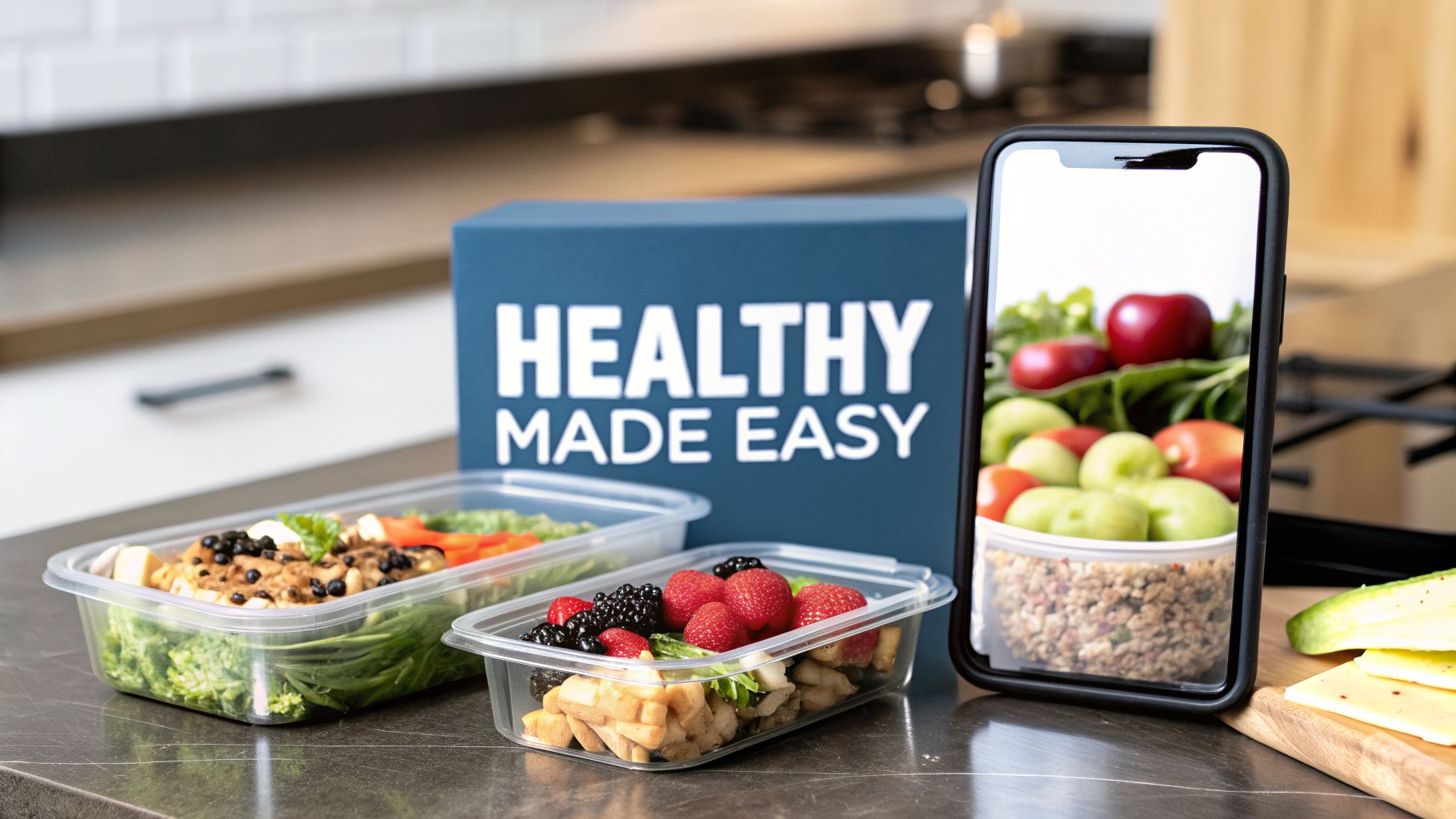
To make healthy eating easy, focus on three key actions: 1) Plan your meals for the week to eliminate daily decisions. 2) Create an organized grocery list to shop efficiently and avoid impulse buys. 3) Master 3-5 quick, nutritious recipes that take under 30 minutes to prepare.
Let's be real for a second. You probably know what you should be eating. The real struggle is finding the time and mental energy to actually do it. Between a packed schedule and constant decision fatigue, healthy eating feels like just another draining chore on a never-ending to-do list.
This isn't a willpower problem. It's a systems problem.
This guide skips the vague advice and gives you a clear, actionable playbook. We're going to show you how to build a simple, sustainable routine that saves you time, cuts your stress levels, and delivers real results like better energy and mental clarity. You can start building that system right now with a tool like the AI Meal Planner.

Why does a system beat willpower for healthy eating?
Relying on motivation to eat healthy is a recipe for failure. It’s a finite resource that disappears after a long day at work or a chaotic week. A system, on the other hand, runs on autopilot, taking the daily guesswork out of the equation so you aren't grabbing takeout just because you're too tired to think.
Building this system doesn't need to be complicated. The entire goal is to make the healthy choice the easiest choice. It’s all about creating a structured—but still flexible—framework that actually fits your life.
What are the core parts of a sustainable system?
A successful approach to making healthy eating made easy rests on a few key pillars. By getting these right, you build a foundation that supports your goals even when you're busy or just not feeling it.
- Strategic Planning: This just means knowing what you’re going to eat before you're hungry. It's the ultimate defense against the 6 PM "what's for dinner?" panic.
- Efficient Shopping: A smart grocery list ensures you buy only what you need, saving you time at the store and money at the checkout.
- Quick Preparation: Having a handful of go-to, nutritious meals you can cook quickly is non-negotiable for weeknight success.
For anyone who travels often, knowing how to eat healthy while traveling is also a critical piece of the puzzle. The same principles of planning and prep apply whether you're at home or on the road.
The secret to making healthy eating last is not having more discipline, but needing less of it. A well-designed system automates your choices, making consistency feel effortless.
Ultimately, this guide will walk you through creating that exact system, turning healthy eating from a constant battle into a simple, integrated part of your life.
What does a "healthy diet" really mean today?
The idea of a "healthy diet" has moved beyond restrictive fads and calorie counting. Today, the focus is on functional nutrition—eating foods that actively fuel your body, sharpen your mind, and boost your energy. It's a shift from a mindset of deprivation to one of empowerment.
The goal isn't just about the number on the scale anymore. It's about feeling your absolute best, and that starts with asking a better question. Instead of "How many calories are in this?" we're now asking, "What can this food do for me?"
How has the focus shifted from calories to functional foods?
Functional foods are ingredients that deliver benefits beyond basic nutrition. Think of them as foods with a specific job, whether that's taming inflammation, supporting your gut, or enhancing your focus. A huge driver behind this shift is our growing understanding of the gut-brain axis—the undeniable link between your digestive health and your mental well-being.
This means that eating for gut health is no longer a niche strategy; it’s a cornerstone of any truly modern, healthy diet.
- Prebiotic Foods: These are special fibers that act as fuel for the good bacteria in your gut. Think garlic, onions, bananas, and whole grains.
- Probiotic Foods: These contain live, beneficial bacteria. You'll find them in foods like yogurt, kefir, kimchi, and sauerkraut.
When you focus on nourishing your gut, you're not just improving digestion. You're also fortifying your immune system and even boosting your mood. It’s a powerful, full-body approach to wellness.
Why are flexible principles better than rigid rules?
Instead of trying to follow a long, complicated list of "bad" foods, today's approach is built on flexible, actionable principles. These simple guidelines empower you to make smarter choices in any situation, without the stress and guilt of old-school dieting. A few simple swaps can make a world of difference.
Here are a few practical examples:
- Swap refined grains for whole grains: Choosing brown rice over white rice, or whole-wheat bread instead of white, is a small change with a big impact. You get more fiber, which helps stabilize blood sugar and keeps you feeling full and energized longer.
- Prioritize lean protein: Adding sources like chicken, fish, tofu, or legumes to every meal is key for maintaining muscle and keeping hunger at bay.
- Fill your plate with color: Aiming for a wide variety of colorful fruits and vegetables ensures you’re getting a full spectrum of vitamins, minerals, and powerful antioxidants.
A healthy diet today isn't about perfection; it’s about intention. It’s defined by consistently fueling your body with nutrient-dense foods that support your energy, performance, and long-term vitality.
This change is clearly reflected in how people think about food. A Tastewise survey of over 550,000 people found that 42.9% now directly connect healthy eating with boosting their energy and physical performance. This marks a massive shift away from old diet culture, with 39% also prioritizing foods for mental clarity. The global healthy foods market is now projected to hit US$897 billion, all driven by this demand for real, functional benefits. You can explore more about these healthy food trends and what's driving them.
How do I balance macronutrients for my goals?
Understanding macronutrients—protein, carbohydrates, and fats—is your key to tailoring your diet to what you want to achieve. You don't need to track every single gram, but knowing the role of each "macro" helps you build balanced, satisfying meals that work for you.
- Protein is the essential building block for repairing and growing tissues, especially muscle. If you want to get stronger or feel fuller between meals, making protein a priority is a non-negotiable.
- Carbohydrates are your body's preferred source of energy. Choosing complex carbs like sweet potatoes and quinoa gives you steady, sustained energy without the crash you get from sugary snacks.
- Fats are absolutely vital for producing hormones and absorbing nutrients. Healthy fats from avocados, nuts, and olive oil are crucial for brain health and reducing inflammation.
Balancing these doesn't have to be complicated. Here's a simple visual trick: fill half your plate with non-starchy vegetables, a quarter with a lean protein source, and the final quarter with a complex carbohydrate. It’s an easy mental checklist that works whether you're cooking at home or eating out.
An effortless meal planning system isn't about finding the perfect spreadsheet or a magic set of recipes. It’s about getting out of the planning business entirely. Let's be honest, the old way is broken. It involves a messy pile of cookbooks, endless recipe searches, and scribbled grocery lists—a tedious process that steals hours from your week and usually ends in frustration.
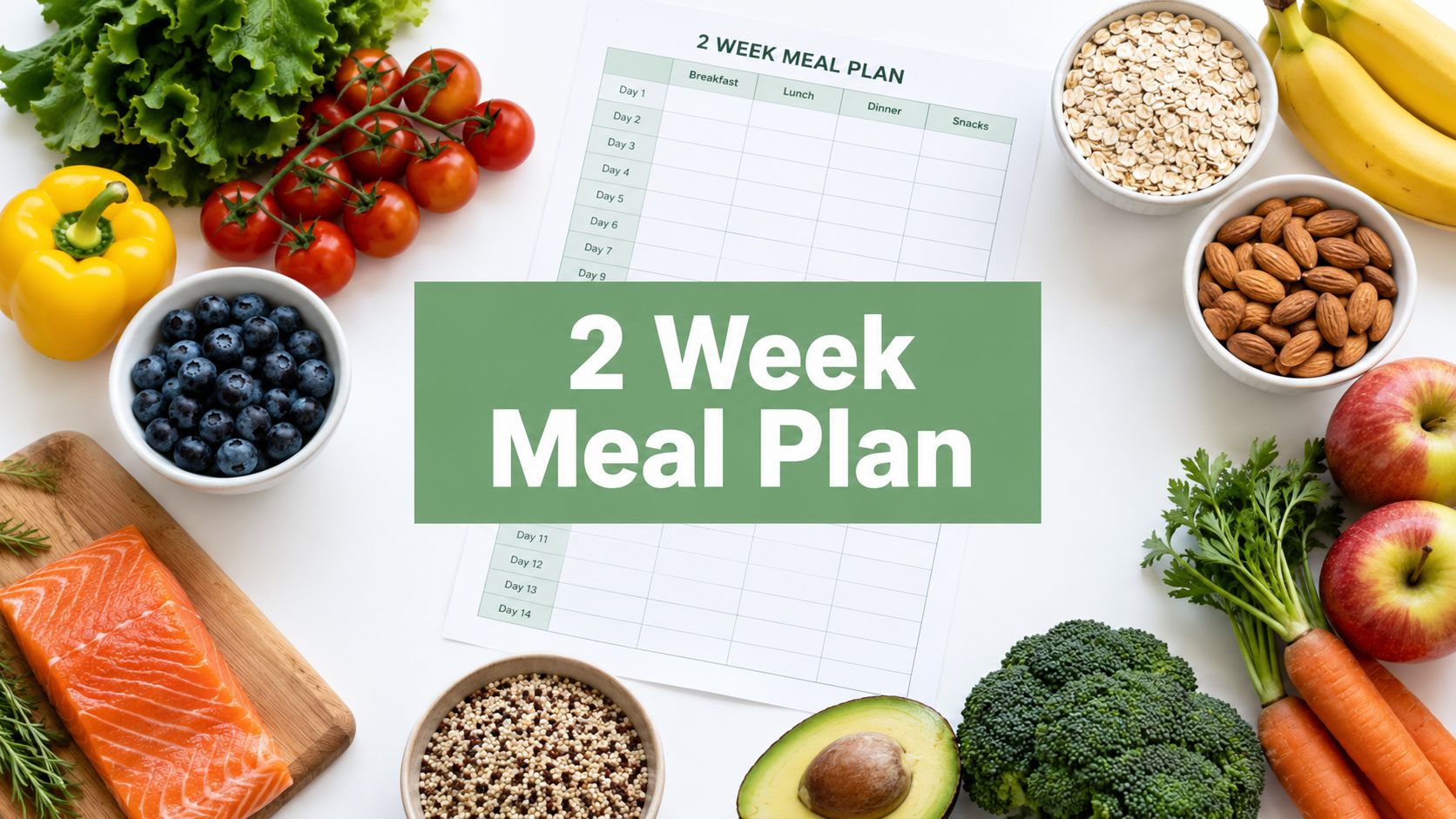
The modern approach flips this on its head. It turns a dreaded chore into a quick, two-minute task that actually empowers you. Instead of spending your Sunday afternoon drowning in decisions, you can have a full week of healthy meals—breakfast, lunch, dinner, and snacks—planned and ready to go in less time than it takes to brew your coffee. This is how you make healthy eating made easy a reality.
A well-designed diet is the engine that powers your life. It directly fuels your brain for clear thinking, your muscles for strength, and your gut for overall well-being.

When your nutrition is dialed in, everything else just works better.
Where does traditional meal planning fail?
The traditional way of meal planning is a setup for failure for most busy people. It demands too much time, energy, and decision-making—the very resources that are already scarce when you're overworked and stressed.
You find a recipe online, jot down the ingredients, cross-reference it with your pantry, and then repeat this exhausting cycle for every single meal. The friction is immense. It's why so many well-intentioned meal plans get abandoned by Wednesday, leaving you ordering takeout and feeling defeated.
This manual process is also incredibly prone to error. Forgetting one key ingredient means another trip to the store, while miscalculating portions leads directly to food waste and a strained budget. It’s a system that punishes you for being busy.
How does a modern automated approach work?
In stark contrast, a modern, automated system removes nearly all of that friction. Tools like an AI Meal Planner allow you to make the important decisions just once during a quick, simple setup. This is where you get to define what "healthy" actually looks like for you.
Here’s how it works in practice:
- Set Your Dietary Profile: You input your specific needs, whether that’s Keto, Vegan, Paleo, or a simple balanced diet. You also add any allergies, intolerances, or foods you just plain dislike.
- Define Your Goals: Are you trying to lose weight, build muscle, or just maintain your health? The system uses this to calculate the right calorie and macronutrient targets for you.
- Specify Your Preferences: You can add real-world constraints, like a preference for certain cuisines or recipes that take under 30 minutes to cook.
Once your profile is locked in, the system does all the heavy lifting. It becomes your personal nutritionist, instantly generating a weekly plan that hits every single one of your targets.
The goal of a modern meal planning system is to eliminate the administrative burden of eating healthy. It’s not just about telling you what to eat; it’s about giving you back your time and mental energy.
To see just how different these two approaches are, let's break it down side-by-side.
How does traditional planning compare to AI-powered planning?
| Aspect | Traditional Method (Manual) | AI Meal Planner (Automated) |
|---|---|---|
| Time Investment | 2-4 hours per week | 5-10 minutes per week |
| Decision Fatigue | High (Choosing every meal, calculating macros) | Low (One-time setup, then automated) |
| Grocery List | Manual creation, prone to forgotten items | Auto-generated and optimized by aisle |
| Nutritional Accuracy | Requires manual tracking, high margin for error | Precise calorie and macro calculations |
| Adaptability | Rigid; changing a meal requires re-planning | Flexible; swap meals with one click |
| Sustainability | Low; high friction leads to burnout | High; effortless workflow promotes consistency |
The difference is clear. One method adds work to your life, while the other removes it.
How does an AI planner automate your workflow?
Automation is what transforms meal planning from a chore you dread into a simple check-in. Once you’ve set your goals, the real magic begins. The system doesn't just hand you a list of recipes; it builds a fully integrated and intelligent plan.
- Automatic Macro Calculation: Every single meal and snack is chosen to fit perfectly within your daily calorie and macro targets. You can stop guessing and finally let go of manually logging your food.
- Flexible Meal Swapping: Not in the mood for what's on the menu? With a single click, the system suggests an alternative that still fits your nutritional goals. It gives you control without derailing your progress.
- Intelligent Recipe Suggestions: The planner curates delicious, easy-to-follow recipes that align with your time constraints, ensuring you're never stuck with an overly complicated meal on a busy weeknight.
This automated workflow is the secret to long-term success. It systematically removes the barriers of time, complexity, and decision fatigue that cause most people to quit.
If you want to see what this looks like in practice, you can explore a complete, personalized meal plan and see how it works. It’s the difference between being handed a map and having a GPS that automatically reroutes when life inevitably gets in the way.
How can I simplify grocery shopping and stop wasting food?
The weekly grocery run often ends with a refrigerator full of good intentions and, eventually, wasted food. The secret isn't just to "make a list." It’s about having a smarter system—one that transforms your shopping from a chaotic chore into a streamlined, efficient task.
The real shift happens when you stop thinking about just buying ingredients and start planning for their entire lifecycle in your kitchen.

Why should I organize my list by store aisle?
A random jumble of ingredients on a piece of paper is a recipe for disaster. You’ll spend half your time backtracking and getting distracted. The single most effective change is organizing your list by the store’s layout: produce, dairy, meat, pantry, frozen goods. It turns a chaotic scavenger hunt into a clear path from entrance to checkout.
When an AI Meal Planner generates your weekly menu, it simultaneously creates a grocery list that's already sorted by category. No more circling back for forgotten items. You move through the store with purpose, which is what healthy eating made easy truly looks like.
How do I use ingredients more efficiently?
Food waste isn't a moral failing; it's a planning problem. The magic is in ingredient reuse—intentionally planning to use a single ingredient in several different meals throughout the week.
Here’s what that looks like in practice:
- Monday: You make a big batch of quinoa for a roasted vegetable salad.
- Wednesday: That leftover quinoa becomes the base for a savory breakfast bowl, topped with an egg and avocado.
- Friday: The last of the quinoa gets mixed with black beans and spices to create incredible homemade veggie burgers.
The most sustainable kitchens aren't run by perfect chefs, but by smart planners. By giving every ingredient a purpose before it even enters your home, you eliminate waste and unlock hidden value in your groceries.
An AI-powered system is built for this kind of strategic thinking. It can intelligently map out how the leftover bell pepper from Monday’s stir-fry gets sliced into Thursday’s fajita bowl. This level of detail ensures you use what you buy, saving you money.
How can I eat healthy on a budget?
Healthy eating doesn’t have to drain your bank account. Some of the most nutritionally dense foods are also the most affordable. Building your weekly meals around these staples is the key to keeping your grocery budget in check.
Take beans, for example. They are a nutritional and financial powerhouse—packed with protein and fiber, and a fraction of the cost of meat. Some studies show that for every 50g of beans eaten daily, there's a potential 6% lower risk of all-cause mortality. Nutritionists predict ingredients like beans will be a huge part of 2026's biggest food trends.
Think about building your meals around these affordable heroes:
- Legumes: Lentils, chickpeas, black beans
- Whole Grains: Oats, brown rice, quinoa
- Seasonal Produce: Always cheaper and fresher
- Eggs: An incredible source of high-quality protein
A smart meal plan, like a well-designed 1500-calorie meal plan, can be centered on these budget-friendly staples, delivering maximum nutrition without breaking the bank.
Which dietary frameworks lead to long-term success?
The reason most diets fail is simple: they are built on short-term restriction, not long-term sustainability. True success is found by adopting a flexible framework that actually fits your life, your tastes, and your health goals.
Forget rigid rules and think of these as proven roadmaps that make healthy eating feel easy. The most effective frameworks champion whole, unprocessed foods and offer flexibility for real-life situations.
Why is the DASH diet a good model for sustainable eating?
For years, health experts have praised the DASH (Dietary Approaches to Stop Hypertension) Diet for its profound and sustainable health benefits. While its name points to blood pressure, its principles are a masterclass in balanced, long-term healthy eating for everyone.
The beauty of the DASH diet is its simplicity and its focus on what to add. It encourages a diet rich in fruits, vegetables, whole grains, and lean proteins while gently guiding you to reduce sodium, saturated fats, and sugary foods.
- Prioritize Plants: Fill your plate with a variety of colorful fruits and vegetables.
- Choose Whole Grains: Opt for things like brown rice, quinoa, and whole-wheat bread.
- Include Lean Protein: Incorporate fish, poultry, beans, and nuts into your meals.
- Limit Sodium and Sugar: Become more mindful of processed foods, where these are often hidden.
This approach aligns perfectly with the growing “Food as Medicine” movement, where we use nutrition to proactively manage our health.
How can I turn a framework into an actionable plan?
Knowing about a great framework like DASH is one thing. Actually implementing it day-to-day is another challenge. This is where modern tools bridge the gap between knowledge and action.
An AI Meal Planner can take the principles of any dietary approach and turn them into a concrete, actionable plan. Imagine you want to follow the DASH diet. Instead of hunting for compliant recipes, you just select "DASH" in your profile. The system instantly generates a full week of appropriate meals that fit your goals, taking all the guesswork out of the equation.
The best dietary framework is the one you can actually stick with. Sustainability is built on simplicity, and automation is the ultimate tool for making a healthy lifestyle feel effortless.
This is a powerful shift. Instead of feeling overwhelmed by a list of rules, you receive a clear, step-by-step guide that makes following an evidence-based eating pattern almost automatic.
How do popular sustainable diets compare?
While the DASH diet is an excellent model, other frameworks offer similar benefits with slightly different areas of focus. The key is finding the one that resonates most with your lifestyle and preferences.
| Dietary Framework | Primary Focus | Best For |
|---|---|---|
| DASH Diet | Heart health, reducing sodium, balanced nutrients. | Overall wellness, managing blood pressure. |
| Mediterranean Diet | Healthy fats, fresh produce, fish, whole grains. | Heart and brain health, enjoying flavorful food. |
| Plant-Based Eating | Prioritizing foods from plants, reducing animal products. | Increasing fiber intake, ethical or environmental concerns. |
| Paleo Diet | Whole foods, avoiding grains, legumes, and dairy. | People with specific gut sensitivities or who prefer simpler eating. |
Any of these can be a fantastic foundation for long-term health. If the Mediterranean approach sounds appealing, you can explore our guide on how to start a Mediterranean diet meal plan.
The DASH Diet has been highly praised for its effectiveness in reducing blood pressure and heart disease risks. With a track record spanning nearly 20 years, it's an ideal choice for the one in two global consumers concerned about managing weight and chronic health conditions. An AI Meal Planner makes adopting any of these frameworks effortless.
How do I track progress and stay motivated?
Making a change is one thing; making it stick is the real challenge. It’s easy to get laser-focused on the number on the scale, but that number is only a tiny part of the story. Fixating on it is the fastest way to kill your motivation.
True progress shows up in ways you can't weigh. These are the “non-scale victories,” and they are powerful signs that your new habits are genuinely working. You might suddenly realize you’re not reaching for that third cup of coffee, you're sleeping through the night, or you just feel more clear-headed during a busy workday.
What should I track besides weight?
Tracking your progress is a skill. It’s not about perfection or obsessive data entry; it’s about building awareness and celebrating the right things. Shift your focus to the broader patterns of how you feel.
Here are key areas to monitor:
- Energy Levels: Are you feeling less reliant on caffeine? Do you have more stamina for your workouts?
- Sleep Quality: Are you waking up feeling genuinely rested?
- Mood and Clarity: Do you notice less "brain fog" and more focus?
- Physical Performance: Are your workouts feeling stronger? Is taking the stairs less of a chore?
The most powerful motivation comes from feeling the positive changes in your daily life. When healthy eating makes you feel better, it stops being a chore and becomes a form of self-care.
How can technology help me stay accountable?
A tool like an AI Meal Planner becomes an incredible ally. Simply looking at your calendar and seeing a week of consistently followed meals gives you concrete proof that you’re showing up for yourself. It’s a quiet but powerful confirmation of your commitment.
These tools also give you the flexibility you need for real life. A hectic week or a last-minute dinner invitation doesn't have to derail everything. You can use features like meal swapping to adapt on the fly. This reinforces a crucial mindset: consistency always beats perfection.
For example, you can adjust your meals to create a buffer for a work dinner. For anyone focused on weight management, learning how to track for a calorie deficit within a flexible system is the key to long-term success without feeling restricted.
Ultimately, the goal is to build a resilient system that bends without breaking. By celebrating the victories that actually improve your quality of life and using smart tools to stay on track, you create a sustainable path to health that you can stick with for the long haul.
FAQ: Your Questions on Simple, Healthy Eating
How much time does meal prep really take?
Efficient meal prep takes just 1-2 hours per week. Focus on "component prep"—batch cooking grains, chopping all your veggies, and portioning snacks—to make meal assembly fast during the week.
Can healthy eating be affordable?
Yes, you can cut your grocery bill significantly by building meals around budget-friendly staples like beans, lentils, and oats. Planning meals and using ingredients across multiple dishes also drastically reduces food waste and saves money.
What if I have specific dietary restrictions?
Modern tools like an AI Meal Planner are designed for dietary complexities. You can set your restrictions (e.g., gluten-free, vegan) once, and the system will automatically generate compliant meal plans and recipes for you.
How do I eat out and still stay on track?
Plan ahead by looking at the restaurant menu online and choosing a healthy option before you go. Simple dishes like grilled protein with steamed vegetables are great choices, and always ask for dressings and sauces on the side to control portions.
What's the best way to start if I feel overwhelmed?
Start small to avoid burnout. Focus on planning just three days of dinners for this week. Once that feels routine, gradually add more meals or days until it becomes a sustainable habit.
Should I count calories to eat healthy?
No, you don't need to count calories to eat healthy. Focusing on nutrient-dense whole foods, balanced macronutrients, and listening to your body's hunger cues is a more sustainable and less stressful approach for long-term success.
How can I stop snacking on unhealthy foods?
Keep healthy, convenient snacks readily available to avoid temptation. Portion out nuts, seeds, or chopped vegetables into grab-and-go containers, and keep fruit in a visible spot on your counter.
Ready to stop guessing and start simplifying? AI Meal Planner creates personalized meal plans and smart grocery lists in minutes, automating your healthy eating journey. Discover how easy it can be by visiting https://ai-mealplan.com/onboarding today.
AI-powered nutrition
Get Your Personalized Meal Plan
AI creates the perfect meals for your goals, lifestyle, and taste.
Start Your Journej