What are the best family meal prep ideas for busy weeknights?
The best family meal prep ideas include batch cooking freezer meals, using the mix-and-match component method, and making one-pot or sheet pan dinners. These strategies save time by allowing you to prepare multiple meals in a single 2-3 hour session. Other effective ideas are assembling slow cooker kits, prepping grab-and-go breakfasts, and creating portion-controlled snack boxes.
Juggling work, school, and extracurricular activities can turn mealtime into a frantic rush. This is where a structured approach to meal preparation becomes essential, not just for saving time, but for ensuring your family enjoys nutritious, home-cooked food consistently. A well-executed meal prep plan can reclaim hours of your week, reduce food waste, and eliminate the daily "what's for dinner?" dilemma.
This guide provides actionable strategies for family meal prep designed to fit different lifestyles, cooking preferences, and dietary needs. Whether you prefer batch cooking for long-term planning, the flexibility of a mix-and-match component system, or quick one-pot dinner solutions, you will find a framework that works for you. We will detail specific recipes and ideas for every meal of the day, from make-ahead breakfasts that simplify hectic mornings to pre-portioned snacks that keep kids energized.
How can I use batch cooking and freezer meals to save time?
Batch cooking is a highly efficient method where you prepare large quantities of complete meals or meal components on a designated prep day. These portions are then stored in the freezer, creating a stockpile of ready-to-eat, home-cooked dinners that eliminate daily cooking stress. This approach is one of the most effective family meal prep ideas for busy households that want to avoid last-minute takeout without sacrificing quality.
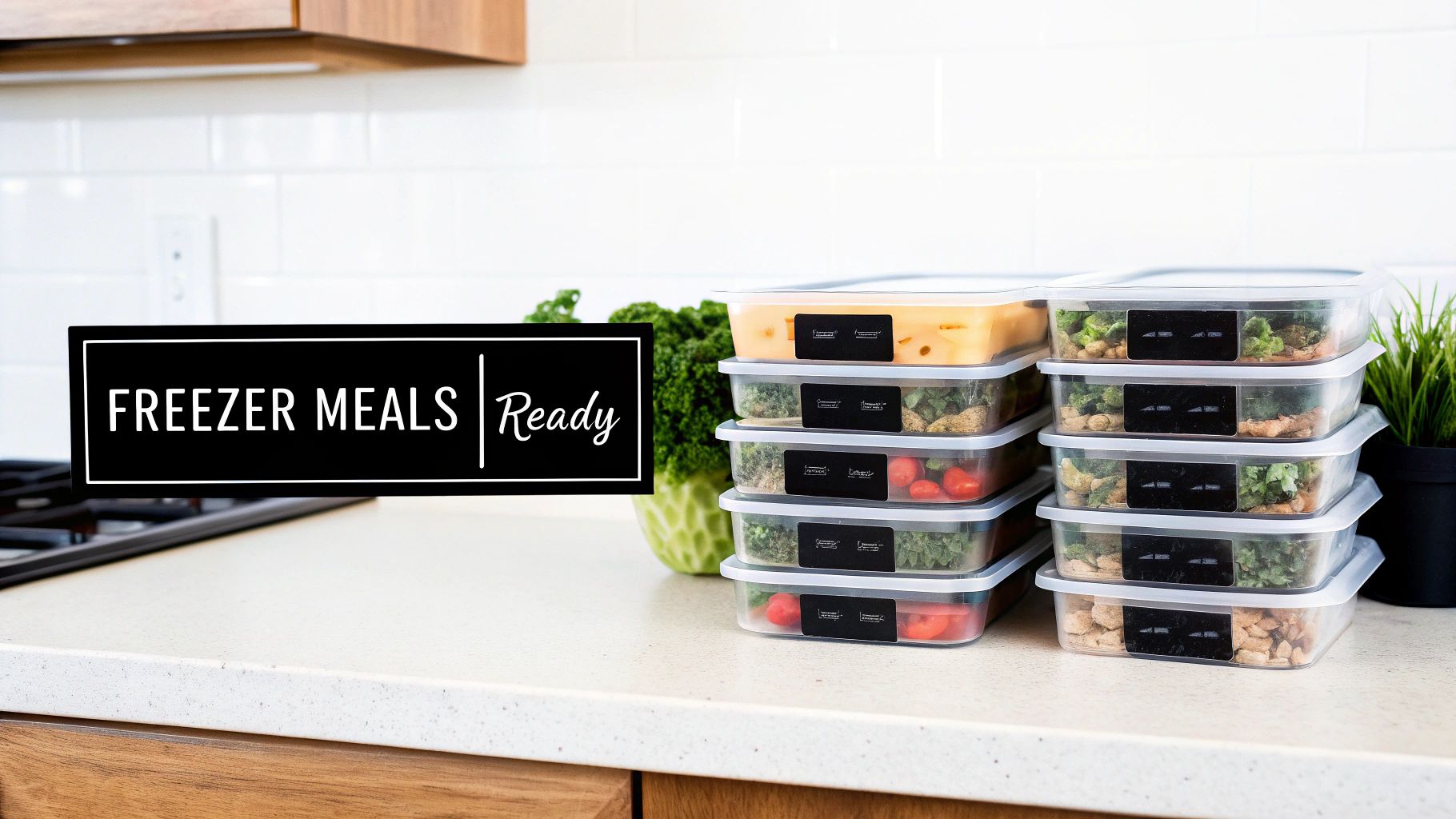
This "cook once, eat many times" strategy transforms a few hours on a Sunday into weeks of hassle-free meals. The core benefit is having a nutritious, ready-made option available on chaotic weeknights, which saves both time and money. It also significantly reduces food waste by using up fresh ingredients in one go.
How to Implement Batch Cooking
- Choose Freezer-Friendly Recipes: Focus on meals that maintain their texture and flavor after freezing. Great options include chili, hearty stews, lasagna, shepherd's pie, curries, and soups.
- Dedicate a Prep Session: Set aside a 2-3 hour block of time, typically on a weekend, to cook all your recipes simultaneously. Maximize efficiency by using multiple appliances like the stovetop, oven, and slow cooker at once.
- Cool and Store Properly: Let all meals cool completely to room temperature before portioning and freezing. This crucial step prevents the formation of ice crystals and freezer burn, preserving the quality of your food.
- Label Everything: Use freezer-safe tape or markers to label each container with the meal's name, the date it was prepared, and simple reheating instructions (e.g., "Microwave 3-4 mins" or "Bake at 350°F for 20 mins"). This eliminates guesswork later.
For those looking to streamline this process even further, advanced tools can generate recipes specifically designed for batch cooking that align with your family's dietary needs. You can learn more about how an AI meal planner can help create your personalized batch-cooking menu.
What is component-based meal prep for picky eaters?
Component-based meal prep, also known as the mix-and-match method, involves cooking individual ingredients separately rather than making complete meals. On prep day, you prepare large batches of proteins, grains, vegetables, and sauces, storing each in its own container. This allows every family member to build their own custom bowl or plate throughout the week, catering to individual preferences and nutritional needs.
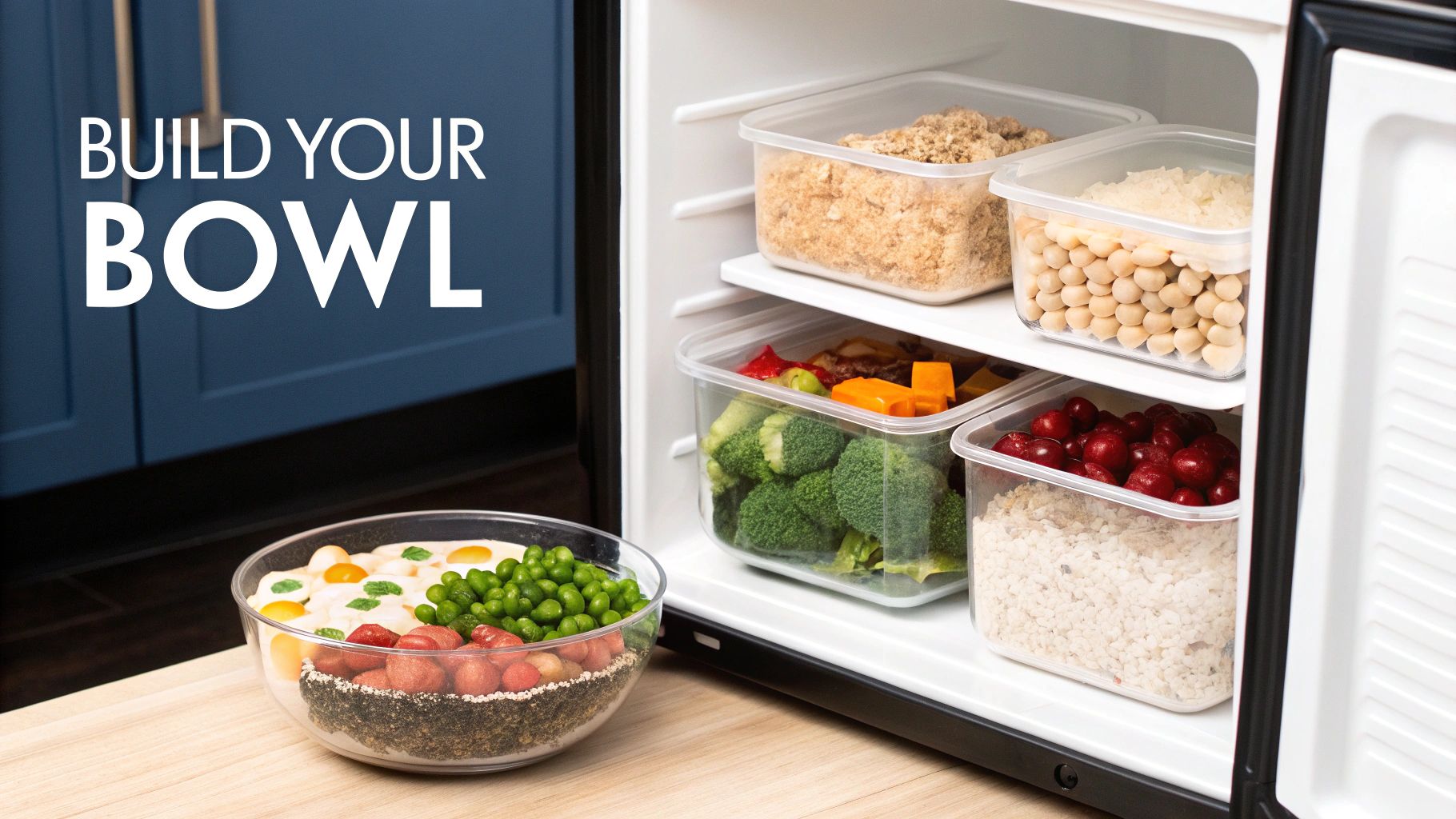
This approach is one of the most flexible family meal prep ideas, empowering picky eaters and accommodating different dietary goals within the same household. A father focused on muscle gain can double his protein portion, while another family member managing their weight can add extra vegetables. It brilliantly prevents meal fatigue by allowing for different combinations daily, such as pairing grilled chicken with quinoa and roasted broccoli on Monday, and then using the same chicken in a wrap with different veggies on Tuesday.
How to Implement Component-Based Meal Prep
- Select Versatile Components: Choose ingredients that work well in various dishes. For example, cook a large batch of shredded chicken, quinoa, roasted sweet potatoes, black beans, and a versatile cilantro-lime vinaigrette.
- Keep Seasoning Neutral: Cook proteins and grains with minimal seasoning, like salt, pepper, and garlic powder. This allows the flavor to be customized later with different sauces, dressings, and spices, preventing taste boredom.
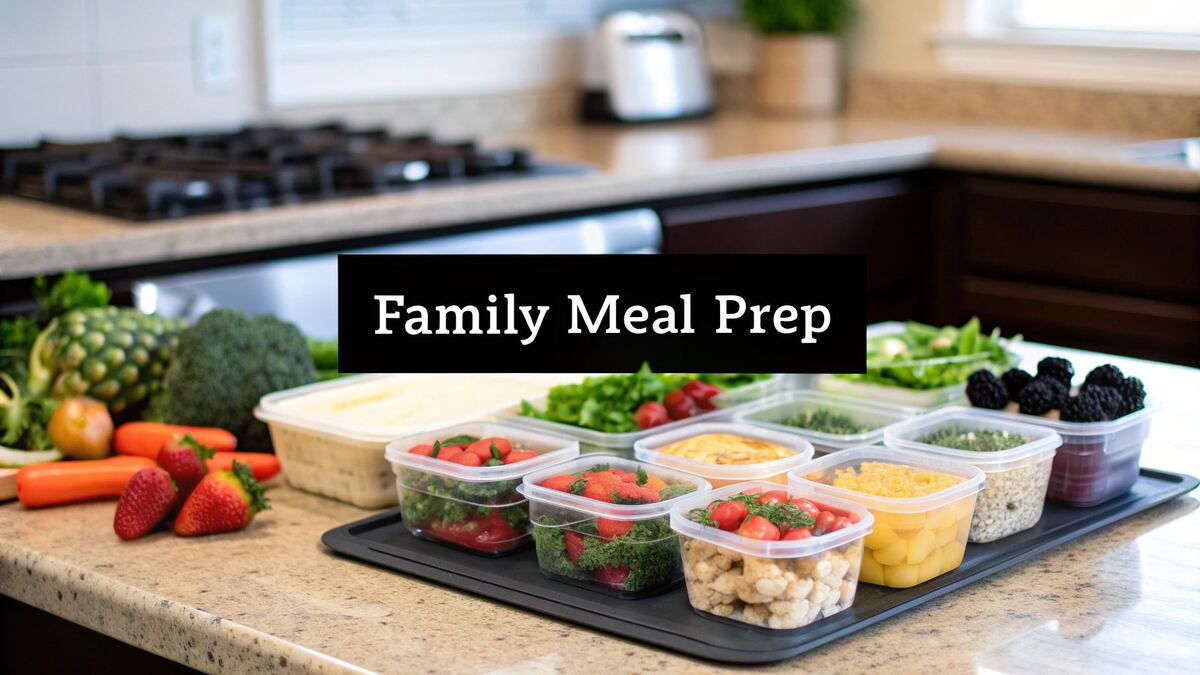
- Store Items Separately: Use clear, airtight containers to store each component individually. This keeps ingredients fresh, prevents them from becoming soggy, and lets everyone easily see the available options when building their meal.
- Prepare a Few Sauces: Sauces are key to variety. Make two or three different options, such as a teriyaki glaze, a creamy avocado dressing, or a simple marinara, to completely change the flavor profile of a meal with minimal effort.
This method excels at creating balanced meals tailored to specific macronutrient targets for each person. You can explore how an AI-powered tool helps design a customized balanced meal plan that aligns perfectly with your family's diverse nutritional requirements.
How can one-pot meals simplify cleanup?
Sheet pan and one-pot meals simplify both cooking and cleanup by combining all ingredients onto a single baking sheet or into one pot. The entire meal cooks together, which drastically reduces the number of dishes you'll have to wash and streamlines your time in the kitchen. This is a game-changing meal prep idea for busy families.
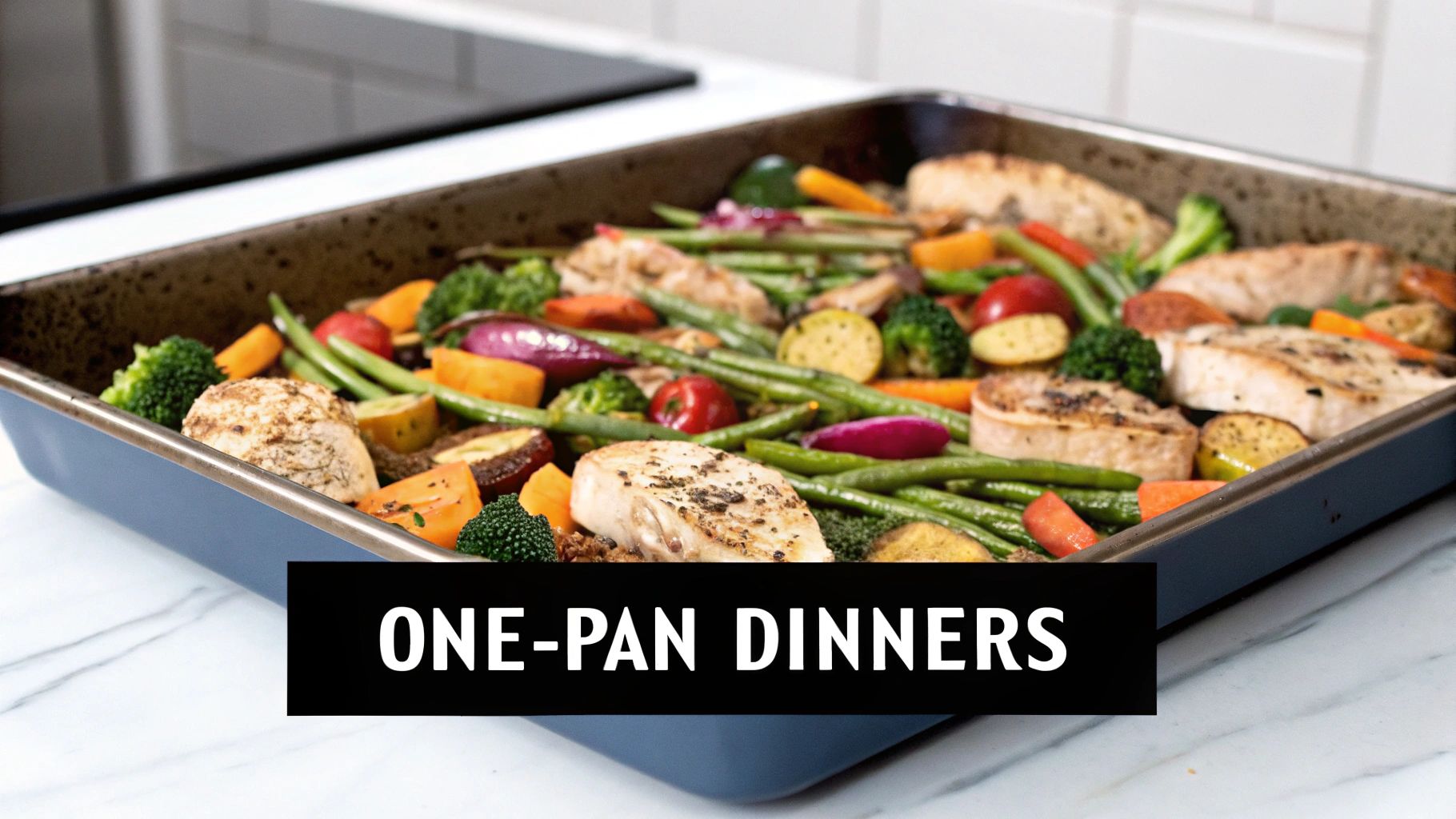
The primary benefit of this approach is its incredible efficiency. By containing the meal to one vessel, you minimize active cooking time and make post-dinner cleanup almost effortless. This method is perfect for busy weeknights when you want a nutritious, home-cooked meal without the associated stress and mess of a complex recipe.
How to Implement Sheet Pan & One-Pot Meals
- Prep All Ingredients First (Mise en Place): Before you turn on the heat, chop all your vegetables, measure spices, and prepare your protein. Having everything ready to go makes the cooking process smooth and prevents ingredients from overcooking while you prep others.
- Ensure Even Cooking: For sheet pan meals, cut denser vegetables like potatoes and carrots smaller than quicker-cooking items like broccoli or bell peppers. This ensures everything finishes cooking at the same time. Alternatively, add hardier vegetables to the pan first and give them a 10-15 minute head start.
- Use Parchment Paper: Lining your sheet pan with parchment paper is a simple trick that guarantees an easy cleanup. It prevents food from sticking and means you can often just throw the paper away, leaving the pan almost completely clean.
- Don't Overcrowd the Pan: Give your ingredients enough space to roast rather than steam. Use a second sheet pan if necessary. Proper spacing allows for better browning and caramelization, which boosts the flavor of your final dish.
How do you meal prep for a slow cooker or Instant Pot?
Slow cooker and Instant Pot meal prep involves preparing all the raw ingredients for a recipe ahead of time and storing them together in a freezer bag. This "dump-and-go" method allows you to transfer the pre-chopped components directly into your appliance on a busy day, offering a hands-off cooking experience. This is one of the best family meal prep ideas for those who need a home-cooked meal without daily chopping.
This strategy combines the efficiency of prepping on a Sunday with the convenience of set-it-and-forget-it cooking. The main benefit is drastically reducing cooking time on weeknights to mere minutes of assembly. By having these pre-portioned kits ready, you can enjoy complex dishes like stews and roasts with almost no effort on the day of cooking.
How to Implement Slow Cooker & Instant Pot Prep
- Choose Compatible Recipes: Focus on recipes designed for this method. Excellent choices include freezer bag chicken fajitas (chicken, peppers, onions, spices), Instant Pot beef stew (beef, potatoes, carrots, broth), and slow cooker chili (ground meat, beans, tomatoes).
- Assemble "Meal Kits": During your prep session, chop all vegetables, measure spices, and portion out proteins. Combine everything into a large, labeled freezer bag or container.
- Freeze Strategically: Lay the bags flat in the freezer to save space and help them freeze evenly. For delicate vegetables, you can freeze them in a separate, smaller bag within the main kit to add later in the cooking process.
- Label with Instructions: Clearly mark each bag with the recipe name, date, and essential cooking instructions. Include the appliance (e.g., "Slow Cooker"), cooking time (e.g., "Low for 6-8 hours"), and any liquids to add, like broth or water.
This method is incredibly versatile and simplifies mealtime. You can explore a wide range of recipes suited for this hands-off approach when you create your personalized meal plan.
What are the best breakfast meal prep ideas?
Breakfast meal prep focuses on creating grab-and-go morning meals in bulk, eliminating daily decision-making and ensuring a balanced, protein-rich start to the day. By preparing items like overnight oats, egg muffins, or breakfast burritos ahead of time, you can reclaim chaotic mornings. This strategy is one of the most impactful family meal prep ideas for establishing a stress-free morning routine.
The primary benefit is having a ready-made, nutritious breakfast waiting in the fridge or freezer. This not only saves precious time on busy weekday mornings but also helps regulate blood sugar and energy levels, setting a positive tone for the entire day. It’s a simple yet powerful way to ensure everyone, especially kids, gets a proper meal before heading out the door.
How to Implement Breakfast Meal Prep
- Create Grab-and-Go Stations: Prepare items like overnight oats in individual mason jars for the week. For a protein boost, make egg muffins by baking a mixture of whisked eggs, cheese, and diced vegetables in a greased muffin tin.
- Utilize Your Freezer: Assemble a batch of 10-12 breakfast burritos with scrambled eggs, sausage, peppers, and cheese. Wrap each one individually and store it in the freezer for a quick meal that can be microwaved in minutes.
- Store for Visibility: Keep prepped breakfast items in clear, accessible containers at eye level in the refrigerator. When kids can see the healthy options easily, they are more likely to grab them.
- Prep with Other Meals: Maximize your kitchen time by preparing breakfast components while you are already cooking lunch or dinner. For example, you can bake a tray of egg muffins while a casserole for dinner is in the oven.
For families needing help generating breakfast ideas that fit specific dietary needs, an advanced meal planning tool can be invaluable. You can get started and create a personalized meal plan to streamline your breakfast prep.
How can I prep snacks and smoothies for the week?
This strategy involves preparing healthy, portion-controlled snack boxes and pre-portioned smoothie ingredient packs in advance. Families gain access to balanced, ready-to-grab options that prevent unhealthy impulse snacking and make morning routines faster. This is one of the most practical family meal prep ideas for managing between-meal hunger and ensuring kids and adults have nutritious choices readily available.
This "grab-and-go" system transforms chaotic moments into opportunities for healthy eating. The key benefit is eliminating the decision-making process when hunger strikes, making the healthy choice the easiest choice. It also helps manage portion sizes, reduces food waste by using up produce, and simplifies busy mornings with blend-ready smoothies.
How to Implement Snack & Smoothie Prep
- Design Balanced Snack Boxes: Combine a protein, a healthy fat, and a complex carbohydrate in each box. Think baby carrots with hummus cups and a few whole-grain crackers, or apple slices with a cheese cube and almonds.
- Assemble Smoothie Packs: In individual freezer-safe bags, portion out smoothie ingredients. A great combination is frozen berries, a handful of spinach, a chunk of banana, and a scoop of protein powder. Label each bag with the contents and date.
- Dedicate a Prep Time: Set aside about 30-45 minutes on a Sunday to wash and chop veggies, portion out nuts and trail mix, and assemble all your smoothie packs for the week. Store them for easy access.
- Store for Visibility: Place prepared snack boxes at eye level in the refrigerator to encourage family members to grab them first. Keep smoothie packs organized in a designated freezer drawer or bin.
For families looking to customize their snack options based on specific nutritional goals, advanced tools can offer a significant advantage. You can get personalized snack recipes that fit your family's dietary needs by creating a personalized meal plan.
How do you keep salads fresh when meal prepping?
Salad jars are a brilliant meal prep solution that keeps salads fresh and crisp by strategically layering ingredients. By placing dressing at the bottom and leafy greens at the top, you prevent delicate greens from getting soggy. This method is one of the best family meal prep ideas for anyone wanting a quick, healthy, and portable meal without daily chopping.
This grab-and-go strategy transforms salads from a tedious daily chore into an exciting, visually appealing meal. The core benefit is having a nutrient-packed, perfectly fresh salad ready anytime, which encourages healthier eating habits and saves significant time on busy weekdays. It also helps use up various vegetables, reducing food waste.
How to Implement Salad Jar Meal Prep
- Master the Art of Layering: The key to a crisp salad is the order of ingredients. Start with the dressing at the very bottom. Follow with hard vegetables like carrots or cucumbers, then add grains or proteins like quinoa or chickpeas. Finally, pack the delicate leafy greens and any crunchy toppings at the very top.
- Choose the Right Containers: Glass mason jars are ideal because they are non-porous and easy to clean. Airtight glass or plastic containers also work well, especially if they have separate compartments for dressing.
- Prep Toppings Strategically: For maximum freshness, it's best to add certain ingredients just before eating. This includes avocado, crunchy croutons or nuts, and some cheeses. Pack these in a small, separate container.
- Shake and Serve: When you're ready to eat, simply shake the jar vigorously to distribute the dressing evenly over all the ingredients. You can then pour it into a bowl or eat it directly from the jar.
For families looking to ensure these meals meet specific nutritional targets, advanced tools can be a game-changer. You can get help creating balanced and delicious salad recipes by using an AI meal planner to design your weekly menu.
How can I meal prep for different fitness goals in my family?
Macro-balanced meal prep involves calculating precise ratios of protein, carbohydrates, and fats to meet specific fitness goals like muscle gain or weight loss. This methodical approach ensures that every family member's nutritional needs are met with precision. It's one of the most targeted family meal prep ideas for households where different members have unique dietary targets.
This strategy requires a more analytical approach, using tools like food scales to ensure accuracy. The core benefit is taking the guesswork out of nutrition, making it easier to achieve consistent results, whether that's losing weight for one parent or helping a young athlete properly fuel for their sport. This method empowers families to understand and control their nutritional intake.
How to Implement Macro-Balanced Meal Prep
- Calculate Individual Macros: Use an online calculator or consult a nutritionist to determine the daily macro targets for each family member based on their age, weight, activity level, and goals.
- Invest in a Food Scale: Accuracy is crucial for this method. A digital food scale is essential for weighing ingredients like chicken breast, rice, and vegetables to ensure each portioned meal matches its calculated macro profile.
- Prep Components Separately: Prepare large batches of individual components: lean proteins, complex carbs, and vegetables. This allows family members to build their own bowls according to their specific macro portions.
- Use a Tracking App: Log your prepped meals in an app like MyFitnessPal or Cronometer. You can create a "recipe" for your prepped meals, making it easy to log the exact macros with a single entry each day.
For those who want to simplify the calculation and planning process, using a dedicated tool can be a game-changer. You can find out how to build a personalized high-protein meal plan that automatically calculates and tracks macros for you.
How do you meal prep for multiple dietary restrictions?
To meal prep for diverse dietary needs, focus on creating shared components and then adding diet-specific elements to complete each person's plate. Instead of cooking multiple separate dinners, this "build-your-own" method makes it possible to cater to everyone. This is one of the most practical family meal prep ideas for households managing allergies or lifestyle choices like keto or veganism.
This strategy prevents cross-contamination and ensures every family member gets a safe, satisfying meal. For example, you can prepare a large batch of roasted vegetables and a protein like chicken, then serve it with quinoa for most of the family and cauliflower rice for the keto member. It streamlines cooking and fosters an inclusive mealtime environment.
How to Implement Dietary Restriction Meal Prep
- Build-Your-Own Stations: Structure meals around a shared base that everyone can eat. A taco night is a perfect example: offer corn and flour tortillas, grilled chicken, black beans, and a large spread of compliant toppings so each person can build their own plate.
- Establish Safe Zones: Prevent cross-contamination by using dedicated tools. Use color-coded cutting boards, utensils, and separate prep areas for allergens like gluten or nuts. This is non-negotiable for families managing severe allergies or celiac disease.
- Label with Precision: Clearly label every container with the contents, the date, and the specific diet it’s for (e.g., "Vegan Chili" or "Gluten-Free Pasta Sauce"). For allergens, add prominent warnings like "Contains Nuts."
- Plan with Smart Tools: Navigating multiple dietary needs can be complex. An advanced planner can help generate recipes that fit specific requirements. For instance, you can get help creating a customized keto meal plan that aligns with everyone's tastes.
How can I optimize my grocery shopping for meal prep?
This approach combines smart technology with a farm-to-table philosophy by using AI-driven tools to create meal plans based on seasonal, local ingredients. The system generates personalized recipes, creates optimized shopping lists, and tracks pantry inventory, prioritizing what's freshest and most affordable. This is one of the most strategic family meal prep ideas for minimizing food waste, reducing grocery costs, and maximizing nutritional value.
The core benefit is creating a highly efficient feedback loop between your kitchen and your grocery store. For instance, an AI tool might notice that four planned recipes use bell peppers and will adjust the shopping list to recommend buying a bulk bag for better value. It aligns your family's health goals with the natural rhythm of the seasons, ensuring meals are flavorful and nutrient-dense.
How to Implement Smart Seasonal Shopping
- Leverage an AI Meal Planner: Use a tool to input your family’s dietary needs, preferences, and goals. The AI will generate a weekly plan and a corresponding grocery list that consolidates ingredients.
- Shop Seasonally: Visit a farmers market or check local grocery flyers to see what’s in season before finalizing your meal plan. In summer, you might focus on meals with tomatoes, zucchini, and corn.
- Sync Your Pantry: Before heading to the store, check your pantry inventory against the AI-generated list. This simple step prevents you from buying duplicates of items you already have on hand.
- Review and Customize: Always review the generated meal plan with your family. Use the swap feature in the app to replace any meals that don't sound appealing, allowing the AI to learn your preferences over time.
For families looking to fully automate this process, specialized tools can build a complete, grocery-optimized plan from scratch. You can see how an AI meal planner can help by tailoring a seasonal menu directly to your family's unique profile.
What should I know before starting family meal prep?
Successful family meal prep is about finding a personalized strategy that fits your family's tastes, dietary needs, and schedule, not adopting one rigid system. To ensure lasting success, start small by prepping just one meal or component for the week. Embrace flexible methods like component prep to cater to picky eaters, and use tools like slow cookers and sheet pans to minimize active cooking and cleanup time.
The key is to build momentum. By mastering these approaches, you move beyond the cycle of last-minute dinner stress. You create a sustainable routine that empowers you to serve nutritious, delicious meals with confidence and ease.
Your Actionable Next Steps
Feeling inspired? It's time to translate that inspiration into action. This week, choose one strategy from this article that resonates most with your current needs.
- Select Your Strategy: Will it be a simple sheet pan dinner or a batch of overnight oats to simplify your mornings?
- Plan Your Menu & Grocery List: Build a focused grocery list based on your chosen recipe, checking your pantry first to avoid buying duplicates.
- Schedule Your Prep Session: Block out 60-90 minutes in your calendar. Treat this time as a non-negotiable appointment with your future, less-stressed self.
- Execute and Store: Follow the prep, storage, and reheating instructions. Take a moment to appreciate your fully stocked fridge, ready to tackle the week ahead.
By consistently applying these techniques, you are investing in your family’s health, reclaiming precious time, and building a foundation for a more organized and peaceful home life.
Frequently Asked Questions
1. What is the easiest meal prep idea for a beginner? The easiest meal prep idea for beginners is making sheet pan or one-pot meals, as they require minimal cooking steps and cleanup.
2. How long does prepped food last in the fridge? Most prepped meals will last safely in an airtight container in the refrigerator for 3-5 days.
3. Is it cheaper to meal prep for your family? Yes, meal prepping is typically cheaper because it reduces expensive takeout orders, minimizes food waste, and allows you to buy ingredients in bulk.
4. How do I meal prep for a family with picky eaters? Use the component-based or "mix-and-match" method, where you prep proteins, grains, and veggies separately so everyone can build their own plate.
5. Can I freeze all types of prepped meals? No, while stews, chilis, and casseroles freeze well, dishes with a high water content like salads or creamy sauces can change texture upon thawing.
6. What are the best containers for family meal prep? Glass containers are ideal as they are durable, non-porous, and safe for both the microwave and dishwasher; however, BPA-free plastic is a lighter, more budget-friendly option.
7. How do I avoid getting bored with my meal prep? Prep versatile components and create different sauces or dressings each week to change the flavor profile of your base ingredients.
AI-powered nutrition
Get Your Personalized Meal Plan
AI creates the perfect meals for your goals, lifestyle, and taste.
Start Your Journej