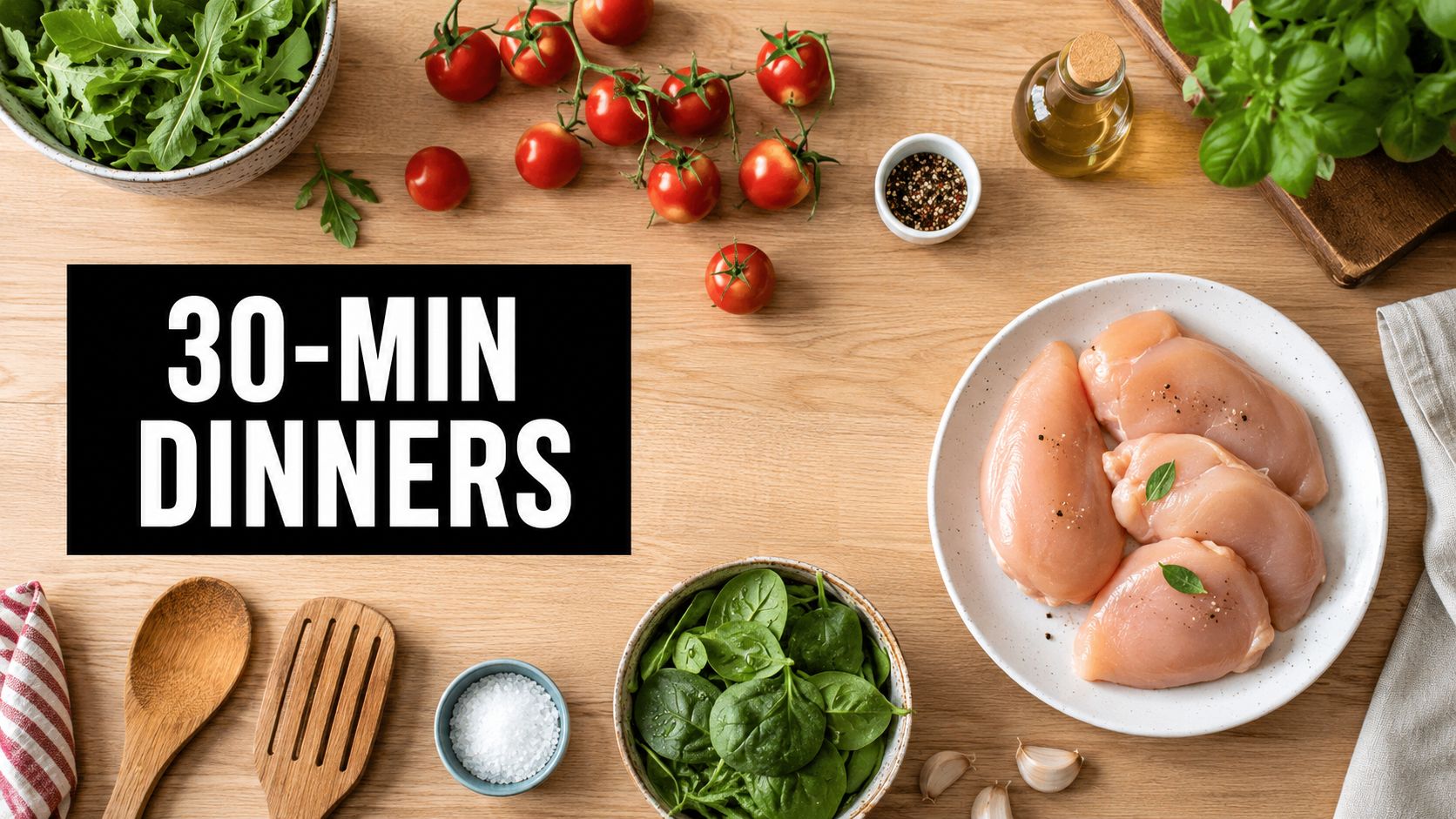
Have you been treating dinner ideas under 30 minutes as a shortcut, when the essential skill is building a dinner system that consistently gets food on the table fast? The best 30-minute dinners are full meals, not just quick stovetop steps. If you plan them well, they can save about 17 minutes per meal versus a typical weeknight baseline of 47 minutes from the fridge to the table, and that adds up to about 2 hours and 21 minutes per week across five nights (The Culture Mom).
A true 30-minute dinner has to cover the whole sequence, opening the fridge, chopping, cooking, plating, and cleanup, not just the active cooking time. The strongest options cluster around bowls, wraps, one-pan meals, and other formats that keep prep simple while still giving you enough protein, vegetables, and flavor to feel like dinner. That's why the fastest home-cook wins usually come from a stocked pantry, a little advance prep, and recipes built for parallel cooking rather than fussy timing (The Culture Mom).
1. Sheet Pan Meals with Protein and Roasted Vegetables
Sheet pan dinners are one of the cleanest answers when you want a real meal without a sink full of pans. You season a protein, scatter chopped vegetables on a tray, and let the oven do the work while you handle the rest of the evening. Done well, this format gives you browned edges, balanced macros, and minimal cleanup in the same meal.
A practical weeknight plate might be lemon herb chicken with Brussels sprouts, bell peppers, and broccoli, or salmon with asparagus, sweet potato, and dill. Tofu steaks with cauliflower, zucchini, and tahini drizzle work just as well for a vegan dinner, and ground turkey with mixed vegetables and Italian seasoning is a solid fallback when the fridge is nearly empty. The key is that everything cooks together, so you're not babysitting separate components.
Practical rule: cut vegetables into uniform pieces, dry the protein well, and use parchment so the tray stays easy to clean.
How to make it work every time
- Use steady heat: Roast at a hot oven temperature so the vegetables caramelize instead of steaming.
- Stage the tray correctly: Put denser vegetables down first, then add lighter items around them so everything finishes together.
- Keep the seasoning simple: Salt, oil, and herbs usually do more than a complicated marinade on a weeknight.
- Think in leftovers: The same tray dinner can become lunch bowls the next day if you cook a little extra protein.
This format is especially useful when your goal is a dinner that feels complete without extra fuss. The meal looks thoughtful, the prep stays short, and the cleanup is easier than almost any skillet-heavy dinner.
2. Stir-Fry with Quick-Cooking Proteins and Pre-Prepped Vegetables

Stir-fries are fast because they reward preparation, not improvisation. Once the pan is hot, you move fast enough that there's no time to chop, measure, or rethink the sauce. That makes this format ideal for nights when dinner needs to happen in 10 to 15 minutes of real active cooking.
Garlic shrimp with broccoli, snap peas, and sesame-soy sauce over brown rice is a strong template. Chicken and bell pepper stir-fry with ginger-garlic sauce, tofu and vegetable stir-fry with cashews, beef strips with mushrooms and onions, or a chickpea-and-vegetable version all follow the same logic. The protein cooks quickly, the vegetables keep their bite, and the sauce brings everything together at the end instead of soaking the pan from the start.
What usually goes wrong
If the ingredients aren't prepped before the heat goes on, the whole meal slows down. If the sauce goes in too early, vegetables turn soft and the pan gets watery. And if the protein is cut unevenly, you'll overcook one piece while another is still catching up.
A few details make the difference:
- Prep first: Stir-fries move too fast to chop midway through.
- Use high smoke-point oil: Peanut, avocado, or vegetable oil handles the heat better than low-smoke-point fats.
- Hold the sauce: Add it near the end so the vegetables stay crisp.
- Cut evenly: Uniform pieces cook at the same pace.
- Cook chicken safely: A meat thermometer keeps you from guessing whether it's done.
If you want the fastest possible weeknight dinner that still tastes deliberate, stir-fry belongs near the top of the list. It's one of the few formats where speed and texture work together.
3. Pasta Dishes with Quick Sauces and Lean Proteins
What makes pasta such a reliable under-30-minute dinner is the way the timing splits cleanly. The water can heat while you start the sauce, and the protein can cook while the pasta boils. By the time everything comes together, the meal already has structure.
Shrimp scampi with angel hair, garlic, white wine, and lemon is a good example of a fast pasta that still feels polished. Whole wheat penne with ground turkey, tomato sauce, and spinach turns into a fuller family-style dinner, while cashew cream pasta with roasted vegetables gives you a vegan option that still satisfies like comfort food. Aglio e olio with grilled chicken and arugula, or baked penne with lean ground beef and low-fat ricotta, keeps the same basic format but shifts the flavor and texture in different directions.
The trade-off is simple. Fast pasta works best when every part has a job, and nothing is left waiting too long in the pan.
The technical details that matter
- Salt the pasta water well: It is the main chance to season the noodles themselves.
- Save some pasta water: The starch helps the sauce cling to the pasta and smooths out a sauce that feels too tight.
- Undercook slightly: Finish the pasta in the sauce so it stays firm instead of turning soft.
- Use herbs and acid: Garlic, lemon zest, and fresh herbs add more flavor than extra oil.
- Choose smart pasta: Whole grain or legume pasta can bring more fiber and protein without changing the cooking method.
Good pasta dinners also depend on restraint. If the sauce is too heavy, the meal loses its weeknight advantage, and if the protein is overcooked, the whole dish feels tired before it reaches the table. Keep the sauce loose enough to coat, keep the heat high enough to finish quickly, and let the ingredients stay distinct.
For a faster shopping shortcut, use the AI Meal Planner recipes page to pull together dinners that fit your weeknight timing without overthinking the pasta aisle. It helps when you want quick meals with enough variety to avoid repeating the same jarred sauce all week.
Wine can fit this format too, especially with tomato-based or garlic-forward pasta. If you want pairing ideas for a meal like this, uncovering wine pairings for pasta is a useful reference.
This category works because it is fast without feeling bare. The best versions taste layered because the sauce is built with intention, not just poured from a jar and left to sit.
4. Grain Bowls with Prepared Proteins and Simple Dressings
Grain bowls are the meal-prep workhorse of the 30-minute dinner world. They're flexible, easy to portion, and simple to rebuild from whatever's already cooked in the fridge. If you keep a grain, a protein, a vegetable, and a dressing ready, dinner becomes assembly instead of cooking.
A quinoa bowl with roasted chickpeas, cucumber, cherry tomatoes, and tahini dressing is a good plant-based template. Brown rice with grilled chicken, steamed broccoli, avocado, and ginger-soy dressing leans more classic, while farro with white beans, roasted beets, arugula, and balsamic vinaigrette gives you a vegan bowl with more chew and depth. Cauliflower rice with ground turkey, sautéed peppers, and lime-cilantro dressing is a practical lower-carb option, and millet with tofu scramble, roasted sweet potato, and tahini-lemon dressing works well when you want a different base.
Practical rule: build bowls from the bottom up, then keep the dressing separate until the last minute.
The structure matters because each layer has a job. Grains soak up flavor, vegetables add freshness, protein makes the bowl satisfying, and a dressing ties everything together without turning it greasy. If you batch-cook grains earlier in the week, these bowls become one of the easiest dinners to reassemble fast.
For shopping help, the AI Meal Planner grocery list generator is useful when you want to turn bowl ideas into a clean, aisle-sorted list without missing a component.
A good bowl doesn't need complexity, it needs contrast. Warm grains, cool vegetables, creamy dressing, and a little crunch at the end make it feel finished instead of random.
5. Slow Cooker or Instant Pot Meals Started in the Morning
Some dinners only look fast at 6 p.m. The bulk of the work happens earlier, with a few minutes of prep in the morning, then the cooker handles the rest. Slow cooker and Instant Pot meals still fit a list of dinner ideas under 30 minutes because the evening effort stays low, even if the total cook time is longer.
A slow cooker beef chili with beans and tomatoes can simmer unattended through the day. Slow cooker pulled chicken gives you a flexible protein for salads, wraps, and grain bowls. Instant Pot chicken and vegetable curry ready in 20 minutes, or Instant Pot lentil soup with vegetables and herbs, works well when you want the pace of a weeknight recipe without sacrificing the deeper texture that comes from a longer simmer. Slow cooker turkey meatball marinara over whole grain pasta is another practical option, because the sauce and protein finish without you standing over the stove.
The method matters less than the payoff. You start with a small amount of prep, then dinner is waiting instead of demanding attention.
Where these methods earn their keep
- Morning prep is tiny: A little chopping, measuring, and layering in the morning saves you from a last-minute scramble later.
- Cheaper cuts work better: Long, moist cooking softens proteins that can turn dry or tough in a skillet.
- Flavor builds gradually: Broth or stock usually gives a deeper result than plain water.
- Finish with care: Add delicate herbs and leafy greens near the end so they stay fresh instead of turning soft.
The trade-off is timing. A slow cooker only helps if you know the day ahead and can start early, while an Instant Pot still needs enough liquid to pressurize properly. That matters on busy nights, especially in households where schedules change late. Both methods reduce decision fatigue and make dinner feel handled before you even walk back into the kitchen.
6. Quick Tacos and Taco Bowls with Seasoned Ground Protein
Tacos are one of the most reliable fast dinners because the filling cooks quickly and everything else is just setup. Ground turkey, beef, or plant-based crumbles can be seasoned, topped, and served before the rest of the table has drifted too far from the kitchen. Taco bowls work the same way, they just swap the tortilla for rice or greens.
Seasoned ground turkey tacos with black beans, lettuce, salsa, and lime crema are dependable and easy to scale. Beef taco bowls over cilantro-lime rice with peppers, onions, and pico de gallo feel a little more substantial, while veggie tacos with black beans, corn, avocado, and cilantro keep the meal vegan without feeling like a compromise. Low-carb taco bowls with cauliflower rice and lean ground beef fit a tighter macro target, and chicken taco salad is an easy lighter option.
A few details improve both flavor and texture:
- Prep toppings first: Once the meat starts browning, the rest of the meal should already be ready.
- Use a spice blend: Cumin, chili powder, and garlic give you more control than a packet.
- Swap in Greek yogurt: It stands in well for sour cream and brings more protein.
- Use drippings wisely: A little of the fat in the pan helps coat the seasoning.
Tacos work because they're forgiving, but they're also easy to overcomplicate. Keep the toppings purposeful, not endless, and the dinner stays fast enough for a real weeknight.
7. Sheet Pan Fish with Herbs, Lemon, and Vegetables
Fish is one of the best proteins for a short dinner because it cooks quickly and doesn't need much handling. On a sheet pan, that means you can pair a delicate fillet with vegetables and pull the whole meal together in one pass. A parchment packet also helps if you want a softer, steamer-style result.
Salmon with asparagus, tomato, and dill en papillote is a reliable option, and cod with zucchini, bell peppers, and Italian herbs stays light without becoming bland. Tilapia with snap peas, broccoli, and ginger-soy sauce, sea bass with roasted cauliflower, lemon, and thyme, or trout with roasted Brussels sprouts and garlic-herb butter all follow the same weeknight logic. The trick is to match delicate fish with vegetables that won't need much more time than the fish itself.
Fish works best when the oven does the heavy lifting and the seasoning stays simple until the end.
That means drying the fish before it goes in, using parchment or foil when the fillet is fragile, and finishing with acid near the end so the flavor stays bright. If you want a dinner that feels lighter than pasta or tacos but still looks like real cooking, fish plus vegetables is hard to beat.
8. Chicken Breast Dinners with Quick Pan Sauces
Chicken breasts get a bad reputation because people often overcook them, then blame the ingredient instead of the method. A hot skillet, even thickness, and a fast pan sauce solve most of that problem. This is one of the easiest ways to get a dinner that feels restaurant-style without extra equipment.
Pan-seared chicken with lemon-butter sauce and steamed broccoli is the simplest version. Chicken piccata with capers, lemon, and white wine feels brighter and more polished, while Marsala mushroom chicken with egg noodles gives you something richer. Garlic-herb chicken with roasted vegetables and balsamic glazed chicken with spinach and tomatoes both work when you want something familiar that still has enough flavor to hold up on a busy night.
The method is straightforward, but the details matter:
- Pound the chicken evenly: Thick and thin spots finish at different times.
- Dry the surface well: Moisture blocks browning.
- Rest the meat briefly: Juices settle back in instead of spilling out on the cutting board.
- Build the sauce right away: The pan still has the flavor you just created.
Chicken breast dinners fail when the pan is crowded, the heat is too low, or the cook waits too long to make the sauce. Keep the process tight and the result changes completely.
9. Vegetable Stir-Fries with Tofu or Plant-Based Proteins
A vegetable stir-fry earns its place in a short-dinner rotation because it solves three problems at once. It cooks fast, it uses whatever vegetables are already in the fridge, and it gives plant-based protein enough browning and sauce to feel like a real meal. The method matters more than the ingredient list. Dry the protein, use a hot pan, and add the sauce only after the vegetables are mostly cooked.
Crispy tofu with broccoli, snap peas, and sesame-soy sauce is the cleanest starting point. Tempeh with mushrooms, bell peppers, and ginger-garlic sauce brings more bite and a firmer texture, while chickpeas with cauliflower, carrots, and miso-tahini dressing work well when the pantry needs to do most of the work. A tofu and vegetable stir-fry with cashew cream sauce gives a richer finish, and a mixed vegetable bowl with marinated tofu and brown rice makes sense when you want the meal to feel more substantial without adding much extra time.
The trade-offs are simple. Tofu gives you the most flexibility, tempeh gives you more chew, and chickpeas are the easiest option when you want to skip pressing or marinating. If you need a dinner that fits a vegetarian rotation without feeling repetitive, the AI Meal Planner vegetarian meal plan can help you map out different combinations without falling into the same bowl every night.
Texture is the whole game here. Press tofu before cooking so excess moisture does not steam the surface. Use larger pieces when you want actual browning, since tiny crumbles cook down too quickly. Start the protein first, pull it out if needed, then return it to the pan only after the vegetables have picked up some color. Finish with sesame seeds, chopped peanuts, or cashews so the final bite has contrast instead of a soft, one-note texture.
The best plant-based stir-fries do not depend on imitation. They work because they deliver what a weeknight dinner needs most, a fast sear, a savory sauce, and enough crunch to keep every bite interesting.
10. Turkey or Lean Beef Meatballs with Quick Tomato Sauce
Meatballs are one of the smartest short dinners because you can bake them while the sauce simmers. That frees you from stovetop babysitting, and it lets both components finish at the same time. The result works over pasta, grains, or vegetables, so one recipe can cover several different dinner moods.
Turkey meatballs with marinara over whole grain spaghetti is a straightforward family meal. Lean beef meatballs with herb tomato sauce and zucchini noodles make the plate feel lighter, while Italian turkey meatballs with fresh basil and roasted vegetables are a good option when you want the meal to look a little more composed. Spiced beef meatballs over brown rice or turkey meatballs with low-sodium tomato sauce also fit well if you're tracking macros more closely.
The cooking details are what keep the texture right:
- Mix gently: Overworking the meat leads to a tougher meatball.
- Chill before baking: A brief rest helps them hold their shape.
- Line the pan: Cleanup stays simple.
- Choose enough fat: Very lean meat can dry out faster.
A good meatball dinner feels complete because the sauce, protein, and base all pull in the same direction. That's why this format stays popular for cooks who want comfort food without spending the whole evening in the kitchen.
11. Egg-Based Dinners with Vegetables
Eggs are one of the most underrated dinner proteins because they cook quickly and work with almost anything in the fridge. A frittata, scramble, or omelette can become dinner without a trip to the store, especially when vegetables and cheese are already on hand. For many households, that makes eggs a backup plan that still feels like a real meal.
A vegetable frittata with spinach, mushrooms, tomatoes, and feta works when you want something sliced and shareable. Scrambled eggs with peppers, onions, and sautéed greens over toast is quicker and more casual, while a cheese omelette with sautéed mushrooms and herbs feels cleaner and more focused. Breakfast-for-dinner frittata with turkey sausage and bell peppers or a Spanish omelette with potatoes, onions, and peas makes the meal heartier when people are very hungry.
Practical rule: cook the vegetables that need time first, then let the eggs finish the job.
That rule keeps the texture right. Medium-low heat prevents scrambles from turning rubbery, and adding cheese at the end keeps it creamy rather than broken. For weeknights where the fridge is half-empty and energy is low, eggs can still deliver dinner fast.
12. Wraps
Wraps are the definition of low-friction dinner ideas under 30 minutes. They work because most of the effort goes into layering, not cooking. If you have leftover protein, rotisserie chicken, canned beans, or pre-cooked grains, a wrap can be on the plate in minutes.
A rotisserie chicken Caesar wrap with romaine and light dressing is a quick classic. Falafel with hummus, cucumber, tomato, and tahini sauce keeps it vegan, while a turkey, avocado, and spinach wrap with mustard vinaigrette is easy to pack or eat at the counter. Grilled vegetable and halloumi wraps and black bean rice burrito-style wraps also give you a useful mix of texture and protein.
The best wraps avoid three common problems. They don't get soggy, they don't tear, and they don't rely on too much sauce. Warm the tortilla briefly, keep wet ingredients centered, and add greens near the outside so the wrap stays intact. If you want extra firmness, toast or grill the assembled wrap for a minute or two.
Wraps are often the answer when dinner needs to be portable, quick, and not fussy. They're also one of the easiest formats to adapt for families with different preferences at the same table.
13. One-Pot Soups and Stews for 30-Minute Dinners
Can a pot of soup or stew really fit into a 30-minute dinner plan? Yes, if you build it around ingredients that cook quickly and bring their own flavor. Quick-cooking legumes, canned beans, pre-cut vegetables, and broth with real seasoning let you create depth without waiting around for a long simmer. Everything stays in one pot, so the cooking is straightforward and the cleanup stays light.
Lentil and tomato soup with spinach and lemon is a good example because it cooks fast and still tastes layered. Chicken tortilla soup with shredded rotisserie chicken and canned tomatoes saves time without feeling stripped down, while minestrone with pre-cut vegetables and quick-cooking pasta keeps the ingredient list manageable. Chickpea and kale stew with curry spices and coconut milk gives you a richer, spiced option, and quick clam chowder with canned clams and diced potatoes works well when you want something warm and filling.
The practical trade-off is simple. To keep these dishes under 30 minutes, you need ingredients that soften quickly and a broth or tomato base that already has enough body. If you start with dried beans or large, dense vegetable chunks, the timing changes fast. Use canned beans for speed, cut vegetables small, and choose proteins that are already cooked or only need brief simmering.
What makes the flavor hold
- Use canned beans wisely: They bring body and protein without forcing a long cook time.
- Add greens late: Spinach, kale, and similar greens stay brighter when they only cook briefly.
- Taste before serving: Salt, spice, and acidity settle as the pot simmers.
- Finish with acid: Lemon or vinegar wakes up a broth that tastes flat.
A small adjustment can make the difference between a soup that tastes rushed and one that feels finished. If the broth seems thin, let it simmer uncovered for a few extra minutes. If the flavor seems muted, add another pinch of salt or a squeeze of lemon instead of more broth.
These meals are especially useful on cold nights or for households that want leftovers without extra work. They reheat well, and the format stretches ingredients farther than most skillet dinners. For cooks trying to keep dinner high in protein without adding extra prep, the AI Meal Planner high-protein meal plan can help keep portions and ingredients on track.
14. Protein-Forward Salads for Quick, Nutritious Dinners
Salads become real dinners when the protein is the center of the plate instead of an afterthought. With pre-washed greens and a cooked or quick-cooking protein, you can build a complete meal in very little time. The trick is to add enough substance that it doesn't feel like a side dish pretending to be dinner.
Grilled salmon salad with mixed greens, avocado, and lemon-dill dressing is a strong example. Tuna Niçoise with green beans, eggs, and new potatoes feels classic and filling, while a warm grain-and-chickpea salad with roasted vegetables and tahini dressing brings more depth. Mediterranean chicken salad with cucumber, tomato, olives, and feta works for a bright, savory plate, and kale Caesar with roasted chickpeas and shaved Parmesan gives vegetarian eaters enough substance to stay satisfied.
For a better result:
- Measure the dressing: Too much turns a salad heavy fast.
- Keep crunchy toppings separate: Add them at the end so they stay crisp.
- Use warm protein: It makes the salad feel more like dinner.
- Add a small carb portion: A little grain or potato helps with staying power.
For high-protein planning, the AI Meal Planner high-protein meal plan can help you keep salad dinners aligned with your goals without having to guess at portions each night. That matters if you want quick dinners that still support training or macro tracking.
Salads work best when they're built, not sprinkled. A good protein salad feels balanced, substantial, and practical enough to repeat.
15. Quick Sandwiches and Paninis
What makes a sandwich or panini work for dinner? It needs enough structure to feel like a meal, not a snack, and enough heat or texture to make it satisfying at the end of a long day. Sandwiches and paninis solve a practical problem on busy nights because they turn leftovers, deli proteins, or quick fillings into something hot, crisp, and easy to serve. If the bread is sturdy and the fillings are balanced, the result feels deliberate instead of improvised.
A turkey, avocado, and Swiss panini with mustard aioli gives you a reliable savory profile with enough richness to carry the meal. Caprese sandwiches with fresh mozzarella, tomato, basil, and balsamic stay lighter and brighter, while a tuna melt on whole-grain bread brings familiar comfort without much effort. A grilled vegetable and hummus sandwich with provolone works well for a meatless dinner, and peanut butter, banana, and honey on toasted whole wheat gives you a fast vegetarian fallback when the fridge is sparse. If you want to plan the plate around a bolder spread, spicy pizza sauce recipes can give panini-style sandwiches more heat and more depth without adding much prep.
The trade-offs are straightforward. Soft bread can collapse under warm fillings, wet vegetables can make the crumb soggy, and too much cheese can make the sandwich heavy before it even hits the pan. Lightly toast the bread before assembling, use just enough condiment to add flavor without flooding the interior, and press the sandwich so the filling warms through without squeezing everything out. Slice it on the bias if you want the sandwich to feel more finished, and keep crisp ingredients like greens or pickles dry until the last minute.
A good sandwich dinner is built around contrast. Warm bread, a protein that holds together, a sharp sauce, and one fresh element give you the balance that keeps the meal from feeling flat. That same framework also helps when you are using up what is already in the fridge, because it gives each ingredient a job instead of letting the filling become random.
Sandwiches become a serious dinner option when you stop treating them like lunch food. Warm, crisp, and properly filled, they can close out a busy day with almost no cleanup.
Comparison of 15 Dinners Under 30 Minutes
| Dinner Style | 🔄 Complexity | ⚡ Time / Efficiency | 💡 Resource Requirements | ⭐ Expected Outcomes | 📊 Ideal Use Cases |
|---|---|---|---|---|---|
| Sheet Pan Meals with Protein and Roasted Vegetables | 🔄 Low–Medium, simple technique, uniform cutting required | ⚡ Prep 5–10 min; roast 15–20 min hands-off | Sheet pan(s), oven, parchment; moderate upfront pan quality | ⭐ Balanced macros, caramelized flavor, good leftovers | Meal prep, family dinners, flexible dietary swaps |
| Stir-Fry with Quick-Cooking Proteins and Pre-Prepped Vegetables | 🔄 Medium, demands mise en place and high-heat technique | ⚡ Very fast active cook (10–15 min after prep) | Wok/skillet, high smoke-point oil, pre-cut ingredients | ⭐ Crisp vegetables, concentrated savory sauces, restaurant-quality | Busy weeknights, using up produce, quick protein-focused meals |
| Pasta Dishes with Quick Sauces and Lean Proteins | 🔄 Low, straightforward boiling and quick sauce assembly | ⚡ 15–20 min total with parallel cooking | Large pot, skillet, dried pasta, canned tomatoes/broth | ⭐ Comforting, satiating, easily portioned/macros adjusted | Quick comfort meals, pantry-based dinners, family favorites |
| Grain Bowls with Prepared Proteins and Simple Dressings | 🔄 Medium, multiple components but modular assembly | ⚡ 15–20 min if components prepped; longer if cooking grains | Cooked grains, proteins, veggies, storage containers for meal prep | ⭐ High-fiber, customizable macros, meal-prep friendly | Weekly meal prep, customizable diets, balanced bowls |
| Slow Cooker or Instant Pot Meals Started in the Morning | 🔄 Low–Medium, minimal morning prep; Instant Pot has a learning curve | ⚡ Slow cooker: long hands-off (6–8 hr); Instant Pot: 20–30 min total | Slow cooker or Instant Pot, inexpensive cuts, stock | ⭐ Deep flavors, tender proteins, large batch yields | Busy schedules, batch cooking, budget-conscious families |
| Quick Tacos and Taco Bowls with Seasoned Ground Protein | 🔄 Low, simple browning and assembly | ⚡ 15–20 min total | Skillet, tortillas/ bowls, spice blends, simple toppings | ⭐ Highly customizable, family-friendly, easy macro tracking | Fast weeknight meals, customizable family dinners, leftovers |
| Sheet Pan Fish with Herbs, Lemon, and Vegetables | 🔄 Low, delicate handling; watch cook time closely | ⚡ 10–20 min total (prep + roast/en papillote) | Sheet pan, parchment/foil, quality fish (fresh or frozen) | ⭐ Lean omega‑3 protein, moist texture when timed well | Light dinners, heart-healthy meals, quick fish preparations |
| Chicken Breast Dinners with Quick Pan Sauces | 🔄 Medium, technique-sensitive (pounding, thermometer helps) | ⚡ ~20 min total (cook + sauce) | Skillet, meat mallet, thermometer, pan-sauce ingredients | ⭐ High-protein, versatile, restaurant-style results | Macro-focused meals, lean-protein dinners, quick date-night dishes |
| Vegetable Stir-Fries with Tofu or Plant-Based Proteins | 🔄 Medium, pressing tofu and sauce balance required | ⚡ 15–20 min active (after pressing) | Wok/skillet, tofu press or towels, umami sauces | ⭐ Lower saturated fat, fiber-forward, flavorful if well-seasoned | Vegan/vegetarian dinners, budget-friendly protein swaps |
| Turkey or Lean Beef Meatballs with Quick Tomato Sauce | 🔄 Medium, mixing, forming, and synchronized baking/sauce | ⚡ 20–25 min (bake 12–15 min + sauce) | Oven, mixing bowls, binders (egg, breadcrumbs) | ⭐ Protein-dense, batch-freeze friendly, versatile servings | Family meals, make-ahead/freezer portions, pasta nights |
| Egg-Based Dinners: Frittatas, Scrambles, and Omelettes with Vegetables | 🔄 Low–Medium, low equipment but some skill for omelettes | ⚡ Fastest, 5–10 min cook time | Skillet, oven for frittata, eggs and quick veg | ⭐ Complete protein, very affordable, highly versatile | Fast dinners, budget-friendly meals, anytime comfort food |
| Wraps | 🔄 Low, assembly-focused, minimal cooking | ⚡ 5–10 min to assemble (using leftovers/pre-cooked items) | Tortillas/flatbread, fillings, minimal prep tools | ⭐ Portable, easy portions, adaptable macros | On-the-go meals, using leftovers, packable lunches/dinners |
| One-Pot Soups and Stews for 30-Minute Dinners | 🔄 Low–Medium, single-pot technique; ingredient timing matters | ⚡ 20–30 min with quick-cooking legumes/ canned goods | Large pot, canned beans/stock, aromatics | ⭐ Satisfying, hydrating, batch-friendly; freezes well | Cozy dinners, pantry-first meals, batch cooking for leftovers |
| Protein-Forward Salads for Quick, Nutritious Dinners | 🔄 Low, assembly with pre-washed greens and proteins | ⚡ 10–20 min assembly (faster with pre-cooked protein) | Pre-washed greens, cooked protein, measured dressings | ⭐ Nutrient-dense, macro-controllable, high micronutrient | Light dinners, meal-prep components, calorie-conscious meals |
| Quick Sandwiches and Paninis | 🔄 Low, simple assembly; pressing adds a step | ⚡ 10–15 min total | Bread/press or skillet, deli or cooked fillings, minimal tools | ⭐ Satisfying warm texture, portable, uses leftovers well | Fast family meals, lunchtime dinners, using leftover proteins |
How do you make 30-minute dinners sustainable week after week?
The key to consistent 30-minute dinners is creating a system, not just collecting recipes. Start by dedicating one hour on the weekend to Mise en Place for the Week, chop vegetables, cook a batch of grains, and mix a vinaigrette. That front-loads the work so weeknight assembly takes minutes, not mental energy. Then build a smart grocery list around versatile staples like canned beans, frozen fish, quick-cooking grains, and a few proteins you know how to cook fast.
The most reliable home cooks don't rely on inspiration alone. They stock a pantry that can support bowls, wraps, stir-fries, pasta, and sheet-pan meals without a second grocery run. They also move proteins from freezer to fridge the night before when possible, which is one of the simplest time-saving habits in fast dinner planning (The Culture Mom).
If your biggest problem is decision fatigue, an automated planning tool can help. AI Meal Planner builds personalized weekly meal plans and grocery lists around your dietary preferences, so you're not trying to invent dinner from scratch every night. That's especially useful when your goal is fast, healthy meals that still fit real life, including allergies, macro targets, or family preferences.
The best part is that this approach makes speed repeatable. Instead of scrambling at 6 p.m., you already know which format to use, which ingredients to keep on hand, and how to get a solid dinner on the table without wasting time.
What do you want to fix first, the planning, the grocery shopping, or the actual cooking? If you want a faster system for dinner ideas under 30 minutes, try AI Meal Planner and let it build a weekly plan with recipes and grocery lists that fit your schedule. It's a practical way to turn quick dinners into a habit instead of a last-minute scramble.
AI-powered nutrition
Get Your Personalized Meal Plan
AI creates the perfect meals for your goals, lifestyle, and taste.
Start Your Journej