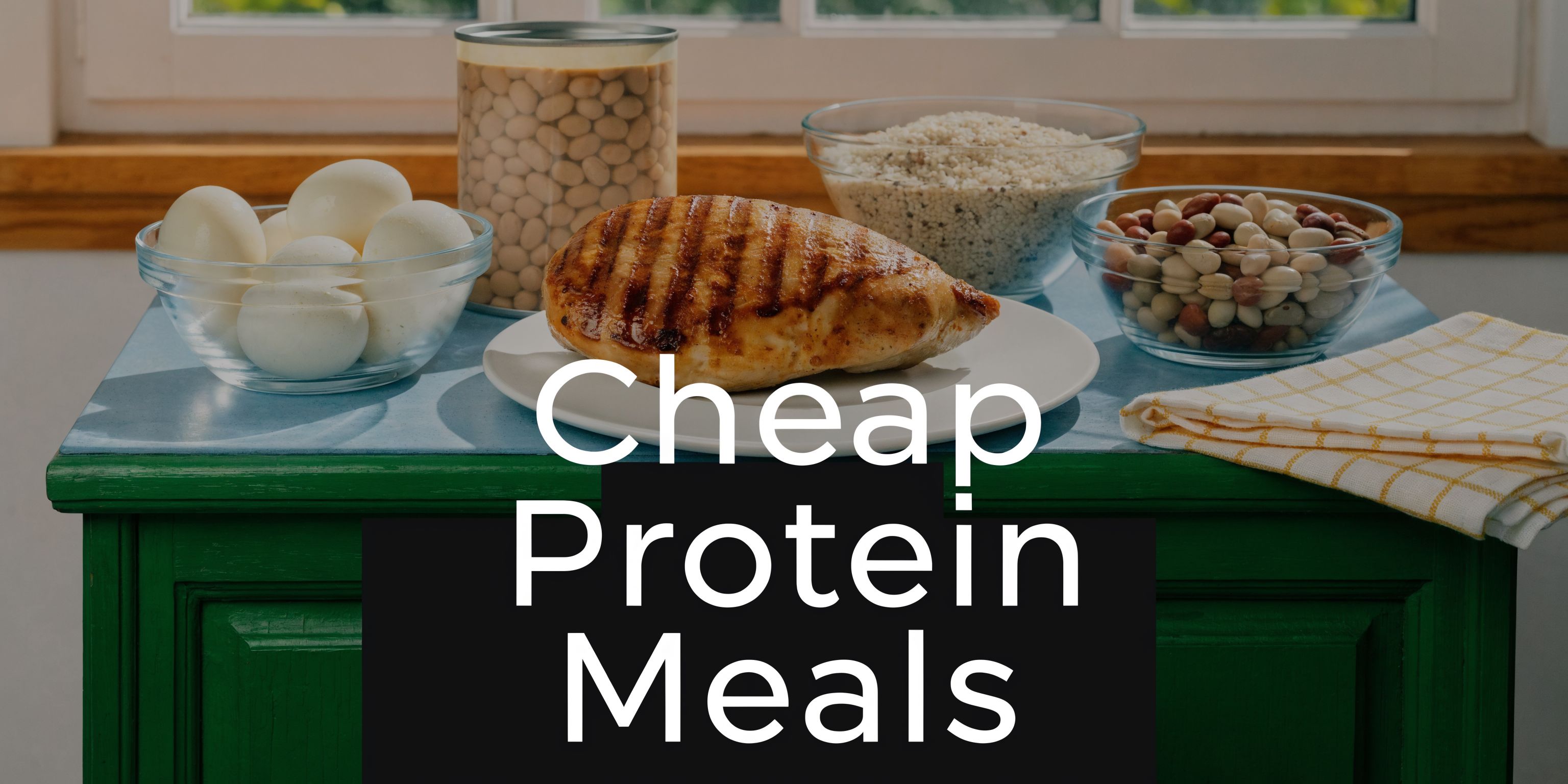
The best cheap high protein meals use low-cost staples like eggs, beans, canned fish, ground turkey, and pantry-based meal bases. Two large eggs provide a significant amount of protein for a low cost, and shelf-stable meal kits made with ground meat can be very economical per portion when bulk-purchased, based on the cited source data.
Staring at a grocery receipt after a “healthy” shop can be frustrating. You want enough protein for muscle gain, appetite control, or easier macro tracking, but the usual advice often points straight to expensive cuts of meat, premium snacks, and powders that blow up the budget fast.
That gap between nutrition goals and real grocery prices is why cheap high protein meals need a system, not just a food list. The ingredients matter, but the repeatable routines matter more. The people who stay consistent usually do three things well: they choose proteins with a strong cost-to-protein ratio, they cook in batches, and they reuse ingredients across multiple meals instead of shopping for separate recipes every day.
This guide keeps that practical lens throughout. You’ll get workable meal ideas, prep methods that save time on busy weeks, and honest trade-offs about what is effective. Some foods are cheaper but slower to cook. Some are very convenient but less flexible. Some stretch further when combined with grains, vegetables, or leftovers.
If you want cheap high protein meals that fit real life, start with foods you can buy once, cook once, and eat several different ways.
1. How can egg-based meals lower your protein costs?
Eggs are one of the easiest answers when someone asks for cheap high protein meals that still feel like real food. They cook fast, they work at any meal, and they are complete protein. One large egg provides 6g of protein and can cost as low as 6¢ in major markets, according to this breakdown of cheap high-protein foods.
A practical egg meal does not need to be fancy. A scramble with onions and frozen vegetables works. So does a basic omelet with a little cheese, or a frittata cut into portions for the next few days.
To make the section practical, watch this simple egg-prep demo:
What egg meals work best during a busy week?
The winners are the meals that scale easily.
- Three-egg scramble: Fast breakfast or dinner. Add onion, leftover rice, or frozen broccoli.
- Tray-baked frittata: Bake a large batch, slice it, and reheat portions.
- Egg-topped noodles or rice: A fried egg turns a carb-heavy meal into something more filling.
Two large eggs provide 13g of protein for under 50¢ in the cited source, which is why eggs stay useful even when food prices rise. They also help when your budget is tight but you still want a meal that feels substantial.
Use eggs as a “protein bridge”: If a meal is mostly rice, toast, potatoes, or noodles, adding eggs usually fixes the protein problem without adding much cost or prep time.
What usually goes wrong with egg meal prep?
People often get bored because they cook eggs the same way every time. Texture changes solve that. Hard-boiled eggs feel different from soft scrambled eggs. A baked frittata feels different from a fried egg on toast.
The other mistake is treating eggs like a snack instead of the foundation. Pair them with low-cost vegetables, bread, oats, potatoes, or rice so the meal holds you for hours.
2. Which dried beans and legumes give the best value?
For the tightest budgets, dried beans and legumes offer some of the best value in the store. They take more planning than eggs or meat, but the payoff is hard to beat. A cheap bag can produce several lunches and dinners, and it gives you a protein base you can stretch with rice, potatoes, onions, canned tomatoes, and frozen vegetables.
Lentils are usually the easiest place to start. They cook faster than most dried beans and often do not need soaking. Pinto beans, black beans, chickpeas, and split peas are also strong buys if you want the lowest cost per cooked serving. In practice, the best choice is the one you will cook every week. If a 90-minute pot of chickpeas keeps getting postponed, lentils or canned beans may be the smarter budget move for your real life.

How do you turn beans into meals you’ll eat?
Use one batch as a weekly component, not as a single recipe.
Cook a pot on Sunday, portion part of it plain, and season the rest in different directions. That prevents the common problem where five containers of the exact same bean chili start to feel like punishment by Wednesday.
A practical rotation looks like this:
- Lentil rice bowls: Lentils, rice, frozen spinach, salsa, and a fried egg or yogurt sauce.
- Bean chili: Pinto or black beans, canned tomatoes, onion, chili powder, and any leftover vegetables.
- Chickpea tray bake: Cooked chickpeas roasted with oil and spices, then added to wraps or grain bowls.
- Split pea soup: Cheap, filling, and good for batch cooking because it reheats well.
For readers building more plant-based meals, a vegetarian meal plan option can help organize combinations that cover protein without repeating the same bowl every day.
What does the value look like in practice?
Beans save money because they do two jobs at once. They provide protein, and they bulk out a meal so you need less meat, cheese, or packaged protein snacks.
A useful setup is half a cup to one cup of cooked beans per serving, paired with a grain or potato and one flavor source such as salsa, curry paste, broth, or a spice mix. That keeps costs low while making the meal filling enough to repeat during the week.
If I am coaching someone with a very tight grocery budget, I usually have them start with two bean formats only. One fast option, usually lentils. One larger batch option, usually black beans, pinto beans, or chickpeas. More variety sounds good, but too many dry goods at once often leads to half-used bags and wasted money.
What are the trade-offs with dried beans?
Time matters. Dried beans are cheap because you do part of the work at home. You sort them, soak some varieties, cook them, and season them well enough that you want to eat them again.
Digestion is the other common issue. Large portions can be rough if your usual diet is low in fiber. Start with smaller servings, rinse soaked beans well, and cook them until fully tender. Undercooked beans are a bad economy because people stop eating them.
Cheap high protein meals stay cheap only if they fit your routine. If dried beans keep sitting in the pantry, buy canned for a while and focus on consistency first.
3. Are chicken thighs better than chicken breasts for budget protein?
Yes, for many trying to save money, chicken thighs are the smarter buy. They are usually cheaper than breasts, stay moist when reheated, and are more forgiving in batch cooking.
Meal prep fails when reheated food tastes dry or dull. Thighs hold up better in sheet-pan meals, rice bowls, soups, and wraps.

What chicken thigh meals stretch the furthest?
A simple tray of roasted thighs, potatoes, and onions can cover multiple meals. On day one, eat them as-is. On day two, shred the leftovers into rice bowls. On day three, toss the chicken into soup or pasta.
A few dependable formats:
- Sheet-pan chicken and potatoes
- Chicken and rice bowls with frozen vegetables
- Chicken wraps with yogurt-based sauce
- Chicken fried rice using leftovers
The practical advantage is not just price. It is flexibility. One large batch can feed different meals without feeling like the same dinner over and over.
What works and what does not?
What works:
- Season heavily before roasting.
- Cook enough for planned leftovers.
- Remove meat from the bone after cooking if you want faster weekday assembly.
What does not:
- Cooking tiny daily portions from scratch.
- Using only boneless skinless breast if you dislike reheated dry meat.
- Buying poultry with no plan to freeze or cook it quickly.
If you find chicken boring, the issue is usually repetition, not the ingredient itself. Change the starch, sauce, or vegetables before you change the protein.
4. When is canned fish the cheapest seafood protein?
Canned fish is the seafood option that makes sense when fresh fillets keep getting wasted or frozen fish keeps sitting untouched. It solves a real budget problem. You get a protein source that is already cooked, keeps for months, and turns into a meal in about five minutes.
The cheapest use case is usually lunch or a backup dinner, not a centerpiece weekend meal. Tuna, sardines, and canned salmon work best when convenience matters as much as price. They also pair well with low-cost staples such as rice, pasta, potatoes, bread, and frozen vegetables, which makes them easy to slot into a weekly plan.
Which canned fish meals are worth repeating?
Use canned fish in formats that hide repetition and keep prep low.
- Tuna yogurt salad bowl: Tuna, chopped onion, celery, plain Greek yogurt or mayo, and crackers or toast. Good for packed lunches.
- Tuna tomato pasta: Stir tuna into warm tomato sauce and pasta. Add chili flakes, garlic, or olives if you want more flavor.
- Sardines on toast with mustard and pickles: Cheap, fast, and better at home than at the office.
- Salmon rice bowl: Canned salmon, rice, frozen vegetables, lemon juice, and black pepper.
For batch cooking, prep the base instead of mixing everything at once. Cook a pot of rice or pasta, portion vegetables, and keep the fish sealed until you eat it. That prevents soggy lunches and keeps the texture better.
A simple operational setup works well:
- Keep tuna for work lunches and quick wraps.
- Keep salmon for rice bowls or salmon cakes.
- Keep sardines for toast, potatoes, or home meals where the stronger smell is less of an issue.
How do you keep canned fish cheap per serving?
Buy it with a purpose. A can that sits in the cupboard for six months is not helping your food budget.
I usually treat canned fish as a targeted tool. It covers the meals where raw meat is least convenient: desk lunches, late nights, travel days, and weeks when cooking capacity is low. In those situations, canned fish often beats fresh seafood on both cost and execution because there is no trimming, thawing, or spoilage risk.
If you want to stretch it further, combine the fish with another low-cost protein or filler ingredient. Tuna mixed with white beans makes a more filling lunch. Salmon folded into rice and vegetables goes further than eating the can alone. Sardines over potatoes or toast cost less than building the meal around specialty breads or snack packs.
What are the trade-offs?
Taste fatigue shows up fast if you buy one type and eat it every day. Tuna is easy, but it gets boring. Sardines are cheap and nutrient-dense, but the flavor is polarizing. Canned salmon is versatile, though it often costs more than tuna.
Smell matters too. Tuna salad in a shared office kitchen is usually fine. Sardines at your desk are a different decision.
The practical fix is rotation, seasoning, and portion planning. Keep acidic and sharp add-ins on hand: lemon juice, mustard, pickles, capers, red onion, hot sauce. Those ingredients do a lot of work for very little money. Canned fish earns its shelf space when you use it as a reliable budget protein for specific meals, not as an everyday default.
5. Can Greek yogurt and cottage cheese replace pricier protein snacks?
Often, yes. Greek yogurt and cottage cheese are two of the easiest ways to stop overspending on branded “high-protein” snack foods. They require almost no prep and can handle both sweet and savory meals.
Many budgets get wrecked by convenience purchases. Single-serve bars, bottled shakes, and packaged puddings can look efficient, but they are usually less flexible than a large tub of yogurt or cottage cheese.
How should you use dairy proteins so they stay interesting?
The answer is to stop treating them as plain snacks only.
Try these:
- Greek yogurt bowl: Add oats, fruit, and peanut butter.
- Savory yogurt sauce: Use with roasted chicken, potatoes, or wraps.
- Cottage cheese toast: Top with pepper, tomatoes, or cucumber.
- Blended cottage cheese dip: A practical option for vegetables, crackers, or baked potatoes.
Plain versions are usually the better buy because they can swing in either direction. Sweet if you add fruit and cinnamon. Savory if you add garlic, lemon, or herbs.
What mistakes make dairy proteins feel repetitive?
Buying too many flavored versions is a common one. They lock you into one use and can become tiring fast.
Another mistake is keeping portions too small. A spoonful of yogurt on the side does not move your protein intake much. Build a meal around it instead. A bowl with oats and peanut butter is breakfast. A yogurt sauce over chicken and rice becomes part of dinner.
If you digest dairy well, these are among the simplest “open fridge and eat” options available.
6. How do you make ground beef cheaper without cutting protein too hard?
Ground beef becomes a budget-friendly option when you stop serving it as the entire meal and start using it as a flavor base. Higher-fat blends are often cheaper, and a smaller amount still goes a long way when combined with beans, pasta, rice, potatoes, or vegetables.
That is the fundamental shift. Cheap high protein meals do not rely on large meat portions. They rely on structuring the plate well.
Which ground beef meals stretch best?
The classic winners are the ones that multiply servings.
- Meat sauce: Ground beef, tomato sauce, onion, and pasta.
- Taco filling: Beef with beans for better stretch and texture.
- Stuffed potatoes: Ground beef over baked potatoes with vegetables.
- Skillet meals: Beef, rice, and frozen vegetables in one pan.
For people specifically targeting muscle gain or more structured macro planning, a high-protein meal planning approach can help organize servings more deliberately across the week.
What practical swaps help most?
Mixing beef with beans is usually the best budget move. Mixing beef with ground turkey also works well if you want a lighter texture and lower overall fat.
Another solid tactic comes from current pantry-meal behavior. Mid-2025 grocery data showed a 14.5% sales increase for Hamburger Helper from June to August, reflecting a clear shift toward cheaper, shelf-stable meal formats during inflation pressure, according to Scripps News reporting on grocery data. That pattern makes sense in practice. A pantry base plus a moderate amount of meat is often more sustainable than trying to center every dinner on expensive cuts.
If your budget is tight, use ground beef to season the meal, not dominate it. You still get the flavor people want, but the total cost drops fast.
7. Can oats, rice, and other grains support high-protein eating?
Yes, if you use them correctly. Grains are not high-protein foods in the same category as eggs, fish, or meat, but they are still valuable in cheap high protein meals because they make those proteins more filling and more sustainable to eat.
Many meal plans break down at this point. People focus only on protein density and end up with meals that feel small, expensive, or unsatisfying. Oats and rice help fix that.
Which grain-based meals work best?
A few combinations consistently do well:
- Overnight oats with yogurt
- Oatmeal with milk and peanut butter
- Rice and beans bowls
- Chicken and rice
- Egg fried rice with leftover vegetables
Rice is especially useful with legumes. In the grocery trend data cited earlier, rice sales also rose as shoppers shifted toward pantry staples. That tells you what many households already know from experience. Staple carbs help stretch protein farther.
What is the right way to think about grains?
Think of grains as infrastructure. They make meal prep easier, leftovers more useful, and small portions of expensive proteins go further.
The mistake is expecting grains alone to solve your protein target. They usually need support from beans, eggs, dairy, fish, or meat. But when you combine them well, they become one of the reasons a budget plan is livable.
A bowl of rice with almost no protein is cheap but not very effective. A bowl of rice with beans, egg, or shredded chicken is a real meal.
8. When does peanut butter earn a spot in cheap high protein meals?
Peanut butter earns its place when you need low-cost calories, some protein, and a food that is easy to store and use quickly. It is not a complete replacement for more protein-dense foods, but it is useful for rounding out meals and making budget breakfasts or snacks more satisfying.
This situation is especially helpful for people who undereat earlier in the day and then overbuy convenience food later.
What are the best uses for peanut butter?
The practical uses are simple:
- Oats plus peanut butter
- Toast with peanut butter and banana
- Peanut sauce for chicken or rice bowls
- Smoothies with milk, oats, and peanut butter
Peanut butter also helps meals feel less restrictive. A budget meal that tastes dry or bland usually does not survive long in a weekly rotation. A spoonful of peanut butter in oats or sauce can fix texture and flavor fast.
What should you watch out for?
The main issue is portion drift. Peanut butter is easy to overserve if you are trying to control calories closely. For muscle gain, that may be helpful. For weight loss, it needs a little more attention.
It also should not be your main protein strategy. It works best as support. Pair it with yogurt, milk, oats, or a more protein-forward meal.
If you need a nut-free option, seed butters can play a similar role, though pricing and taste vary by store.
9. Is whey protein still one of the cheapest ways to hit a high target?
For many people, yes. If you need a high daily intake and struggle to get there through food alone, whey can be one of the most practical tools in the plan. It is fast, portable, and easy to combine with regular groceries.
The mistake is using whey as the entire strategy. It works best as backup, not as the foundation of your diet.
When does whey make the most sense?
Whey is especially useful in three situations:
- Post-workout when you need something fast
- Breakfast when you are short on time
- Late in the day when you are under your protein target
A basic shake with oats, milk, and banana turns a supplement into a real meal. It also solves a common problem for busy professionals who skip breakfast, then spend the rest of the day trying to catch up.
For people building a training-focused routine, a muscle gain meal planning setup can help fit whey into the day without relying on it too heavily.
What does not work with whey?
Using it as a replacement for every meal. That usually leads to poor satisfaction and boredom.
Another issue is buying large tubs without testing flavor or texture first. If you hate it, it is not cheap anymore. Start with a flavor you know you will use often or an unflavored option that can go into oats, smoothies, or yogurt.
Whey is best viewed as a gap-filler. It keeps the plan on track when cooking time or appetite is limited.
10. What budget meal planning system keeps protein costs down?
This is the part that determines whether the food list above saves you money or just gives you more ideas you never use. Cheap high protein meals become sustainable when you run them through a weekly system.
The strongest system is simple. Pick a small number of repeatable proteins, pair them with a few starches and vegetables, and cook enough to create leftovers on purpose.
What should a low-cost weekly setup look like?
A practical weekly structure might look like this:
- Protein batch: Eggs, cooked beans, roasted chicken thighs, or browned meat
- Carb batch: Rice, oats, potatoes, or pasta
- Flexible add-ons: Frozen vegetables, onions, yogurt sauces, peanut sauce, canned fish
That gives you enough building blocks to produce breakfasts, lunches, and dinners without shopping for seven separate recipes.
The budget pressure people feel right now is real. One recent budget-focused guide also highlighted an underserved need for high-protein meals under tight per-serving limits during ongoing food inflation, while noting eggs at about $0.20 each, canned tuna at about $1 per can for 25g of protein, and lentils at about $0.50 per cooked cup for 18g of protein in its market framing, as discussed in this budget-friendly meal planning guide.
What habits save the most money?
The habits are boring, but they work.
- Repeat meals on purpose: Variety is useful, but too much variety raises cost and waste.
- Shop with a meal map: Buy for actual meals, not random “healthy” ingredients.
- Use leftovers as planned lunches: This saves a lot of money.
- Keep emergency pantry meals ready: Eggs, pasta, canned fish, rice, beans.
If you want help turning this into a repeatable routine, a budget meal planning tool can organize meals and grocery lists around your constraints.
Top 10 Budget High-Protein Meals Comparison
| Item | Implementation Complexity 🔄 | Resources & Cost ⚡ | Expected Outcomes 📊 | Ideal Use Cases ⭐ | Key Advantages & Tips 💡 |
|---|---|---|---|---|---|
| Egg-Based Meals (Scrambles, Omelets, Frittatas) | Low: simple cooking skills (5-15 min) | Very low cost; requires refrigeration | ~6–7g per egg; high satiety; quick meals | Breakfasts, quick dinners, batch prep | Cheapest complete protein; buy bulk, batch-cook, mix with veggies |
| Dried Beans & Legumes (Black, Pinto, Lentils, Chickpeas) | Moderate: soaking/long cook or pressure-cooker | Extremely low cost; shelf-stable | 15–20g per cooked cup; high fiber; sustained energy | Soups, stews, grain bowls, vegetarian meals | Inexpensive + durable; buy dry in bulk, pressure-cook and freeze |
| Chicken Thighs & Budget Poultry Cuts | Moderate: roasting/stewing (for best results) | Low–moderate cost; needs refrigeration/freezer | ~26g per 100g; flavorful, higher fat | Roasts, sheet-pan meals, batch protein for week | Juicy and versatile; buy whole or on sale, batch roast and freeze |
| Tuna & Canned Fish (Mackerel, Sardines) | Very Low: ready-to-eat, no cooking | Low cost per can; delivers omega‑3s | 20–25g per can; shelf-stable | Quick lunches, travel, emergency staples | Convenient and portable; buy store-brand, drain to cut sodium |
| Greek Yogurt & Cottage Cheese (Dairy Proteins) | Low: minimal prep (mix/serve) | Low–moderate when bought in bulk; refrigerated | 14–20g per serving; probiotics and casein benefits | Breakfasts, snacks, smoothies, high‑protein recipes | High protein and versatile; buy large tubs, choose plain varieties |
| Ground Beef & Budget Meats (70/30, 75/25) | Low: simple browning; moderate food safety | Moderate cost; freezes well | ~20–22g per 100g; high fat for flavor and satiety | Tacos, sauces, casseroles, bulk meals | Flavorful and economical; brown in bulk, drain/portion and freeze |
| Oats & Grain-Based Protein (Oatmeal, Quinoa, Brown Rice) | Low: easy preparation (stovetop/overnight) | Very low cost; long shelf life | 5–8g per serving; pairs with legumes/dairy for completeness | Breakfasts, bases for bowls, cheap meal fillers | Extremely cheap and versatile; bulk-buy, combine with legumes or dairy |
| Peanut Butter & Budget Seeds (Spreads, Powders) | Very Low: no cooking required | Low cost per serving; long shelf life | ~8–10g per 2 tbsp; calorie-dense | Snacks, sauces, smoothies, to stretch meals | High satiety and portability; use peanut powder for higher protein |
| Whey Protein Powder (Supplement) | Very Low: mix/shake; quick use | Moderate upfront cost; low per-serving in bulk | 20–25g per serving; rapid protein boost | Post-workout, meal replacements, baking | Concentrated, convenient protein; buy bulk, use unflavored for versatility |
| Master Strategy: Budget Meal Planning & Smart Lists | Moderate: time investment and habit setup | Low monetary cost; requires planning time/tools | 20–40% grocery savings; consistent protein intake | Weekly batch-cooking, grocery optimization, waste reduction | Largest overall savings; create 2–3 rotating templates and batch-cook weekly |
Your Next Steps & Frequently Asked Questions
Eating high-protein on a budget is not about chasing one miracle food. It is about combining a few reliable ingredients in ways that keep cost, time, and boredom under control. The strongest budget plans usually rely on eggs, beans, canned fish, poultry, dairy, grains, and a short list of repeat meals that can be batch-cooked and reused.
That is the key takeaway. Cheap high protein meals work best when they are operational, not aspirational. A food can be affordable on paper and still fail in real life if it takes too long to cook, reheats badly, or does not fit your workweek. The foods in this guide matter because they solve different problems. Eggs solve speed. Beans solve long-term value. Chicken thighs solve meal prep. Canned fish solves convenience. Whey solves protein gaps when the day gets away from you.
The easiest place to start is not a total diet overhaul. Pick two or three meals you can make repeatedly next week. A good example would be egg scrambles for breakfast, bean-and-rice bowls for lunch, and roasted chicken thighs for dinner. That gives you variety in texture and flavor without forcing you to buy a long ingredient list.
Then batch-cook the pieces, not just the finished meals. Cook rice once. Roast a tray of chicken once. Hard-boil eggs once. Prepare one bean dish or keep canned fish on hand for backup. When the components are ready, weekday decisions get much easier. That matters more than many people realize. A lot of food overspending happens when you are hungry, short on time, and have nothing assembled.
It also helps to define your main goal before you shop. If your priority is weight loss, lean harder on beans, eggs, yogurt, and structured portions. If your priority is muscle gain, add more total food around those proteins, including rice, oats, potatoes, and occasional whey. If your main challenge is staying consistent through a busy week, convenience should carry more weight in your decisions. In that case, canned fish, yogurt, eggs, and pre-cooked batch meals are often worth repeating.
Another practical rule is to stop paying for novelty. Many “fitness foods” are just regular foods in more expensive packaging. Cottage cheese, plain Greek yogurt, eggs, oats, and dried beans often outperform trendier products because they fit into more meals and usually create less waste.
If you want outside help putting this into action, AI Meal Planner is one option that can structure weekly meals, macros, and grocery lists around your budget, preferences, and dietary restrictions. That kind of support is useful when you know the right foods but do not want to build the weekly system manually every time.
Frequently Asked Questions
1. How can I get a lot of protein on a small grocery budget?
Base most meals on eggs, beans, canned fish, poultry, and plain dairy foods, then use rice, oats, potatoes, or pasta to make them more filling.
2. What is usually cheaper, animal protein or plant protein?
Dried beans and legumes are often the cheaper long-term choice, especially if you cook them from dry and use them across several meals.
3. Are cheap high protein meals good for weight loss?
Yes. Foods like eggs, beans, yogurt, canned fish, and chicken can help with fullness when portions and cooking methods match your calorie goal.
4. Can I build muscle with cheap high protein meals?
Yes. Muscle gain depends on getting enough protein and total food consistently, not on buying expensive ingredients.
5. Is canned fish good enough to use regularly?
It is a practical option for regular rotation, especially for quick lunches and emergency dinners, as long as you vary your choices and do not rely on one food exclusively.
6. Do I need protein powder to eat high-protein cheaply?
No. Protein powder is useful, but you can build a strong budget plan around eggs, beans, dairy, canned fish, and poultry.
If you want a faster way to turn these ideas into a weekly routine, AI Meal Planner can build personalized meal plans and grocery lists around your goals, budget, food preferences, and dietary restrictions.
AI-powered nutrition
Get Your Personalized Meal Plan
AI creates the perfect meals for your goals, lifestyle, and taste.
Start Your Journej